
What Is Living in Cibolo, Texas Like?
Twenty years ago Cibolo had fewer than 5,000 residents. Today it has 39,019 — and the cranes haven't stopped moving. That growth rate, among the fastest in Texas on a percentage basis, is the first thing newcomers notice, and it shapes almost everything else about the experience of living here. Cibolo sits in Guadalupe County on the northeastern edge of the San Antonio metro, positioned along FM-78 and FM-1103 with I-10 to the south and I-35 to the north. Those two interstates are the reason so many people discovered Cibolo in the first place — the drive into San Antonio takes about 30 minutes on most mornings, which makes this one of the more practical spots in the metro for families who want space without surrendering a reasonable commute.
The economic backbone here is a mix of military, education, and a manufacturing sector that keeps growing. Joint Base San Antonio – Randolph, located in neighboring Universal City, is a major demographic anchor — a large share of Cibolo's households include active-duty military personnel or veterans who chose to stay after their service. The local school district, which holds a B rating according to the Texas Education Agency, is the city's largest employer and one of the most commonly cited reasons families choose Cibolo over neighboring suburbs. Aisin Texas Corporation, a Japanese automotive transmission manufacturer, expanded its local footprint by nearly 300,000 square feet and created substantial employment. The median household income here runs $122,365 — a figure that reflects the professional and military households that make up a large share of the population.
On cost, Cibolo is genuinely more affordable than comparable suburban rings around Austin or Dallas, and the typical home price of $336,323 (Zillow Home Value Index, July 2026) is one of the more accessible entry points for a growing San Antonio suburb. The city's effective property tax rate of 1.51% is worth factoring into any budget calculation — see the full cost-of-living breakdown at our cost-of-living page. Daily life here is car-dependent by design: the subdivisions are spread out, and most errands mean a drive. What offsets that is the outdoor infrastructure — particularly Crescent Bend Nature Park, a 190-acre preserve along Cibolo Creek — and a city actively investing in trail connections and parks to match its population growth.
Whether you're weighing this city against other suburbs or just beginning to research the area, the sections below break down Cibolo's neighborhoods, housing market, commute patterns, schools, local employers, and what daily life here is actually like for the families and professionals who've already made the move.

Cibolo at a Glance
Looking to buy in Cibolo? Estimate your payment.
Enter your numbers to see an estimated monthly mortgage payment.
Estimate only. Excludes HOA fees and mortgage insurance. The interest rate above is a starting point, not a quoted rate — replace it with your own to see real numbers. Insurance is a flat placeholder, not a Cibolo quote.
Why Are People Moving to Cibolo?
The short answer is affordability, schools, and space — in that order, for most people. But the fuller story starts with the city's extraordinary trajectory: from a small farming community along the Southern Pacific Railroad corridor to 39,019 residents today, Cibolo has remade itself entirely within the lifetimes of people old enough to remember when it was farmland.
The Military and Education Connection
A significant share of the people moving here aren't choosing Cibolo so much as choosing the San Antonio metro — and then discovering that Cibolo offers the school district, the lot sizes, and the price point that fit. Joint Base San Antonio – Randolph in Universal City pulls active-duty families into this northeast corridor, and many of them stay after separation. The local school district has a reputation for stability and competitiveness; parents with school-age children consistently cite it as the deciding factor over neighboring districts.
Who Settles Here
| Buyer Type | Why Cibolo Works | What to Know |
|---|---|---|
| Families | Strong ISD, large lots, new construction subdivisions | Growth means some areas are still being built out around you |
| Commuters | about 30 minutes to San Antonio via I-35 or I-10 | Rush-hour on FM-78 and FM-1103 can add meaningful time |
| First-Time Buyers | Typical home price well below Austin or Dallas comparables | Rapid development means resale comps shift quickly |
| Value Seekers | Median household income here supports the typical home price | Property tax rate of 1.51% is a real line item to budget |
| Military Families | Proximity to Joint Base San Antonio – Randolph | Universal City and Schertz are also in the same ISD corridor |
| Renters Testing the Market | New apartment inventory expanding with the city | Typical rent city-wide runs $1,702/mo (Zillow ZORI, July 2026) — see cost of living |
The honest case against moving here is also worth naming. Cibolo is still building its commercial layer — restaurants, retail, and services are growing but lag behind the residential growth. If you move into one of the newer subdivisions on the city's edges, you may spend the first couple of years watching strip centers go up around you rather than walking into a finished neighborhood.
A City Still Defining Itself
The Historic Cibolo Schoolhouse — now a City Hall annex — stands as a reminder that this was once a quiet agricultural community named for the buffalo that once roamed the creek. That identity is still visible in the Cibolo Grange Farmers & Artisans Market and in the way longtime residents describe the place: country-style roots, city-life perks. The tension between those two things is real, and it's exactly what draws a specific kind of buyer — people who want space and community without fully leaving the metro behind.
Cibolo's safety profile adds to the appeal: a violent crime rate of 2 per 1,000 residents and a property crime rate of 9 per 1,000 residents sit well below both the state average (violent 4 per 1,000, property 20.7 per 1,000) and national figures (violent 3.7 per 1,000, national property 18.4 per 1,000). For more on safety across the city's different areas, see the safety breakdown.
What Daily Life Feels Like in Cibolo
Nearly every errand requires a car — that's the practical baseline for life in Cibolo, and knowing it going in shapes how you choose which subdivision to buy in. What the city has is a network of well-kept subdivisions, a growing commercial corridor, and a genuine sense that it's in the middle of becoming something — which is energizing if you're optimistic and frustrating if you want things finished.
The Practical Day
The city has contracted with Alamo Regional Transit for demand-response bus service that connects residents to San Antonio and covers surrounding counties, but for day-to-day life — groceries, school pickup, appointments — a personal vehicle is the baseline assumption. Walkability within individual subdivisions like Bentwood Ranch or Legendary Trails is fine for an evening walk, but it doesn't extend to running errands on foot.
The schools are the daily anchor for most households here. The local district runs active UIL athletics programs — Friday night football at Steele High School fills the stands in a way that functions as the city's most reliable community gathering. The district's details, including school-level information, are covered on the schools page.
What Six Months In Actually Looks Like
People who move here from larger metros are often surprised by how much social life organizes itself around the subdivisions rather than around commercial destinations. Block parties, neighborhood Facebook groups, and HOA-organized events are genuinely active. The Cibolo Grange Farmers & Artisans Market gives the city a community gathering point that feels authentically local rather than developer-built.
The summer heat is the seasonal adjustment nobody fully anticipates. Cibolo averages 223 sunny days a year, and July and August are genuinely punishing — outdoor activities shift to early mornings, and the stretch of weeks where afternoon temperatures routinely exceed 100°F is longer than most transplants from the Midwest or West Coast expect. The flip side is that winters are mild enough that Crescent Bend Nature Park stays usable for most of the year.
The Construction Reality
As of mid-2026, Cibolo has 272 registered construction and development projects tracked across the city. That number means two things simultaneously: the city is investing in itself, and you will drive past active construction sites regularly. Road projects — including the Town Creek Trail connection designed to link central Cibolo to its parks — signal that the infrastructure is catching up, but it hasn't fully caught up yet. Buyers who get frustrated by that are not wrong; it's the honest trade for getting in ahead of the finished product.
For a look at how the city's geographic areas and neighborhoods compare in character and feel, the neighborhoods guide goes deeper.
The Cibolo Housing Market Right Now
The typical home price in Cibolo is $336,323 (Zillow Home Value Index, July 2026). For context within the San Antonio metro, that figure puts Cibolo noticeably above neighboring Universal City and somewhat above Schertz and Selma — though it remains accessible relative to comparable suburbs around Austin. A full price comparison and breakdown of ongoing costs is on the cost-of-living page.
What the Market Actually Looks Like
Cibolo's housing stock skews heavily toward newer single-family construction. The subdivisions that have gone up over the past fifteen years — Bentwood Ranch, Foxbrook, Falcon Ridge, and the rest — are predominantly four- and five-bedroom homes on generous lots, built for the families that make up the bulk of buyers here. Older and more modestly sized homes do exist in the parts of the city closer to its original core, and they represent the lower end of the market.
New apartment inventory is expanding alongside the single-family market, with hundreds of units across several recently opened and planned developments. That rental supply helps keep the city accessible for residents who aren't ready to buy — and gives the market an additional data point beyond the homeownership-dominated narrative Cibolo usually carries.
What Buyers Should Understand
One dynamic worth knowing: because so much of Cibolo's housing is relatively new and similar in construction vintage, appraisals and comparable sales can shift quickly as new phases of development close. Buyers coming from more established markets sometimes underestimate how actively that affects pricing in fast-growth suburbs. The median household income of $122,365 is at or above the income needed to buy the typical home here — which means the market is broadly accessible to the professional and military households that dominate the buyer pool, without being artificially stretched.
Cibolo's effective property tax rate of 1.51% is a real consideration that changes the monthly math meaningfully relative to states with lower rates. Run the numbers carefully before comparing a Cibolo sticker price to one in a lower-tax state. The first-time homebuyer page covers the buying process and financing landscape in more detail.
Cibolo Neighborhoods
Cibolo has several distinct areas — each with its own character and appeal. Here’s a breakdown to help you narrow down where to focus your home search.
🏡 Bentwood Ranch
One of Cibolo's more established planned communities, Bentwood Ranch draws families who want larger lots, a neighborhood park, and a sense of the subdivision having been around long enough to feel settled rather than freshly built.
🏠 Foxbrook
Foxbrook is a family-oriented subdivision with newer construction and wide streets that give it the open, spread-out feel that Cibolo buyers generally come looking for; it suits parents with school-age children who want easy access to the district's campuses.
🌳 Falcon Ridge
Falcon Ridge appeals to buyers who want a quieter residential feel within Cibolo's growing footprint — the streets stay calm, and the neighborhood has a community identity that makes it popular with households settling in for the long term.
🏘 Turning Stone
Turning Stone is a newer development that reflects Cibolo's current growth wave — well-built single-family homes on planned streets, with the surrounding commercial infrastructure still catching up to the residential density.
🏔 Legendary Trails
Legendary Trails lives up to its name with trail-connected common spaces that make it a strong fit for active households and families who want outdoor access built into the neighborhood rather than requiring a drive to find it.
🌆 Heights of Cibolo
Heights of Cibolo sits on elevated terrain that gives portions of the neighborhood longer sightlines than most of the city's flatter subdivisions; it attracts buyers who want a slightly different character within Cibolo's predominantly new-construction landscape.
Pros & Cons of Living in Cibolo
The Pros
- Newer housing stock at prices below closer-in San Antonio suburbs
- Strong, well-regarded SCUCISD schools
- Family-friendly master-planned communities with parks and pools
- Close proximity to Randolph AFB for military families
The Cons
- Long average days-on-market and a cooling price trend signal a slower resale market
- Property tax rates in Cibolo run higher than the county average
- Commute into central San Antonio can stretch past 30 minutes during peak traffic
Getting Around & Commuting in Cibolo
Cibolo is a car city, and knowing that going in saves you from making a housing decision you'll regret. The main arteries — FM-78 and FM-1103 — carry the bulk of local traffic, connecting residential areas to commercial strips and feeding onto I-35 to the north and I-10 to the south. Those two interstates are what make Cibolo's commute math work for most residents.
The Commute Picture
| Destination | Primary Route | Typical Drive | Notes |
|---|---|---|---|
| San Antonio (central) | I-35 or I-10 | About 30 minutes | Add time during weekday morning rush |
| Joint Base San Antonio – Randolph | FM-78 or FM-1103 to Universal City | Short hop, under 15 minutes | A primary reason military families land here |
| New Braunfels | I-35 north | Under 30 minutes in light traffic | Growing job center in its own right |
| San Antonio International Airport | I-35 to SAT | 22 miles | Nearest major airport |
| Downtown Schertz / Selma | FM-78 or SL-539 | 10–15 minutes | Closest commercial and retail hubs |
Where the Traffic Actually Accumulates
FM-78 is the artery that connects Cibolo to Schertz and eventually to San Antonio, and it is also the corridor that slows down most visibly during the morning and evening commute windows. Residents in subdivisions on the western side of the city have the most direct path toward I-35; those farther east lean more on FM-1103. Neither route is a significant highway, and both carry local cross-traffic that can add time on school days.
The city has contracted with Alamo Regional Transit for demand-response public transportation — curb-to-curb service that connects to San Antonio and surrounding counties. It's a genuine option for residents who need mobility assistance or occasional city access without driving, but it's not a commuter transit system in the conventional sense. Plan around car ownership for daily life.
Who the Commute Works For
Professionals commuting into San Antonio for healthcare, finance, or technology roles are the dominant commuter profile here. The roughly 30-minute drive is reliable enough on non-peak hours that it doesn't dominate the quality-of-life conversation the way a 45- or 60-minute crawl would. Military households assigned to Randolph have one of the shortest commutes in the metro — which is precisely why so many of them ended up in Cibolo and its immediate neighbors in the first place.
People who work remotely are an increasingly large part of the population, and Cibolo's spacious homes and comparatively lower price point make it a logical destination for that group. A two-car household with at least one remote worker is the dominant lifestyle configuration here, and the city's infrastructure is built around that assumption.
Schools in Cibolo
Families relocating to Cibolo have public, private, and higher-education options nearby. Here’s a quick overview.
🎓 School District
Schertz-Cibolo-Universal City Independent School District serves K–12 students across Cibolo and the surrounding area. Rated B (source: Texas Education Agency, 2025 A-F accountability rating (2024-25 school year)).
🏆 Graduation Rate
The 4-year high-school graduation rate here is approximately 93.7%.
📚 Higher Education
Texas’s public universities — the University of Texas at Austin, Texas A&M University, and the University of Houston — offer four-year degrees statewide, with one of the largest community college systems in the country (50+ public community college districts) providing two-year and workforce programs.
🌐 Online Learning
UT Austin Online and Texas A&M University Online offer fully accredited online degrees for remote learners across the state.
Safety in Cibolo
A quick look at how Cibolo compares on the numbers that matter most when weighing a neighborhood or a move.
🛡 Violent Crime
Approximately 2 per 1,000 residents.
🔒 Property Crime
Approximately 9 per 1,000 residents.
Compared to the most recent national figures from the Bureau of Justice Statistics (2024), Cibolo’s violent crime is below the national average (about 3.7 per 1,000), and property crime is below the national average (about 18.4 per 1,000).
Against Texas as a whole, Cibolo’s violent crime is roughly half the state average, and property crime is roughly half the state average (Bureau of Justice Statistics, Crime Known to Law Enforcement, 2024 (tables 2 and 3)).
Crime rates can vary a lot within a single city, so the citywide numbers above are only a starting point. Some neighborhoods in Cibolo run well below these averages, while others run higher — the kind of block-by-block detail that matters most when you’re actually choosing where to live. The full guide below breaks it down neighborhood by neighborhood.
Working in Cibolo
Cibolo’s largest employers span several industries — here are some of the anchors of the local job market.
🎓 Schertz-Cibolo-Universal City Independent School District
Education
🎓 Marion Independent School District
Education
🏛 City of Cibolo
Municipal government
🏛 Joint Base San Antonio – Randolph
Military, located in Universal City
Parks & Recreation in Cibolo
Some of the outdoor spaces that shape everyday life in Cibolo.
🌱 Crescent Bend Nature Park
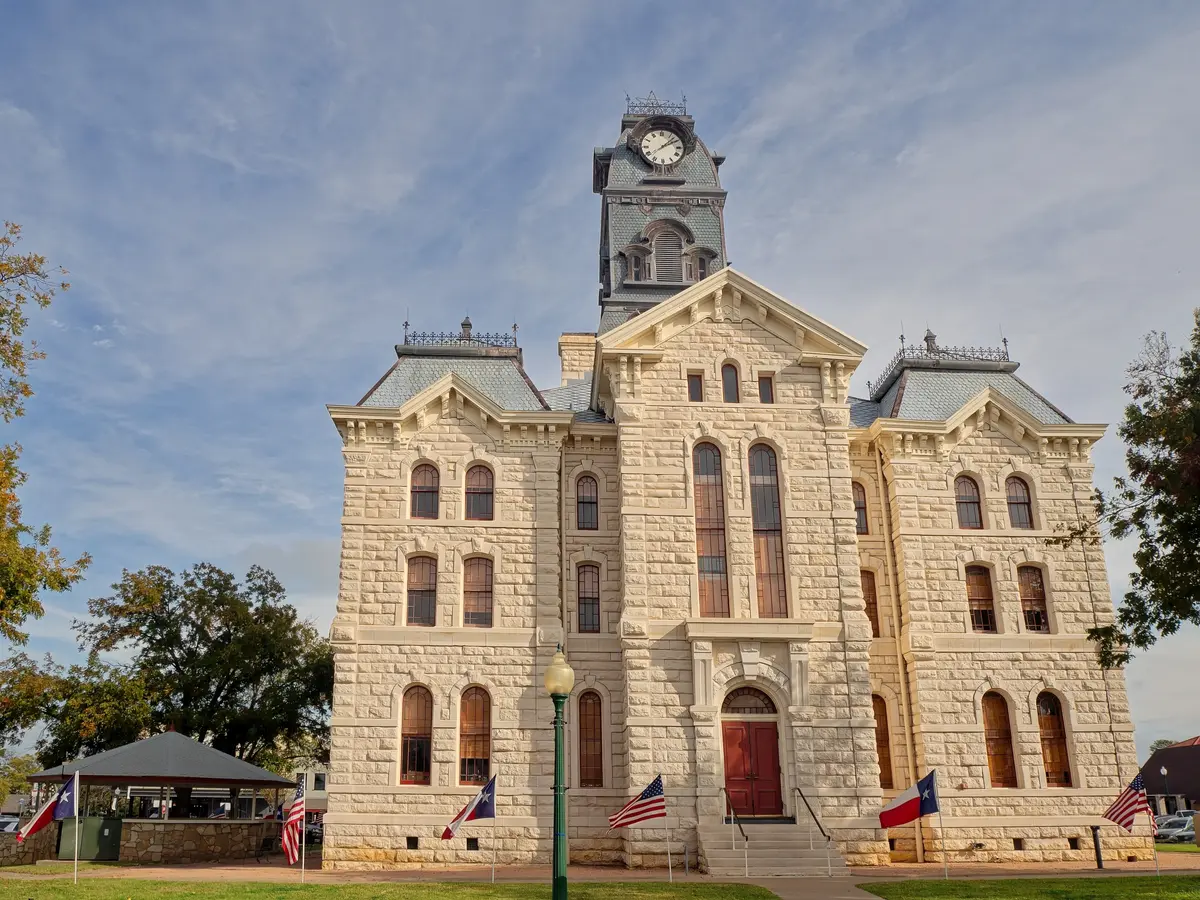
Cibolo residents don’t have to go far for green space — spots like Crescent Bend Nature Park are part of everyday life here, whether that’s a morning walk, a weekend hike, or just somewhere to unwind outside. The full guide below covers more of what Cibolo has to offer for parks and outdoor recreation.
Retiring in Cibolo
Cibolo draws retirees for its balance of amenities, outdoor access, and cost. Here’s what to weigh.
🌤 Climate
Cibolo gets 223 sunny days a year, with mild winters that rarely require more than a light jacket. Summers are long and genuinely hot — July and August push well above 100°F regularly — which tends to shift outdoor activity to mornings. Spring and fall are the seasons most retirees cite as the reason they stay.
🍴 Lifestyle
Daily amenities are expanding with the city's growth, including a growing dining scene anchored by a handful of local restaurants and independent coffee shops. Crescent Bend Nature Park provides accessible year-round trail access for hiking and birding. The Cibolo Grange Farmers & Artisans Market is a consistent community gathering point for residents looking for a slower weekend rhythm.
🏚 55+ Communities
No 55+ communities were found in Cibolo. Retirees considering this area typically explore neighboring Schertz or Universal City, where additional senior-oriented housing options exist within the same general corridor.
✈ Getting Around
A personal vehicle is necessary for daily life in Cibolo — most errands and appointments require driving, and the city is laid out around car ownership. San Antonio International Airport is 22 miles away, making travel straightforward. Alamo Regional Transit provides demand-response service for residents who need an alternative to driving.
🏛 Texas Taxes for Retirees — What to Know
- No state income tax — Texas has no personal income tax — constitutionally protected under Article VIII, Section 24. Social Security, pensions, 401(k)/IRA withdrawals, and annuity payments are all untaxed at the state level, with no state return to file.
- Sales tax is the tradeoff — The state sales tax is 6.25%, and local add-ons bring the combined rate in Cibolo to 8.25% (Texas Comptroller of Public Accounts, city sales and use tax rates, July 2026). Groceries and prescription drugs are exempt.
- Property taxes — the real tradeoff — Texas’s effective property tax rate averages about 1.40%, among the highest in the country, since property tax (not income tax) funds most local government and schools.
- Over-65 homestead exemption and school-tax freeze — Homeowners 65+ (or disabled) get an additional $60,000 exemption from their home’s value for school district taxes, on top of the general homestead exemption — $200,000 off school taxable value combined, following November 2025’s Proposition 11 (SB 23), which raised the over-65 exemption to $60,000, and Proposition 13 (SB 4), which raised the general homestead exemption to $140,000. Once claimed, your school district tax bill is frozen at that year’s amount and cannot increase as home values rise, and the ceiling can transfer if you move to a new home within Texas.
- Deferral option if cash is tight — Homeowners 65+ can defer property tax payment entirely for as long as they live in the home, rather than paying it currently — interest accrues, but no forced sale.
- No estate or inheritance tax — Texas has no estate tax, no inheritance tax, and no gift tax.
- No separate capital gains tax — Because Texas has no state income tax, capital gains — including on investments and home sales — are not taxed at the state level at all, unlike states such as Washington that tax capital gains separately from income.
Tax laws change frequently and individual situations vary. This is general information, not tax advice — always consult a qualified Texas tax professional or CPA for personalized retirement tax planning.
Weekends & Local Favorites in Cibolo
Cibolo's leisure scene is still finding its shape — which is an honest way of saying it's improving faster than it gets credit for. The city that was almost entirely residential a decade ago now has a recognizable set of local anchors that residents actually use, not just a strip of chains along the commercial corridor.
Outdoors First
Crescent Bend Nature Park is the city's best outdoor asset — a 190-acre preserve along Cibolo Creek with a 1.6-mile loop trail built for hiking, birding, trail running, and biking. Bird-watching blinds, fishing access, and interpretive signage about local flora make it genuinely worth the visit rather than just a place to walk the dog. It's consistently dog-friendly, which matters to a lot of households here.
The Cibolo Sports Complex handles the organized side of outdoor life, drawing club sports, tournaments, and community leagues that keep it active on most weekends. Between the two, families with kids who play sports have a practical weekend rhythm that doesn't require driving to San Antonio.
Where Locals Eat and Drink
Crepeccino Café & Crêperie is a distinctive local spot — a crêperie in a Texas suburb is genuinely unusual, and it's developed a following. Old Main Ice House brings the casual Texas icehouse format to Cibolo; it's the kind of spot where you run into neighbors. Parry's Pizzeria & Taphouse and Noli's Vite Cibolo fill out the sit-down end of the dining scene with solid options that have become regulars for families who want something beyond the chain corridor. Santikos Cibolo handles the cinema and entertainment side of things for date nights and family outings.
For coffee, Brew K Cafe, The Pastry Corner, Frenchie Coffee Roasters, and Steep N' Brew Coffee Co. give the city a genuine independent coffee culture — notable for a suburb of this size, and a sign of the demographic that's settled here. These are the spots where the Saturday morning routine tends to land before a trip to Crescent Bend or a kids' soccer game.
The Community Gathering Points
The Cibolo Grange Farmers & Artisans Market is the city's most authentically local weekly gathering — a place that reflects Cibolo's stated identity as a community with country-style roots and city-life conveniences. It draws regulars who've been coming since the market was smaller than the city, which is saying something given how fast the city grew. Friday night UIL football is the other consistent community moment — Steele High School games are a genuine social event for a city that's still building the commercial density that gives older towns their weekend character. The town is still writing that chapter, but the pieces are arriving faster than most newcomers expect.
Local favorites in Cibolo
Restaurants
- Crepeccino Café & Crêperie
- Santikos Cibolo
- Old Main Ice House
- Parry's Pizzeria & Taphouse
- Noli's Vite Cibolo
Outdoors
- Crescent Bend Nature Park
- Cibolo Sports Complex
Coffee
- Brew K Cafe
- The Pastry Corner
- Frenchie Coffee Roasters
- Steep N' Brew Coffee Co.
Farmers Markets
- Cibolo Grange Farmers & Artisans Market
Top Things Locals Say About Cibolo
The best intel about a city comes from the people who actually live there. Here’s what Cibolo residents say when newcomers ask the questions everyone’s thinking.
“I knew it would be suburban, but I didn't realize how much the city would change in just the two years after we closed. The shopping center that was a dirt lot when we moved in opened while our kid was finishing kindergarten. It's a weird thing — you feel like you're watching the city grow up at the same time your family does.”
— Recent Cibolo home buyer
“What's the most surprising thing about living in Cibolo?”
How fast everything changes. I'd drive the same stretch of FM-78 every week and watch a new building go up each time. It's exciting in one way — the city is clearly investing in itself — but if you're the kind of person who likes a neighborhood that feels settled and finished, parts of Cibolo will test your patience. The older areas near the city's original core feel more established; the newer subdivisions still have that in-progress quality.
“What do locals love most about Cibolo?”
Crescent Bend Nature Park is genuinely beloved here — it's the kind of outdoor space that makes people feel like they got something right when they chose this city. Friday night football at Steele is the other thing people mention: it's one of those genuine community events where you see neighbors you'd otherwise only wave to from the driveway. And the farmers market draws people who've been regulars for years, which gives it a warmth you don't always find in fast-growing suburbs.
“What should newcomers to Cibolo know?”
Budget the property tax carefully — at 1.51%, it adds up in ways that catch people off guard if they're comparing the sticker price to homes in states with lower rates. Also, plan your commute around FM-78 morning traffic before you pick which subdivision to buy in. The subdivisions closer to I-35 have a noticeably smoother morning run into San Antonio than those farther east on FM-1103. And get to Crescent Bend Nature Park early on weekends — it gets busy, especially on mild mornings in fall and spring.
“How much do you need a car in Cibolo?”
A car is essential for nearly everything in Cibolo. Groceries, school pickup, appointments, coffee — all of it means driving. The city has demand-response transit through Alamo Regional Transit, which provides real service for residents who need it, but it's not a commuter system. Within individual subdivisions like Bentwood Ranch, you can walk for exercise, but reaching anything beyond your own neighborhood requires a vehicle. Two-car households are the norm here.
Cities Near Cibolo
Other communities near Cibolo worth a look — each with its own character and price point.
| City | Distance | Best For | Vibe | Median Rent | Median Buy |
|---|---|---|---|---|---|
| Schertz | 4 mi | Established families, walkable retail | More settled, mixed housing stock | $1,942 | $315,578 |
| Selma | 9 mi | Budget buyers, retail access | Commercial-heavy, compact | $1,297 | $287,687 |
| Universal City | 8 mi | Military families, value seekers | Quiet, close to Randolph | $1,137 | $266,030 |
More Helpful Guides for Cibolo
Going deeper on Cibolo? Our blog series covers everything from first-time buying to retiring here — explore the guides below.
Local Expert Takeaway: Cibolo rewards buyers who understand what they're actually buying: access to a strong local school district, a reasonable San Antonio commute, and a lot of new construction at a price point that makes sense for the metro. The catch is that the commercial and community infrastructure is still catching up to the residential growth — Crescent Bend Nature Park and the Cibolo Grange Farmers & Artisans Market are excellent, but the fully finished neighborhood feel that makes a suburb feel settled takes time. Buyers who move in expecting that to happen around them, rather than waiting for it to be complete before they arrive, tend to be the happiest here.
Quick Takeaways & FAQs
✅ Cibolo's typical home price of $336,323 (July 2026) is accessible for the San Antonio metro, and the median household income here supports that purchase for most buyer profiles.
⚠️ The commercial scene is still catching up to the residential growth — newer subdivisions on the city's edges can feel incomplete, with retail and restaurants still arriving around you.
📍 Joint Base San Antonio – Randolph in Universal City is one of the biggest reasons military families cluster here, making the neighborhood feel more transient and community-minded simultaneously than most Texas suburbs of this size.
Is Cibolo a good place to raise a family?
How long is the commute from Cibolo to San Antonio?
What is the typical home price in Cibolo?
Are there 55+ communities in Cibolo?
How fast is Cibolo growing, and does that affect quality of life?
Helpful Links for Moving to Cibolo
Moving to Texas?
Tell us what you need help with and we'll connect you with local resources.
