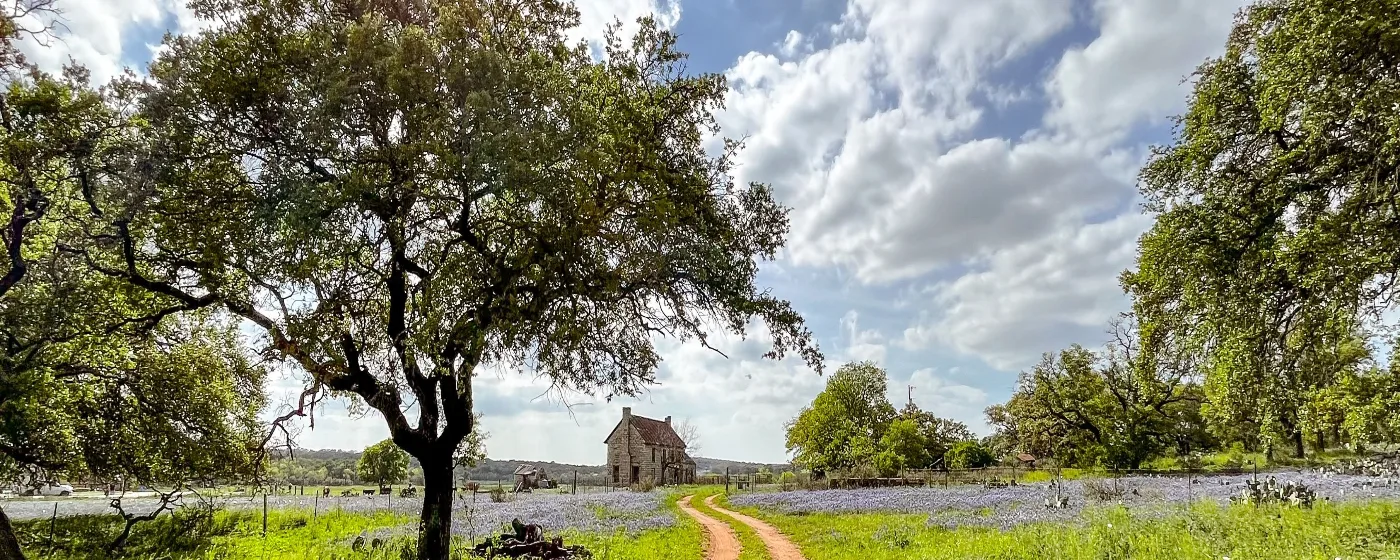
What Is Living in Alamo Heights, Texas Like?
Alamo Heights is technically a small city — 7,632 residents packed into roughly 1.9 square miles — but it operates like a tight neighborhood with its own ZIP code, school district, and city government, sitting completely surrounded by San Antonio about five miles north of downtown. US-281 runs along its western edge, SL-368 (Austin Highway) marks its northern boundary, and the Salado Creek greenway frames the east. That geography matters more than it sounds: living here means you get San Antonio's restaurants, culture, and job market at arm's length, without actually living in a city of over a million people. The drive to downtown San Antonio is about 12 minutes on a clear day.
The school district is the single biggest reason families move here. Alamo Heights Independent School District holds a B rating, according to the Texas Education Agency, with 4,735 students enrolled in 2025-26 across five campuses. The Mules, as the high school teams are known, have had that mascot since 1926. Fort Sam Houston — part of Joint Base San Antonio — borders the city to the east, making Alamo Heights a practical landing spot for military families who want top-performing schools without a long commute to base. The city's largest private employer is USAA, the financial services giant headquartered just west of here in San Antonio, and a significant share of residents commute there or to other San Antonio employers while treating Alamo Heights as home base.
The typical home price here was $739,289 as of July 2026, well above what most of San Antonio commands — and the effective property tax rate runs approximately 1.73%. The median household income is $182,819, though even at that level buyers are stretching to reach the typical purchase price. Everyday life is genuinely walkable in the core: morning joggers and dog walkers fill the tree-lined streets, errands cluster within a short drive, and the Broadway corridor puts independent restaurants, boutique shops, and galleries within easy reach. Olmos Basin Park, with its more than 1,000 acres of green space, anchors the western edge of the city's outdoor life.
Whether you're weighing Alamo Heights against other San Antonio-area neighborhoods or deciding whether this particular enclave fits your budget and lifestyle, the sections below break down the neighborhoods, housing market, schools, commute patterns, and what daily life here actually feels like.
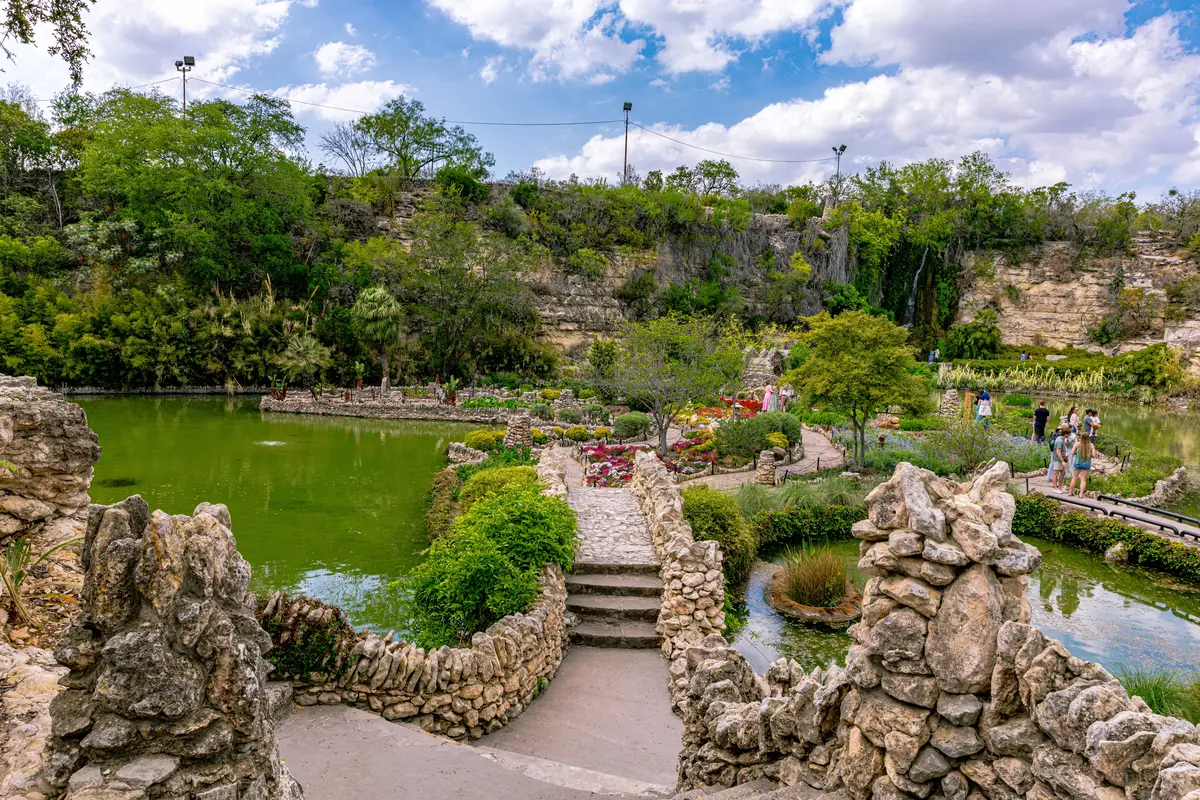
Alamo Heights at a Glance
Looking to buy in Alamo Heights? Estimate your payment.
Enter your numbers to see an estimated monthly mortgage payment.
Estimate only. Excludes HOA fees and mortgage insurance. The interest rate above is a starting point, not a quoted rate — replace it with your own to see real numbers. Insurance is a flat placeholder, not a Alamo Heights quote.
Why Are People Moving to Alamo Heights?
Most people moving to Alamo Heights aren't moving to a city — they're moving to a school district wrapped inside a quiet, low-density enclave. That distinction drives almost every buying decision here.
The Enclave Advantage
Alamo Heights incorporated in 1922 and has spent the century since deliberately staying small. Zoning ordinances restrict building height and density; this is not a place where high-rises or big-box retail appear. What you get instead is a residential municipality where the streets feel like a neighborhood even though they have their own mayor, police department, and city hall.
Completely surrounded by San Antonio, the city functions as an island of self-governance. That has a practical upside: Alamo Heights ISD is independent of the San Antonio ISD, which matters significantly to families researching schools. On 2024-25 state assessments, 61% of students reached math proficiency and 73% reached reading proficiency.
Who Actually Moves Here
| Buyer Type | What Draws Them | Best Fit |
|---|---|---|
| Families with school-age children | Alamo Heights ISD's reputation and small class sizes | Families School |
| Military families at JBSA | Under three miles to Fort Sam Houston, top schools | Commuter Families |
| USAA employees and San Antonio professionals | Short commute, established neighborhood feel | Commuter Luxury |
| Downsizers from larger San Antonio homes | Walkable streets, low-density character, amenities nearby | Walkable Quiet |
| Remote workers seeking a distinct community | Small-town feel with big-city access | Value Walkable |
| Arts and culture enthusiasts | Broadway corridor, proximity to the McNay Art Museum in San Antonio | Walkable Luxury |
The honest trade-off: entry into this lifestyle costs more than the typical household income here can comfortably carry. For many buyers, the decision involves stretching the budget in a way that other San Antonio neighborhoods would not require.
What Longtime Residents Notice
People who've lived here a decade will tell you the same thing: the city feels smaller than its numbers suggest. Neighbors recognize each other at the Broadway corridor restaurants. The Alamo Heights Bark Park draws the same crowd most evenings. That intimacy is the product of intentional small-city governance — and it's fragile in the way all small things are. Growth pressure from the surrounding metro is real, and property values reflect how many buyers are competing for a fixed supply of homes in 1.9 square miles.
For more on how the safety picture compares to the broader metro, see the Alamo Heights safety page — the city posts a violent crime rate of 1 per 1,000 residents, well below the state figure of 4 per 1,000.
What Daily Life Feels Like in Alamo Heights
Six months after moving here, most newcomers say the same thing: it's quieter than they expected, and more connected. The tree-shaded streets genuinely invite walking. The morning routine — coffee, a dog walk, maybe a loop through Judson Nature Trails along Salado Creek — happens without getting in a car.
The Broadway Corridor Is the City's Living Room
SL-368 (Austin Highway) and Broadway Street are where Alamo Heights does its public life. The Broadway corridor runs the length of the city, lined with boutique shops, galleries, and a dense collection of independent restaurants. This is not a suburban strip mall — the scale is pedestrian, the businesses are local, and the foot traffic on a weekend evening is genuine.
Most day-to-day errands stay within a short drive. For a larger shopping run, the Alamo Quarry Market — a sprawling open-air lifestyle center on E Basse Road, just outside city limits — handles what the Broadway corridor does not. Serious big-box shopping or anything the local shops don't carry means heading further into San Antonio.
The Outdoor Rhythm
Judson Nature Trails' 40 acres along Salado Creek give the city a real green corridor for walkers, joggers, and cyclists. Olmos Basin Park, on Devine Road, adds more than 1,000 acres of open space — rare for an enclave this densely surrounded. The Alamo Heights Bark Park is a genuine community gathering point; regulars know each other and their dogs by name.
The city averages 221 sunny days a year, which means outdoor routines work most of the year. August is the one month most long-timers don't push it — triple-digit heat is common, and the city's modest tree canopy only partially offsets it. Newcomers from cooler climates consistently say nobody warned them how aggressively hot July and August get.
The Cultural Anchor Next Door
The McNay Art Museum, just outside city limits in San Antonio, sits within easy reach — Texas's first modern art museum, housed in a 1920s Spanish Colonial Revival mansion on 23 sculpture-dotted acres, with a permanent collection of more than 22,000 works. Residents treat it as a local amenity rather than a destination, which tells you something about the cultural baseline here.
For a full picture of parks, trails, and outdoor recreation options, the parks and recreation page goes deeper.
The Alamo Heights Housing Market Right Now
The typical home price in Alamo Heights was $739,289 as of July 2026, a figure that puts this city in a different tier from most of the San Antonio metro — noticeably higher than neighboring San Antonio and roughly in the same premium range that defines nearby Terrell Hills and Olmos Park.
What That Number Means on the Ground
At $739,289 (July 2026 Zillow Home Value Index), Alamo Heights sits at a price point where the median household income here — $182,819 — does not fully close the gap. Buyers typically bring substantial down payments, dual incomes, or proceeds from a prior home sale. Entry-level options exist, primarily older construction on smaller lots, but they are limited by the city's fixed supply: 1.9 square miles surrounded on all sides.
The effective property tax rate is approximately 1.73% — lower than some Texas suburbs but still a meaningful line item on any home purchase. For a full breakdown of taxes, utilities, and living costs, see the cost of living page.
Renting in Alamo Heights
The city-wide typical rent runs $2,450 per month (Zillow ZORI, July 2026). Rental inventory is thin — this is a predominantly owner-occupied city, and turnover is low. Well-priced rentals tend to move quickly when they do appear. For anyone testing the neighborhood before buying, expect competition and limited options.
The Market Character
Alamo Heights benefits from something no amount of development can replicate: a hard boundary. The city cannot expand. Every home sold here is in the same 1.9-square-mile footprint it has always been in, and the number of homes does not meaningfully grow. That supply constraint supports prices in ways that purely market-driven dynamics might not.
Some parts of the city run well above the typical figure — older, larger homes on established lots in Bluebonnet Hills or Northwood command premiums — while the Cottage District's smaller bungalows offer the most accessible price points in the city. For neighborhood-level character and what distinguishes each area, the best neighborhoods page covers the full picture.
Alamo Heights Neighborhoods
Alamo Heights has several distinct areas — each with its own character and appeal. Here’s a breakdown to help you narrow down where to focus your home search.
🏡 Bluebonnet Hills
Annexed into Alamo Heights in 1928, Bluebonnet Hills is one of the city's most established areas — larger lots, mature trees, and homes that reflect decades of care and reinvestment. It draws buyers who want space and architectural character within the enclave's boundaries.
🏠 Sylvan Hills
The northernmost addition to Alamo Heights, annexed in 1944 when it completed the city's current boundary, Sylvan Hills has a quieter residential feel and sits closest to Austin Highway. It suits families who want a slightly less central position with easy access to SL-368.
🌳 The Cottage District
The Cottage District offers some of the most accessible price points in the city, with smaller bungalow-style homes on tighter lots — the entry point into Alamo Heights for first-time buyers and downsizers who want the schools and community without the largest footprints.
🏘 Northwood / Northwood Estates
Northwood and Northwood Estates sit in the city's northern reaches, where the housing stock tends toward larger, well-maintained homes on generous lots. The area runs above the city-wide typical price and appeals to buyers looking for space and quiet in the enclave's upper tier.
🏔 Lamont Avenue area
The Lamont Avenue corridor sits close to the Broadway commercial strip and within easy walking distance of the city's restaurant and retail anchors. It suits buyers who want to minimize car use and be embedded in the neighborhood's daily street life.
Pros & Cons of Living in Alamo Heights
The Pros
- Top-rated Alamo Heights ISD schools with a 97% graduation rate
- Walkable, historic tree-lined streets just minutes from downtown San Antonio
- Strong home-value retention in one of the city's most prestigious zip codes
- Abundant nearby culture including the McNay Art Museum and Quarry shops/restaurants
The Cons
- Among the highest home prices and property tax burdens in the San Antonio area
- Very limited land area (under 2 square miles) means little room for new construction
- No full-service acute-care hospital within city limits itself
Getting Around & Commuting in Alamo Heights
Alamo Heights is a car-dependent city in the way most Texas cities are — but its geography makes the car part less painful than it sounds. Downtown San Antonio is about 12 minutes under normal conditions, and the city's position along US-281 puts the wider metro within reach without grinding through San Antonio's densest corridors.
The Commute Reality
| Destination | Typical Drive | Primary Route |
|---|---|---|
| Downtown San Antonio | About 12 minutes | US-281 |
| San Antonio International Airport (SAT) | About 5 miles | US-281 / SL-368 |
| Fort Sam Houston / JBSA | Under 3 miles | Local streets east |
| USAA headquarters (San Antonio) | Short drive west | US-281 |
| Medical Center district | Northwest via US-281 | US-281 |
| Broadway corridor (within city) | On foot or under 5 minutes | Broadway / SL-368 |
US-281 is the city's main artery north to south, and SL-368 (Austin Highway) carries the east-west flow. Both routes carry commuter load during peak hours, and the US-281 interchange can back up meaningfully during the morning rush toward downtown.
Within the City
Inside Alamo Heights itself, a lot moves on foot or by bike. The Broadway corridor, most schools, and the neighborhood parks are genuinely reachable without a car for residents in the city's core. Local bus routes connect to surrounding districts, and rideshare is widely available — but for anything beyond the immediate neighborhood, a car is the practical tool.
The airport proximity is one of Alamo Heights' quiet selling points. San Antonio International Airport (SAT) sits about five miles away — close enough that frequent travelers can leave later and arrive back sooner than most of the metro manages.
Who This Setup Suits
Professionals commuting to USAA, the broader San Antonio employment base, or Fort Sam Houston find Alamo Heights genuinely well-positioned. The commute times are short by Texas standards, and the city's residential character means you're not fighting through commercial traffic to get home. Remote workers — who make up a meaningful share of Alamo Heights residents — find the walkable-streets-and-short-errand-drive setup particularly practical on a daily basis.
What this city does not suit: anyone who needs frequent, efficient public transit beyond local bus service. That is a real limitation, and it's worth factoring in before committing.
Schools in Alamo Heights
Families relocating to Alamo Heights have public, private, and higher-education options nearby. Here’s a quick overview.
🎓 School District
Alamo Heights Independent School District serves K–12 students across Alamo Heights and the surrounding area. Rated B (source: Texas Education Agency, 2025 A-F accountability rating (2024-25 school year)).
🏆 Graduation Rate
The 4-year high-school graduation rate here is approximately 94.8%.
📚 Higher Education
Texas’s public universities — the University of Texas at Austin, Texas A&M University, and the University of Houston — offer four-year degrees statewide, with one of the largest community college systems in the country (50+ public community college districts) providing two-year and workforce programs.
🌐 Online Learning
UT Austin Online and Texas A&M University Online offer fully accredited online degrees for remote learners across the state.
Safety in Alamo Heights
A quick look at how Alamo Heights compares on the numbers that matter most when weighing a neighborhood or a move.
🛡 Violent Crime
Approximately 1 per 1,000 residents.
🔒 Property Crime
Approximately 29.4 per 1,000 residents.
Compared to the most recent national figures from the Bureau of Justice Statistics (2024), Alamo Heights’s violent crime is below the national average (about 3.7 per 1,000), and property crime is above the national average (about 18.4 per 1,000).
Against Texas as a whole, Alamo Heights’s violent crime is roughly a quarter of the state average, and property crime is about one and a half times the state average (Bureau of Justice Statistics, Crime Known to Law Enforcement, 2024 (tables 2 and 3)).
Crime rates can vary a lot within a single city, so the citywide numbers above are only a starting point. Some neighborhoods in Alamo Heights run well below these averages, while others run higher — the kind of block-by-block detail that matters most when you’re actually choosing where to live. The full guide below breaks it down neighborhood by neighborhood.
Working in Alamo Heights
Alamo Heights’s largest employers span several industries — here are some of the anchors of the local job market.
🎓 Alamo Heights Independent School District
Education
🏛 City of Alamo Heights
Municipal government
🏦 USAA
Financial services, located in San Antonio
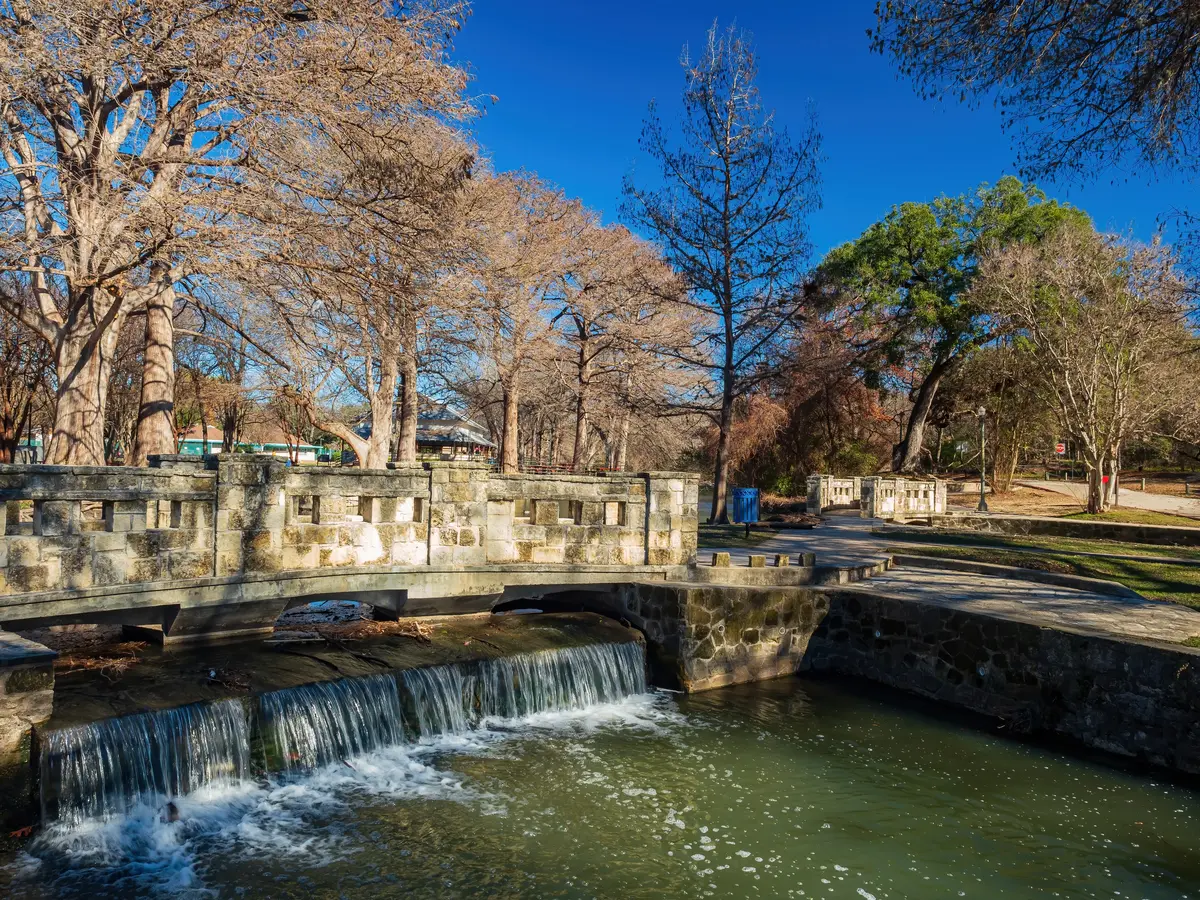
Retiring in Alamo Heights
Alamo Heights draws retirees for its balance of amenities, outdoor access, and cost. Here’s what to weigh.
🌤 Climate
Alamo Heights averages 221 sunny days a year, with mild winters that rarely see prolonged cold. Spring and fall are the best seasons — warm, dry, and comfortable for outdoor routines. July and August bring intense heat that most retirees from northern climates find more demanding than expected; early mornings are the workable window for outdoor activity in peak summer.
🍴 Lifestyle
The Broadway corridor puts independent restaurants, galleries, and boutique shops within easy reach, and the nearby McNay Art Museum in San Antonio provides a world-class cultural anchor for regular visitors. Judson Nature Trails and Olmos Basin Park offer walkable green space for daily exercise. The city's scale — under 8,000 residents — means amenities are close and the pace of daily life is genuinely unhurried.
🏚 55+ Communities
No 55+ communities were found in Alamo Heights. Retirees typically purchase single-family homes in established neighborhoods, with the Cottage District's smaller bungalows offering the most accessible entry point into the city. San Antonio's broader senior housing market provides more options within a short drive.
✈ Getting Around
Most of Alamo Heights' daily destinations are reachable on foot or by a short drive, and the streets are flat and well-maintained for walking and cycling. San Antonio International Airport (SAT) is about five miles away — a meaningful advantage for retirees with family elsewhere. For anything beyond the neighborhood, a car is the practical tool.
🏛 Texas Taxes for Retirees — What to Know
- No state income tax — Texas has no personal income tax — constitutionally protected under Article VIII, Section 24. Social Security, pensions, 401(k)/IRA withdrawals, and annuity payments are all untaxed at the state level, with no state return to file.
- Sales tax is the tradeoff — The state sales tax is 6.25%, and local add-ons bring the combined rate in Alamo Heights to 8.25% (Texas Comptroller of Public Accounts, city sales and use tax rates, July 2026). Groceries and prescription drugs are exempt.
- Property taxes — the real tradeoff — Texas’s effective property tax rate averages about 1.40%, among the highest in the country, since property tax (not income tax) funds most local government and schools.
- Over-65 homestead exemption and school-tax freeze — Homeowners 65+ (or disabled) get an additional $60,000 exemption from their home’s value for school district taxes, on top of the general homestead exemption — $200,000 off school taxable value combined, following November 2025’s Proposition 11 (SB 23), which raised the over-65 exemption to $60,000, and Proposition 13 (SB 4), which raised the general homestead exemption to $140,000. Once claimed, your school district tax bill is frozen at that year’s amount and cannot increase as home values rise, and the ceiling can transfer if you move to a new home within Texas.
- Deferral option if cash is tight — Homeowners 65+ can defer property tax payment entirely for as long as they live in the home, rather than paying it currently — interest accrues, but no forced sale.
- No estate or inheritance tax — Texas has no estate tax, no inheritance tax, and no gift tax.
- No separate capital gains tax — Because Texas has no state income tax, capital gains — including on investments and home sales — are not taxed at the state level at all, unlike states such as Washington that tax capital gains separately from income.
Tax laws change frequently and individual situations vary. This is general information, not tax advice — always consult a qualified Texas tax professional or CPA for personalized retirement tax planning.
Weekends & Local Favorites in Alamo Heights
Alamo Heights packs a lot of weekend into a small footprint. The rhythm here on a Saturday runs from morning coffee to an afternoon on the trails to an evening on Broadway — and most of it stays within walking distance of the same neighborhood.
Where People Eat
Paloma Blanca Mexican Cuisine is the kind of place longtime residents take visiting family — classic Tex-Mex in a setting that feels like a real restaurant rather than a chain approximation, known for its enchiladas and margaritas. Cappy's Restaurant has anchored the city's dining scene for decades; its garden setting and seasonally driven menu make it the go-to for celebrations and slow weekend dinners. For something more casual at the same address, Cappyccino's handles the coffee-and-brunch crowd with a warmth that regulars return to weekly. Bistr09 takes the city's dining up a register — the wine list and European-leaning menu make it one of the more serious restaurants in this part of San Antonio.
Coffee and the Slower Morning
Middle of Nowhere Coffee Shop and Wine Bar earns its name. It functions as both a neighborhood coffee anchor in the morning and a wine-and-small-plates spot by evening — the kind of place that regulars treat as a second living room, and newcomers discover by accident and then come back to on purpose.
The Outdoor Week
Judson Nature Trails along Salado Creek is where weekday morning runs happen; the 40 acres of wooded trail along the creek feel genuinely removed from the surrounding city. The Alamo Heights Bark Park runs its own social scene — regulars know each other, dogs have established friends, and it's one of the more reliable places to meet neighbors in a city where people tend to stay in their own blocks. Olmos Basin Park, with over 1,000 acres on Devine Road, offers more space and more solitude when the neighborhood trails feel crowded.
Culture and the Arts
The McNay Art Museum, just across the city line in San Antonio, is where Alamo Heights residents go when they want a world-class afternoon without a long drive. Texas's first dedicated modern art museum houses more than 22,000 works — Picasso, Matisse, O'Keeffe, Rivera — on 23 acres of grounds in a 1920s Spanish Colonial Revival mansion. Many residents go multiple times a year; it does not feel like a tourist destination when you live this close.
The Broadway Street shopping corridor handles boutique retail, galleries, and the kind of independently owned shops that are increasingly rare in suburban Texas. Most Saturday routines involve at least one pass through it.
Local favorites in Alamo Heights
Restaurants
- Paloma Blanca Mexican Cuisine
- Cappy's Restaurant
- Cappyccino's
- Bistr09
Outdoors
- Olmos Basin Park
- Judson Nature Trails
- Quarry Golf Club
- Alamo Heights Bark Park
Coffee
- Middle of Nowhere Coffee Shop and Wine Bar
Top Things Locals Say About Alamo Heights
The best intel about a city comes from the people who actually live there. Here’s what Alamo Heights residents say when newcomers ask the questions everyone’s thinking.
“I knew the schools were good and the neighborhood was nice, but I didn't expect to feel like I actually knew my neighbors within a few months — we walk the same streets, go to the same spots on Broadway, run into each other at the park. It's genuinely small in the best way.”
— Recent Alamo Heights home buyer
“What's the most surprising thing about living in Alamo Heights?”
How insulated the city feels from the rest of San Antonio, even though you're completely surrounded by it. You can spend an entire weekend in Alamo Heights — coffee, a trail run along Salado Creek, dinner on Broadway — and never feel like you're missing the big city. Then on Monday morning you're downtown in twelve minutes. The psychological distance is much larger than the physical distance.
“What do locals love most about Alamo Heights?”
The school district is the obvious answer, but once you're here it's really the scale of the place. Knowing your neighbors, recognizing faces at the Bark Park, having a coffee spot that remembers your order — that's what people talk about. It functions like a close-knit town inside one of Texas's largest cities.
“What should newcomers to Alamo Heights know?”
US-281 is your main artery and it earns its reputation during the morning rush toward downtown. Leave ten minutes earlier than you think you need to. Also: August is genuinely brutal, and the city does not have the tree canopy that would take the edge off the way older Hill Country towns do. Plan your outdoor time for early morning or evening from July through September. And introduce yourself to your neighbors early — this is one of the few San Antonio-area neighborhoods where that actually happens.
“How much do you need a car in Alamo Heights?”
For daily life within the city — the Broadway corridor, the schools, the parks, the coffee shop — a car is optional if you're in the right part of the grid. A lot of residents genuinely walk or bike those errands. But for anything beyond the immediate neighborhood, including larger grocery runs, doctor visits, or commuting to an employer outside the enclave, you'll drive. Rideshare is available and reliable here, but it's a supplement, not a replacement for a car.
Cities Near Alamo Heights
Other communities near Alamo Heights worth a look — each with its own character and price point.
| City | Distance | Best For | Vibe | Median Rent | Median Buy |
|---|---|---|---|---|---|
| Terrell Hills | 2 mi | Established families, premium lots | Quiet, leafy, refined | $1,900 | $860,188 |
| Olmos Park | 2 mi | Privacy seekers, luxury buyers | Secluded, historic, upscale | $2,000 | $947,137 |
| San Antonio | 5 mi | Budget-conscious buyers, renters | Urban, diverse, expansive | $1,390 | $249,689 |
More Helpful Guides for Alamo Heights
Going deeper on Alamo Heights? Our blog series covers everything from first-time buying to retiring here — explore the guides below.
Local Expert Takeaway: Alamo Heights works best for families who have decided that Alamo Heights ISD is the non-negotiable, and who can stretch to the $739,289 typical home price without it breaking the budget. The city's hard boundary — 1.9 square miles, fully surrounded — keeps the neighborhood feel intact but also keeps supply tight. The Broadway corridor is genuinely walkable from much of the city, the drive to downtown San Antonio and to the airport is short, and the outdoor options along Salado Creek and Olmos Basin punch above the city's size. The one thing to go in clear-eyed about: this is not an affordable entry into the San Antonio market, and the property tax bill at 1.73% is a real number. But for buyers who fit the profile, very few places in the metro deliver this combination of schools, community feel, and urban proximity.
Quick Takeaways & FAQs
✅ Alamo Heights ISD holds a B rating from the Texas Education Agency and operates five campuses in a city of fewer than 8,000 people — the student-to-teacher ratio at the high school is among the lowest in the metro.
⚠️ The typical home price was $739,289 as of July 2026, and even the city's strong median household income of $182,819 doesn't fully close the gap — buyers here typically come with significant equity or down payment resources.
📍 The city sits completely inside San Antonio with its own ZIP code, police force, and school district — a legal and practical distinction that shapes everything from tax bills to school enrollment eligibility.
Is Alamo Heights its own city or part of San Antonio?
How are the schools in Alamo Heights?
What is the typical home price in Alamo Heights?
How far is Alamo Heights from downtown San Antonio?
Is Alamo Heights a good place to retire?
Helpful Links for Moving to Alamo Heights
Moving to Texas?
Tell us what you need help with and we'll connect you with local resources.
