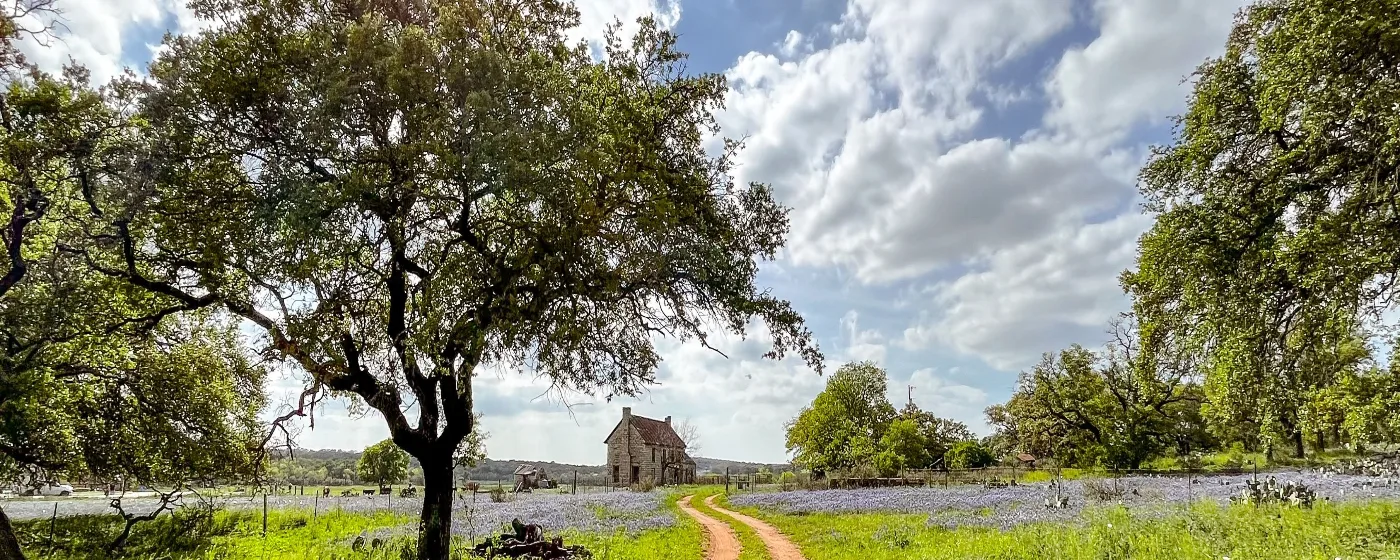
Most people who retire to Alamo Heights didn't stumble into it. They spent time in San Antonio, fell for this small city tucked just northeast of downtown, and started asking questions. What they find is a place of 7,632 residents that functions less like a suburb and more like a self-contained village — with its own city hall, its own police force, its own school district, and a walkable commercial strip along the Broadway corridor that most Texas cities three times its size would envy. The access point is US-281, with the loop of SL-368 (Austin Highway) wrapping the northern edge. Downtown San Antonio is about 12 minutes to Downtown San Antonio — close enough to tap its medical centers, arts scene, and airport, far enough to feel removed from it.
The economic profile here is specific: the typical home price stands at $739,289 (July 2026), the median household income is $182,819, and the overall character of the city leans toward established professionals and long-tenured homeowners rather than first-time buyers or young renters. That shapes retirement here too. The neighbors you'll have tend to be financially settled, and the city itself is quiet, well-maintained, and genuinely invested in its own stability. San Antonio International Airport (SAT) is 5 miles away — a practical detail that matters when family visits or when you're the one doing the traveling.
Texas's lack of a state income tax removes one of the biggest financial anxieties for retirees drawing from Social Security, pensions, or retirement accounts. The effective property tax rate of approximately 1.73% is real and worth planning for, but recent state legislation significantly expanded senior homestead exemptions, which changes the calculus for older homeowners in meaningful ways. Daily life here benefits from 221 sunny days a year, accessible green space at Olmos Basin Park and along the Judson Nature Trails, and a Broadway corridor that makes it possible to run genuine errands — coffee, groceries, a restaurant dinner — without a car on many days.
Whether you're comparing Alamo Heights to nearby Terrell Hills and Olmos Park, evaluating the healthcare options around the CHRISTUS Santa Rosa system, or deciding whether to downsize into a smaller home or rent for a few years, this guide covers the retirement calculus honestly — budget, healthcare access, walkability, senior community life, downsizing inventory, and how this city stacks up against the alternatives.
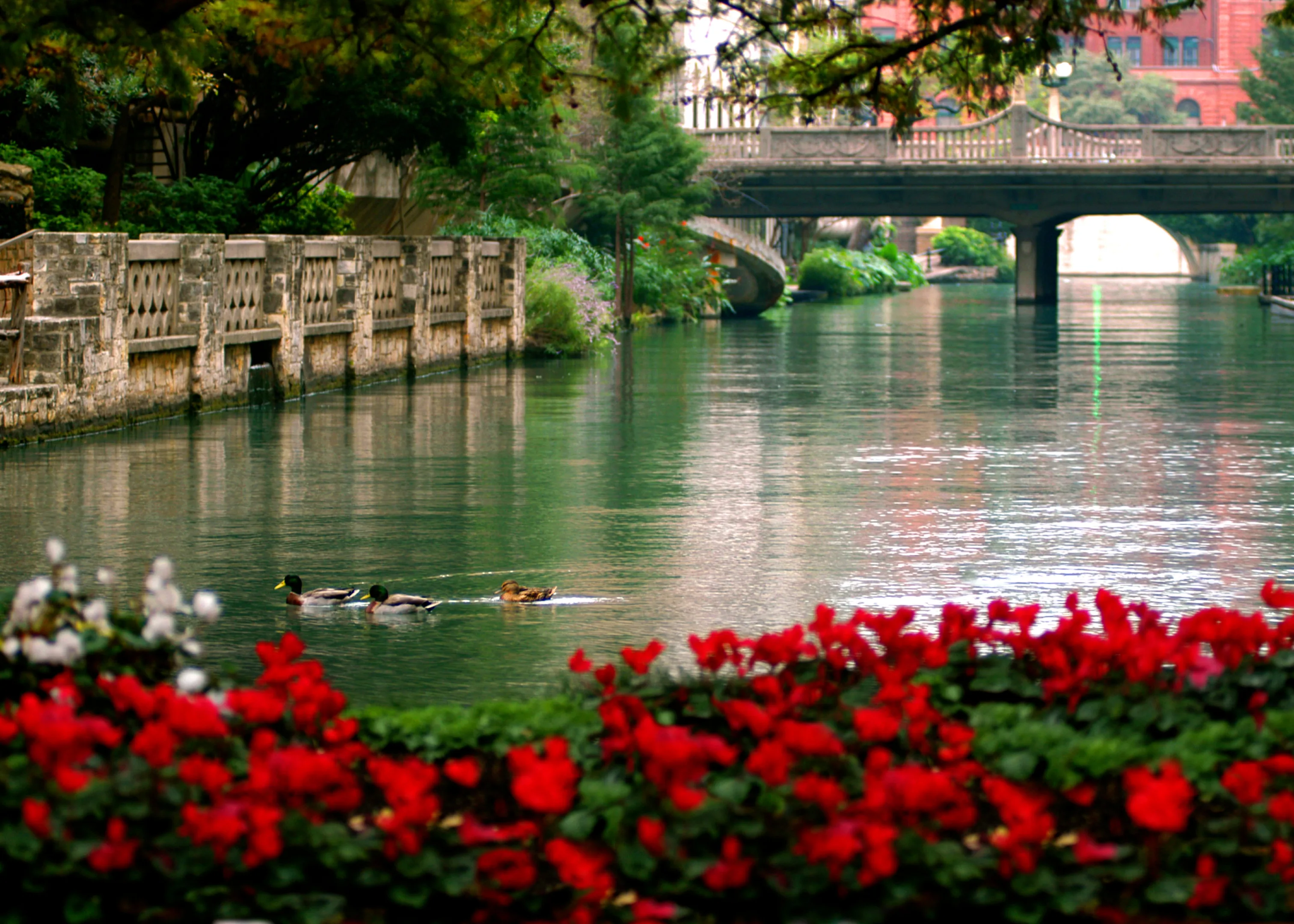
Why Retirees Are Choosing Alamo Heights
Alamo Heights appeals most to retirees who want city access without city scale. At 7,632 residents, it is one of the 307th-largest incorporated cities in Texas — small enough that you recognize faces at the coffee shop, large enough to have genuine amenities within walking distance. People who've spent careers in dense metros and want to decompress without giving up cultural access tend to land here and stay.
The Broadway corridor matters more than almost any other single factor. Retirees who can walk to a restaurant, a specialty shop, or a café for the morning paper without starting a car are not taking that lightly — most of the San Antonio metro cannot offer it. Alamo Heights can, and for many people that changes the retirement math entirely. The city is also genuinely safe: a violent crime rate of 1 per 1,000 residents — well below both the state violent crime rate of 4 per 1,000 and the national figure of 3.7 per 1,000 — gives the walkable-street equation a foundation that holds up under scrutiny.
The honest caveat: Alamo Heights is not for retirees on a tight fixed income. The typical home price of $739,289 (July 2026) prices out many buyers, and even modest homes here carry meaningful property tax obligations at an effective rate of approximately 1.73%. Retirees who need a lower entry point, a 55+ community, or a quieter, more isolated setting will find better fits elsewhere in the metro. But for the retiree who wants an active, walkable, culturally rich small-city life within easy reach of a major medical system, this city is one of the strongest arguments in Texas.
Healthcare & Medical Access in Alamo Heights
The nearest hospital is CHRISTUS Santa Rosa Hospital – Alamo Heights, roughly 2 miles from most of the city. For a community hospital, its scope is notable: a 24/7 emergency room, an ambulatory surgery center, outpatient imaging, an on-site laboratory and pharmacy, and 36 private inpatient rooms staffed at a 4-to-1 nurse-to-patient ratio. For routine emergencies, outpatient procedures, and recoveries that don't require a major academic center, this is a highly functional resource right at the city's edge.
What matters as much as the building itself is what sits behind it. CHRISTUS Santa Rosa is part of the only faith-based, not-for-profit health system in San Antonio — a system established in 1869 with additional campuses and specialty clinics distributed across the metro. That network means residents aren't limited to what's on one campus: primary care, rehabilitation, cardiology, and specialty services accessible through the same system are a short drive away, and the relationship between campuses is integrated rather than referral-based.
For retirees weighing advanced care, the broader picture is this: San Antonio hosts a mature medical ecosystem, including academic medical centers and a deep bench of specialists. That level of care is roughly the same distance from Alamo Heights as it is from anywhere else in the inner metro — which is to say, accessible but not walking distance. The proximity of the Quarry Golf Club to the hospital isn't incidental: this corner of the metro was deliberately built around the intersection of recreation and medical access, and it shows in how the amenities cluster.
One honest gap: Alamo Heights has no standalone cancer center, no Level I trauma center, and no pediatric hospital within its own footprint. Retirees managing complex chronic conditions or anticipating high-intensity specialty needs should map their specific providers to the metro before assuming everything they need is 10 minutes away. For most retirees, it will be. For a subset, a location closer to a major medical campus on the south side of San Antonio may be the more practical call.
The Retiree Budget in Alamo Heights
Texas's stance on retirement income is about as favorable as any state in the country. There is no state income tax — Social Security benefits, pension distributions, and withdrawals from IRAs and 401(k)s all pass through at the federal level only. That removes a layer of tax planning that retirees coming from states like California or New York spend significant energy managing, and it makes the gross-to-net conversion on a fixed income meaningfully more predictable.
Property taxes are the meaningful offset. The effective rate in Alamo Heights runs approximately 1.73%, and on a home at the city's typical price point that is a real annual obligation — see the cost-of-living page for the full breakdown. The mitigation available to seniors is substantial, though. Texas homeowners 65 and older qualify for a school-district tax ceiling: once the freeze is in place, the school-district portion of the tax bill cannot increase even if the home's assessed value climbs, for as long as the owner occupies the home as a primary residence. That alone addresses the largest source of property tax volatility for long-term homeowners.
Texas voters approved Proposition 13 in November 2025, which raised the school-district homestead exemption from $100,000 to $140,000 for all homeowners. A companion measure raised the additional over-65 exemption from $10,000 to $60,000, bringing the total combined homestead exemption for qualifying seniors to $200,000. Applied against an Alamo Heights home's assessed value before the rate is calculated, that exemption materially reduces the effective bill — particularly for retirees who bought years ago when values were lower.
Daily cost of living on the Broadway corridor is high by San Antonio standards but moderate by the standards of comparable walkable urban neighborhoods in Austin or Dallas. Independent grocery runs, café visits, and casual dining are priced for a city that earns what this city earns. Retirees accustomed to coastal urban pricing will find it a relief; those comparing to outer-ring San Antonio suburbs will find it a step up. The cost-of-living page has the detailed comparison.
Looking to buy in Alamo Heights? Estimate your payment.
Enter your numbers to see an estimated monthly mortgage payment.
Estimate only. Excludes HOA fees and mortgage insurance. The interest rate above is a starting point, not a quoted rate — replace it with your own to see real numbers. Insurance is a flat placeholder, not a Alamo Heights quote.
Walkability, Community & Staying Active in Alamo Heights
The walkability here is real in a way it rarely is in Texas. The Broadway Street corridor functions as a genuine main street — dining, retail, daily services — in a metro where most municipalities score a car-dependent 37 on standard walkability measures. Alamo Heights scores in the range of 74–88 depending on how close to Broadway a home sits, which puts it in genuinely walkable territory. For a retiree who wants to get out most mornings without planning a drive, this is one of the few places in the San Antonio area that makes that possible.
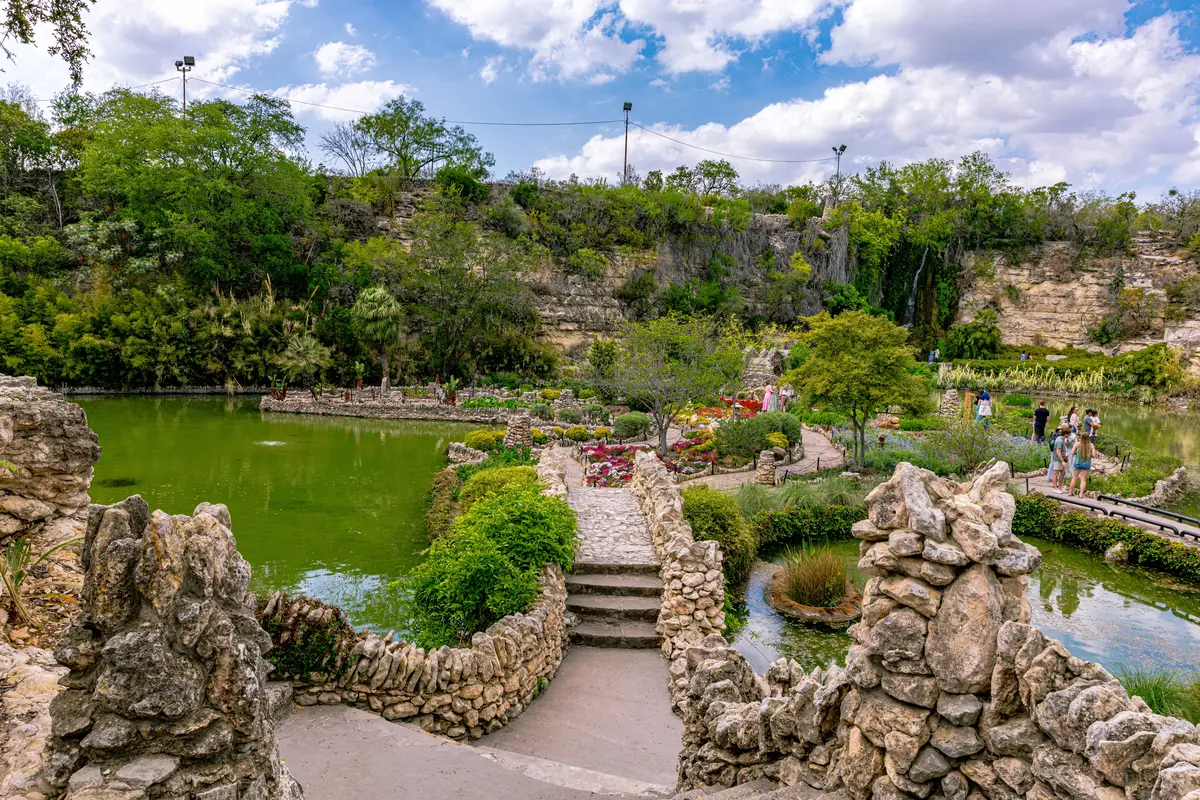
The terrain helps too. Alamo Heights is gently rolling rather than hilly, making foot travel comfortable for most mobility levels. Olmos Basin Park and the Judson Nature Trails offer accessible green space for walkers who want something softer than a sidewalk — the basin's creek-side paths are especially popular for low-impact morning exercise. The Alamo Heights Bark Park draws a regular crowd of dog owners, which means it functions as a social anchor as much as an amenity. These aren't places you visit once; they're the rhythm of the week.
San Antonio VIA Metropolitan Transit runs bus service along the Broadway corridor connecting Alamo Heights to downtown San Antonio, which means retirees who prefer not to drive for museum visits, medical appointments, or an afternoon in the city have a practical option. It is not a substitute for a car on most days, but for a city of this size, having a useful transit link at all is notable.
The McNay Art Museum — the first modern art museum in Texas, founded in 1954 and housed in a Spanish Colonial Revival mansion just outside Alamo Heights city limits — runs rotating exhibitions and regular public programs year-round. It is the kind of institution that supports a genuine cultural routine rather than an occasional trip. Quarry Golf Club, also just outside city limits, draws a significant portion of the city's active adults. The social fabric of Alamo Heights tends to form around these shared anchors rather than formal senior-center programming — which suits the city's character, though retirees who rely on structured senior programming should plan accordingly.
Right-Sizing: Downsizing in Alamo Heights
The downsizing picture in Alamo Heights is honest: inventory is limited, and what exists skews toward single-family homes rather than purpose-built low-maintenance alternatives. The Cottage District neighborhood — named for its smaller, older homes — is probably the most natural landing spot for retirees looking to reduce square footage without leaving the city. Homes there tend to be more modestly scaled than the larger Northwood and Bluebonnet Hills stock, though they still carry Alamo Heights pricing.
Single-level living is available but not abundant. The city's housing stock leans toward two-story homes on modest lots, and truly step-free single-level options with low-maintenance exteriors require patient searching. Buyers who are flexible on timing tend to find them; buyers who need to move quickly may find the options frustrating. There is no dedicated patio-home product here in the way that some retirement-oriented suburbs offer it, and condos are scarce within city limits.
No 55+ communities were found in Alamo Heights. The Franklin Park campus — which markets independent living, assisted living, and memory care — sits in the broader San Antonio ZIP that borders Alamo Heights but is not within the incorporated city limits. Retirees who want an age-restricted community with shared amenities and managed grounds will need to look to San Antonio and the surrounding metro rather than Alamo Heights proper.
The practical calculus for downsizers: Alamo Heights works best for retirees who are selling a larger home in the city or a comparable market and reinvesting the equity into a smaller home here. The entry point — see the neighborhoods page for the full breakdown — is well above the San Antonio metro average, which means downsizing into this market from a lower-priced suburb often requires bringing cash to close. The trade-off is the walkability, the safety profile, and the Broadway-corridor lifestyle that many retirees find genuinely worth the premium.
Alamo Heights vs Nearby Retirement Destinations
| City | Cost vs Alamo Heights | Primary Hospital | Walkability | Senior Living Depth | Overall Retirement Fit |
|---|---|---|---|---|---|
| Alamo Heights | Anchor | CHRISTUS Santa Rosa – Alamo Heights (2 mi) | Very walkable; Broadway corridor | No 55+ communities in city; assisted living nearby | Strong for active, financially settled retirees |
| Terrell Hills | Noticeably higher | Same CHRISTUS system, similar access | Quieter, more residential; less walkable corridor | Limited dedicated senior options | Premium quiet enclave; less daily walkability |
| Olmos Park | Noticeably higher | Close proximity to same hospital network | Residential; minimal walkable retail | Very limited; small city with few amenities | Exclusive but isolated; better for privacy seekers |
| San Antonio | Noticeably lower | Multiple major hospital systems; academic centers | Varies widely by neighborhood; most areas car-dependent | Substantial — multiple 55+ communities and senior campuses | Best for budget-conscious retirees or those needing specialty care |
| Castle Hills | Moderately lower | Access to San Antonio metro hospital network | Car-dependent; limited walkable amenities | Some senior living options in the area | Quieter suburban feel; lower price point than Alamo Heights |
| Hollywood Park | Moderately lower | Relies on north San Antonio hospital network | Predominantly car-dependent | Limited within city; suburban senior options nearby | Suburban quiet with lower costs; fewer walkable amenities |
The core trade-off across these options is straightforward. Terrell Hills and Olmos Park offer comparable prestige and peace but at a higher price point and with meaningfully less day-to-day walkability — the right call for retirees who prioritize seclusion over street life. San Antonio beats Alamo Heights on cost, on healthcare depth (particularly for those managing complex conditions who need an academic medical center within minutes), and on the variety of 55+ housing options, but it cannot match the walkable, village-scale character that makes Alamo Heights distinctive.
Castle Hills and Hollywood Park both offer lower entry costs and a quieter suburban rhythm, but neither delivers a Broadway-style commercial corridor or the same proximity to the CHRISTUS Santa Rosa campus. For retirees who genuinely need to stretch a fixed income, San Antonio's wider market provides the most flexibility. For those who want a walkable, safe, culturally connected small city and have the financial position to support it, Alamo Heights remains the strongest argument in this part of the metro.
Local Expert Takeaway: Alamo Heights earns its retirement reputation on two things most Texas cities can't match simultaneously: genuine walkability along the Broadway corridor and a community hospital two miles from most front doors. The senior tax benefits — no state income tax, a school-district tax freeze at 65, and a $200,000 combined homestead exemption for qualifying seniors — meaningfully reduce the sting of the approximately 1.73% effective property tax rate. The honest catch is inventory: single-level homes and low-maintenance alternatives are limited, there are no 55+ communities within city limits, and the typical home price of $739,289 (July 2026) means this works best for retirees with equity to deploy rather than those stretching a fixed budget. But if you want to walk to Cappy's for dinner, stroll Olmos Basin on a Tuesday morning, and have a 24/7 emergency room a short drive away — with downtown San Antonio about 12 minutes to Downtown San Antonio when you need a major medical center — this city consistently earns a second look.
Quick Takeaways & FAQs
✅ Texas has no state income tax, and seniors 65+ qualify for a school-district property tax freeze and up to $200,000 in combined homestead exemptions — among the most favorable retirement tax environments in the country.
⚠️ No 55+ communities exist within Alamo Heights city limits, and single-level, low-maintenance housing is limited — retirees with specific housing-type needs may find the inventory frustrating.
📍 CHRISTUS Santa Rosa Hospital – Alamo Heights is 2 miles away with a 24/7 ER, but retirees managing complex conditions should map their specific specialists to the broader San Antonio metro before committing.
Is Alamo Heights a good place to retire on a fixed income?
Are there any 55+ communities in Alamo Heights?
How close is Alamo Heights to a hospital?
How walkable is Alamo Heights for a retiree who doesn't want to drive every day?
What are the property tax advantages for retirees in Alamo Heights?
Moving to Texas?
Tell us what you need help with and we'll connect you with local resources.
