
You've run the numbers at least twice. Your California rent or mortgage is consuming a percentage of your income that would make a financial planner wince, and someone — a coworker, a Reddit thread, a family member who made the leap two years ago — mentioned Gonzales, Texas. It sounds small because it is: a city of 7,239 on the edge of the Coastal Bend, where US-90A, US-183, and SH-97 converge between San Antonio and the Gulf Coast. What surprises most Californians when they dig past the population figure is that Gonzales isn't positioning itself as a suburb of anything — it's a standalone small city with its own history, its own employment base, and home prices that read like a typo next to anything you've been shopping in California.
The economic core here isn't tech or hospitality — it's healthcare, food manufacturing, and the school district. Gonzales Healthcare Systems, Gonzales Independent School District, Kitchen Pride Mushroom Farms, and Adams Extract & Spice anchor a local workforce of roughly 2,900. The school district — Gonzales ISD, with 2,516 students enrolled in 2025-26 — holds a C rating, according to the Texas Education Agency, which is worth knowing upfront if strong academic metrics are a deciding factor for your move. The Apaches run active UIL athletics programs, and Friday night football is genuinely a community event here in ways that feel foreign to most transplants from larger metros.
The typical home price in Gonzales is $249,933 (Zillow Home Value Index, July 2026), which means that even buyers priced out of California's most affordable inland markets are landing in a different financial reality entirely. Everyday costs reflect that same gap — groceries, utilities, and transportation all run noticeably below what California residents are used to paying. The trade-off is real too: this is a small city, and Austin-Bergstrom International Airport is 58 miles away. A serious shopping trip or a specialist appointment means a drive, and the metro amenities you've normalized in California don't exist locally. Whether that trade-off works for you is what this guide will help you figure out.
The sections below break down Gonzales's California-to-Texas cost comparison, the tax picture, what the climate actually feels like after six months, what daily life looks like in a city this size, and the honest case for and against making this move.
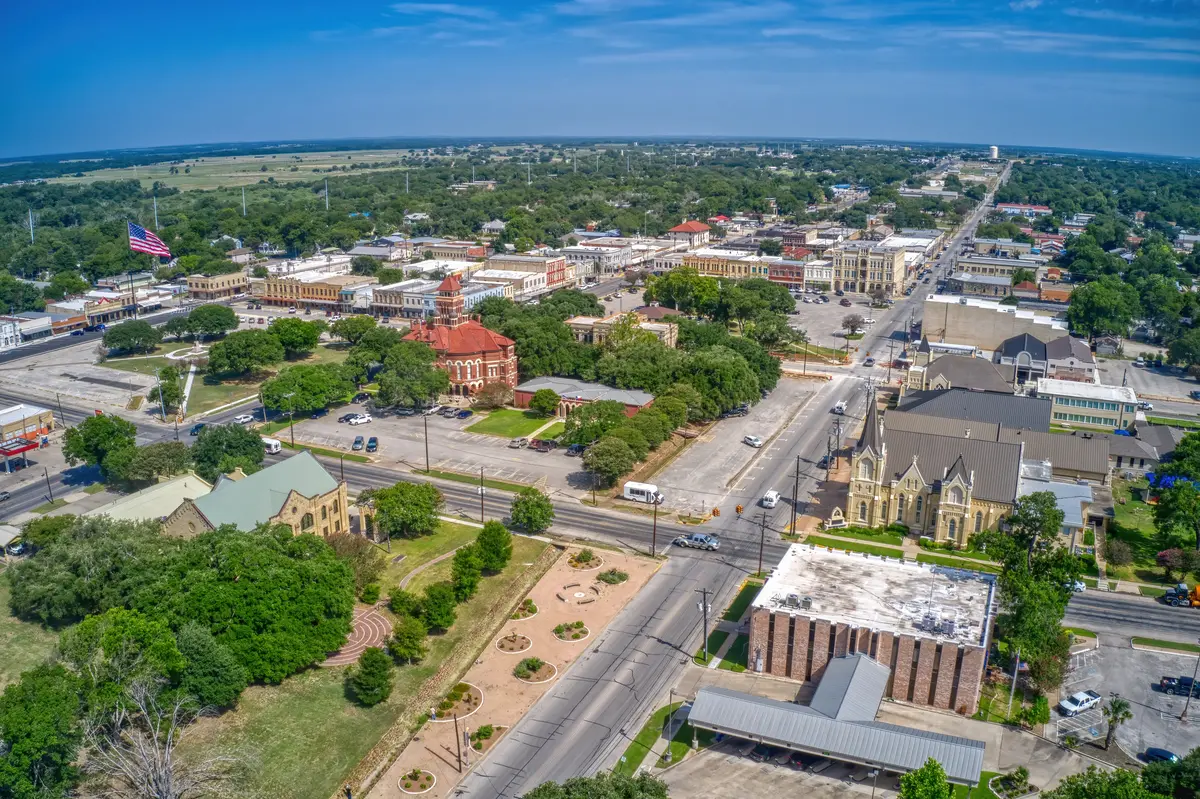
The Home Price Difference Is Not Subtle
California's statewide typical home value of $773,735 is the baseline most Californians are used to measuring against — and Gonzales's $249,933 (Zillow Home Value Index, July 2026) lands noticeably below it. That isn't a rounding difference; it's a structural one driven by land costs, density, and decades of California policy that have made housing fundamentally expensive regardless of where you were looking.
What that gap means in practice: a buyer who would have stretched to a modest California purchase can own something substantially larger in Gonzales without extending their budget. A buyer who was renting in California because ownership felt impossible may find themselves genuinely able to buy here. The cost of living page has the full breakdown, but the short version is that housing is the biggest single driver of why this move makes financial sense for so many people.
One honest note: the median household income in Gonzales sits at $51,929, which is below the income level needed to carry the typical home price here. That gap is roughly $6,000 and it matters — especially if you're planning to work locally rather than remotely. Californians bringing remote income into Gonzales are in a different position than buyers relying on local wages alone.
How Nearby Markets Compare
Gonzales doesn't sit in isolation. Luling and Cuero, both reachable in under 30 minutes, run noticeably lower than Gonzales's typical price. Seguin, which offers more suburban infrastructure and sits closer to the San Antonio metro, runs somewhat higher. None of these markets approach anything close to California's statewide typical home value of $773,735.
If you're weighing whether to land in Gonzales itself or in one of the surrounding towns, the neighborhoods page covers Gonzales's own internal geography — Historic Downtown Gonzales, Creekwood, Rivercrest, and the newer subdivisions like High Ridge Meadows and Whispering Oaks all feel meaningfully different from one another.
What Californians Often Underestimate
The purchase price is the headline, but it's not the whole story. Homeowner insurance in California has become genuinely difficult — wildfire exposure has pushed premiums sharply higher, and some carriers have exited the market entirely. In Gonzales, coverage is more straightforward to obtain, though Texas carries its own weather risks in the form of heat and severe storms. The premium picture generally looks better here than what you were paying in California, and you're less likely to face non-renewal.
Texas Has No State Income Tax — And That Changes Everything
California's top state income tax rate of 13.3% applies only to the highest earners, but even moderate incomes carry a meaningful California state tax bill. A single filer earning $100,000 pays roughly $5,055 in California state income tax. Texas charges $0. That's not a marginal difference — it's money that either goes toward a mortgage, savings, or quality of life from the first paycheck.
This is the single most cited reason Californians give for crossing state lines, and the math is straightforward: California's top state income tax rate of 13.3% has no equivalent in Texas at any income level. If you're a remote worker keeping your California-level salary while living in Gonzales, the income tax savings alone can be substantial on an annual basis.
The Property Tax Trade-Off Is Real
California's effective property tax rate of 0.71% is held down by Proposition 13, which caps assessed value increases as long as you own the property. Texas has no equivalent cap, and Gonzales's effective property tax rate is 1.52% — more than twice California's effective rate. On a $249,933 home, that rate applies to a much smaller base than any California purchase, so the dollar amount is still manageable. But Californians who have owned their homes for decades and watched their assessed value stay artificially low will feel the difference.
The practical reality for most California transplants: the income tax savings significantly outweigh the higher property tax rate, especially at middle and upper-middle incomes. The calculation shifts if you're retired and on fixed income with no earned income to shelter — see the retiring page for that angle.
Sales Tax: A More Even Playing Field
California's statewide base sales tax rate of 7.25% is the highest statewide floor in the country, and local additions push it higher in most California cities. Texas's state rate is 6.25%, with local jurisdictions able to add up to 2%, bringing the maximum combined rate to 8.25%. In practice, the combined sales tax environment in Gonzales is comparable to — and often below — what you paid on everyday purchases in California. It's the one tax category where the Texas advantage is modest rather than dramatic.
| Tax Type | California | Texas / Gonzales | Who Benefits |
|---|---|---|---|
| State income tax | California's top state income tax rate of 13.3% | $0 — no state income tax | Earners Remote workers |
| Effective property tax | California's effective property tax rate of 0.71% (Prop 13 protected) | 1.52% in Gonzales, no cap | Advantage shifts by tenure |
| State sales tax base | California's statewide base sales tax rate of 7.25% | 6.25% state base, up to 8.25% combined | Roughly comparable |
The income tax line is what drives most California-to-Texas decisions, and the property tax line is the honest offset. Neither one cancels the other for most buyers — the net is strongly in Texas's favor.
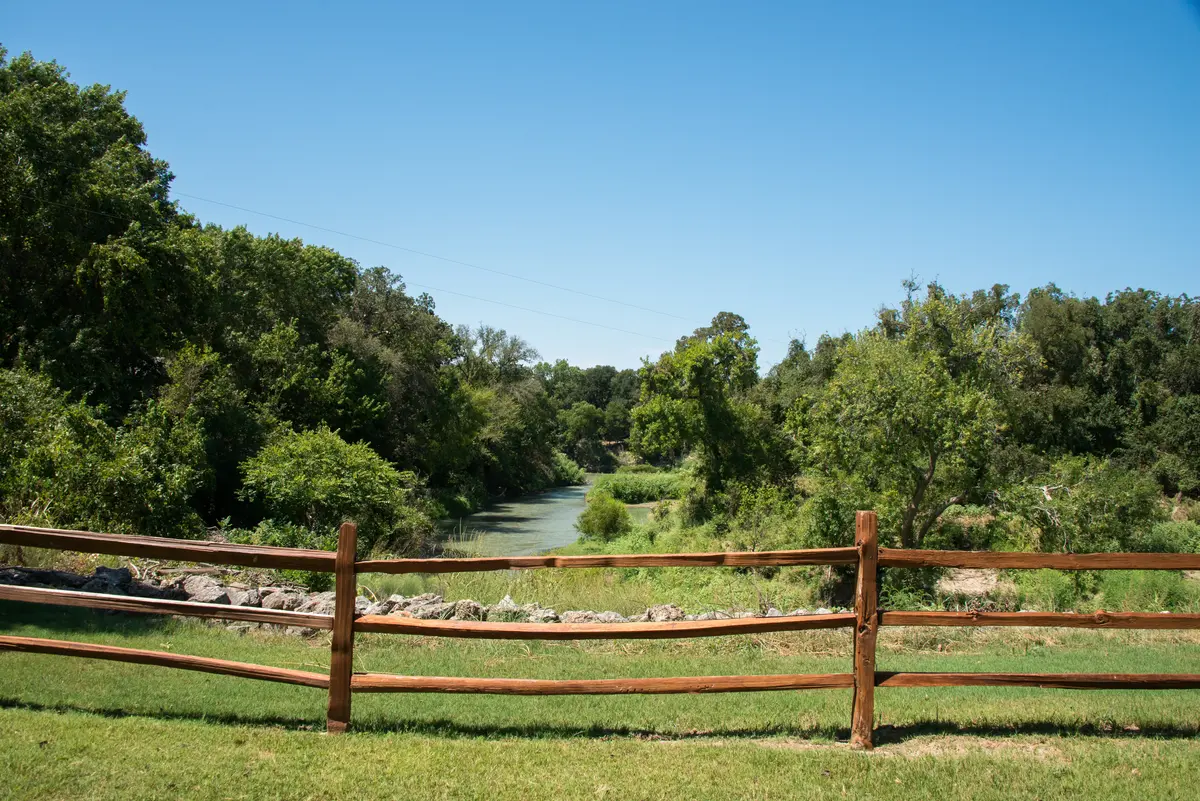
What Daily Life Actually Looks Like in a City This Size
Gonzales has a population of 7,239. That number has real implications for what's available locally, and the transplants who struggle here are almost always the ones who underestimated it. This is not a suburb with a Whole Foods two exits up the interstate — it's a small, self-contained city where you learn to plan ahead, batch errands, and order things online that you used to pick up on the way home.
The Independence Square Anchor
The historic core of Gonzales is built around Independence Square, where the Gonzales County Courthouse sits alongside the Gonzales Memorial Museum and the Gonzales County Jail Museum. The "Come and Take It" cannon — the symbol of the first battle of the Texas Revolution, fought here — is not a tourist footnote but a genuine piece of local identity. Residents who engage with Gonzales's history tend to settle in faster than those who treat the town as a placeholder.
Where People Actually Spend Time
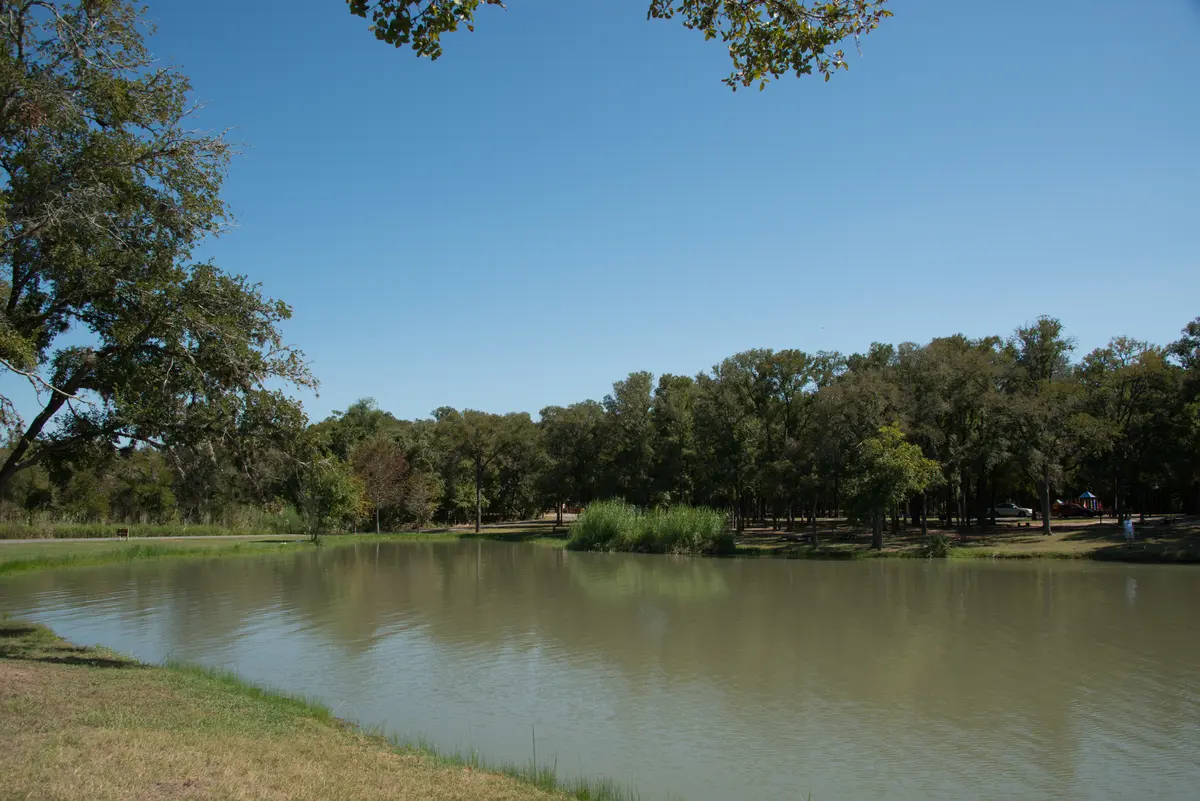
Palmetto State Park, a few miles outside town, draws residents for camping, hiking, and river access along the San Marcos River — it's a genuine natural asset that Californians from coastal or mountain-adjacent cities often appreciate more than they expected. Independence Golf Course handles the recreational golf crowd locally. Weekends and local favorites center around a handful of established spots — Cow Palace, La Bella Tavola Italian Grill & Pizza, Baker Boys BBQ, Gonzales Food Market, and Texpresso for coffee — covered in full in the local favorites section below.
The Commute Reality
San Antonio is about 65 minutes away by road, which means it's genuinely accessible for a day trip, a specialist appointment, or a major shopping run — but it's not a quick hop. Austin-Bergstrom International Airport sits 58 miles out. Californians who relied on dense metro infrastructure will notice the distance most in the first few months. The adjustment is real, and it's worth being honest with yourself about how much you actually used what was nearby before you commit to a city where everything significant is a planned trip.
For a fuller picture of who thrives in Gonzales and who finds it too remote, the living in Gonzales guide covers the commuter and lifestyle angles in depth.
Looking to buy in Gonzales? Estimate your payment.
Enter your numbers to see an estimated monthly mortgage payment.
Estimate only. Excludes HOA fees and mortgage insurance. The interest rate above is a starting point, not a quoted rate — replace it with your own to see real numbers. Insurance is a flat placeholder, not a Gonzales quote.
The Climate Gap: More Sun, More Humidity
Gonzales gets 217 sunny days a year — more than the U.S. average of 205. If you're moving from a coastal California city accustomed to marine layer and mild temperatures, the sunshine is immediately obvious. If you're moving from inland California where summers already run hot, the difference isn't the heat — it's the humidity.
Summers Here Are a Different Animal
August daytime highs average around 97°F, and the humidity through May into September makes that feel heavier than the same temperature in Sacramento or Fresno. Californians who grew up sweating through dry desert heat need to recalibrate: 95°F at 70% humidity is a different physical experience than 105°F at 15%. Air conditioning is not optional — it's a utility you budget for the way Californians budget for water.
The first Texas summer is the one that filters people. Most California transplants in Gonzales say they adapted by month two or three, but the ones who didn't are also honest about why they eventually left. If you run hot and genuinely struggle with humidity, this is worth stress-testing before you close on a house.
Winters Are Genuinely Mild
January lows rarely approach freezing, and snow is essentially absent. For Californians relocating from the Bay Area or Southern California, the winters in Gonzales will feel familiar — mild, occasionally rainy, and manageable without a heavy coat most days. Annual precipitation runs 35 to 36 inches, spread through the year, which is more than most California cities see but spread out enough that it rarely disrupts daily life the way concentrated wet seasons do.
The seasonal wildfire anxiety that has become a background feature of California life — watching air quality indices, evacuation zone maps, ember storms — is largely absent in Gonzales. That's not a trivial quality-of-life shift for people who have lived through multiple California fire seasons.
The Honest Case For and Against This Move
More than 700,000 Californians relocated to Texas between 2020 and 2025 — the single largest interstate population shift in the country over that period. Most of them went to the major metros: Austin, Dallas, Houston, San Antonio. Gonzales represents a different calculation entirely, and it's worth being clear about what that calculation actually involves.
The Case For Gonzales
Financial reset. The combination of Texas's no state income tax, home prices far below California's statewide typical home value of $773,735, and everyday costs for groceries, utilities, and transportation that run noticeably below California norms creates a financial picture that's hard to replicate in any California market. For remote workers especially, the income stays California-sized while the expenses drop dramatically.
Genuine community texture. Gonzales has a history — the birthplace of Texas independence, the site of the original Come and Take It stand — and that history is woven into daily life in a way that large suburbs rarely replicate. Independence Square, the Gonzales Pioneer Village Living History Center, and the fabric of the school district's role in the community give residents something to connect to.
Regional access without metro prices. Sitting between San Antonio, Austin, and Houston means residents can reach major metro amenities, airports, and job markets within one to two hours. You're not isolated — you're offset. That's a different thing.
The Case Against
Local job market is limited. If you're not working remotely and not in healthcare, education, or manufacturing, the local employment picture is thin. The school district and Gonzales Healthcare Systems are the two largest local anchors. People who need a robust local white-collar job market will find it undersupplied.
Schools need honest evaluation. Gonzales ISD holds a C rating, according to the Texas Education Agency, with on 2024-25 state assessments, 32% of students reaching math proficiency and 47% reaching reading proficiency. Families with school-age children who are leaving high-performing California districts should go in with clear eyes. The full picture is on the schools page.
Small city, long drives. A serious shopping trip means driving out of town. Specialist care means planning ahead. The entertainment and dining density of a California suburb doesn't exist here, and the restaurants and coffee shops that do exist — good as they are — are a short list. That's not a criticism; it's an accurate description of what a city of 7,239 looks like.
Crime context matters. Gonzales carries a violent crime rate of 13.9 per 1,000 residents and a property crime rate of 20 per 1,000 residents — both above state and national averages. The safety page breaks down where and how those numbers manifest, which is context worth having before you choose a neighborhood.
Who This Move Works Best For
Remote workers who want to own a home, keep their income, and eliminate state income tax. Retirees whose income is largely passive and who prioritize mild winters, low cost of living, and proximity to San Antonio without paying San Antonio prices. Buyers who grew up in small-town environments and find the pace genuinely comfortable rather than quietly stressful. People who have done the honest math and are moving toward something specific — not just away from California prices.
Local Expert Takeaway: Gonzales makes the most financial sense for California transplants who are either working remotely or retiring — people whose income doesn't depend on the local job market. The home price at $249,933 (July 2026) and the complete absence of a state income tax are real and meaningful. The offsets — a higher property tax rate than California, limited local shopping, long drives to major amenities, and a school district rating that requires honest evaluation — are also real. The move rewards people who go in with specific reasons and a clear-eyed picture of what a Texas city of 7,239 actually looks like day to day.
Quick Takeaways & FAQs
✅ Texas charges no state income tax at any income level, which represents immediate and ongoing savings compared to California's progressive rates.
⚠️ Gonzales's effective property tax rate of 1.52% is more than double California's effective rate — the honest offset to the income tax advantage that every buyer needs to model.
📍 The 'Come and Take It' cannon in Independence Square isn't just a tourist marker — it's the civic identity of a city that takes its founding history seriously, and newcomers who engage with it tend to feel at home faster.
How much cheaper is a home in Gonzales compared to California?
Does Texas really have no state income tax, and how does that affect someone moving from California?
Is Gonzales's property tax rate going to wipe out the income tax savings?
What should Californians know about the climate in Gonzales before moving?
How realistic is Gonzales as a base for commuting to San Antonio or Austin?
Moving to Texas?
Tell us what you need help with and we'll connect you with local resources.
