
About Elizabeth
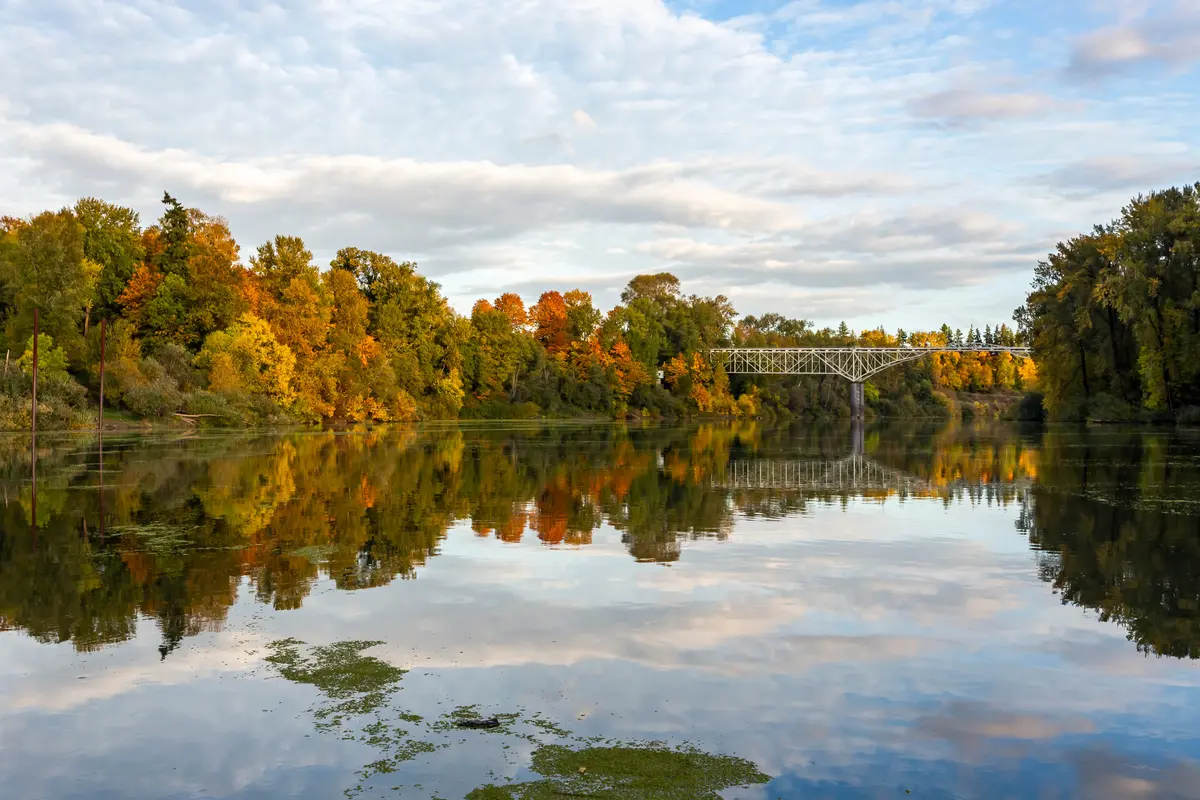
Who Moves to Newberg — and Why
The buyers I work with in Newberg fall into a pretty consistent pattern. They've looked at the Portland suburbs closer in — Sherwood, Tualatin, Lake Oswego — and either found the price points out of reach or decided the trade-off of a longer drive for more land and more character was worth it. Newberg sits at a genuine crossroads: it's the last city before the Willamette Valley wine country opens up, framed by the Chehalem Mountains and Ribbon Ridge appellations, and it's large enough to have real infrastructure while still feeling like a place where people know their neighbors.
George Fox University gives the city a texture that purely residential suburbs don't have. The university's main campus sits near downtown on 108 acres, and the academic calendar shapes when restaurants fill up, when the farmers markets draw a crowd, and when rental demand ticks up. For buyers, that means a community with year-round energy that doesn't go quiet in February the way some small Oregon towns do.
The city's food scene is a genuine draw — USA Today ranked it the fourth-best small-town food scene in the country in 2023, which sounds like boosterism until you actually spend a weekend here and understand the density of quality that exists in a city of 27,136 people. That recognition has made Newberg more of a destination, and some of my buyers factor the dining and wine access into their decision as seriously as they factor in the commute.
Remote workers and partial commuters make up a growing share of the people I'm placing here. At roughly 5.91 square miles, Newberg is genuinely easy to navigate — you're never far from the Chehalem Ridge trail system or Rogers Landing Park along the Willamette — and that combination of size, access, and community feel is exactly what draws people who've decided they don't need to be twenty minutes from Portland every day.
Newberg Neighborhoods: What Each One Actually Delivers
The neighborhood picture here is more varied than the median suggests. Single-family detached homes make up roughly 59% of the city's housing stock, with three- and four-bedroom floor plans as the most common building size — so the bones of the market are suburban, but the neighborhoods feel quite different from one another on the ground.
Downtown Newberg
This is the walkable core — the stretch where you can walk from a coffee shop to the Chehalem Cultural Center to dinner without getting in a car. The housing stock is older here, often Craftsman and bungalow styles, and buyers who want on-foot access to the city's independent restaurant and café scene gravitate here. George Fox University's campus proximity means there's always foot traffic and a certain vitality. Best for: Walkable First-time buyers
North Newberg
North of downtown, the character shifts toward established residential streets with more mid-century and ranch-style homes. It's quieter than the core and draws buyers who want proximity to downtown amenities without being in the middle of them. This is a practical neighborhood — good access to OR-99W for the morning commute, established trees, and a settled feel. Best for: Families Commuters
Springbrook
Springbrook runs along the city's southern edge and holds some of Newberg's newer construction. Buyers who want updated floor plans, open layouts, and newer mechanical systems tend to end up here. The trade-off is less walkability — you'll drive for most errands — but the homes show well and tend to move when priced right. Best for: Families Value
The Oaks at Springbrook
This is one of Newberg's more polished newer developments. The homes here are larger, the lots are well-landscaped, and the neighborhood has the feel of a place where buyers put down serious roots. It draws professionals who want more finished space than older parts of the city offer. Best for: Luxury Families
Jaquith Park
Named for the park that anchors it, this neighborhood has a real neighborhood-park feel — the kind of place where kids actually play outside and parents actually know one another. The housing mix is varied, which means entry points exist for buyers at different stages. Best for: Families First-time buyers
South Newberg, Hidden Meadows, and Oxberg Lake Estates
These neighborhoods on the southern and western edges offer more space per dollar and a quieter setting. Hidden Meadows and Oxberg Lake Estates in particular attract buyers who want a more rural character without leaving city limits — larger lots, more privacy, and in the case of Oxberg Lake Estates, an address that feels genuinely removed from the city's commercial corridors. The catch is that daily errands are a drive, not a walk. Best for: Privacy Nature

The Commute Reality
I'm going to be direct about this because it's the question I get most often: the drive to Portland from Newberg is about 40 minutes under reasonable conditions. That number is real — I've made the drive myself — but it assumes OR-99W is moving. On a wet Tuesday morning when traffic backs up through Tigard, the return trip can stretch well past an hour.
OR-99W through downtown is the primary artery east toward Portland. The good news is that Phase 1 of the OR-18 Newberg-Dundee Bypass opened in January 2018, relieving some of the through-traffic pressure that used to make downtown a chokepoint during peak hours. Phase 2A was under construction as of April 2026, with completion anticipated in 2027 — that project includes new interchange work at OR-18 and OR-219, and when it's finished, the through-town congestion picture improves further.
OR-219 and OR-240 give residents additional routing options depending on where they're heading. Buyers commuting to the west side of Portland have more flexibility than those heading to the east side, where the drive adds meaningful time.
What I tell buyers who are coming from full-time office jobs in Portland: be honest with yourself about how many days a week you'll be making that commute. Two or three days? Most people adjust and stop noticing it within a few months. Five days a week, both directions? That's a different conversation, and it's one we should have before you fall in love with a house on the wrong side of town.
Portland International Airport sits about 32 miles from Newberg — close enough for frequent travelers that it rarely becomes the deciding factor, but far enough that an early-morning flight means a very early departure from home.
Looking to buy in Newberg? Estimate your payment.
Enter your numbers to see an estimated monthly mortgage payment.
Estimate only. Excludes HOA fees and mortgage insurance. The interest rate above is a starting point, not a quoted rate — replace it with your own to see real numbers. Insurance is a flat placeholder, not a Newberg quote.
Schools in Newberg
Newberg School District 29J serves the city, with 3,866 students enrolled in 2025-26. That's a district large enough to offer real programming breadth — active OSAA athletics, the Newberg Tigers, and a range of academic and extracurricular offerings — but small enough that it doesn't feel like an anonymous bureaucracy.
On 2024-25 state assessments, 39.8% of students reached math proficiency and 48.4% reached reading proficiency, according to figures the Oregon Department of Education publishes. Those numbers sit in the context of statewide trends, and the Oregon Department of Education's data is the right starting point for any family doing a deeper comparison across districts.
George Fox University's presence creates an interesting side effect for families: the city has a baseline cultural investment in education that shows up in community events, public programming, and a general civic seriousness that you don't always find in cities this size.
What I always tell buyers with school-age children: confirm the assigned school for the specific address you're considering directly with the district before going under contract. School boundaries in Newberg follow address-level geography, not neighborhood names, and a house one street over can land in a different assignment. Review the data the Oregon Department of Education publishes directly — don't rely on third-party summaries. I'd encourage you to do that due diligence yourself; I can point you to the resources, but the assignment verification has to come from the district.
For families considering private options, George Fox University's proximity shapes the educational culture of the city broadly, and there are faith-based school options in the area worth researching on their own terms.
Newberg vs Nearby Cities
| City | Typical Home Price | Typical Rent | Cost vs Newberg |
|---|---|---|---|
| Newberg (this city) | $535,028 | $2,159/mo | — |
| Dundee | $598,118 | $1,700/mo | 12% higher |
| Sherwood | $629,598 | $2,555/mo | 18% higher |
| McMinnville | $488,040 | $1,679/mo | 9% lower |
Source — home prices: Zillow ZHVI, July 2026; rent: Zillow ZORI, July 2026. Nearby-city figures are the same series, refreshed together.
I work with a lot of buyers who arrive with two or three cities on their list. Here's how I frame the real trade when Newberg is one of them.
Newberg vs. Sherwood: Sherwood is closer to Portland, more connected to the metro, and priced noticeably higher than Newberg. What you gain in Sherwood is a shorter commute and a more suburb-integrated feel. What you give up is the wine-country setting, the character of a city with a real downtown and a university at its center, and the price point that lets buyers get meaningfully more house. Most buyers who choose Newberg over Sherwood have made a deliberate decision that the lifestyle trade — more space, more character, a longer drive — is worth it. Most buyers who choose Sherwood want the commute confidence and are willing to pay for it.
Newberg vs. Dundee: Dundee sits immediately to the west and runs somewhat higher than Newberg on typical home prices despite being a smaller town. The appeal there is immediate wine-country immersion — Dundee is in the heart of the Willamette Valley's most celebrated wine corridor. But Dundee is a very small community with limited services, and buyers who want a real grocery run, a school district with programming depth, or a hospital inside city limits land in Newberg instead.
Newberg vs. McMinnville: McMinnville is Newberg's most natural comparison point to the west. Typical home prices run somewhat lower there than in Newberg, and McMinnville has its own strong food scene and a walkable downtown. The meaningful difference is distance to Portland — McMinnville is a longer commute by a significant margin, so buyers who still need Portland access regularly tend to land in Newberg. Buyers who are genuinely done with Portland-orbit work find McMinnville compelling.
Newberg vs. Dayton and St. Paul: These are smaller communities with a more rural feel and fewer services. Buyers I work with who are considering them are usually making a specific lifestyle choice — maximum space, maximum quiet, minimum infrastructure. Newberg makes more sense for buyers who want some of both.
Weekends and Local Favorites
One of the honest selling points of Newberg is that daily life here has texture. The city is small enough that you recognize faces, but large enough that a weekend doesn't require leaving town to find something worth doing.
The food scene is the most talked-about part of that. The USA Today recognition in 2023 for one of the country's top small-town food scenes still holds up. Within the city you have J's Family Restaurant & Lounge for a neighborhood-diner feel, Rosmarino Osteria Italiana for serious Italian cooking, and The Newbergundian Bistro drawing on the wine-country pairing culture that defines the area. JORY Restaurant is one of the most celebrated wine-country dining experiences in the valley. Old Town Bar & Grill fills the casual anchor role in the evenings. Coffee Cat Coffeehouse, Lyrics Cafe, Caravan Coffee, Greenhouse Coffee Co., and Donut Land give the morning routine real variety — this is not a city where your options are a gas station and a drive-through.
Outdoors, Rogers Landing Park gives direct access to the Willamette River and is the kind of place families spend entire afternoons. Ewing Young Park is the downtown green anchor. Chehalem Ridge Nature Park offers serious trail mileage with Chehalem Mountain views. Bald Peak State Scenic Viewpoint delivers one of the best vantage points over the valley floor — the kind of drive that reminds people exactly why they moved here.
The Hoover-Minthorn House Museum — Herbert Hoover's boyhood home — and the Chehalem Cultural Center give the city a sense of its own history and civic identity that a lot of newer suburbs simply don't have. The 99W Drive-In Theatre is a genuine local institution, the kind of thing you stop taking for granted about six months after you move here and start genuinely appreciating.
George Fox University's campus draws visitors and conference guests from across the region well into the summer months, which means the restaurants and coffee shops stay busy well beyond the academic year. That sustained energy is one of the things buyers notice after they move in — the city doesn't empty out in summer the way you might expect.

Final Advice From Elizabeth
Quick Takeaways & FAQs
✅ Newberg sits at the gateway to Oregon's Willamette Valley wine country, giving residents weekend-wine-country access without wine-country pricing.
⚠️ The drive to Portland is about 40 minutes under normal conditions — a real commute that demands honest planning for anyone heading into the city regularly.
📍 George Fox University anchors the local economy and shapes the city's community character in ways that go well beyond a typical college town.
What is the commute from Newberg to Portland actually like day to day?
How are the schools in Newberg?
Which neighborhood in Newberg is right for a family with young children?
What does the typical home price in Newberg actually buy?
How does Newberg compare to Sherwood for someone who needs to be in Portland regularly?
What surprises people after they've lived in Newberg for six months?
Why do people leave Newberg, when they do?
Is Newberg a good fit for someone who works remotely full-time?
Moving to Oregon?
Tell us what you need help with and we'll connect you with local resources.
