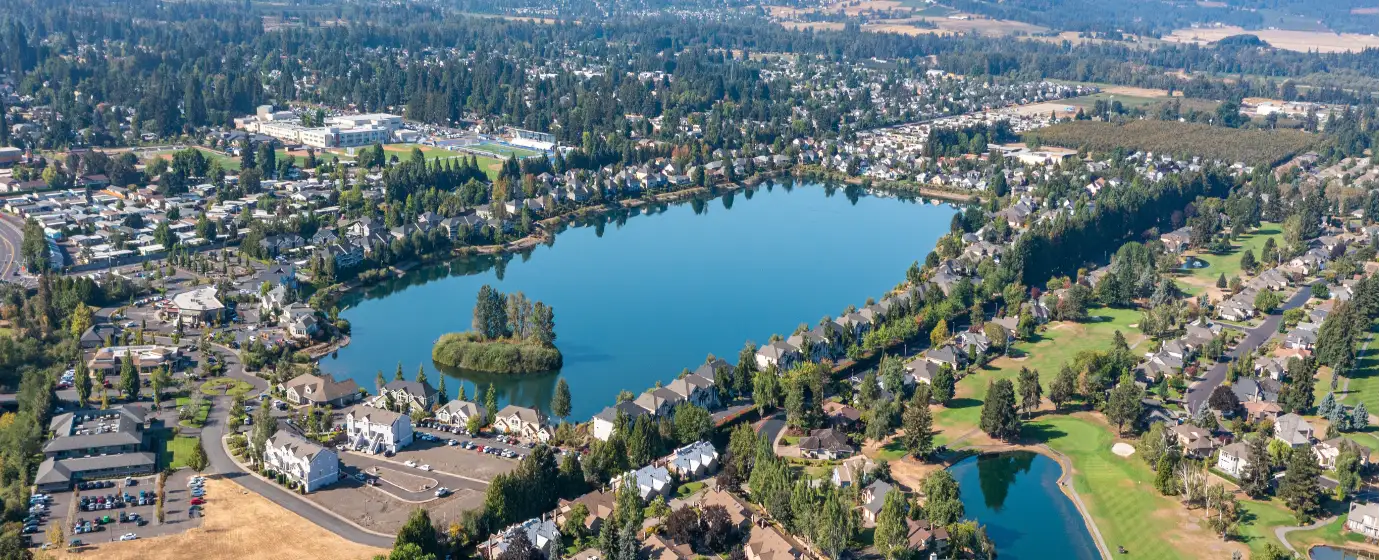
Most people researching Keizer start by Googling crime rates and end up more confused than when they started — because the numbers depend almost entirely on which source you're reading and how it defines its terms. Here's the short version: Keizer, a city of 39,082 in Oregon's Willamette Valley, sits meaningfully below both Oregon and national crime benchmarks on violent crime, and its property crime picture, while not negligible, tracks below the state average as well. That's not a marketing claim — it's what the numbers show when you hold the measuring stick still.
Keizer is its own incorporated city, distinct from Salem directly to the south, and that boundary matters for crime reporting. The city has its own police department, its own city council, and its own crime data — so the figures you'll see here are Keizer's alone, not blended into a Salem metro or Marion County aggregate. The distinction matters because Keizer's numbers look notably better than the broader region, and conflating the two would give you the wrong picture before you decide on a neighborhood.
The sections below walk through what the data shows, how different parts of the city compare, what the Keizer Police Department looks like from a staffing and community engagement standpoint, and what residents actually say about living here day to day. Whether you're evaluating a move or just want to understand how this city compares to where you're coming from, this guide covers the full picture — including the honest caveats.
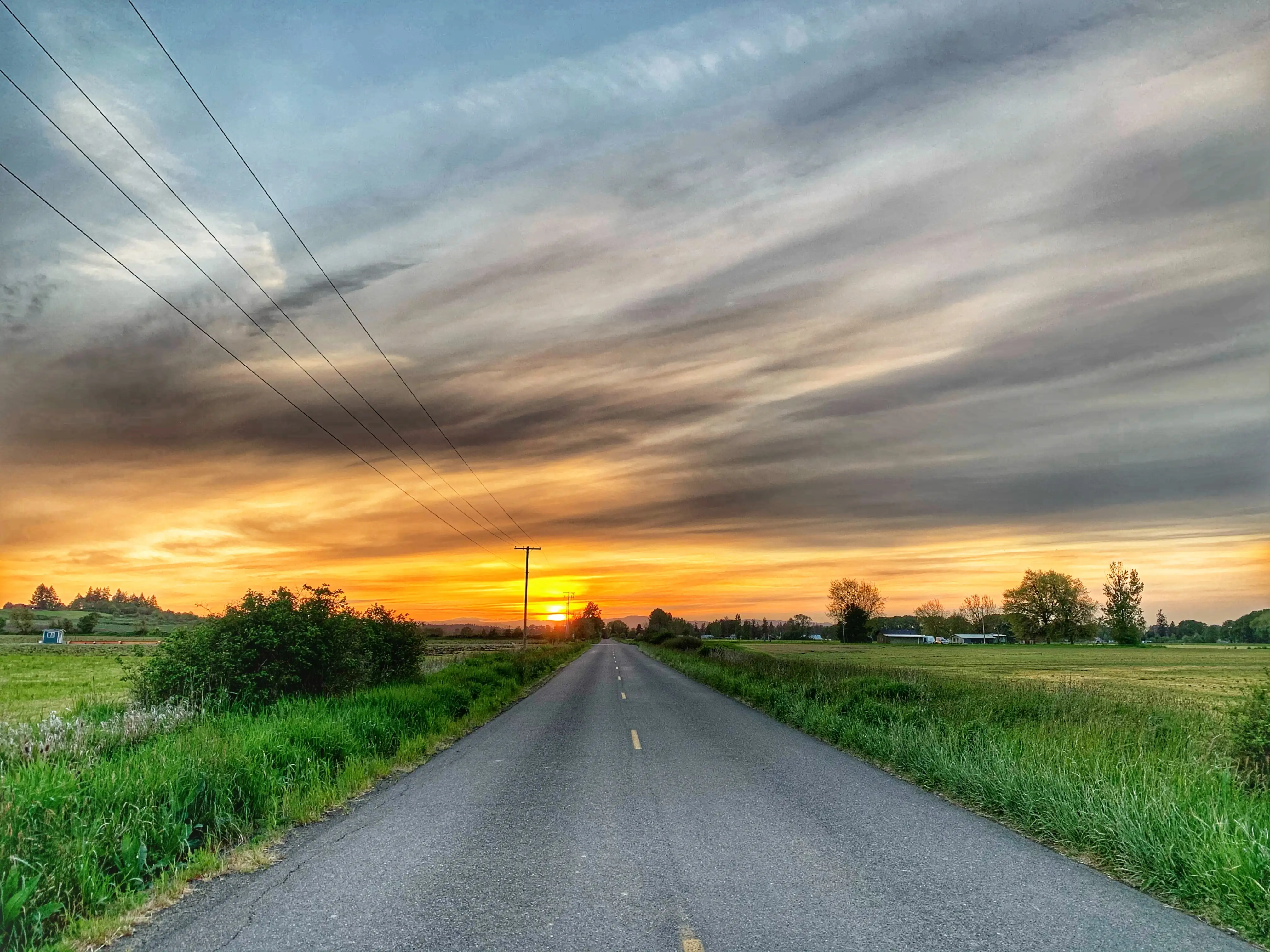
Keizer's Crime Rates vs. State and National Benchmarks
The headline figure is this: Keizer carries a violent crime rate of 1.46 per 1,000 residents. The Oregon state rate runs at 3.3 per 1,000, and the national rate sits at 3.7 per 1,000 (Bureau of Justice Statistics, Crime Known to Law Enforcement, 2024, tables 2 and 3). Those comparisons are not close — Keizer's violent crime exposure is substantially below both benchmarks.
On the property crime side, the picture is less dramatic but still favorable. Keizer carries a property crime rate of 19.11 per 1,000 residents, which runs below the Oregon state rate of 24.5 per 1,000. It does sit above the national property crime rate of 18.4 per 1,000 — a gap worth acknowledging rather than burying. Thefts and vehicle-related offenses are the primary driver of that figure, and they concentrate in predictable commercial areas rather than spreading evenly across residential streets.
Oregon's statewide property crime fell across every reportable category in the most recent reporting period, with motor vehicle theft seeing the steepest drop. Keizer is moving with that trend, not against it. One more data point worth stating plainly: in the most recent FBI reporting year, Keizer recorded a murder rate of zero. For a city of nearly 40,000, that is a meaningful signal about the character of violent crime here — which trends toward lower-level offenses rather than the serious end of the spectrum.
The North-South Safety Divide: What the Geography Actually Shows
Keizer is not uniformly safe in the same way across its footprint — and understanding the rough geography of crime is more useful than a single city-wide number when you're evaluating specific neighborhoods.
The northern and northwestern parts of the city consistently report the fewest incidents. Neighborhoods like McNary Estates and those in the broader northwest corridor see relatively low crime activity, and residents on community platforms describe those streets as quiet, well-maintained, and largely uneventful in the way that people who have lived somewhere peaceful tend to take for granted. West Keizer carries a similar reputation — more established, quieter, with a character that reflects longer-tenured homeownership. For a deeper look at what distinguishes these neighborhoods from each other, the neighborhood guide covers the full picture.
The southern end of Keizer, closer to the border with Salem and near commercial corridors, sees meaningfully more activity. This is where retail traffic concentrates — near Keizer Station shopping center and along the busier arterials — and where the risk profile rises from the low baseline you see in the north. That pattern is common in cities where a commercial strip anchors one end and quieter residential streets fill the other. It doesn't make the south side dangerous in any absolute sense; it means the southern areas look more like a typical mixed-use suburban corridor than a purely residential pocket.
What This Means When Choosing a Neighborhood
If minimizing property crime exposure is a priority, the northern neighborhoods — McNary Estates, Greater Gubser, and the areas around Keizer Rapids Park — are the natural starting point for your search. The northeast Keizer area near Keizer Station offers convenience and newer construction, but commercial proximity comes with the trade-off of higher foot traffic and the property crime that tends to follow it.
Inland Shores, Hidden Creek Estates, and Wilark Park tend to sit in quieter residential pockets. Northgate, which sits mid-city, falls roughly in the middle of the spectrum. None of these areas registers as a place most buyers would walk away from on safety grounds alone — the differences within Keizer are gradients, not categorical shifts. But they're real enough to be worth knowing before you narrow your search.
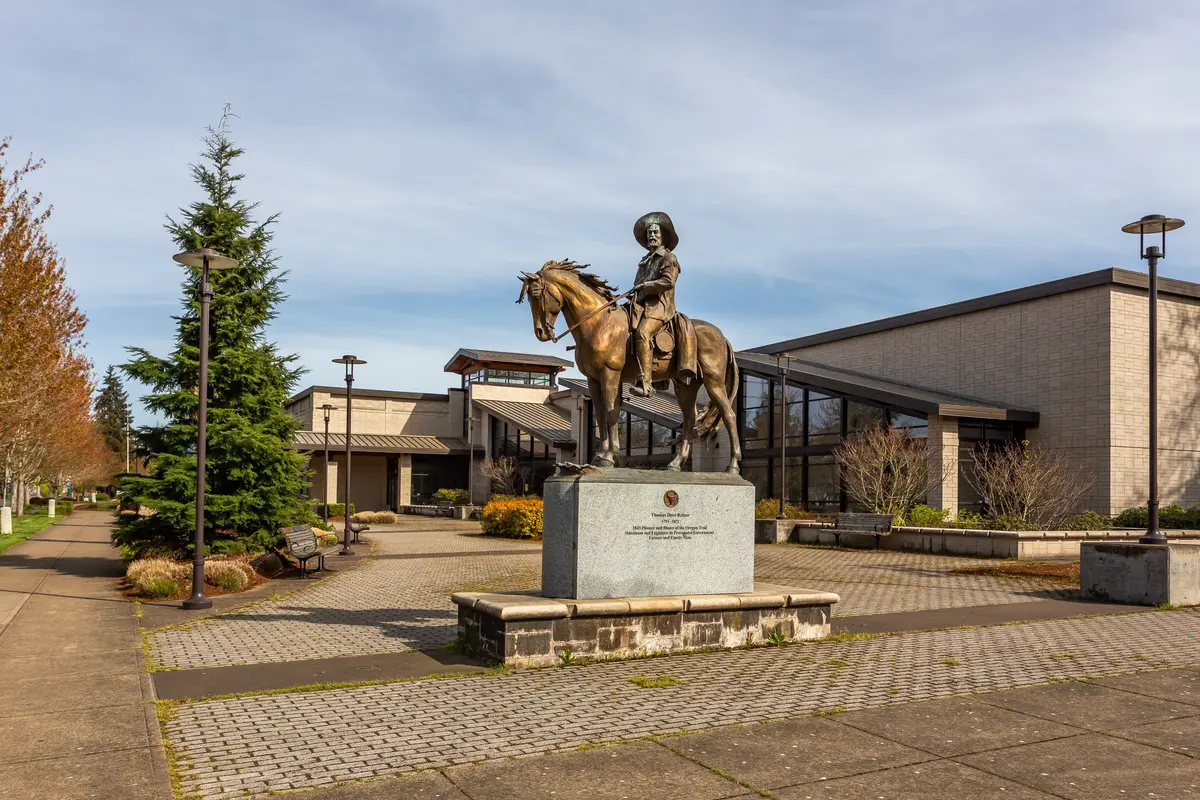
The Keizer Police Department: Staffing, Philosophy, and What's Being Debated
The Keizer Police Department is a community-scaled operation — a department that knows the city's streets and neighborhoods at a level of familiarity that larger metro forces rarely achieve. The department's stated philosophy is problem-oriented policing — the idea that addressing root causes of recurring issues reduces crime more durably than reactive enforcement alone.
In 2024, the department averaged 55 calls per day and assisted neighboring law enforcement agencies nearly 800 times over the course of the year. That mutual-aid volume reflects Keizer's position as a city bordered by Salem, and the practical reality that regional public safety cooperation is part of daily operations here.
The Staffing Conversation That's Worth Watching
In late 2025, the city convened a task force specifically to assess whether Keizer's current police staffing levels match the community's public safety needs. The task force discussions included the possibility of community engagement events and a future public vote on expanded police funding. This is not a crisis story — it is a proactive governance conversation, the kind that cities with functioning civic structures tend to have when they're looking ahead rather than reacting to a problem that already got out of hand.
If you're moving to Keizer and care about long-term public safety investment, this is the local civic thread worth following. The outcome of that process — whether it results in expanded staffing, adjusted deployment, or something else — will shape what the department looks like three to five years from now.
Community Programs Beyond Patrol
The department runs a Cadet Unit, a Community Response Unit, and a Police Reserve Program. It participates in National Night Out each year and maintains a Surveillance Camera Registration program that allows residents to voluntarily connect their home security systems to a city-coordinated mapping tool. School safety partnerships operate through the SafeOregon tip line. These programs are not transformative on their own, but they reflect a department that has invested in community-facing infrastructure beyond standard patrol operations.
Looking to buy in Keizer? Estimate your payment.
Enter your numbers to see an estimated monthly mortgage payment.
Estimate only. Excludes HOA fees and mortgage insurance. The interest rate above is a starting point, not a quoted rate — replace it with your own to see real numbers. Insurance is a flat placeholder, not a Keizer quote.
What Residents Actually Say About Safety in Keizer
Survey data from Niche.com shows that 81% of Keizer residents describe the city as very safe with no safety concerns, and another 13% call it pretty safe with only some concerns. That leaves roughly 6% with meaningful reservations — a small minority, but worth noting because no city reads as uniformly peaceful to everyone who lives there.
The people most likely to hold safety reservations tend to be those closest to the commercial southern corridor, or those who have had a vehicle broken into — property crime being the realistic risk category here, not violent crime. That kind of friction doesn't usually drive people out of Keizer, but it does inform where experienced residents choose to park and what they bother locking.
What Surprises People After Six Months Here
The most common observation from people who moved to Keizer from a larger metro — particularly from the Portland area — is that the baseline anxiety they carried around urban areas simply doesn't travel with them. The city feels smaller than its population suggests, in the way that quiet streets and recognizable faces at Keizer Rapids Park will make you feel after a few months. That's a genuine quality-of-life advantage, not a talking point.
The counterpoint, and it's honest: Keizer is still adjacent to Salem, and Salem carries more significant crime challenges than Keizer does. The cities share a border, not a crime rate. But that adjacency means some of the regional activity that touches Salem's northernmost areas can occasionally spill across. Most residents will go years without that touching their daily life. A few won't, and the honest version of this guide acknowledges that.
Where Families Actually Gather
The safety conversation in Keizer happens alongside a community texture that reinforces the numbers. Keizer Rapids Park functions as the city's gathering place — the kind of park where families with school-age children spend weekend mornings and where the community's civic identity is most visible. The activity concentrated there, along the Willamette riverfront, reflects a population that uses its public spaces with the ease of people who don't feel they need to think twice about it.
Practical Safety Research: What to Check Before Choosing a Neighborhood
City-wide crime rates are a starting point, not a destination. If you're comparing two specific streets or a handful of candidate neighborhoods, the data that matters is more granular than anything a single number can capture.
Look at the Commercial Proximity
In Keizer, property crime risk tracks closely with retail and commercial density. Neighborhoods that back up to shopping corridors — particularly in the south and along busier arterials — carry higher exposure than the quieter residential pockets to the north and northwest. When you're evaluating a specific block, look at what surrounds it, not just the neighborhood label.
Use Multiple Sources and Hold Them Together
CrimeGrade.org, AreaVibes, and Niche all publish neighborhood-level safety profiles for Keizer. None of them use identical methodologies, which means they'll sometimes give you different gradations of the same underlying picture. Use them together rather than treating any one as definitive. The directional signal — north quieter, south more active — is consistent across sources even when the specific rankings shift.
Talk to the Department Directly
The Keizer Police Department's Community Response Unit exists in part for this kind of engagement. If you have a specific block or neighborhood on your shortlist, the department is the right place to ask about recent patterns in that area. That's not something most relocating buyers think to do, and it's probably the highest-signal step available that costs nothing.
The Seasonal Reality
Newcomers from sunnier climates are sometimes surprised to learn that Keizer averages 153 sunny days a year — gray Willamette Valley winters are long, and the reduced daylight does affect how much people are outside and how visible neighborhood activity is. That's not a crime driver in any meaningful statistical sense, but it shapes the social texture of the city from November through March in ways that take some adjustment. The upside is that summer evenings at Keizer Rapids Park and the baseball atmosphere around Volcanoes Stadium make the warm months feel earned in a way that's hard to replicate in drier climates.
For context on what it costs to live in the neighborhoods you're evaluating, the cost of living page covers the typical home price and rent figures in full.
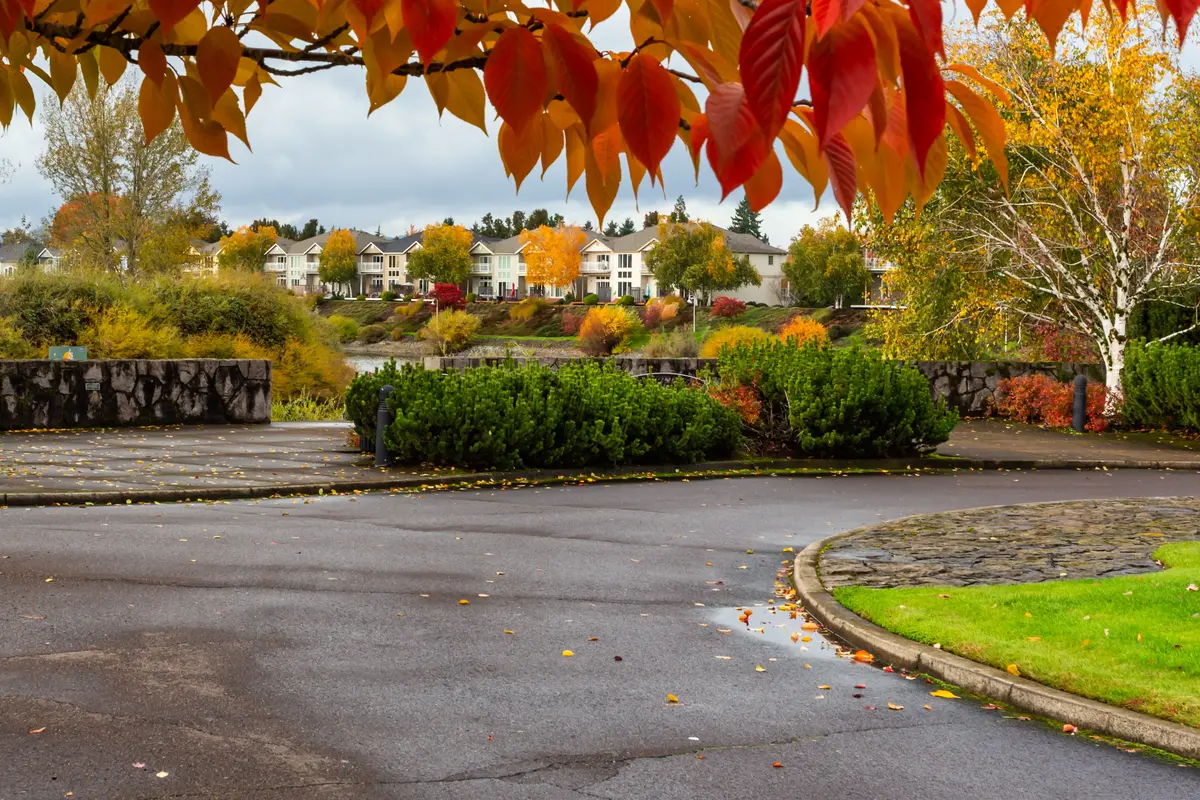
Local Expert Takeaway: Keizer carries a violent crime rate of 1.46 per 1,000 residents — one of the more reassuring figures you'll find for a Willamette Valley city of this size, well below the Oregon state rate and the national benchmark. The realistic concern for most households is property crime near commercial areas, particularly in the southern part of the city. Families who end up in McNary Estates or near Keizer Rapids Park typically stop thinking about safety within a few months. Those near the Keizer Station corridor should lock their cars and manage expectations accordingly — it's suburban-normal, not alarming, but it's real.
Quick Takeaways & FAQs
✅ Keizer carries a violent crime rate of 1.46 per 1,000 residents, well below both the Oregon state rate and the national average, and the most recent reporting year recorded zero murders.
⚠️ Property crime near the southern commercial corridors is the realistic risk category here — thefts and vehicle-related incidents, not violent crime, drive the city's less favorable comparisons.
📍 The northern and northwestern neighborhoods — McNary Estates, Greater Gubser, and the area near Keizer Rapids Park — consistently show the quietest crime profiles in the city.
Is Keizer safer than Salem?
What is the violent crime rate in Keizer, Oregon?
Which neighborhoods in Keizer are the safest?
Is property crime a problem in Keizer?
How well-staffed is the Keizer Police Department?
Moving to Oregon?
Tell us what you need help with and we'll connect you with local resources.
