About Gary
The Brookings Neighborhood Landscape
Brookings is a small city — 6,703 people — but it has real geographic variety, and where you land matters more than the address on the listing. The neighborhoods divide roughly between the hillside areas above town, the flat coastal corridor, and the Harbor district at the water's edge, and they feel genuinely different in ways that affect daily life.
Downtown Brookings
Downtown is the commercial and civic core, walkable in the sense that you can run most everyday errands on foot. It's where you'll find the concentration of local services, and it draws buyers who want to be in the middle of things rather than up on a ridge. The housing stock here tends toward older construction — bungalows and mid-century homes — and it's where buyers on a tighter budget often start the conversation.
Harbor
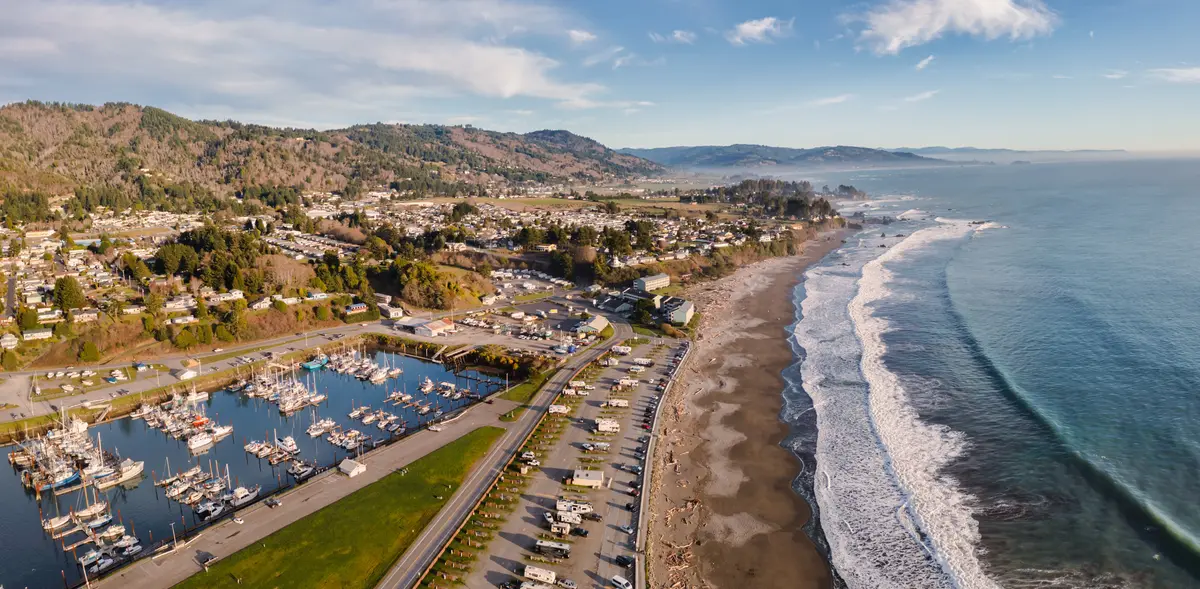
The Harbor neighborhood is its own world. The Port of Brookings Harbor anchors an active sportfishing culture here, and the waterfront energy is unlike anything else in southern Curry County. Buyers who move to the Harbor are usually there on purpose — they want the boats, the salt air at close range, and the easy access to the fleet. I always flag the tsunami inundation maps carefully for Harbor buyers; the lower-lying areas require that extra layer of due diligence before any offer.
Azalea Park Area
The Azalea Park neighborhood sits near one of the city's most beloved landmarks — the park itself, home to the Brookings-Harbor Azalea Festival every Memorial Day weekend, an Oregon Heritage Tradition that has run since 1939. Residential lots here tend to be established, with mature trees and a settled feel that appeals strongly to buyers coming from Northern California.
Pacific Heights, Seacrest Estates, Crown Terrace Heights, Driftwood Pointe Estates, Emerald Coast Estates
The hillside neighborhoods — Pacific Heights, Crown Terrace Heights, Seacrest Estates, Driftwood Pointe Estates, and Emerald Coast Estates — sit above the fog line more reliably, take advantage of ocean views when the lots are positioned right, and generally represent the more recent residential development in the city. These are the neighborhoods I steer buyers toward when views and elevation are priorities. They are also where I remind buyers to pull Oregon's Department of Land Conservation and Development's tsunami inundation maps alongside the FEMA flood zone maps — not as a reason to avoid them, but because the two mapping systems are separate and both matter here.
Best for: Harbor — Nature Views; Pacific Heights / Crown Terrace / hillside neighborhoods — Views Quiet; Downtown — Walkable Value
What the Money Actually Buys
The typical home price in Brookings sits at $486,371 as of July 2026, and I want to be straight with you about what that figure means in context. That number sits meaningfully above what a household earning the local median income of $74,933 can comfortably carry — the gap between local earning power and local home prices is a real feature of this market, not a footnote. The buyers who make Brookings work financially are usually retirees with equity from a California sale, remote workers whose income is tied to an out-of-state employer, or buyers who've inherited property or have significant savings outside their paycheck.
Oregon's tax structure helps on the ownership side. There is no state sales tax, the effective property tax rate in Curry County is 0.42% — well below what comparable coastal communities in California carry — and Oregon does not tax Social Security benefits at the state level. For a California retiree who has spent decades paying that state's sales tax and property tax rates, those differences add up fast.
What does roughly $486,000 actually get you? In the hillside neighborhoods, you can find newer construction with partial ocean views. In Downtown Brookings and parts of Harbor, that budget reaches older bungalows and mid-century homes on established lots. Entry-level properties — smaller older homes, some needing work — come in below that figure, while well-positioned view homes and newer builds in Emerald Coast Estates or Driftwood Pointe Estates will run noticeably above it.
One thing I tell every buyer who is stretching for a view home: understand that coastal exposure adds maintenance costs that don't show up in the purchase price. Salt air is hard on paint, roofing, and any exposed metal. Budget for that before you make the offer, not after.
Coastal Hazards: What Every Brookings Buyer Must Understand
I put this section near the front of every buyer conversation because it is the piece most people haven't fully thought through before they call me. Brookings sits on the Oregon coast, and the Oregon coast sits above the Cascadia Subduction Zone. The Oregon Department of Land Conservation and Development identifies a Cascadia Subduction Zone earthquake and resulting tsunami as the greatest hazard facing this coastline. That is a direct quote from the state, and I repeat it because it should shape your due diligence, not your fear.
The practical steps are specific. FEMA flood zone maps and Oregon DOGAMI tsunami inundation maps are two separate systems. Many buyers pull one and assume they've covered it. You need both, for every property you're seriously considering. Lower-lying areas — particularly near the harbor and the shoreline — sit within inundation zones. The hillside neighborhoods generally sit at higher elevation, and elevation matters in this specific kind of risk assessment.
I am not an engineer, a geologist, or an insurance specialist, and I tell my clients that plainly. What I am is someone who has worked this coast long enough to know which questions to ask and which professionals to bring in. A coastal hazard specialist, a review of the DOGAMI maps, and a thorough conversation with your insurance agent before closing are non-negotiable steps in this market. If an agent doesn't bring this up, ask why.
Earthquake and flood insurance, coastal windstorm coverage — these are the conversations you have in Brookings that you don't have in most Oregon markets. Factor the cost into your ownership budget before you fall in love with a listing.
Looking to buy in Brookings? Estimate your payment.
Enter your numbers to see an estimated monthly mortgage payment.
Estimate only. Excludes HOA fees and mortgage insurance. The interest rate above is a starting point, not a quoted rate — replace it with your own to see real numbers. Insurance is a flat placeholder, not a Brookings quote.
Schools in Brookings-Harbor
The Brookings-Harbor School District 17C serves the city, with 1,221 students enrolled in 2025-26, according to figures the Oregon Department of Education publishes. It's a small district by any measure, and the school community reflects that — most families know the teachers, the class sizes allow for real relationships between staff and students, and the community identity around OSAA athletics is genuinely strong. Friday night football matters here in the way it does in small coastal towns throughout the state.
On academic metrics, the picture is honest and worth understanding directly. On 2024-25 state assessments, 20.2% of students reached math proficiency and 35.6% reached reading proficiency, according to figures the Oregon Department of Education publishes. Those numbers are below state averages, and I won't soften that. What I tell families is this: the state assessment figures are one data point, not a complete portrait. Small districts can have individual teachers and programs that outperform the aggregate, and they can have years that look different from the one the data captures. The way to get an accurate picture is to visit the schools, talk to the principal, and talk to parents who have kids enrolled right now.
Anyone seriously considering a move to Brookings should do their own due diligence on the schools — confirm which school serves a specific address by calling the district directly, and review the data the Oregon Department of Education publishes themselves. Boundaries in small districts can shift, and confirming the assigned school for a property before closing is the right move, not an afterthought.
For families with older kids who have very specific academic or athletic needs, it's worth having an honest conversation about whether a district of this size can meet them. For families who value close-knit school communities, deep teacher-student relationships, and year-round access to the outdoors as part of their kids' growing up — many of my clients say Brookings delivers that in ways no spreadsheet captures.
Brookings vs Nearby Cities
| City | Typical Home Price | Typical Rent | Cost vs Brookings |
|---|---|---|---|
| Brookings (this city) | $486,371 | — | — |
| Gold Beach | $439,479 | $1,300/mo | 10% lower |
| Crescent City, CA | $350,000 | $1,400/mo | 28% lower |
| Port Orford | $384,346 | $1,150/mo | 21% lower |
Source — home prices: Zillow ZHVI, July 2026. Nearby-city figures are the same series, refreshed together.
I work with a lot of buyers who are cross-shopping Brookings against its neighbors, and the honest answer is that each comparison involves a genuinely different set of trade-offs — not just price differences, but lifestyle differences that matter more in the long run than a dollar gap.
Gold Beach is about 30 miles north along US-101, and it runs somewhat lower on home prices than Brookings. What you give up is the Banana Belt microclimate — Brookings's Chetco Effect keeps winters noticeably milder than the rest of the coast, and Gold Beach doesn't share that advantage to the same degree. If the climate is why you're coming to Brookings specifically, Gold Beach is a different weather picture. If you're budget-constrained and the microclimate is less important to you than ownership cost, Gold Beach is worth a serious look.
Crescent City, California is just about 20 minutes to Crescent City, CA — the drive is short enough that some buyers genuinely wonder why they'd pay Oregon prices. Here's why: Oregon has no state sales tax; California does. The effective tax burden on the Oregon side of the border is meaningfully lower in ways that compound over time. The buyers I've worked with who chose Crescent City did so primarily on purchase price. The ones who chose Brookings were thinking about the total cost of ownership and the state tax environment over a decade or more.
Port Orford runs noticeably lower than Brookings on home prices, and it's an even smaller community with even more limited services. I describe it to buyers as a more remote version of this already-remote stretch of coast. If solitude and low price are the priorities and you don't need the service infrastructure Brookings offers, Port Orford has buyers who love it deeply. If you need reliable access to healthcare, retail, and services, Brookings is the regional hub and Port Orford is not.
The engine below this section will show you the price comparison in table form. What I want you to take away from this conversation is that the right city for you depends on which trade-offs you can live with — and that's a conversation, not a spreadsheet.
Weekends and Local Life in Brookings
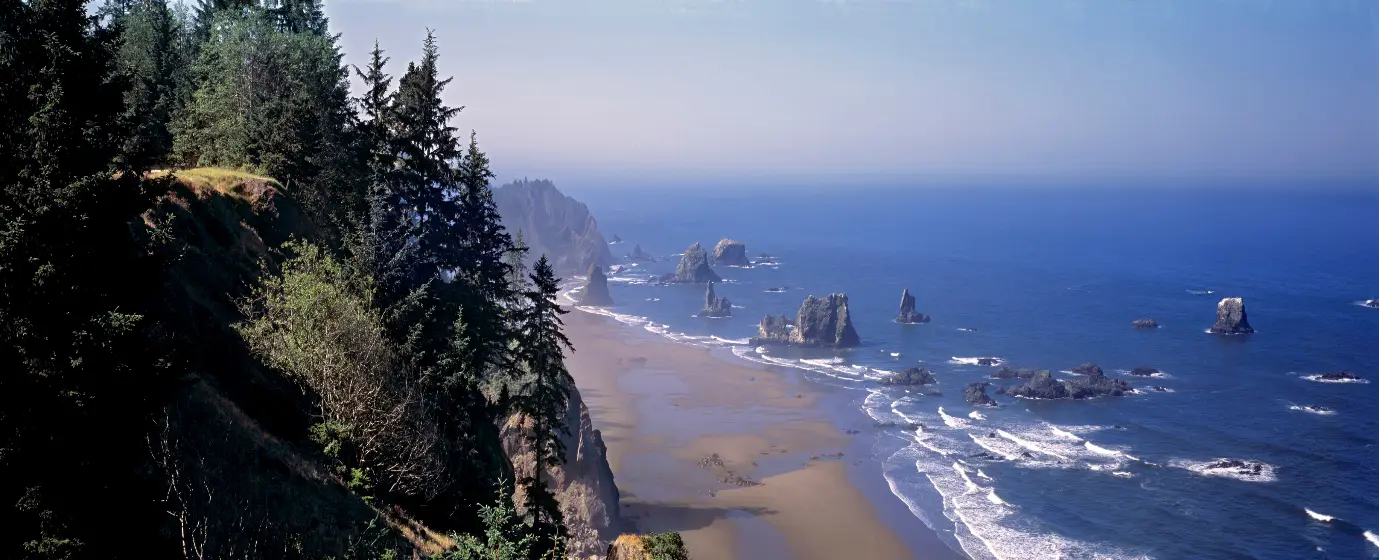
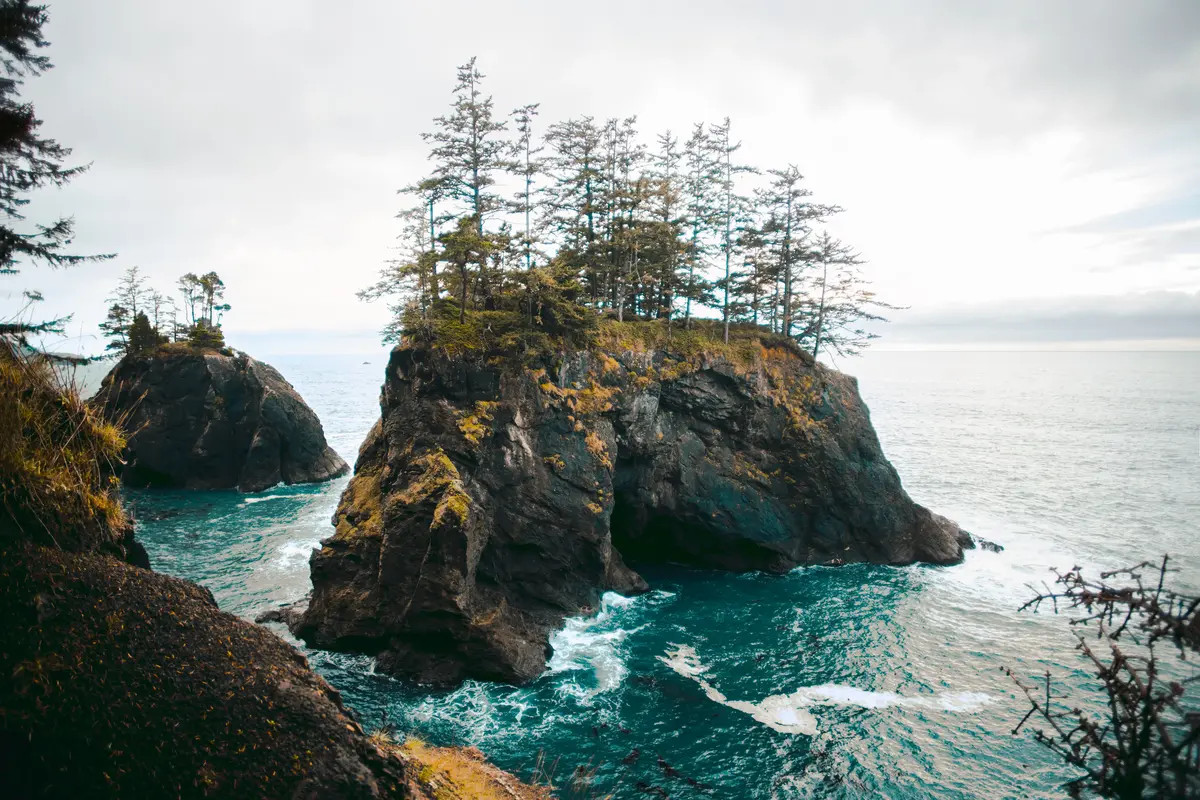
One of the first things I tell buyers who are deciding between Brookings and a more connected city is this: remote coastal living is a specific lifestyle, and it rewards people who come prepared for it. The outdoor access here is extraordinary. Harris Beach State Park puts tidepools and offshore sea stacks within minutes of most neighborhoods. Alfred A. Loeb State Park takes you into old-growth myrtlewood forest along the Chetco River. The Samuel H. Boardman State Scenic Corridor, running along the coastline, is among the most dramatic stretches of coastline scenery anywhere on the Oregon coast. These are not weekend drives — they are genuinely part of daily life for people who live here.
The sportfishing community centered at the Port of Brookings Harbor is a real social fabric, not a tourist attraction. For buyers who fish or who want to, the harbor culture is a ready-made community from day one. For buyers who don't, it's still a defining feature of the city's character and worth understanding before you move.
For coffee and casual meals, the local independent scene covers the basics well. Bell & Whistle Coffee House, Compass Rose Cafe, Cosmic Grind Organic Coffee Espresso Smoothies and Boba, and Honeybee Bakery are the kind of spots that regulars return to week after week. Dutch Bros Coffee is on the more commercial end. For meals, Hungry Clam, Zola's on the Water, Mattie's Pancake House, Pacific Sushi & Grill Brookings Oregon, and Superfly Martini Bar & Grill represent what the dining scene offers — a handful of well-regarded local anchors rather than a restaurant row.
A serious shopping trip means driving out of town; you'll be ordering online for anything the local shops don't carry. The nearest commercial airports are Rogue Valley International-Medford (MFR) and Arcata-Eureka (ACV, CA), both roughly 110 miles away. Air travel here requires planning, and buyers who fly frequently for work should factor that in before closing.
The Azalea Festival every Memorial Day weekend — the 87th ran in 2026 — is the event that orients the community calendar in spring. It draws visitors from throughout the region and has been running since 1939. For residents, it's the marker of the season, and arriving in time for it in your first year tells you something about what kind of place this is.
What surprises people most after six months here is the fog. The Banana Belt reputation is real — the Chetco Effect does keep Brookings meaningfully warmer and sunnier than the rest of the Oregon coast, with 191 sunny days a year — but coastal fog is still a regular presence, particularly in the mornings and through stretches of late spring. Buyers who move here expecting perpetual California sunshine sometimes need a reset. The ones who knew what they were getting — and came for the mild winters, the quiet, and the access to wild coastal landscape — rarely want to leave.
Final Advice From Gary
Quick Takeaways & FAQs
✅ Brookings's Banana Belt microclimate — driven by the Chetco Effect — gives it measurably milder winters than anywhere else on the Oregon coast, which is the single biggest draw for retirees and remote workers coming from Northern California.
⚠️ The local job market is genuinely limited for specialized or professional roles; buyers who aren't retired or remote-work-enabled should think carefully about employment before committing.
📍 Every property in Brookings requires two separate hazard-map checks — FEMA flood zone maps and Oregon DOGAMI tsunami inundation maps — because they are different systems covering different risks, and lower-lying areas near the harbor are in inundation zones.
What is the commute like for people who work outside Brookings?
What do the schools look like in Brookings?
Which neighborhood is right for me?
What do I need to know about coastal hazards before buying?
How does Brookings compare to Crescent City or Gold Beach for buyers on a budget?
What surprises people most after they move to Brookings?
Is Brookings a good fit for retirees?
How quickly do homes sell in Brookings, and what should I expect as a buyer?
Moving to Oregon?
Tell us what you need help with and we'll connect you with local resources.
