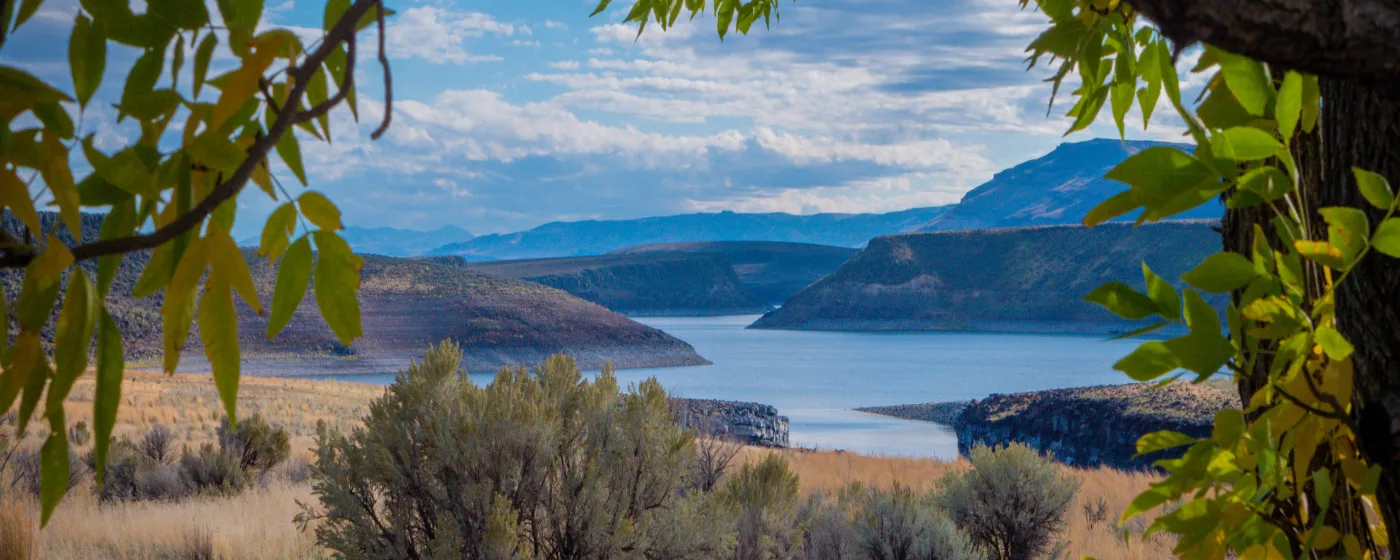
Maybe you've been priced out of the Boise market and someone mentioned the Magic Valley. Maybe your kids settled in Twin Falls and you're thinking about closing the distance. Maybe you've just run the numbers and $266,500 median home prices look impossible to ignore. Whatever brought Rupert onto your radar, it rewards a closer look — and it also has a hard limit you need to understand before you commit: this is a small agricultural county seat of 6,324 people, and the trade-offs of rural Idaho retirement are real. Rupert sits along U.S. Highway 24 in Minidoka County, about 25 minutes east of Twin Falls, surrounded by the Snake River Plain's irrigated farmland and big southern Idaho sky.
The economy here runs on food manufacturing — Idahoan Foods, Brewster Cheese, Snake River Sugar Company, and Gossner Foods anchor the employment base — which keeps the town stable in a way that bedroom communities aren't. That stability matters for retirees: it means Rupert isn't hollowing out, the tax base is held up by working households, and community institutions from the DeMary Memorial Library to the Minidoka County Historical Museum have staying power. The downtown Historic District still centers on Rupert Square, one of the largest town squares in Idaho, and local events use it year-round.
The cost picture is genuinely compelling. Rupert's overall cost of living runs approximately 9–11% below the U.S. national average, with housing costs tracking roughly 22.7% below the national average. Idaho's tax treatment of Social Security is a meaningful bonus for retirees on fixed incomes, and the effective property tax rate of approximately 0.48% is well below what most transplants from California, Washington, or the Mountain West are used to paying. The full cost-of-living breakdown goes deeper on every line item.
Whether you're seriously weighing a move or just doing early research, the sections below cover what retirement in Rupert actually looks like: healthcare access and its honest limits, the retiree tax picture, daily walkability and community, downsizing options, and how Rupert stacks up against nearby alternatives including Burley, Heyburn, and Twin Falls.
Why Retirees Are Choosing Rupert
Rupert fits a specific kind of retiree well: someone who wants a quiet, owned home at a price that leaves retirement savings largely intact, doesn't need walkable amenities within steps of the front door, and finds meaning in a town where people know each other by name. The $266,500 median sale price (Redfin, January 2026) means a retiree downsizing from a higher-cost market can often buy outright or carry a very small mortgage — a genuinely uncommon position in today's housing landscape.
The retirees who struggle here are the ones who underestimate the isolation. Rupert has no urgent-care chain, no large grocery with a pharmacy drive-through, and no walkable coffee row. If your baseline expectation involves specialist appointments without a 25-minute drive, or a Saturday morning that starts with a stroll to a bookstore, this is a harder fit. The town is honest about what it is: a working agricultural community that happens to offer exceptional affordability and a tight social fabric.
Who genuinely thrives here: outdoors-oriented retirees drawn to Lake Walcott State Park and the Snake River corridor, people with strong existing ties to the Magic Valley region, and couples or individuals who prioritize financial security over urban amenity. If your retirement vision includes fishing, disc golf on a world-class 21-hole course at Lake Walcott, or wide-open space without a neighbor 15 feet away, Rupert will exceed your expectations on the lifestyle side. If it involves frequent travel — Twin Falls Regional Airport is roughly 25 minutes west — that connection makes the remoteness considerably more manageable.
Healthcare & Medical Access in Rupert
Your Local Hospital
Minidoka Memorial Hospital is the anchor of healthcare in Rupert and the only hospital in Minidoka County. It holds DNV Hospital Accreditation, employs over 300 people, and offers a genuinely broad range of services for a Critical Access Hospital: emergency care, surgery, inpatient and outpatient treatment, long-term care, home health, and ambulance services. For the routine healthcare needs that make up the vast majority of a retiree's medical life — post-surgical recovery, primary care follow-ups, infusion therapy, wound care — Minidoka Memorial handles it without a drive.
For day-to-day primary care, Minidoka Medical Center RHC at 1308 8th Street is the non-profit rural health clinic that operates as part of the Minidoka Memorial system. It provides family medicine, urgent care, and preventive care — the kind of regular touchpoints that matter most when managing chronic conditions in retirement. Having that clinic embedded in Rupert itself, rather than only at the hospital, is a practical convenience that relocating retirees often underestimate until they're making their third appointment in two months.
The Honest Distance-to-Specialist Reality
Where Minidoka Memorial's Critical Access designation becomes relevant is specialist depth. Cardiology, oncology, neurology, orthopedic surgery, and advanced imaging are largely the domain of St. Luke's Magic Valley Medical Center in Twin Falls — about 25 minutes west on Interstate 84. That's not an unreasonable drive for a scheduled appointment, but it's a real consideration if you have a condition requiring frequent specialist visits, or if you're thinking about what a health emergency looks like for a spouse who can't drive.
Retirees with complex cardiac histories or conditions requiring regular oncology monitoring generally find that Twin Falls becomes a frequent destination. Some manage this by scheduling multiple appointments on the same day. Others decide the drive is fine until it isn't — and that's the honest tension to sit with before committing to Rupert over a place like Heyburn or Burley, which are even closer to Twin Falls services.
For emergency air transport to a Level I or II trauma center, St. Alphonsus Regional Medical Center in Boise is the realistic destination — roughly 150 miles northwest. Minidoka Memorial maintains ambulance services and transfer protocols, but that distance is worth knowing if you or your partner has a condition where rapid advanced trauma response could matter.
The Retiree Budget in Rupert
Idaho's Tax Treatment of Retirement Income
Idaho's most retiree-friendly tax feature is straightforward: Social Security benefits are completely exempt from state income tax, regardless of your income level or age. That exemption alone can meaningfully reduce a retiree's state tax bill compared to states that apply income tax to Social Security.
Other retirement income — distributions from 401(k) accounts, traditional IRAs, and most pensions — is taxed at Idaho's flat income tax rate. Confirm the current rate at tax.idaho.gov before finalizing any tax planning, as the rate has shifted across recent legislative sessions. For tax year 2025, Idaho adopted federal conformity on standard deductions, and a new $6,000-per-person enhanced senior deduction became available to those aged 65 and older under the One Big Beautiful Bill Act (effective 2025–2028). For a couple both aged 65+, that's $12,000 in additional deductions beyond the standard amount — a real reduction in taxable income on a fixed retirement budget.
Property Taxes and the Circuit Breaker
Rupert's effective property tax rate is approximately 0.48% — already well below the U.S. median. On a home in Rupert's typical price range, that's a low annual figure by national standards, though the engine's calculator below will give you a precise estimate for any purchase price you're modeling.
Idaho's Circuit Breaker program goes further for qualifying seniors. Homeowners aged 65 or older with 2025 income of $39,130 or less (after medical deductions) can reduce their property tax bill by $250 to $1,500 annually. Veterans and people with disabilities qualify regardless of age. There's also a separate deferral option: if you're 65 or older with income of $60,000 or less, you can defer property tax payments entirely until the home is sold — a meaningful cash-flow tool for retirees on tight fixed incomes.
Day-to-Day Costs on a Fixed Income
Rupert's overall cost of living runs approximately 9–11% below the national average. Groceries are a particular bright spot: food costs for a single person are estimated at approximately $264 per month — noticeably below what most transplants from metro areas expect to spend. There's no Trader Joe's or Whole Foods; the nearest Costco is in Twin Falls. But the conventional grocery options in Rupert and neighboring Burley keep everyday shopping manageable without a long drive.
Independent breakfast and lunch spots in the downtown area run well under $15 for a weekday meal — the kind of affordable daily rhythm that retirees on fixed incomes actually feel in their monthly bank statements. See the full cost-of-living page for a broader breakdown of utilities, transportation, and housing costs.
Looking to buy in Rupert? Estimate your payment.
Enter your numbers to see an estimated monthly mortgage payment.
Estimate only. Excludes HOA fees and mortgage insurance. The interest rate above is a starting point, not a quoted rate — replace it with your own to see real numbers. Insurance is a flat placeholder, not a Rupert quote.
Walkability, Community & Staying Active in Rupert
The Walkability Reality
Rupert is not a walkable city in the sense that most people moving from a suburb expect. Running daily errands on foot — groceries, pharmacy, hardware — isn't realistic for most addresses. The town is flat, which matters for older adults: no hills, no difficult terrain, and the streets around Rupert Square and the Downtown Historic District are pleasant to walk for leisure. But a car remains essential for practical living.
What Rupert does have is a compact, grid-based layout that makes short drives genuinely short. Nothing in town is more than five or ten minutes by car. For retirees who are still driving comfortably, that compactness is an underrated quality — no freeway required for any errand, no grid-locked arterial roads. The friction of daily life is low.
Where People Actually Gather
The social center of Rupert is Rupert Square itself — community events, seasonal markets, and town gatherings happen here in a way that reinforces the small-city intimacy that draws retirees. The Minidoka County Historical Museum draws engaged volunteers from the senior population, and the DeMary Memorial Library anchors a quieter social and intellectual community. The Historic Wilson Theatre, when programming is active, provides one of the few in-town cultural anchors that doesn't require a drive to Twin Falls.
The independent breakfast spots along the downtown grid have the feel of neighborhood regulars — the kind of place where the Tuesday morning crowd is largely the same faces every week. For retirees relocating from cities, that predictable social rhythm is often what makes a small town feel like home after six months rather than isolating.
Active Outdoor Life
Lake Walcott State Park, a short drive northeast on the Snake River, is a genuine asset for active retirees. The 17-mile reservoir offers fishing for smallmouth bass and rainbow trout, boating, and birding in the adjoining Minidoka National Wildlife Refuge — including one of only three white pelican nesting colonies in Idaho. The park's 21-hole disc golf course draws players from across the region. For retirees who organize their days around being outside, this access to nature and recreation changes the daily calculus significantly.
Cycling and walking the flat Snake River Plain roads is popular among residents who want low-impact daily movement. The absence of a dedicated senior center with programming is a gap — there is no standalone facility equivalent to what larger Magic Valley towns offer — but the Minidoka County community events calendar and faith community networks fill much of that social function informally.
Right-Sizing: Downsizing in Rupert
What the Inventory Actually Looks Like
Rupert's housing stock skews toward single-family homes, most of them one-story or easily navigable ranch-style construction built between the 1950s and 1990s. That's genuinely useful for downsizing retirees: single-level living is the norm rather than the exception, and many homes come with manageable lot sizes that don't demand a significant landscaping commitment.
The downside is what Rupert doesn't have in meaningful quantity: purpose-built 55+ communities, active-adult developments with amenity packages, patio home clusters, or condo buildings. If your mental image of downsizing involves a lock-and-leave condo with a community pool and a clubhouse, Rupert's inventory will disappoint you. The market is almost entirely detached single-family homes, with a small stock of duplexes and older multi-unit rentals.
The Practical Downsizing Path
For most retirees downsizing into Rupert, the realistic path is a three-bedroom or two-bedroom ranch home — often under 1,400 square feet — on a modest lot. At Rupert's price levels, these homes regularly trade in ranges that allow outright purchase or a very small balance after applying equity from a higher-cost market. That financial clean-slate dynamic is one of the most common reasons retirees from the Pacific Northwest or California end up in small Magic Valley towns.
The nearest meaningful inventory of 55+ and active-adult housing is in Twin Falls, roughly 25 minutes west, and in Burley, about 10 minutes east. If a dedicated senior community with structured programming and maintenance-free living is a priority, those markets give you more options without requiring you to move far from the Rupert area. Some retirees split the difference: buy in Rupert for the price and quiet, then use Twin Falls for medical appointments, shopping, and social programming.
Maintenance and Long-Term Aging-in-Place
One thing the flat terrain gets right for aging-in-place: single-story ranch homes on flat lots are structurally well-suited to mobility modifications as needs change. Widened doorways, walk-in shower conversions, and ramp additions are all straightforward on the typical Rupert ranch footprint. Contractors serving the Magic Valley region handle these modifications regularly. The challenge is that in-home care services and home health aides are more limited here than in Twin Falls — Minidoka Memorial operates a home health program, but the overall provider pool for in-home care in Minidoka County is thin compared to a larger market.
Rupert vs Nearby Retirement Destinations
| City | Cost vs Rupert | Primary Hospital | Walkability | Senior Living Depth | Overall Retirement Fit |
|---|---|---|---|---|---|
| Rupert | Anchor | Minidoka Memorial Hospital (Critical Access, DNV accredited) | Low — flat terrain, car essential for errands | Limited — single-family stock, no dedicated 55+ communities | Value Quiet Best for budget-first, outdoors-oriented retirees |
| Burley | About the same | Cassia Regional Hospital (24/7 ER, slightly larger than Minidoka Memorial) | Slightly better — a bit more retail walkable | Modest — more rental options, some senior apartments | Value Best for those wanting a touch more retail access at similar cost |
| Heyburn | Slightly cheaper | Shares Cassia Regional (Burley, minutes away) | Low — very small town, minimal walkable services | Very limited | Quiet Best for retirees who want minimal town services and maximum peace |
| Twin Falls | Noticeably pricier | St. Luke's Magic Valley Medical Center (full specialist depth) | Moderate — walkable commercial corridors, transit options | Strong — multiple 55+ communities, memory care, assisted living | Full amenity Best for retirees who prioritize healthcare access and senior community options |
| Paul | Slightly cheaper | Minidoka Memorial Hospital (Rupert, short drive) | Very low — tiny agricultural town | Minimal | Privacy Best for retirees who want maximum rural quiet and have strong self-sufficiency |
| Jerome | About the same | St. Luke's Jerome (clinic level); Twin Falls for hospital | Low to moderate — small downtown, car-dependent | Limited — growing but still sparse | Commuter Best for retirees who want Twin Falls access on a Rupert-sized budget |
Twin Falls is the clear winner on healthcare depth and senior living options — if specialist access or a structured 55+ community is your top priority, the price premium over Rupert is a trade-off worth considering carefully. Burley beats Rupert modestly on retail convenience without meaningfully changing the cost picture, making it a reasonable alternative if you want to stay in the Magic Valley at similar affordability.
Heyburn and Paul appeal to a narrower profile: retirees who genuinely want to minimize neighbors and external stimulation, have good health, and drive confidently. Jerome makes sense for someone who wants a Twin Falls commute profile but isn't ready for Twin Falls prices. Rupert itself lands best for the retiree who has done the math, values financial security above amenity density, and finds meaning in a community where the town square is still the center of civic life.
Local Expert Takeaway: Rupert's retirement value proposition is unusually specific: if you can buy a ranch home outright or close to it — as many downsizing Pacific Northwest transplants can — and you're healthy enough to handle a 25-minute drive to St. Luke's Magic Valley for specialist care, the numbers work in your favor in a way that few Idaho towns can match. Social Security exempt from state tax, a 0.48% property tax rate, Circuit Breaker relief for qualifying lower-income seniors, and grocery bills that genuinely run under $265 a month for one person — that combination is hard to find. Independent breakfast spots downtown run under $15. Lake Walcott's fishing and disc golf are a short drive away. The catch is honest: no 55+ communities, a thin in-home care provider pool, and a town that asks you to be comfortable with smallness. Retirees who walked in expecting a mini-Boise were disappointed. Those who walked in expecting a quiet, affordable, genuinely community-minded Idaho town found exactly what they were looking for.
Quick Takeaways & FAQs
✅ Idaho exempts Social Security from state income tax entirely, and the Circuit Breaker program can reduce property taxes by up to $1,500 annually for qualifying seniors aged 65 and older.
⚠️ Minidoka Memorial Hospital covers routine and emergency care in town, but specialist-level medicine — cardiology, oncology, orthopedic surgery — requires a 25-minute drive to St. Luke's in Twin Falls.
📍 Rupert Square, the flat walkable Historic District, and Lake Walcott State Park's 21-hole disc golf course and Snake River birding are the genuine community gathering points that make daily life here feel grounded rather than just cheap.
Does Idaho tax Social Security retirement benefits?
What hospital serves Rupert, and when do retirees need to go to Twin Falls?
Are there 55+ or active-adult communities in Rupert?
What is Idaho's Circuit Breaker program and does it apply in Rupert?
How does Rupert compare to Burley or Twin Falls for retirement?
Moving to Idaho?
Tell us what you need help with and we'll connect you with local resources.
