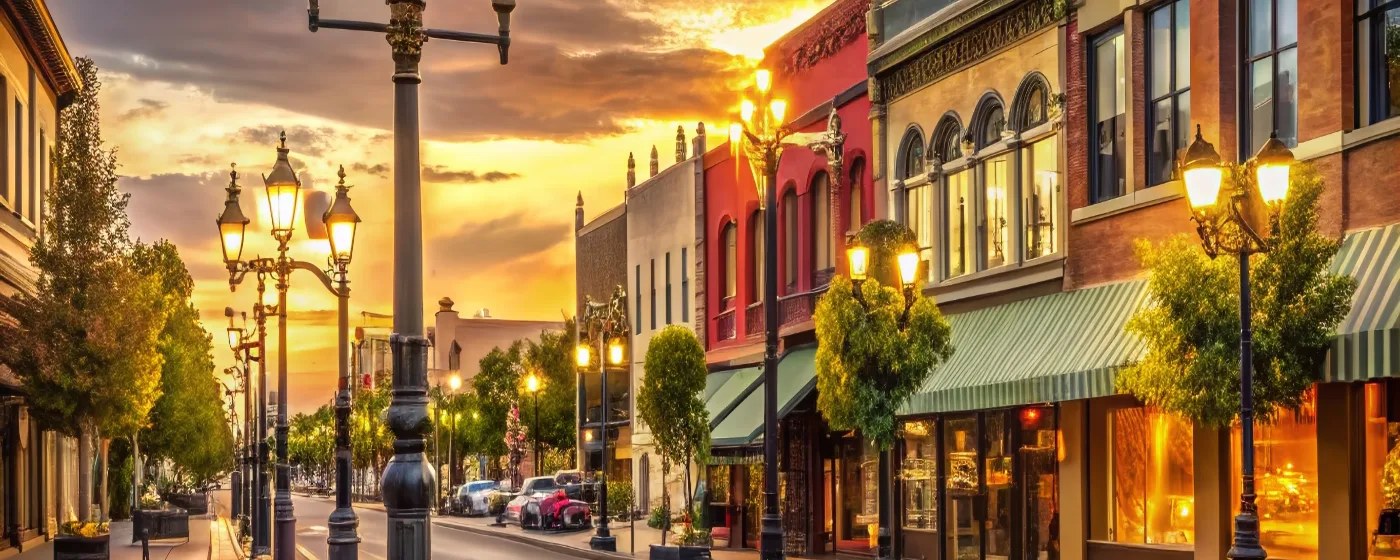
Maybe your financial planner ran the numbers and Idaho Falls came up. Maybe you've been watching costs climb everywhere else and someone mentioned eastern Idaho. Maybe you drove through on the way to Yellowstone and thought: people actually live here — at that price? The surprise for most people who look seriously at Idaho Falls is that it doesn't feel like a compromise. It's a regional hub of about 72,700 people, sitting at the confluence of the Snake River and a major tributary fork, anchored by Interstate 15 and US-20, and it genuinely punches above its weight — in healthcare infrastructure, in cultural amenities, and in what your retirement dollar can actually do here.
The economic engine running beneath the surface is Idaho National Laboratory, the federal nuclear research complex about 50 miles west, which has drawn a well-educated, science-oriented professional class to the region for decades. That workforce shapes the city in ways that matter to retirees: strong hospitals, a functional civic culture, the Art Museum of Eastern Idaho, the Museum of Idaho, and a downtown that has been actively reinvesting in itself. Eastern Idaho Regional Medical Center — EIRMC — is not a small community hospital. It is a full-service regional trauma center, and that distinction separates Idaho Falls from almost every comparably priced retirement market in the Mountain West.
Cost of living is genuinely and substantially below the national average — housing in particular runs well under comparable markets in the region. The Snake River Greenbelt, Tautphaus Park, and proximity to Yellowstone and Grand Teton National Parks mean outdoor access is real, not aspirational. Winters are cold and snowy, and the city's Walk Score of 42 means a car isn't optional for most residents. Those two facts — harsh winters and car dependency — are the honest reasons some retirees try Idaho Falls and leave.
Whether you're seriously considering a move or just doing early research, the sections below cover Idaho Falls' retirement case in full: healthcare access, the retiree tax picture, day-to-day costs on a fixed income, walkability and community life, downsizing options, and a side-by-side look at how Idaho Falls stacks up against nearby retirement alternatives.
Why Retirees Are Choosing Idaho Falls
Idaho Falls fits a specific kind of retiree well: someone who wants a real city's services — a Level II trauma center, regional retail, symphony performances at Mountain America Center, a zoo, a minor-league baseball stadium — without paying a coastal or resort-market premium for them. The typical home price of $400,448 (Zillow Home Value Index, May 2026) puts single-level ownership within reach for buyers who've built equity elsewhere, and it opens the door to downsizing with cash left over.
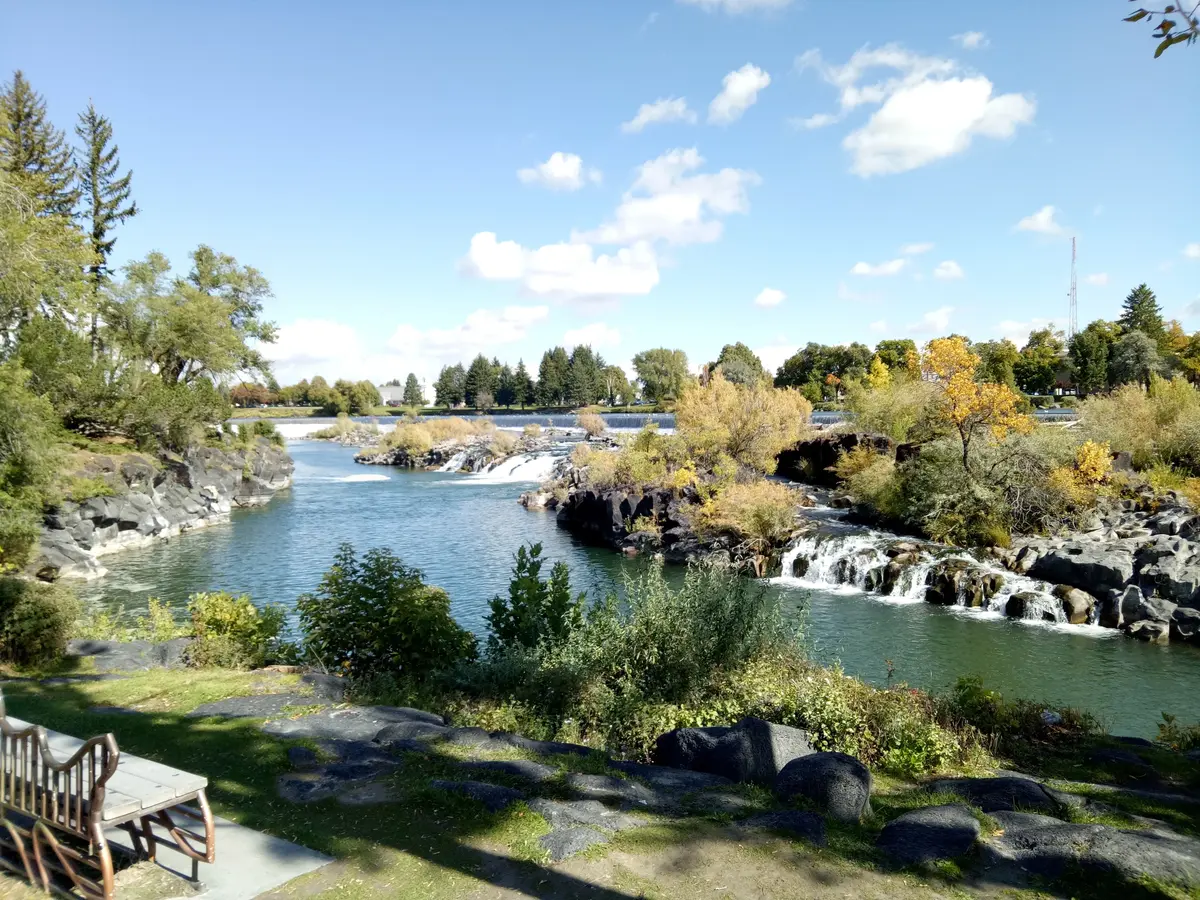
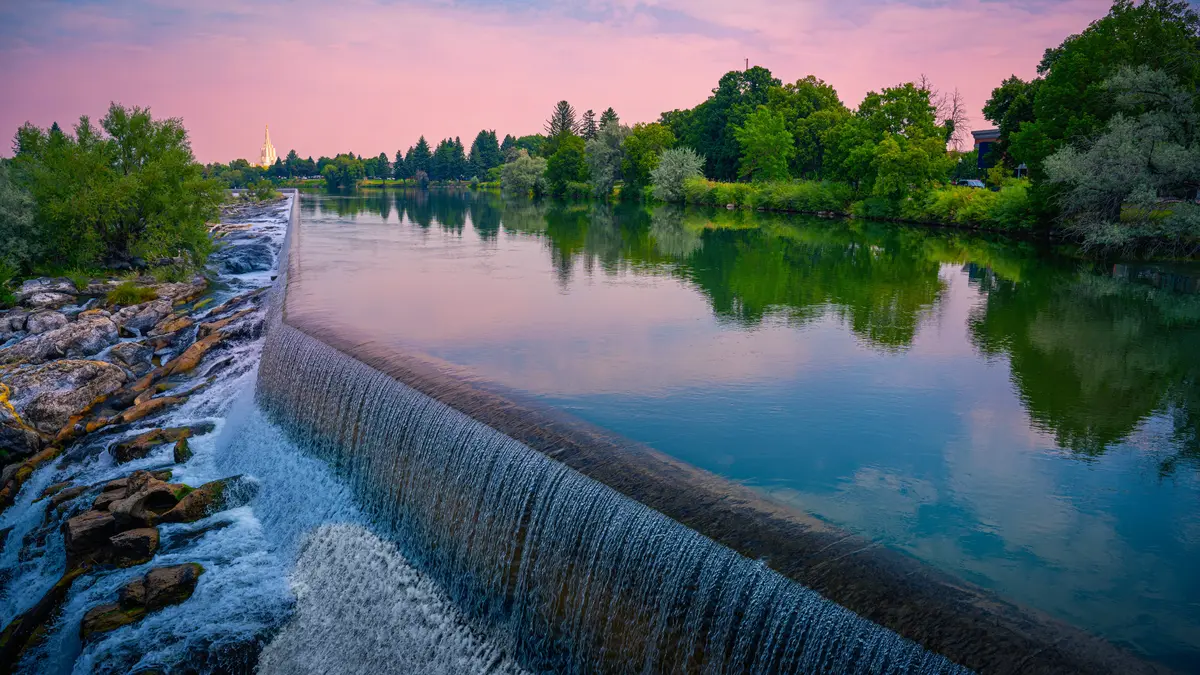
The outdoor access also draws retirees who aren't done moving. Yellowstone's west entrance is about two hours north. Grand Teton National Park is closer. A stretch of the Snake River southeast of the city offers some of the region's best fly-fishing, about 45 minutes out. If your retirement plan involves serious hiking, fishing, or day trips to national parks, the geography here is exceptional. The Snake River Greenbelt, which winds through downtown and past the Idaho Falls waterfall, gives you a flat, paved walking path that's genuinely usable year-round — on the milder days, at least.
Idaho Falls is a harder sell for retirees who want to walk to most errands, rely on public transit, or live somewhere with a warm, dry climate. The city averages around 190 frost days per year, and Greater Idaho Falls Transit (GIFT) operates as an on-demand service with no fixed bus routes — which means driving stays necessary well into retirement. If those are dealbreakers, look at Boise first. If they're manageable trade-offs for the right price and the right hospital system close by, keep reading.
Healthcare & Medical Access in Idaho Falls
This is where Idaho Falls genuinely earns its retirement case. Eastern Idaho Regional Medical Center — EIRMC — is a Joint Commission-accredited, 304-bed full-service hospital that operates at a level unusual for a city this size. It holds Idaho's only burn center, a Level II Trauma Center, one of only two Level I intensive care units in the entire state, and the region's only pediatric ICU. For a retiree evaluating healthcare access, that depth of specialization is the single most important fact about this city.
U.S. News & World Report rates EIRMC highly for Heart Arrhythmia treatment and Transcatheter Aortic Valve Replacement (TAVR) — two procedures that show up disproportionately on the medical timelines of people over 65. TAVR in particular is the kind of intervention that, in many smaller markets, would require a multi-hour transfer to a tertiary center. Here, it's available in-city.
EIRMC also operates Air Idaho Rescue, its own air medical transport service covering a 500-mile radius — including Yellowstone, the surrounding mountain parks, and remote stretches of Montana and Wyoming. That matters in eastern Idaho, where distances between hospitals can be vast. Mountain View Hospital provides a second full-service option in the city, and Melaleuca's presence as a major employer has supported a broader ecosystem of specialty clinics and outpatient providers than you'd typically find in a market this size.
The honest limitation: if you need sub-specialty care in fields like complex oncology, advanced neurosurgery, or organ transplant, you will be referred to Salt Lake City — roughly 220 miles south on I-15. That drive or flight is manageable for most situations, but it's a real consideration for anyone with an existing complex diagnosis. For the vast majority of retiree healthcare needs, including cardiac care, orthopedics, and emergency response, Idaho Falls handles it locally.
The Retiree Budget in Idaho Falls
Idaho's tax treatment of Social Security income is straightforward and favorable: the state does not tax Social Security benefits at all, regardless of your income level or filing status. That exemption is one of the cleaner ones in the Mountain West — no income phase-out, no means test.
Other retirement income — IRA and 401(k) withdrawals, pension distributions — is generally taxable at Idaho's flat income tax rate. The rate has been cited variously across sources for 2025 returns; confirm the current figure at tax.idaho.gov before filing. Beginning with tax year 2025, seniors aged 65 or older can claim an enhanced deduction of up to $6,000 per person ($12,000 per couple) against both federal and Idaho state taxes, subject to income limits — a meaningful offset for retirees drawing from tax-deferred accounts. Idaho also has no estate or inheritance tax, and the federal exemption threshold sits at $15 million for 2026, so the vast majority of retirees' estates carry no tax exposure at either level.
Property taxes here are low by any national comparison. The effective rate runs approximately 0.50% — on a $400,000 home, that keeps annual taxes well under most markets retirees are moving from. Idaho's Circuit Breaker program adds further relief: qualifying homeowners aged 65 or older with 2025 income under $39,130 can receive a property tax reduction of $250–$1,500, applied at the county assessor's office between January 1 and April 15 each year.
Day-to-day costs on a fixed income are where Idaho Falls makes the strongest case. Overall cost of living runs roughly 17% below the national average — groceries, healthcare co-pays, and local services all land below what most buyers relocating from the West Coast or the Mountain West resort corridor are used to paying. For a fuller breakdown of grocery, utility, and transportation costs, see the Idaho Falls cost of living page.
Looking to buy in Idaho Falls? Estimate your payment.
Enter your numbers to see an estimated monthly mortgage payment.
Estimate only. Excludes HOA fees and mortgage insurance. The interest rate above is a starting point, not a quoted rate — replace it with your own to see real numbers. Insurance is a flat placeholder, not a Idaho Falls quote.
Walkability, Community & Staying Active in Idaho Falls
Idaho Falls has a city-wide Walk Score of 42 — second among Idaho cities, but still firmly car-dependent territory for most daily errands. The number is pulled up substantially by Downtown Idaho Falls and the West Side, where blocks are shorter, sidewalks connect to the Snake River Greenbelt, and a handful of independent cafés, restaurants, and shops are reachable on foot. If walkable streets matter to your retirement, those two areas are where you should focus your housing search.
The Snake River Greenbelt is flat, paved, and genuinely one of the better urban trail systems in the Mountain West — roughly five miles of riverside path with views of the Idaho Falls waterfall, the Japanese Friendship Garden, and the historic downtown temple skyline. Retirees who walk or bike it regularly describe it as the social infrastructure of the city's older active population. On a summer morning, it functions like a neighborhood park that happens to run through the entire city.
For structured community, the Bonneville County Senior Citizens Center on Rollandet Avenue is the primary hub — fitness classes, meals, social programs, and volunteer coordination. The Idaho Falls Public Library and the Art Museum of Eastern Idaho both host regular programming oriented toward adult learners. Tautphaus Park, home to the zoo and a full-service recreation area, draws multigenerational weekend crowds that include a visible population of active older adults.
Volunteering is a real pathway to community here. Idaho National Laboratory's regional footprint means there's an established culture of professional civic engagement — literacy programs, museum docent roles, and community science initiatives all depend on volunteers, and retirees frequently fill those slots. A brewery along the River Parkway corridor and an independent taphouse near Park Avenue serve as informal gathering points for the over-50 crowd on weekend evenings — both are within reasonable distance of the Greenbelt corridor and the downtown core.
What surprises most retirees after six months: how quickly the social calendar fills up. The city is small enough that showing up twice to the same event means you already know people. What catches some of them off guard in a less pleasant way is the January-through-March stretch — temperatures regularly dip below zero, and anyone who planned to walk everywhere discovers very quickly that the Greenbelt is icy and the errands still need doing by car.
Right-Sizing: Downsizing in Idaho Falls
Single-level living is available in Idaho Falls, but inventory in the most convenient locations — close to EIRMC, the Greenbelt, or the medical clinic corridor — moves quickly. The city's housing stock skews toward traditional single-family homes built in the postwar through 1990s range, with a meaningful share of ranchers and split-levels that work well for buyers prioritizing no-stair access.
The Sunnyside area and pockets near the University Place neighborhood have seen the most consistent development of patio homes and maintenance-free detached communities in recent years. These typically appeal to buyers who want the ownership structure of a single-family home without the yard maintenance burden — a common priority for retirees who've already done that chapter. Expect newer construction in this category to trade at a premium over the city-wide median; older patio home communities in the same areas can offer better value for buyers willing to update.
Condominiums exist in Idaho Falls but the market is thin compared to Boise or a resort corridor like Jackson Hole. Downtown-adjacent condo inventory occasionally appears near the Snake River Landing development and along the Greenbelt corridor — these carry the most walkability of any attached product in the city, which commands a price accordingly.
Formally designated 55+ or active-adult communities, in the Sun City or Del Webb sense, are not a prominent feature of the local market. What exists instead is a scatter of smaller age-restricted or active-adult-oriented developments in the broader metro, particularly in Ammon and Iona to the east, where newer subdivision development has been most active and where single-level floor plans are easier to find. Buyers committed to a true 55+ community structure may find the selection limited and should budget time to search thoroughly or work with a local agent who tracks off-market listings in that category.
The practical downsizing path most retirees take in Idaho Falls: sell a larger family home, purchase a single-level rancher or newer patio home in the $350,000–$450,000 range, bank the equity difference, and use the lower property tax rate — approximately 0.50% effective — to keep carrying costs manageable on a fixed income. That math works here in a way it genuinely doesn't in most Western markets.
Idaho Falls vs Nearby Retirement Destinations
| City | Cost vs Idaho Falls | Primary Hospital | Walkability | Senior Living Depth | Overall Retirement Fit |
|---|---|---|---|---|---|
| Idaho Falls, ID | Anchor | EIRMC — Level II Trauma, TAVR, burn center | Walk Score 42; Greenbelt walkable core | Moderate; patio homes, limited 55+ communities | Value Nature Strong for active retirees prioritizing healthcare |
| Rexburg, ID | Noticeably cheaper | Madison Memorial Hospital — small community facility | Very car-dependent; limited pedestrian core | Thin; very limited senior-specific inventory | Quiet Best for retirees with family ties to BYU-Idaho; limited amenities |
| Blackfoot, ID | Cheaper | Bingham Memorial Hospital — small regional | Minimal; rural small-town layout | Very limited; mostly traditional single-family | Value Works if Idaho Falls healthcare is 25 minutes away and cost is the priority |
| Ammon, ID | About the same | Uses EIRMC (adjacent to Idaho Falls) | Car-dependent; newer suburban layout | Growing; newer single-level construction more available | Families Quiet Quieter suburban feel with full Idaho Falls access |
| Pocatello, ID | Noticeably cheaper | Portneuf Medical Center — regional trauma center | Slightly more walkable downtown than Idaho Falls | Moderate; wider range of senior-oriented housing | Value Solid alternative for budget-first retirees; smaller economy |
| Jackson, WY | Dramatically pricier | St. John's Medical Center — solid but small | Walkable town square; limited beyond core | Very limited; resort-market pricing squeezes inventory | Views Luxury Only viable for high-net-worth retirees; world-class scenery |
For retirees where healthcare depth is the deciding factor, Idaho Falls is the clear regional winner — no nearby city matches EIRMC's trauma level, cardiac specialization, and air-transport infrastructure. Pocatello is the strongest budget alternative, with Portneuf Medical Center providing a comparable (though somewhat smaller) regional hospital and a housing market that runs noticeably below Idaho Falls. Ammon is worth considering if you want newer construction and single-level floor plans while still being minutes from EIRMC and every Idaho Falls amenity. Jackson offers unmatched scenery and a compact walkable core, but its cost structure puts it out of reach for most retirees working from a fixed income. Rexburg and Blackfoot make sense primarily for people with existing family or community ties — neither offers the service depth that retirement-stage healthcare needs tend to require.
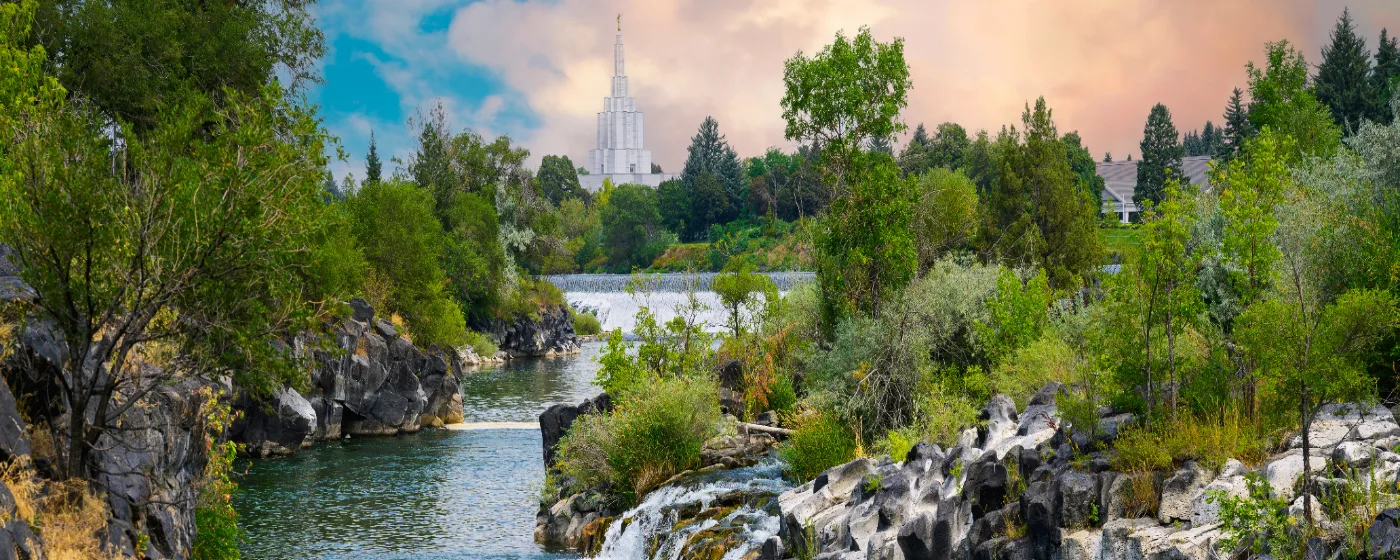
Local Expert Takeaway: The retirement case for Idaho Falls rests on three things that don't usually come together at this price point: a hospital — EIRMC — that handles cardiac emergencies and trauma at a level you'd expect from a city three times the size; a property tax rate of approximately 0.50% that keeps carrying costs low even as housing values have risen; and a Snake River Greenbelt that gives active retirees a genuine, flat, year-round walking corridor through the middle of the city. The catch is honest: winters are hard, Greater Idaho Falls Transit's on-demand service is not a substitute for owning a car, and 55+ community options are thinner here than in a Boise suburb. But for the retiree who wants a real city's infrastructure at a fraction of the cost — and who isn't giving up driving yet — Idaho Falls holds up under scrutiny in a way that most comparably priced markets don't.
Quick Takeaways & FAQs
✅ EIRMC in Idaho Falls holds a Level II Trauma Center designation, Idaho's only burn center, and nationally recognized cardiac capabilities including TAVR — making it one of the strongest retirement-stage hospital systems in any Idaho market at this price point.
⚠️ Idaho Falls has no fixed-route public bus service: Greater Idaho Falls Transit operates on demand only, meaning a personal vehicle remains essential for most retirees throughout retirement.
📍 Idaho's Circuit Breaker property tax relief program can reduce annual taxes by $250–$1,500 for homeowners aged 65+ with income under $39,130 — apply at the Bonneville County Assessor's office between January 1 and April 15.
Does Idaho tax Social Security retirement benefits?
How good is the hospital in Idaho Falls for retirees?
Are there 55+ or active-adult communities in Idaho Falls?
Can you get by without a car in Idaho Falls as a retiree?
What is the property tax rate for retirees in Idaho Falls?
Moving to Idaho?
Tell us what you need help with and we'll connect you with local resources.
