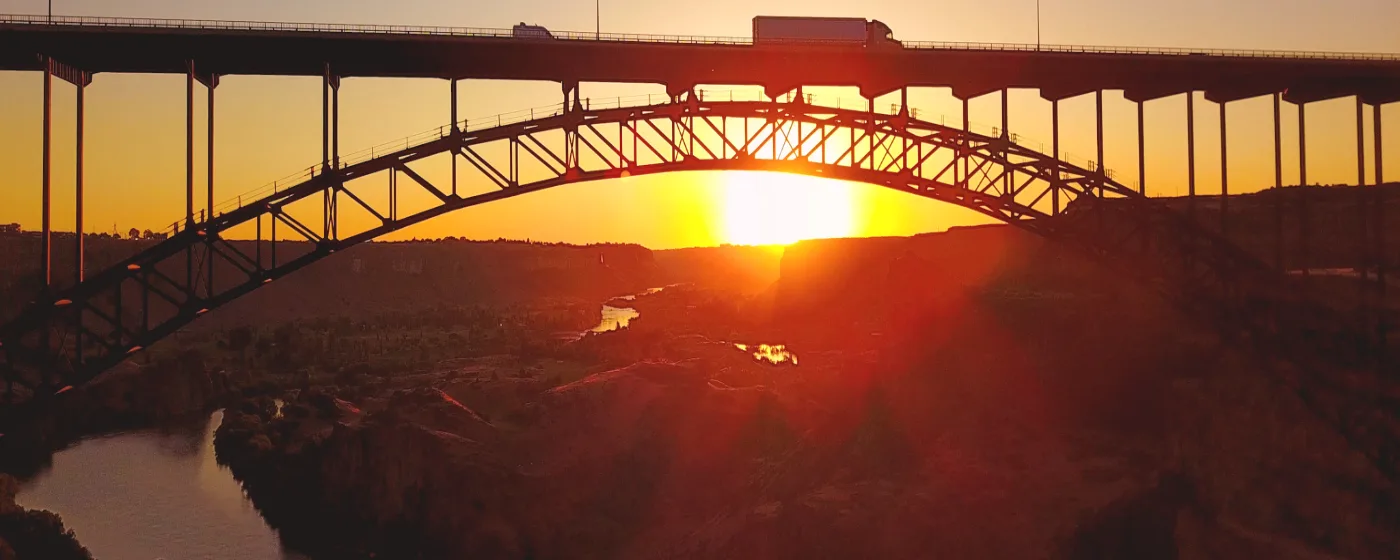
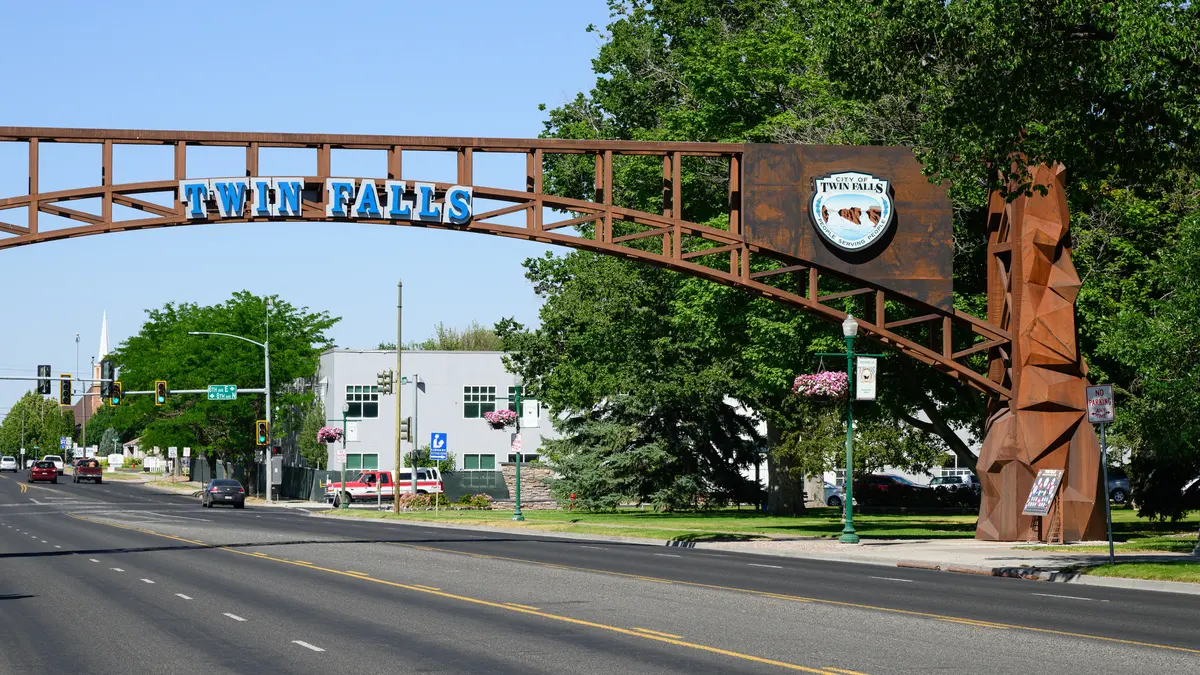
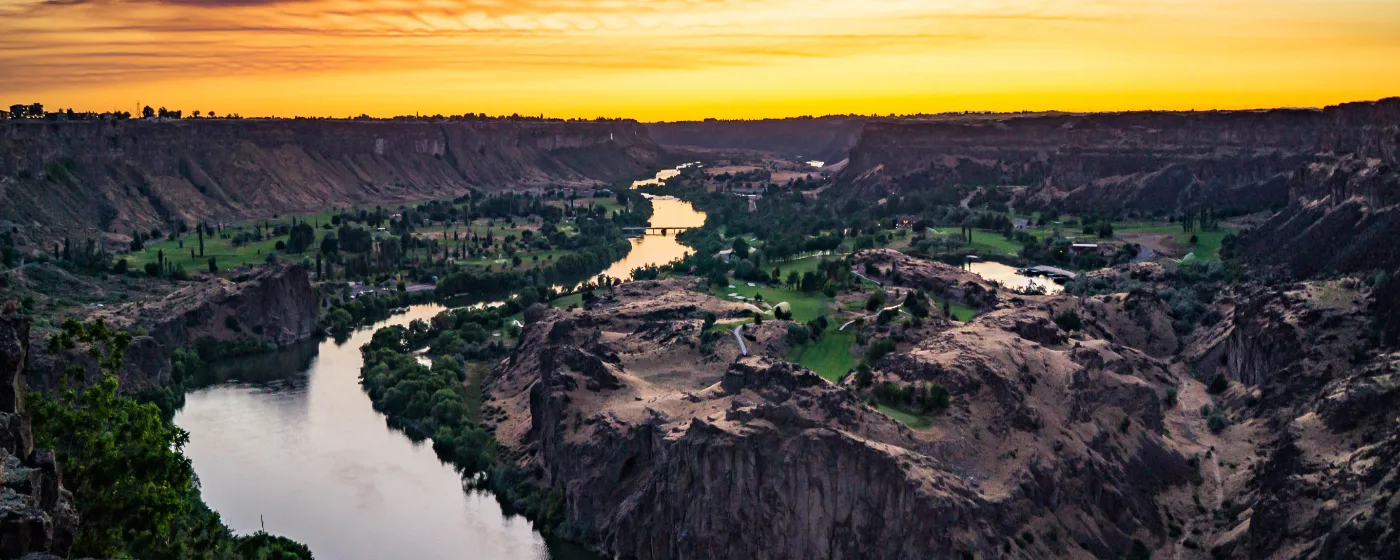
You've probably done the math already — or someone in your life has done it for you. California median home prices hit $843,390 in Q1 2026, and the question of what that same purchasing power looks like somewhere else has become impossible to ignore. Twin Falls sits in the center of Idaho's Magic Valley, bracketed by the Snake River Canyon to the south and high desert farmland in every other direction, about two hours from Boise on I-84. It is not a small town, and it is not trying to be Boise. It is the largest city within a 100-mile radius, and it functions as the commercial and cultural hub for a region that stretches into northeastern Nevada. That regional role shapes daily life here more than anything else.
The economic backbone is more industrial than most Californians expect. Chobani's massive yogurt plant, Clif Bar, and Glanbia Nutritionals make food and dairy manufacturing the city's defining industry — these are not tech jobs, and the salary culture reflects that. The College of Southern Idaho anchors the education sector and provides genuine community programming. Families relocating here from Sacramento, the Central Valley, or the Inland Empire often find the employment picture familiar; Bay Area and coastal transplants sometimes need a longer adjustment period to recalibrate income expectations. For a full picture of who the city suits and what the local job market actually looks like, see the Living in Twin Falls guide.
Total living costs in Twin Falls run roughly 8% below the U.S. national average, which puts them dramatically below coastal California benchmarks. The cost of living page covers utilities, groceries, and transportation in detail. What you need to know upfront is that the savings story is real — but it is concentrated in housing and taxes, not in everything. Groceries are taxed at 6% (Idaho's state sales tax; no city surtax applies in Twin Falls, though a $155-per-person food tax credit partially offsets this). The compromise is reduced access to the amenities a coastal Californian takes for granted: no Trader Joe's, limited public transit, and a cultural calendar that is growing but still modest compared to a mid-sized California metro.
This guide covers what Californians most need to understand before making the move: the home price and tax comparison in real dollar terms, what everyday life actually looks like, what surprises people after they arrive, and where the city is heading. Whether you're already in escrow or just stress-testing the idea, the sections below break down the numbers, the neighborhoods, the schools, the lifestyle, and the honest downsides.
The Home Price Reality: What Your California Equity Buys Here
The headline number is striking enough to state clearly: Twin Falls's median sold price was $380,000 in May 2026. California's statewide median was $843,390 in Q1 2026. That is not a rounding difference — it is a fundamentally different financial position for a buyer carrying California equity into this market.
For most California sellers arriving with a significant down payment, Twin Falls entry-level inventory is accessible in a way that has not been true in their home state for years. Buyers who sold a modest Central Valley home or a Southern California condo often find they can purchase in Twin Falls with no financing at all, or with a down payment large enough to keep monthly obligations well below California norms.
What the Price Gap Means in Practice
The gap is widest at the middle and upper end of the Twin Falls market. Areas along Canyon Rim, where homes face the Snake River Canyon, carry premiums above the city median — but even those tend to sit well below what a comparable view-lot property would command in coastal California. For neighborhood-by-neighborhood character and what each area actually feels like on the ground, the best neighborhoods page covers that in full.
One thing California buyers sometimes miscalculate: Twin Falls is not a buyer's market in the classic sense. Inventory moves. Sellers in the established neighborhoods along Grandview Drive or in the newer developments off Washington Street North do not wait indefinitely for offers. If you are planning a fly-in-and-decide trip, budget for speed — having financing in order before you land matters.
Property Tax: A Genuine Advantage
Idaho's effective property tax rate in Twin Falls is 0.72%. California's Prop 13 floor is 1.0% on assessed value — and for anyone who bought in California in the last decade, assessed value often tracks close to purchase price. At the national average of roughly 1.1%, most U.S. homeowners pay more than Twin Falls residents do. This is one of the few areas where Twin Falls genuinely outperforms Prop 13-protected California ownership on an ongoing basis, not just at purchase.
| Metric | Twin Falls, ID | California (Statewide) |
|---|---|---|
| Median sold home price | $380,000 (Redfin, May 2026) | $843,390 (C.A.R., Q1 2026) |
| Effective property tax rate | 0.72% | ~1.0% (Prop 13 floor) |
| State income tax | 5.3% flat rate | 1%–13.3% marginal rate |
| State sales tax | 6.0% (no local surtax) | 7.25% base + local add-ons |
| State Disability Insurance (SDI) | None | 1.3% (no wage cap, 2026) |
| Social Security taxed at state level | No | No |
For a deeper dive on all of Twin Falls's tax rates, see the cost of living page.
Idaho vs. California Taxes: A Line-by-Line Comparison
The income tax shift is the single largest ongoing financial change for most California transplants. Idaho moved to a flat 5.3% individual income tax rate on January 1, 2025 — confirmed by the Idaho State Tax Commission's own press release following the signing of HB 40 in March 2025. California's marginal rate climbs from 1% to 13.3% depending on income. A household earning $150,000 a year in California pays a very different effective state rate than that same household in Twin Falls pays at a flat 5.3%.
The Paycheck Items Californians Stop Paying
California's State Disability Insurance deduction was set at 1.3% with no wage cap in 2026. Idaho has no equivalent. For a high earner, this alone represents a meaningful annual difference in take-home pay — not dramatic on its own, but compounding with the income tax drop and the lower housing cost makes the total picture significant.
Idaho does not tax Social Security benefits at the state level. This matters most for households approaching or in retirement, but it is a clean structural advantage that does not require planning around.
Where Idaho's Tax Picture Is More Complicated
Idaho does tax grocery purchases at 6% — that is the state sales tax rate in full, with no Twin Falls city or county add-on. California exempts most groceries from its base sales tax. Idaho partially offsets this with a food tax credit: $155 per person for tax year 2025. For a family of four, that is $620 annually returned through the credit — real money, but it does not fully close the gap for larger grocery budgets.
The sales tax comparison otherwise runs in Idaho's favor. California's base rate is 7.25%, and most California counties and cities layer additional surtaxes on top of that, often pushing total rates to 9% or above in Los Angeles, San Francisco, and other metros. Twin Falls sits at a clean 6% with no local additions.
First-Year Tax Planning for California Arrivals
California has residency rules that can result in partial-year California income tax liability even after you move. Establish your Idaho residency cleanly — driver's license, voter registration, vehicle registration — and document your move date precisely. The state tax authority in California monitors high earners who leave, and the burden of proof for departure falls on you. This is not a Twin Falls-specific issue, but it surprises more California transplants than it should. A CPA familiar with dual-state year filings is worth the fee in your first Idaho tax year.
Daily Life: What California Prepared You For and What It Didn't
The first thing most California arrivals say around month three is some version of: I didn't realize how much I was paying just to be near things. Driving fifteen minutes to reach a mid-range restaurant felt normal in California because it was normal. In Twin Falls, that same fifteen minutes puts you in front of most of what the city has. The scale is genuinely different, and for a lot of people, that turns out to be fine — sometimes more than fine.
Where People Actually Gather
Downtown Twin Falls along Main Avenue West has been reshaping itself with new independent businesses alongside the longtime anchors. Koto Brewing Company opened on Main Ave W in spring 2026 and has become a reliable gathering spot — outdoor seating, community-oriented, the kind of place where you run into people you know. 2nd South Market in the Historic Warehouse District is Idaho's first food hall: six local food vendors plus a full bar in a repurposed 1926 building of about 13,000 square feet. Friday evenings there have a real energy that caught a lot of recent arrivals off guard.
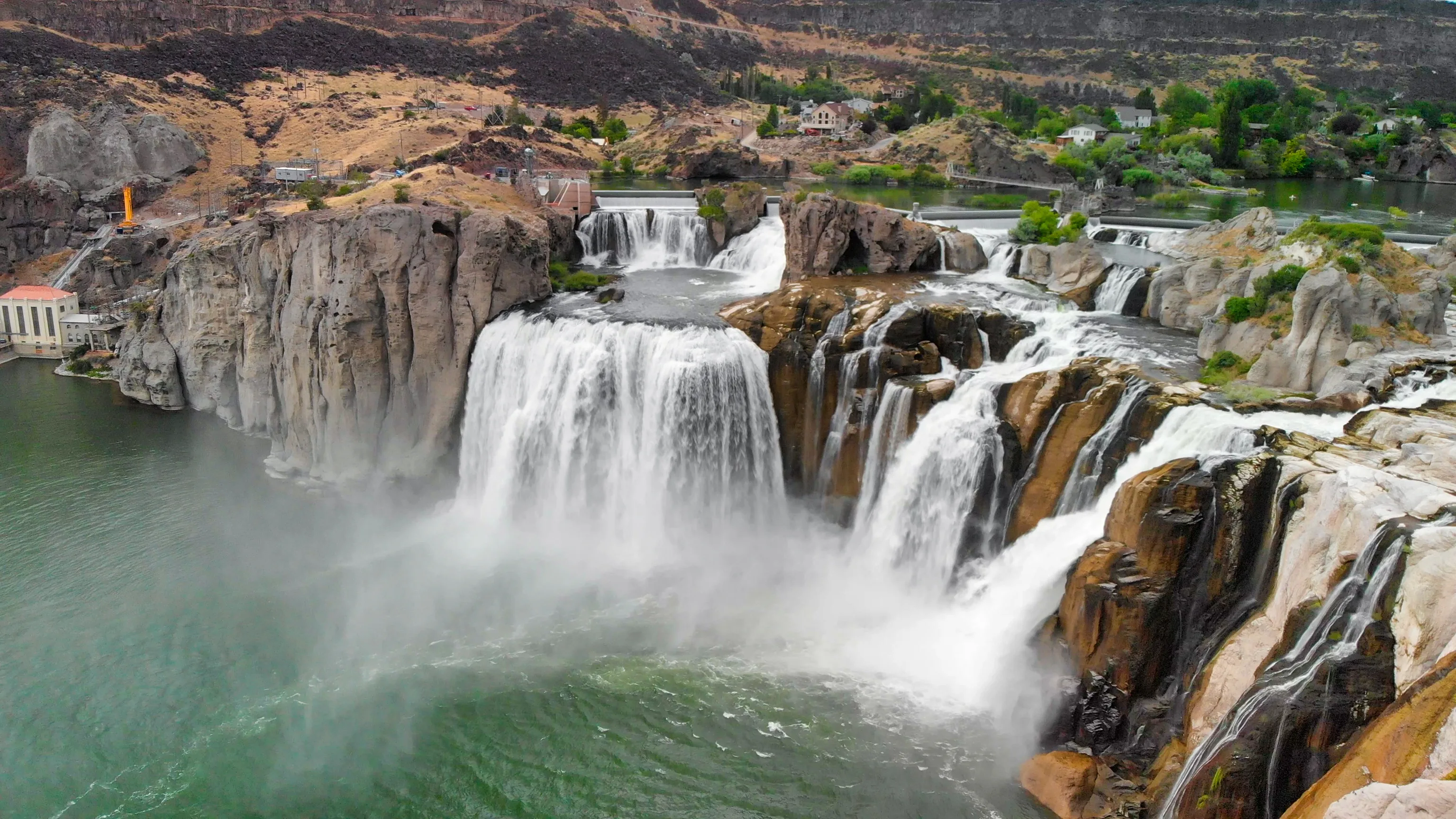
Shoshone Falls and the Perrine Bridge are not just tourist checkboxes — they are where locals go with visiting family, where people walk in the evenings, where BASE jumpers launch off a bridge that's just... in town. Centennial Waterfront Park and Dierkes Lake give the city a recreational waterfront that many cities four times its size would envy. For a full breakdown of what the parks and trail network actually looks like, the parks and recreation page has it covered.
The Commercial Development Story Right Now
Twin Falls is in an active build-out cycle in 2025–2026. New hotels are under construction along the Snake River Canyon rim and adjacent to Magic Valley Mall. Multiple national restaurant chains are opening. The city is growing into its role as a regional hub, and the experience of living here in 2026 is noticeably different from what it was even three years ago. California arrivals who wrote off the retail and dining picture based on older accounts are sometimes genuinely surprised.
What California Didn't Prepare You For
The wind. Twin Falls sits at roughly 3,700 feet in high desert, and the canyon geography funnels consistent, sometimes gusting wind that feels nothing like coastal breezes. It can sand-blast newly planted landscaping and make outdoor dining uncomfortable on spring afternoons. Nobody mentions this in relocation conversations, and nearly everyone who moves from coastal California brings it up within a year.
The heat and cold swings are also steeper than most California origins. Summers hit the high 90s regularly, and winters bring genuine cold snaps and occasional heavy snow. If you are coming from San Diego or coastal Los Angeles, budget for a wardrobe transition and possibly HVAC upgrades in older housing stock.
Looking to buy in Twin Falls? Estimate your payment.
Enter your numbers to see an estimated monthly mortgage payment.
Estimate only. Excludes HOA fees and mortgage insurance. The interest rate above is a starting point, not a quoted rate — replace it with your own to see real numbers. Insurance is a flat placeholder, not a Twin Falls quote.
Schools, Safety, and the Practical Infrastructure Californians Ask About
Twin Falls School District holds a B rating, according to Niche, and serves a diverse student population that includes a significant Spanish-speaking community. The district has made measurable investments in dual-language and vocational programming through its partnership with the College of Southern Idaho. For families whose California school experience was shaped by highly competitive suburban districts, the adjustment can go either direction — some find the smaller class environments a genuine improvement, others miss the depth of AP offerings. The schools page breaks down individual campuses in detail.
Safety: The Honest Read
Twin Falls is not crime-free. The city carries a moderate property crime footprint concentrated in specific commercial and transitional corridors rather than spread evenly across all neighborhoods. Some streets closer to the older downtown core see more incidents than the newer development areas to the north. For specifics by neighborhood, see the safety page.
Getting Around and Getting Out
Boise is approximately 120 miles northwest on I-84 — roughly two hours under normal conditions, longer in winter weather. Magic Valley Regional Airport (TWF) offers limited direct routes, so most significant air travel involves driving to Boise Airport, which has a far broader flight network. This is one of the catches that matters most to Californians with frequent professional or family travel needs. Build that two-hour Boise buffer into any job that requires regular air departures.
The traffic chokepoint that locals know: the Blue Lakes Boulevard corridor at afternoon rush, particularly between Falls Avenue and Pole Line Road, backs up reliably between 4:30 and 5:30 p.m. It is not Bay Area traffic — nothing here is — but for a city this size, it is a genuine bottleneck. Locals heading north toward the Canyon Springs Road area often cut through Washington Street to avoid it.
Who Thrives Here and Who Struggles: The Honest Accounting
The people who land in Twin Falls and never look back tend to share a few things. They have equity from a California sale that genuinely reset their financial position. They are not primarily defined by access to urban cultural infrastructure. They have outdoor interests — the canyon, the Snake River, the proximity to Sun Valley and Craters of the Moon — that the region actually delivers on. And they value the scale: knowing people in town, shorter commutes, the ability to be involved in the community without being anonymous.
Who Tends to Struggle
Californians who move to Twin Falls expecting a cheaper version of the lifestyle they had often have a harder adjustment. The restaurant scene is growing but it does not match what even a mid-sized California city offers. There is no symphony, no major-league sports anchor, and limited cultural programming outside of the College of Southern Idaho's events calendar. Single professionals from coastal cities sometimes find the social scene narrower than they expected.
Remote workers with California salaries and Twin Falls costs are, on paper, in the best possible position. In practice, some find that the combination of geographic isolation and professional disconnection from their industry's networks is harder to sustain long-term than they anticipated. Boise's tech and creative economy is real, but it is two hours away.
Why People Leave
The most honest reason people move back to California — or move on to Boise — is professional opportunity. If your industry or your career trajectory requires proximity to a larger labor market, Twin Falls will eventually feel like a constraint. Some families make it work by treating Boise as a commutable job market for one partner and leaning on Twin Falls's cost structure; others find that math exhausting after a couple of years.
A smaller cohort leaves because of the wind, the summer heat, and the winters — the climate reality that California did not prepare them for. These are not dealbreakers for people who grew up with real seasons, but they catch coastal transplants off guard more than almost any other factor.
The Bottom Line for California Arrivals
Twin Falls is a genuinely good move for the right household profile: equity in hand, lifestyle oriented around outdoors and community over urban density, and a realistic read on the employment picture. The financial case — lower home prices, a flat 5.3% state income tax, a 0.72% property tax rate, no SDI deduction — is not hype. It is real and it compounds. The lifestyle case requires more honest self-assessment. For more on which buyer types Twin Falls tends to suit long-term, see the Living in Twin Falls guide.
Local Expert Takeaway: The financial case for moving from California to Twin Falls is legitimate — the home price gap is real, the tax structure is genuinely friendlier, and the 0.72% property tax rate undercuts both California's Prop 13 floor and the national average. What the spreadsheet doesn't capture: the canyon wind that surprises every coastal arrival, the two-hour Boise buffer built into any flight, and the fact that Friday night in Twin Falls now means Koto Brewing on Main Ave W or dinner at 2nd South Market in the Historic Warehouse District — not the Mission District. If that trade-off fits your life, the numbers will follow.
Quick Takeaways & FAQs
✅ Twin Falls's $380,000 median sold price (May 2026) sits at less than half of California's Q1 2026 statewide median, giving California equity sellers a genuine financial reset.
⚠️ Idaho's 6% sales tax applies to groceries, which California exempts — a real ongoing cost difference that the $155-per-person food tax credit only partially offsets.
📍 The Blue Lakes Boulevard corridor between Falls Avenue and Pole Line Road backs up daily from 4:30–5:30 p.m.; locals headed north use Washington Street to bypass it.
How much cheaper are homes in Twin Falls compared to California?
How does Idaho's income tax compare to California's for someone earning $100,000–$150,000?
Does California try to tax you after you move to Idaho?
What do most California transplants not expect about daily life in Twin Falls?
Is Twin Falls a good fit for remote workers moving from California?
Moving to Idaho?
Tell us what you need help with and we'll connect you with local resources.
