
Most people who move to Twin Falls from larger Idaho markets do a double-take when they see what $380,000 actually buys here. In a state where a lot of headline growth has been concentrated in the Treasure Valley, Twin Falls sits roughly 120 miles to the southeast and holds its own as a genuine regional hub — anchored by the Snake River Canyon, the Perrine Bridge, and a food-manufacturing economy that keeps steady employment even when tech-sector tides turn. The city's layout is car-dependent and spread out, but that sprawl is also what keeps land costs reasonable compared to what's happened north of the canyon in Boise.
The economic backbone here isn't remote workers chasing scenery — it's Chobani, Clif Bar, Glanbia Nutritionals, and the College of Southern Idaho, a constellation of employers that gives the city a fundamentally different income profile than a bedroom suburb. The median household income of $61,205 is modest by national standards, but it aligns reasonably well with what the housing market actually demands. That alignment — not a dramatic discount, just a functional one — is what draws families, manufacturing professionals, and people looking to own a home without a decade-long savings campaign.
Twin Falls's overall cost of living runs approximately 5% below the national average, driven mainly by housing and utilities rather than any dramatic grocery edge. Utilities are a genuine standout: Idaho Power's residential electricity rate of 11.88 cents per kilowatt-hour runs close to 29% below the national average, and combined monthly utility costs (electric, water, sewer, trash) land around $253 for a typical household. Groceries come in roughly 5% below national norms. The catch is transportation — living here without a car is not a practical plan, and fuel and vehicle costs run a touch above the national average as a result.
Whether you're weighing a job offer in the Magic Valley, comparing Twin Falls against Jerome or Burley, or just trying to figure out whether your budget stretches here, the sections below break down Twin Falls's housing costs, rent vs. buy math, everyday expenses, a side-by-side city comparison, and the full Idaho tax picture.

What It Really Costs to Live in Twin Falls
Twin Falls is not a bargain-basement market, but it is a genuinely affordable one — and that distinction matters. The Redfin median sale price hit $380,000 in May 2026, a figure that reflects years of steady appreciation driven by population growth and demand from buyers priced out of the Boise metro. That number is meaningfully below what buyers face in Boise or the broader Treasure Valley, but it's also no longer the sleeper deal it was five years ago.
What keeps Twin Falls accessible is the combination of factors working in tandem: low property taxes, below-average utility costs, and an Idaho tax structure that avoids the local income-tax pile-on common in other states. The city's overall cost of living running 5% below the national average sounds modest, but it compounds — lower utilities, lower property-tax bills, and competitive grocery prices add up over a year in ways a headline number doesn't capture.
The honest pressure point is that wage growth here hasn't kept perfect pace with home-price appreciation. A household earning the city's median income of $61,205 stretches to buy at the current median price. That math is workable for dual-income households or buyers bringing equity from a previous sale — it's tighter for single earners stepping in fresh.
Housing: Rent vs Buy in Twin Falls
At $380,000 (Redfin median sale price, May 2026), Twin Falls sits comfortably below the Boise metro but has moved well past the sub-$300,000 range that defined it just a few years back. Entry-level homes — older construction, smaller footprints, often needing some updating — can still be found starting in the low-to-mid $200,000s, though that window is narrowing. Those more affordable options tend to cluster in older sections of the city rather than the newer-construction subdivisions on the edges of town; for a detailed neighborhood-by-neighborhood breakdown, the best neighborhoods guide covers the specifics.
The effective property tax rate in Twin Falls County is approximately 0.72% — well below the national median of around 1.02%. That lower rate meaningfully reduces the annual carrying cost of ownership compared to what buyers pay in many Western markets. Use the mortgage calculator below this section to model your full monthly payment; what the tax rate tells you is that the property-tax slice of that payment will be smaller here than in most comparable cities.
When Renting Makes More Sense
Average monthly rent in Twin Falls runs approximately $1,222 to $1,402 depending on unit type and building vintage. For someone relocating for a new job, renting first makes real sense here — the city's neighborhoods vary more than first-time visitors expect, and buying the wrong location is a common mistake among people who moved quickly.
Renting also makes sense if you're planning to stay fewer than three years. The Twin Falls market has appreciated, but transaction costs and the modest pace of local wage growth mean the break-even horizon on buying isn't as short as in hotter markets. If you're staying long-term, ownership at these prices — with a sub-1% effective property-tax rate — is a strong financial position.
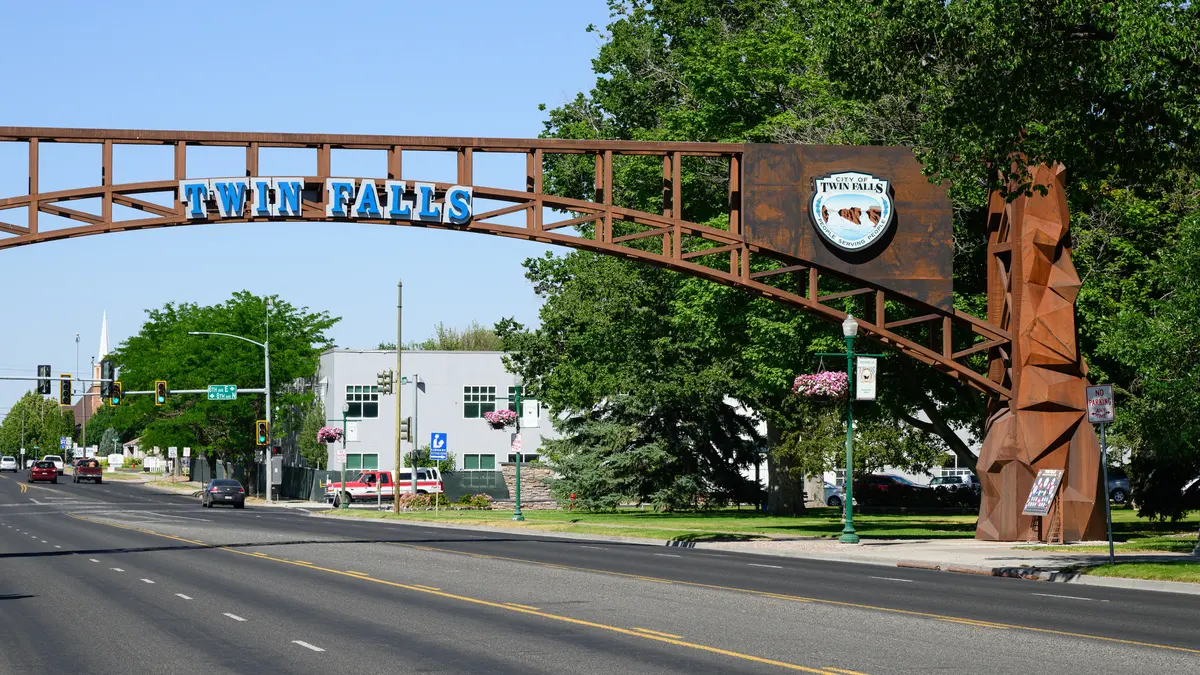
Everyday Costs Beyond Housing in Twin Falls
Utilities are where Twin Falls genuinely over-delivers. Idaho Power serves the city at 11.88 cents per kilowatt-hour — well below national norms — and when you add water, sewer, and trash, the combined monthly utility bill for a typical household runs around $253. That's a number that surprises most newcomers, especially those arriving from California or the Pacific Northwest.
Groceries track about 5% below the national average, and transportation is the line item that fights back: the car-dependent layout means fuel, insurance, and vehicle maintenance costs run slightly above the national average. There's no meaningful public transit network here, so budget for two vehicles if your household is used to that setup elsewhere.
| Category | Typical Monthly Cost | Notes |
|---|---|---|
| Housing (2BR Rent) | $1,222 – $1,402 | Market-rate apartments and rentals; owners should use the mortgage calculator above for a purchase estimate |
| Utilities | ~$253 | Electric, water, sewer, trash combined; Idaho Power rates effective Jan 2026 |
| Groceries | $400 – $550 | Roughly 5% below national average; estimate for 1–2 person household |
| Transportation & Gas | $350 – $500 | Car-dependent city; budget for fuel, insurance, and maintenance — runs ~5% above national average |
| Phone & Internet | $100 – $160 | Major carriers available; fiber and cable internet options in most neighborhoods |
| Dining & Entertainment | $200 – $400 | A pint at Koto Brewing Co. on Main Avenue North or dinner at Elevation 486 on River Vista Place runs reasonable by Idaho standards |
| Misc / Discretionary | $150 – $300 | Personal care, household supplies, subscriptions — tracks close to national norms |
Looking to buy in Twin Falls? Estimate your payment.
Enter your numbers to see an estimated monthly mortgage payment.
Estimate only. Excludes HOA fees and mortgage insurance. The interest rate above is a starting point, not a quoted rate — replace it with your own to see real numbers. Insurance is a flat placeholder, not a Twin Falls quote.
Twin Falls vs Nearby Cities: Cost Comparison
| City | Median Home Price | Typical 2BR Rent | Cost vs Twin Falls |
|---|---|---|---|
| Twin Falls | $380,000 (Redfin, May 2026) | $1,222 – $1,402/mo | Anchor |
| Jerome | Approx. $310,000 – $330,000 | $1,000 – $1,200/mo | Noticeably cheaper |
| Kimberly | Approx. $320,000 – $345,000 | $950 – $1,150/mo | Somewhat cheaper |
| Filer | Approx. $290,000 – $320,000 | $900 – $1,100/mo | Cheaper, fewer amenities |
| Buhl | Approx. $270,000 – $300,000 | $850 – $1,050/mo | Meaningfully cheaper |
| Hansen | Approx. $260,000 – $295,000 | $800 – $1,000/mo | Most affordable nearby option |
The pattern is consistent: Twin Falls commands a premium over its smaller neighbors because it's where the colleges, major retailers, and most of the regional employment actually sit. Living in Jerome or Kimberly and commuting into Twin Falls is a genuine strategy for buyers who want lower home prices without sacrificing access to city amenities — the drive is typically 15 to 25 minutes depending on your destination.
Taxes & the Bottom Line for Twin Falls
Idaho State Income Tax
Idaho moved to a flat individual income tax rate of 5.3% effective January 1, 2025, down from the prior 5.69%. There is no local income tax layered on top — what the state charges is what you pay, full stop. That flat structure is straightforward to plan around, and it positions Idaho favorably compared to states with higher marginal rates, though it's not as dramatic an advantage as no-income-tax states like Nevada or Washington.
Sales Tax
The statewide sales tax is 6.0%, with a combined state-and-local average of approximately 6.03% — Twin Falls has no meaningful local addition on top of the state rate. That combined rate is among the lower figures in the Western U.S., which is worth noting for households that do a significant share of their spending locally rather than online.
Property Tax
The effective property tax rate of approximately 0.72% is the quiet hero of Twin Falls's cost structure. At the current median price discussed above, the annual property tax bill is well below what owners in comparable Western markets pay — a durable annual savings that compounds over a long ownership horizon. Idaho also offers a homeowner's exemption that can reduce the taxable value of a primary residence, which lowers the effective rate further for owner-occupants.
The Honest Bottom Line
Twin Falls fits dual-income households, established professionals, and buyers arriving with equity from a prior sale. It's a stretch for single earners at the city's median income buying at the current median price — the math is workable but leaves little margin. If you're coming from a higher-cost Western market and your income travels with you, Twin Falls still represents a strong value proposition — just not the automatic slam-dunk it was before 2020.

Local Expert Takeaway: Twin Falls's cost advantage over the Boise metro is real but increasingly specific: it shows up most clearly in property taxes (0.72% effective rate), utility bills (~$253/month combined), and home prices that still come in well below Treasure Valley medians. The places where you won't save — transportation and vehicle costs — reflect a city built around driving, full stop. Budget for two cars, and don't underestimate how much the Snake River Canyon geography shapes where you'll want to live relative to where you'll actually work. A pint at Koto Brewing on Main or dinner at Elevation 486 overlooking the canyon costs less than you'd expect and signals the broader point: everyday life here punches above its price tag.
Quick Takeaways & FAQs
✅ Twin Falls's overall cost of living runs approximately 5% below the national average, with utilities coming in close to 29% below national norms thanks to Idaho Power's low residential electricity rates.
⚠️ Home prices have climbed significantly from pre-2020 levels and the $380,000 median (May 2026) is a stretch on a single median income — dual-income households or buyers with equity from a prior sale will be better positioned.
📍 There is no local income tax in Twin Falls — Idaho's flat 5.3% state rate is the only income tax you'll pay, and the 6% sales tax has virtually no local addition on top.
What is the median home price in Twin Falls, Idaho?
How much does it cost to rent a 2-bedroom apartment in Twin Falls?
Is Twin Falls cheaper to live in than Boise?
What are the property taxes like in Twin Falls?
Does Idaho have a local income tax on top of the state rate?
Moving to Idaho?
Tell us what you need help with and we'll connect you with local resources.
