Maybe you've priced out the Boise suburbs and someone mentioned eastern Idaho. Maybe you have family near BYU-Idaho in Rexburg and you want to stay close without paying Rexburg prices. Sugar City sits just ten minutes from Rexburg along U.S. Highway 20, small enough that you'll recognize your neighbors by the second month but close enough to a real town that you aren't truly isolated. That proximity is the central fact of life here — nearly everything that makes retirement functional (hospital, grocery, pharmacy, dining) is a short drive into Rexburg, not walkable from your front door.
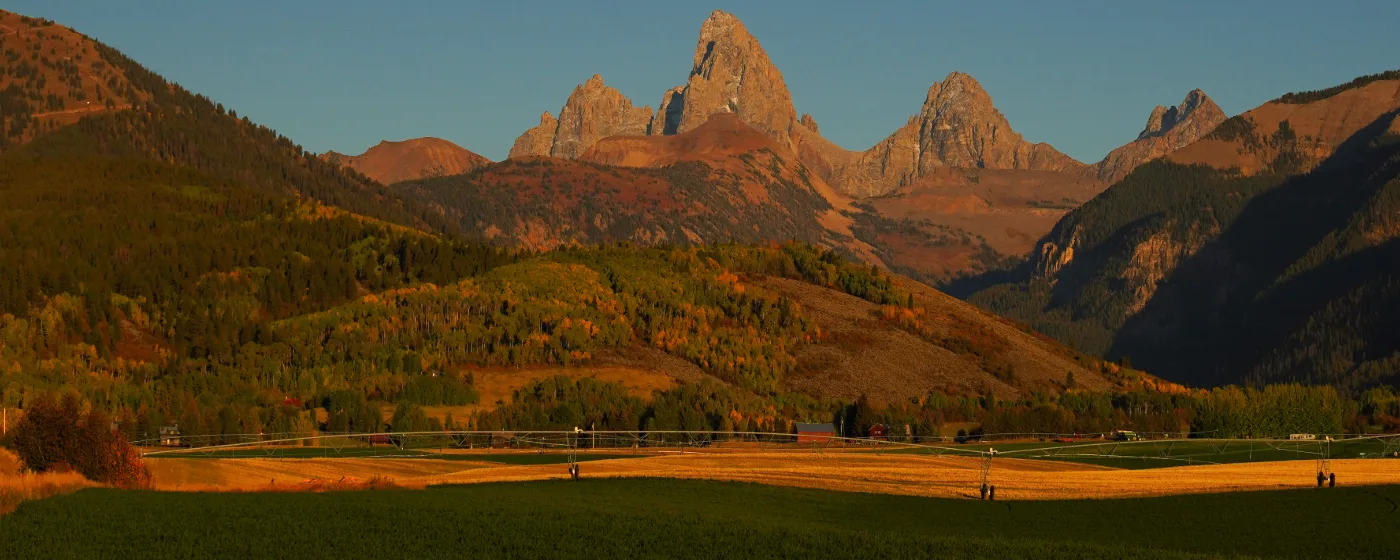
Sugar City is a city of roughly 2,115 people in Madison County, and it is growing fast — a 57.3% population increase since the 2020 Census. That growth skews young: the median age is 29.3 years, and an estimated 339 seniors currently live in the city. Retiring here means joining a tight-knit, largely faith-centered community that values quiet streets, low crime, and proximity to spectacular eastern Idaho scenery. The Teton Range is visible on a clear morning from almost anywhere in town. The Teton Dam Flood Memorial along the North Fork Teton River is a genuine piece of American history, and it sits right here in Sugar City. For retirees who value that kind of deep local story, this place delivers.
The cost picture is genuinely appealing on a fixed income. The median list price for homes stood at $434,000 as of March 2026 — noticeably below the Boise metro and well below Sun Valley or Jackson Hole across the Wyoming border. Idaho's tax structure treats retirees reasonably well, with Social Security fully exempt from state income tax and an effective property tax rate of approximately 0.66%. Day-to-day costs for groceries, gas, and services run lean compared to Idaho's larger metros. For a full breakdown of Sugar City's cost of living, including rent and utilities, that page goes deep.
Whether you're seriously considering a move or just researching the region, the sections below cover what retirement in Sugar City actually looks like: healthcare access and its honest limitations, the retiree tax picture, walkability and community life, downsizing options, and how Sugar City stacks up against nearby retirement alternatives across eastern Idaho.

Why Retirees Are Choosing Sugar City
The retirees who thrive in Sugar City share a specific profile: they want quiet, they want affordable, and they don't need a city's worth of amenities within walking distance. If you're coming from a larger metro and expecting restaurants and cultural venues a short stroll away, Sugar City will disappoint quickly. But if your retirement vision involves a small-town pace, low traffic, neighbors who wave, and dramatic scenery an hour from Yellowstone's west entrance, this town punches well above its size.
The community leans heavily on shared values shaped by the area's predominant faith tradition. Social life here tends to organize around faith congregations, family gatherings, and outdoor recreation rather than bars or nightlife — which suits plenty of retirees perfectly and will feel limiting to others. That's not a judgment, it's a calibration. Come with realistic expectations and you'll find genuine warmth. Come expecting a conventional retirement-community social scene and you'll find yourself driving to Rexburg or Idaho Falls for most of it.
The home price picture at $434,000 median list price (March 2026) positions Sugar City as an accessible entry point for retirees downsizing from higher-cost markets, particularly those selling equity from california, washington, or utah's Wasatch Front. Inventory moves slowly — homes sat a median of 92 days on the market as of March 2026 — which gives buyers time to be deliberate rather than reactive. That buyer-friendly pace is unusual in Idaho right now and genuinely valuable for retirees who don't need to rush. For those who do need significant healthcare infrastructure or urban social density within their own zip code, Rexburg or Idaho Falls will be the better fit.
Healthcare & Medical Access in Sugar City
Madison Memorial Hospital: Your Primary Resource
Madison Memorial Hospital in Rexburg — roughly 10 minutes from Sugar City — is the anchor of healthcare access for anyone retiring here. It is a community-owned, non-profit facility with 69 licensed beds, and it covers the core bases: emergency and surgical care, orthopedics, cancer care, and women's health services. That orthopedics coverage matters specifically for older adults; joint replacements and post-surgical rehab can be handled locally rather than requiring a trip to Idaho Falls.
The Madisonhealth system that operates Madison Memorial is larger than the hospital alone — it includes six clinics and a network of 270 doctors, providers, contracted therapists, and CRNAs across seven eastern Idaho locations. That depth means primary care, physical therapy, and many specialist appointments stay within a 15-minute drive. Patient satisfaction is strong: 89% of patients report they would recommend the hospital to others, per U.S. News & World Report.
What's Not Here — and What That Means
Cardiac surgery, Level I trauma care, and many subspecialty services require the drive south to Idaho Falls — approximately 30 miles from Sugar City. Eastern Idaho Regional Medical Center in Idaho Falls is the referral destination for complex cases that Madison Memorial cannot handle. For most healthy retirees managing routine conditions, this is manageable. For anyone with serious cardiac disease, complex cancer treatment, or a condition requiring frequent specialist visits, that 30-mile gap is a real factor worth weighing before committing.
Telehealth has reduced the friction for many routine specialist consultations, and the Madisonhealth clinic network can coordinate referrals efficiently. But if you've been accustomed to having a major academic medical center 10 minutes away, the adjustment to eastern Idaho's healthcare geography is genuine. Go in with clear eyes about your current and likely future medical needs.

The Retiree Budget in Sugar City
Idaho's Tax Picture for Retirement Income
Idaho's treatment of Social Security is the first good news: the state exempts Social Security benefits entirely from state income tax, regardless of your income level. For retirees leaning primarily on Social Security, that exemption delivers immediate, meaningful relief compared to states that tax it at full rates.
Other retirement income — pensions, IRA withdrawals, 401(k) distributions — faces Idaho's flat state income-tax rate of 4.4% (tax year 2025, per TaxShark citing the Idaho State Tax Commission). That rate is competitive without being exceptional. Idaho also imposes no state estate tax and no inheritance tax, which simplifies planning for retirees thinking about wealth transfer to children or grandchildren.
Property Tax Relief Layers
Idaho stacks several property tax relief programs that retirees should know before dismissing the state as a high-tax environment. The Homeowner's Exemption removes 50% of a primary residence's assessed value — up to a $125,000 maximum — from the taxable base. On top of that, the Circuit Breaker program cuts property taxes by $250 to $1,500 for homeowners age 65 or older whose 2025 net household income falls at or below $39,130. Both programs can be used together, and applications for the Circuit Breaker run January 1 through April 15 at the Madison County assessor's office.
The effective property tax rate in Sugar City is approximately 0.66% — already among the lower rates in Idaho, and meaningfully reduced further if you qualify for either exemption. One more budget line worth noting: Idaho offers a grocery tax credit of $140 per person annually for residents age 65 or older, claimed directly on your state income-tax return. On a fixed income where every recurring cost matters, that credit offsets a real expense.
Daily Cost Reality on a Fixed Income
Sugar City itself has no grocery store — daily errands mean driving into Rexburg, where a full supermarket, pharmacy, and big-box retail are readily available. Fuel costs and vehicle upkeep are genuine line items in your budget here; this is not a car-optional retirement. The trade-off is that Rexburg's prices for groceries and services run lean compared to Idaho's larger metros, so the drive costs you time but not necessarily money relative to living in Boise or Meridian.
Looking to buy in Sugar City? Estimate your payment.
Enter your numbers to see an estimated monthly mortgage payment.
Estimate only. Excludes HOA fees and mortgage insurance. The interest rate above is a starting point, not a quoted rate — replace it with your own to see real numbers. Insurance is a flat placeholder, not a Sugar City quote.
Walkability, Community & Staying Active in Sugar City
The Walkability Reality
Sugar City is flat — the terrain poses no challenge for walking or cycling — but the infrastructure for car-free errands is essentially nonexistent. There is no grocery, pharmacy, or retail within the city limits. Smith Park and Heritage Park offer pleasant walking loops, and the streets of Central Sugar City and the West Center Street Area are quiet enough for a daily walk without traffic stress. But plan your life around the assumption that you will drive for almost every practical errand.
That said, flat terrain combined with wide, low-traffic residential streets makes Sugar City genuinely pleasant for walking or cycling as exercise — just not as transportation. Retirees who walk for fitness rather than necessity often appreciate exactly this kind of low-pressure environment. The North Fork Teton River corridor near the Teton Dam Flood Memorial adds a scenic outdoor route that carries real historical weight.
Community Life and Social Connection
The social infrastructure for seniors is anchored more in Rexburg than in Sugar City itself. Rexburg's senior center offers programming, meals, and organized activities within 10 minutes — the short drive is real but manageable for most retirees. BYU-Idaho's presence in Rexburg adds cultural programming: lectures, concerts, and performances that retirees in the area regularly attend.
Within Sugar City, community life clusters around faith congregations, informal neighborhood relationships, and outdoor activity. The community is genuinely welcoming, but the organized senior social calendar is thin compared to what you'd find in a larger retirement-destination city. Retirees who build social connection through their faith community or who are comfortable making Rexburg their social hub tend to find the arrangement satisfying. Those who want a full senior center, fitness classes, and clubs within walking distance will feel the gap.
For outdoor-minded retirees, the surrounding landscape is a genuine asset. Mesa Falls is about 30 minutes away. Harriman State Park — a working ranch turned wildlife refuge — sits within an easy drive and offers flat trails well-suited to older adults. The Snake River Plain stretches south with fishing access that retirees with licenses use year-round. Sugar City sits at roughly 4,900 feet elevation, which means real winters — plan on snow from November through March — but also mild, low-humidity summers that many retirees from the Pacific Northwest or Mountain West find ideal. See the full parks and recreation guide for trail and outdoor specifics.
Right-Sizing: Downsizing in Sugar City
The Honest Inventory Picture
Sugar City is a small, fast-growing city with a housing stock that skews toward single-family homes rather than the condos, patio homes, and maintenance-free communities that many downsizing retirees prefer. Dedicated 55-plus or active-adult developments do not currently exist within Sugar City's city limits in any established, named form. If a lock-and-leave lifestyle or HOA-managed exterior maintenance is your priority, you will need to look to Rexburg or Idaho Falls for those options.
What Sugar City does offer is a meaningful supply of single-level ranch homes — particularly in Central Sugar City and the North Sugar City area — at prices that undercut Rexburg by a measurable margin. For retirees who want to own a detached home on a manageable lot without the noise and density of a larger city, these neighborhoods deliver. The 92-day median days on market means you have time to be selective about condition, lot size, and single-level layout rather than making rushed decisions.
Practical Downsizing Strategy
Retirees downsizing from a larger home often find that Sugar City's price point — $434,000 median list price as of March 2026 — allows a clean, debt-free purchase when combined with equity from a higher-cost market. That financial simplicity changes the retirement budget math significantly. The Homeowner's Exemption and potential Circuit Breaker credit further reduce carrying costs on a modestly priced home.
For those who want condo-style living with no yard maintenance, the practical options are in Rexburg, which has a small but growing inventory of townhomes and attached housing. Idaho Falls, 30 miles south, has the region's most complete set of downsizing options including assisted living, independent living communities, and continuing-care facilities. If your 10- or 15-year plan includes anticipating a transition to assisted care, Idaho Falls is worth serious consideration as the base rather than Sugar City — the senior-living infrastructure there is substantially deeper.
Sugar City vs Nearby Retirement Destinations
| City | Cost vs Sugar City | Primary Hospital | Walkability | Senior Living Depth | Overall Retirement Fit |
|---|---|---|---|---|---|
| Sugar City | Anchor | Madison Memorial (10 min, Rexburg) | Low — car required for all errands | Thin — no 55+ communities in-city | Strong for budget-conscious, outdoors-oriented, faith-community retirees |
| Rexburg | About the same, slightly pricier | Madison Memorial (in-city) | Moderate — walkable core, transit limited | Moderate — some senior services and assisted living | Better daily convenience; same hospital but hospital is actually here |
| St. Anthony | Noticeably cheaper | Madison Memorial (25 min) | Low — small-town, car dependent | Thin | Affordable and quiet; trades proximity to Rexburg services for lower cost |
| Idaho Falls | Pricier | Eastern Idaho Regional Medical Center (in-city, full-service regional hospital) | Moderate to good — more retail and services on-foot or nearby | Strong — robust assisted living, independent living, memory care options | Best overall senior infrastructure in the region; higher cost is the trade-off |
| Teton | Noticeably cheaper | Madison Memorial (20–25 min) | Very low — rural village | Minimal | Best for retirees who want true rural solitude at the lowest cost in the region |
| Newdale | Noticeably cheaper | Madison Memorial (25–30 min) | Very low — rural | Minimal | Extremely quiet; suited to retirees with full self-sufficiency and low medical needs |
Idaho Falls is the clear winner on healthcare depth and senior living infrastructure — Eastern Idaho Regional Medical Center handles the complex cases that Madison Memorial refers out, and the city has a mature inventory of independent and assisted-living communities. If you anticipate needing that level of care within the next decade, Idaho Falls is the more practical long-term base even at a higher price point.
St. Anthony offers a comparable small-town experience to Sugar City at a lower cost, but the additional distance from Rexburg's services makes the trade-off tangible for older adults who visit a doctor or run errands frequently. Rexburg is genuinely the strongest all-around option for retirees who want Sugar City's general character but with hospital access, a small senior center, and slightly more retail in their own city — the price premium over Sugar City is modest, and the convenience gain is real. Sugar City's own argument is simple: the lowest cost of any city in this table with more than a handful of residents, buyer-friendly inventory, and ten minutes to everything Rexburg offers.

Local Expert Takeaway: Sugar City is not a retirement destination in the conventional sense — there's no 55-plus community, no walkable downtown, and no hospital inside city limits. What it is: one of the most affordable entry points in eastern Idaho, ten minutes from Madison Memorial Hospital, with flat streets, low crime, and a community that's genuinely welcoming to older adults who plug into its faith-centered social fabric. The retirees who are happiest here drove through on a visit, liked the quiet, and did the math. The ones who struggle underestimated how much daily life depends on being comfortable getting in the car for nearly everything.
Quick Takeaways & FAQs
✅ Idaho fully exempts Social Security benefits from state income tax, and Sugar City's approximately 0.66% effective property tax rate — further reducible through the Homeowner's Exemption and Circuit Breaker — gives retirees on fixed incomes genuine breathing room.
⚠️ Sugar City has no grocery store, pharmacy, or senior center within city limits — nearly every practical errand requires a drive to Rexburg, and retirees who need walkable daily access will find that gap frustrating over time.
📍 Homes in Sugar City sat a median of 92 days on the market as of March 2026, giving downsizing buyers more time to find a true single-level home than in nearly any other Idaho market right now.
Is Sugar City, Idaho a good place to retire?
What is the nearest hospital to Sugar City, Idaho?
Does Idaho tax Social Security or retirement income?
Are there 55-plus or active-adult communities in Sugar City?
What property tax breaks are available to seniors in Sugar City?
Moving to Idaho?
Tell us what you need help with and we'll connect you with local resources.
