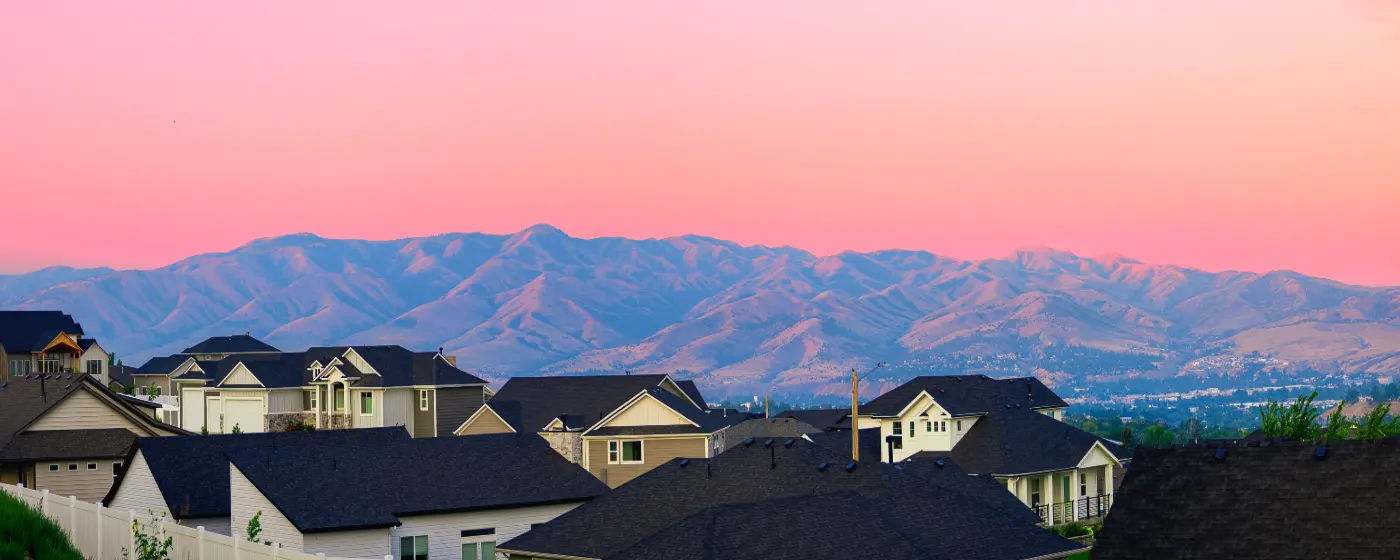
Pocatello doesn't show up on most people's relocation radar until they run the numbers — and then it's hard to ignore. Tucked into the Portneuf Valley in eastern Idaho where I-15 and I-86 intersect, the city functions as a regional hub for southeastern Idaho, with a cost of living index that comes in roughly 9% below the national average. That number isn't driven by one cheap category; housing, groceries, and utilities all land below U.S. norms, which is unusual for a city with a genuine university presence and an actual downtown.
Idaho State University anchors the economy here, and its 12,000-plus students and several thousand faculty and staff create steady rental demand and a consumer base that keeps local services affordable. Bannock County government, ON Semiconductor, and Amy's Kitchen fill out the employment picture, collectively producing a median household income of $60,418. The workforce skews toward education, manufacturing, and public services — not the tech-inflated salaries that push costs up in Boise. That matters when you're calibrating whether Pocatello's prices are genuinely a good deal or simply a reflection of lower local wages.
The honest answer is both, but tilted toward the good-deal side. The Zillow Home Value Index puts the typical home value at $318,721 (2026), which sits noticeably below the statewide median and is far removed from what buyers face in Boise or the Treasure Valley. Renters pay well under national averages. Intermountain Gas delivers natural gas at rates roughly 47% below the U.S. average, and Idaho Power's hydroelectric-heavy grid keeps electric bills moderate even through cold eastern Idaho winters. The city levies no additional sales tax on top of Idaho's flat 6%, and the grocery tax credit softens the sting of paying sales tax on food.
Whether you're seriously considering a move or just trying to understand what your dollar actually buys here, the sections below break down Pocatello's housing market, rent-versus-buy math, everyday expenses, a side-by-side comparison with nearby cities, and the full tax picture.
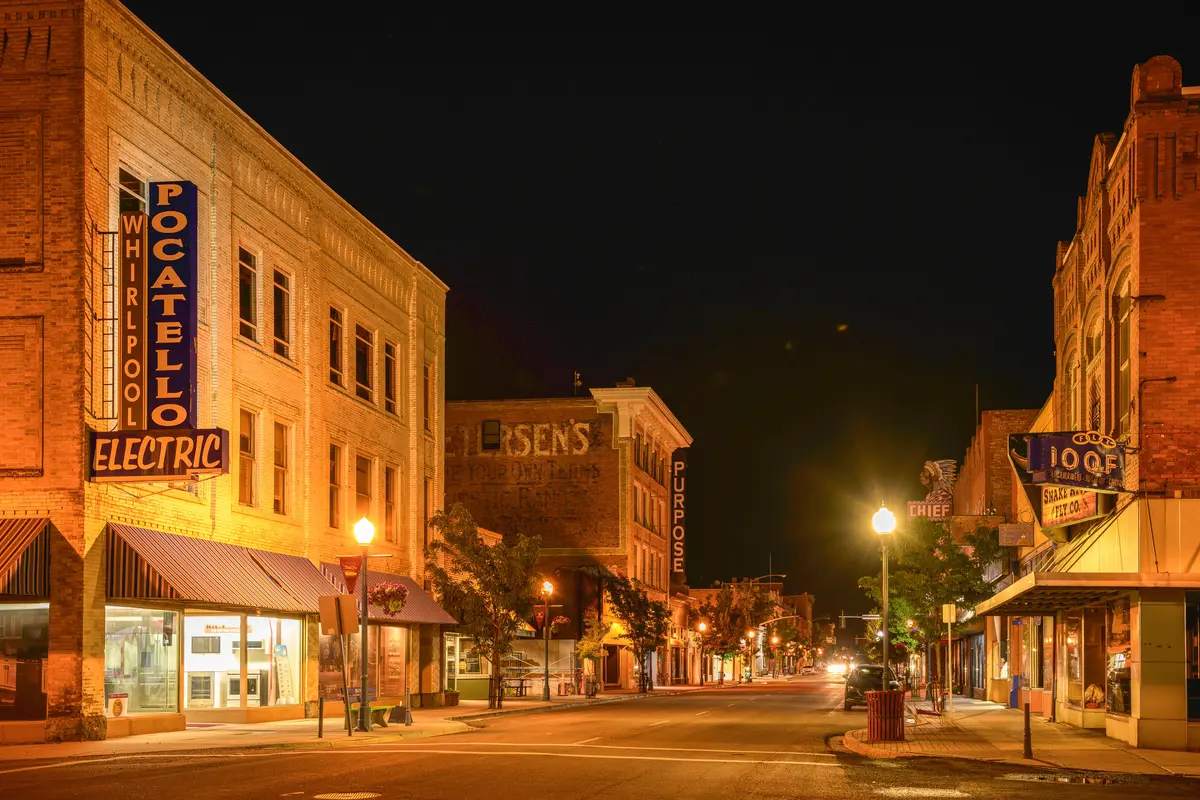
What It Really Costs to Live in Pocatello
Pocatello is genuinely affordable — not in a "you have to give something up" way, but across the board. The cost of living index from AreaVibes places it at 91, roughly 9% below the national average. ERI's research pegs it 14% below the U.S. norm and, importantly, 13% below the average Idaho city — which means Pocatello undercuts even most of its in-state competition.
The Zillow Home Value Index for Pocatello puts the typical home at $318,721 (2026). That single figure explains most of the affordability story. When the anchor cost — housing — runs well below national medians, every other budget category stretches further. Groceries and utilities are below average on their own, but they feel even more manageable when your housing payment isn't consuming the lion's share of take-home pay.
What drives the number? Pocatello isn't a bedroom community feeding a booming metro. It's a self-contained regional city with its own economy — one built on education, manufacturing, and public services rather than tech or finance. Wages here reflect that, and so do prices. The trade-off is straightforward: lower costs come with a more modest local job market than you'd find in Boise. For remote workers, ISU-affiliated households, and anyone employed at one of the city's anchor institutions, the math is compelling.
Housing: Rent vs Buy in Pocatello
Buying
Entry-level homes in Pocatello — older construction, smaller square footage, sometimes needing cosmetic updates — start in the low-to-mid $200,000s. The city-wide typical value sits at $318,721 (Zillow Home Value Index, 2026), and move-up properties with newer finishes or larger lots push into the $350,000–$400,000 range. If you're coming from a West Coast market or even Boise, those numbers will reset your expectations quickly.
The effective property tax rate in Pocatello is approximately 0.71% — higher than Idaho's statewide average of around 0.50%, but still well below the national median. Use the mortgage calculator below to run your own monthly payment estimate; given the price point here, the numbers tend to surprise buyers who've been shopping in larger markets.
Renting
ISU's enrollment keeps the rental market active year-round. Two-bedroom apartments in Pocatello typically run in the $900–$1,200 per month range depending on condition and proximity to campus. Single-family rental homes generally come in higher. Vacancy does fluctuate with the academic calendar — late summer tends to tighten supply, and you'll compete with students for well-priced units near the University District.
When Renting Makes More Sense
If you're relocating for a position at ISU and aren't certain the role is permanent, renting for a year makes real sense. Pocatello's price appreciation has been steady rather than explosive, so you're unlikely to be priced out by waiting. For buyers who plan to stay five or more years, the purchase math — even at current rates — tends to work in this price range.

Everyday Costs Beyond Housing in Pocatello
Utilities in Pocatello are among the more pleasant surprises for newcomers. Idaho Power supplies electricity at rates supported by a hydroelectric-heavy grid — the average monthly electric bill runs approximately $136. Combined with water, sewer, and trash billed by the city under FY2026 rates, total monthly utilities for a typical household come to roughly $218 on standardized usage assumptions. Intermountain Gas delivers natural gas at rates dramatically below the national average, which matters in a city where winters regularly push below freezing and heating is a real line item, not an afterthought.
Groceries score well below U.S. norms — ERI's research gives Pocatello a food-cost score of 9 out of 10 on affordability. Transportation costs depend heavily on car ownership; Pocatello is not a city where you can comfortably go without a vehicle, and gas prices in eastern Idaho tend to track slightly above regional averages due to distribution distance. The sample budget below uses a typical two-bedroom rent as the housing line — homeowners should run the mortgage calculator in the section above for their specific payment.
| Category | Typical Monthly Cost | Notes |
|---|---|---|
| Housing (2BR Rent) | $900–$1,200 | Owners: use the mortgage calculator above for your payment estimate |
| Utilities | $180–$260 | Electric ~$136/mo avg; natural gas extra in winter; water/sewer/trash included in estimate |
| Groceries | $350–$500 | Below U.S. average; Idaho's $155/person annual grocery tax credit provides some offset |
| Transportation & Gas | $200–$350 | Car required; gas prices track Idaho averages; minimal public transit options |
| Phone & Internet | $100–$160 | Major carriers available; ISP competition is moderate for a city this size |
| Misc / Discretionary | $200–$400 | Dining, entertainment, personal care; costs are lower here than in Boise |
A two-person household renting a two-bedroom in Pocatello can reasonably budget $1,930–$2,870 per month for all-in living costs, excluding savings and debt service. That figure would look meaningfully higher in most comparable Mountain West cities.
Looking to buy in Pocatello? Estimate your payment.
Enter your numbers to see an estimated monthly mortgage payment.
Estimate only. Excludes HOA fees and mortgage insurance. The interest rate above is a starting point, not a quoted rate — replace it with your own to see real numbers. Insurance is a flat placeholder, not a Pocatello quote.
Pocatello vs Nearby Cities: Cost Comparison
| City | Median Home Price | Typical 2BR Rent | Cost vs Pocatello |
|---|---|---|---|
| Pocatello | $318,721 | $900–$1,200/mo | Baseline |
| Chubbuck | ~$330,000–$345,000 | $950–$1,250/mo | Slightly higher |
| Blackfoot | ~$270,000–$295,000 | $800–$1,050/mo | Moderately cheaper |
| American Falls | ~$210,000–$240,000 | $700–$900/mo | Noticeably cheaper |
| Idaho Falls | ~$340,000–$380,000 | $1,000–$1,350/mo | ~10–15% higher |
| Inkom | ~$250,000–$290,000 | Limited rental inventory | Somewhat cheaper; rural tradeoffs |
Chubbuck functions as Pocatello's practical twin — the cities share a border and many services, and the price difference is minor enough that most buyers choose based on specific listings rather than city lines. Idaho Falls, about 50 minutes up I-15, carries a noticeably higher price tag and is pushing closer to Boise's growth orbit.
Taxes & the Bottom Line for Pocatello
Income Tax
Idaho moved to a flat individual income tax rate of 5.3%, effective January 1, 2025, when Governor Brad Little signed HB 40. That's a meaningful reduction from the prior rate of 5.695%, and it applies to all taxable income above a small threshold. For most earners, 5.3% is the effective marginal rate — there's no graduated structure to navigate.
Sales Tax
Idaho's statewide sales tax is a flat 6.00%. Pocatello adds no city or county sales tax on top of that, so the rate at any register in the city is exactly 6% — one of the lower combined rates in the Mountain West. Idaho does apply sales tax to groceries, which is unusual nationally, but the state partially offsets this with a food tax credit of $155 per person annually — a meaningful cushion for households on tighter budgets.
Property Tax
The effective property tax rate for Pocatello homeowners is approximately 0.71% — above Idaho's statewide average but well below the national median. Applied to the typical home value discussed in the first section, annual property tax comes in at a level that most buyers find manageable relative to what they'd pay in other states. Idaho's homeowner's exemption provides additional relief on the first $125,000 of a primary residence's value, which further reduces the effective burden for owner-occupants.
Who This Budget Fits
Pocatello's overall tax and cost structure works well for households earning in the $55,000–$85,000 range — roughly aligned with the local median income of $60,418. Remote workers importing salaries from higher-wage markets will find their purchasing power amplified significantly. The city tends to be a stretch for single-income households earning under $45,000 who want to buy rather than rent, particularly as interest rates remain elevated. And buyers who need Boise-level amenities, a major airport within 20 minutes, or significant career-ladder options beyond ISU and the city's regional employers often find themselves making the I-84 drive eventually.

Local Expert Takeaway: Pocatello's affordability isn't a fluke or a sign that something's missing — it's structural. The city's economy isn't chasing a tech boom, and prices reflect that stability rather than a distressed market. For a household relocating from a coastal city or even from Boise, the typical home price here, combined with utility costs anchored by Idaho Power and Intermountain Gas, and a 6% flat sales tax with no local add-on, makes the monthly budget math look very different. The one honest caveat: you need a car, and the job market rewards patience. But if your income is portable or you're already employed at ISU or one of the city's manufacturing anchors, Pocatello's cost profile is among the strongest genuine values in the Mountain West.
Quick Takeaways & FAQs
✅ Pocatello's typical home price of $318,721 (Zillow Home Value Index, 2026) is well below both the Idaho statewide median and nearly every comparable Mountain West city.
⚠️ The local job market is anchored by education and manufacturing — salaries here are lower than in Boise, and that wage gap narrows but doesn't erase the housing cost advantage for buyers relocating from higher-income markets.
📍 Idaho Power supplies Pocatello with hydroelectric-heavy electricity averaging roughly $136 per month, and Intermountain Gas delivers natural gas at rates dramatically below the U.S. average — both matter in a city that sees real winters.
What is the typical home price in Pocatello, Idaho?
How much does it cost to rent a two-bedroom apartment in Pocatello?
What is the property tax rate in Pocatello?
Is Pocatello cheaper than Idaho Falls?
Does Idaho tax groceries, and how does that affect Pocatello residents?
Moving to Idaho?
Tell us what you need help with and we'll connect you with local resources.
