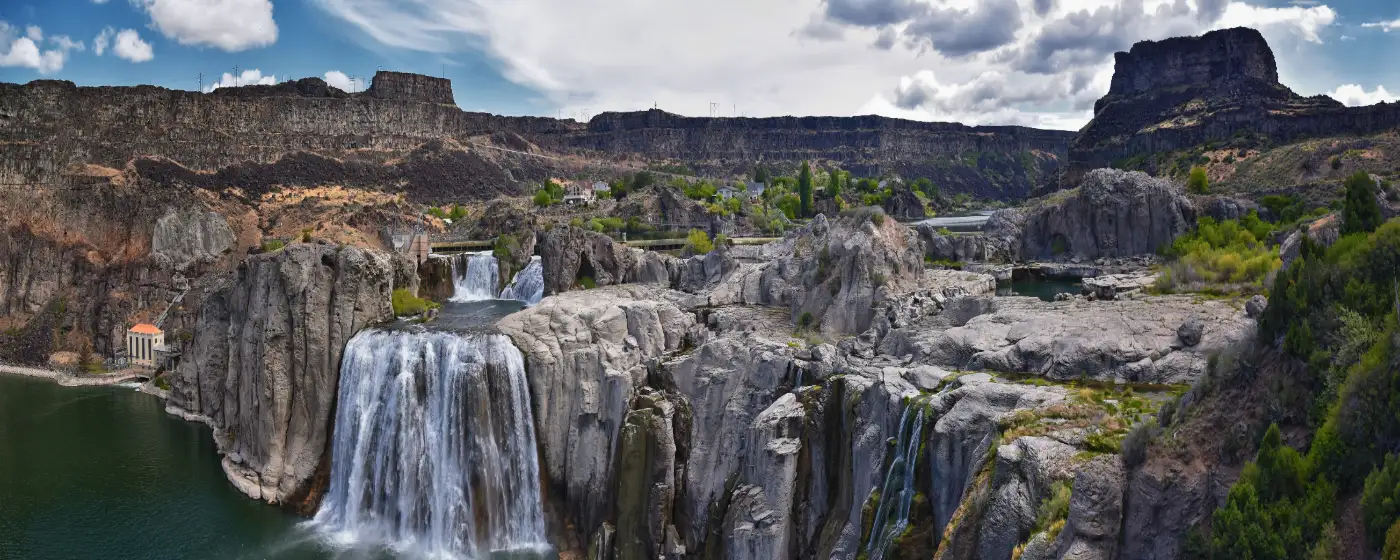
Maybe your financial planner handed you a spreadsheet and Burley looked like a typo — $330,751 median home value in a state with no Social Security tax and a 0.45% property tax rate. But Burley, Idaho is a real working town of roughly 12,000 people anchored along the Snake River in Cassia County, about 40 minutes east of Twin Falls on I-84. What you actually get here is a quiet, flat agricultural community where the trade-off is real: genuine affordability and a low cost of living on one side, and limited urban amenities plus a long drive to specialist care on the other.
Burley has a stable, working-class character rather than the retiree-resort feel of, say, Sun Valley. That's not a criticism; it's a description. Retired teachers, tradespeople, and small-business owners who want to own a well-kept single-level home outright and still have money left over find Burley genuinely works. People relocating from the Pacific Northwest or California who expect walkable coffee shops and specialist medical care within five minutes tend to leave frustrated.
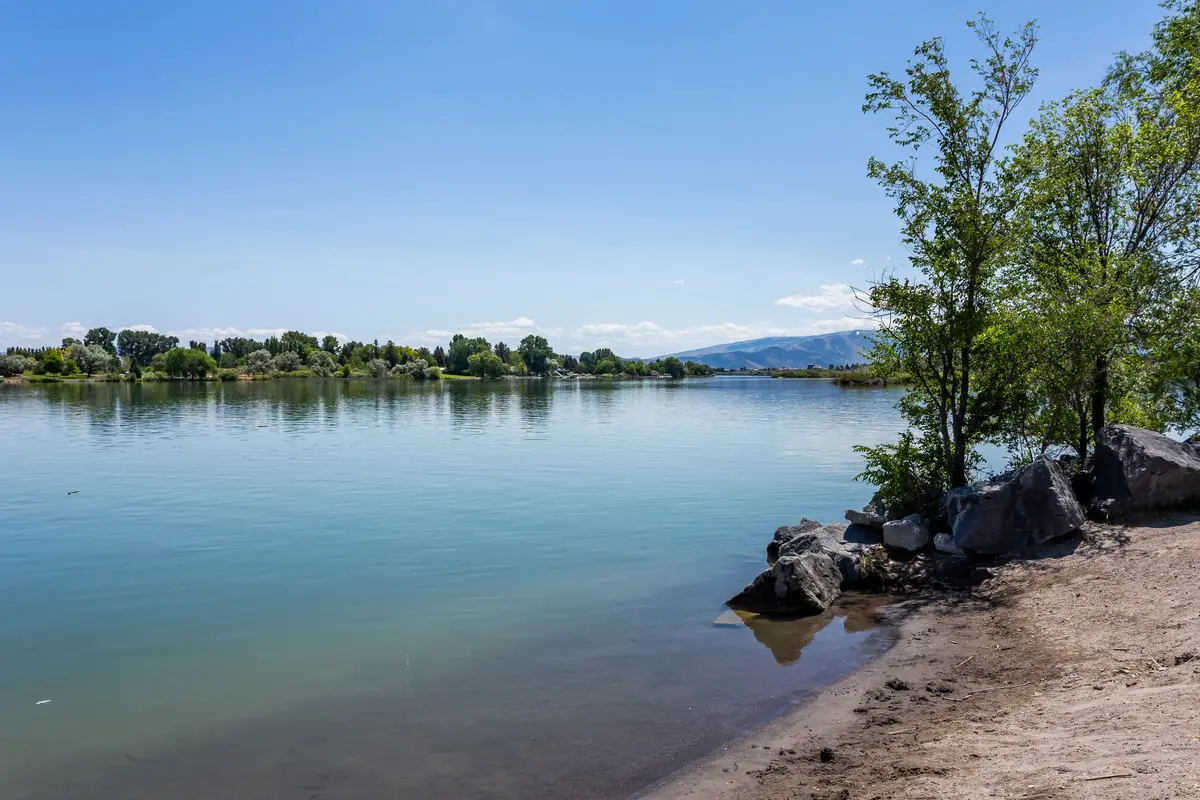
Day-to-day life here is oriented around driving. Centennial Park and the paved Snake River Trail give retirees an accessible outdoor routine, and the annual Idaho Regatta on the Snake River brings an unexpected burst of energy every June. Pomerelle Ski Resort is roughly 45 minutes up into the Albion Mountains if winter recreation matters to you. For grocery runs, big-box errands, and casual dining, everything is reachable within a few minutes by car — but almost nothing is reachable on foot from a residential street.
Whether you're weighing Burley as a primary retirement destination or comparing it to Twin Falls and other Magic Valley towns, this guide covers the healthcare reality, the retiree tax picture, daily costs, downsizing options, community life, and an honest side-by-side with the region's other retirement contenders.
Why Retirees Are Choosing Burley
The clearest reason people retire here is financial: a typical home price of $330,751 (Zillow Home Value Index, March 2026) means many retirees can downsize into a paid-off, single-level home without depleting savings. That frees up retirement income for travel, healthcare costs, or simply a comfortable cushion — something that's increasingly difficult to achieve in Twin Falls, let alone Boise.
Burley also fits retirees who genuinely like small-town rhythms. The Cassia County Fairgrounds fills up every summer. The Idaho Regatta and the Spudman Triathlon turn the Snake River waterfront into a genuine community gathering spot. This is a town where neighbors still introduce themselves.
Who should look elsewhere? If you need regular specialist appointments — cardiology, oncology, orthopedics — you will drive to Twin Falls or beyond for almost all of them. That round trip adds up, physically and logistically, as you age. Retirees who prioritize walkable neighborhoods, cultural programming, or airport access will also find Burley a poor fit. The town has a municipal airport, but commercial flights require Twin Falls or Boise. If any of those needs are non-negotiable, neighboring Twin Falls or the Treasure Valley offers more — at a noticeably higher price.
Healthcare & Medical Access in Burley
What's Here
Cassia Regional Hospital — part of the Intermountain Health system — sits at 1501 Hiland Avenue, about a five-minute drive from most of the city. It's a 25-bed critical access hospital with 24/7 emergency services, surgical capabilities, diagnostic imaging, infusion therapy, and labor and delivery. U.S. News & World Report rates it 'high performing' in one adult procedure or condition, and 88% of patients say they would recommend it. For a town of 12,000, that's a meaningful baseline.
Primary care is reasonably well covered. Intermountain's local clinics handle routine visits, chronic disease management, and preventive care without requiring a drive. Dental and optometry practices operate in town. A pharmacy is not a problem to find.
The Honest Distance Reality
The moment your health needs move beyond primary care and general surgery, you're looking at Twin Falls — about 40 minutes west — for most specialty services. Cardiologists, oncologists, neurologists, orthopedic surgeons, and advanced imaging beyond basic CT are concentrated at St. Luke's Magic Valley Medical Center in Twin Falls. For anything truly complex — major cardiac intervention, transplant evaluation, or Level I trauma — Boise is the realistic destination, roughly two hours away.
This is the calculus every retiree considering Burley needs to make honestly. If you are in your early 60s and in good health, the local hospital will handle the vast majority of what you need. If you are managing multiple chronic conditions or anticipate frequent specialist visits, living in Burley means building those drives into your regular routine — or accepting that your care will sometimes feel logistically complicated.
Planning Ahead
Intermountain Health's network membership is an advantage: your records, referrals, and care coordination move with you whether you're seen in Burley or at an Intermountain-affiliated facility elsewhere in the region. Establishing care with a local primary care physician early — before you need a specialist referral — is the move experienced Burley retirees recommend. Waiting until you have a health event to navigate the system is harder than building the relationship first.
The Retiree Budget in Burley
Idaho's Social Security Advantage
Idaho fully exempts Social Security benefits from state income tax, regardless of age or income level. For retirees whose primary income stream is Social Security, this is a real and immediate advantage over states that tax it partially or fully. It's one of the reasons Idaho keeps appearing on retirement-friendly state lists — and why it tends to reward retirees who draw heavily from Social Security rather than large investment accounts.
Other retirement income is treated differently. IRA withdrawals, 401(k) distributions, and most private pensions are taxed at Idaho's flat income tax rate — cited variously between approximately 5.3% and 5.8% depending on tax year and applicable conformity rules; confirm the current rate with the Idaho State Tax Commission at tax.idaho.gov before filing. A narrow Retirement Benefits Deduction exists but applies only to specific public pensions: PERSI, military retirement, CSRS, and Idaho firefighter or police pensions. If your retirement income comes primarily from a 401(k) or traditional IRA, budget for Idaho income tax on those distributions.
Property Taxes: A Genuine Bright Spot
Burley's effective property tax rate is approximately 0.45% — well below the national median. For a home at the city's typical value, that rate keeps annual property tax obligations modest, leaving more monthly income available for other expenses. See the full cost-of-living breakdown for how that fits into the broader housing picture.
If you are 65 or older and your household income falls under the qualifying threshold (set at $39,130 for 2025 — confirm the 2026 figure with the Cassia County Assessor), Idaho's Circuit Breaker program can reduce your property tax bill by $250 to $1,500 annually. Applications are filed January 1 through April 15 at the county assessor's office. This is the kind of program that goes unused simply because people don't know it exists — worth knowing before your first full year of ownership.
No Estate or Inheritance Tax
Idaho levies no estate or inheritance tax at the state level. With the federal exemption at $15 million for 2026, essentially no Burley retiree faces estate tax exposure. If passing assets to children or grandchildren is part of your retirement plan, Idaho doesn't add a layer of complexity there.
Daily Cost of Living on a Fixed Income
Groceries, fuel, and everyday services run at or slightly below national averages in Burley. There's no Trader Joe's or Whole Foods — the nearest is in Twin Falls — but standard grocery chains and a farmers market give you reasonable options. Dining out is genuinely affordable: a meal along the Snake River waterfront or an evening at one of the local pizza spots won't feel like a budget event. A daily independent café habit on a fixed income here is a reasonable indulgence, not a splurge.
Looking to buy in Burley? Estimate your payment.
Enter your numbers to see an estimated monthly mortgage payment.
Estimate only. Excludes HOA fees and mortgage insurance. The interest rate above is a starting point, not a quoted rate — replace it with your own to see real numbers. Insurance is a flat placeholder, not a Burley quote.
Walkability, Community & Staying Active in Burley
The Walkability Reality
Burley is flat — genuinely flat — which matters more than most people realize when you're thinking about aging in place and staying physically active. There are no hills to navigate, no uneven terrain to worry about. What there is, however, is a car-dependent layout. Running errands on foot from most residential streets isn't realistic; you'll drive to the pharmacy, the grocery store, and most services. Daily life here is built around a vehicle, and that doesn't change in retirement.
The exception that retirees consistently point to is the Snake River Trail — a paved, flat, bench-lined path that runs approximately 2.5 miles along the Snake River. AllTrails rates it easy, it's accessible year-round (best March through October), and the city is actively seeking funding to extend it toward River Edge Golf Course with added docks and ramps. For a daily walk or light bike ride, it's genuinely pleasant and purpose-built for exactly the kind of low-impact routine that keeps people moving into their 70s and 80s.
Senior Center and Social Life
The Burley Senior Center functions as the genuine social hub for older adults in town — not a perfunctory drop-in space, but a real community anchor with structured programming, regular meals, and activities designed specifically for retirees. If you move here without knowing anyone, this is where you start building a social network. People who skip it in the first six months often wish they hadn't waited.
Centennial Park draws families and older residents alike on summer evenings. The Idaho Regatta, held the last full weekend in June, is one of those events where the whole town shows up — a natural point of connection if you're new. River Edge Golf Course gives active retirees a recreational anchor that doesn't require driving out of town. And Pomerelle Ski Resort, approximately 45 minutes up into the Albion Mountains, is a legitimate winter option for retirees who are still skiing or want to watch grandchildren do so.
Volunteering and Civic Life
Cassia County's nonprofit ecosystem is small but present. The local library, the Cassia County Fairgrounds, and events connected to King Fine Arts Center all draw volunteers. For retirees who define staying active partly as staying useful, there are meaningful ways to contribute in a community this size — often more visible and impactful than they'd be in a larger city.
Right-Sizing: Downsizing in Burley
The Single-Level Advantage
Burley's housing stock skews toward modest single-family homes built from the 1950s through the 1990s, and a meaningful portion of that inventory is ranch-style — single-level layouts that are exactly what most downsizing retirees are looking for. You're not hunting through a luxury condo market; you're looking at practical, well-maintained homes on quiet streets with manageable yards. That's either ideal or underwhelming depending on what you're coming from.
Entry points into the market are accessible by Idaho standards. Retirees arriving from higher-cost states often find they can purchase in cash or with a small mortgage — a financial position that significantly changes the retirement math. The cost-of-living page has the full current picture on pricing.
Dedicated Senior Living Communities
Burley has a more developed senior living landscape than its size might suggest. Verified communities currently operating in the city include:
- Pomerelle Place Senior Living (1301 Bennett Ave) — assisted living and memory care
- Highland Estates (2050 Hiland Ave) — 75 apartments, independent and assisted living
- Diamond Peak of Burley (1703 Almo Ave) — assisted living and memory care
- Rosetta of Burley (1919 Hiland Ave) — assisted living, memory care, respite care, and skilled nursing
That's four dedicated facilities within the city — an unusual concentration for a community of 12,000. Inventory in the independent-living category is thinner than in assisted living, so retirees who want a maintenance-free independent apartment (rather than a traditional house) may find options limited. The gap between independent living and assisted living is something to plan for if that transition matters to your long-term care strategy.
What the Downsizing Process Actually Looks Like
One thing that surprises retirees who move here from larger metros: the Burley market moves relatively quickly on well-priced, single-level homes. Inventory stays modest, and there aren't competing buyers flooding in from out of state the way there are in Twin Falls. That means a well-maintained ranch home at a fair price tends to sell — it also means your choices at any given moment may be limited to a handful of listings. Patience and timing matter more here than in a deep market. Working with a local agent who knows which streets have been quietly upgraded and which have deferred maintenance issues is worth more than the commission difference.
Burley vs Nearby Retirement Destinations
| City | Cost vs Burley | Primary Hospital | Walkability | Senior Living Depth | Overall Retirement Fit |
|---|---|---|---|---|---|
| Burley | Anchor | Cassia Regional (Intermountain Health) — 25-bed critical access, in-city | Car-dependent; flat terrain; good trail access | Strong for town size — 4 dedicated facilities | Value Quiet Best for budget-focused retirees in good health |
| Twin Falls | Noticeably pricier | St. Luke's Magic Valley Medical Center — full regional hospital with broad specialty depth | More walkable core; still car-dependent overall | Significantly deeper — more independent-living options | Commuter Best for retirees who need specialist care regularly |
| Rupert | About the same | Relies on Cassia Regional in Burley (~10 min) | Very limited; small-town car-dependent | Minimal — few dedicated senior facilities | Quiet Works for deeply rural-lifestyle retirees; limited services |
| Heyburn | About the same | Cassia Regional in Burley (~5 min) | Minimal walkability; essentially suburban Burley | Limited — relies on Burley facilities | Families Practical for those who want rural setting near Burley's services |
| Jerome | Slightly pricier | St. Luke's Jerome — small outpatient clinic; Twin Falls for inpatient | Modest small-town walkability in core | Moderate — a few senior facilities | Value Reasonable middle ground; closer to Twin Falls services |
| Oakley | Noticeably cheaper | No local hospital; Cassia Regional ~45 min | Very limited; rural small town | Minimal | Privacy Nature Only for self-sufficient retirees prioritizing solitude over services |
Twin Falls is the clearest alternative if specialist healthcare access is your primary concern — you trade meaningfully higher home prices for a full regional hospital and a deeper pool of senior living options. Rupert and Heyburn function as satellite communities to Burley rather than true independent retirement destinations; you get quiet and affordability, but you depend on Burley for nearly all services anyway.
Oakley is genuinely rural and genuinely cheap, but it's the choice for retirees who are healthy, self-sufficient, and prioritizing scenery over convenience — not a practical option if medical appointments are a regular reality. Jerome splits the difference geographically, sitting between Burley and Twin Falls and drawing retirees who want small-town character with a shorter drive to Twin Falls specialists. Burley itself holds up best for retirees who arrive in good health, own their home outright or close to it, and value stability and community over urban amenities.
Local Expert Takeaway: Burley rewards retirees who do their homework before they arrive and who arrive in reasonable health. Get established with a primary care physician at Cassia Regional Hospital early — don't wait for a health event to navigate the Intermountain system for the first time. File for the Circuit Breaker property tax reduction at the Cassia County Assessor's office by April 15 of your first full year; it goes unclaimed more than it should. Walk the Snake River Trail in the morning before the summer heat sets in. And if you want a social foothold fast, the Burley Senior Center is not optional — it's where the community actually is.
Quick Takeaways & FAQs
✅ Idaho exempts Social Security benefits entirely from state income tax, and Burley's 0.45% effective property tax rate is well below the national median — a combination that stretches fixed incomes noticeably further than in most Western states.
⚠️ Cassia Regional Hospital handles day-to-day and emergency care well, but almost all specialty medicine requires a 40-minute drive to Twin Falls — retirees managing chronic conditions should plan that logistics honestly before committing.
📍 Burley has four verified senior living facilities operating within the city itself — Pomerelle Place, Highland Estates, Diamond Peak, and Rosetta of Burley — an unusually deep bench for a town of 12,000.
Does Idaho tax Social Security retirement income?
What hospital serves Burley, Idaho retirees?
Are there 55+ or active-adult communities in Burley?
Is there a property tax break for seniors in Idaho?
How does Burley compare to Twin Falls for retirement?
Moving to Idaho?
Tell us what you need help with and we'll connect you with local resources.
