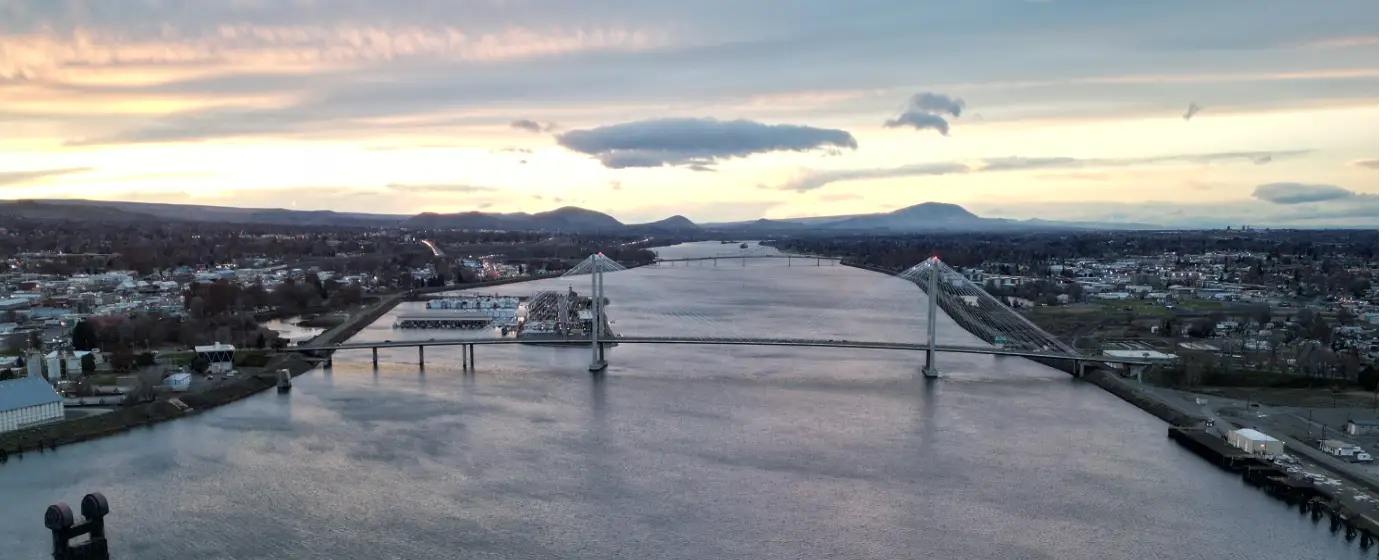
Maybe you ran the numbers after your last California tax return. Maybe you've been priced out of the Sacramento suburbs and someone in a Hanford contractor's HR department mentioned the Tri-Cities. Whatever brought you here, the core surprise is the same for almost every Californian who makes this move: West Richland is not a compromise. It sits in the Columbia Basin in south-central Washington, about 15 minutes from the Richland and Kennewick employment hubs, with the Yakima River to the north and the Red Mountain wine region just east toward Benton City. The highways are wide, the commutes are short, and daily life runs at a pace that takes some getting used to — in the best way.
The economic anchor here is the Hanford Site, a massive federal nuclear cleanup project that employs tens of thousands of contractors through DOE partners, alongside researchers at Pacific Northwest National Laboratory. These are not entry-level jobs. The median household income in West Richland is $119,892 — higher than most of the California communities people are leaving — and the households driving that figure tend to be dual-income, STEM-oriented, and looking for exactly what West Richland offers: newer construction, good schools in the Richland School District, and a city that feels suburban without being sprawling. Families with school-age children make up a significant share of buyers here, and the Richland School District holds an A- rating, according to Niche, which reflects that demand.
The cost picture is where this city separates itself. The Tri-Cities metro carries a Cost of Living Index of 95.9 against the U.S. average of 100 — and dramatically below major California metros. Utility costs run approximately 18% below the national average, groceries are exempt from Washington's sales tax, and there is no state income tax on wages or salaries. The typical West Richland home value sits at $499,865 (Zillow Home Value Index, 2026) — see the full breakdown on the cost-of-living page. If you're coming from the Bay Area or Los Angeles, that figure may read as almost implausibly low. It's real, and it has consequences — for your budget, your equity position, and the kind of life you can build here.
Whether you're relocating for a Hanford contract, following a partner, or simply chasing financial breathing room, the sections below walk through everything Californians specifically need to understand about West Richland: the home price and tax comparison, what your California proceeds can do here, the lifestyle shift, the honest trade-offs, and what the first year actually feels like.

The Home Price Reality: California Dollars in West Richland
The most jarring moment for most California buyers happens when they see what $500,000 buys here. In West Richland, that's the typical home — a newer-construction single-family house with a garage, a yard, and often a view of the surrounding hills. In the Bay Area, $500,000 is a down payment.
California's median home sale price varies sharply by region, but the contrast is stark at every level. Rather than a side-by-side price table, the clearest way to frame it is qualitative: Bay Area and South Bay medians run roughly two to nearly three times West Richland's $499,865 typical value; Los Angeles and San Diego run substantially higher; Sacramento comes closest, at a slight premium; and Fresno sits modestly below. In every case except Fresno, a California seller arrives with meaningful equity to deploy.
What Your California Proceeds Actually Buy
If you're selling a Bay Area home in the $1.2–1.4 million range, your net proceeds after paying off a typical mortgage will likely cover the entire West Richland purchase outright and leave capital to invest elsewhere. Los Angeles sellers in the $800,000–$950,000 range arrive with enough to put 40–60% down and still have reserves. Even Sacramento sellers trading a comparable-priced home end up with a lateral move on price but a dramatic improvement in property tax burden — more on that below.
West Richland has been issuing permits at a strong pace — 109 single-family permits through early September 2025 — with active development corridors along Van Giesen Street and Keene Road. That supply pipeline matters: unlike many Western cities, this market has room to grow, which keeps prices from spiking the way they did in Boise or Bend after California migration waves arrived. For neighborhoods and specific areas, the best neighborhoods page breaks down what to expect block by block.
The One Number Californians Miss
Effective property tax in West Richland runs at 1.07% of assessed value. On the typical $499,865 home, that's approximately $5,349 per year. Compare that against the effective rate in California — which for many owners who purchased years ago sits artificially low due to Proposition 13, but for new buyers in 2025–2026 runs approximately 1.1–1.25% on a much higher assessed value. A new buyer on an $850,000 Los Angeles home might pay $10,000–$12,000 annually in property tax. The math here is straightforward.
The Tax Equation: No State Income Tax Changes Everything
California taxes wage income at rates ranging from 1% at the bottom to 13.3% at the top — the highest marginal state income tax rate in the country. Washington has no individual state income tax on wages or salaries, period. For 2025–2026, that figure is zero.
For a household earning $119,892 — West Richland's median — a California resident in that bracket would typically owe somewhere between $6,000 and $9,000 in state income tax per year, depending on deductions and filing status. In Washington, that bill disappears entirely. That's a raise that requires no promotion, no negotiation, and no performance review.
The New Millionaires' Tax — Does It Affect You?
The 2026 Washington Legislature passed Senate Bill 6346, which creates a 9.9% income tax on individual income exceeding $1 million, effective January 1, 2028. For the overwhelming majority of people relocating from California for Hanford contracts, research positions, or general lifestyle reasons, this is irrelevant. If your household clears $1 million in wage income, you already know to talk to a CPA — and even at that level, California's 13.3% top marginal rate is still higher than Washington's forthcoming 9.9%.
Sales Tax: The One Offset Worth Understanding
Washington funds its state government through a higher sales tax instead of income tax, and West Richland's combined rate is 8.7% (6.5% state plus 2.2% city). California's base rate is 7.25% with local add-ons that vary by city — many California cities run 9.25–10.25% at the register. West Richland's 8.7% is in the same neighborhood, and often lower than what Bay Area or Los Angeles residents were paying.
The meaningful difference: Washington exempts groceries from sales tax entirely. What you spend on food at the store is fully untaxed. That exemption compounds quietly over the course of a year and is one of the structural advantages of the Washington system that doesn't show up in headline comparisons.
Capital Gains: The One Asterisk for California Sellers
Washington taxes 7% on long-term capital gains above a $278,000 standard deduction for 2025, rising to 9.9% on gains above $1,000,000. This is specifically relevant if you're selling California investment property, stocks, or a business with significant embedded appreciation and reinvesting the proceeds here. California taxes capital gains as ordinary income — at up to 13.3%. Washington's 7% is still materially lower, but it's no longer zero, and if your California real estate sale produces a large gain, a tax professional should model both states' treatment before closing.
| Tax Type | California | Washington (West Richland) |
|---|---|---|
| State income tax (wages) | 1%–13.3% marginal | 0% (through 2027) |
| Income tax on $1M+ | 13.3% at top bracket | 9.9% beginning Jan. 1, 2028 |
| Sales tax (general) | 7.25%–10.75% (varies by city) | 8.7% combined |
| Groceries sales tax | Taxed in most cities | Exempt statewide |
| Effective property tax (new buyer) | ~1.1%–1.25% of purchase price | 1.07% of assessed value |
| Capital gains tax | Up to 13.3% (as ordinary income) | 7% on gains over $278K (2025); 9.9% on gains over $1M |
| Retirement income (pensions, IRAs) | Taxed as ordinary income | Not taxed |
| Social Security benefits | Not taxed at state level | Not taxed |
For a dual-income household in a Hanford-adjacent career — think two engineers or a researcher and a project manager — the income tax savings alone can easily exceed $15,000–$20,000 annually. That difference, compounded over five years, goes a significant way toward funding retirement or college tuition.

Cost of Living Beyond the Tax Bill
The income tax headline gets the most attention from California transplants, and it deserves it. But the day-to-day cost picture has its own story, and it's mostly good news with one or two genuine adjustments.
Utilities and Energy
Utility costs in the West Richland area run approximately 18% below the national average. That gap is driven largely by Pacific Northwest hydropower — electricity here is structurally cheaper than in California, where rates have climbed sharply over the past decade. If you've been watching your power bill grow, the move will be noticeable within the first billing cycle.
Groceries and Everyday Spending
The overall Cost of Living Index for the Tri-Cities metro sits at 95.9 against the U.S. average of 100. Grocery prices are roughly in line with the national norm — not dramatically cheaper — but the exemption from sales tax on food makes every shopping trip slightly lighter. You will not find a Trader Joe's in West Richland; the nearest is across the river in the broader Tri-Cities area. Day-to-day provisioning happens at the major grocery chains along Van Giesen Street and Keene Road.
Healthcare Costs — The Honest Trade-Off
Health insurance premiums generally run noticeably below what California residents pay, particularly for employer-sponsored plans tied to the regional market rather than California's higher-cost pool. The honest offset: you will drive farther for subspecialty care than you did in a major California metro, and some specialized services require a trip to the Seattle or Portland corridor. Routine and primary care has improved with the addition of a new primary care clinic in West Richland that opened in June 2026. For a fuller picture of healthcare access, see the retiring in West Richland page.
Dining and Local Life
West Richland's restaurant and bar scene has grown alongside its population. Miss Tamale on Keene Road has become a local go-to since opening in September 2025 — a genuine neighborhood spot rather than a chain placeholder. Tapp'd on W. Van Giesen Street offers a self-serve taproom model that works well for the young professional demographic the city keeps attracting. Burlesque Brew on Van Giesen pulls the morning coffee crowd. None of this is San Francisco density, but it's also not the dining desert that Californians sometimes expect to find in a smaller Washington city. For a deeper look at parks, trails, and outdoor amenities, see the parks and recreation page.
What Californians Underestimate
The adjustment that catches most transplants off guard isn't the price of things — it's the pace. West Richland doesn't have the ambient noise of a California metro. There's no gridlock on Keene Road at 5:45 p.m. That sounds appealing in the abstract, and it is — but it also means the restaurant you wanted is closed on Mondays, the nearest concert venue requires a drive, and Friday nights in October revolve around WIAA football games at the local high school rather than anything you could mistake for urban nightlife. Californians who've spent years in dense metros sometimes find the quiet more disorienting than they expected in months two and three.
Looking to buy in West Richland? Estimate your payment.
Enter your numbers to see an estimated monthly mortgage payment.
Estimate only. Excludes HOA fees and mortgage insurance. The interest rate above is a starting point, not a quoted rate — replace it with your own to see real numbers. Insurance is a flat placeholder, not a West Richland quote.
What the Lifestyle Shift Actually Looks Like
West Richland in January is not the Central Valley. Temperatures drop into the 20s, the Columbia Basin gets periodic freezes, and the area sees light but real snow. It is not the Pacific Northwest of rainfall stereotypes — the Basin sits in a rain shadow and runs dry and sunny for much of the year — but if you're moving from San Diego or the South Bay, you will own a real coat for the first time in years.
Summer Is the Reason People Stay
July and August in West Richland run reliably in the 90s, with low humidity and clear skies that California's coast rarely matches. The Columbia River is minutes away, the Red Mountain AVA's more than 15 wineries sit just east toward Benton City — Cabernet Sauvignon and Syrah grown on 2,382 planted acres — and the outdoors access that draws people to California's mountain corridors is closer and less crowded here. Flat Top Park and Columbia Playfield give families an easy Friday-evening destination without a parking ordeal.
The Wine Region Nobody Expected
Red Mountain AVA is Washington's smallest designated wine region at 4,040 total acres, and it consistently produces some of the state's most-awarded red wines. For Californians accustomed to Napa and Sonoma as their nearby wine country, arriving to find a legitimate prestige wine region practically in the backyard is a genuine surprise — and a regular weekend activity for the households that settle here.
The Commute Picture
If you're coming from a Bay Area or Los Angeles commute, the 15-minute drive to Richland or Kennewick will feel almost implausible. The Hanford Site employment campus and Pacific Northwest National Laboratory draw a significant share of West Richland's residents, and the commute from residential streets to the site gate simply doesn't have a California equivalent. For commute routes, timing, and traffic patterns, the living in West Richland guide covers the specifics.
Schools and Families
Parents with school-age children consistently cite the Richland School District as a primary factor in choosing West Richland over other Tri-Cities options. The district serves a population with a high concentration of STEM-household families — which tends to shape the culture of the schools as much as any funding figure. Full school-by-school details live on the schools page.
The Honest Friction
People leave West Richland for two main reasons: they miss the cultural and culinary density of a major metro, or a spouse's career doesn't have a natural landing spot in a market this specialized. The employment base here is narrower than California's — Hanford, Pacific Northwest National Laboratory, food processing, regional healthcare — and if your household depends on a creative-industry or tech-sector job that requires in-person presence, the options thin out quickly. Remote work has changed this calculus significantly, but it hasn't eliminated it. Go in with clear eyes about what your partner will do professionally, and whether that work exists in the Tri-Cities market.
Making the Move: Practical Steps for California Buyers
California buyers typically arrive at West Richland's market with two structural advantages: equity and motivation. The equity piece is obvious. The motivation matters because West Richland's well-priced homes in sought-after areas — Riesling Estates, Watermark, The Lakes — can move quickly, and buyers conditioned to California's months-long listing durations sometimes assume they have more time than they do.
Timing Your California Sale
The sequencing question — sell first, then buy, or buy contingent on the California sale — has a cleaner answer here than in most California-to-Washington moves. Because West Richland prices are low enough that many California buyers can bridge with cash or a home equity line from their current property, the contingent-sale scenario is less common and less necessary. If you can close the California sale and rent briefly in the Tri-Cities while you shop at leisure, that's often the cleanest path. Short-term rentals and month-to-month apartments in Richland and Kennewick provide good staging ground.
Washington Residency and Tax Timing
The income tax benefit begins the day you establish Washington domicile — no waiting period, no partial-year phase-in for wage income. If you're moving mid-year, California will tax the income you earned while a California resident, and Washington won't tax anything earned after you establish residency there. The split-year return is standard and not complicated, but worth confirming with a CPA who knows both states, particularly if you have California-source income continuing after the move (rental property, deferred compensation, stock options from a California employer). California has an aggressive residency audit posture and monitors high-income departures; documentation of your move date, domicile change, and California ties severed is worth keeping organized.
What to Investigate Before You Commit
The Hanford Site's long-term cleanup mission creates economic stability, but it also creates a particular kind of local economy — one where federal contract cycles, budget appropriations, and regulatory timelines shape the job market in ways that a California technology or finance professional may not have encountered before. If your household income depends on a Hanford contract, understanding the contract renewal cycle and your employer's position on it is basic due diligence before you sink a California equity payout into a home here.
For safety context, crime patterns, and what the data actually shows about West Richland's neighborhoods, see the safety page. For the full mechanics of the buying process in Washington state, including what differs from California's process on disclosures, timelines, and first-time buyer programs, the first-time homebuyer page covers it in detail.
The Bottom Line for California Buyers
West Richland is not a lateral move. It is a material improvement in purchasing power, tax burden, commute time, and outdoor access — in exchange for a smaller city, a narrower cultural scene, and a job market that rewards specific technical credentials over generalist professional backgrounds. Most California households who make this move and arrive with realistic expectations stay. The ones who struggle typically underestimated how much they relied on big-city infrastructure — not just the restaurants and concerts, but the career optionality, the airport access, and the sense that the next opportunity is always nearby. West Richland is a destination, not a waypoint. Come because you want to be here, not just because you want to leave California.
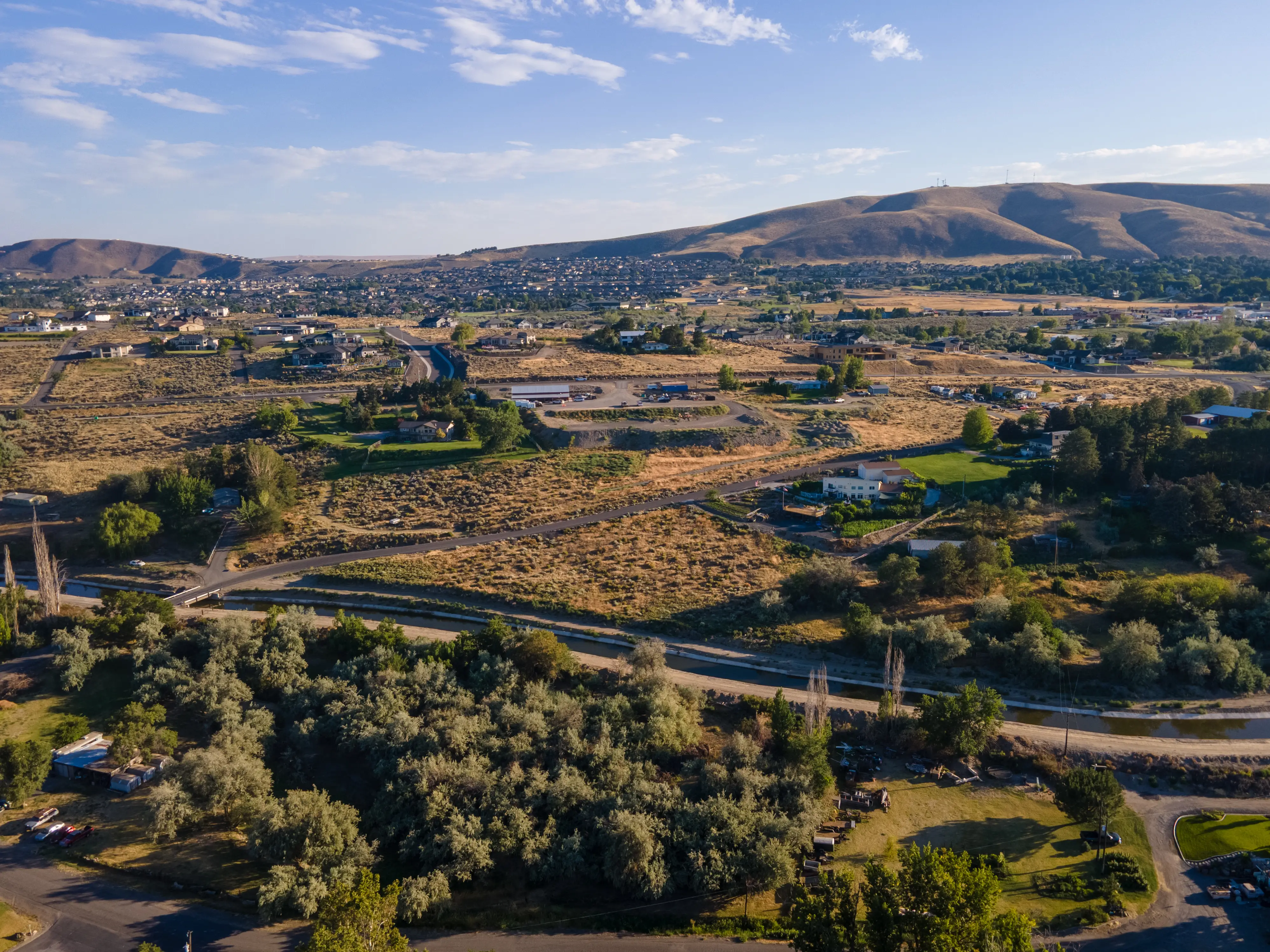
Local Expert Takeaway: The financial case for moving to West Richland from California is genuinely strong — no state income tax on wages, a typical home price under $500,000, and utility costs running 18% below the national average. But the transplants who thrive here came for the lifestyle, not just the spreadsheet. Saturday mornings picking up coffee at Burlesque Brew on Van Giesen, afternoons at the Red Mountain AVA wineries near Benton City, and evenings at Flat Top Park feel nothing like a California suburb — and that's exactly the point.
Quick Takeaways & FAQs
✅ Washington's zero state income tax on wages saves most households $6,000–$20,000 per year compared with California — a structural financial advantage that starts the day you establish Washington residency.
⚠️ The job market here runs narrow: Hanford contractors, Pacific Northwest National Laboratory researchers, food processing, and regional services dominate — if your career doesn't fit those tracks, have a clear plan before you sell your California home.
📍 West Richland issued 109 single-family building permits through early September 2025, so new construction is genuinely available along Van Giesen Street and Keene Road — you're not competing for a fixed pool of aging inventory.
How much do homes in West Richland cost compared to California?
Does Washington state really have no income tax?
What is the property tax rate in West Richland?
What is the sales tax in West Richland, and how does it compare to California?
Do I need to worry about California trying to tax me after I move to Washington?
Moving to Washington?
Tell us what you need help with and we'll connect you with local resources.
