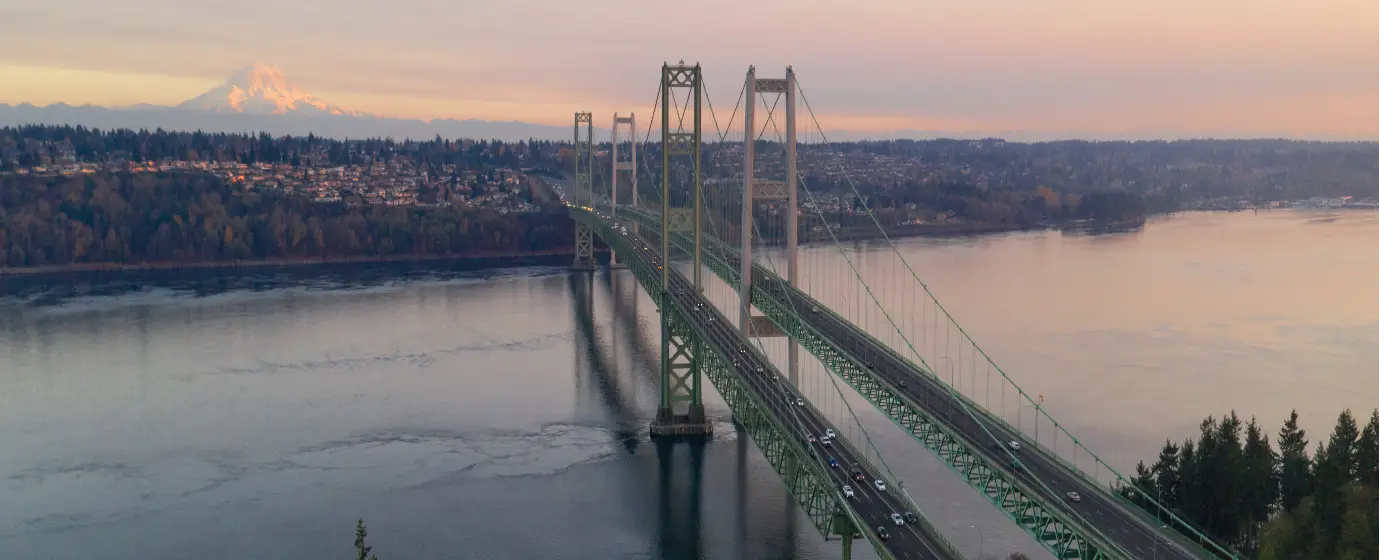
You've probably heard that Washington has no income tax. That fact alone pulls retirees north from California, Oregon, and beyond — but the state's zero income tax is only part of the University Place story. This is a city of 35,160 on a bluff above Puget Sound, wedged between Tacoma's urban core and the saltwater shoreline of the Narrows, where a retired couple can walk the Chambers Creek Regional Park trails in the morning and still be 15 minutes from a full-service hospital. The geography shapes retirement here more than any spreadsheet will.
University Place isn't a retirement community — it's a real, working city with a broad economic base anchored by MultiCare Health System and Pierce County government. That mix means retirees share space with working families and commuters, which most find energizing rather than intrusive. What draws retirees specifically is the combination: Puget Sound proximity, access to MultiCare's network of primary and specialty care providers, and a residential character that feels quieter than Tacoma proper without being isolated. The city's parks, including the 930-acre Chambers Creek Regional Park with more than two miles of saltwater shoreline, deliver the active-outdoor lifestyle that shows up on every retiree wish list in the Pacific Northwest.
Cost of living runs noticeably above the Washington state average — housing is the main driver — and the state's sales tax, at approximately 9.51% combined state and local, is among the highest in the country. That's the honest counterweight to the income-tax story. For retirees living primarily on Social Security, pension income, and retirement-account withdrawals, the tax picture is still strongly favorable. For those on very tight fixed incomes where daily spending costs matter more than income-tax savings, the math gets closer. See the full cost-of-living breakdown before drawing conclusions.
Whether you're comparing University Place to Tacoma, eyeing a downsizing move after selling a larger home, or planning a full relocation from out of state, the sections below walk through healthcare access, the retiree tax picture, walkability and community, downsizing inventory, and how University Place stacks up against nearby retirement alternatives.

Why Retirees Are Choosing University Place
University Place works best for retirees who want Pacific Northwest nature without rural isolation — people who will use the trails at Chambers Creek Regional Park regularly, who care about driving less than ten minutes to a clinic, and who want a neighborhood that feels residential and calm without being an hour from a real city. If that's you, this city has a strong case.
The bluff-top neighborhoods along the Sound — particularly around Chambers Bay — offer a retirement setting that's genuinely hard to replicate in the inland suburbs. Watching fog burn off the Olympic Mountains from your back deck while the tide shifts in the Narrows is not a marketing line; it's Tuesday morning for residents here. The Zillow Home Value Index placed the city's typical home value at $633,676 as of June 2026, which is real money, but it's meaningfully below what comparable waterfront-adjacent living costs in the Seattle metro.
University Place tends to disappoint retirees who need walkable errands without a car — the city is hilly in places, and most daily tasks require driving. It's also not the right call for retirees on very modest fixed incomes who will feel the 9.51% state-and-local sales tax with every grocery run. And if advanced specialty care — major cardiac surgery, oncology, complex neurology — is a near-term priority rather than a background concern, the distance to a true academic medical center is something to plan around carefully.
Healthcare & Medical Access in University Place
What's Right Here
MultiCare Health System — the region's dominant nonprofit health network, founded in 1882 and operating eight hospitals across Washington — has a meaningful footprint directly in University Place. That includes primary and specialty care clinics, and physical and occupational therapy through its Olympic Sports & Spine joint venture. For retirees who need ongoing musculoskeletal care, post-surgical rehab, or regular specialist visits, having MultiCare providers locally is a genuine convenience, not just a marketing claim.
MultiCare Indigo Urgent Care operates a walk-in clinic at 2700 Bridgeport Way W (Suite A), open 8 a.m. to 8 p.m. daily and accepting Medicare and private insurance. For the minor-but-urgent situations that become more common with age — a fall, a respiratory flare, an infection that can't wait — this matters. Same-day care without a primary-care appointment, without driving to Tacoma, is the kind of thing retirees don't think about until they need it.
The Honest Distance Reality
MultiCare Tacoma General Hospital — the nearest full-service facility for major procedures, emergency surgery, and complex inpatient care — sits approximately five to seven miles from University Place's city center. In good traffic, that's under fifteen minutes. In Tacoma's more congested corridors during peak hours, it can stretch longer.
For retirees who may need advanced oncology, major cardiac intervention, or high-complexity neurosurgery, Tacoma General is a solid regional hospital, but it is not an academic medical center on the level of UW Medical Center in Seattle. Seattle is roughly 40 miles north — a viable option for planned specialty care, but not a practical emergency distance. Most retirees in University Place find Tacoma General more than sufficient for realistic health needs; those with existing complex conditions should have that conversation with their specialists before committing to a move.
Senior Living Continuum
University Place has an unusually strong continuum of care for a city its size. Bridgeport Place Assisted Living, Hearthside Manor Memory Care, Cogir at the Narrows, and The Cottages at University Place (memory care) are all located within or immediately adjacent to city limits. Pierce County adult family homes fill additional niches. For retirees planning to age in place — or for those moving an aging parent — this range of options within a small geography is a meaningful advantage over smaller nearby towns where the continuum simply doesn't exist locally.
The Retiree Budget in University Place
Washington's Income Tax Advantage
Washington levies no individual income tax. Social Security benefits, pension distributions, IRA withdrawals, and 401(k) income are all fully exempt from state taxation. Washington's capital gains tax (7%, with a 2025 threshold of $278,000 adjusted annually) specifically exempts retirement account transactions and real estate sales — meaning a retiree living on Social Security, a pension, and retirement-account draws will typically owe nothing under it. For retirees moving from high-income-tax states, this is a structural budget improvement that compounds over time.
Washington does carry a state estate tax with a relatively low exemption — if you're planning to pass a meaningful estate to heirs, that's worth a conversation with an estate attorney before you establish residency. It doesn't affect day-to-day retirement income, but it's the one tax lever Washington pulls that other no-income-tax states don't.
Property Taxes and Daily Costs
The effective property tax rate in University Place is approximately 1.13%. On the city's typical home value, that's a real number — use the interactive calculator below for your specific scenario. Washington offers income-based senior property tax exemption and deferral programs at the state level; Pierce County administers eligibility locally, and income tiers are worth confirming directly with the county assessor's office before assuming you qualify.
The offset to Washington's income-tax story is the sales tax. The combined state-and-local rate in University Place runs approximately 9.51% — among the highest in the nation. Every grocery run, hardware purchase, and restaurant meal carries that load. For retirees whose monthly spending is heavy on taxable goods and services, this erodes a meaningful portion of the income-tax savings. University Place's overall cost of living runs noticeably above the Washington state average, driven by housing. See the full picture at the cost-of-living page.
What a Fixed-Income Budget Feels Like Here
Retirees who sell a paid-off home in a lower-cost state and buy in University Place with significant equity often find the budget math works well — lower income taxes offset the sales tax drag, and the property tax rate is reasonable relative to comparable Pacific Northwest markets. Retirees who arrive without substantial equity, or who are renting, tend to find the city's cost level harder to absorb on Social Security alone. The honest read: University Place is a comfortable retirement for people who arrive with assets, and a stretch for those who don't.
Looking to buy in University Place? Estimate your payment.
Enter your numbers to see an estimated monthly mortgage payment.
Estimate only. Excludes HOA fees and mortgage insurance. The interest rate above is a starting point, not a quoted rate — replace it with your own to see real numbers. Insurance is a flat placeholder, not a University Place quote.
Walkability, Community & Staying Active in University Place
The Walkability Reality
University Place is not a walk-to-errands city. The terrain is hilly in the bluff neighborhoods, sidewalk coverage varies by area, and the commercial corridors along Bridgeport Way and 27th Street are designed around cars. Retirees who imagine leaving the car behind will be disappointed — a vehicle remains a practical necessity for most daily tasks. The Town Center corridor along Bridgeport Way is the closest the city gets to transit-accessible, and it's where condos and townhomes tend to cluster for that reason.
What University Place does offer is exceptional recreational walkability. The Chambers Creek Regional Park trail network — 930 acres, over five miles of maintained trails, more than two miles of saltwater shoreline — is the kind of asset that retirees in most cities would drive an hour to reach. It's here. Sunset Beach Park, Paradise Pond Park, and the Chambers Bay waterfront trail system all add to a recreational on-foot network that few cities of 35,000 can match. The distinction matters: this is a city where you'll drive to the trailhead and then walk for two hours, not a city where you stroll to the coffee shop.
Active-Adult Social Life
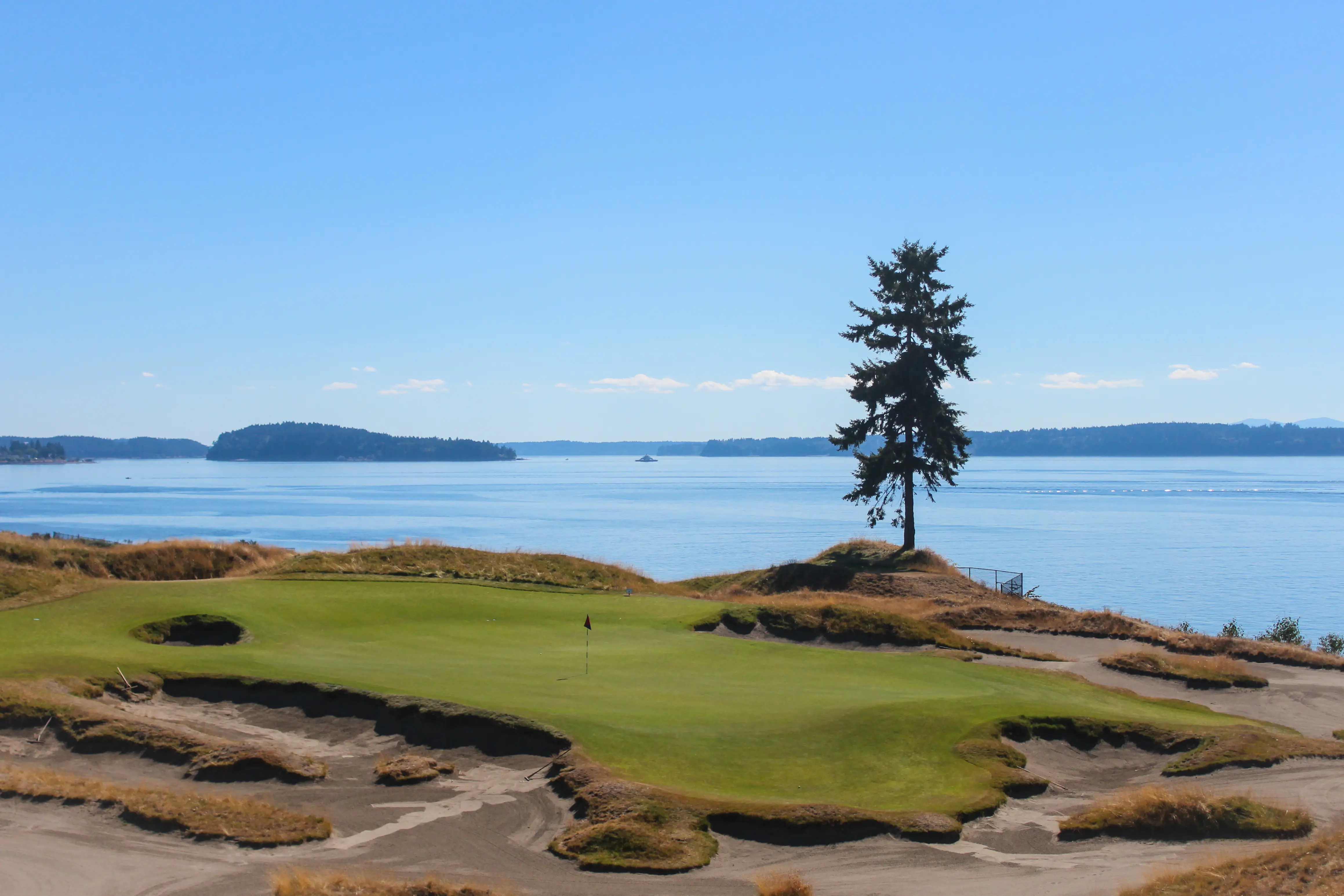
Chambers Bay Golf Course — the 18-hole links-style public course that hosted the 2015 U.S. Open, walking-only — is a specific, recurring social anchor for active retirees here. The walking-only policy isn't just a quirk; it creates a culture of real engagement on the course rather than cart-riding. The on-site restaurant along Chambers Bay Drive W is the natural gathering point after a round, with Puget Sound views that make a post-golf lunch feel like something you planned for years.
Pierce County operates senior services and programs accessible to University Place residents, and the city's proximity to Tacoma means access to a broader range of cultural programming, volunteering opportunities, and senior center activities than a smaller standalone city would offer. For retirees who plan to stay engaged — through community volunteering, arts programming, or faith communities — Tacoma's resources are close enough to use regularly without being the reason you moved here.
One thing six-month residents often note: the social fabric in University Place forms around outdoor activity more than around a town-center coffee culture. If your retirement vision centers on walking to a neighborhood café and lingering over a book, manage expectations. If it centers on trail walks, golf, and saltwater views, you'll have more company than you expected.
Right-Sizing: Downsizing in University Place
What Downsizing Looks Like Here
The most common downsizing path in University Place runs from a larger single-family home in the Chambers Bay or bluff-top neighborhoods toward a single-level or low-maintenance option in the Town Center and Cascadia Park corridor along Bridgeport Way. That corridor has the city's densest concentration of condos and townhomes, generally at the most accessible price points within University Place. For retirees who want to stay in the city but shed yard work and exterior maintenance, this is the natural landing zone.
Single-level ranch homes exist in University Place but inventory is limited and competition for them is real. The city's residential stock skews toward two-story single-family homes built primarily in the 1980s and 1990s. Retirees who need truly step-free living — no stairs to the main living area or master bedroom — often find that the condo and townhome inventory along Bridgeport Way serves them better than searching for a ranch in the bluff neighborhoods.
55+ and Senior Living Options
University Place doesn't have a large-scale age-restricted active-adult subdivision in the Sun City model. What it has is more distributed: Cogir at the Narrows offers independent and assisted-living options; Bridgeport Place Assisted Living and The Cottages at University Place cover the memory-care end of the continuum; and Hearthside Manor Memory Care serves residents with more advanced cognitive needs. Pierce County adult family homes — small residential care settings — fill the gaps between those larger facilities.
For retirees who want to buy a home now and have a realistic plan for what happens if their health changes, this continuum within a small geographic area is meaningful. You are not planning to relocate to a completely different city if your needs shift — the next level of care is often a few miles away. That continuity of place matters to many retirees more than they anticipate before they need it.
Inventory in the condo and townhome segment moves at varying pace — the Town Center corridor is the most active part of the University Place market for this product type, but buyers downsizing from a larger home should expect competition and plan their timeline accordingly rather than assuming a smooth, same-month transition.
University Place vs Nearby Retirement Destinations
| City | Cost vs University Place | Primary Hospital Access | Walkability | Senior Living Depth | Overall Retirement Fit |
|---|---|---|---|---|---|
| University Place | Anchor | MultiCare network locally; Tacoma General ~5–7 miles | Low for errands; high for trails | Strong — full continuum within city limits | Nature Views Best for active, asset-rich retirees |
| Steilacoom | About the same | Tacoma General ~10 miles; limited local clinics | Better on-foot access in the historic core | Thin — very limited local senior living | Quiet Views Smaller, quieter; best for self-sufficient retirees |
| Fircrest | Noticeably cheaper | Same Tacoma General catchment; MultiCare clinics nearby | Flat streets; modest but real walkability | Limited within city; Pierce County options nearby | Value Best for budget-conscious retirees near UP amenities |
| Lakewood | Noticeably cheaper | A regional hospital within city limits; Tacoma General nearby | Car-dependent; strip-commercial character | Broader than Fircrest; several assisted-living facilities | Value Best for retirees prioritizing hospital proximity and lower housing costs |
| Tacoma | Cheaper on average | MultiCare Tacoma General and a second full hospital system — full urban hospital access | Higher in specific walkable neighborhoods | Widest range in the region | Transit Walkable Best for retirees who want urban amenities and healthcare depth |
| A waterfront community south via the Tacoma Narrows corridor | Pricier | A regional hospital locally; Tacoma options a bridge crossing away | Low — car-essential outside the waterfront core | Growing inventory; several newer senior communities | Views Luxury Best for retirees who want a waterfront feel with a newer-construction senior market |
Fircrest is the most direct budget alternative to University Place — it sits immediately adjacent, shares access to most of the same MultiCare network, and carries meaningfully lower housing costs without giving up the basic Pierce County infrastructure. For retirees who love the University Place area but feel the price pressure, Fircrest deserves a serious look.
Tacoma beats University Place on healthcare depth (two full hospital systems), walkability in its best neighborhoods, and cultural programming — but it doesn't offer the same residential calm or trail access that draws most retirees to University Place specifically. Lakewood has a hospital within city limits and lower prices, but the commercial character along its main corridors is a real lifestyle downgrade for many buyers. Steilacoom is the most distinctive of the nearby options — a historic waterfront town with real character — but its senior living inventory is thin, which makes it a stronger choice for a younger, healthier retiree than for someone planning a full aging-in-place continuum.

Local Expert Takeaway: University Place is a strong retirement call for people who arrive with real equity, want a Pacific Northwest outdoor lifestyle without rural trade-offs, and will use the Chambers Creek Regional Park trail system and Chambers Bay Golf Course regularly. The MultiCare network's local footprint — including the Indigo Urgent Care walk-in clinic at 2700 Bridgeport Way W — is a meaningful daily-life advantage. The honest catch: Washington's 9.51% sales tax bites on fixed-income spending, the city is car-dependent for errands despite its trail network, and retirees who need advanced specialty care beyond what Tacoma General provides will need to plan for Seattle trips. Fircrest is the best nearby alternative for buyers who want University Place's access at a lower price point; Tacoma is the better call for retirees who prioritize hospital depth and walkable neighborhoods over quiet residential character.
Quick Takeaways & FAQs
✅ Washington's zero state income tax exempts Social Security, pensions, and all retirement-account withdrawals — a structural financial advantage that compounds meaningfully for retirees over time.
⚠️ University Place's combined state-and-local sales tax of approximately 9.51% is among the highest in the nation and meaningfully offsets the income-tax savings for retirees who spend heavily on everyday goods.
📍 MultiCare Indigo Urgent Care at 2700 Bridgeport Way W is open 8 a.m.–8 p.m. daily and accepts Medicare — a same-day care option most comparable small cities simply don't have within city limits.
Is University Place, WA a good place to retire?
Does Washington State tax Social Security or pension income?
What is the nearest hospital to University Place?
Are there 55+ or active-adult communities in University Place?
How does the property tax rate in University Place compare to other Washington cities?
Moving to Washington?
Tell us what you need help with and we'll connect you with local resources.
