
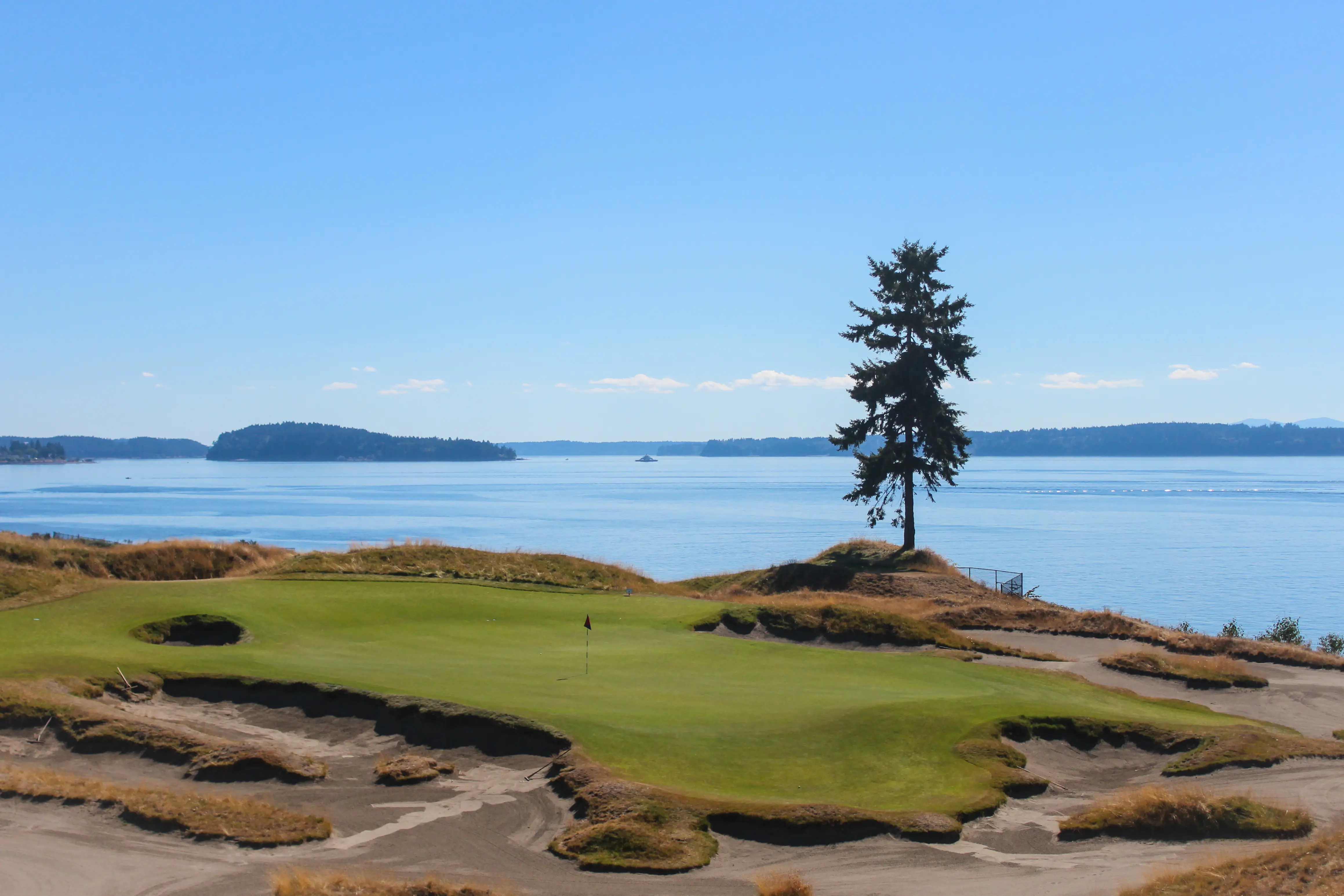
Maybe you've been renting in the South Sound for a few years and the math finally started pointing toward buying. Maybe you're relocating to Tacoma for work and someone mentioned University Place as a quieter alternative with more suburban breathing room. Either way, the first thing you need to know is this: University Place does not reward casual buyers. Redfin scores this market highly on competitiveness, and the average home goes pending in roughly 9 days. The city sits on a bluff above the bay, about 15 minutes from downtown Tacoma, flanked by Chambers Bay Golf Course and Chambers Creek Regional Park. Those geographic advantages are baked into every price.
The typical home here costs $633,676 (Zillow Home Value Index, June 2026) — a number that surprises buyers expecting Pierce County to be uniformly affordable. Washington's lack of a personal state income tax means take-home pay goes further than in most states, and many households in University Place earn close to or above the $99,031 median household income — which helps with qualifying, but doesn't make the down payment any easier to save. For a deeper look at how overall living costs stack up, see the cost of living page.
The practical reality for first-timers is that entry-level inventory is thin. Homes in the low-to-mid $500,000s exist, but they move fast and often attract multiple offers, some with waived contingencies. You are not competing against other first-timers alone — you are competing against move-up buyers from Lakewood and Fircrest and against investors who know this corridor. Coming in prepared — pre-approved, financially realistic, and clear on which contingencies you can and cannot live without — is not a nice-to-have. It is the minimum.
Whether you are buying your first home or just beginning serious research, the sections below walk through what your budget actually buys in University Place, the step-by-step purchase process, a concrete budget snapshot, and the specific mistakes that cost first-timers the most in this market.

The University Place First-Time Buyer Reality
The Zillow Home Value Index for University Place sat at $633,676 as of June 2026 — down about 3.7% from a year prior, but do not read that as a buyer's market. Inventory is tight, demand is persistent, and the slight price softening has mostly compressed the top end rather than opened up true entry-level supply. The pullback has made some previously overheated price points more accessible, but the competitive dynamics have not fundamentally changed.
At the entry level — homes in the low-to-mid $500,000s — you are typically looking at older 1960s or 1970s ranch-style construction, often with original kitchens and bathrooms, or townhomes with homeowners association fees that add to your monthly obligation. At the city-wide median, you can generally find a three-bedroom house with a garage in established neighborhoods. Breaking into Chambers Bay, Day Island, or Sunset Beach as a first-time buyer is a harder lift — those areas carry premium pricing that typically puts them out of reach without significant equity or a sizable down payment.
The speed of this market is what catches first-timers off guard. Hot homes — meaning anything well-priced and in good condition — can go pending in around 4 days and sell for roughly 2% above list price. That means a home listed at $600,000 can close near $612,000 before you have even finished your second showing. If you are still in the "browsing" phase without a pre-approval letter in hand, this market will pass you by repeatedly until you get serious.
The Homebuying Process in University Place, Step by Step
Step 1: Get Pre-Approved Before You Tour Anything
In most markets, pre-approval is strongly recommended. In University Place, it is non-negotiable. Listing agents here routinely ask buyer's agents to confirm pre-approval status before scheduling showings on competitive properties. Showing up with a pre-qualification letter — a softer, less verified document — instead of a full pre-approval will mark you as unprepared in a market where sellers have options.
Pre-approval requires submitting actual documents: W-2s or 1099s for two years, recent pay stubs, bank statements, and authorization for a hard credit pull. Your lender will give you a maximum loan amount, but the smarter number to get from them is your comfortable payment ceiling — what you can afford monthly without financial stress, not just what you technically qualify for. Washington's 30-year fixed rate averaged 6.93% as of July 2026 (Curinos LLC data), so running those numbers with a local lender before you fall in love with a house is essential.
Step 2: Find a Buyer's Agent Who Knows This Market
University Place is small — about 35,000 residents — but its micro-neighborhoods have meaningfully different dynamics. An agent who primarily works Tacoma or Lakewood will not know that a particular street near Bridgeport Way W has quirks that affect resale, or which pockets of the city have boundary or access considerations that matter to your specific situation. Local knowledge is worth negotiating hard to get.
Step 3: Shop With Realistic Offer Parameters
Go into every showing with a pre-set ceiling: the maximum you will pay for that specific home, not the maximum you are pre-approved for. With homes routinely selling 1–2% above list price, you need to know in advance whether you will escalate and by how much. Decide before the showing, not in the emotional 20 minutes after a walkthrough.
Step 4: Inspection and Appraisal — Do Not Skip Either
First-timers sometimes waive inspections to compete. This is the single costliest mistake you can make in University Place's housing stock, which includes a significant number of homes built before 1980. Deferred maintenance on older roofs, aging electrical panels, and crawl-space moisture issues are common. An inspection does not have to kill a deal — it gives you information and, in some cases, negotiating leverage. The appraisal protects your lender's interest, but it also protects yours: if a home appraises below your offer price, you need to know whether you can cover the gap or need to renegotiate.
The one contingency many serious buyers do waive in very competitive situations is the financing contingency — but only after their lender has thoroughly underwritten the loan and the buyer has verified the property qualifies. Waiving it otherwise puts your earnest money at risk. This is a decision to make with your agent and lender, not one to make under pressure at an offer deadline.
Step 5: Closing
Washington is an escrow state, meaning a title and escrow company handles the closing rather than an attorney. Closing typically takes 30–45 days from accepted offer. You will receive a detailed closing summary from your escrow company three business days before your closing date — read it carefully and compare it line-by-line against the Loan Estimate you received at pre-approval. Errors happen, and in a closing-table environment where everyone is moving fast, catching a fee discrepancy is your job, not theirs.
The Washington State Housing Finance Commission requires a free, five-hour homebuyer education course for borrowers using certain loan programs — completing it early (before you are under contract) removes one more timeline variable from your closing.
How Much Home Can You Afford in University Place
Closing costs in Washington typically run 2–3% of the purchase price, covering lender fees, title insurance, escrow fees, prepaid property taxes, and homeowners insurance escrow. The table below uses 2.5% as a midpoint estimate. Down payment percentages are minimums for each loan type — putting more down reduces your loan balance and eliminates private mortgage insurance on conventional loans once you reach 20% equity.
| Scenario | Purchase Price | Down Payment | Est. Closing Costs (2.5%) | Cash Needed at Table |
|---|---|---|---|---|
| FHA loan (3.5% down) — entry level | $500,000 | $17,500 (3.5%) | ~$12,500 | ~$30,000 |
| Conventional (3% down) — entry level | $500,000 | $15,000 (3%) | ~$12,500 | ~$27,500 |
| FHA loan (3.5% down) — near median | $633,676 | ~$22,200 (3.5%) | ~$15,800 | ~$38,000 |
| Conventional (3% down) — near median | $633,676 | ~$19,000 (3%) | ~$15,800 | ~$34,800 |
| Conventional (10% down) — near median | $633,676 | ~$63,400 (10%) | ~$15,800 | ~$79,200 |
| Conventional (20% down) — no PMI | $633,676 | ~$126,700 (20%) | ~$15,800 | ~$142,500 |
These are estimates — actual closing costs vary by lender, loan type, and property specifics. The interactive calculator below will model your specific scenario with current rates.
One figure many first-timers undercount: the earnest money deposit, typically 1–3% of the offer price in Pierce County. That money is due within days of an accepted offer and comes out of your total cash-to-close — it is not an additional cost, but you need it liquid, not tied up in a brokerage account requiring three days to settle.
The effective property tax rate in University Place runs approximately 1.13% of assessed value — factor it into your monthly budget even though the calculator will quantify the exact figure for your scenario. For the full tax picture, see the cost of living page.
Looking to buy in University Place? Estimate your payment.
Enter your numbers to see an estimated monthly mortgage payment.
Estimate only. Excludes HOA fees and mortgage insurance. The interest rate above is a starting point, not a quoted rate — replace it with your own to see real numbers. Insurance is a flat placeholder, not a University Place quote.
Common First-Time Buyer Mistakes in University Place
Shopping Without a Pre-Approval Letter
In a market where homes go pending in 9 days on average, spending your first two weekends touring without a pre-approval means you are practicing, not buying. By the time you get pre-approved and fall in love with a home, it will already be under contract. Get pre-approved first — then tour.
Waiving the Inspection Contingency on an Older Home
University Place has a substantial inventory of homes built in the 1960s and 1970s. Waiving inspection on a 55-year-old house to win a bidding war is a gamble that can cost far more than the deal was worth. A failed sewer line or an outdated electrical panel can run $10,000–$20,000 to remediate — expenses that arrive before your first mortgage anniversary. Save the inspection waiver for new construction or near-new homes where the risk profile is genuinely lower.
Assuming a Zip Code Tells You What You Need to Know
University Place shares the 98466 zip code with parts of Tacoma. Address boundaries for utilities, service districts, and other municipal considerations do not always align with city limits — and what applies to one street may not apply to the next. Verify specific address details with your agent before making an offer, rather than assuming the zip code resolves every question about what you are buying into.
Underbudgeting Total Cash Needed
The down payment is the number buyers focus on. The full cash-to-close figure is the one that actually stops transactions. Closing costs, prepaid insurance, property tax escrow, and the earnest money deposit together can push your total cash requirement 50–60% above your down payment alone — as the budget table above illustrates. Add a reserve: most financial planners recommend at least 1% of the purchase price in a savings account for immediate post-closing repairs or replacements. On a $633,676 home, that is roughly $6,300 sitting untouched as a buffer, separate from your closing cash.
Treating the Comps as a Ceiling Instead of a Floor
A home listed at $599,000 in University Place is often priced to attract multiple offers and close above asking. First-timers who calculate their maximum offer as "list price plus a little" repeatedly lose to buyers who understand that the list price in a competitive market is frequently the starting bid, not the ceiling. Ask your agent to pull the recent sold-to-list ratio for homes in your target range — that ratio tells you what the market is actually clearing at, and it should anchor your escalation strategy.

Local Expert Takeaway: University Place rewards buyers who show up prepared and penalizes those who treat it like a slow, patient market. Get fully pre-approved before you tour, keep enough cash liquid to cover both closing costs and an earnest money deposit of 1–3% of your offer price, and never assume the list price is the final number. A handful of independent spots along Bridgeport Way W make for a fine place to decompress after a long weekend of showings — but save the celebration for after you have waived your financing contingency responsibly, not before.
Quick Takeaways & FAQs
✅ University Place's tight inventory and persistent demand keep prices near the city-wide median of $633,676 even after a slight year-over-year dip — this is not a buyer's market yet.
⚠️ Entry-level homes in the low-to-mid $500,000s exist but move in under a week — buyers without a pre-approval letter in hand will consistently lose to those who have one.
📍 The 98466 zip code overlaps with parts of Tacoma, so never assume a zip code alone answers every question about what a specific address is subject to — verify details before making an offer.
What credit score do I need to buy a home in University Place?
How long does it take to buy a home in University Place from start to finish?
Is FHA or conventional financing better for buying in University Place?
Can I buy a home in University Place on a household income under $100,000?
What is earnest money, and how much should I offer in University Place?
Moving to Washington?
Tell us what you need help with and we'll connect you with local resources.
