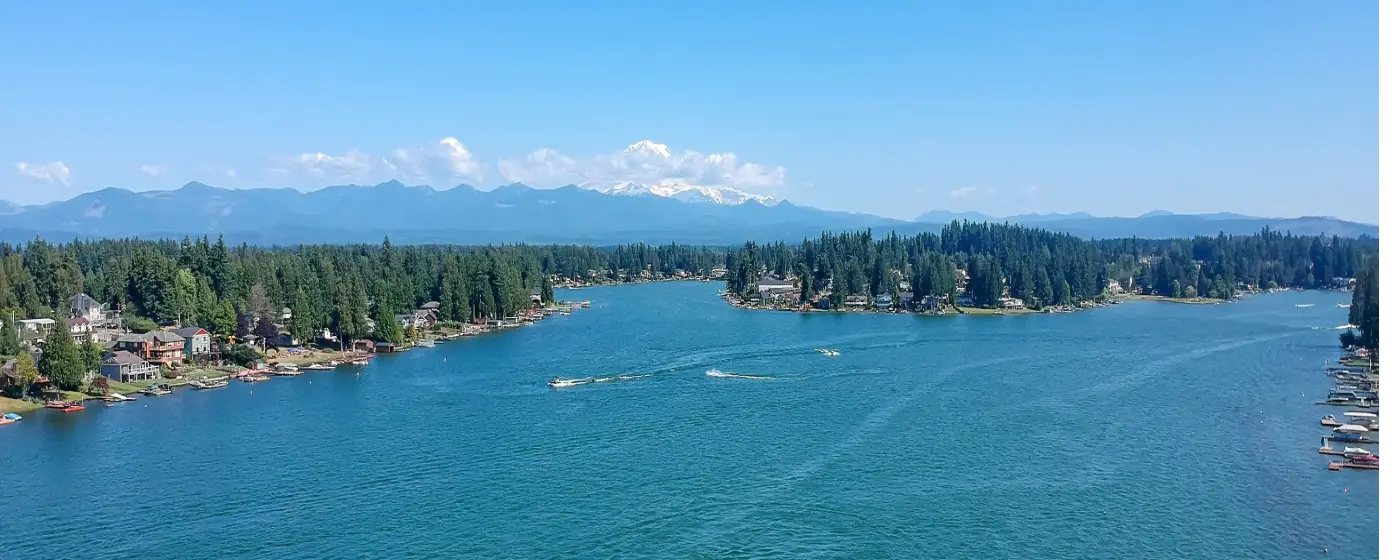
Most people arriving in Sumner for the first time expect a quiet bedroom community with a quaint downtown — and they're right, up to a point. What surprises them is how decisively the Sounder commuter rail station on Maple Street shapes every neighborhood decision. Whether you're closest to the platform or fifteen minutes away by car changes the math on your daily commute to Seattle or Tacoma in ways no spreadsheet fully captures. Sumner sits at the junction of SR-167 and SR-410 in Pierce County, roughly midway between Puyallup and Bonney Lake, and that position makes it genuinely useful for workers tied to the broader Seattle-Tacoma corridor.
The economic fabric here is more industrial than it looks on the surface. REI, Costco, and Amazon all run major distribution and logistics operations nearby, and Kellogg's and Dillanos Coffee have long maintained manufacturing roots in the area. The Sumner–Bonney Lake School District serves Sumner, Bonney Lake, and Edgewood across 14 schools — and its attendance boundaries are one of the sharpest practical divides buyers encounter when comparing neighborhoods. Understanding which elementary feeds where matters more than many relocating buyers realize until they're already in contract.
The Zillow Home Value Index for Sumner sits at $555,065 (2026), a figure that makes this city meaningfully more accessible than Auburn or much of King County, while still reflecting the broader Puget Sound premium. Housing ranges from century-old Craftsman homes on generous downtown lots to tight newer subdivisions on the city's eastern edge. Day-to-day life revolves around Field's Riverway Park along the White River, the independent shops and restaurants along Main Street, and — every June — the Rhubarb Days festival at Heritage Park, which draws 200-plus vendors and two live music stages. Sumner officially calls itself the Rhubarb Pie Capital of the World, and locals mean it without irony.
Whether you're deciding between a walkable downtown block and a newer planned subdivision, or weighing the Sounder-commuter lifestyle against driving flexibility, the sections below break down Sumner's eight neighborhoods, price bands, buyer types, rental zones, and the mistakes that trip up buyers who treat this city as uniform.

The Sumner Reality
One divide runs through nearly every Sumner buying decision: proximity to the Sounder station on Maple Street. Neighborhoods within a short walk or bike ride of the platform — Downtown Sumner, Sumner Town Center — carry a lifestyle premium that has nothing to do with lot size or finishes. For a buyer who will board the S Line multiple days a week, that access is worth real money. For a buyer who drives everywhere, it's an irrelevant variable that can inflate the price of a home they'll never use the same way.
The second divide is directional. The older, western neighborhoods closest to Main Street and the rail corridor tend to be denser, walkable, and architecturally varied — Craftsman bungalows next to mid-century ranches next to renovated commercial mixed-use. Move east toward SR-410, and the character shifts: newer subdivisions, longer lots, more separation from retail, and a car-dependent rhythm that feels structurally different even though you're still in the same small city. East Sumner, Lakeland, and Bridgewood buyers are getting more land and newer construction; they are giving up on-foot access to downtown and, critically, a shorter path to the train.
School boundary lines inside the Sumner–Bonney Lake School District create a third wrinkle. The district serves Sumner, Bonney Lake, and Edgewood across 14 schools, and elementary boundaries don't always follow the neighborhood logic you'd expect. A block or two in the Prairie Ridge or Bridgewood areas can mean a meaningfully different school assignment. Verify the exact boundary — not just the general neighborhood — before making an offer, especially if an elementary school's reputation or proximity is part of your rationale for buying in a specific part of town.
Neighborhoods at a Glance
| Neighborhood | Best For | Price Range | Vibe |
|---|---|---|---|
| Downtown Sumner | Walkable Commuter | $480,000–$620,000 | Historic Main Street, dog-friendly, train-adjacent |
| Sumner Town Center | First-Time Transit | $460,000–$580,000 | Mixed residential and retail, walkable to Sounder |
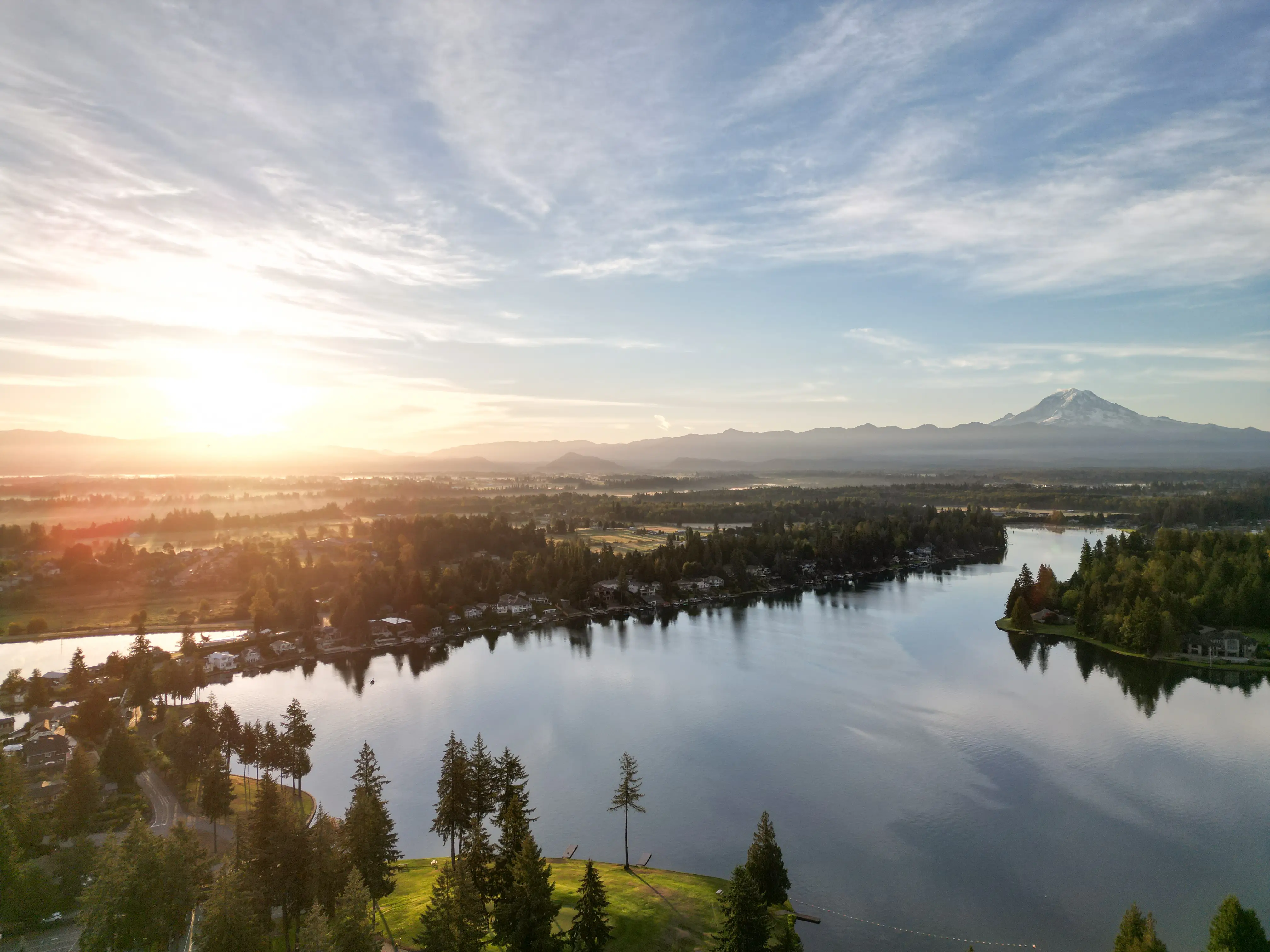
| East Sumner | Nature Privacy | $490,000–$650,000 | Farmland edges, Mount Rainier views, quieter pace |
| Lakeland | Families Value | $510,000–$660,000 | Planned community, parks, newer homes |
| Sumner Ridge | Views Quiet | $530,000–$680,000 | Elevated position, larger lots, residential quiet |
| Bridgewood | Families School | $520,000–$670,000 | Newer construction, suburban pace, family-oriented |
| Prairie Ridge | Families Quiet | $495,000–$640,000 | Well-kept homes, community cohesion, parks nearby |
| Creekside | Nature Renter | $470,000–$610,000 | Creek-adjacent, wooded feel, accessible entry pricing |
Best Neighborhood by Buyer Type
| Buyer Type | Best Neighborhood | Why |
|---|---|---|
| First-Time Buyer | Sumner Town Center | Entry pricing starts below the city median and the Sounder station is within walking distance, giving you optionality you can grow into. |
| Luxury Buyer | Sumner Ridge | Elevated lots, larger footprints, and valley views command the city's upper price band without leaving Sumner's boundaries. |
| Walkability Seeker | Downtown Sumner | Main Street's independent shops, restaurants, and the Rhubarb Days festival grounds are all reachable on foot. |
| Families with Kids | Lakeland | Planned community layout means parks and paths are built into the neighborhood rather than bolted on as an afterthought. |
| Commuters | Downtown Sumner | Walking to Sumner Station — which logged nearly 96,000 boardings in 2024 — eliminates the park-and-ride scramble entirely. |
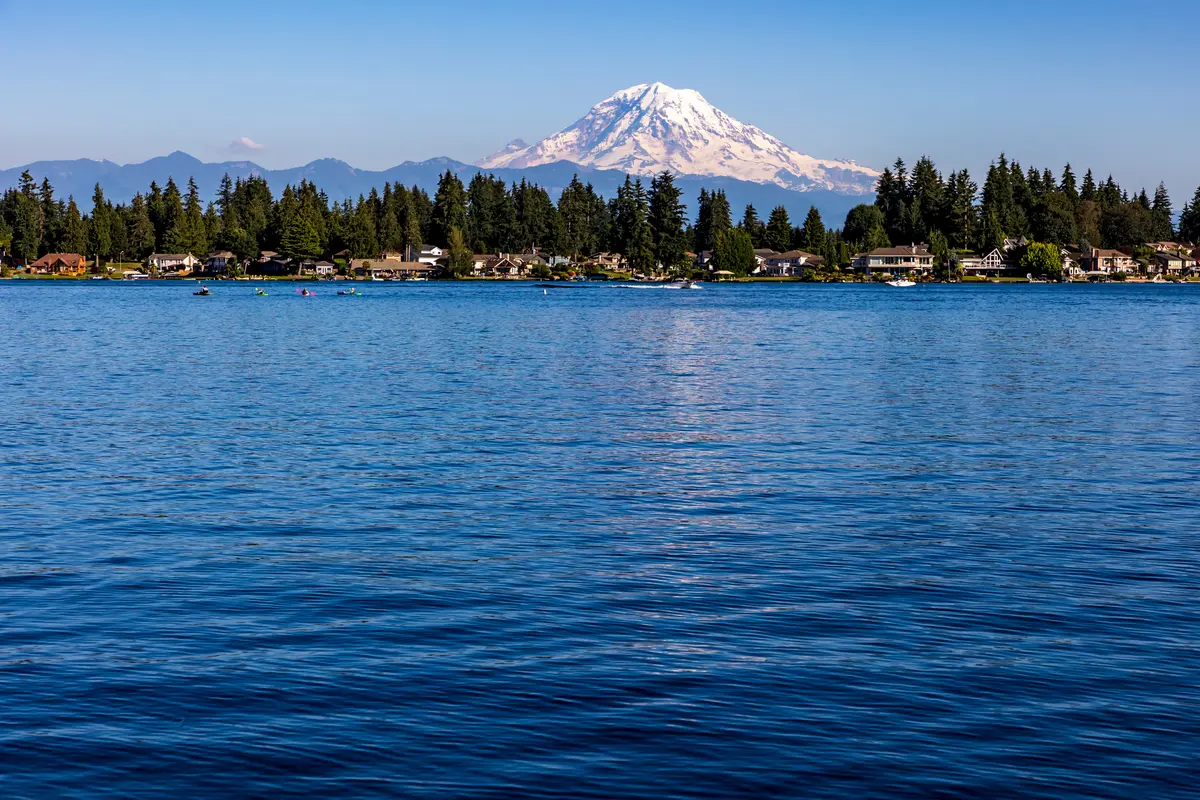
| Large-Lot Buyers | East Sumner | Agricultural edges and the White River corridor mean you can find properties with genuine breathing room and Mount Rainier sight lines. |
| Renters | Creekside | Rental inventory is more consistent here than in the tighter owner-occupied core, and the wooded creek-adjacent character sets it apart from the grid-pattern subdivisions elsewhere. |
Looking to buy in Sumner? Estimate your payment.
Enter your numbers to see an estimated monthly mortgage payment.
Estimate only. Excludes HOA fees and mortgage insurance. The interest rate above is a starting point, not a quoted rate — replace it with your own to see real numbers. Insurance is a flat placeholder, not a Sumner quote.
Most Popular Neighborhoods
1. Downtown Sumner
Living within a few blocks of Main Street means Rhubarb Days in June arrives essentially in your front yard — 200-plus vendors, food trucks, and two live music stages filling the Historic Downtown corridor — which is wonderful if you embrace it and genuinely disruptive if you don't. The trade-off is lot size: historic Craftsman homes here sit on tighter parcels than anything east of SR-167, and parking is a daily negotiation. Homes typically range from $480,000 to $620,000, reflecting the walkability premium and the Sounder-station proximity.
Best for: Commuters who want to walk to the train, on-foot access seekers, and buyers who want a genuine Main Street a block from home.
2. Sumner Town Center
This corridor-adjacent area sits just close enough to the Sounder station on Maple Street to benefit from transit access without paying the full Downtown premium. The mix skews younger — more rentals, more starter homes, more townhouse-style construction — and the streetscape is less polished than the historic core, though that gap is narrowing. Price ranges of $460,000–$580,000 make this the most accessible entry point for buyers who want the commuter lifestyle without stretching to a full Downtown-priced property.
Best for: First-time buyers, transit-dependent households, and anyone prioritizing the Sounder over the boutique-shopping experience.
3. East Sumner
East of downtown, the city's agricultural DNA shows through: residential streets give way quickly to working farmland and open fields, with Mount Rainier filling the southeast horizon on clear days. The catch is that everything requires a car — grocery runs, school pickups, and the Sounder station itself all mean driving — and SR-410 noise bleeds into the closer parcels. Homes in the $490,000–$650,000 range deliver the most square footage and lot space per dollar anywhere in Sumner.
Best for: Buyers who want views, space, and a quieter rural edge inside city limits — and who are comfortable with a car-dependent daily rhythm.
4. Lakeland
Lakeland is Sumner's clearest example of a purpose-built family neighborhood: internal trails, neighborhood parks, and relatively uniform newer construction aimed squarely at parents with school-age children. The downside is exactly what you'd expect from a planned community — limited architectural variety and a homogeneity that some buyers find reassuring and others find flat. Prices in the $510,000–$660,000 range reflect newer builds with standard finishes rather than the historic character you'll find closer to Main Street.
Best for: Families with kids who want parks built into the neighborhood, newer construction, and a predictable suburban environment.
5. Sumner Ridge
Positioned at a higher elevation than the rest of the city, Sumner Ridge delivers the valley views that flat-lot buyers elsewhere in Sumner can only imagine, along with quieter residential streets and larger parcels. The practical downside: you're driving everywhere, and the elevation that produces those views also adds distance from both Main Street and the Sounder platform. Expect to pay $530,000–$680,000 for the city's highest price band, and expect to put real miles on a second car.
Best for: View-seekers, buyers prioritizing lot size and quiet over walkability, and households that treat the train as an occasional rather than daily option.
6. Bridgewood
Bridgewood reads as Sumner's most conventionally suburban neighborhood — newer homes, consistent maintenance, family-oriented streets, and proximity to SR-410 for drivers heading toward Bonney Lake or Auburn. The SR-410 adjacency that makes it convenient for drivers is the same variable that introduces road noise into some parcels closer to the interchange, so lot positioning matters more than the neighborhood average suggests. Homes typically land in the $520,000–$670,000 range, clustering around newer-construction two-stories with attached garages.
Best for: Families wanting newer construction with easy freeway access, and buyers for whom the school boundary assignment in this part of the district is the deciding factor.
7. Prairie Ridge
Prairie Ridge sits northwest of Pioneer Way E and has the tight-knit feel of a neighborhood that actually knows itself — residents are active on community platforms, the homes are well-maintained, and nearby parks give families a gathering point without having to drive across town. It's a small neighborhood (roughly 219 households on Nextdoor), which means inventory is genuinely limited; when a home comes available here, it tends to move. Prices in the $495,000–$640,000 range are competitive with East Sumner for similar square footage but with a more cohesive neighborhood identity.
Best for: Families with kids who want a community-oriented block, buyers who value neighborhood cohesion, and anyone who has narrowed their search to the northwest side of Pioneer Way.
8. Creekside
Creekside earns its name — the wooded, creek-adjacent character makes it feel distinctly different from the grid-pattern subdivisions dominating the city's eastern half. Entry pricing at the lower end of the $470,000–$610,000 range makes it one of the more accessible ownership options in Sumner, and the natural surroundings attract buyers who want that wooded feel without paying Sumner Ridge view premiums. The owner-occupant mix here is more varied than in Prairie Ridge or Lakeland, which affects block-to-block consistency.
Best for: Nature-oriented buyers, entry-level purchasers, and renters looking for wooded character at accessible price points.
Common Mistakes Buyers Make in Sumner
Assuming the Whole City Is Equally Commuter-Friendly
Sumner Station on Maple Street is a genuine asset — a parking garage expansion underway in 2026 will more than double capacity from 302 to over 600 stalls. But buying in Bridgewood or East Sumner and planning to use the Sounder daily means a driving leg before you even board. Buyers who don't map that added commute segment often underestimate total trip time to Seattle by fifteen minutes or more each way.
Treating SR-410 Proximity as Neutral
The freeway access that makes Bridgewood and parts of East Sumner convenient for drivers creates real road noise on parcels within a few hundred feet of the on-ramps. During the offer stage, buyers frequently focus on the floor plan and skip a basic drive-by at 7 a.m. on a weekday. Do that drive before going under contract — the sound environment on a quiet Sunday afternoon is not representative of daily life on those blocks.
Skipping the School Boundary Check
The Sumner–Bonney Lake School District serves three cities and unincorporated Pierce County across 14 schools, and its internal boundaries don't follow neighborhood marketing maps. A street in Prairie Ridge and a street two blocks away in the same general area can feed different elementaries. Verifying the exact address-level school assignment through the district — not through a listing description — is the step most buyers skip and later regret.
Chasing Square Footage in East Sumner Without Pricing in Car Dependence
The agricultural edges of East Sumner offer the most land per dollar in the city, and that's genuinely attractive. What the listing won't tell you is that grocery stores, the Sounder platform, and most of the city's restaurant and retail corridor require driving every single time. For a two-car household that values space above everything, this is a reasonable trade. For a household expecting one partner to use the Sounder daily while the other manages kids and errands, the car dependency on the eastern side compounds quickly.
Best Areas to Rent in Sumner
| Area | Ideal For | Typical Rent Range | Trade-off |
|---|---|---|---|
| Downtown Sumner | Sounder commuters, walkability seekers | $1,700–$2,200/mo (1–2BR) | Tightest inventory; units move fast and rarely sit more than a week |
| Sumner Town Center | First-time renters, transit riders | $1,550–$2,000/mo (1–2BR) | More mixed streetscape; newer units share blocks with older retail |
| Creekside | Nature-oriented renters, value-focused households | $1,600–$2,100/mo (2–3BR) | More varied owner-occupant mix means block-to-block consistency varies |
| Prairie Ridge | Families, long-term renters seeking stability | $1,750–$2,250/mo (3BR) | Inventory is thin; owner-occupants dominate, so rentals appear infrequently |
| East Sumner | Renters wanting space, Mount Rainier views | $1,800–$2,400/mo (3–4BR) | Full car dependence; no on-foot access to retail or the Sounder platform |
Sumner's rental market is leaner than buyers coming from Puyallup or Auburn typically expect — the city's small size keeps total inventory limited, and demand from Sounder commuters keeps Downtown and Town Center units occupied year-round. Renters planning a longer stay should track listings actively rather than assuming something will open up on a convenient timeline.
Local Expert Takeaway: The single most useful thing to know before buying in Sumner: map every candidate property against two fixed points — Sumner Station on Maple Street and the elementary school boundary for that exact address. Those two variables shape daily life more than lot size, finish level, or neighborhood marketing name. Downtown Sumner and Sumner Town Center solve the commuter equation cleanly; Lakeland and Prairie Ridge solve the family-community equation; East Sumner and Sumner Ridge solve the space-and-views equation. Very few properties solve all three at once, and the ones that come close don't sit on the market. The Rhubarb Pie Capital of the World has genuine upside — just know which upside you're actually buying before you sign.
Quick Takeaways & FAQs
✅ The Sounder station on Maple Street makes Downtown Sumner and Sumner Town Center among the most genuinely transit-accessible small-city neighborhoods in Pierce County.
⚠️ SR-410 noise is a real variable for Bridgewood and parts of East Sumner — do a weekday-morning drive-by before making an offer, not just a Sunday walkthrough.
📍 Sumner's Rhubarb Days festival runs every June at Heritage Park on Kincaid Ave and functionally closes parts of downtown for a weekend — a genuine delight if you're within walking distance, a parking headache if you're not.
What is the most walkable neighborhood in Sumner, WA?
Which Sumner neighborhoods are closest to the Sounder train station?
What are home prices like in Sumner's different neighborhoods?
Which Sumner neighborhood is best for families with school-age children?
Is East Sumner a good place to buy if you want space and views?
Moving to Washington?
Tell us what you need help with and we'll connect you with local resources.
