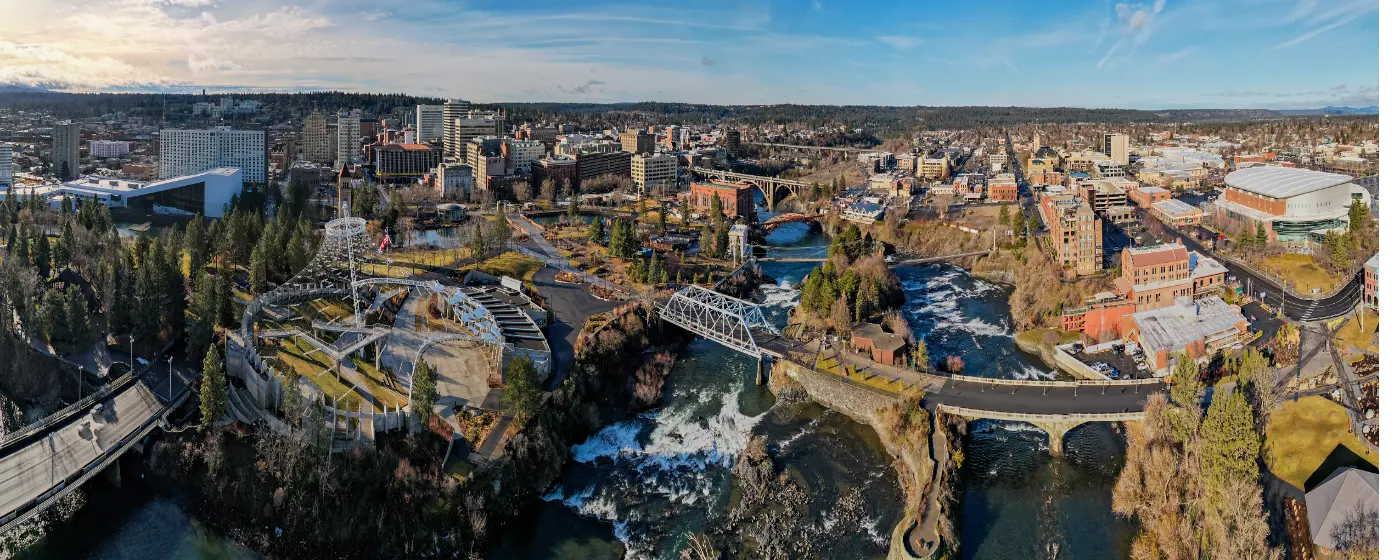
You've probably run the numbers at least once. Maybe you were priced out of Sacramento, the Bay Area, or San Diego and someone mentioned Spokane in a Facebook group. Maybe your company went fully remote and you suddenly realized you could stop paying California prices for a two-bedroom. Whatever brought you here, the first thing Californians consistently underestimate about Spokane is how complete a city it actually is — not a consolation prize, not a stepping stone, but a working, growing city of roughly 230,000 people anchored along the Spokane River in the far northeast corner of Washington state. Interstate 90 connects it west to Seattle and east to Coeur d'Alene, Idaho, about 30 miles away, and that regional position — close enough to mountains, ski areas, and lakes, far from any major metro — shapes everything about the pace of life here.
Spokane's economy doesn't run on one sector, which matters when you're deciding whether to trust a city with your livelihood. Fairchild Air Force Base anchors the west side. Gonzaga University — known nationally for its basketball program but equally significant as an employer and neighborhood anchor in the Logan/Gonzaga District — gives the city a steady collegiate energy. Two major regional health systems together make healthcare one of the city's largest employment categories. Amazon operates a significant logistics presence. That breadth means the local job market doesn't crater when one industry hits a rough quarter. The Spokane Public Schools district holds a B rating, according to Niche, and is worth researching at the neighborhood level when you're choosing where to buy.
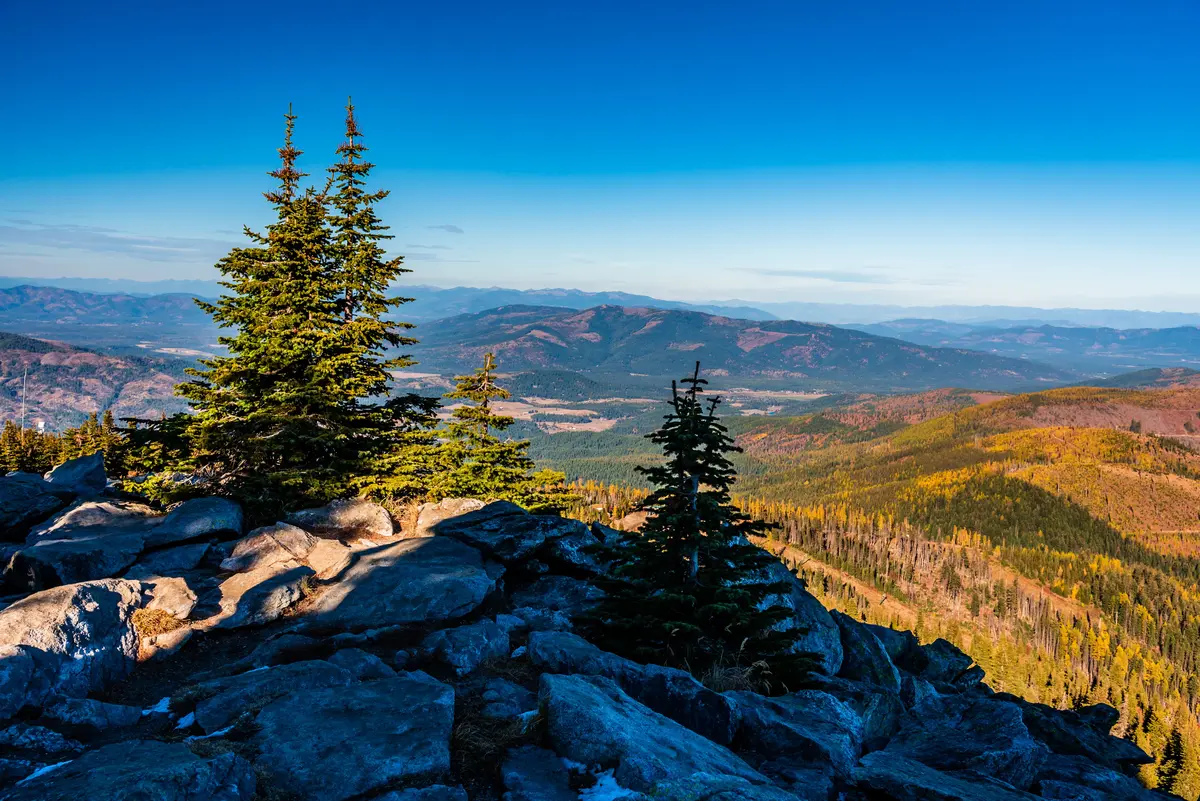
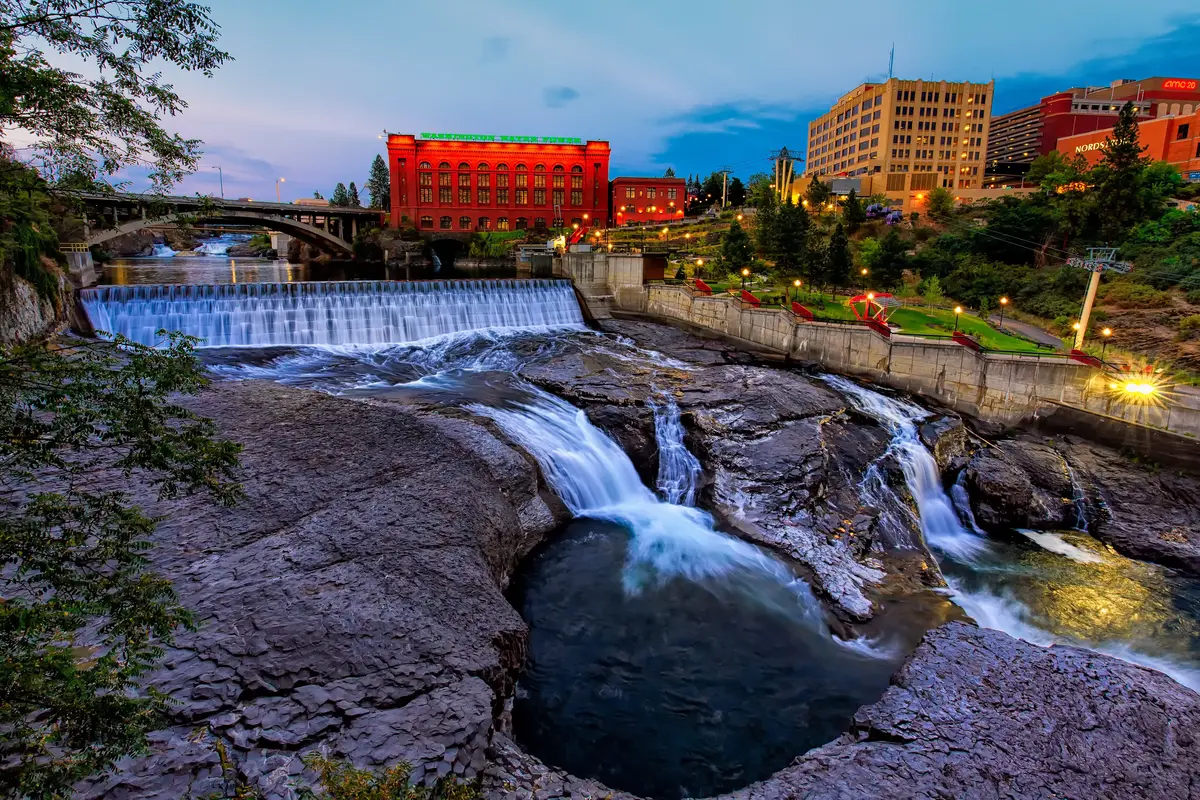
The cost picture is the main event for most California transplants. Washington's overall cost-of-living index sits at 110.7, against California's 142.2 (where 100 equals the national average) — a gap that shows up not just in housing but in what you pay for everyday goods, services, and yes, taxes. Washington collects no individual income tax on wages, Social Security, or retirement distributions. That single fact changes annual household budgets in ways that take a few months of pay stubs to fully appreciate. The outdoor access is the other piece locals cite constantly: Riverfront Park and Spokane Falls sit in the middle of the city, Mount Spokane is 30 miles out, and dozens of lakes fill the Idaho panhandle just east. Winter is real — Spokane averages roughly 40 inches of snow annually — and anyone moving from coastal California should budget for a wardrobe, a snow shovel, and about one full season of adjustment.
Whether you're choosing a neighborhood, negotiating an offer, or just deciding whether Spokane even makes sense for your situation, the sections below walk through the home price and tax comparison, the day-to-day cost shift, what the lifestyle actually looks like, the honest friction points California transplants encounter, and what the city's dining and culture scene can and cannot offer.
Home Prices: What California Money Buys in Spokane
The headline figure is hard to argue with. Spokane's typical home value is $403,557 (Zillow Home Value Index, June 2026). California's statewide median home price sits at $785,000 — meaning Spokane's market runs at roughly half what buyers face statewide in California. That gap is not a rounding error; it represents a genuine shift in what a given budget can accomplish.
In practical terms: the budget that buys a one-bedroom condo in Sacramento's midtown or a townhouse in San Diego's suburbs buys a three-bedroom house with a yard in Spokane. The budget that would put you in a starter home in the East Bay gets you into something on South Hill — established neighborhood, good schools nearby, real square footage — without stretching the household finances to the breaking point.
For more on which specific areas carry different price characters, the Spokane neighborhoods guide covers the geographic divides in detail. What matters for the California comparison is this: Spokane is not a market where you have to compromise on location entirely to afford a reasonable home. The entry points are accessible at a price range that would be considered deeply affordable by Bay Area or Los Angeles standards.
Property Tax: The Numbers Work Differently Here
Washington's effective property tax rate in Spokane is 0.83% — applied to a typical home valued at $403,557, that yields an estimated annual tax obligation of roughly $3,350. California's effective property tax rate runs approximately 0.76% on that state's median home. At California's $785,000 median, that calculation produces approximately $5,966 per year.
The dollar difference is meaningful even though the rates are close. Spokane's lower assessed values — not a dramatically different rate — are what make property taxes tangibly lighter. For buyers carrying equity out of California, the math compounds: selling a California home at the state median and buying at Spokane's median frees up capital that most California owners never had access to while they were in state.
What Californians Get Wrong About the Buying Process
The most common mistake California transplants make is treating Spokane like a buyer's market in the leisurely sense — assuming that lower prices mean lower competition. That assumption has cost people offers. Spokane's inventory has tightened meaningfully over the past several years, and well-priced homes in South Hill, Kendall Yards, or near Manito Park move quickly. Coming from California with equity and pre-approval is an advantage, but it does not replace local market knowledge. The first-time homebuyer page covers the buying process mechanics in detail if you're navigating Washington's transaction structure for the first time.
The Income Tax Shift: Washington's Biggest Financial Advantage
Washington collects no state income tax on wages, salaries, retirement distributions, Social Security, or capital gains below the investment threshold. For someone relocating from California, this is the financial change that compounds the fastest and surprises people the most when they see their first Washington pay stub.
California's income tax is progressive and aggressive. The top marginal rate reaches 13.3% — a 12.3% base rate plus a 1% Mental Health Services Tax on income above $1 million. For a household earning $100,000 per year, the difference between California and Washington amounts to roughly $5,762 annually in state income tax alone, based on current comparative calculations. That figure doesn't include the home price savings or the lower cost of living; it's purely the tax line on the household budget.
At a Glance: California vs. Washington Tax Comparison
| Tax Type | California | Washington (Spokane) | California Transplant Impact |
|---|---|---|---|
| State income tax (wages) | 1%–13.3% progressive | None (through 2027) | Immediate paycheck increase |
| State income tax ($100K earner) | ~$5,762/yr estimated | $0 | ~$5,762/yr freed annually |
| Retirement / Social Security tax | Taxed as ordinary income | Not taxed | Major benefit for retirees |
| Sales tax (city rate) | 7.25% state base | a combined state and local sales tax rate of 9.1% | Higher on taxable purchases |
| Groceries (sales tax) | Exempt | Exempt | No difference on food |
| Effective property tax rate | ~0.76% | 0.83% | Close — dollar amount lower here |
The one place Washington's tax structure costs more than California's is the combined sales tax rate. Spokane has a combined state and local sales tax rate of 9.1% — higher than California's 7.25% state base. Groceries are exempt in Washington, which softens the daily impact, but clothing, furniture, electronics, and vehicles will carry a higher sales tax rate than you were used to.
The High-Earner Footnote Worth Knowing
If your household income exceeds $1 million, there is a change on the horizon. Governor Ferguson signed ESSB 6346 in March 2026, which imposes a 9.9% state income tax on household income above $1 million beginning January 1, 2028. Income below that threshold remains untaxed at the state level. Most relocating households won't hit this threshold, but executives, physicians, or investors moving from California should factor it into long-horizon planning. For the full picture on Washington's tax structure, see the Spokane cost-of-living breakdown.
Day-to-Day Cost of Living: The Real Shift from California
The index comparison is a useful starting point: Washington's cost-of-living index is 110.7 against California's 142.2, both measured against a national average of 100. That gap shows up across almost every spending category — not just housing — and Californians who move here typically notice it within the first two or three months of normal spending.
Groceries are close to the national average and noticeably below what most coastal California cities carry. Utilities run higher per-month in winter because Spokane gets cold — expect natural gas bills in January and February to be a genuine line item — but the annual average still lands well below what Bay Area or Los Angeles households typically pay. Health insurance premiums run noticeably below what most California employers charge, though the honest trade-off is that you will drive farther for specialist care than you would from a major California metro.
What the Dining and Culture Scene Actually Offers
One thing California transplants consistently worry about and then stop worrying about within six months: Spokane has a real food and culture scene. The Martin Woldson Theater at the Fox anchors a performing arts presence downtown. The Northwest Museum of Arts & Culture draws regional exhibitions year-round. The Inlander's 2026 Best Of list spans upscale bistros, historic spots like Frank's Diner on W. 2nd Avenue — described as Washington's oldest dining-car restaurant — and neighborhood public houses.
The craft beer scene alone has 21 breweries with open tasting rooms as of mid-2025. No-Li Brewhouse on N. Division Street, Bellwether Brewing on N. Monroe Street, and Iron Goat Brewing on W. Mallon Avenue all represent that culture well — distinct, locally owned, not the kind of brewery-as-brand operation that California's saturated market tends to produce. Downtown continued expanding into 2025–2026, with new openings from the Downtown Spokane Partnership including a wood-fired pizza restaurant, a Japanese ramen and sushi kitchen, and a bookstore café.
What You Give Up
Spokane does not have a Trader Joe's. The nearest one is in Coeur d'Alene, Idaho, roughly 30 miles east — a detail that sounds minor until it becomes a weekly planning question. National retail options are more limited than what Bay Area or San Diego suburban corridors offer, and specialty grocery, international ingredients, and high-end specialty retail require either online ordering or a longer drive. For Californians accustomed to having every cuisine within a 10-minute radius, Spokane's dining diversity is genuinely good for a city its size — but it is not Los Angeles or San Francisco, and anyone expecting that comparison to hold will be disappointed.
Looking to buy in Spokane? Estimate your payment.
Enter your numbers to see an estimated monthly mortgage payment.
Estimate only. Excludes HOA fees and mortgage insurance. The interest rate above is a starting point, not a quoted rate — replace it with your own to see real numbers. Insurance is a flat placeholder, not a Spokane quote.
Lifestyle, Seasons, and What Nobody Warns You About
The lifestyle pitch for Spokane is genuine: mountains, ski areas, lakes, trails, and a city compact enough that you can reach Riverfront Park, the Spokane Falls overlook, or Manito Park's formal gardens within 15 minutes of almost any neighborhood. The outdoor access that Californians pay a premium to be near in Tahoe or coastal communities is simply the background of daily life here.
What people don't warn you about is the smoke. Eastern Washington sits in a wildfire corridor, and late summer — typically July through September — brings days when air quality drops into ranges that keep children indoors and make outdoor recreation uncomfortable. Californians from the Bay Area or Southern California will recognize this from their own experience, but Spokane's smoke season can be longer and more persistent than some parts of California. Budget for air purifiers before you arrive.
The Snow Learning Curve
Winter is the bigger cultural shift for most California transplants. Spokane averages around 40 inches of snow per year, and the city's elevation and inland position mean cold snaps are real — temperatures below 10°F are not unusual in January. The city handles snow reasonably well at the infrastructure level, but newcomers from coastal California consistently underestimate the cost and the adjustment: snow tires or chains, a different approach to driving, and a psychological recalibration around what "winter morning" actually means.
Most people from California who stay past year two say the same thing: the first winter is the hardest, and after that it becomes a feature rather than a problem. The Spokane River doesn't freeze, Riverfront Park remains usable year-round, and there is a cross-country skiing and snowshoeing community that treats the season as the point, not the penalty. The families you'll meet in the parks and at Friday evening spots along Monroe Street tend to be year-round outdoor people — not the fair-weather version that California's mild climate can produce.
Where California Transplants Actually Land
Most buyers relocating from California gravitate toward South Hill (established, family-oriented, strong school proximity), Kendall Yards (walkable streets, newer construction, river views), and Browne's Addition (historic character, close to downtown). The neighborhoods guide covers each area's character in depth. What matters for the California comparison is that the geographic divides in Spokane are real and affect daily life — just as freeways or hills created distinct zones in whatever California city you came from.
Who Spokane Works For — and Honest Reasons People Leave
The move from California to Spokane tends to work best for specific situations: remote workers who want to stretch equity and lower their monthly burn rate; families with school-age children who are willing to be intentional about school boundaries in exchange for far more living space; military families rotating through Fairchild Air Force Base who often return after service because the cost-benefit math held up; and retirees for whom Washington's treatment of retirement income — no state tax on Social Security, pension distributions, 401(k) withdrawals, or IRA income — makes the financial case straightforwardly.
It is less straightforward for people who need a specific industry concentration. Spokane's job market is real and diversified, but it is not a tech hub, a finance center, or a media market. Professionals who depend on a dense ecosystem of companies in their specific field — venture-backed startups, entertainment, biotech — will find the options thinner than what they left. Remote work solves that for many; if you need to be physically embedded in an industry cluster, Spokane requires an honest assessment of what's available locally versus what you'd be trading away.
Why People Move Out
The most common reasons Spokane residents leave, stated plainly: they underestimated winter and couldn't make the mental adjustment; they couldn't find work in their specific field and remote employment didn't materialize; or they moved here primarily for price and didn't connect with the community, which — unlike California's fragmented suburban model — requires some active participation to access. The city rewards people who show up to it. It does not deliver the same ambient social density that a Bay Area neighborhood or a coastal California beach town generates passively.
Crime is the other honest point. Spokane's property crime rate runs higher than many comparable mid-size cities, and it is not evenly distributed across the city's geography. That reality belongs in the full context of the safety overview rather than a summary here, but California transplants who expect a smaller city to mean a uniformly safer city sometimes find the property crime picture in certain areas is a genuine adjustment. The question is which specific area you're buying into — and that requires neighborhood-level research, not a city-level statistic.
The Bottom Line for California Buyers
Spokane offers California transplants something genuinely difficult to find in Western markets: a complete, working city at a price point that allows households to rebuild financial flexibility rather than continuously sacrifice it to housing costs and state income taxes. The cultural adjustment is real — winter, smoke season, a smaller retail footprint, a city whose scale requires you to know it rather than be carried by it. But the financial delta between what California extracts from a household and what Spokane costs is large enough, and durable enough, that most people who make the move at the right stage of life don't come back. For a full picture of who the city suits at different life stages, the living in Spokane overview lays it out directly.

Local Expert Takeaway: The financial case for leaving California for Spokane is cleaner than almost anywhere else in the West — no state income tax on wages, a typical home price near $403,557 versus California's $785,000 median, and a dining and brewery scene (No-Li on Division, Iron Goat on Mallon, Frank's Diner on 2nd) that makes the cultural adjustment easier than the numbers-only pitch would suggest. The catch is that Spokane rewards people who engage with it: the community, the winters, and the outdoor life are not ambient features that arrive automatically. Come prepared for snow, come ready to participate, and the financial breathing room tends to be the thing California transplants say changed their lives.
Quick Takeaways & FAQs
✅ Washington collects no state income tax on wages — a California earner at $100,000/year keeps roughly $5,762 more annually the moment they move.
⚠️ Spokane has a combined state and local sales tax rate of 9.1%, which runs higher than California's 7.25% state base, and smoke season in late summer can rival what many California residents fled.
📍 Frank's Diner on W. 2nd Avenue — Washington's oldest dining-car restaurant — is a genuine Spokane institution that signals how much local character the city carries at its own scale.
Is Spokane actually affordable compared to California cities?
Does moving from California to Washington really eliminate state income tax?
What should I know about Spokane's sales and property taxes before moving from California?
What surprises Californians most after six months in Spokane?
Is Spokane a good move for someone working remotely who wants to leave California?
Moving to Washington?
Tell us what you need help with and we'll connect you with local resources.
