
Maybe you've been priced out of Seattle or the Eastside and someone mentioned Spokane. Maybe Fairchild Air Force Base is bringing you here, or Gonzaga pulled a family member and now you're considering following. Whatever the reason, Spokane tends to surprise people — not because it's secretly a big city, but because it's a genuinely livable mid-sized one with real neighborhood character and a city-wide typical home value of $403,557 (Zillow Home Value Index, June 2026) that still feels attainable compared to western Washington markets. The surprise wears off fast once you realize the city is not uniform — and that where you land shapes almost everything about your daily experience.
Spokane's neighborhoods divide sharply along geography, income, and development era. The South Hill rises steeply from downtown and has historically concentrated the city's larger homes, established school attendance zones, and mature tree canopy. North of the river, redevelopment corridors like Kendall Yards sit minutes from downtown while older working-class districts like Hillyard and West Central sit further out from the core, with prices and character to match. Gonzaga University anchors the Logan district with a college-town energy that bleeds into surrounding blocks. Knowing which corridor you're entering before you start touring homes prevents most of the expensive mistakes buyers make here.
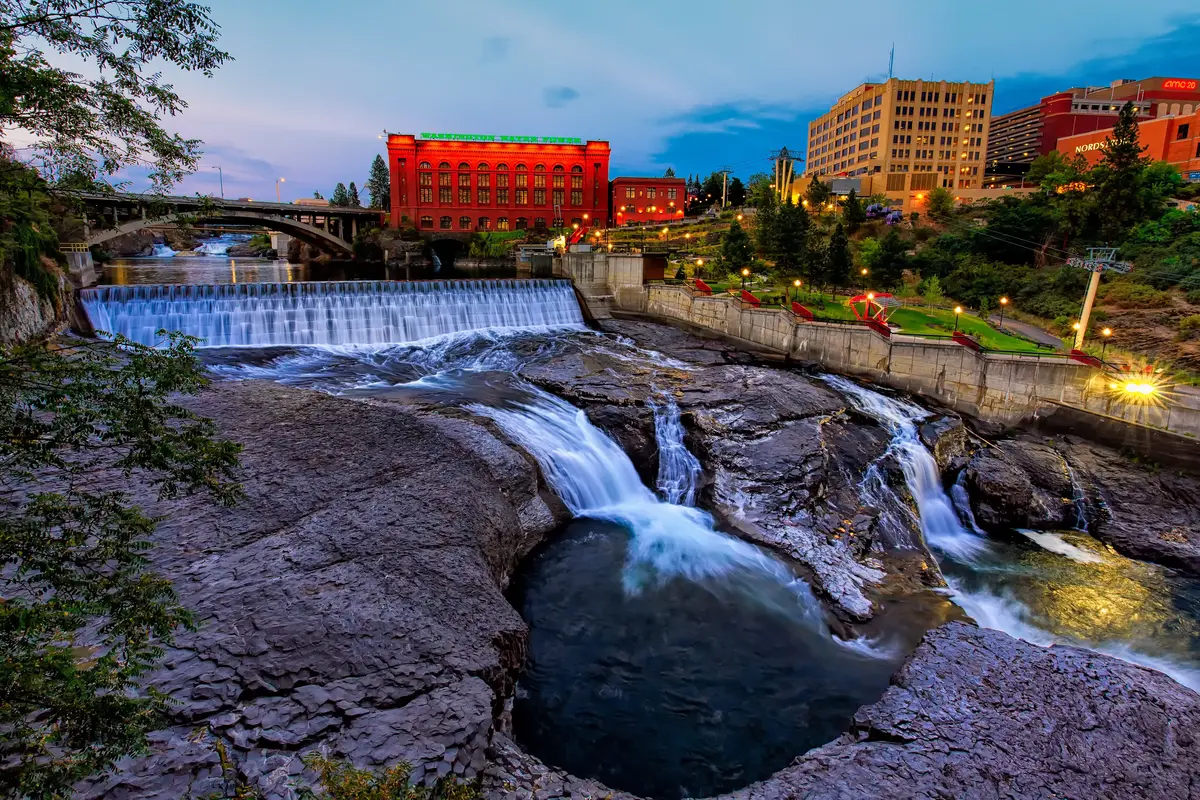
The outdoor access is real and worth naming: Riverfront Park and the Centennial Trail run directly through the city, and Manito Park's 78 acres anchor the South Hill. Homes go pending in approximately 15 days as of mid-2026 — competitive enough that you need to know your target neighborhoods before you walk into an open house, not after. The rental market runs noticeably below the national average, making this one of the more accessible metros in the Pacific Northwest for people who want to try a neighborhood before committing to buy.
Whether you're relocating, moving up, or renting while you get oriented, the sections below break down Spokane's eight most relevant neighborhoods by price, character, buyer type, and the honest trade-offs locals rarely mention to newcomers.

The Spokane Reality
The Hill Divides Everything
The single most important thing to understand about Spokane real estate is the physical divide between the South Hill and everywhere else. The hill rises sharply south of downtown, and the neighborhoods on it — South Hill proper, Manito/Cannon Hill — carry consistently higher price points, different school attendance boundaries, and a suburban pace that feels removed from the city center even when you're technically five miles away. Buyers who tour a South Hill home and then tour a West Central home the same afternoon often feel like they're in two different cities. They're not wrong.
The River as a Psychological Boundary
The Spokane River and the I-90 corridor create a second divide: north of downtown versus south. Kendall Yards sits just north of the river and has been intentionally redeveloped into a walkable, mixed-use district — but step outside its 78-acre boundary and you're quickly in neighborhoods with a very different character. Hillyard and Logan/Gonzaga sit further north and east of downtown, respectively, and buyers who don't map these distinctions before shopping often end up surprised by what surrounds a listing that looked fine on a screen.
School Boundaries Are Not Obvious Here
Spokane Public Schools (District No. 81) attendance boundaries don't follow the logic newcomers expect. Two homes on the same block can occasionally feed different elementary schools, and the district's boundaries have shifted enough in recent years that older online sources are unreliable. If a specific school is driving your neighborhood search, verify the current boundary on the district's own site before making an offer — not after.
Spokane Neighborhoods at a Glance
| Neighborhood | Best For | Price Range | Vibe |
|---|---|---|---|
| Browne's Addition | Walkable Luxury | $450K–$700K+ | Historic Victorian streets, minutes from downtown |
| South Hill | Families School | $450K–$900K+ | Established, tree-lined, suburban feel with city access |
| Kendall Yards | Walkable Transit | $500K–$800K | New-urbanist planned community on the river |
| Manito/Cannon Hill | Families Quiet | $400K–$650K | Early 20th-century grid, residents rarely leave |
| West Central | First-Time Value | $250K–$400K | Historic bungalows, active revitalization corridor |
| Hillyard | First-Time Value | $200K–$350,000 | Former independent city, working-class roots, improving |
| North Indian Trail | Families Privacy | $400K–$600K | Newer construction, quiet cul-de-sacs, city views |
| Logan/Gonzaga District | Renter Walkable | $280K–$450K | College-town energy, lively streets, high rental demand |
Best Neighborhood by Buyer Type
| Buyer Type | Best Neighborhood | Why |
|---|---|---|
| First-Time Buyer | West Central | Entry prices in the $250K–$400K range and active neighborhood reinvestment make it the most accessible path to ownership close to downtown. |
| Luxury Buyer | South Hill | The upper end of South Hill delivers the largest lots, the strongest resale history, and the most established school attendance zones in the city. |
| Walkability Seeker | Kendall Yards | The Centennial Trail is literally outside your door, downtown is a five-minute walk, and the neighborhood's street-level retail is purpose-built for pedestrians. |
| Families with Kids | Manito/Cannon Hill | A tight grid of mid-sized homes, proximity to Manito Park, and a community where neighbors tend to stay and age in place creates real stability for school-age kids. |
| Commuters | North Indian Trail | Quick access to the US-395 corridor and proximity to Fairchild Air Force Base via the freeway make this the practical choice for anyone commuting northwest. |
| Large-Lot Buyers | South Hill (upper) | The upper reaches of South Hill hold the city's deepest lots, mature landscaping, and the most physical separation between neighbors. |
| Renters | Logan/Gonzaga District | High rental inventory driven by university demand, walkable streets near campus, and rents that run well below Puget Sound region comparables. |
Looking to buy in Spokane? Estimate your payment.
Enter your numbers to see an estimated monthly mortgage payment.
Estimate only. Excludes HOA fees and mortgage insurance. The interest rate above is a starting point, not a quoted rate — replace it with your own to see real numbers. Insurance is a flat placeholder, not a Spokane quote.
Most Popular Neighborhoods in Spokane
1. Browne's Addition
Spokane's first nationally registered historic district (listed 1976) and its first locally designated historic district (2019), Browne's Addition sits immediately west of downtown with Victorian mansions, Craftsman bungalows, and a walkable strip of independent restaurants and cafés along West First Avenue. The historic designation is both a selling point and a constraint — exterior renovations require design review approval, which adds time and occasionally cost to projects buyers assume will be straightforward. Prices run $450K–$700K+, with the higher end reserved for the fully restored landmark homes.
Best for: Buyers who want architectural character, proximity to Riverfront Park, and on-foot access to downtown without sacrificing a residential feel.
2. South Hill
South Hill is where Spokane's most established family neighborhoods sit — large lots, mature elms and maples, and a mix of mid-century ranches and older two-story homes climbing the ridge south of 29th Avenue. Manito Park's 78 acres (including the Gaiser Conservatory and duck pond) functions as the neighborhood's backyard. The catch: at $450K–$900K+, it's the city's priciest corridor, and buyers who stretch to get here sometimes find the upper streets feel more isolated than the map suggests, with limited walkable retail outside the 29th Avenue strip.
Best for: Families prioritizing school attendance zones and buyers who want Spokane's closest equivalent to a classic Pacific Northwest residential neighborhood.
3. Kendall Yards
Built on a formerly contaminated Great Northern rail yard on the north bank of the Spokane River, Kendall Yards is Spokane's most intentionally designed neighborhood — 78 acres of mixed-use development where rowhouses, condos, and small-lot single-family homes sit within a five-minute walk of downtown. The Centennial Trail runs along the river directly below the bluff, and a 200-unit, $71 million mixed-use building is currently in the pre-development pipeline for West Summit Parkway, signaling continued investment. Prices run $500K–$800K for owned product; the trade-off is that the neighborhood's density and planned character feel more urban than traditional Spokane buyers expect, and HOA involvement in design decisions is real.
Best for: Buyers who want new construction, river trail access, and walkable urban living without leaving Spokane proper.
4. Manito/Cannon Hill
Immediately north of the Manito Park boundary, the Manito/Cannon Hill neighborhood is defined by an early 20th-century street grid of predominantly mid-sized single-family homes — the kind of block where neighbors have lived for fifteen years and have no plans to leave. That stability is the appeal and the limitation: inventory is tight because people don't sell, which keeps prices in the $400K–$650K range but means buyers sometimes wait months for the right listing to appear. The short grid and mature trees create a pocket neighborhood feel that's difficult to replicate elsewhere on the South Hill.
Best for: Buyers who want South Hill proximity and park access at a notch below peak South Hill prices, with a genuine sense of settled community.
5. West Central
West Central is one of Spokane's oldest residential districts, with Victorian homes and Craftsman bungalows dating to the late 1800s lining streets like Ash and Maple between the river and the freeway. Prices in the $250K–$400K range reflect a neighborhood still mid-transition: blocks near the river corridor have seen genuine reinvestment, while streets further from the core remain more variable. Buyers who move here often cite the value and the proximity to downtown; those who leave often cite the inconsistency — a renovated bungalow can sit next to a property that hasn't been touched in decades, and that patchwork is still resolving itself.
Best for: First-time buyers and value-oriented buyers who are comfortable with a neighborhood that is improving but not finished improving.
6. Hillyard
Hillyard was a separate city before Spokane annexed it, and that independent origin still shows in the neighborhood's distinct street grid and the historic Market Street corridor named for Great Northern Railway magnate James J. Hill. It's Spokane's most affordable ownership market in this guide, with prices running $200K–$350,000 for older bungalows and smaller single-family homes. The honest reality: Hillyard rewards patient, research-oriented buyers who visit multiple blocks before choosing one — the neighborhood is large enough that quality varies street by street, and assuming uniformity is how buyers end up on the wrong block.
Best for: Buyers with a tight budget who want homeownership in Spokane proper and are willing to do the block-level homework.
7. North Indian Trail
North Indian Trail sits on Spokane's northwest plateau, a mix of established 1980s and 1990s construction alongside newer infill homes, with the kind of cul-de-sac-and-view-lot layout that appeals to buyers moving from larger metros who want suburban quiet without leaving city limits. Downtown Spokane is visible from the higher streets. Prices in the $400K–$600K range reflect the newer housing stock and the relative insulation from urban density. The honest limitation: on-foot access to retail or services is minimal — this is a drive-everywhere neighborhood, and buyers who expect walkable errands will need to reset that expectation.
Best for: Families and commuters who want newer construction, city views, and a quieter pace inside Spokane's northwestern boundary.
8. Logan/Gonzaga District
The blocks immediately north of Gonzaga University's campus carry a college-town energy that persists even for owners who have no university connection — lively streets, a mix of older bungalows and duplexes, and consistent foot traffic from students and faculty year-round. Prices in the $280K–$450K range reflect both the location's convenience and the older housing stock. The honest catch for owner-occupants: rental demand from the university keeps investor activity high, which means competition at the lower end of the price range is significant, and the neighborhood's character shifts noticeably when the academic calendar winds down in summer.
Best for: Buyers comfortable with a mixed owner-renter block dynamic, and renters who want to walk to campus or the strip of coffee shops and casual dining near the university.
Common Mistakes Buyers Make in Spokane
Assuming South Hill Is One Uniform Market
South Hill covers a large swath of the city's southern slope, and prices, lot sizes, and school attendance zones shift significantly as you move up the hill or across it. A home on the lower stretches near 29th Avenue is a different product from a home near the upper ridge above 57th — different school boundaries, different lot character, different resale dynamics. Buyers who tour one South Hill home and then write offers on another assuming they're interchangeable are making a geographic assumption the data doesn't support.
Underestimating the Monroe Street Corridor's Role
Monroe Street functions as one of the city's main north-south spines, connecting downtown to the North Indian Trail area. During peak morning hours, the Monroe Street Bridge and the stretch through Kendall Yards creates real friction for northbound commuters. Buyers who test a commute on a Saturday afternoon and decide it's fine, then start the same commute on a Tuesday in January, often have a different assessment by week three.
Chasing Square Footage Over School Boundary in Hillyard
Hillyard consistently offers the largest homes per dollar in this neighborhood set. The mistake buyers make is optimizing for the square footage and not mapping the school attendance zone before writing an offer. Spokane Public Schools boundaries in the northern neighborhoods have shifted, and some Hillyard addresses feed schools that are not the ones buyers assume based on proximity. Verify the boundary on the district's site before you fall in love with the listing.
Treating West Central's Best Blocks as Representative of the Whole Neighborhood
The renovated Victorian homes closest to the river in West Central are genuinely impressive for the price — and they're the ones that get photographed, featured in neighborhood guides, and shown to newcomers first. Several blocks further from that core, the neighborhood looks and feels materially different. Walking the full area, not just the showcase streets, is the most reliable way to calibrate expectations before committing to a purchase here.
Best Areas to Rent in Spokane
| Area | Ideal For | Typical Rent Range | Trade-off |
|---|---|---|---|
| Logan/Gonzaga District | Students, young professionals, university staff | $1,100–$1,600/mo | High turnover; summer vacancy risk; investor-heavy inventory |
| Kendall Yards | Professionals who want walkability and new construction | $1,500–$2,200/mo | Highest rents in the city; limited older affordable stock |
| South Hill / Manito corridor | Families wanting top school zones without buying | $1,400–$2,000/mo | Single-family rentals are limited; competition is real |
| West Central | Budget-conscious renters comfortable with a transitional neighborhood | $950–$1,400/mo | Block-level quality varies; do your homework on the specific street |
| North Indian Trail | Families and commuters who prioritize quiet over access | $1,300–$1,800/mo | Car-dependent; thin rental inventory compared to central areas |
Availability tightens in August when Gonzaga's academic year approaches, and any rental near the Logan/Gonzaga District should be evaluated against that seasonal cycle before signing a lease.

Local Expert Takeaway: The buyers who navigate Spokane's market well share one habit: they pick a neighborhood before they pick a house. The geographic divides here — the hill, the river, the school boundaries — are real enough that a home in West Central and a home in Manito/Cannon Hill at the same price are not interchangeable options. Spend a weekday morning in Kendall Yards walking the Centennial Trail, then drive up to the South Hill and spend an afternoon around Manito Park. If you're leaning toward value and upside, walk Browne's Addition on a weekend evening. The neighborhood that fits your daily rhythm will be obvious faster than any spreadsheet will tell you.
Quick Takeaways & FAQs
✅ Spokane's typical home value of $403,557 (Zillow Home Value Index, June 2026) puts ownership within reach for a range of buyers — including first-timers who target West Central or Hillyard.
⚠️ The South Hill–versus–everywhere-else divide is Spokane's defining real estate fault line: buyers who skip the geographic orientation often end up in the wrong neighborhood for their lifestyle.
📍 Homes in Spokane go pending in approximately 15 days as of mid-2026 — know your target neighborhood before you tour, not after, or you'll be writing offers under pressure you didn't prepare for.
What is the most affordable neighborhood to buy a home in Spokane?
Which Spokane neighborhood is best for families with school-age children?
Is Kendall Yards worth the premium over other Spokane neighborhoods?
How competitive is the Spokane real estate market in mid-2026?
What surprises people about living in Spokane after the first few months?
Moving to Washington?
Tell us what you need help with and we'll connect you with local resources.
