
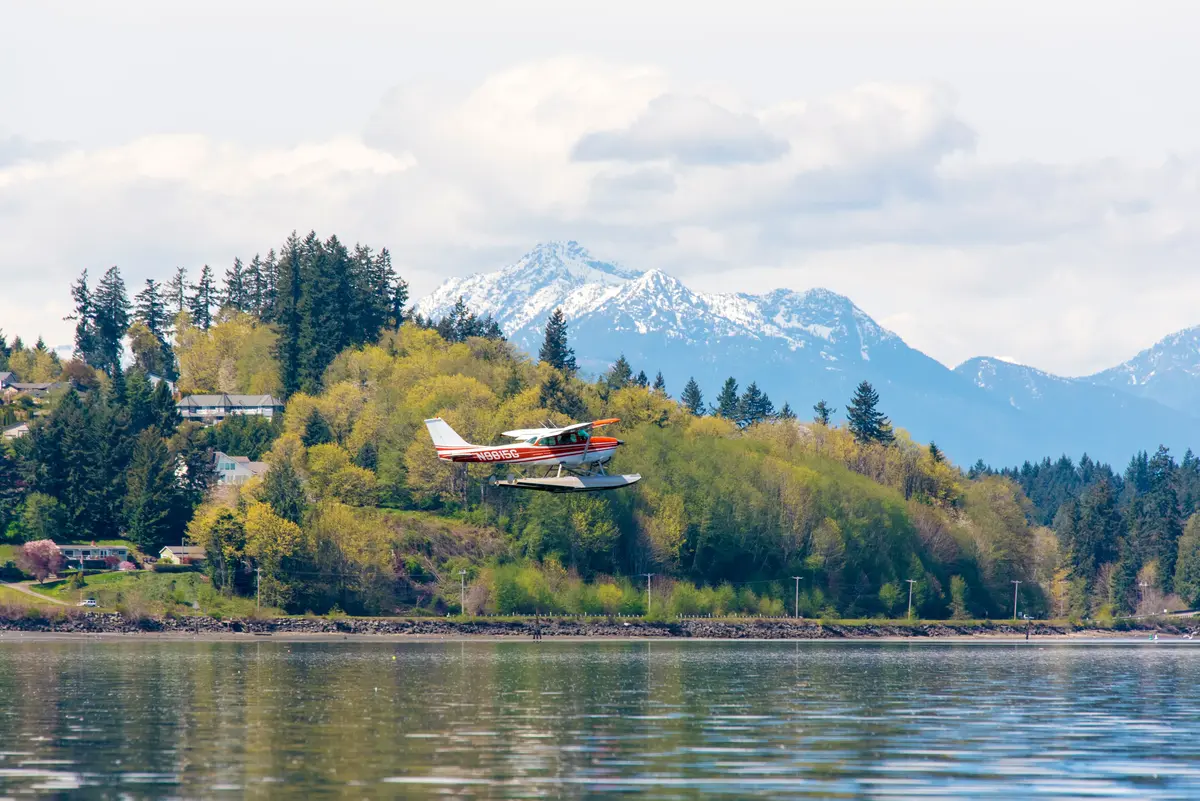
Most people who move to Port Orchard from east of the Cascades — or from somewhere landlocked entirely — say the same thing around month two: they had no idea they'd be living on the water. Sinclair Inlet sits right at the foot of Bay Street, and on a clear morning the Olympic Mountains rise across the water in a way that genuinely stops people mid-commute. The city's recreation identity is built around that waterfront, but it doesn't end there. Port Orchard backs up quickly into Douglas fir forest, and the combination of saltwater access and forested trail systems gives this small Kitsap County city a recreational footprint that punches far above its 19,000-person population.
The outdoor options here range from a paved, dog-friendly boardwalk along the inlet to 209 acres of county parkland with mountain bike trails and a miniature railroad — plus a state park with genuine Puget Sound saltwater camping less than five miles away. The city formalized its vision in a Parks, Recreation, and Open Space Plan adopted in February 2022, following more than two years of community input, so expansion of trails and facilities has been an active policy priority, not just a talking point. Families with kids, paddlers, hikers, and cyclists all find something genuine here.
The honest caveat: Port Orchard is still growing into its parks system. A city this size doesn't have the indoor recreation infrastructure of Silverdale or the polished trail networks of a larger metro suburb. What it does have is waterfront, forest, and a state park most residents can reach in under ten minutes. If your weekend default is being outside, that's a strong foundation. If you need a rec center with a lap pool and a climbing wall, you'll be driving to Bremerton or Silverdale.
The sections below cover Port Orchard's waterfront trail and marina, the forested parks inland, the Manchester neighborhood's state park, and the seasonal outdoor calendar that shapes life here year-round.
The Bay Street Boardwalk and Sinclair Inlet Waterfront
The Bay Street Pedestrian Pathway is the recreational spine of downtown Port Orchard. It's a paved, flat, dog-friendly path running along Sinclair Inlet from the ferry landing west past the marina — bikeable, walkable, and open to the Olympic Mountain views that remind you exactly where you are in the Pacific Northwest.
The full out-and-back boardwalk run clocks in at 1.5 miles with only 32 feet of elevation gain, passing through Rockwell Park and Port of Bremerton Marina Park before ending at the Observation Deck at the Port Orchard Marina. That makes it genuinely accessible: strollers, dogs, seniors, and serious cyclists share it without tension most mornings.
What makes the path more than a casual stroll is what you're looking at. Directly across the inlet sits the Bremerton naval complex; scanning left, the Olympics fill the skyline on clear days. Sinclair Inlet is one of the better birdwatching corridors in the county — the shallow embayment draws species you won't find in the forested parks inland. Morning walkers regularly spot herons working the shallows.
The Marina as a Recreation Hub
The Port Orchard Marina, operated by the Port of Bremerton, functions as the anchor for on-water recreation. Boaters get a full-service facility: fuel dock, dockside pumpout, covered moorage for vessels 28 to 52 feet, free showers, and Wi-Fi. Overnight moorage runs $40/night (plus $1 per foot over 40 feet), which makes it an attractive stop for cruisers running Puget Sound.
Day-use boaters and paddlers launch here too, and the marina's position on sheltered water matters more than it might look on a map. Sinclair Inlet's calm conditions make it forgiving for newer kayakers — no ocean swells, predictable tides, and enough shoreline to explore without committing to a long crossing.
Kayaking Sinclair Inlet
Beyond the marina, paddlers have two additional launch points: Annapolis Pier and Waterman Pier, the latter sitting in the Waterman neighborhood at the inlet's eastern edge. River otters appear regularly on morning paddles, and bald eagles are common enough that spotting one stops being remarkable after a few weeks of living here.
The Kitsap Transit foot ferry crosses to Bremerton in approximately 10 minutes, which creates an unusual recreational option: kayak one direction, ferry the other, and explore two waterfronts in a single outing. It's the kind of thing locals figure out fast and visitors almost never do.
The Farmers Market Season
From April through October, the waterfront adjacent to the marina hosts the Port Orchard Farmers Market, with live concerts at Marina Park running through summer. After six months here, most residents quietly acknowledge this market is where the community actually gathers — not a civic event, just the reliable Friday or Saturday ritual that makes the waterfront feel like a town center rather than a scenic backdrop.
South Kitsap Regional Park: Forest, Trails, and All-Ages Recreation
South Kitsap Regional Park is the city's most versatile outdoor facility — 209 acres of Kitsap County parkland with enough variety that a family with a toddler, a teenager on a mountain bike, and a dog-walking grandparent can all spend two hours there simultaneously without overlap.
| Feature | Details |
|---|---|
| Total acreage | 209 acres |
| Trail network | ~6 miles of forested hiking and mountain biking trails |
| Skatepark | 7,000 sq ft |
| Forest Explorer Trail | 0.3-mile interactive loop for children |
| Miniature railroad | Operated by Kitsap Live Steamers (seasonal) |
| Athletic facilities | Fields, batting cages, Chase Road parking area |
| Signature trail | Skookum Connection Trail, ~2.5-mile forested loop |
The trail system is where serious hikers and mountain bikers spend their time. The Skookum Connection Trail — roughly 2.5 miles, beginning near the batting cages off the Chase Road parking area — is the go-to loop for a proper forest workout without leaving city limits.
What Families Actually Use It For
The 0.3-mile Forest Explorer Trail is designed for younger kids, with interpretive stops built into a short loop through the trees. It's genuinely good — not an afterthought. Parents with school-age children find that the combination of the Forest Explorer Trail, the skatepark, and the miniature railroad operated by Kitsap Live Steamers turns a single park visit into a half-day without much planning.
The 7,000-square-foot skatepark draws a consistent crew of skaters and BMX riders, and it's large enough that it rarely feels crowded on weekday afternoons. This is where Port Orchard teenagers actually congregate — not a downtown plaza, not a mall parking lot.
Youth Sports at the Park
The athletic fields and batting cages handle a significant share of the organized sports activity in the city. For a fuller picture of youth leagues and recreational programs tied to this facility, the schools and youth activities page covers the organized sports landscape in detail.
One thing newcomers underestimate: this park gets genuinely muddy from November through March. The forested trails don't drain the way a groomed suburban trail does, and the mountain bike routes in particular can be deeply rutted after a wet week. Locals bring the right footwear and accept the mud as part of the deal. Relocating buyers who show up expecting year-round groomed-path conditions are frequently surprised by how Pacific Northwest the experience actually is.

Manchester State Park: Saltwater, History, and Camping on Rich Passage
Manchester State Park sits near the Manchester neighborhood, just outside Port Orchard's city limits but within easy reach of nearly every part of the city — and it's the outdoor asset most residents mention first when someone asks what surprised them about living here.
The park covers 111 acres with 3,400 feet of saltwater shoreline on Rich Passage in Puget Sound. It drew 261,014 visitors in 2024, which puts it firmly on the map as a regional draw, not just a local secret. Day admission runs $5, or it's included with a Discover Pass at $30 per year — the Discover Pass being the purchase that every outdoor-focused household in Kitsap County eventually makes.
What the Park Actually Offers
| Activity | Notes |
|---|---|
| Saltwater shoreline | 3,400 ft on Rich Passage / Puget Sound |
| Camping | 50 campsites |
| Hiking | Forest and shoreline trails through 111 acres |
| Mountain biking | Available on park trails |
| Scuba diving | Rich Passage is a recognized dive site |
| Fishing | Saltwater access from shore |
| Wildlife viewing | Marine mammals, seabirds along Rich Passage |
| Historic structures | Torpedo warehouse (~1901), mining casemate, gun battery |
The historic structures are genuinely worth the detour. A torpedo warehouse built around 1901 — used to store underwater mines during the early-to-mid twentieth century — still stands alongside a mining casemate and a gun battery, all remnants of the park's role as a coastal defense installation protecting Puget Sound Naval Shipyard across the water in Bremerton. It's one of the few places in the region where the naval history you see from the boardwalk becomes something you can actually walk through.
The Dive Community
Rich Passage is a legitimate scuba destination, and the dive community in Kitsap County treats Manchester State Park as one of its home sites. The current-swept passage brings cold-water species and reasonable visibility on the right tide. If you're a diver relocating from a landlocked state, this alone tends to be a significant quality-of-life discovery in the first few months.
The Camping Reality
Fifty campsites means this park books up during summer weekends faster than newcomers expect. If you're planning to use it as a backyard campground through July and August, reserve well in advance — particularly on weekends when ferry traffic brings day-trippers and overnight visitors across the Sound. The shoulder seasons — late September and April through May — are when locals actually camp here, and the experience of having Rich Passage to yourself on a quiet October morning is considerably better than fighting for a spot in August.
Looking to buy in Port Orchard? Estimate your payment.
Enter your numbers to see an estimated monthly mortgage payment.
Estimate only. Excludes HOA fees and mortgage insurance. The interest rate above is a starting point, not a quoted rate — replace it with your own to see real numbers. Insurance is a flat placeholder, not a Port Orchard quote.
Neighborhood Trails, Seasonal Recreation, and What You'll Actually Do Outside
Beyond the signature parks, Port Orchard has trail access woven into its residential neighborhoods in ways that don't always show up on official park maps. McCormick Woods — the city's largest planned community — includes the Ledum Loop, a nature path through fern forest and wetlands starting on McCormick Woods Drive. It's easy-rated, well-signed, and leash-friendly, which makes it the default morning walk for the neighborhood's significant population of dog owners.
The Ledum Loop through McCormick Woods is the kind of trail that people specifically mention when they're explaining why they bought in that neighborhood over somewhere else in the city. It's not dramatic — no views, no summit — but a fern-lined path through Pacific Northwest wetland five minutes from your front door has a way of making morning routines feel less routine. Details on McCormick Woods and how it compares to other Port Orchard neighborhoods are on the best neighborhoods page.
The Seasonal Calendar
Port Orchard's outdoor calendar is shaped less by dramatic seasonal shifts and more by rain tolerance. Winters here are gray and wet — not brutal, but persistently damp in a way that people relocating from drier climates find disorienting even after twelve months. The trails stay accessible year-round, but the forested ones get muddy from November through March. The waterfront boardwalk, being paved and flat, is the year-round default for anyone who wants to get outside without committing to mud-boot conditions.
Summer is when the city's outdoor life fully opens up. The farmers market and marina concerts run April through October. Manchester State Park's campground fills on summer weekends. Kayaking season on Sinclair Inlet peaks from June through September, when morning water conditions are reliably calm and the sunrise views of the Olympics are at their clearest. The ferry to Bremerton runs daily and turns a quick paddle into a genuine urban adventure.
What Outdoors-Focused Buyers Don't Always Ask
People researching Port Orchard almost always ask about trails and waterfront access — the answer is good on both counts. What they less often ask is whether there's a community around those activities. The honest answer: it's growing. The Kitsap Live Steamers who run the miniature railroad at South Kitsap Regional Park, the dive community at Manchester, the farmers market regulars on summer Saturday mornings — these are real, self-organized outdoor communities. They're not the size of Bellingham's trail scene or the Gig Harbor waterfront crowd, but they're genuine and accessible to newcomers who show up.
One thing to know before you go looking for Peninsula BevCo on Harrison Avenue after a trail run at South Kitsap Regional Park — it's a taproom, bottle shop, and restaurant in one, and it's become the post-outdoor-activity gathering point for that corner of the city. Brickhouse 714 Bar and Grill on Bay Street serves the same function for the waterfront crowd after an evening on the boardwalk. Neither is remarkable as a destination on its own; both are exactly the kind of neighborhood anchor that makes outdoor-oriented living feel social rather than solitary.
The Trade-Off Worth Naming
Port Orchard's parks and trail system is legitimately good for a city this size. The catch is indoor recreation. There is no city-operated recreation center with a pool, a fitness floor, or drop-in programming. Residents who rely on indoor gym access, lap swimming, or structured fitness classes drive to Silverdale or Bremerton to get it. That's a 15-to-20-minute round trip most days — manageable, but worth factoring in before you assume Port Orchard can replace a city with full indoor rec infrastructure.

Local Expert Takeaway: Port Orchard's outdoor life is built around two things: the Sinclair Inlet waterfront, where the Bay Street Boardwalk and marina put kayaking and ferry crossings within walking distance of downtown, and the forested parks inland, anchored by South Kitsap Regional Park's 6-mile trail network and 209 acres of all-ages facilities. Manchester State Park near the Manchester neighborhood adds saltwater camping and diving on Rich Passage — 261,014 visitors came in 2024, and most of them weren't from Port Orchard. The gaps are real: no city rec center, no lap pool, and forested trails that turn muddy from November through March. But for a city under 20,000 people, the combination of tidewater, forest, and a state park ten minutes away is genuinely unusual.
Quick Takeaways & FAQs
✅ The Bay Street Boardwalk is a 1.5-mile paved, dog-friendly waterfront trail with Olympic Mountain views that functions as Port Orchard's everyday outdoor hub year-round.
⚠️ Port Orchard has no city-operated recreation center with a pool or indoor fitness programming — residents drive to Silverdale or Bremerton for that infrastructure.
📍 Manchester State Park, near the Manchester neighborhood, drew over 261,000 visitors in 2024 and offers saltwater camping, scuba diving on Rich Passage, and a circa-1901 torpedo warehouse worth exploring — all accessible with a $30/year Discover Pass.
Is the Bay Street Boardwalk in Port Orchard good for biking?
Can you kayak from Port Orchard, and where do you launch?
What is South Kitsap Regional Park and what does it have?
How far is Manchester State Park from Port Orchard, and what does it cost?
Does Port Orchard have an indoor recreation center or public pool?
Moving to Washington?
Tell us what you need help with and we'll connect you with local resources.
