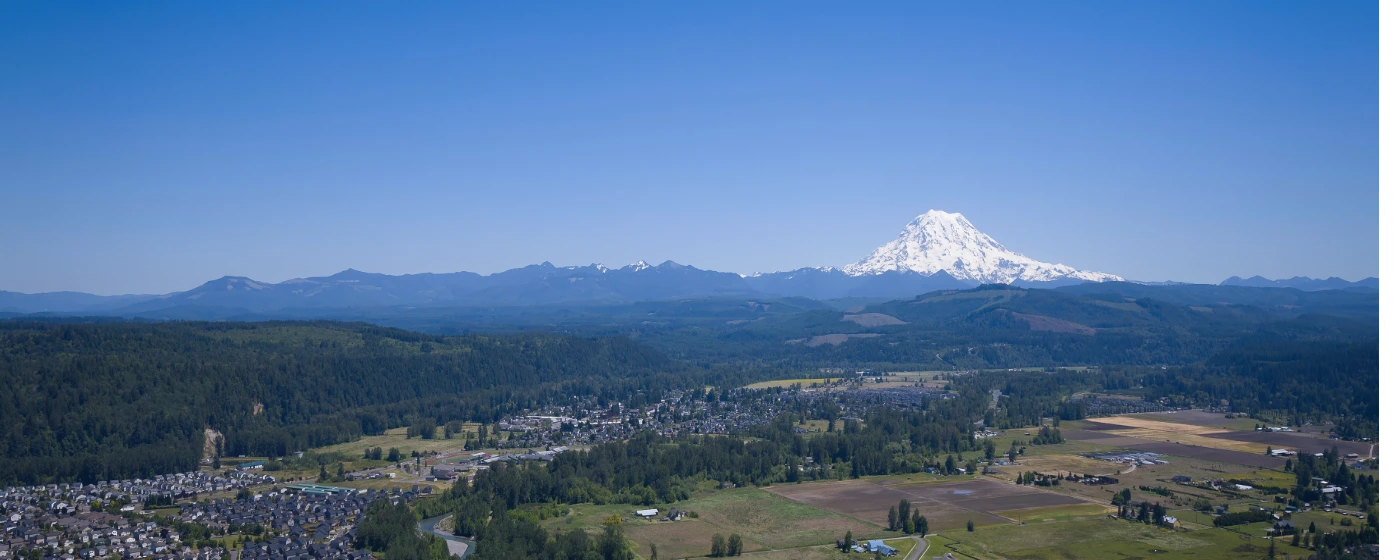
Maybe you've been watching your California property tax bill climb on a house that's appreciated far beyond what your salary can replicate elsewhere. Maybe your employer went remote and you finally ran the numbers. Whatever the trigger, the math that brings Californians to Orting, Washington tends to hit them the same way: the typical home value here is $545,757 (Zillow Home Value Index, July 2026), a figure that would buy a teardown in most Bay Area zip codes and a modest condo in much of Los Angeles. Orting sits about 35 miles south of Tacoma in the Puyallup River valley, tucked between the farmland of Pierce County and an unobstructed view of Mount Rainier that fills the windshield on Washington Avenue every clear morning. That view, and the price tag attached to the houses beneath it, is usually the first thing California transplants mention.
The economic backbone here is small but stable. The Washington Soldiers Home and the state Department of Veterans Affairs anchor one end of the employment picture; the Orting School District, Pierce County government, Northwest Medical Specialties, and Alliance Door Products fill in the rest. This is not a city with a large tech campus or a downtown office tower — most residents commute to Tacoma, Puyallup, or Sumner for work. The median household income in Orting is $132,877, which reflects that many buyers here are dual-income families who've done exactly the math described above and decided the drive is worth it. The Orting School District holds a B- rating, according to Niche — honest mid-range performance, not a showcase district, but a functioning one in a community where parents tend to be actively involved.
Day-to-day life in Orting is quieter than anything most Californians are leaving behind. The approximately 21-mile Foothills Trail — a paved, non-motorized rail-trail designated a National Recreation Trail in 2012 — runs straight through downtown and Central Park, giving residents a car-free corridor toward Puyallup to the north and Buckley to the south. Washington Avenue's small commercial strip includes Tim's Kitchen, a local diner on Washington Ave S, and a handful of small independent spots — the kind of places where you'll recognize faces within a month. For larger retail, Puyallup is the realistic base. Health insurance premiums run noticeably below what most Californians were paying, though you will drive farther for specialist care than you would from a California metro. The overall cost picture still tilts sharply in Orting's favor for most families moving out of Southern California or the Bay Area, even accounting for a combined state and local sales tax rate of 9.6%.
There is one fact about Orting that every California transplant needs to understand before signing a purchase agreement, and it has nothing to do with taxes: this city sits inside Mount Rainier's lahar hazard zone. It is a real, documented risk with real infrastructure built around managing it — and it shapes the psychology of living here in ways that neither a Zillow listing nor a weekend visit will fully communicate. This guide covers the California-to-Orting financial comparison in detail, the tax picture on both sides, what the lahar reality means practically, and what the first year here typically looks and feels like for people making this move.
The Home Price Reality: California vs. Orting
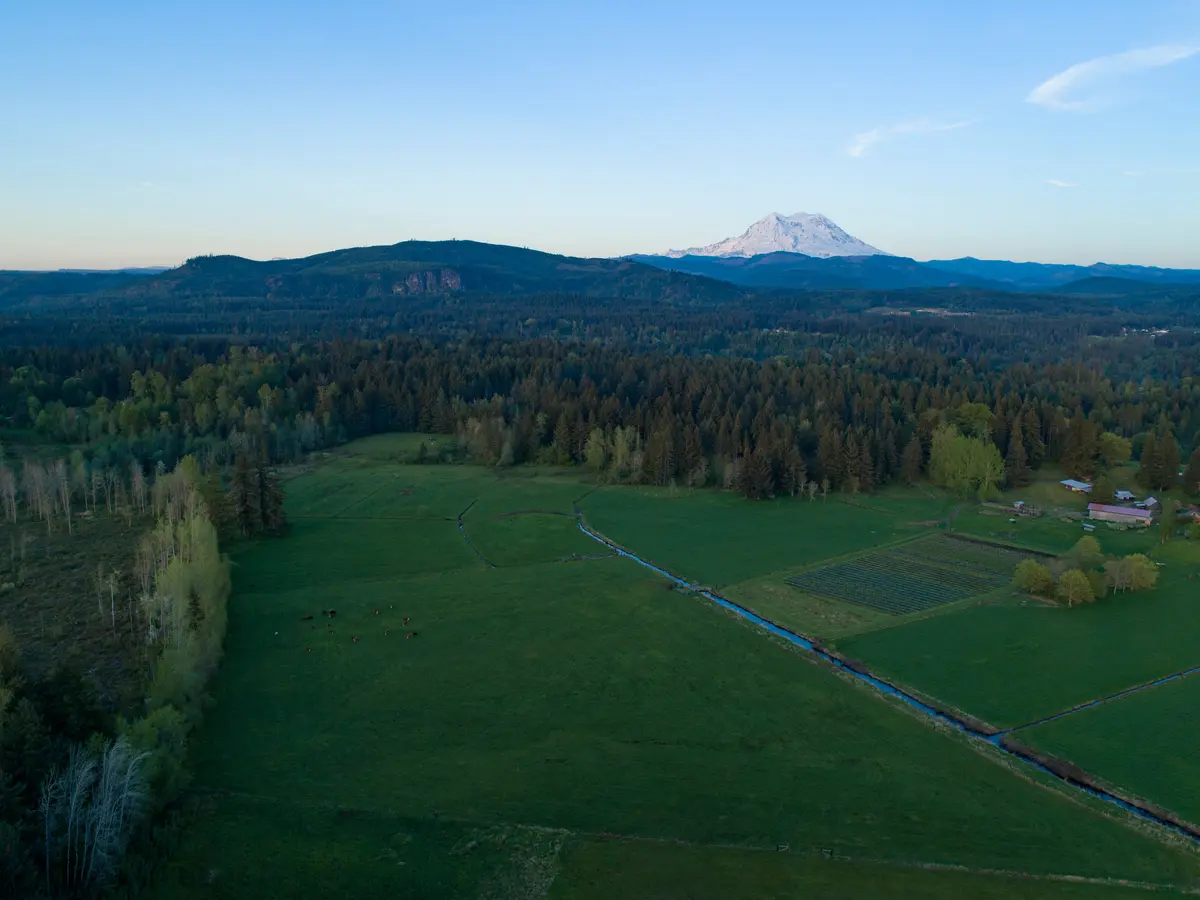
The number that stops most California buyers mid-scroll is Orting's typical home value of $545,757 (Zillow Home Value Index, July 2026). In coastal California metros, median values routinely run between $900,000 and $1.3 million — and that's before you account for the property you're actually leaving.
What the Gap Looks Like on Paper
| Market | Typical Home Value (2025–2026) | Effective Property Tax Rate | Annual Tax on Typical Home |
|---|---|---|---|
| Orting, WA | $545,757 | 0.94% | ~$5,130 |
| Los Angeles metro | $900,000–$1,000,000+ | ~1.1% (Prop 13 adjusted) | $9,900–$11,000+ |
| San Francisco / Bay Area | $1,100,000–$1,300,000+ | ~0.8% (long-held homes) | $8,800–$10,400+ |
| San Diego metro | $850,000–$950,000+ | ~1.0–1.1% | $8,500–$10,450+ |
| Sacramento metro | $500,000–$600,000 | ~0.75–1.0% | $3,750–$6,000 |
| Inland Empire (Riverside/SB) | $550,000–$650,000 | ~1.0–1.2% | $5,500–$7,800 |
* Annual tax figures are approximate estimates based on the typical home value range and the effective rate — not a guarantee of any specific tax bill. Actual amounts vary by assessed value and local levies.
Orting's 0.94% effective property tax rate is higher than many California homeowners pay on long-held Prop 13-protected homes — but the assessed value it's applied to is dramatically lower. That combination means the actual annual property tax bill on a typical Orting purchase lands noticeably below what most California buyers are used to paying in absolute dollars.
What California Equity Actually Buys Here
Californians who've owned for five or more years often arrive with substantial equity. In Orting, that equity can translate to a significantly larger down payment percentage — or in some cases, a purchase that doesn't require financing at all. That changes the monthly math in ways that a simple price comparison doesn't capture.
Entry-level homes — older ranch-style construction, smaller lots, occasional deferred maintenance — start in the low-to-mid $400,000s. The newer subdivisions like White Hawk and Morningview Estates sit closer to the city-wide typical value or above it. For neighborhood-level price detail, the Orting neighborhoods guide breaks down what each area actually delivers at its price point.
The catch no one warns California buyers about: Orting is a small city with limited inventory, and the most desirable listings — particularly those with clear Rainier sightlines — move quickly. Coming in with a competitive pre-approval and California equity doesn't guarantee the first offer wins.
The Tax Comparison: Washington vs. California
For most California earners, the income tax difference alone is significant enough to shape the relocation decision. Washington levies no broad-based personal income tax on wages or salaries — a structural advantage that California's top marginal rate of 13.3% makes impossible to ignore for anyone earning in the upper-middle to high bracket.
Income Tax: The Core Advantage
A dual-income household earning $200,000 in California could owe $15,000–$18,000 or more in state income tax annually, depending on deductions and filing status. In Washington, that bill drops to zero for wages — a difference that buys a significant portion of a mortgage payment each year.
One important caveat for high earners: Washington signed a new 9.9% "millionaires tax" into law on March 30, 2026, applicable to household income above $1 million. It does not take effect until January 1, 2028, and faces expected legal challenges. For the vast majority of Orting buyers, this is not a near-term factor — but households with income or investment gains approaching that threshold should track the legislation.
Washington also imposes a capital gains excise tax at 7%, with a graduated top rate of 9% on gains above $1 million (effective 2025). If you're selling California investment property or have significant stock compensation, account for this before assuming Washington is entirely tax-free on your specific situation.
The Sales Tax Trade-Off
Washington funds public services without an income tax partly through a higher sales tax. Orting has a combined state and local sales tax rate of 9.6% — Washington's 6.5% state base plus 3.1% in local taxes. That is meaningfully higher than California's base rate of 7.25%, and it lands above many California cities' combined rates as well.
In practice, this matters most on large purchases: a $40,000 vehicle purchase costs roughly $3,840 in Orting sales tax. Day-to-day groceries are exempt from Washington sales tax, which softens the impact for most households.
WA Cares: The Payroll Tax California Transplants Miss
Washington's WA Cares long-term care program adds a 0.58% payroll tax withheld from gross wages. It's a small number but one that California transplants frequently overlook in their initial budget projections. For a household earning $132,000, that's roughly $765 per year withheld — not a dealbreaker, but worth knowing going in.
| Tax Category | California | Washington (Orting) | Verdict for Most Orting Buyers |
|---|---|---|---|
| State income tax (wages) | 1%–13.3% marginal | None (for most earners) | Major Washington advantage |
| Millionaires income tax | 13.3% above $1M | 9.9% above $1M (2028, contested) | Watch-and-wait for affected earners |
| Capital gains | Up to 13.3% (as ordinary income) | 7% excise (9% above $1M) | Depends on your situation |
| Sales tax | 7.25%–10.75% combined | 9.6% combined (Orting) | Roughly comparable; grocery exemption helps WA |
| Property tax rate | ~0.75%–1.1% (Prop 13 adjusted) | 0.94% effective (Orting) | Near-even; absolute bill lower in Orting due to lower values |
| WA Cares payroll tax | None | 0.58% of gross wages | Small California advantage; easily offset by income tax savings |
For a full breakdown of utilities, groceries, and day-to-day costs in Orting, the cost of living page has the complete picture.
The Lahar Risk: What Every California Buyer Must Understand
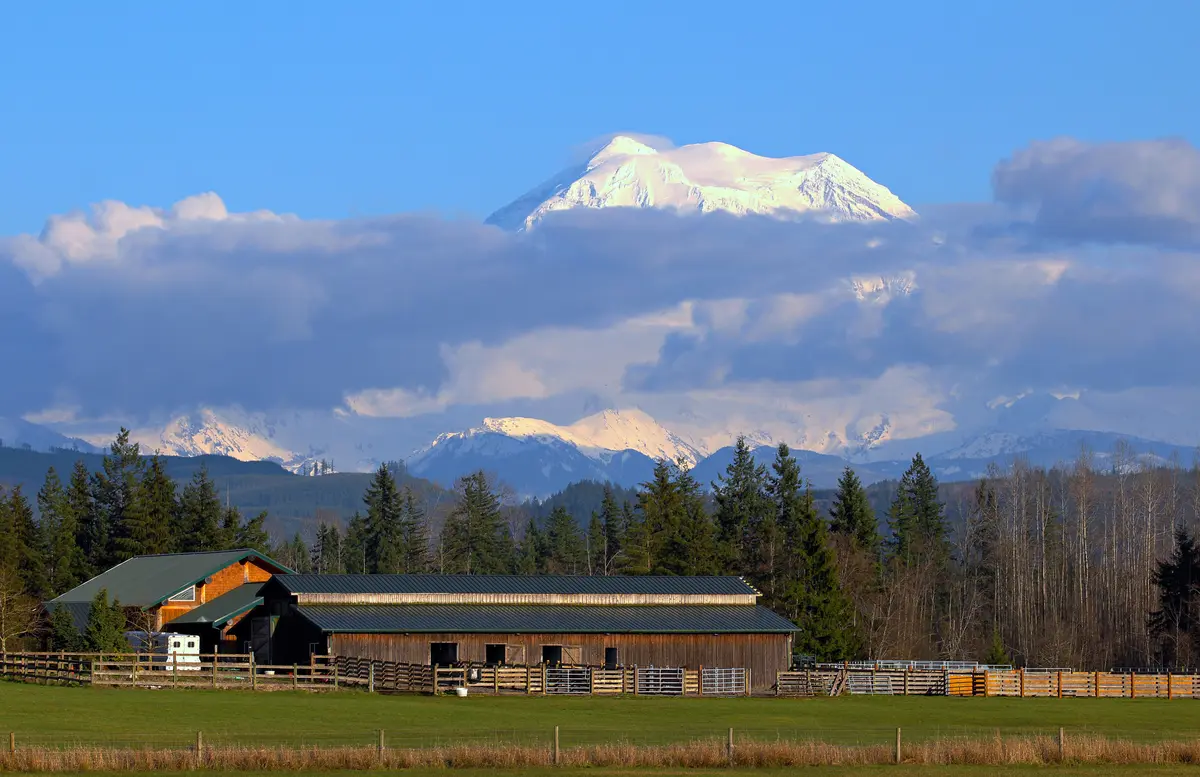
No relocation guide for Orting is honest without spending real time here. This is not a theoretical risk buried in fine print. Orting sits within the Puyallup River lahar hazard zone — a formally mapped area where USGS modeling indicates that a large volcanic flow from Mount Rainier's west flank could reach the city in as little as approximately 50 minutes. That figure comes from peer-reviewed USGS research on a specific flow scenario; arrival times vary by flow size and origin, but the approximately 50-minute estimate is the benchmark most frequently cited in emergency planning documents.
What "Managed Risk" Actually Means Here
The infrastructure built around this risk is more substantial than most newcomers expect. Pierce County and the USGS have operated a lahar detection system since 1998 — acoustic flow monitors and trip wires on upper river reaches that trigger automated warning sirens in communities below. The system remains active. Schools in Orting practice walking evacuation routes to high ground; in March 2024, more than 45,000 students from five school districts — including Orting — participated in what the USGS described as the world's largest lahar evacuation drill, with roughly 13,000 students walking up to two miles to locations outside the mapped hazard zone.
The Foothills Trail itself carries posted lahar warning signs directing users to high ground — believed to be unique among U.S. rail trails. When you're jogging past Mount Rainier views on a Tuesday morning and see those signs, the risk stops being abstract.
What This Means for Buyers
Homeowner's insurance in the lahar zone does not typically carry a special surcharge for volcanic hazard the way earthquake insurance does in California — but lenders and insurers have their own requirements, and this is a conversation to have explicitly with both your agent and your insurance provider before making an offer.
The more significant practical reality is resale. Buyers a decade from now will face the same disclosure requirements you face today. Many Californians who've lived through earthquake country find the risk psychology familiar — a documented, planned-for hazard is different from an unknown one. Others decide after a few months that the background awareness isn't something they can normalize. Both reactions are reasonable, and neither is wrong.
People do move out of Orting specifically because of this. It's the most honest reason on the list, and worth sitting with before you make an offer rather than after.
Looking to buy in Orting? Estimate your payment.
Enter your numbers to see an estimated monthly mortgage payment.
Estimate only. Excludes HOA fees and mortgage insurance. The interest rate above is a starting point, not a quoted rate — replace it with your own to see real numbers. Insurance is a flat placeholder, not a Orting quote.
Daily Life in Orting: What California Transplants Should Expect
Six months after moving from anywhere in the greater Los Angeles or Bay Area corridor, Californians in Orting tend to notice the same things. The silence is the first one — not just quieter streets, but a different relationship to space. Washington Avenue is the closest thing to a main commercial strip, and it's measured in blocks, not miles.
The Trade-Offs That Take Time to Feel
Orting has around 9,000 residents. There is no Trader Joe's — the nearest is in Puyallup. There is no commuter rail connection; getting to Tacoma means driving SR-162 to SR-512 or SR-167, roughly 35 minutes in normal conditions, longer in the corridor's morning congestion. For commute patterns and traffic specifics, the living in Orting page covers what the drive actually looks like across the week.
The downtown strip is genuinely local. Tim's Kitchen on Washington Ave S is the diner where you'll see school staff, county workers, and retirees at the counter on weekday mornings. The weekend lunch crowd gathers at a handful of independent spots along Washington Avenue North. These are not culinary destinations — they're the places that tell you whether you've actually become part of a town.
Outdoor Life Is the Anchor
The approximately 21-mile Foothills Trail is not an amenity; for many Orting residents it's the reason they stay. It runs from Puyallup through Central Park in downtown Orting and continues toward Buckley, paved the entire way, with unobstructed Rainier sightlines along the Orting segment. Cyclists, runners, and walkers use it daily. The Carbon River parallels the trail south of town.
One seasonal reality California transplants don't fully anticipate: the Daffodil Parade runs through Central Park each spring, turning the quiet main corridor into a genuine community event. It's the social calendar anchor for families with school-age children, and it's the kind of thing that either makes you feel rooted or makes you realize you're not. For outdoor recreation beyond the trail, the parks and recreation page covers what's accessible from Orting year-round.
What You're Actually Giving Up
California buyers with school-age children should go in with realistic expectations. The district is functional rather than exceptional — parents accustomed to the top-tier suburban districts common in Southern California bedroom communities will likely notice the difference. The schools guide has the detailed breakdown by building.
Diversity, restaurant variety, cultural programming, and walkable access to services are all smaller here than in the California metros most buyers are leaving. For people who genuinely used those things in their daily California life — not just in theory — this is the adjustment that takes longer than the financial spreadsheet suggests.
Making the Move Work: Practical Advice for California Buyers
California buyers often arrive in Orting with two advantages and one disadvantage relative to local buyers. The advantages: larger equity positions and familiarity with competitive offer environments. The disadvantage: underestimating how different the Pacific Northwest disclosure process is, particularly around natural hazard zones.
The Disclosure Conversation to Have Early
Washington's seller disclosure requirements include natural hazard disclosures, and in Orting, the lahar zone mapping will appear in due diligence materials. California buyers from earthquake country are often more comfortable with this than buyers from less geologically active states — but the conversation with your agent about what the disclosure means, and doesn't mean, for insurability and resale is worth having before you fall in love with a specific house.
For a full walkthrough of the Washington purchase process, the first-time homebuyer page covers what to expect from offer through closing in this market.
Timing the Sale and the Purchase
Selling in California and buying in Orting simultaneously is the most common logistical challenge this move creates. Washington's closing timelines typically run 30–45 days for financed purchases. If your California property is in escrow, coordinating a contingency-free Orting offer is often what separates competitive buyers from ones who lose out to local buyers with no chain attached.
Rental inventory in the Puyallup–Sumner corridor is one option for a bridge period — it avoids the double-close pressure and gives you time to learn Orting's specific streets and neighborhood dynamics before committing. It costs you one move, which is annoying. It also means you don't rush an offer in an unfamiliar market, which is worth something.
The Budget Items Most Californians Miss
- WA Cares payroll tax: 0.58% of gross wages, withheld automatically — factor it into your monthly net.
- Sales tax on vehicle purchase: At 9.6%, a car purchase is meaningfully more expensive here than in lower-tax California jurisdictions.
- Utility costs: Western Washington's electricity rates run below California averages, but natural gas and heating oil costs vary by house type. Older Orting construction sometimes runs on oil heat, which surprises California buyers used to all-electric or gas-only homes.
- No state income tax withholding: Your first Washington paycheck will look different. Update your federal withholding accordingly — the absence of state withholding can produce a tax surprise at the federal level if you don't adjust.
The full cost-of-living picture — utilities, groceries, transportation — lives on the cost of living page. The safety and crime context, which is relevant to how California buyers often think about a new-to-them city, is on the safety page.
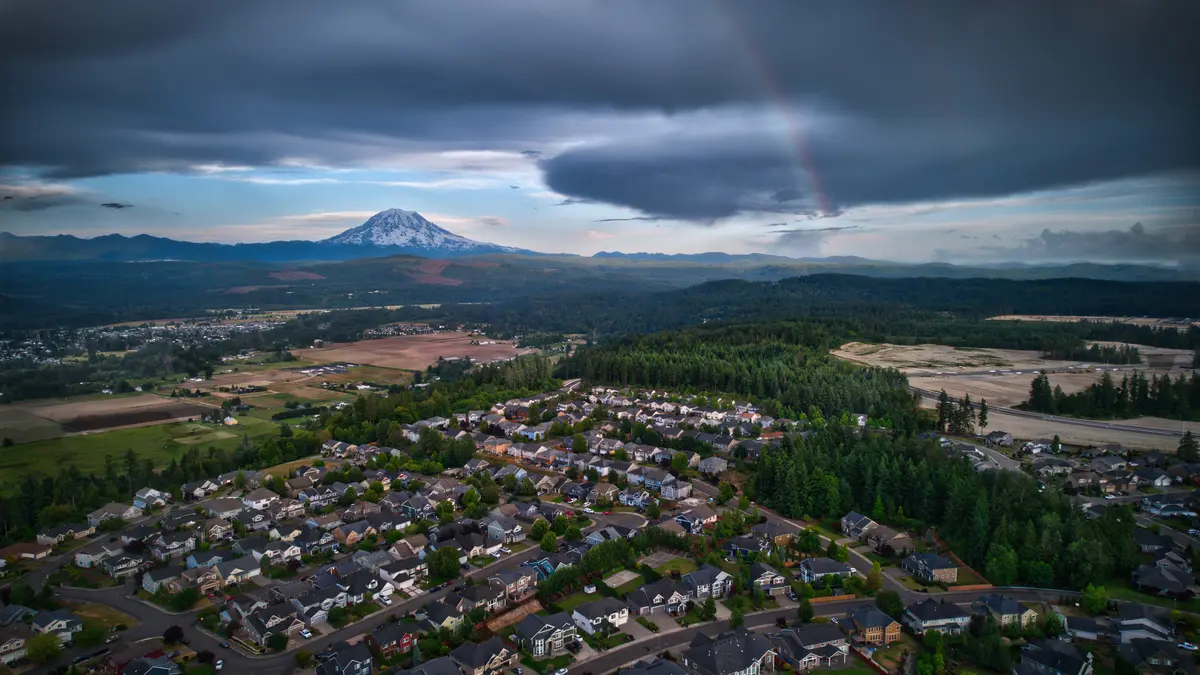
Local Expert Takeaway: Orting makes financial sense for California buyers who run the full numbers — not just the home price, but the income tax elimination on wages, the lower absolute property tax bill, and what California equity actually buys here versus in the Bay Area or Southern California. The part the spreadsheet doesn't capture is what it feels like to live in a small Pierce County city of 9,000 people where the biggest community event is the Daffodil Parade, your morning run takes you past lahar evacuation signs on the Foothills Trail, and the nearest big-box retail is a 15-minute drive. Californians who come for the math and stay for the pace are the ones who make it work. The ones who come for the math and miss the density tend to be back in California within three years.
Quick Takeaways & FAQs
✅ Washington's no-income-tax structure on wages is a genuine, immediate financial advantage for most California earners relocating to Orting — the savings on a $150,000 household income can run $8,000–$12,000 per year compared to what California takes.
⚠️ Orting sits inside Mount Rainier's lahar hazard zone — a formally mapped, actively monitored volcanic flow risk that the city drills for annually and that every buyer must understand before making an offer.
📍 Tim's Kitchen on Washington Ave S is the anchor of Orting's small downtown dining scene — if you need a wide restaurant selection within walking distance, plan for Puyallup.
Is it worth moving from California to Orting just for the tax savings?
What is the lahar risk in Orting, and should it affect my decision to buy?
How does Orting's sales tax compare to California, and is it a problem?
What should California buyers know about the home buying process in Orting specifically?
Does Orting have enough amenities for someone moving from a California suburb?
Moving to Washington?
Tell us what you need help with and we'll connect you with local resources.
