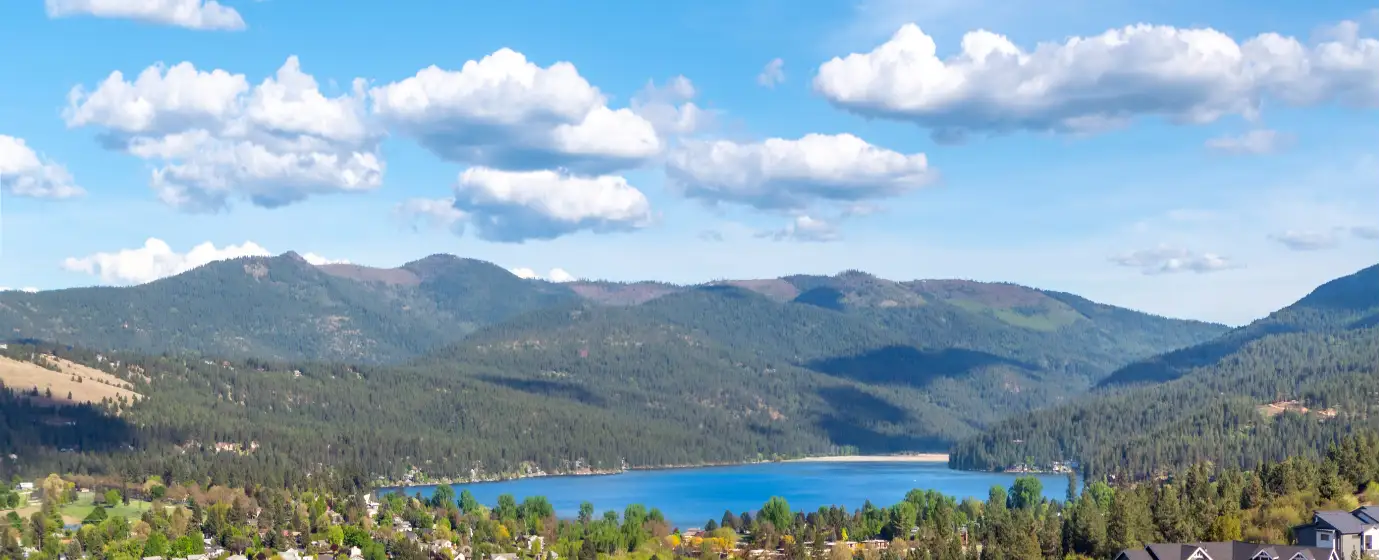
Most people who retire to Liberty Lake weren't looking for it specifically — they were looking for a smaller, quieter version of Spokane and stumbled onto a city that felt like it was designed with retirement in mind. Liberty Lake sits at the eastern edge of the Spokane metro along I-90, about 20 minutes from downtown Spokane and a similar distance to Coeur d'Alene, Idaho. That position matters: you get genuine small-city calm — a population under 14,000, a lake, hundreds of miles of trails — without giving up access to the medical, retail, and cultural infrastructure of a larger metro.
The city's economic base is anchored by technology and financial services firms rather than heavy industry, which shapes its character. Itron, Numerica Credit Union, STCU, and Amphenol Network Solutions all have a presence here, and the workforce they've drawn tends to be educated and relatively prosperous, with a median household income well above $100,000. That demographic context means Liberty Lake has developed amenities — well-maintained parks, a Pavillion Park events space, the Numerica Skate Ribbon — that a city of 13,000 would not ordinarily support. Retirees moving from larger metro areas often find the infrastructure-to-crowd ratio surprisingly favorable.
Washington's no-income-tax status is a genuine headline for retirees: your Social Security check, pension, IRA withdrawals, and 401(k) distributions are all free of state income tax. Pair that with a cost of living that runs noticeably below Seattle or the major California metros, and Liberty Lake becomes a credible retirement destination for people who want Inland Northwest outdoor access without the financial squeeze of the coast. The Zillow Home Value Index put the typical home value at $580,200 in mid-2026 — meaningful money, but far below most Pacific Northwest coastal markets.
Whether you're weighing Liberty Lake against a retirement in Coeur d'Alene, Spokane Valley, or somewhere farther afield, the sections below cover what you actually need to know: healthcare access, the retiree tax picture, daily costs on a fixed income, walkability and community life, downsizing options, and how Liberty Lake stacks up against the region's other retirement candidates.
Why Retirees Are Choosing Liberty Lake
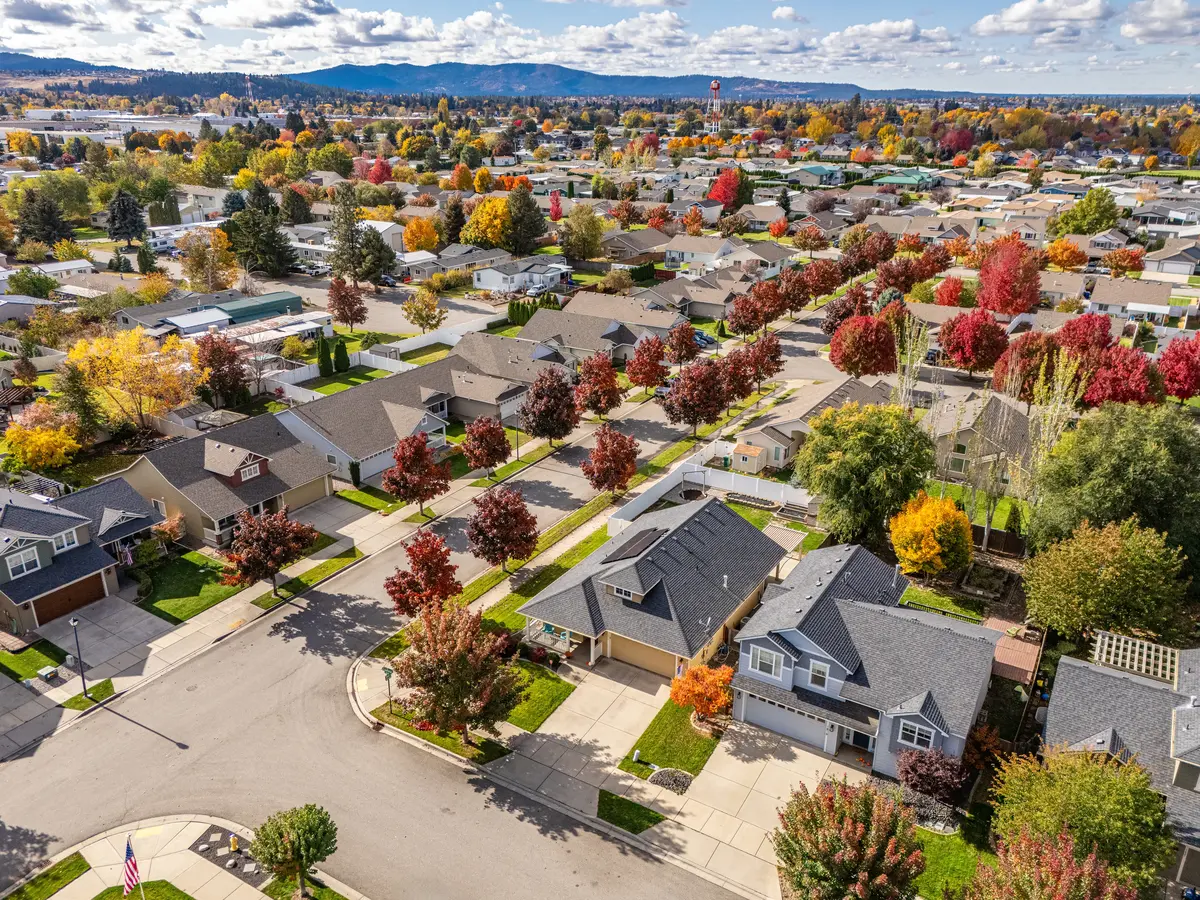
Liberty Lake attracts a specific kind of retiree: someone who wants genuine outdoor access — lake swimming, trail running, cross-country skiing — combined with a community that already feels finished rather than still being built. This is not a retirement-destination city in the manufactured sense. It's a real working city where retirees happen to fit exceptionally well because the infrastructure, the safety profile, and the pace of life align with what most people want in their sixties and beyond.
The case for retiring here is clearest if you value proximity over price. At a typical home value of $580,200 (Zillow Home Value Index, mid-2026), Liberty Lake is not the cheapest option in the region — Post Falls and Spokane Valley both undercut it. What you're buying is a polished, small-city environment with immediate trail access, lower crime than virtually any comparable market in the Inland Northwest, and a 20-minute drive to Spokane's full hospital and specialty-care network. For retirees who've done the math and know they'll need healthcare infrastructure within reach, that proximity has real value.
Who should look elsewhere? Retirees on a strict fixed income who need to minimize housing costs will find better value in Spokane proper or across the state line in Post Falls. And if walkable urban energy — dense restaurant blocks, a downtown core you can navigate without a car — is the priority, Liberty Lake's suburban grid will disappoint. It is, fundamentally, a quiet residential city. That's the point for most people who land here. For others, it's the reason they keep looking.
Healthcare & Medical Access in Liberty Lake
What's Actually In the City
Liberty Lake has more in-city medical infrastructure than its size would suggest. MultiCare Rockwood Clinic operates a primary-care location directly at 1326 N Stanford Lane — chronic condition management, physicals, vaccinations, and screenings, all without leaving the city limits. For acute needs that don't require an ER, the Valley Hospital Urgent Care Clinic at 1431 N Liberty Lake Road handles same-day illness and injury within the city itself.
That combination — a primary-care clinic and an urgent care location both in town — handles the overwhelming majority of what a healthy or moderately healthy retiree needs week to week. Most Liberty Lake residents go months without needing anything outside that footprint.
When You Need More
The honest caveat is that Liberty Lake has no inpatient hospital of its own. MultiCare Valley Hospital in neighboring Spokane Valley is among the closest full-service facilities for inpatient care. For advanced specialty needs — complex cardiac surgery, oncology, major trauma — you're looking at the Spokane corridor, approximately 20 minutes west on I-90.
Providence Sacred Heart Medical Center in Spokane is the regional flagship: Healthgrades recognizes its cardiac and surgical programs, and it functions as the tertiary referral center for the entire Inland Northwest. At 20 minutes via I-90 from Liberty Lake, it's genuinely accessible — not "close-ish" in the way rural retirement brochures mean, but a real 20-minute highway drive on a route you'll drive frequently anyway.
Kootenai Health in Coeur d'Alene, Idaho is also roughly 30 minutes east and provides an additional option for some specialty services. The practical healthcare picture for Liberty Lake retirees: excellent everyday access in-city, solid regional hospital options 20–30 minutes out, and no need for a medical evacuation flight if something serious happens.
What Experienced Retirees Notice After Year One
The friction point most people don't anticipate is specialist wait times. The Spokane metro's specialist capacity doesn't scale proportionally with population growth, and wait times for rheumatology, neurology, and some orthopedic subspecialties can run longer than retirees used to larger metro areas expect. Building a specialist relationship early — before you urgently need one — is the single most consistent piece of advice from long-term Liberty Lake residents navigating the regional health system.
The Retiree Budget in Liberty Lake
Washington's Tax Advantage Is Real
Washington levies no personal income tax. For retirees, that means Social Security benefits, pension income, 401(k) distributions, IRA withdrawals, and Roth conversions are all untaxed at the state level — zero, not reduced, zero. Washington's relatively new capital gains tax (7% on long-term gains above approximately $278,000 annually) carves out a broad exemption: retirement account transactions and real estate sales are both explicitly exempt. For the vast majority of retirees, the capital gains tax is irrelevant to their financial picture.
Washington enacted additional high-income tax legislation (ESSB 6346) effective roughly 2027–2028, targeting household income above $1 million. Standard retirement income — Social Security, pensions, IRA distributions — does not reach that threshold for almost any retiree, so the practical impact on Liberty Lake's retirement population is minimal.
Property Tax and Senior Relief Programs
Liberty Lake's effective property tax rate is approximately 0.83% — close to the state average and meaningfully below many Western states. Washington offers a senior property tax exemption program for qualifying income levels that freezes your home's assessed value for tax purposes, reducing your annual levy burden going forward. A companion deferral program is available for those who qualify. Specific income thresholds change periodically; verify current eligibility requirements directly with the Spokane County Assessor before you close on a home.
Day-to-Day Cost of Living
Groceries, gas, and dining in Liberty Lake track with the broader Spokane metro — noticeably below Seattle and the Puget Sound corridor, and roughly comparable to Coeur d'Alene. Washington's sales tax applies to most purchases (no state income tax is partly offset here), but the overall daily cost of living on a fixed income is manageable relative to most Western retirement markets. For a fuller picture of costs, see the cost of living breakdown. Hay J's Bistro on E Mission Ave — rated the top restaurant in Liberty Lake on TripAdvisor — is the kind of place retirees gravitate toward for a relaxed weeknight dinner without driving to Spokane. Chavelitas Pub Grill & Cantina, which opened in Liberty Lake in 2025, adds a more casual neighborhood option closer to the city center.
Looking to buy in Liberty Lake? Estimate your payment.
Enter your numbers to see an estimated monthly mortgage payment.
Estimate only. Excludes HOA fees and mortgage insurance. The interest rate above is a starting point, not a quoted rate — replace it with your own to see real numbers. Insurance is a flat placeholder, not a Liberty Lake quote.
Walkability, Community & Staying Active in Liberty Lake
The Walkability Reality
Liberty Lake is an honest suburban grid, not a walkable downtown. Running errands entirely on foot — pharmacy, grocery, bank — is not the daily reality here the way it might be in an urban neighborhood. You will use a car for most practical tasks. What Liberty Lake does offer, and what distinguishes it from generic suburban retirement, is exceptional pedestrian and trail access for recreation and light transit once you're out the door.
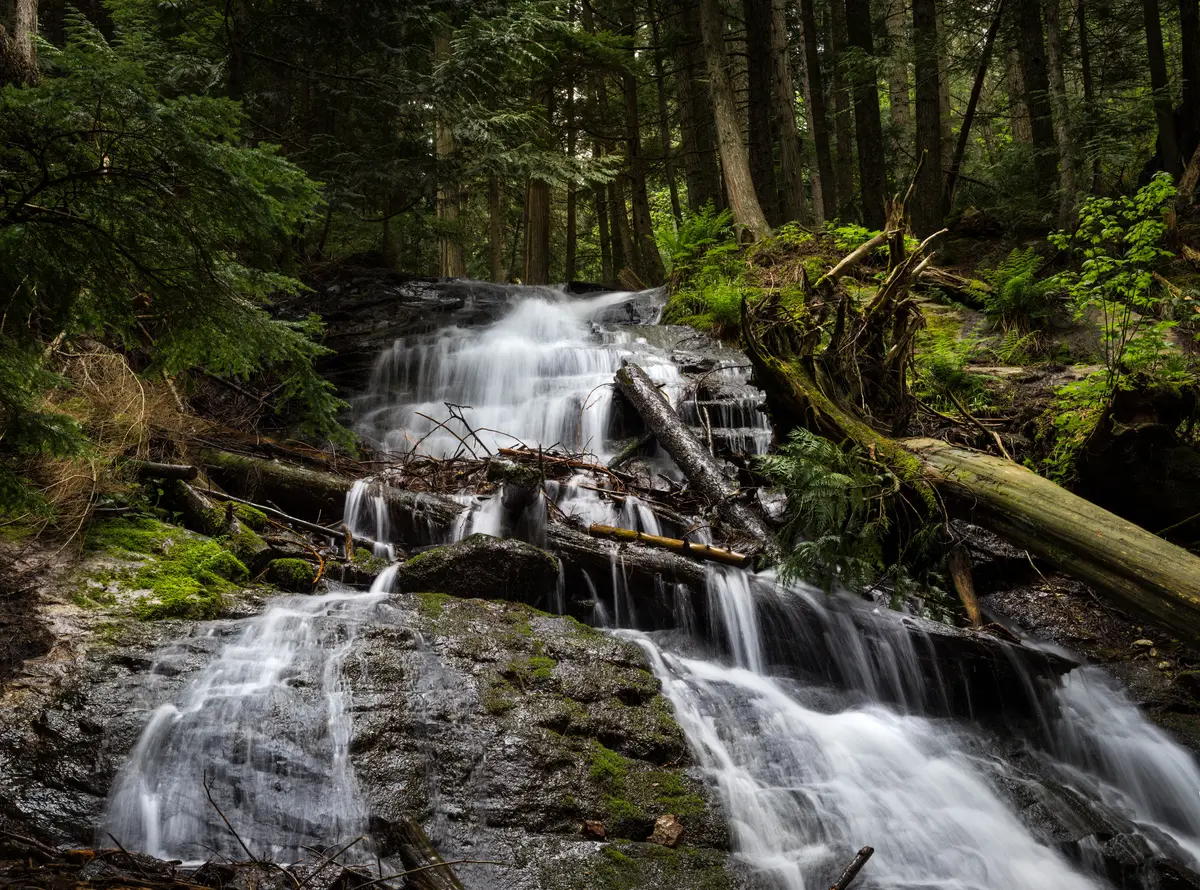
The Centennial Trail runs through the city with a trailhead at Harvard Road, connecting into a regional system that eventually reaches Spokane. The 8.3-mile Liberty Lake Loop Trail inside Liberty Lake Regional Park — 3,591 acres of wetlands, cedar groves, and montane forest — passes Split Creek and Liberty Falls and is genuinely one of the better urban-fringe hiking experiences in the Inland Northwest. The terrain around the lake itself is relatively flat, which matters for retirees who want daily walks without elevation-gain concerns.
Staying Social and Active
Pavillion Park serves as the community gathering anchor — concerts, seasonal events, and the kind of recurring programming that gives a small city its social rhythm. The Numerica Skate Ribbon adds a seasonal activation that brings residents of all ages outdoors in winter, and the Trailhead Golf Course gives golfers a local option without driving to Spokane. Liberty Lake Regional Park's swimming beach is a genuine summer gathering point.
The city's relatively high household income and educated demographic base support a social environment where retirees tend to find peers quickly — book clubs, trail running groups, and volunteer networks form organically within an engaged community. For formal senior programming, Spokane's senior center network (approximately 20 minutes west) fills gaps that a city of 13,000 cannot maintain independently. The trade-off for Liberty Lake's intimacy is that you may need to drive to Spokane for structured senior programming, specialized fitness classes, or larger social events.
On the parks and recreation page, you'll find a full rundown of trails, the lake access points, and the seasonal programming calendar.
Right-Sizing: Downsizing in Liberty Lake
What the Inventory Actually Looks Like
Liberty Lake's housing stock skews relatively new — most of the city was developed after 2000, which means single-level construction and accessible design are more common here than in older Spokane neighborhoods with multi-story craftsman homes. If single-floor living is a priority, Liberty Lake's newer subdivisions offer a better baseline selection than much of the region without requiring a custom build.
The Villages at Stonehill and The Villas at Big Trout represent the kind of planned residential communities that attract downsizing buyers — lower-maintenance lots, consistent aesthetics, and neighbors at a similar life stage. These aren't age-restricted in the formal 55+ sense, but the buyer demographic in practice skews toward empty nesters and retirees who want a well-kept community without HOA-light chaos.
Condos, Patio Homes, and 55+ Options
True 55+ age-restricted communities with on-site amenities are not a large part of Liberty Lake's current inventory. The city's relatively small size means your options for a purpose-built active-adult community are limited within the city limits. Buyers specifically seeking a dedicated 55+ environment — clubhouse, organized activities, restricted-age community — will find stronger inventory in Spokane or in the Coeur d'Alene corridor.
Patio homes and maintenance-free attached units do exist in Liberty Lake and tend to move quickly when they hit the market, precisely because downsizing demand runs ahead of supply. Setting alerts and being ready to move fast on single-level patio homes is practical advice here, not a sales pitch — this is a thin slice of an already constrained market.
At a typical home value of $580,200, Liberty Lake sits in a range where equity from a larger home sale often covers a straight purchase without a large mortgage — the math works for many retirees downsizing from a family-size home in a higher-cost market, though the specific numbers depend heavily on where you're coming from and what you're selling.
Liberty Lake vs Nearby Retirement Destinations
| City | Cost vs Liberty Lake | Primary Hospital Access | Walkability | Senior Living Depth | Overall Retirement Fit |
|---|---|---|---|---|---|
| Liberty Lake, WA | Anchor | In-city primary care; 20 min to Providence Sacred Heart | Good for recreation; car needed for errands | Moderate; limited 55+ inventory | Nature Quiet Strong for active, outdoors-oriented retirees |
| Spokane Valley, WA | About the same | MultiCare Valley Hospital on-site; full inpatient access | Similar suburban car-dependent pattern | Deeper; more 55+ and senior-apartment inventory | Value Good for those who want more senior-specific housing options |
| Spokane, WA | Noticeably cheaper for comparable sq. footage | Full tertiary system (Providence Sacred Heart, MultiCare Deaconess) in-city | Varies sharply by neighborhood; some areas more walkable than others | Deepest in the region; widest range of senior communities | Transit Best for healthcare-dependent retirees or those wanting urban amenity access |
| Coeur d'Alene, ID | Pricier for lakefront; comparable inland | Kootenai Health — strong regional system | Downtown core is genuinely walkable; outlying areas suburban | Growing; several active-adult developments in the pipeline | Views Luxury Top lifestyle choice if budget allows; note Idaho's different tax structure |
| Post Falls, ID | Noticeably cheaper | Kootenai Health ~15 min; no in-city hospital | Car-dependent; limited pedestrian infrastructure | Moderate and growing | Value Best for cost-first retirees comfortable with Idaho's tax and regulatory environment |
| Otis Orchards-East Farms, WA | Cheaper | Closer to Liberty Lake than to a major hospital; relies on Spokane corridor | Rural; very limited on-foot options | Thin; mostly single-family residential | Privacy Suits retirees wanting rural land and acreage, not amenity access |
If healthcare infrastructure depth is your primary concern, Spokane itself edges Liberty Lake — you get tertiary-level hospitals in-city rather than 20 minutes away, and the senior housing inventory is significantly deeper. The compromise you make is a more urban environment and, depending on the neighborhood, a noisier and less park-adjacent daily experience.
Coeur d'Alene wins on lifestyle — the lake setting is legitimately beautiful and the downtown walkability is the best of any option on this list — but you're crossing into Idaho, which has a different income tax structure (Idaho taxes most retirement income), a different regulatory environment, and a higher price ceiling for the most desirable addresses. For retirees whose income tax picture matters, that Idaho state income tax is a meaningful cost that Washington does not impose.
Post Falls is the cost-first answer: cheaper housing, still within reach of Kootenai Health, and close enough to Liberty Lake that the lifestyle gap is manageable. Spokane Valley lands in a practical middle ground — comparable cost to Liberty Lake, deeper senior-housing inventory, and inpatient hospital access without the 20-minute drive. If the 55+ community and senior-apartment selection in Liberty Lake frustrates you during your search, Spokane Valley is the natural next look.
Local Expert Takeaway: Liberty Lake is a genuinely strong retirement option for people who want a finished, quiet community with serious outdoor access and Washington's tax advantages — but go in knowing it's not a purpose-built retirement town. The in-city medical footprint at MultiCare Rockwood Clinic on N Stanford Lane and Valley Hospital Urgent Care on N Liberty Lake Road handles daily healthcare well; Providence Sacred Heart in Spokane, 20 minutes west on I-90, handles the rest. The downsizing inventory is thin and moves fast, so if single-level or patio-home living is your target, set alerts early. And if a walkable urban core matters to you — somewhere you can get dinner at Hay J's Bistro on E Mission Ave and run errands on foot — Liberty Lake gives you the dinner but not the errands. Plan to own a car here.
Quick Takeaways & FAQs
✅ Washington's no-income-tax status means your Social Security, pension, and IRA withdrawals are all free of state income tax — a genuine financial advantage for retirees choosing Liberty Lake over Idaho communities.
⚠️ Liberty Lake has no inpatient hospital of its own, so retirees with complex or chronic health needs will depend on a 20-minute drive to Spokane's hospital network for anything beyond primary and urgent care.
📍 Single-level patio homes and maintenance-free units exist in Liberty Lake but are in short supply; buyers targeting that product type should set market alerts early, as they typically sell quickly when listed.
Is Liberty Lake a good place to retire?
Does Washington State tax Social Security or pension income?
What hospitals are near Liberty Lake for retirees?
Are there 55+ or active-adult communities in Liberty Lake?
What is the property tax rate in Liberty Lake, WA?
Moving to Washington?
Tell us what you need help with and we'll connect you with local resources.
