
Plenty of retirees leave San Antonio and keep driving east on I-10 until the price tags make sense. Seguin, at 41,048 residents and sitting about 40 minutes to San Antonio, is where a lot of them stop. The typical home is listed at $274,107 as of July 2026 — a figure that puts serious square footage within reach on a fixed income in a way that New Braunfels or Schertz simply cannot match anymore. What Seguin is not is a polished retirement resort town. It is a working Texas city with pecan trees, a main street that is still figuring itself out, and a community hospital that punches well above its class.
The economic backbone here is a mix of manufacturing — Caterpillar Inc. and CMC Steel Texas anchor the industrial side — plus the school district, city government, and Guadalupe Regional Medical Center. That employer mix matters to retirees because it means the city has genuine fiscal infrastructure: stable tax base, a funded hospital, maintained parks. The median household income of $64,861 tracks with a workforce-heavy city rather than a wealthy enclave, which keeps the social fabric grounded and the cost of daily life reasonable. Seguin has 226 sunny days a year, which sweetens the outdoor calculus considerably.
Texas's tax posture for retirees is genuinely favorable — no state income tax on Social Security, pensions, or IRA withdrawals, and a property tax structure that becomes more manageable once you turn 65. The cost-of-living page covers the full breakdown, but the short version is that a retiree household spending carefully can live here without the financial anxiety that follows a move to the Hill Country's resort corridor. The tradeoffs are real: most errands mean a drive, the dining and entertainment scene is modest, and the nearest advanced trauma center requires a trip to San Antonio.
Whether you are downsizing from a larger Texas city, relocating from out of state, or just running the numbers on the San Antonio metro's affordable fringe, the sections below cover what retiring in Seguin actually looks like — from the hospital on the edge of downtown to the walking trails along the Guadalupe, the tax advantages available to homeowners over 65, and how Seguin stacks up against the nearby towns that compete for the same retiree dollar.

Why Retirees Are Choosing Seguin
The retiree who fits Seguin best is the one who has done the math on the San Antonio metro and decided that paying noticeably more for a New Braunfels address is not worth it. With a typical home price of $274,107 (July 2026), Seguin delivers real homeownership on a fixed income — not a compromise condo, but a house with a yard, often single-level, often with a pecan tree or two in back. That accessibility is the primary draw, and it is honest rather than aspirational.
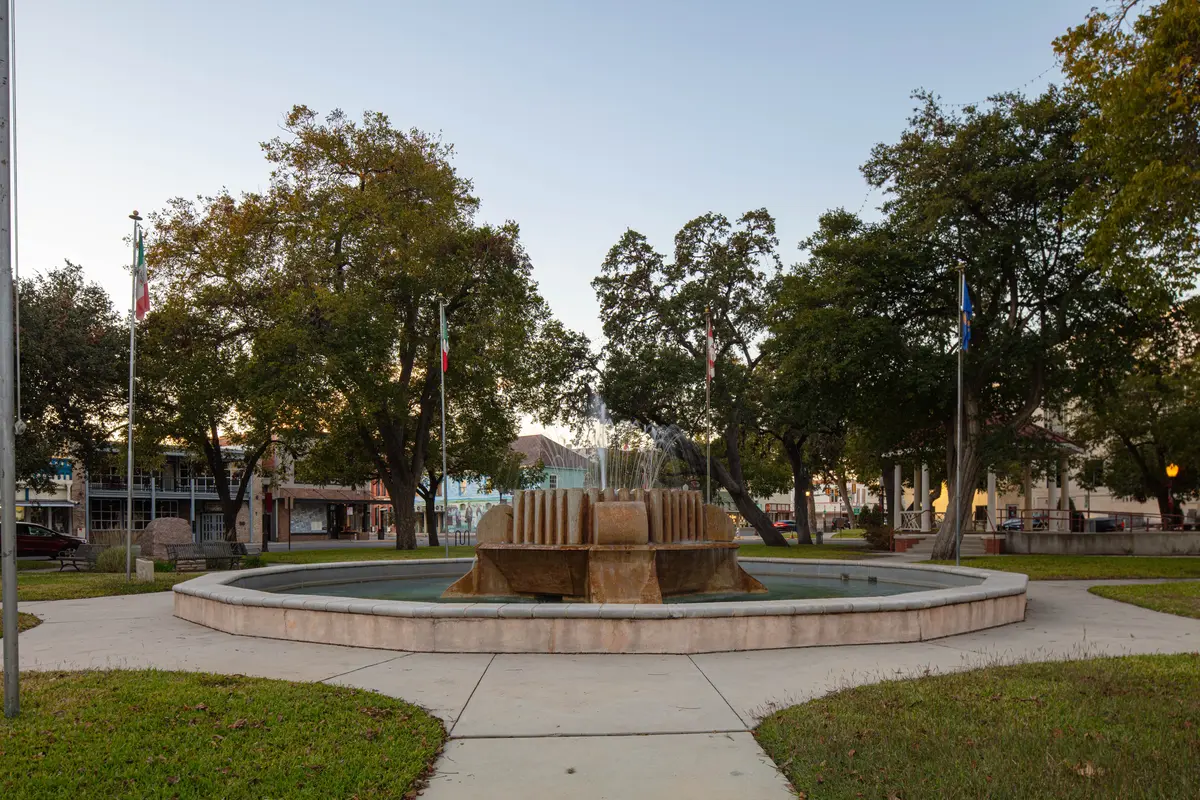
Seguin also fits retirees who genuinely like a smaller-city pace and do not need a curated lifestyle handed to them. The Guadalupe River runs through Max Starcke Park. The historic downtown has genuine bones even if the restaurant density is thin. Community events — including the annual festival that draws crowds to the square around the World's Largest Pecan — give the calendar a local rhythm. If you need a farmer's market, a robust arts scene, or a walkable restaurant strip on your block, Seguin is not there yet.
Retirees who may want to look elsewhere include anyone requiring frequent specialist care beyond what a community hospital provides, and anyone whose long-range plan involves reducing driving significantly — most errands in Seguin mean getting in the car. Anyone whose retirement plan specifically centers on an active-adult community with age-restricted amenity programming will also find that Seguin does not offer that option within city limits. What Seguin offers in return is affordability and authenticity — a real town, not a retirement product.
Healthcare & Medical Access in Seguin
The Hospital Inside City Limits
Guadalupe Regional Medical Center — GRMC — sits inside Seguin city limits and is the closest hospital to most of the city. It operates as a non-profit community hospital and holds a distinction that is genuinely unusual: it is the only city-county hospital in Texas. That structure means community accountability in a way that investor-owned facilities rarely deliver.
GRMC carries a broad specialist bench for a city this size — cardiology, orthopedics, endocrinology, and urology among the specialties represented — and runs a full-service emergency department, an ICU, a Medical Surgical Unit, and rehabilitation services. That covers most of what an active retiree household will need from routine emergency care through post-surgical recovery. For non-emergency needs, affiliated urgent care handles the kinds of visits that do not warrant an ER.
The Honest Distance-to-Advanced-Care Reality
GRMC operates as a Level IV trauma center. That designation covers stabilization and initial care — it is the right place for a broken wrist, a cardiac event that needs immediate stabilization, or a stroke requiring rapid intervention before transfer. For a major cardiac procedure, complex neurosurgery, or subspecialty oncology, the pathway runs to San Antonio, which is about 40 minutes away.
For most retirees in reasonable health, GRMC's depth is genuinely sufficient for day-to-day medical life. The calculus shifts for anyone managing a serious chronic condition who expects to need tertiary-level care regularly — that drive to San Antonio is not a hardship once or twice a year, but it is a real factor if it is a weekly reality. The San Antonio medical corridor is the region's full-service anchor and is within reach; GRMC is the right first stop for almost everything else.
The Retiree Budget in Seguin
Texas Tax Advantages — the Real Numbers
Texas levies no state income tax. Social Security benefits, pension income, IRA and 401(k) withdrawals, and investment income are all tax-free at the state level — a structural advantage that compounds meaningfully on a fixed income over a decade or two. For retirees coming from California, Illinois, or any state that taxes retirement income, the effective pay raise on arrival is real.
The property tax picture is more complicated. Seguin's effective property tax rate runs approximately 1.70%, which is on the higher end for a Texas city of this size. That rate is what makes the monthly cost of homeownership here higher than the purchase price alone suggests. However, Texas law carves out substantial relief for homeowners aged 65 and older. Following constitutional amendments approved by Texas voters in November 2025, the combined school district homestead exemption for seniors is now $200,000 — a $140,000 general homestead exemption plus an additional $60,000 over-65 exemption — which eliminates school district property taxes entirely for many older homeowners. This change applies retroactively to the 2025 tax year.
Beyond the exemption, Texas seniors who qualify also receive a school district tax ceiling: the school district portion of their property tax bill is frozen at the level paid in the year they turn 65 and cannot rise in future years as long as they remain in the home. That freeze is meaningful protection against appreciation-driven tax creep in a county — Guadalupe — that has been growing steadily. The full cost-of-living breakdown covers the daily budget picture in detail; the headline here is that the tax structure, especially post-65, is genuinely friendlier than the headline rate implies.
Daily Cost of Life on a Fixed Income
Groceries, utilities, and gas in Seguin track with mid-tier Texas cities — not as cheap as a small rural town, not as expensive as the San Antonio core. The city has no shortage of national retailers for everyday shopping, and a typical retiree household can manage most weekly needs without leaving Seguin. A serious shopping run or a specialist appointment still means time on I-10, which is a real cost in fuel and time even if not a surprising one for a Texas exurb.
Looking to buy in Seguin? Estimate your payment.
Enter your numbers to see an estimated monthly mortgage payment.
Estimate only. Excludes HOA fees and mortgage insurance. The interest rate above is a starting point, not a quoted rate — replace it with your own to see real numbers. Insurance is a flat placeholder, not a Seguin quote.
Walkability, Community & Staying Active in Seguin
Getting Around Day to Day
Most errands in Seguin mean driving. Grocery runs, pharmacy stops, hardware stores, and most dining all require a vehicle, which is the practical reality of a Texas city at this scale and density. That is an important planning consideration for retirees whose long-range goal involves reducing reliance on a car over time — Seguin rewards those who are comfortable driving, and asks more of those who are not.
On foot, the picture is better than the driving reality suggests. The Walnut Springs Trail follows a spring-fed creek through a flat, wooded corridor near downtown — paved and natural-surface sections, stone bridges, easy terrain — and is genuinely pleasant for a morning walk or a slow afternoon. Park West, the city's newer park, has a flat paved loop accessible to all fitness levels. Max Starcke Park stretches 227 acres along the Guadalupe River and carries an 18-hole golf course through a riverside pecan grove, plus a paddling trail, fishing area, disc golf, walking trails, and tennis courts. Twelve parks totaling nearly 380 acres is a real amenity base for a city this size.
Senior Community and Social Life
The Seguin/Guadalupe County Senior Citizens' Center offers fitness classes and volunteer programming — the kind of facility that anchors a retiree's weekly social schedule without requiring a trip to San Antonio. Beyond the center, community life here runs through local churches, the historic downtown square, and outdoor recreation rather than organized resort-style programming.
Retirees who engage with the community tend to find it welcoming and unpretentious. The mix of long-term locals, manufacturing families, and incoming retirees from pricier parts of the metro creates a social texture that is genuinely mixed rather than age-siloed. The World's Largest Pecan and Sebastopol House State Historic Site give the town a sense of its own story. The downtown square and Max Starcke Park are where retirees and working families genuinely overlap. For anyone who finds resort-corridor retirement towns a bit hermetic, Seguin's mixed-demographic social scene is a feature, not a bug.
Right-Sizing: Downsizing in Seguin
What the Housing Stock Looks Like
Seguin's housing stock skews toward single-family homes, and a meaningful portion of the inventory — particularly in established neighborhoods like Country Club Estates, River Oaks, and the older sections near the historic district — is single-level construction. That matters enormously for retirees who are thinking three steps ahead about accessibility. Patio homes and smaller-footprint single-level houses are findable here at price points that are well below the San Antonio metro median, giving downsizers real options without the sacrifice of moving to a rural area with no services.
Condos and townhomes are a thinner slice of the Seguin market. Buyers specifically wanting lock-and-leave living with HOA-managed exteriors will find fewer choices than in a purpose-built retirement corridor, and may need to be patient or flexible on neighborhood. The inventory tends to favor traditional homeownership over resort-style maintenance-free living.
The 55+ Community Question
No 55+ communities were found in Seguin. That is a genuine gap for buyers whose retirement plan specifically includes an age-restricted neighborhood with amenity programming, a clubhouse, or a gated community of peers. Options in nearby cities — including a gated 55+ community in Schertz with single-family homes, and active-adult developments in New Braunfels — carry noticeably higher home prices than Seguin. The neighborhoods page covers the full inventory and geographic character of Seguin's residential areas for buyers weighing specific locations within the city.
The honest read for a downsizer: if the priority is price and single-level square footage, Seguin delivers. If the priority is a purpose-built active-adult community, the search starts outside city limits.
Seguin vs Nearby Retirement Destinations
| City | Cost vs Seguin | Primary Hospital | Getting Around | Senior Living Depth | Overall Retirement Fit |
|---|---|---|---|---|---|
| Seguin | Anchor | Guadalupe Regional Medical Center (Level IV, in-city) | Most errands require driving; good trail system | Senior center; no 55+ communities | Strong on affordability; honest trade-offs on amenities |
| New Braunfels | Noticeably higher | Regional hospital in-city | More walkable downtown core | 55+ community options available | Better amenity depth; significantly higher cost of entry |
| Schertz | Noticeably higher | Relies on San Antonio system | Driving-dependent suburban | Gated 55+ community available | Good for age-restricted buyers; not a budget play |
| Cibolo | Noticeably higher | Relies on San Antonio system | Driving-dependent; newer development | Limited; rapidly developing | Fast-growing suburb; skews younger; less retirement infrastructure |
| Marion | About the same or cheaper | Relies on Seguin or San Antonio | Minimal; very rural | Essentially none | Maximum quiet; minimum services; for self-sufficient retirees only |
| McQueeney | About the same | Relies on Seguin (GRMC) | Minimal; lake-community feel | Limited | Lake lifestyle appeal; leisure-focused; limited services |
New Braunfels beats Seguin on walkability, restaurant depth, and 55+ community options — but buyers pay a noticeably higher price for those advantages, and the gap is not small. Schertz is the right answer specifically for buyers who want an age-restricted community and are willing to pay for it; the gated 55+ option there simply does not exist in Seguin.
Marion and McQueeney offer similar or lower price points but give up services in exchange — neither has a hospital of its own, and both lean heavily on Seguin or San Antonio for medical care. For a retiree who values quiet and lake access over infrastructure, McQueeney has genuine appeal. For anyone prioritizing healthcare proximity, Marion's rural isolation is a meaningful risk factor.
Seguin's edge is the combination: a community hospital inside city limits, a real park system, a price point that leaves room in the budget, and Texas's full retirement tax advantages — all in one place. The city does not offer everything, but what it offers, it delivers at a price that the Hill Country corridor stopped offering a decade ago.

Local Expert Takeaway: Seguin is the San Antonio metro's most underrated retirement value precisely because it is not trying to be a retirement destination. Guadalupe Regional Medical Center handles the medical needs that matter most day-to-day — a full-service hospital with a broad specialist bench, inside city limits. Max Starcke Park gives you 227 acres of Guadalupe River frontage. The over-65 property tax exemptions — now at a $200,000 combined school district exemption under statewide law — meaningfully reduce the carrying cost of homeownership. Most errands mean driving, there are no 55+ communities, and a serious specialty appointment means San Antonio. But if you can live with those trade-offs, the $274,107 typical home price (July 2026) buys a retirement lifestyle that costs twice as much thirty miles west.
Quick Takeaways & FAQs
✅ Guadalupe Regional Medical Center is inside city limits with a broad specialist bench for a city this size — unusually deep healthcare infrastructure for a community of 41,048.
⚠️ No 55+ communities exist in Seguin, and most errands require a car — both are real limitations for retirees whose plans depend on either.
📍 Texas's over-65 homestead exemptions, including the new $200,000 combined school district exemption approved by voters in November 2025, can effectively eliminate school district property taxes for qualifying senior homeowners in Seguin.
Is Seguin, Texas a good place to retire?
What hospital serves retirees in Seguin?
What are the property tax benefits for retirees in Seguin?
Are there any 55+ communities in Seguin?
How car-dependent is Seguin for retirees who want to reduce driving?
Moving to Texas?
Tell us what you need help with and we'll connect you with local resources.
