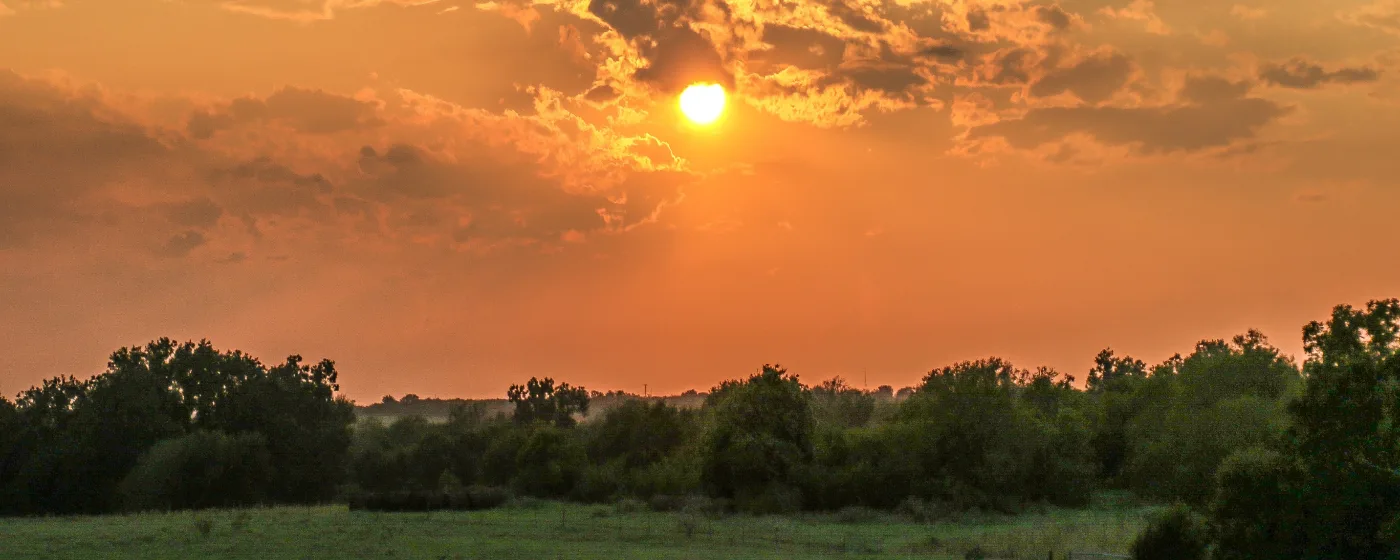
Seguin's outdoor story starts with the Guadalupe River, which cuts through the city and shapes nearly every significant green space it has. Max Starcke Park alone wraps 227 acres along that riverbank. Walnut Springs Trail threads through the urban core. And Lake McQueeney — a 396-acre reservoir that spent three years dry after its dam failed — has water returning to it as of early 2026. For a city of 41,048 people, the recreational infrastructure here is genuinely outsized.
What surprises most people who move here from larger metros is how much of the outdoor infrastructure is free or nearly free. The trail system is paved and open year-round. The municipal park has a wave pool, a disc golf course, a dog park, tennis and basketball courts, and an 18-hole golf course — all within walking distance of each other. None of it requires a membership or a long drive. That accessibility changes daily life in ways that are easy to underestimate when you're still comparing spreadsheets.
The 226 sunny days a year that Seguin averages makes year-round outdoor use realistic in a way it simply isn't in most of the country. Winters are mild enough that the trail system never goes dormant. Summers are genuinely hot, which is where the wave pool and river access earn their keep. The shoulder seasons — March through May and October through November — are when the parks are at their best and the competition for space is lowest.
This guide covers Seguin's signature parks, the trail network, the water recreation picture, and what seasonal recreation actually looks like day-to-day. For neighborhood context and how proximity to parks affects home values, see the best neighborhoods page.

Max Starcke Park: The Anchor of It All
Most cities this size have one good park. Seguin has one great one, built between 1936 and 1938 with Works Progress Administration funding and National Youth Administration labor. Max Starcke Park opened in May 1938 on what had been a working pecan orchard, and the Texas Recreation and Park Society later designated it a Lone Star Legacy Park — a recognition that puts it among the most significant municipal parks in the state.
The scale of what's packed into 227 riverside acres is the first thing that registers. This is not a lawn with a pavilion. The park holds a regulation 18-hole golf course that winds under mature pecan trees along the river, a wave pool complex, a natural fishing area, a paddling trail, a 0.8-mile walking loop, tennis courts, basketball courts, volleyball courts, a disc golf course, a dog park called Barky Park, the Kids Kingdom playscape, and a Little League baseball and softball complex.
The Wave Pool
The Seguin Wave Pool, located in the eastern portion of the park, is a 15,000-square-foot facility with zero-depth beach entry, a splash pool, and a raindrop mushroom feature — the kind of setup that makes a summer afternoon genuinely manageable for families with small kids. Admission is modest: free for children under four, and a few dollars for older kids and adults.
This is where Seguin residents spend their summer weekends, and it shows. Locals will tell you to arrive early on a hot Saturday — the pool draws a crowd that reflects the whole city, from Texas Lutheran University students to grandparents watching toddlers in the zero-entry section.
The Golf Course
The 18-hole course at Max Starcke is one of the more underrated municipal layouts in the San Antonio metro, partly because it gets overshadowed by the wave pool and partly because it's genuinely good. Cart rental, a pro shop, and a driving range are all on site. The riverfront holes under the pecan canopy play differently in every season.
Park West, the city's second major recreational hub, rounds out the municipal park system and connects directly to the trail network that runs through the urban core.
The Walnut Springs Trail: Seguin's Urban Spine
The Walnut Springs Hike and Bike Trail is what happens when a city takes a spring-fed creek corridor seriously. The route follows a historic watercourse through a shaded wooded corridor — paved in some sections, natural surface in others — for 4.4 miles out-and-back with only 78 feet of elevation gain. It's rated easy, open year-round, and suitable for walking, running, road biking, and leashed dogs.
The completed trail, which finished a $5.18 million buildout with a ribbon-cutting in June 2023, runs continuously for approximately 4 miles one way. The route connects from New Braunfels Street in the north through Walnut Springs Park, past the Seguin Public Library and Texas Lutheran University, through Park West, and all the way to Max Starcke Park East at the Guadalupe River. It includes the city's first below-grade crossing, built under the South Austin Street bridge — a small engineering detail that makes the route feel genuinely seamless rather than a collection of disconnected segments.
Two Recognized Green Spaces in One Corridor
Walnut Springs Park, the linear greenway at the trail's heart, earned its own Lone Star Legacy Park designation from the Texas Recreation and Park Society back in 2012. That means Seguin has two Legacy Parks — Max Starcke and Walnut Springs — which is notable for a city this size and speaks to how seriously the city has invested in this corridor over several decades.
The city maintains multiple interconnected trail routes within this system, including the Park West to Starcke Park Bike Trail and the Texas Lutheran University to Seguin Library Bike Trail. Together they form a functional network rather than a single out-and-back, which means regular users can vary their routes without covering the same ground every time.
What Regular Trail Users Know
The shaded corridor is the trail's defining feature and its primary advantage in a Texas summer. On a morning in July when the air is already dense before 8 a.m., the tree canopy along the spring-fed creek section makes a meaningful difference. Most local runners are on the trail by 6:30 a.m. in summer and extend that window considerably in fall and spring. The 226 sunny days a year that Seguin averages cut both ways: gorgeous shoulder seasons, genuinely demanding summer middays.
One honest note: the trail is a linear urban route, not a wilderness experience. If you're relocating from a city with dedicated mountain bike singletrack or extensive backcountry access, this system won't replace that. What it does offer is safe, well-maintained, shaded on-foot access woven through the parts of the city people actually live in — and that turns out to matter more for daily quality of life than a dramatic trail an hour away.
Lake McQueeney and Water Recreation on the Guadalupe
Lake McQueeney carries a specific reputation in Texas water-recreation history. The 396-acre reservoir on the Guadalupe River was known for generations as the Water Ski Capital of Texas — a tag that stuck because the lake's shape and size made it genuinely well-suited to the sport, and because the community around it built its identity accordingly.
That identity was interrupted abruptly. In 2023, the lake was drained after the failure of its nearly century-old dam gates — a loss that affected not just recreation but the entire character of the Lake Placid neighborhood that borders it. Three years of an empty lake bed is not a small thing for a community that had oriented itself around the water.
The Return of the Water
As of March 2026, the newly constructed dam became operational and water levels began rising again. The Lake McQueeney Water Control and Improvement District No. 1 managed the restoration project through years of engineering and repair. Once the gates were closed, the expectation was approximately three months to fully refill — which puts a functioning lake back on the map for the first time since 2023.
For anyone relocating to the Lake Placid neighborhood or simply scoping out Seguin's water recreation picture, the timing matters. The lake that made this part of the Guadalupe corridor famous is coming back. What the recreational access looks like post-restoration, and whether the water-ski culture around it revives, is something the next year will answer more clearly than any guide written in 2026 can.
The Guadalupe River Corridor
Beyond Lake McQueeney, the Guadalupe runs through and around Seguin in ways that shape multiple park experiences. Max Starcke Park's paddling trail and natural fishing area both use the river directly. The park's golf course wraps along the riverbank. The trail system terminates at the Guadalupe. The river is not a distant amenity — it's the physical infrastructure that the city's outdoor recreation is built on top of.
Fishing along the Guadalupe is a year-round activity here, and the river's access points through Max Starcke draw anglers across all seasons. The combination of the river corridor, the lake restoration, and the city's wave pool means that water recreation in Seguin spans a wider range than most cities at this population scale can offer.
Looking to buy in Seguin? Estimate your payment.
Enter your numbers to see an estimated monthly mortgage payment.
Estimate only. Excludes HOA fees and mortgage insurance. The interest rate above is a starting point, not a quoted rate — replace it with your own to see real numbers. Insurance is a flat placeholder, not a Seguin quote.
Seasonal Recreation and Daily Outdoor Life
The rhythm of outdoor life in Seguin runs on the seasons in a way that's worth understanding before you move here. Summer is the wave pool and early-morning trail runs. Fall is the golf course and disc golf under the pecan canopy. Winter is mild enough that the trail system never closes, and you'll see cyclists on the Walnut Springs route on December mornings. Spring is when everything — trail use, fishing, park gatherings — peaks before the heat arrives.
What Families Actually Do Here
Parents with school-age children tend to anchor their outdoor weekends around Max Starcke Park. The Kids Kingdom playscape, the Little League complex, and the wave pool cover a wide age range in one location. The disc golf course at Starcke has become a consistent draw for teenagers and college students from Texas Lutheran University, which sits directly on the trail corridor. Barky Park, the dog park within Starcke, draws a regular crowd of its own on weekend mornings.
For youth sports leagues and organized activities tied to the school calendar, the schools page has more on what Seguin ISD and the broader community programs offer.
The Honest Seasonal Trade-Off
July and August are the months that newcomers from milder climates underestimate. Seguin's summers are Central Texas summers — not Pacific Northwest springs with extra sun. The 226 sunny days a year figure sounds appealing until you're on an exposed section of trail at 2 p.m. in August. The parks that work well in summer are the ones with shade and water: the Walnut Springs corridor and the wave pool at Starcke. The open sections — the golf course, the disc golf course, the basketball courts — are best left to morning or evening use from late June through September.
The flip side is October through March, when Seguin's outdoor infrastructure is genuinely enviable. Mild weekday afternoons mean the trail system gets used by people who in other cities would already have put their bikes away for the season. A Saturday morning in November at Max Starcke Park, with the pecan trees turning and the golf course uncrowded, is one of those things residents mention when asked why they stayed.
Quick Reference: Seguin's Major Outdoor Assets
| Asset | Type | Key Feature | Best For |
|---|---|---|---|
| Max Starcke Park | Municipal park (227 acres) | Guadalupe River frontage, Lone Star Legacy designation | Families Nature |
| Seguin Wave Pool | Aquatic facility (seasonal) | 15,000 sq ft, zero-depth entry, modest admission | Families Value |
| Walnut Springs Trail | Hike and bike trail (4.4 mi out-and-back) | Spring-fed corridor, connects library, TLU, and river | Walkable Nature |
| Barky Park | Dog park (within Max Starcke) | Enclosed off-leash area | Nature |
| Lake McQueeney | Reservoir (396 acres) | Historic Water Ski Capital of Texas; dam restored 2026 | Nature Views |
| Park West | Municipal park / trail hub | Connects to Walnut Springs Trail and Starcke system | Families Commuter |
| 18-Hole Golf Course | Municipal golf (within Max Starcke) | Riverside layout under pecan canopy, cart and pro shop | Quiet |

Local Expert Takeaway: Seguin's parks punch well above their weight for a city of 41,048. Max Starcke Park — covering 227 Guadalupe River acres and holding a wave pool, 18-hole golf course, disc golf, and dog park within one contiguous property — would be the centerpiece of a city twice this size. The Walnut Springs Trail adds a shaded, paved urban spine that connects neighborhoods to the university, the library, and the river. And Lake McQueeney, with water returning after its 2023 drainage, is coming back to a community that built its identity around it. If outdoor access matters to your relocation decision, Seguin delivers it at a scale and price point that the larger metros nearby simply don't match.
Quick Takeaways & FAQs
✅ Max Starcke Park is a 227-acre Guadalupe River landmark holding a wave pool, 18-hole golf course, disc golf course, and dog park within one contiguous property — one of the most complete municipal parks in the San Antonio metro.
⚠️ Summers are genuinely hot, and the exposed sections of the park system — golf, disc golf, open courts — are best used early morning or evening from late June through September.
📍 Lake McQueeney, the historic Water Ski Capital of Texas, had its newly constructed dam become operational in March 2026 after three years drained — the lake is refilling and its recreational future is one of the more interesting stories in the area right now.
Is Max Starcke Park free to use?
How long is the Walnut Springs Trail and where does it go?
What happened to Lake McQueeney and is it back?
Are there good parks in Seguin for families with young kids?
Can you bike in Seguin, and are the trails connected?
Moving to Texas?
Tell us what you need help with and we'll connect you with local resources.
