
What Is Living in Rio Grande City, Texas Like?
Most people who end up in Rio Grande City didn't stumble onto it from a relocation list — they came because family is here, because a job with the school district or county government brought them, or because they grew up two hours away and finally decided to put down roots close to home. What surprises them is how much city there is for the size of it. Rio Grande City is the county seat of Starr County and one of the oldest settlements in South Texas, sitting directly on the Rio Grande — linked to Camargo, Tamaulipas by the Rio Grande City–Camargo International Bridge. It pre-dates McAllen, Mission, and Harlingen by more than half a century, and that history is still visible on every block of the downtown. US-83 is the main artery that ties this city to the rest of the Valley, making it less a suburb of McAllen than its own distinct place: a working border community of 15,451 people with a real civic identity, a historic core, and a cost of living that most of the country has genuinely forgotten exists.
The economic backbone here is what you'd expect from a county seat: Rio Grande City Grulla ISD is the anchor employer, followed by Starr County Memorial Hospital, Starr County government, and IDEA Public Schools. Education and healthcare together employ the majority of working residents, and the most common occupations are teaching, healthcare support, and sales. The school district — one of the larger in the region — holds a B rating according to the Texas Education Agency, which reflects a district that is actively working and seeing real results. The Rio Grande Valley as a whole has been one of the stronger job-growth regions in Texas, and Rio Grande City's own employment base has expanded along with it. For families making a career in public service, education, or healthcare, this city has real hiring depth.
The number that stops most out-of-towners cold is the home price. The typical home here was $147,646 as of July 2026 (Zillow Home Value Index) — not a typo, not a distressed-property average, and not the cheapest corner of town. That is the city-wide figure, and it puts Rio Grande City well below Roma, McAllen, and Mission in terms of entry cost. The effective property tax rate runs approximately 1.96%, which is worth factoring in, and the full cost-of-living picture is covered at the cost of living page. Day-to-day life runs at a slower, warmer pace than a metro — 222 sunny days a year, community events that actually draw a crowd, and a downtown that is being actively restored rather than abandoned.
Whether you're weighing a move here for work, family, or affordability, the sections below break down Rio Grande City's neighborhoods, housing market, commute patterns, local employers, schools, and what daily life here is really like.

Rio Grande City at a Glance
Looking to buy in Rio Grande City? Estimate your payment.
Enter your numbers to see an estimated monthly mortgage payment.
Estimate only. Excludes HOA fees and mortgage insurance. The interest rate above is a starting point, not a quoted rate — replace it with your own to see real numbers. Insurance is a flat placeholder, not a Rio Grande City quote.
Why Are People Moving to Rio Grande City?
The honest answer is that most people who move to Rio Grande City are already connected to it — a family tie, a job offer from the school district, a government post in Starr County. It is not the kind of place people relocate to sight-unseen from out of state, and that is actually part of what keeps it grounded. The community has a coherence and continuity that newer, faster-growing Valley cities sometimes trade away for development speed.
The largest draw remains public-sector employment. Rio Grande City Grulla ISD is the dominant employer in the city — one of the larger school districts in the region — and it generates a steady demand for teachers, administrators, counselors, and support staff. IDEA Public Schools adds another layer of charter-sector hiring. Starr County Memorial Hospital anchors the healthcare side, serving not just the city but the entire county. Starr County government and the City of Rio Grande City itself round out the employer list, making this a city where a career in public service, education, or healthcare translates into real local opportunity.
The Rio Grande Valley has been one of the stronger job-growth regions in Texas — outpacing state and national rates — led by the same sectors that define Rio Grande City: government, education, health, and trade. The city's Economic Development Corporation has been working to diversify that base, recruiting new businesses and partnering on workforce and land development initiatives. Commercial growth is incremental but real.
The affordability story is also pulling in buyers who have been priced out of other Valley markets. When the typical home in neighboring McAllen runs noticeably higher, Rio Grande City's price point starts to look less like a rural outlier and more like a deliberate choice. Longtime residents who grew up here, raised families, and now want to buy — rather than rent — are finding that ownership is still within reach in a way it simply isn't in larger Valley cities. The safety picture also holds up well: the city posts a violent crime rate of 1.9 per 1,000 residents and a property crime rate of 17.5 per 1,000 residents, both below the Texas statewide figures of 4 per 1,000 and 20.7 per 1,000 respectively, and below national averages as well.
Who This City Suits Best
| Buyer Type | Why Rio Grande City Works | What to Know |
|---|---|---|
| Families | Strong public-sector employer base, low crime, schools with active UIL athletics programs and the community feel of a county seat | School performance is a mixed picture; see the schools page for the full breakdown |
| First-Time Buyers | One of the most genuinely affordable entry points in South Texas; ownership within reach for local wages | Median household income is close to the income threshold for the typical home — budget carefully; see the first-time buyer guide |
| Commuters to McAllen | Significantly lower home prices than the McAllen market, with a manageable drive on US-83 | The drive is about 50 minutes to McAllen, TX — a real daily commitment |
| Value Seekers | Historic homes in the downtown core at prices that don't exist in larger Texas markets; brick construction from another era | Older homes require renovation budgets; inspect carefully |
| Retirees & Downsizers | Warm climate, low cost of living, deep community roots, and a walkable historic downtown | No 55+ communities were found in Rio Grande City; see the retiring page for options |
| Remote Workers | Extremely low cost of living; proximity to the international bridge opens cross-border lifestyle options | Retail and services are limited locally — plan for drives or online ordering for anything beyond the basics |
What Daily Life Feels Like in Rio Grande City
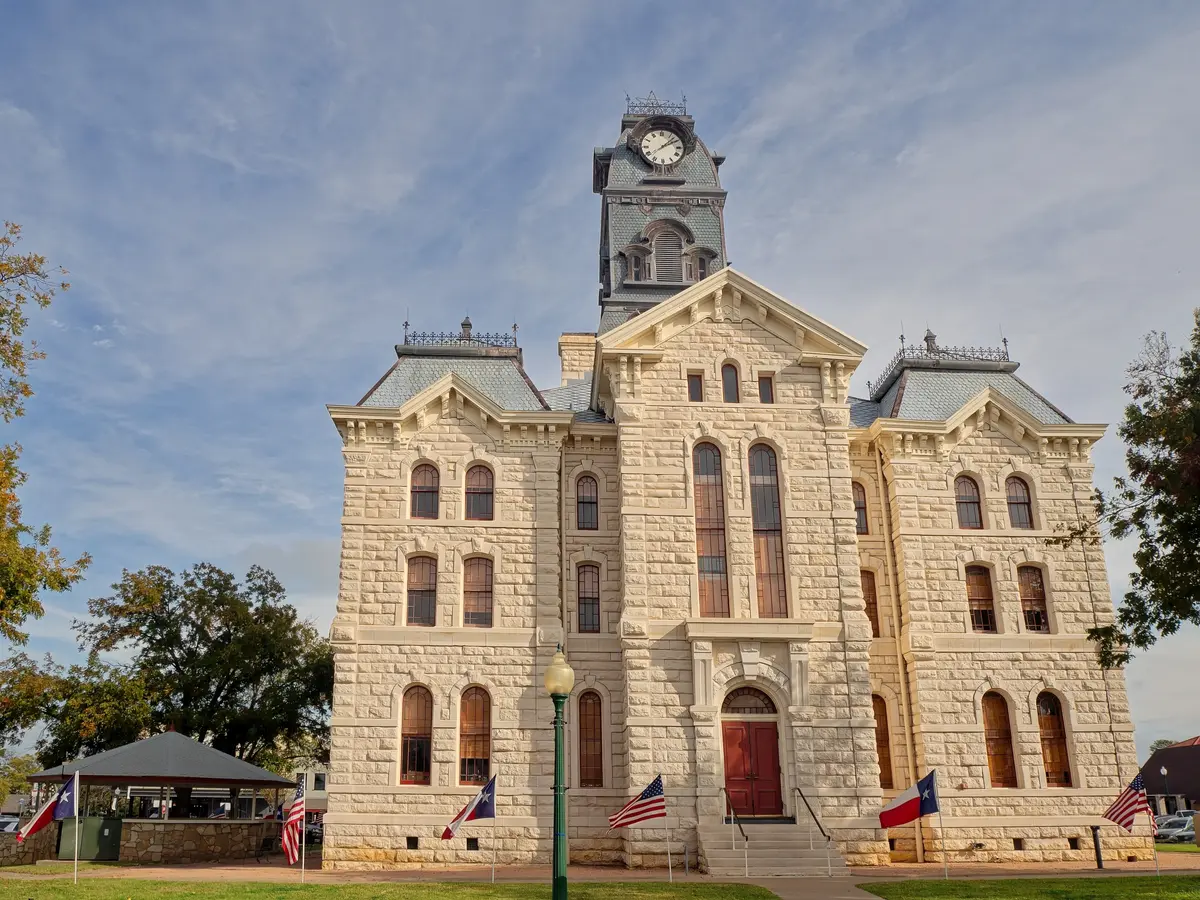
Rio Grande City moves at a pace that people from larger metros either love immediately or take time to adjust to. The downtown is not a strip of chain restaurants and parking lots — it is a recognized Texas Main Street City, with restored historic buildings, independent shops, and family-run restaurants lining the streets around the Starr County Courthouse. The Tijerina Complex and Courtyard, restored through the Main Street program and the EDC, now anchors community events in a space that feels genuinely local.
The city's Hispanic heritage runs through everything: the architecture, the food, the calendar. Vaquero Days celebrates the South Texas ranching tradition and the vaquero culture that gave rise to the American cowboy. The Vivo Mexico Celebration highlights the living Mexican-American cultural traditions that have defined the border for generations. These are not tourist events — they draw residents, families, and return visitors who grew up here.
Fort Ringgold, established in 1848 after the Mexican-American War and one of Texas's best-preserved old military posts, sits on what is now a school campus — original brick structures still standing, history folded into the everyday. The La Borde House, a National Historic Landmark with architecture that blends European, Creole, and Texas border influences, has been restored and operates as a hotel. You drive past these things on a Tuesday morning on the way to work. That layering of history into ordinary life is something longtime residents take for granted and newcomers find genuinely remarkable.
The Six-Month Surprise
What catches newcomers off guard isn't the heat — they expect that. It's the degree to which Rio Grande City operates as a self-contained community. People here know each other. The school board meeting draws a crowd. The Friday night UIL football game fills the stands. The city's Rattlers mascot is a genuine point of local pride. For people who grew up in anonymous suburbs, that level of community connectedness takes some getting used to — and then it becomes the thing they most appreciate.
The honest tradeoff is the service gap. A serious shopping trip, a specialty medical appointment, or a night at a large entertainment venue means driving. Most errands that can't be handled locally require the road to McAllen, and that drive — about 50 minutes — becomes a regular feature of life here. Families with school-age children find the rhythm manageable; people who are used to having everything within ten minutes find it a genuine adjustment.
The parks and recreation page covers outdoor options in more detail, including Fort Ringgold Municipal Park and Veterans Memorial Park, which serve as the main gathering green spaces in the city.
The Rio Grande City Housing Market Right Now
The typical home in Rio Grande City was $147,646 as of July 2026 (Zillow Home Value Index) — a figure that reads as almost impossible to people accustomed to major Texas metros, but it reflects both the city's income base and its distance from employment centers. This is not a market propped up by investor demand or out-of-state migration; it is priced close to what local wages can reach.
That proximity matters. The median household income here is $44,577, which sits just below the income threshold for carrying the typical home comfortably. First-time buyers working in local public-sector jobs need to plan their finances carefully — ownership is within reach, but it is not automatic. The cost of living page breaks down the full picture, including what to expect on taxes and utilities.
The effective property tax rate runs approximately 1.96%, which adds a meaningful monthly cost to any purchase — factor it in before you calculate what you can afford. Texas has no state income tax, which offsets some of that burden, but the property tax line here is real and worth running the numbers on.
The housing stock itself reflects the city's age and history. The downtown and historic core offer older brick construction — some of it genuinely beautiful, some of it requiring serious renovation budgets. Newer subdivisions in areas like Stonegate and Morning Star offer more conventional ranch-style construction at prices that remain well below the Valley's larger markets. Some parts of the city cost more than others, but that variation is qualitative rather than dramatic — this is not a market with dramatic price cliffs between neighborhoods. The neighborhoods page covers character and housing feel across the city's main areas.
Compared to neighboring markets, Rio Grande City sits noticeably below Roma, McAllen, and Mission on price. For buyers who have been watching the McAllen market and wondering whether ownership will ever be possible, Rio Grande City's numbers represent a genuine alternative — with the trade-off of a longer commute to the employment hub.
Rio Grande City Neighborhoods
Rio Grande City has several distinct areas — each with its own character and appeal. Here’s a breakdown to help you narrow down where to focus your home search.
🏡 Downtown / Historic District
The oldest part of the city and its civic core, anchored by the Starr County Courthouse, the La Borde House National Historic Landmark, and the restored Main Street commercial corridor. It suits buyers who want character, walkability to restaurants and shops, and the sense of living inside the city's actual history.
🏠 Las Norias
A residential area with a mix of established single-family homes that draws longtime local families and buyers looking for a settled neighborhood feel outside the immediate downtown core.
🌳 Stonegate
One of Rio Grande City's newer subdivision-style areas, with more recently built ranch homes that appeal to families and first-time buyers looking for conventional construction and a suburban feel.
🏘 Morning Star
A quieter residential pocket that attracts families with school-age children and buyers who want a neighborhood with breathing room and newer housing stock within the city limits.
🏔 Las Villas del Rio
A residential development with a riverine setting that appeals to buyers drawn to the Rio Grande corridor and the cross-border lifestyle that defines the city's geographic identity.
🌆 Inwood Estates
An established neighborhood with a mix of housing styles that suits buyers looking for a settled, community-oriented setting with the stability of an older Starr County residential area.
Read the full Best Neighborhoods guide for Rio Grande City →
Pros & Cons of Living in Rio Grande City
The Pros
- Very low cost of living and home prices relative to the rest of Texas
- Rich historic downtown with preserved 19th-century architecture
- Close-knit bilingual border community
- Short drive to the larger McAllen metro for shopping and jobs
The Cons
- Limited local job market outside of government, healthcare, and retail
- Hot, humid summers with little relief
- Crime rates and poverty levels higher than state and national averages
Getting Around & Commuting in Rio Grande City
Rio Grande City is a driving city — there is no qualifying that. The average commute runs about 19.3 minutes, and average car ownership is two vehicles per household. Most residents drive alone to work, and for good reason: the daily routine here is built around the car. US-83 is the main artery, running east toward McAllen and west toward Laredo, carrying the majority of the city's commuter traffic in both directions.
FM-755 is the other named route serving the city, connecting the interior of Starr County to the river corridor. For most residents, though, the commute question comes down to one route: US-83 east toward the Valley.
The McAllen Commute
The single most important commute fact for anyone considering Rio Grande City is this: it is about 50 minutes to McAllen, TX. That is the anchor city for the region's larger employers, major retail, specialty medical care, and the closest major airport — McAllen Miller International Airport (MFE), roughly 42 miles out. If your job is in McAllen or if you anticipate regular trips there, that drive is your life. Five days a week, it adds up to meaningful time and fuel cost.
For people who work locally — in the school district, at the county, or from home — the commute picture is much friendlier. The city is compact enough that internal trips are genuinely short, and the 19.3-minute average reflects a real cross-section of people who never leave Starr County for work.
What Locals Know About the Drive
US-83 is the main road, and it is well-traveled. The stretch between Rio Grande City and the larger Valley cities can thin out or bunch up depending on time of day and border traffic patterns. People who work in McAllen and commute daily from Rio Grande City tend to calibrate their schedules around that reality — leaving early is a known strategy. The international bridge also generates traffic that spills into the city corridor on busy commercial days.
Remote work has made a real difference here. A household where one or both earners work from home can sidestep the commute question almost entirely, and Rio Grande City's cost of living makes it a practical base for that arrangement. Several families in the city have settled into a pattern where occasional McAllen trips are planned rather than daily. For the rest, the drive is the price of the affordability — and most people who've done the math decided it was worth it.
Schools in Rio Grande City
Families relocating to Rio Grande City have public, private, and higher-education options nearby. Here’s a quick overview.
🎓 School District
Rio Grande City Consolidated Independent School District serves K–12 students across Rio Grande City and the surrounding area. Rated B (source: Texas Education Agency, 2025 A-F accountability rating (2024-25 school year)).
🏆 Graduation Rate
The 4-year high-school graduation rate here is approximately 98.5%.
📚 Higher Education
Texas’s public universities — the University of Texas at Austin, Texas A&M University, and the University of Houston — offer four-year degrees statewide, with one of the largest community college systems in the country (50+ public community college districts) providing two-year and workforce programs.
🌐 Online Learning
UT Austin Online and Texas A&M University Online offer fully accredited online degrees for remote learners across the state.
Safety in Rio Grande City
A quick look at how Rio Grande City compares on the numbers that matter most when weighing a neighborhood or a move.
🛡 Violent Crime
Approximately 1.9 per 1,000 residents.
🔒 Property Crime
Approximately 17.5 per 1,000 residents.
Compared to the most recent national figures from the Bureau of Justice Statistics (2024), Rio Grande City’s violent crime is below the national average (about 3.7 per 1,000), and property crime is about the same as the national average (about 18.4 per 1,000).
Against Texas as a whole, Rio Grande City’s violent crime is roughly half the state average, and property crime is somewhat below the state average (Bureau of Justice Statistics, Crime Known to Law Enforcement, 2024 (tables 2 and 3)).
Crime rates can vary a lot within a single city, so the citywide numbers above are only a starting point. Some neighborhoods in Rio Grande City run well below these averages, while others run higher — the kind of block-by-block detail that matters most when you’re actually choosing where to live. The full guide below breaks it down neighborhood by neighborhood.
Working in Rio Grande City
Rio Grande City’s largest employers span several industries — here are some of the anchors of the local job market.
🎓 Rio Grande City Grulla ISD
Education
🏥 Starr County Memorial Hospital
Healthcare
🏛 Starr County
County government
🏛 City of Rio Grande City
Municipal government
🎓 IDEA Public Schools
Charter education
Retiring in Rio Grande City
Rio Grande City draws retirees for its balance of amenities, outdoor access, and cost. Here’s what to weigh.
🌤 Climate
Rio Grande City sees 222 sunny days a year and the mild winters that define South Texas — a genuine draw for retirees leaving colder states. Summers are hot and humid, with temperatures regularly exceeding 100°F from June through August, so outdoor activity tends to shift to the early morning and evening hours during peak heat.
🍴 Lifestyle
The historic downtown, restored through the Texas Main Street program, gives retirees a walkable core with independent restaurants, bakeries, and coffee shops. Community events like Vaquero Days and the Vivo Mexico Celebration provide a recurring social calendar. The La Borde House, a National Historic Landmark hotel, is a distinctive local landmark that adds character most small cities can't match.
🏚 55+ Communities
No 55+ communities were found in Rio Grande City. Retirees looking for age-restricted communities will need to look toward other Valley markets. The city does offer affordable single-family homes and a close-knit community environment that suits retirees who prefer integration into general neighborhood life over a dedicated 55+ setting.
✈ Getting Around
A car is essential for daily life in Rio Grande City. Most errands are manageable within the city itself, but medical specialists, major retail, and the closest major airport — McAllen Miller International Airport (MFE), about 42 miles out — all require driving. The city is flat and compact, making short in-town trips straightforward.
🏛 Texas Taxes for Retirees — What to Know
- No state income tax — Texas has no personal income tax — constitutionally protected under Article VIII, Section 24. Social Security, pensions, 401(k)/IRA withdrawals, and annuity payments are all untaxed at the state level, with no state return to file.
- Sales tax is the tradeoff — The state sales tax is 6.25%, and local add-ons bring the combined rate in Rio Grande City to 8.25% (Texas Comptroller of Public Accounts, city sales and use tax rates, July 2026). Groceries and prescription drugs are exempt.
- Property taxes — the real tradeoff — Texas’s effective property tax rate averages about 1.40%, among the highest in the country, since property tax (not income tax) funds most local government and schools.
- Over-65 homestead exemption and school-tax freeze — Homeowners 65+ (or disabled) get an additional $60,000 exemption from their home’s value for school district taxes, on top of the general homestead exemption — $200,000 off school taxable value combined, following November 2025’s Proposition 11 (SB 23), which raised the over-65 exemption to $60,000, and Proposition 13 (SB 4), which raised the general homestead exemption to $140,000. Once claimed, your school district tax bill is frozen at that year’s amount and cannot increase as home values rise, and the ceiling can transfer if you move to a new home within Texas.
- Deferral option if cash is tight — Homeowners 65+ can defer property tax payment entirely for as long as they live in the home, rather than paying it currently — interest accrues, but no forced sale.
- No estate or inheritance tax — Texas has no estate tax, no inheritance tax, and no gift tax.
- No separate capital gains tax — Because Texas has no state income tax, capital gains — including on investments and home sales — are not taxed at the state level at all, unlike states such as Washington that tax capital gains separately from income.
Tax laws change frequently and individual situations vary. This is general information, not tax advice — always consult a qualified Texas tax professional or CPA for personalized retirement tax planning.
Weekends & Local Favorites in Rio Grande City
Weekends in Rio Grande City tend to organize themselves around family, food, and the outdoors — in roughly that order. The city's restaurant scene is anchored by places that have been feeding the community for years, and the historic downtown gives the city a weekend atmosphere that newer Valley towns have to manufacture from scratch.
Where to Eat and Drink
Casa De Adobe is a local institution — the kind of Tex-Mex that residents cite when someone from out of town asks where to go first. La Escondida Restaurant draws a loyal following for its border cooking. Texas Cafe serves as a reliable everyday spot. El Penko Viejo rounds out the downtown dining anchor, and La Reynera Bakery Premium brings the kind of fresh pan dulce and baked goods that make weekend mornings feel different. For coffee, Rio Cafe, Twisted Sistas co., and Thanks-A-Latté each have their regulars and their own character — this is not a city that relies on drive-through chains for its morning routine.
Parks and Gathering Spots
Fort Ringgold Municipal Park is the main outdoor gathering space, sitting within the historic Fort Ringgold grounds where the original 1848 military post structures still stand. Veterans Memorial Park serves as another community anchor. With 222 sunny days a year, both parks see real use through most of the calendar — weekend soccer games, family cookouts, and morning walks are part of the regular fabric here.
History as a Weekend Activity
The Starr County Courthouse, a WPA-era structure that anchors the historic downtown, is the kind of civic building that makes you understand why preservation matters. La Borde House — a National Historic Landmark with architecture that blends French, Creole, and Texas border influences — is the city's most striking single structure and worth an afternoon. The Replica Shrine of Our Lady of Lourdes is a significant pilgrimage site for local families and draws visitors from across the region. And the Rio Grande City–Camargo International Bridge is not just infrastructure — it is a living connection to Camargo, Tamaulipas that residents cross for family visits, shopping, and the kind of cross-border daily life that defines the South Texas border experience in a way that inland Texas cities simply don't have.
Rio Grande City is also part of the Los Caminos del Rio heritage corridor — a 200-mile stretch of history between Laredo and Brownsville. For residents interested in South Texas history, that context turns a drive along US-83 into something genuinely interesting rather than just a commute.
Local favorites in Rio Grande City
Restaurants
- Casa De Adobe
- La Escondida Restaurant
- La Reynera Bakery Premium - Rio Grande City
- Texas Cafe
- El Penko Viejo
Outdoors
- Fort Ringgold Municipal Park
- Veterans Memorial Park
Coffee
- Rio Cafe
- Twisted Sistas co.
- Thanks-A-Latté
Top Things Locals Say About Rio Grande City
The best intel about a city comes from the people who actually live there. Here’s what Rio Grande City residents say when newcomers ask the questions everyone’s thinking.
“I knew the commute to McAllen would be long, but I didn't expect how quickly I'd stop thinking of it as a sacrifice and start thinking of it as the price of having a real neighborhood — where my kids know their teachers outside of school and I actually know my neighbors' names.”
— Recent Rio Grande City home buyer
“What's the most surprising thing about living in Rio Grande City?”
How much history is just woven into the everyday. You drive past Fort Ringgold on the way to pick up the kids, you see the La Borde House on a Tuesday and forget it's a National Historic Landmark. People from bigger cities visit and can't believe buildings like that are just there, open, part of the neighborhood. You stop seeing it after a while, but newcomers always notice.
“What do locals love most about Rio Grande City?”
The community actually functions like a community. Vaquero Days brings out families who've been coming for decades. The Friday night football game — the Rattlers — fills the stands no matter the season record. The downtown has been improving steadily with the Main Street program, and there's genuine local pride in that. It's not performative — people here actually care about the city.
“What should newcomers to Rio Grande City know?”
Plan your McAllen trips in batches. If you need specialty shopping, a specific medical appointment, or anything you can't find locally, you're going to US-83 — so you learn quickly to combine errands into one longer trip rather than making the drive every time something comes up. Also: the border crossing is part of local life here in a way that's hard to explain until you've lived it. Many families cross to Camargo regularly for family, food, and errands. It expands your sense of the region considerably.
“How much do you need a car in Rio Grande City?”
For everything beyond a walk around the downtown or the park, you need a car — and most households run two of them. Internal errands in the city are short and manageable, averaging under 20 minutes for most trips. But anything that requires McAllen's retail or services means a road commitment. The average household here owns two vehicles for a reason: one person is often heading to work in a different direction than the other.
Cities Near Rio Grande City
Other communities near Rio Grande City worth a look — each with its own character and price point.
| City | Distance | Best For | Vibe | Median Rent | Median Buy |
|---|---|---|---|---|---|
| Roma | 15 mi | Buyers wanting a smaller, quieter border town | Historic, intimate, river-focused | $750 | $190,000 |
| McAllen | 41 mi | Employment, retail, and metro amenities | Urban, fast-growing, full-service | $1,276 | $228,710 |
| Mission | 35 mi | Families wanting Valley suburban feel | Established, residential, citrus-country roots | $1,366 | $218,831 |
More Helpful Guides for Rio Grande City
Going deeper on Rio Grande City? Our blog series covers everything from first-time buying to retiring here — explore the guides below.
Local Expert Takeaway: Rio Grande City is the rare place where the home prices are real, the community is genuine, and the history is still standing. The trade-off is distance from the larger Valley employment centers and the service gap that comes with it — serious shopping, specialty care, and major entertainment all require the drive to McAllen. But for families rooted in Starr County, public-sector workers, and buyers who've been priced out of the rest of the Valley, this city offers something increasingly hard to find in Texas: a real hometown at a price that reflects local wages.
Quick Takeaways & FAQs
✅ The typical home price of $147,646 (July 2026) makes Rio Grande City one of the most genuinely affordable ownership markets in South Texas.
⚠️ The drive to McAllen — about 50 minutes — is the central trade-off; buyers who work locally experience a very different daily life than those commuting to the Valley hub.
📍 Fort Ringgold, La Borde House, and the Starr County Courthouse give this city a historic core that most newer Texas communities simply don't have — and the Main Street program is actively restoring it.
Is Rio Grande City a good place to raise a family?
How far is Rio Grande City from McAllen?
What is the typical home price in Rio Grande City?
What are the main employers in Rio Grande City?
Are there 55+ communities in Rio Grande City?
Helpful Links for Moving to Rio Grande City
Moving to Texas?
Tell us what you need help with and we'll connect you with local resources.
