
What Is Living in Dayton, Texas Like?
You've probably heard Dayton mentioned as one of those places east of Houston where you can still buy a real house on a real lot without draining your savings. That reputation is accurate, but it understates something important: Dayton is in the middle of one of the fastest growth spurts of any small city in Southeast Texas. The population has climbed to 10,226, and the city has been annexing land at a pace that is drawing developers, logistics companies, and families who got priced out of Katy or Humble and kept driving east on US-90 until something felt right. Five major highways converge here — US-90, SH-146, SH-321, FM-1960, and SH-99 (the Grand Parkway) — and that convergence is why industry and residents are arriving at the same time. The Trinity River runs along the city's eastern edge, which gives Dayton its character and, in storm season, its most pressing challenge for buyers.
The economic backbone of Dayton is anchored by a handful of durable institutions: the Dayton Independent School District, with 5,782 students enrolled in 2025-26, is the city's largest employer; the City of Dayton itself keeps a steady municipal workforce; Global Tubing manufactures oilfield equipment locally; and Union Pacific Railroad moves freight through a rail corridor that has been here since the city's founding as a railroad town in the late 19th century. The Gulf Inland Logistics Park — a rail-served industrial development on the city's edge — has drawn new tenants and added local jobs in the industrial sector, with direct Union Pacific and BNSF Railway connections roughly 30 minutes from the Port of Houston. Many residents also commute to the Baytown petrochemical corridor, where ExxonMobil's Baytown Complex anchors a dense concentration of energy-sector jobs, or work fully remote from homes with the square footage that smaller Houston suburbs simply cannot offer at this price point.
The typical home price here was $302,660 as of July 2026 (Zillow Home Value Index), which puts Dayton well below the cost of comparable living in Mont Belvieu to the south or most of the western Houston suburbs — see the full breakdown on the cost-of-living page. Typical rent runs $1,454 per month (Zillow ZORI, July 2026). What that money buys is space: new construction on generous lots, master-planned communities with resort-style amenities, and access to the Trinity River and Lake Houston Wilderness Park without fighting for a parking spot. The Gulf Coast climate means 205 sunny days a year, long summers that start early and end late, and mild winters — offset by genuine hurricane and flood risk that any buyer here needs to factor into their decision, especially for lots near the river.
Whether you're considering a move or just researching the area, the sections below break down Dayton's neighborhoods, job market, housing conditions, commute realities, and what weekends here actually look like.

Dayton at a Glance
Looking to buy in Dayton? Estimate your payment.
Enter your numbers to see an estimated monthly mortgage payment.
Estimate only. Excludes HOA fees and mortgage insurance. The interest rate above is a starting point, not a quoted rate — replace it with your own to see real numbers. Insurance is a flat placeholder, not a Dayton quote.
Why Are People Moving to Dayton?
The short answer is affordability and space — but the longer answer involves a city that is actively betting on its own future in ways most towns this size don't. Dayton grew approximately 17 percent since the 2020 census, a pace well above what infrastructure typically absorbs without strain, and the city's annexation map tells the same story: tracts annexed in 2025 and early 2026 include the Forestar residential tract, M/I Homes Trinity Landing, and a new Dayton Business Park. This is not passive growth; the city is going after it.
The Jobs Picture
Local employment used to mean the school district, the railroad, or a shift at Global Tubing's oilfield manufacturing operation. That picture has expanded. The Gulf Inland Logistics Park brought rail-served industrial tenants with direct Union Pacific and BNSF Railway connections roughly 30 minutes from the Port of Houston, adding jobs locally in a sector that previously required a commute. The park's build-out will take years, and how far it goes depends on factors no one can guarantee — but the tenants that have arrived represent a meaningful shift in what Dayton's industrial base looks like.
Plenty of residents still commute. The Baytown petrochemical corridor, anchored by ExxonMobil's Baytown Complex, is the most common destination for energy-sector workers. A meaningful share of the workforce also works remotely, treating Dayton as a place to live well while staying connected to Houston-area employers. That combination — local industrial jobs growing, remote work viable, Houston reachable — is what makes the math work for families moving from closer-in suburbs.
The Retail Gap
One honest friction point: Dayton's retail options haven't caught up to its residential growth. The Economic Development Corporation is actively courting big-box retailers and has engaged a national retail recruitment firm to fill that gap — but for now, a serious shopping run means driving out of town. People who move here from Humble or League City sometimes feel that acutely in the first few months. The downtown façade grant program and tenant build-out incentives are slowly filling in the commercial gaps, but this is a city mid-transition, not one that has already arrived.
What draws people despite that trade-off is the same thing that drew the sawmill operators and rice farmers who founded West Liberty on the Trinity's west bank in the 19th century: the land itself. Open fields, mature oak canopy, and wide Texas sky that the inner suburbs traded away a generation ago are still here.
What Daily Life Feels Like in Dayton
Morning in Dayton often starts with a drive. Nearly everything — coffee, groceries, a gym — requires getting in the car, and that's simply the nature of a small city that is still building out its commercial base. The upside is that the drives are short within town, traffic on local roads is nothing like what residents left behind, and the pace of daily life slows noticeably once you get off the main corridors.
Weather and the Flood Reality
The Gulf Coast climate here is genuine. Long summers arrive early — heat and humidity by May, still warm in October. With 205 sunny days a year and mild winters, the outdoor window is wide. But Dayton sits in the Gulf Coast storm track, and its position near the Trinity River means flood risk is a real, material factor for buyers evaluating specific lots. Elevation matters here in ways it doesn't in Dallas or Austin. This is not a reason to avoid Dayton, but it is absolutely a reason to understand what you're buying — insurance costs, FEMA flood zone designation, and lot elevation relative to the river should be part of every buyer's research before making an offer.
Where People Gather
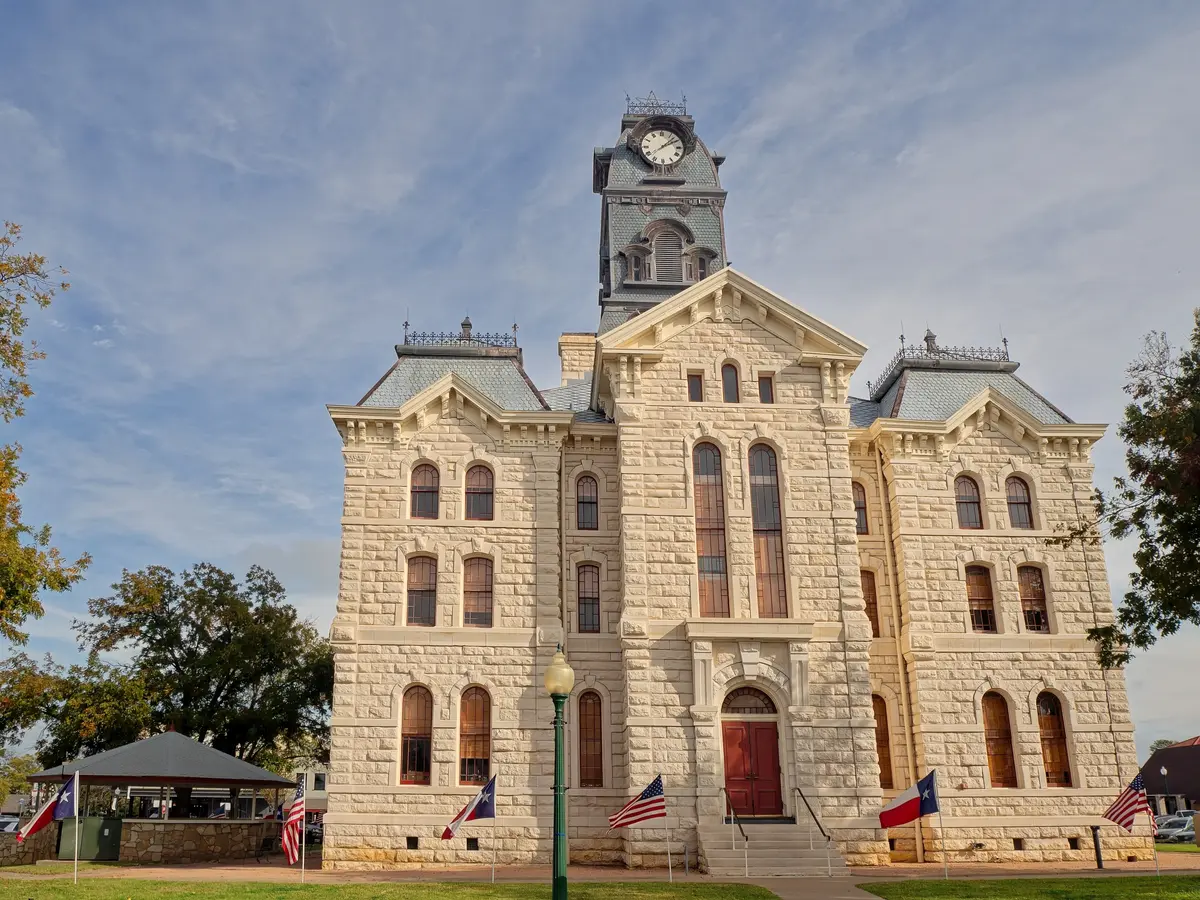
Historic Downtown Dayton is a genuine small-town square — the kind with the courthouse, a handful of local businesses, and the Old School Museum as its cultural centerpiece. That 1911 cypress schoolhouse, which survived multiple tornadoes and hurricanes before the Dayton Historical Society restored it, says something about this town's relationship with its own history. It's the kind of place a newcomer visits once and then stops noticing, the way locals do, until a visitor asks about it.
Dayton City Park handles the everyday outdoor needs — open space, room for kids to run. The Trinity River access points draw anglers and kayakers year-round. Lake Houston Wilderness Park, a short drive away, offers hiking, canoeing, fishing, birdwatching, and camping from primitive sites to cabins — and it rarely feels crowded the way closer-in parks do.
What Surprises People After Six Months
New arrivals from the Houston suburbs often say the same thing: they expected to feel more isolated, and they don't. The highways that converge in Dayton — US-90, SH-146, SH-321, FM-1960, and SH-99 — mean you can reach a lot without living in it. What they didn't fully anticipate was the summer heat arriving two weeks before they expected it and staying two weeks longer. The combination of Gulf humidity and Trinity River bottomland air is distinct from inland Texas heat, and it shapes outdoor life from May through October in ways a spreadsheet comparison doesn't capture.
The Dayton Independent School District holds a C rating, according to the Texas Education Agency, with 5,782 students enrolled in 2025-26. Families with school-age children should review the full picture — including the 2024-25 state assessment results — on the schools page.
The Dayton Housing Market Right Now
The typical home price in Dayton was $302,660 as of July 2026 (Zillow Home Value Index). That figure sits noticeably below Mont Belvieu to the south — though the full neighborhood breakdown lives on the best neighborhoods page.
What the Market Is Offering
New construction is the dominant story. Developers are building across multiple master-planned communities — River Ranch, White Oak Trails, The Villages at Westpointe, and others — on lots that give buyers the square footage and outdoor space that established suburbs stopped offering years ago. The city issued 96 new residential building permits in the year before mid-2024, with more proposed after that. Buyers who want a finished, move-in-ready older home in an established neighborhood have fewer choices; the inventory skews newer and larger.
One structural reality worth understanding before you shop: the median household income in Dayton is $52,966, which is below the income level needed to comfortably carry the typical home at current prices. That gap means many buyers here are stretching, bringing equity from a prior sale, or benefiting from dual incomes. It also shapes the market toward households moving in with financial runway from a previous home, not first-time buyers working from zero.
The Flood Factor in Pricing
Lot elevation and flood zone designation genuinely influence what homes cost in Dayton — and what they cost to insure. A home on higher ground outside a designated flood zone carries meaningfully different long-term ownership costs than one in a low-lying area near Trinity River access. That isn't a reason to avoid the river-adjacent neighborhoods, which often come with scenery and outdoor access that buyers value. It is a reason to read the FEMA map before you fall in love with a lot, not after. Flood insurance is not optional in many Dayton zip codes; it's a line item in your budget from closing day forward.
The effective property tax rate here is approximately 1.42%, which is consistent with Liberty County norms. Full cost-of-living context — including utilities, groceries, and transportation — is on the cost-of-living page.
Dayton Neighborhoods
Dayton has several distinct areas — each with its own character and appeal. Here’s a breakdown to help you narrow down where to focus your home search.
🏡 River Ranch
One of Liberty County's fastest-growing master-planned communities, River Ranch draws families and younger buyers with resort-style amenities including Angel Lagoon — a feature that sets it apart from anything else in the Dayton market. The housing stock skews newer and larger, with a community feel that is still actively forming.
🏠 Encino Estates
Encino Estates offers a quieter, more established residential feel compared to the newer master-planned communities, attracting buyers who want a settled neighborhood without the HOA intensity of the larger developments.
🌳 The Villages at Westpointe
A newer planned community with modern construction and generous lot sizes, The Villages at Westpointe suits families looking for updated finishes and outdoor space in a neighborhood that is still growing into itself.
🏘 White Oak Trails
White Oak Trails blends newer residential construction with the tree canopy that Liberty County is known for, making it a strong fit for buyers who want modern square footage without giving up the wooded, open feel of East Texas.
🏔 Oaks of Trinity
As the name suggests, Oaks of Trinity leans into the area's mature tree cover and proximity to Trinity River geography, drawing buyers who prioritize outdoor access and a less manicured neighborhood character.
🌆 Downtown Dayton
The historic core of the city, Downtown Dayton suits buyers who want proximity to local businesses, the Old School Museum, and the civic energy of a small-town center that is actively receiving investment through the city's downtown improvement programs.
Pros & Cons of Living in Dayton
The Pros
- Significantly more affordable housing and land than closer-in Houston suburbs
- Growing industrial/logistics job base with the Grand Parkway extension
- Small-town, community-oriented feel
- Good highway access via US-90, SH-146, SH-321 and FM 1960
The Cons
- Long commute (45-60+ minutes) to core Houston job centers
- No full-service hospital within city limits
- School district ranks in the lower half of Texas districts academically
Getting Around & Commuting in Dayton
Dayton is a highway city in the most literal sense. Five routes converge here — US-90, SH-146, SH-321, FM-1960, and SH-99 (the Grand Parkway) — and the completion of SH-99 added a major new connection into the greater Houston loop that changed how residents navigate the metro. The city is built around the car. Most errands require one, and the Brazos Transit District does operate fixed bus routes in the city, but day-to-day life here runs on driving.
The Commute to Houston
The standard Dayton-to-Houston commute is about 50 minutes under normal conditions. That's a real number, not a best-case scenario — but commuters who've done it say the stretch on US-90 through Baytown can tighten unpredictably during rush hour. The people who make it work tend to stagger their hours, work from home two or three days a week, or target employers in Baytown rather than downtown Houston, cutting meaningful time off the drive.
The Baytown Corridor Advantage
For residents working in the petrochemical and energy sector, Baytown is the real anchor. ExxonMobil's Baytown Complex and the broader refinery and chemical plant corridor along the Ship Channel are closer than downtown Houston, and the drive via SH-146 is more manageable than fighting into the city center. This is why Dayton has historically attracted shift workers and plant operators who want a rural-feeling home base with predictable highway access to a consistent industrial job.
Airport Access
George Bush Intercontinental Airport (IAH) is 38 miles from Dayton — a drive that lands somewhere between 45 minutes and well over an hour depending on traffic conditions and the direction of the approach. For occasional travelers, it's workable. For frequent flyers, the variability is something to account for when choosing where in Dayton to live relative to the highway on-ramps.
Remote Work and the Future
A growing share of Dayton residents have decoupled their address from their employer's location entirely. For that cohort, Dayton's highway access is less about the daily commute and more about the occasional trip — the Saturday run to Houston for a family event, the quarterly visit to a client. The Gulf Inland Logistics Park's expanding tenant base may also create more local employment options over time, though how quickly that materializes is not something anyone can predict with certainty.
Schools in Dayton
Families relocating to Dayton have public, private, and higher-education options nearby. Here’s a quick overview.
🎓 School District
Dayton Independent School District serves K–12 students across Dayton and the surrounding area. Rated C (source: Texas Education Agency, 2025 A-F accountability rating (2024-25 school year)).
🏆 Graduation Rate
The 4-year high-school graduation rate here is approximately 96.1%.
📚 Higher Education
Texas’s public universities — the University of Texas at Austin, Texas A&M University, and the University of Houston — offer four-year degrees statewide, with one of the largest community college systems in the country (50+ public community college districts) providing two-year and workforce programs.
🌐 Online Learning
UT Austin Online and Texas A&M University Online offer fully accredited online degrees for remote learners across the state.
Safety in Dayton
A quick look at how Dayton compares on the numbers that matter most when weighing a neighborhood or a move.
🛡 Violent Crime
Approximately 1 per 1,000 residents.
🔒 Property Crime
Approximately 22 per 1,000 residents.
Compared to the most recent national figures from the Bureau of Justice Statistics (2024), Dayton’s violent crime is below the national average (about 3.7 per 1,000), and property crime is above the national average (about 18.4 per 1,000).
Against Texas as a whole, Dayton’s violent crime is roughly a quarter of the state average, and property crime is about the same as the state average (Bureau of Justice Statistics, Crime Known to Law Enforcement, 2024 (tables 2 and 3)).
Crime rates can vary a lot within a single city, so the citywide numbers above are only a starting point. Some neighborhoods in Dayton run well below these averages, while others run higher — the kind of block-by-block detail that matters most when you’re actually choosing where to live. The full guide below breaks it down neighborhood by neighborhood.
Working in Dayton
Dayton’s largest employers span several industries — here are some of the anchors of the local job market.
🎓 Dayton Independent School District
Education
🏛 City of Dayton
Municipal government
🏭 Global Tubing
Oilfield manufacturing
💼 Union Pacific Railroad
Rail, logistics
💼 ExxonMobil Baytown Complex
Petrochemicals, located in Baytown
Parks & Recreation in Dayton
Some of the outdoor spaces that shape everyday life in Dayton.
🌱 Trinity River access points
Dayton residents don’t have to go far for green space — spots like Trinity River access points are part of everyday life here, whether that’s a morning walk, a weekend hike, or just somewhere to unwind outside. The full guide below covers more of what Dayton has to offer for parks and outdoor recreation.
Retiring in Dayton
Dayton draws retirees for its balance of amenities, outdoor access, and cost. Here’s what to weigh.
🌤 Climate
Dayton gets 205 sunny days a year with long, warm summers and mild winters — the Gulf Coast season runs long on both ends. Humidity is a constant companion from spring through fall, and hurricane season from June through November brings real weather risk that retirees on fixed incomes should factor into home insurance planning.
🍴 Lifestyle
Daily life is quiet and unhurried, centered on the Trinity River, Dayton City Park, and a small-town downtown anchored by the Old School Museum. The dining scene is casual and local, with a handful of well-regarded spots for everyday meals. Houston's full range of cultural amenities, medical specialists, and airports is about 50 minutes by highway.
🏚 55+ Communities
No 55+ communities were found in Dayton. Retirees who move here typically do so into standard single-family neighborhoods, often drawn by the lower home prices and larger lots compared to closer-in suburbs.
✈ Getting Around
A car is essential for daily life in Dayton — most services, shopping, and medical appointments require driving. Liberty Dayton Regional Medical Center is 7 miles away, making routine care accessible locally. George Bush Intercontinental Airport (IAH) is 38 miles from the city for longer travel.
🏛 Texas Taxes for Retirees — What to Know
- No state income tax — Texas has no personal income tax — constitutionally protected under Article VIII, Section 24. Social Security, pensions, 401(k)/IRA withdrawals, and annuity payments are all untaxed at the state level, with no state return to file.
- Sales tax is the tradeoff — The state sales tax is 6.25%, and local add-ons bring the combined rate in Dayton to 8.25% (Texas Comptroller of Public Accounts, city sales and use tax rates, July 2026). Groceries and prescription drugs are exempt.
- Property taxes — the real tradeoff — Texas’s effective property tax rate averages about 1.40%, among the highest in the country, since property tax (not income tax) funds most local government and schools.
- Over-65 homestead exemption and school-tax freeze — Homeowners 65+ (or disabled) get an additional $60,000 exemption from their home’s value for school district taxes, on top of the general homestead exemption — $200,000 off school taxable value combined, following November 2025’s Proposition 11 (SB 23), which raised the over-65 exemption to $60,000, and Proposition 13 (SB 4), which raised the general homestead exemption to $140,000. Once claimed, your school district tax bill is frozen at that year’s amount and cannot increase as home values rise, and the ceiling can transfer if you move to a new home within Texas.
- Deferral option if cash is tight — Homeowners 65+ can defer property tax payment entirely for as long as they live in the home, rather than paying it currently — interest accrues, but no forced sale.
- No estate or inheritance tax — Texas has no estate tax, no inheritance tax, and no gift tax.
- No separate capital gains tax — Because Texas has no state income tax, capital gains — including on investments and home sales — are not taxed at the state level at all, unlike states such as Washington that tax capital gains separately from income.
Tax laws change frequently and individual situations vary. This is general information, not tax advice — always consult a qualified Texas tax professional or CPA for personalized retirement tax planning.
Weekends & Local Favorites in Dayton
Dayton on a weekend is genuinely unhurried. There is no entertainment district, no nightlife corridor, and no brunch crowd competing for tables at 11 a.m. That's either the appeal or the problem, depending entirely on why you're moving here.
Food and Coffee
The local dining scene is small and mostly unpretentious, which suits the town. Los Compadres Mexican Restaurant and Texas Kountry Kitchen handle a significant share of the weekday lunch traffic from city workers and school staff. Mike's is a longtime local anchor. For a sit-down dinner, Tuscany Italian Restaurant and Texas Seafood & Steakhouse cover the more substantial end of the menu. Daystown Craft Coffee draws the morning crowd who want something beyond a drive-through, and Dayton Nutrition serves the fitness-minded with protein shakes and meal-replacement options that have become genuinely popular in smaller Texas cities.
The Outdoors
The Trinity River access points are where a lot of Dayton residents spend Saturday mornings — fishing from the bank, launching a kayak, or just watching the water move. Dayton City Park handles the everyday version of outdoor time: room to move, space for kids, a break from the house. Lake Houston Wilderness Park is the more ambitious option, offering hiking trails, canoeing, fishing, and camping that ranges from primitive to cabin-level comfort. The Trinity River National Wildlife Refuge, accessible from the area, adds thousands of acres for hunting, fishing, and wildlife observation.
History and Culture
The Old School Museum in Historic Downtown Dayton is worth an afternoon — a restored 1911 Prairie-style cypress schoolhouse that survived tornadoes and hurricanes before the Dayton Historical Society brought it back. The adjacent log cabin, built around the mid-1800s, puts the town's timeline in sharp perspective. This is the kind of cultural anchor that small Texas towns either have or don't, and Dayton has it.
For bigger weekends — concerts, professional sports, larger museums, airports — Houston is about 50 minutes by highway, and SH-99 now gives Dayton residents a cleaner arc around the metro's northern edge without threading through downtown surface streets.
Local favorites in Dayton
Restaurants
- Los Compadres Mexican Restaurant
- Texas Kountry Kitchen
- Mike's
- Tuscany Italian restaurant
- Texas Seafood & Steakhouse
Outdoors
- Trinity River access
- Dayton City Park
- Lake Houston Wilderness Park (nearby)
Coffee
- Daystown Craft Coffee
- Dayton Nutrition
Top Things Locals Say About Dayton
The best intel about a city comes from the people who actually live there. Here’s what Dayton residents say when newcomers ask the questions everyone’s thinking.
“We knew the commute would be longer, but what we didn't expect was how quickly we stopped thinking about it — you get into a rhythm fast, and having a yard the kids can actually use every day more than makes up for the extra time on US-90. The first hurricane season was a wake-up call though. Nobody mentioned flood insurance until after we were under contract.”
— Recent Dayton home buyer
“What's the most surprising thing about living in Dayton?”
How fast the city is changing. River Ranch looked like raw fields when people first moved in a few years back — now it has a lagoon and a full community feel. The annexations and new subdivisions are coming in constantly, so the Dayton someone moved to in 2022 is genuinely different from the one someone is buying into now. The Gulf Inland Logistics Park bringing in industrial tenants was a big deal locally. People talked about it for months.
“What do locals love most about Dayton?”
The space and the quiet. You can have a house with a real backyard, mature trees, and room to breathe, and still be on a highway within minutes. The Trinity River access is something longtime residents take seriously — fishing, kayaking, just sitting by the water on a weekend morning. And the pace here is different from Humble or Baytown. Things move slower in a way that feels intentional, not neglected.
“What should newcomers to Dayton know?”
Get your flood zone research done before you fall in love with a specific lot. Dayton has areas with real elevation variation, and two houses on the same street can be in completely different insurance situations. Also: the retail gap is real. You will be doing a significant grocery run by driving out of town at least part of the time. It stops feeling like a burden after a few months, but the first few weeks it catches people off guard.
“How much do you need a car in Dayton?”
You need a car for essentially everything — groceries, errands, dining, commuting. The Brazos Transit District runs fixed bus routes in the city, but day-to-day life here is built around driving. The highway network is genuinely good, so once you're in the car the access is there. What you're trading is the ability to walk anywhere useful, which in a city this size and at this stage of development isn't really on the table yet.
Cities Near Dayton
Other communities near Dayton worth a look — each with its own character and price point.
| City | Distance | Best For | Vibe | Median Rent | Median Buy |
|---|---|---|---|---|---|
| Liberty | 10 mi | buyers wanting lower prices, older character | historic county seat, established | $1,250 | $222,929 |
| Mont Belvieu | 15 mi | higher-end buyers, petrochemical commuters | polished, newer, growing fast | $1,700 | $489,400 |
| Crosby | 18 mi | budget buyers, rural feel seekers | rural, spacious, unpretentious | $1,450 | $239,995 |
More Helpful Guides for Dayton
Going deeper on Dayton? Our blog series covers everything from first-time buying to retiring here — explore the guides below.
Local Expert Takeaway: Dayton is a genuine value play in the Houston orbit, but the value comes with homework. Flood zone designation and lot elevation matter more here than in most Texas cities of this size, and the retail gap is real — plan to drive out of town for anything beyond basics. The Gulf Inland Logistics Park has added local industrial employment that previously required a commute, and River Ranch's Angel Lagoon amenity gives new construction buyers something no other Liberty County community is currently offering. If you work remotely or in Baytown's petrochemical corridor and want a newer home with real outdoor space, the math in Dayton works. If you need walkable amenities and a short commute, the math doesn't.
Quick Takeaways & FAQs
✅ New construction in master-planned communities like River Ranch gives buyers generous lots and resort-style amenities at a typical home price well below the Houston metro average.
⚠️ Flood risk near the Trinity River is a genuine ownership cost — insurance premiums and FEMA zone designation should be part of every buyer's due diligence before making an offer.
📍 The Gulf Inland Logistics Park has brought rail-served industrial tenants and new local jobs to Dayton, meaningfully expanding an employment base that previously centered on the school district, the railroad, and oilfield manufacturing.
How far is Dayton, TX from Houston?
Is Dayton, TX a good place to raise a family?
What is the flood risk in Dayton, TX?
What are the best neighborhoods in Dayton, TX?
Are there 55+ communities in Dayton, TX?
Helpful Links for Moving to Dayton
Moving to Texas?
Tell us what you need help with and we'll connect you with local resources.
