
Portland, Tennessee sits in Sumner County about 40 minutes to Nashville, straddling a useful middle ground: small enough that you recognize faces at Richland Park, large enough that a cardiologist visits in town weekly and the interstate is minutes away. With a population of 13,658 and a typical home price of $333,034 (August 2026), it offers the kind of affordability that has mostly disappeared from the outer Nashville suburbs — though it is not the lowest-cost option in the region, and retirees who assume rural always means cheap should read the sales tax section before getting too comfortable.
The city's economic backbone rests on Shoals Technologies Group, Sumner County Schools, and the city government itself — a modest employer base that keeps the town's pace genuinely unhurried. That pace is a real selling point for retirees leaving the density and noise of larger metros, and the Strawberry Festival, which fills downtown Portland each May with vendors, live music, a carnival, and a parade, gives you a taste of what community engagement looks like here. Portland is not trying to become the next Franklin or Brentwood; it is still a working Tennessee town, and for many retirees, that is precisely the point.
Tennessee's tax structure is one of the most retirement-friendly in the country — no state income tax on Social Security, pensions, or investment withdrawals — and the effective property tax rate here is among the lowest you will find anywhere in the South. The trade-off lands on the sales tax side: the combined state-and-local rate averages approximately 9.62%, which adds up on a fixed income. Daily life costs for groceries, gas, and dining lean affordable, and the cost-of-living page breaks down the full picture.
Whether you are moving here from a higher-cost state, downsizing from a larger home in the Nashville suburbs, or simply looking for a quieter chapter without giving up reasonable access to urban amenities, the sections below cover what retiring in Portland actually looks like — healthcare access, the retiree budget, walkability and community, downsizing options, and how the city stacks up against nearby alternatives.
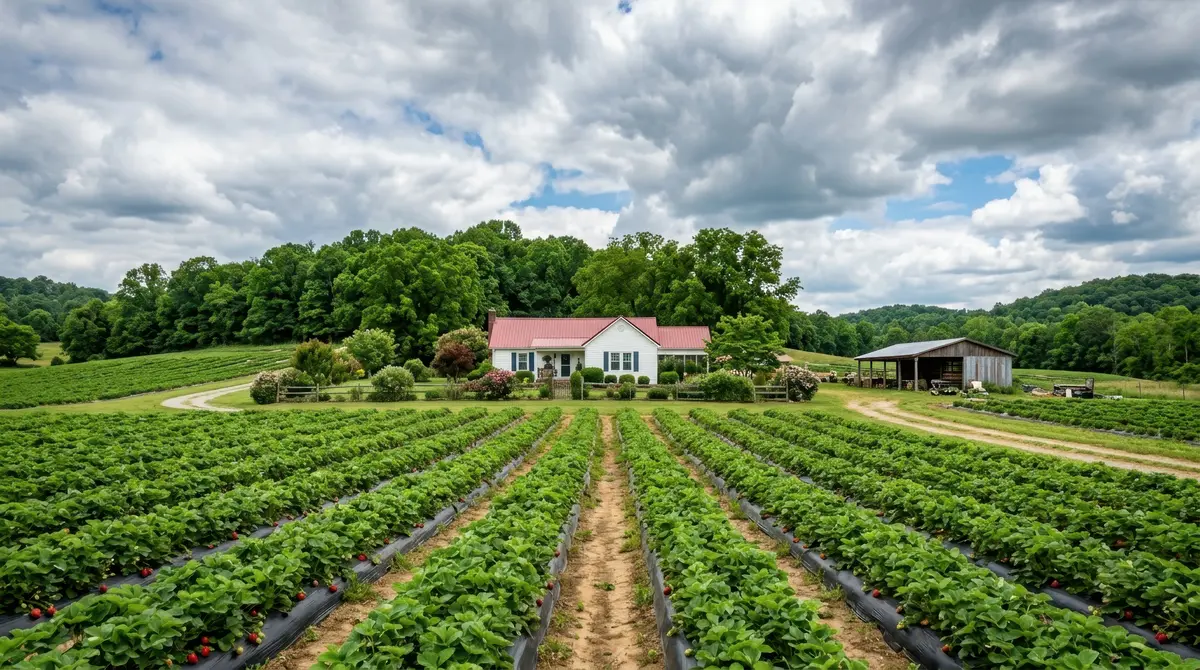
Why Retirees Are Choosing Portland
The case for Portland starts with price and ends with pace. A typical home at $333,034 (August 2026) sits noticeably below what comparable stock costs in White House or Gallatin, and that gap matters when you are converting a retirement account into a paid-off roof. For retirees coming from higher-cost markets — Middle Tennessee's own fast-growing suburbs, or almost any major metro outside the South — Portland's entry point is genuinely compelling.
What you are buying beyond the price is a town that moves slowly in the best sense. The Downtown Portland Historic District is compact and human-scaled. Richland Park anchors the social calendar. Neighbors wave. Portland is the 48th-largest incorporated city in Tennessee, which means it lacks some of the amenities retirees moving from Nashville or Knoxville might expect — no large hospital in town, no Trader Joe's, and a restaurant scene that will disappoint anyone with strong opinions about cuisine variety. A serious shopping trip means driving out of town.
Portland fits best for retirees who are comfortable behind the wheel, value low housing costs over walkable density, and want genuine small-town community rather than the curated version of it. If you need specialist medical care on a weekly basis or expect to age in place without driving, the 18-mile distance to the nearest full-service hospital is a meaningful limitation to weigh now, not later. For the active, independent retiree who still drives and wants a quiet base about 40 minutes to Nashville, Portland earns serious consideration.
Healthcare & Medical Access in Portland
The nearest full-service hospital is Highpoint Health – Sumner, about 18 miles away. For routine emergencies and inpatient care, that distance is manageable — but it is not negligible, and retirees should plan for it rather than discover it. TriStar Hendersonville Medical Center in Hendersonville and TriStar Northcrest Medical Center in Springfield add additional regional options without being close-in.
What Portland does have inside its own borders is more than most towns its size. Tennessee Heart and Vascular, affiliated with TriStar Medical Group, maintains a satellite cardiology clinic here with diagnostic testing and specialist treatments on a regular basis — meaning routine cardiac follow-ups do not require a Nashville drive. That is a genuine quality-of-life advantage for the large share of retirees managing heart conditions.
Primary care is locally covered. Portland Medical LLC handles primary care, wellness visits, and chronic disease management, and Firefly Health offers physicals, lab work, and sick visits. Fast Pace Health provides walk-in urgent care, accepts Medicare and Medicaid, and does not require an appointment. For day-to-day health management, the in-town options are solid.
The gap shows up at the specialist level beyond cardiology. Oncology, neurology, orthopedic surgery, and complex procedures will send you toward Nashville or a regional hub. Retirees who anticipate frequent specialist visits should map those routes and accept that some appointments will be 45-minute to one-hour drives. For long-term care, Signature HealthCARE of Portland operates a 112-bed facility in the city, offering skilled nursing, rehab-to-home, and behavioral services for dementia and Alzheimer's care.
What Medical Access Looks Like Day to Day
If your retirement health picture involves a primary care doctor, an annual cardiologist check-in, and the occasional urgent care visit, Portland's in-town resources cover most of it. If you have a complex or multi-specialist chronic condition, the 18 miles to Highpoint Health – Sumner and the longer drive to Nashville's medical corridor become part of your regular calendar. That is the honest trade-off, and it is better to name it now than to discover it after closing.
The Retiree Budget in Portland
Tennessee's tax posture for retirees is about as favorable as any state in the country. Social Security benefits are not taxed at the state level. Pension income, IRA withdrawals, and 401(k) distributions are equally untouched — the Hall Income Tax on interest and dividends was fully repealed effective January 1, 2021, leaving zero state income tax on any form of personal income. For retirees living on a combination of Social Security and retirement account draws, that represents real money compared with states that tax each of those streams.
The effective property tax rate in Portland runs approximately 0.36%, one of the lowest figures you will find anywhere in Tennessee. Tennessee also runs two programs worth knowing: the Property Tax Relief Program, which provides qualifying homeowners aged 65 or older a check to offset property taxes (income limits apply for the 2026 tax year — total 2025 household income of $38,470 or less), and the Property Tax Freeze Program, which can lock assessed value for seniors who qualify. Disabled veterans and their unremarried surviving spouses qualify for the Relief Program with no income limit. Check with the Sumner County Assessor's office for current eligibility details, since these programs are revised periodically.
The counterweight to all of that is the sales tax. Tennessee's combined state-and-local rate averages approximately 9.62%, among the highest in the country. Groceries carry a reduced state rate of 4%, but that is not zero, and on a fixed income the cumulative impact of sales tax on every grocery run, every hardware trip, every restaurant meal adds up in a way income-tax savings can only partially offset. Retirees who spend heavily on services and goods — rather than drawing down investments — feel this most acutely.
Day-to-day costs for housing and dining lean affordable relative to the Nashville metro's core. The cost-of-living page has the full breakdown on rent, groceries, and utilities. The interactive mortgage calculator below this section can help you model what a purchase at the current typical price looks like at today's rates.
Looking to buy in Portland? Estimate your payment.
Enter your numbers to see an estimated monthly mortgage payment.
Estimate only. Excludes HOA fees and mortgage insurance. The interest rate above is a starting point, not a quoted rate — replace it with your own to see real numbers. Insurance is a flat placeholder, not a Portland quote.
Beyond the Monthly Mortgage Payment — What to Factor In
- The property tax rate above — The 0.36% used in the estimate is the median effective rate — tax actually paid as a share of market value — published by Ownwell, 2026. Half of local homes pay more and half pay less: your own bill depends on that property's assessed value and any exemptions it qualifies for, which can differ a lot from its market price. Confirm with the Sumner County assessor before you budget.
- Total cost of ownership — Your monthly mortgage payment is just the baseline. Depending on the specific city, county, and service district, homeownership costs also include local utility fees, municipal surcharges, and special assessments (such as water, sewer, storm drainage, or local energy taxes) that vary by location.
- Independent due diligence — Because these recurring local costs and municipal fees change depending on the exact property address, buyers must research them independently during their transaction process.
Tax laws, local municipal fees, and utility costs change frequently and individual situations vary. This page is general information, not tax or legal advice — always consult a qualified tax professional, CPA, or local municipal offices for personalized guidance.
Walkability, Community & Staying Active in Portland
Portland is not a city you can retire into without a car. The compact downtown and the area around Richland Park are navigable on foot — the Downtown Portland Historic District has some genuine charm for a short walk — but most errands, most medical appointments, and most shopping require driving. The city's Parks & Recreation Master Plan, adopted in 2022, set a framework for future trail and greenway improvements, but that future has not fully arrived yet. Plan your retirement here around a vehicle, not around on-foot access.
What the city offers instead of walkability is a community calendar with real pull. The Middle Tennessee Strawberry Festival fills downtown Portland each May with vendors, live music, a carnival, and a parade — the kind of event that makes you realize how tightly knit Portland's civic culture actually is. The Portland TN Farmers Market runs at Richland Park from Strawberry Festival week through the growing season, and the Homegrown Market adds another regular option for locally grown produce and artisan goods — both are the kind of low-key, recurring social anchor that retirees who have traded a corporate calendar for an open one tend to appreciate.
Richland Park itself is the city's gathering point: enough green space for a morning walk, enough community programming to keep it from feeling empty. Old Hickory Lake, a short drive away, gives retirees access to fishing, boating, and water recreation without leaving the area. For those who want the social texture of a wine-country afternoon, Sumner Crest Winery sits nearby and draws a crowd that skews heavily toward retirees and weekenders.
Senior Services and Volunteering
Portland's size means formal senior programming is limited compared to what you would find in Gallatin or Hendersonville. The city and Sumner County offer some recreational programming, and the school district, faith communities, and local civic organizations are active. Volunteering within the community — at the Farmers Market, through the Sumner County Schools system, or with local faith-based organizations — is how many retirees here build a genuine social network. The friction moment most newcomers hit around month six is realizing that the social infrastructure you expected to walk into does not exist at the same density it does in larger retirement-oriented cities. You build your life here; you do not slot into one.
Right-Sizing: Downsizing in Portland
No 55+ communities were found in Portland. That is the single most important thing to know before you plan a downsizing move here specifically for an age-restricted community. If a master-planned active-adult environment is on your list, Gallatin and Hendersonville are worth examining instead.
What Portland does have is a housing stock that skews toward single-family homes on manageable lots. The neighborhoods the city is known for — Heritage Chase, Autumns Brooke, Golfview Estates, Waverly Pointe, Wind Wood Estates, Irish Oaks, Cornerstone, and Angelina Estates — are predominantly detached homes. Some of these developments include ranch-style or single-level floor plans, which matter more than most buyers admit until knees and stairs become a conversation. If single-level living is a non-negotiable, be explicit with your agent about it; inventory varies and you may need to wait for the right listing.
The absence of a significant condo market is a real gap for retirees seeking true lock-and-leave convenience. Patio homes and smaller single-family footprints do exist, but Portland is not a city built around low-maintenance retirement product the way some planned communities are. Anyone accustomed to a condo lifestyle in a larger city will find the options limited here.
For long-term care planning, Signature HealthCARE of Portland's 112-bed facility handles skilled nursing, short-term rehab, and memory care — which means couples navigating different levels of care need do not necessarily have to leave the city for that transition. That is a meaningful local asset for a town this size. For a closer look at which neighborhoods suit different buyer types, including retirees seeking a quieter block, the neighborhoods page covers the specifics.
What to Expect from the Downsizing Market
The typical home price of $333,034 (August 2026) means that a retiree arriving with equity from a larger home — especially one purchased years ago in a higher-cost market — may be able to buy here outright or carry a very manageable note. That cash-flow flexibility is one of Portland's strongest arguments for the retiree on a fixed income. The catch is that you are choosing from a relatively thin slice of the market if your requirements include single-level, low-maintenance, and no HOA.
Portland vs Nearby Retirement Destinations
| City | Cost vs Portland | Primary Hospital | Walkability | Senior Living Depth | Overall Retirement Fit |
|---|---|---|---|---|---|
| Portland | Anchor | Highpoint Health – Sumner (~18 mi) | Car-dependent; downtown walkable | Long-term care facility in town; no 55+ communities | Good for independent, car-driving retirees on a budget |
| Gallatin | Noticeably higher | Highpoint Health – Sumner (closer) | More retail and services within reach | Multiple 55+ and active-adult options | Stronger retirement infrastructure; costs more |
| White House | Noticeably higher | Highpoint Health – Sumner | Car-dependent; growing suburb feel | Limited dedicated senior living | Better for commuter-retirees; not a retirement hub |
| Springfield | About the same | TriStar Northcrest Medical Center (in town) | Car-dependent; small-town pace | Some assisted living options locally | Comparable value; hospital in town is the key advantage |
| Westmoreland | Noticeably cheaper | Highpoint Health – Sumner | Minimal; very rural feel | Very limited | Lowest cost in the corridor; limited services |
| Cottontown | Noticeably cheaper | Highpoint Health – Sumner | Minimal; unincorporated community | None to speak of | For retirees who want rural quiet and keep Nashville as their service hub |
The clearest case for Portland over its nearby alternatives is the combination of a below-average home price, Tennessee's zero-income-tax structure, and an effective property tax rate of approximately 0.36% — all without the full rural isolation of Westmoreland or Cottontown. Springfield is the most interesting competitor for retirees who are anxious about hospital distance, since TriStar Northcrest Medical Center sits within Springfield itself rather than 18 miles away.
Gallatin wins on retirement infrastructure — more senior living choices, more retail, more dining — but you pay a noticeably higher housing cost for that convenience. White House skews younger and suburban, without the senior-living depth to make it a natural retirement destination. For the retiree who wants the lowest possible cost and accepts a very rural existence, Westmoreland and Cottontown exist, but both require treating Nashville as the primary service city for almost everything beyond the basics.
Portland's sweet spot is the retiree who wants authentic small-town Tennessee life, a healthy tax picture, and a reasonable drive to Nashville when the city is needed — and who does not require a walkable downtown or an age-restricted community to feel settled.

Local Expert Takeaway: Portland, Tennessee makes the most sense for retirees who drive, want a genuinely low-cost housing base with Tennessee's unmatched income-tax advantage, and are comfortable building their own social life rather than inheriting one. The satellite cardiology clinic from Tennessee Heart and Vascular, the in-town urgent care at Fast Pace Health, and the long-term care facility at Signature HealthCARE of Portland give the city a more complete healthcare picture than its size would suggest — but the 18 miles to Highpoint Health – Sumner is real and should be part of your planning, not a footnote. If you can live without a 55+ community and accept that a serious shopping trip means leaving town, Portland's budget and pace are hard to beat in Sumner County.
Quick Takeaways & FAQs
✅ Tennessee levies no state income tax on Social Security, pensions, or retirement account withdrawals — one of the most favorable income-tax environments for retirees in the country.
⚠️ No 55+ communities were found in Portland, and the nearest full-service hospital is 18 miles away — two real limitations that active-adult and health-dependent retirees should weigh before committing.
📍 Tennessee Heart and Vascular maintains a satellite cardiology clinic inside Portland, meaning routine cardiac follow-ups can happen in town without a Nashville drive.
Is Portland, Tennessee a good place to retire?
Does Tennessee tax Social Security or retirement income?
How far is the nearest hospital from Portland, Tennessee?
Are there 55+ or active-adult communities in Portland, TN?
What is the property tax rate for retirees in Portland, Tennessee?
Moving to Tennessee?
Tell us what you need help with and we'll connect you with local resources.
