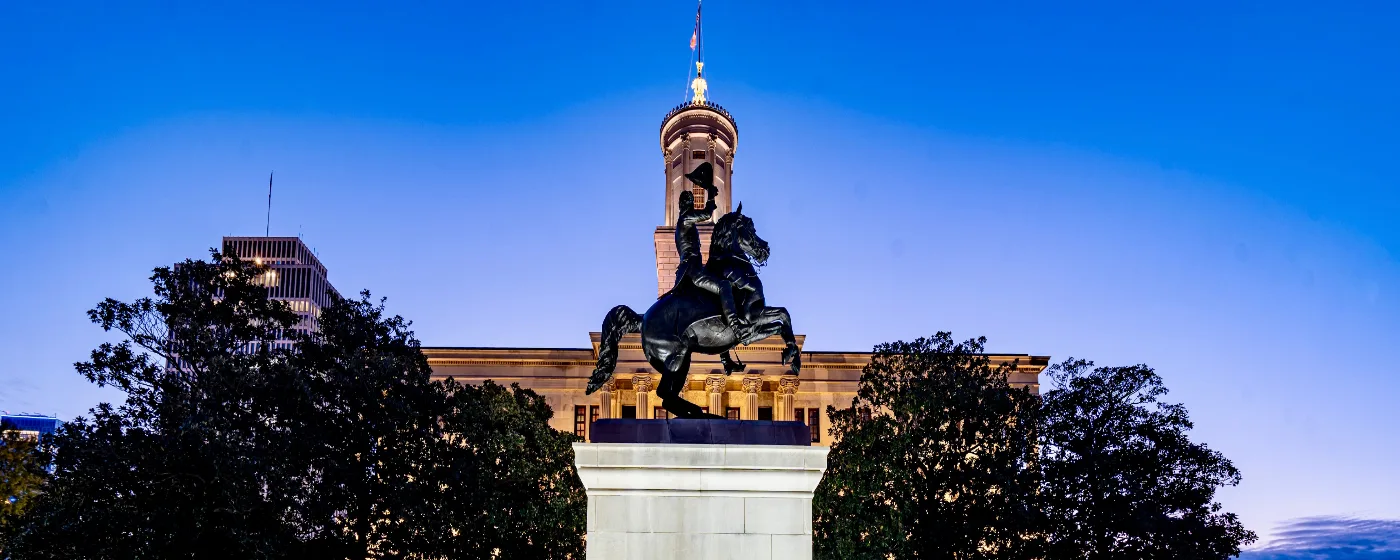
What Is Living in Springfield, Tennessee Like?
Most people who move to Springfield, Tennessee were priced out of somewhere closer to Nashville — and then they discovered something they didn't expect: a real town. Not a bedroom subdivision grafted onto farmland, but a county seat with a proper public square, a courthouse on the National Register of Historic Places, and a downtown that has been pulling people back in on purpose. Springfield sits in Robertson County, about 30 minutes to Nashville via US-41, and its population of 20,090 puts it at a size where you can know your neighbors without knowing everyone. That balance — city services, small-town scale, actual Nashville access — is what drives most relocation conversations here.
The local economy has more depth than many Robertson County newcomers expect. Electrolux Home Products runs a major appliance manufacturing operation here, Airtech International adds to the manufacturing base, and Robertson County Schools is among the largest employers in the county. A major regional health system operates inside city limits, and city and county government round out the public-sector side. Remote workers have moved in steadily over the past few years, drawn by the price gap with the Nashville metro and the county tourism authority's own pitch: rural home sites, historic districts, golf course communities, and even loft living on the revitalized downtown square. The Springfield 2044 Comprehensive Plan, adopted in mid-2024, signals that the city is actively managing where growth goes rather than just absorbing it.
Housing costs in Springfield run noticeably below the U.S. average, and that gap shows up most clearly when you compare the typical home price of $331,021 (Zillow Home Value Index, August 2026) against what comparable square footage runs in White House or the closer Nashville suburbs. The full cost-of-living breakdown covers what that means across groceries, utilities, and taxes. Day-to-day life leans on a car — US-41 and TN-49 carry most of the traffic, and most errands mean a drive — but Travis Price Park, The Legacy golf course, and a downtown that hosts a monthly outdoor event series from May through October give residents genuine gathering places rather than just commuter infrastructure.
Whether you're seriously considering a move or just starting your research, the sections below break down Springfield's neighborhoods, housing market, commute patterns, school district, local favorites, and what daily life here is actually like.
Springfield at a Glance
Looking to buy in Springfield? Estimate your payment.
Enter your numbers to see an estimated monthly mortgage payment.
Estimate only. Excludes HOA fees and mortgage insurance. The interest rate above is a starting point, not a quoted rate — replace it with your own to see real numbers. Insurance is a flat placeholder, not a Springfield quote.
Beyond the Monthly Mortgage Payment — What to Factor In
- The property tax rate above — The 0.45% used in the estimate is the median effective rate — tax actually paid as a share of market value — published by Ownwell, 2026. Half of local homes pay more and half pay less: your own bill depends on that property's assessed value and any exemptions it qualifies for, which can differ a lot from its market price. Confirm with the Robertson County assessor before you budget.
- Total cost of ownership — Your monthly mortgage payment is just the baseline. Depending on the specific city, county, and service district, homeownership costs also include local utility fees, municipal surcharges, and special assessments (such as water, sewer, storm drainage, or local energy taxes) that vary by location.
- Independent due diligence — Because these recurring local costs and municipal fees change depending on the exact property address, buyers must research them independently during their transaction process.
Tax laws, local municipal fees, and utility costs change frequently and individual situations vary. This page is general information, not tax or legal advice — always consult a qualified tax professional, CPA, or local municipal offices for personalized guidance.
Why Are People Moving to Springfield?
The short version: Nashville's growth pushed housing costs north, and Springfield was sitting there with a real downtown, a functional town square, and prices that still make sense. That story has been playing out for a few years, but Springfield's version of it is different from what happened to White House or Hendersonville — because Springfield already had something to come back to.
A County Seat with Real Roots
Springfield was incorporated in 1819 and spent most of its history as the dark-fired tobacco capital of the world — a title Robertson County still carries with some pride. That agricultural identity left behind the Robertson County Courthouse, the Springfield Town Square Historic District, and Woodard Hall, all of which give the city a physical history you can actually see. The Robertson County History Museum puts that history in context, with exhibits running from Bell Witch lore to the tools of the tobacco trade.
That civic infrastructure — the square, the courthouse, the annual events — is what separates Springfield from a newer suburb. Families with kids who outgrew Nashville-adjacent rents, small business owners looking for lower commercial costs, and remote workers who want space without isolation have all been showing up in Robertson County in recent years, and many of them land in Springfield specifically because the town already exists.
What the Growth Signals Say
The city's 2044 Comprehensive Plan covers land use, parks, utilities, and economic projections for the next two decades — which is the kind of document a city produces when it expects to keep growing and wants to manage it. Springfield also launched an online development tracker so residents can follow active projects in real time. Both moves suggest a local government that is paying attention to how growth lands, which matters when you're deciding whether to buy ahead of it.
Tourism sustained more than 500 jobs in 2024, and the city is actively pursuing Tennessee Main Street Program designation — a designation that could unlock restoration funding for the historic square. That pursuit reflects something real: the downtown is not finished, but it is moving in a direction.
The Honest Trade-Off
Springfield is still a commuter town for most households. The local job base is real but not deep enough to employ everyone who lives here, and the median household income of $58,741 sits below what it takes to comfortably carry the typical home price at current rates. Buyers here are often making a bet that the commute to Nashville is worth the price gap — and for many, it is. For others, especially those without a remote or Nashville-bound job, the calculus is tighter than the headline number suggests. See the cost-of-living page for the full picture on what that gap actually means in practice.
What Daily Life Feels Like in Springfield
Six months in, most newcomers say the same thing: the pace surprised them. Not slow — just unhurried in a way that downtown Nashville no longer is. The public square is a genuine civic center, not a redevelopment concept. On a weekday morning it looks like a working county seat; on a monthly outdoor event evening it looks like a real community gathering.
The Downtown Core
The Springfield Town Square Historic District anchors daily life in a way that newer Robertson County towns simply can't replicate. The square hosts a monthly outdoor vendor and music series from May through October — drawing visitors from well outside the county — along with the Robertson County Fair, a tradition that stretches back 150 years, which brings the agricultural roots of the county into an annual late-summer event with carnival rides and live music. Freedom Fest runs in July, and the Springfield Christmas Parade, with horse-drawn carriages, closes out the year in December.
None of that happens by accident in a town of 20,090. It happens because the infrastructure for civic life — the square, the courthouse grounds, the park — was already there.
Schools and Kids' Activities
Robertson County Schools serves the area and holds a C+ rating, according to Niche. On 2025-26 state assessments, 35.7% of students reached math proficiency and 38% reached reading proficiency — figures that reflect a district still working toward stronger outcomes. High school athletics programs run at the competitive state level, and the Springfield Yellowjackets draw a real Friday night crowd. For a deeper look at the schools picture, the schools page covers boundary quirks, individual campuses, and what parents with kids have found.
What Surprises People After Moving Here
Two things catch newcomers off guard. First: how genuinely rural the edges of town feel, even inside the city limits. Springfield covers about 13 square miles, and the transition from the historic square to open farmland happens faster than most people from larger metros expect. Second: the seasonal rhythm of the town square, which goes quiet after the last outdoor market evening and then builds back up the following spring. If your social life depends on a walkable downtown restaurant scene seven nights a week, Springfield is not that place yet — but it is getting closer.
The Art in the Park festival at Travis Price Park is the kind of community event that becomes a calendar anchor once you've been to it once. Free admission, local artists, live music — it is a good early read on what the community actually values.
The Springfield Housing Market Right Now
The typical home in Springfield is priced at $331,021 (Zillow Home Value Index, August 2026) — a figure that looks different depending on where you're moving from. For buyers coming out of Nashville proper or Williamson County, it represents a meaningful step down in cost for comparable square footage. For buyers from rural Middle Tennessee, it reflects a county seat premium over genuinely small-town alternatives.
What That Price Buys
At this price point, Springfield offers established single-family homes on real lots — not the zero-lot-line construction that defines some newer suburbs. Neighborhoods like Stonegate and Canterbury Estates have the feel of settled, tree-lined streets rather than recent build-outs. The Historic Downtown area includes some of the older housing stock in Robertson County, with brick bungalows and Victorian-era homes that have been steadily attracting buyers who want character over new construction. Newer developments in areas like Oakland Farms and Mooreland Estates cater to buyers who want updated finishes and larger floor plans. The neighborhoods page has the full breakdown on what each area looks and feels like on the ground.
The Affordability Reality
One number worth sitting with: the median household income in Springfield, at $58,741, is below what it takes to carry the typical home price at current rates — by a meaningful margin. That gap is not unique to Springfield, but it is wider here than the headline price might suggest to buyers who assume affordability tracks income. Many buyers make it work through dual incomes, equity from a prior home, or the advantage of moving from a higher-cost market. The first-time homebuyer page covers the mechanics of how buyers are navigating it.
Renting First
Typical rent in Springfield runs approximately $1,647 per month (Zillow, August 2026) — a useful baseline for anyone who wants to spend a year in the community before committing to a purchase. Renting first is a reasonable strategy in a market where neighborhood feel varies more than the city-wide median suggests, and where the development trajectory is genuinely in motion. Watching one full seasonal cycle of the town square, a Robertson County Fair, and a winter before buying is a piece of advice longtime residents offer regularly.
Springfield Neighborhoods
Springfield has several distinct areas — each with its own character and appeal. Here’s a breakdown to help you narrow down where to focus your home search.
🏡 Historic Downtown / Historic District
The oldest part of Springfield, anchored by the Robertson County Courthouse and the National Register-listed Town Square — best suited to buyers who want walkable access to community events and an older housing stock with character, including brick bungalows and Victorian-era homes.
🏠 Stonegate
A well-established residential neighborhood with tree-lined streets and a settled, suburban feel that appeals to families with kids and buyers looking for a conventional single-family home environment away from the downtown core.
🌳 Canterbury Estates
Canterbury Estates offers the kind of quiet, established neighborhood character that buyers prioritize when they want distance from commercial traffic while remaining inside the Springfield city limits — suits parents with school-age children and buyers who value a low-traffic environment.
🏘 Kingston Estates
A residential area within Springfield's city limits that draws buyers seeking more space and a quieter setting, with a neighborhood feel that skews toward established families and those who commute out of Robertson County for work.
🏔 Mooreland Estates
Mooreland Estates tends to attract buyers looking for newer finishes and more contemporary floor plans than the older downtown stock offers — a reasonable choice for households prioritizing updated construction over historic character.
🌆 Oakland Farms
One of Springfield's newer residential developments, Oakland Farms suits buyers who want modern construction and larger lots, with a neighborhood layout that feels more open than the older established areas closer to the town square.
Pros & Cons of Living in Springfield
The Pros
- Historic, walkable downtown square with local shops and restaurants
- Home values and cost of living well below the Nashville metro average
- Reasonable ~30 minute commute into downtown Nashville
- Strong small-town community feel with active agritourism and festivals
The Cons
- Local school district test scores and graduation trends lag state averages
- Violent crime rate runs higher than national average despite low property crime
- Limited public transit and bike infrastructure means a car is a necessity
Getting Around & Commuting in Springfield
Springfield is a driving city, full stop. Most daily errands require a car, and the commute to Nashville — about 30 minutes under normal conditions — defines the rhythm of the working week for a large share of households. That drive is the central variable in almost every relocation decision made here.
The Routes That Matter
US-41, locally known as Tom Austin Highway, is the primary artery carrying commuter traffic toward Nashville. TN-49 and TN-76 handle east-west movement through Robertson County and connect Springfield to neighboring communities like White House and Portland. TN-161 and US-431 serve additional corridors within the county. Most residents who work in Nashville drive — those who work remotely have a noticeably different relationship with the city's geography.
The Commute Calculus
about 30 minutes to Nashville is the figure most residents quote under good conditions, but that number assumes off-peak timing or favorable traffic on US-41. For buyers whose office is downtown Nashville or in a corridor that requires navigating surface streets, the real-world commute will run longer. The most common relocation calculus here is straightforward: accept the commute in exchange for a meaningful difference in what your housing dollar buys.
Remote workers have a notably different experience of Springfield. When Nashville access is occasional rather than daily, the city's position — close enough for concerts, Predators games, or a full day of errands — becomes an asset rather than a dependency. That flexibility has made Springfield a practical landing spot for households where one partner commutes and one works from home.
Local Employers
For buyers who want to eliminate or shorten the Nashville drive, Springfield's local employer base is worth understanding. Electrolux Home Products runs a major appliance manufacturing operation in the city and is one of the largest private employers in Robertson County. Airtech International adds manufacturing capacity. Robertson County Schools employs a significant share of residents directly, and city and county government round out the public sector. A major regional health system operates inside city limits as well. None of these constitute a deep tech or professional-services job market, but for manufacturing, healthcare, education, and public-sector roles, the local options are real.
Airport Access
Nashville International Airport (BNA) sits approximately 35 miles from Springfield — close enough to reach in under an hour outside of peak travel windows, and far enough that regular flyers need to plan around it. For occasional travel, the distance is manageable. For frequent flyers, it is a factor worth pricing into the commute picture.
Schools in Springfield
Families relocating to Springfield have public, private, and higher-education options nearby. Here’s a quick overview.
🎓 School District
Robertson County serves K–12 students across Springfield and the surrounding area. Rated C+ (source: Niche.com).
📊 District Stats
- Enrollment 2024-25
- 10,935 students
- 4-year graduation rate
- 88.9%
- Math proficiency 2025-26
- 35.7%
- Reading proficiency 2025-26
- 38%
- Science proficiency 2025-26
- 39.8%
Source: Tennessee Department of Education Data Downloads (district profile, graduation rate and TCAP assessment files).
📚 Higher Education
Tennessee’s public universities — the University of Tennessee, Vanderbilt University, and Middle Tennessee State University — offer four-year degrees statewide, with a statewide community and technical college system of 13 community colleges and 24 colleges of applied technology, with tuition-free options for residents through Tennessee Promise and Tennessee Reconnect providing two-year and workforce programs.
🌐 Online Learning
UT Knoxville Online and MTSU Online offer fully accredited online degrees for remote learners across the state.
Safety in Springfield
A quick look at how Springfield compares on the numbers that matter most when weighing a neighborhood or a move.
🛡 Violent Crime
Approximately 4 per 1,000 residents.
🔒 Property Crime
Approximately 9.1 per 1,000 residents.
Compared to the most recent national figures from the Bureau of Justice Statistics (2024), Springfield’s violent crime is above the national average (about 3.7 per 1,000), and property crime is below the national average (about 18.4 per 1,000).
Against Tennessee as a whole, Springfield’s violent crime is roughly two-thirds of the state average, and property crime is roughly half the state average (Bureau of Justice Statistics, Crime Known to Law Enforcement, 2024 (tables 2 and 3)).
Crime rates can vary a lot within a single city, so the citywide numbers above are only a starting point. Some neighborhoods in Springfield run well below these averages, while others run higher — the kind of block-by-block detail that matters most when you’re actually choosing where to live. The full guide below breaks it down neighborhood by neighborhood.
Working in Springfield
Springfield’s largest employers span several industries — here are some of the anchors of the local job market.
🏭 Electrolux Home Products
Appliance manufacturing
🏥 NorthCrest Medical Center
Healthcare
🏭 Airtech International
Manufacturing
🎓 Robertson County Schools
Education
🏛 City of Springfield/Robertson County Government
Public sector

Retiring in Springfield
Springfield draws retirees for its balance of amenities, outdoor access, and cost. Here’s what to weigh.
🌤 Climate
Springfield gets 205 sunny days a year — a reasonable number for Middle Tennessee, where summers run hot and humid and winters are mild by regional standards. Snow is occasional rather than seasonal. Retirees who find Midwest winters too harsh and Deep South summers too extreme often find the Robertson County climate a reasonable compromise, though July and August will test your tolerance for heat and humidity.
🍴 Lifestyle
The historic town square gives retirees a genuine civic center — the Robertson County History Museum, the courthouse grounds, and a calendar of community events from the Robertson County Fair to the Christmas Parade with horse-drawn carriages. The dining scene is modest but local, and Travis Price Park and The Legacy golf course provide outdoor and recreational anchors without a long drive.
🏚 55+ Communities
No 55+ communities were found in Springfield. Retirees here tend to settle in established single-family neighborhoods — the Historic Downtown area, Stonegate, and Canterbury Estates among them — rather than age-restricted developments. The full picture on what retirement looks like in Robertson County is on the retiring page.
✈ Getting Around
A car is necessary in Springfield for nearly all daily tasks. Nashville International Airport (BNA) is approximately 35 miles away — reachable in under an hour outside peak travel times — which makes occasional air travel manageable. A regional acute-care hospital operates inside city limits, which is a meaningful consideration for retirees evaluating healthcare access.
🏛 Tennessee Taxes for Retirees — What to Know
- No state income tax — Tennessee has no personal income tax. Social Security, pensions, 401(k) and IRA withdrawals and annuity payments are all untaxed at the state level, with no state return to file. The Hall tax on interest and dividends — the state’s last income-type tax — was fully phased out and repealed effective 2021.
- Sales tax is the tradeoff — The state sales tax is 7.0%, and local add-ons bring the combined rate in Springfield to 9.75% (Tennessee Department of Revenue (SUT-13, SUT-53); Streamlined Sales Tax rate boundary file TNR2026Q3, Q3 2026). Groceries are taxed at a reduced state rate of 4% plus the local rate; prescription drugs are exempt. Prepared food, candy, dietary supplements and alcohol pay the full rate.
- Property taxes are low, not the tradeoff — Property tax in Tennessee is set county by county, and rates are low by national standards. Unlike Texas, which funds local government through high property taxes in place of an income tax, Tennessee leans on its sales tax instead — so a retiree is not trading one bill for another. Your county trustee publishes the current rate.
- Tax relief for owners 65 and over — The state reimburses part of the property tax bill for low-income homeowners who are 65 or older, and for disabled homeowners of any age, through the Property Tax Relief program administered by county trustees. It is income-tested and must be applied for each year.
- A tax freeze — but only where the county or city adopted it — Tennessee also allows a Property Tax Freeze that locks a homeowner’s bill at the amount owed in the year they qualify, for owners 65 and over under an income limit. It is a local option: each county and city chooses whether to offer it, and sets its own income threshold, so it is available in some parts of the state and not others. Check with the county trustee.
- No estate, inheritance or gift tax — Tennessee has none of the three. The inheritance tax was repealed for deaths occurring in 2016 and after, and the gift tax was repealed effective January 1, 2012.
- No separate capital gains tax — Because Tennessee has no state income tax, capital gains — including on investments and on the sale of a home — are not taxed at the state level at all, unlike states such as Washington that tax capital gains separately from income.
Source: Tennessee Department of Revenue and Tennessee Comptroller of the Treasury.
Tax laws change frequently and individual situations vary. This is general information, not tax advice — always consult a qualified Tennessee tax professional or CPA for personalized retirement tax planning.
Weekends & Local Favorites in Springfield
The weekend culture in Springfield is built around the town square, the park, and the county's agricultural calendar — not around a dense commercial strip or a nightlife district. That is not a complaint from longtime residents; it is a description of what they chose.
Eating and Drinking
The local dining scene is smaller than what Nashville proximity might suggest, but it is genuine. Depot Bar & Grill draws a reliable crowd for casual meals, and Torino's covers the Italian end of the spectrum with a following among longtime residents. Larry's Restaurant is the kind of lunch counter that has been feeding Robertson County for long enough that ordering requires no explanation. Ichiban handles the Japanese side, and El Molcajete - Springfield's Mexican Restaurant is a local fixture for Mexican food. None of these are destinations in the Nashville-magazine sense — they are the places people actually eat on a Tuesday night.
Coffee and Morning Stops
Historic Perk occupies a natural spot for anyone spending time around the square — the kind of independent coffee shop a downtown needs to feel like a downtown. KOFEE BROZ LLC gives residents another local option, and Helen Donut Springfield TN handles the morning pastry end of things. These are the spots where regulars run into each other, which in a town of 20,090 happens more often than you'd expect.
Outdoors and Recreation
Travis Price Park is the city's primary green space and serves as the setting for Art in the Park, a free annual arts and music festival that draws a genuine local crowd each summer. The Legacy golf course gives residents a local option for a round without driving to Nashville. Port Royal State Historic Park, just outside the city near Adams, TN, preserves the site of a town established in 1797 along the Red River, including a restored 1859 general store and a section of the National Trail of Tears Historic Trail — a 30-acre day-use park that rewards the short drive. For a deeper look at what Springfield's parks system offers, see the parks and recreation page.
The Farmers Market and Annual Calendar
The Farmers Market gives residents a regular connection to the agricultural county they live in — a detail that feels appropriate for a city whose long-standing identity is tied to the land. The monthly outdoor market series from May through October functions as Springfield's unofficial social season, and the Robertson County Fair — running for 150 years — is the kind of community event that residents plan around rather than stumble across. The Robertson County History Museum rounds out the cultural offerings, with exhibits that move from Bell Witch folklore to the tools and artifacts of the tobacco era that built this corner of Tennessee.
Local favorites in Springfield
Restaurants
- Depot Bar & Grill
- Torino's
- Larry's Restaurant
- Ichiban
- El Molcajete - Springfield's Mexican Restaurant
Outdoors
- Travis Price Park
- The Legacy golf course
- Port Royal State Historic Park (nearby)
Coffee
- Historic Perk
- KOFEE BROZ LLC
- Helen donut Springfield TN
Farmers Markets
- Farmers Market
Top Things Locals Say About Springfield
The best intel about a city comes from the people who actually live there. Here’s what Springfield residents say when newcomers ask the questions everyone’s thinking.
“I knew the commute would be real, but I didn't expect how much I'd actually stop minding it once I had a house with a yard and a town square I could walk to on a Friday night. The monthly market thing — I thought it would be a small-town thing. It is a small-town thing. That's the point.”
— Recent Springfield home buyer
“What's the most surprising thing about living in Springfield?”
How fast you leave the historic square and find yourself looking at open farmland. Springfield covers a lot of ground geographically, and the edges of town feel genuinely rural — not suburban-rural, but actual Robertson County farmland. Newcomers from larger metros usually expect more of a buffer. There isn't one. Once you adjust to that, it becomes one of the things people like most about living here.
“What do locals love most about Springfield?”
The town square on a market night is the honest answer. It is the kind of thing that sounds corny until you show up and realize the vendors are local, the music is live, and you keep running into people you know. The Robertson County Fair has been running for 150 years for a reason. Springfield has community events that feel like they belong here, not like they were imported to boost foot traffic.
“What should newcomers to Springfield know?”
The commute on US-41 is manageable but not invisible — timing matters, and the drive into Nashville extends meaningfully if you're heading into traffic rather than away from it. Plan your first year around the seasonal calendar: the square activates from May through October and quiets down after the Christmas parade. That rhythm is not a bug; it is how the town breathes. Give it a full year before you decide what you think of it.
“How much do you need a car in Springfield?”
A car is essentially required for daily life in Springfield. Most errands — grocery runs, appointments, anything beyond the immediate downtown square — mean driving. The downtown core is walkable once you are in it, and a few things on the square are genuinely on foot from the Historic Downtown neighborhoods. But the city's footprint is large enough, and the commercial spread is dispersed enough, that going car-free is not a realistic option for most households.
Cities Near Springfield
Other communities near Springfield worth a look — each with its own character and price point.
| City | Distance | Best For | Vibe | Median Rent | Median Buy |
|---|---|---|---|---|---|
| Greenbrier | 6 mi | Families, rural character seekers | Quiet, spread-out, agricultural feel | $1,300 | $340,000 |
| White House | 10 mi | Commuters, newer construction buyers | Growing, more suburban, higher price point | $1,839 | $387,992 |
| Portland | 15 mi | Value-focused buyers, small-town preference | Small, industrial roots, similar pricing | $1,350 | $333,034 |
More Helpful Guides for Springfield
Going deeper on Springfield? Our blog series covers everything from first-time buying to retiring here — explore the guides below.
Local Expert Takeaway: Springfield is the right move for buyers who genuinely want a county seat with a working downtown — the Robertson County Courthouse, the public square, the monthly outdoor market series, the Robertson County Fair — and who can absorb a roughly 30-minute daily drive to Nashville in exchange for a home price that is noticeably below the closer suburbs. The caution is real: the school district's numbers are still developing, the local job market skews toward manufacturing and public sector, and the median household income here does not carry the typical home price without a stretch. Buy here because you want the town, not only because of the price.
Quick Takeaways & FAQs
✅ Springfield's Robertson County Courthouse and Town Square are listed on the National Register of Historic Places — the downtown is the real thing, not a redevelopment concept.
⚠️ The median household income in Springfield sits below what it takes to comfortably carry the typical home price at current rates, so the affordability story requires a careful look at your own numbers.
📍 The monthly outdoor vendor and music series runs from May through October on the historic square — it is the social calendar anchor most newcomers didn't know they were signing up for.
How far is Springfield, TN from Nashville?
Is Springfield, TN a good place to raise a family?
What is the typical home price in Springfield, TN?
What are the main employers in Springfield, TN?
What is the crime rate in Springfield, TN?
Helpful Links for Moving to Springfield
Moving to Tennessee?
Tell us what you need help with and we'll connect you with local resources.
