
Portland, Tennessee sits about 40 minutes to Nashville on I-65, close enough to the metro to matter and far enough north to feel like a different world entirely. At 13,658 residents, it is a genuine small city — the 48th-largest incorporated city in Tennessee — where Sumner County farmland still pushes up against subdivision streets, and where the housing stock runs from 1999-era starter homes to one-acre custom builds that would cost considerably more one county south. The city's central tension is this: you get real house for real money, but you are committing to a commute and a pace of life that not everyone from a larger city will be ready for.
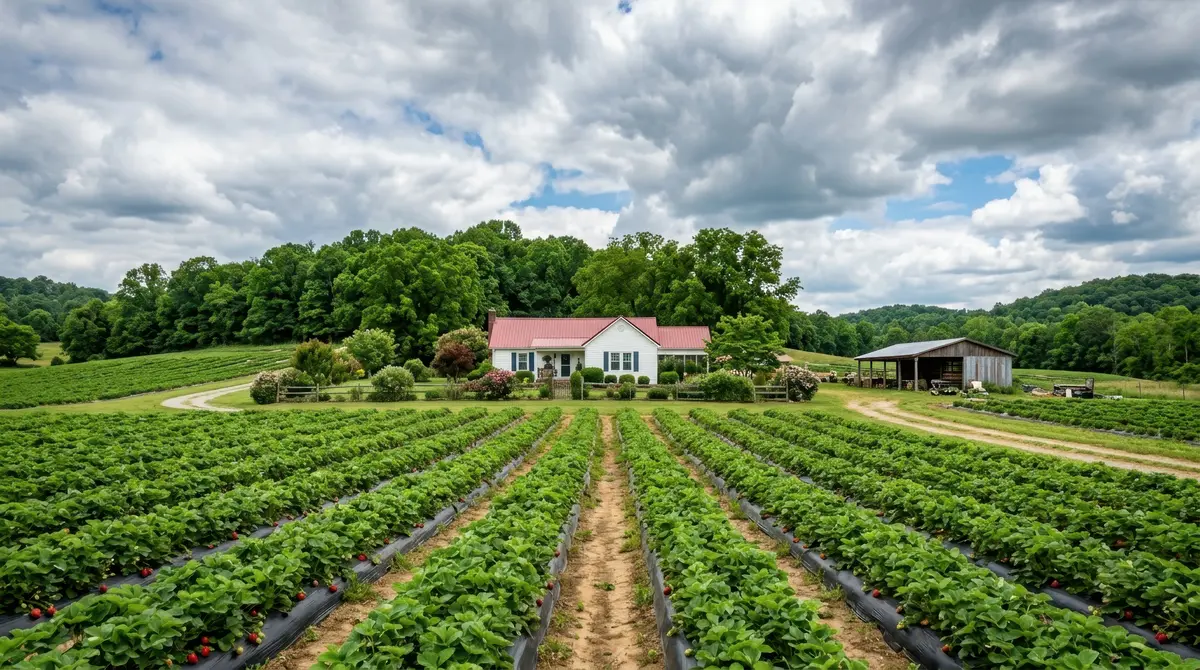
The economic backbone here is a short list: Shoals Technologies Group anchors the manufacturing side with solar energy equipment production, Sumner County Schools is a significant employer, and the City of Portland rounds out the public sector. The school district holds an A- rating, according to Niche, which is a genuine draw for families with school-age children weighing the Nashville suburbs. Portland is the kind of place where the annual Strawberry Festival fills the downtown with people who actually know each other — community identity runs deep, and that matters when you're deciding where to put down roots.
On the price side, Portland competes differently than its neighbors. The typical home price stands at $333,034 (Zillow Home Value Index, August 2026), which sits noticeably below comparable homes in White House or Gallatin, and roughly in line with Springfield. That relative affordability is what draws buyers who've been priced out of the closer-in suburbs — but it is worth knowing that the median household income of $72,380 runs below what it takes to carry the typical home here, so buyers should go in clear-eyed about what the numbers actually require. For the full cost picture, the cost-of-living page breaks it down.
Whether you are relocating from Nashville's tighter market or moving into the region for the first time, the sections below break down Portland's eight neighborhoods by character, buyer type, and honest trade-offs — so you can match a subdivision to your actual life, not just a square-footage number.
The Portland Reality
Portland's geography does more to shape your daily experience than any individual neighborhood feature. I-65 is the city's spine: it connects residents to Nashville, pulls commerce toward the interchange corridors, and creates a practical divide between the neighborhoods that feel tied to the city's core and those that feel comfortably rural even within city limits. Where a subdivision sits relative to that corridor — and to downtown Portland, Richland Park, and the schools — shapes everything from your commute to your weekend routine.
The second dividing line is age of construction. Heritage Chase, Irish Oaks, and Cornerstone represent the established 2000s-era build wave, with smaller lots, mature trees, and settled-in neighborhoods where you know your neighbors' names. Wind Wood Estates and Angelina Estates sit at the other end: large lots, newer or custom construction, and a quiet that feels more intentional. Neither is better — they serve different buyers — but conflating them in a home search is a common mistake.
School boundaries matter here in a way that surprises some buyers. The Sumner County school district — with 30,232 students enrolled in 2024-25 — is a unified countywide system, so assignment follows address, and a few blocks can determine which elementary school your children attend. The full picture on schools lives on the schools page, but if boundaries matter to your search, confirm the specific address before you make an offer, not after.
Neighborhoods at a Glance
| Neighborhood | Best For | Vibe |
|---|---|---|
| Heritage Chase | First-Time Value | Compact, established starter neighborhood close to downtown and the interstate |
| Autumns Brooke | Families Quiet | Single-family suburban development with a northern Sumner County rural feel |
| Golfview Estates | Views Privacy | Golf-course-adjacent living near the Kentucky border with a laid-back, pastoral character |
| Waverly Pointe | Families Commuter | Tightly knit subdivision in the heart of Portland's most active residential corridor |
| Wind Wood Estates | Luxury Privacy | Custom homes on large lots with upscale finishes and no HOA overhead |
| Irish Oaks | Families Value | Established, flexible floor plans with multi-generational appeal |
| Cornerstone | Families Nature | Mid-2000s subdivision close to Richland Park and downtown |
| Angelina Estates | First-Time Quiet | New construction on large lots with country views and builder flexibility |
Portland typical home price: $333,034 (Zillow ZHVI, August 2026). Neighborhood tiers on this page are relative to these figures.
Best Neighborhood by Buyer Type
| Buyer Type | Best Neighborhood | Why |
|---|---|---|
| First-Time Buyer | Heritage Chase | Smaller homes built in the early 2000s give entry-level buyers a foothold at the accessible end of Portland's market. |
| Luxury Buyer | Wind Wood Estates | Custom builds on one-acre-plus lots with hardwood floors, granite, gas fireplaces, and underground utilities — no HOA to contend with. |
| Walkability Seeker | Cornerstone | Proximity to Richland Park and downtown Portland gives this neighborhood the most on-foot access of any option in the city. |
| Families with Kids | Irish Oaks | Split bedroom plans, bonus rooms, and fenced yards make the layout genuinely livable for households with children at multiple ages. |
| Commuters | Heritage Chase | Sitting close to I-65 and downtown, this neighborhood cuts the friction off a daily drive that runs about 40 minutes to Nashville. |
| Large-Lot Buyers | Wind Wood Estates | Lots consistently run over one acre with city utilities already in place — the rare combination of space and infrastructure inside city limits. |
| Renters | Cornerstone / Heritage Chase area | Established neighborhoods near downtown tend to produce the most rental inventory in a city where single-family rentals dominate. |
Looking to buy in Portland? Estimate your payment.
Enter your numbers to see an estimated monthly mortgage payment.
Estimate only. Excludes HOA fees and mortgage insurance. The interest rate above is a starting point, not a quoted rate — replace it with your own to see real numbers. Insurance is a flat placeholder, not a Portland quote.
Beyond the Monthly Mortgage Payment — What to Factor In
- The property tax rate above — The 0.36% used in the estimate is the median effective rate — tax actually paid as a share of market value — published by Ownwell, 2026. Half of local homes pay more and half pay less: your own bill depends on that property's assessed value and any exemptions it qualifies for, which can differ a lot from its market price. Confirm with the Sumner County assessor before you budget.
- Total cost of ownership — Your monthly mortgage payment is just the baseline. Depending on the specific city, county, and service district, homeownership costs also include local utility fees, municipal surcharges, and special assessments (such as water, sewer, storm drainage, or local energy taxes) that vary by location.
- Independent due diligence — Because these recurring local costs and municipal fees change depending on the exact property address, buyers must research them independently during their transaction process.
Tax laws, local municipal fees, and utility costs change frequently and individual situations vary. This page is general information, not tax or legal advice — always consult a qualified tax professional, CPA, or local municipal offices for personalized guidance.
Most Popular Neighborhoods
Heritage Chase
Built between 1999 and 2001, Heritage Chase is Portland's clearest entry point into homeownership — compact homes in the 1,170 to 1,760 square-foot range, situated close to downtown and the I-65 interchange. The trade-off is what you'd expect from a neighborhood of this age and size: lot sizes are modest, and the homes are working on their second or third decade of wear, so a thorough inspection and a clear picture of deferred maintenance is essential before you commit. This neighborhood runs below the city-wide typical home price, making it the most accessible option among the eight.
Best for: First-time buyers, commuters, and anyone who wants to be close to Portland's downtown core without stretching their budget.
Autumns Brooke
Autumns Brooke is a single-family development in northern Sumner County, sitting within the 37148 zip code that has become one of Portland's most active housing corridors. It carries the character of a transitional northern suburb — new enough to feel clean and uncomplicated, rural enough that you hear more birds than traffic most mornings. The thinner street presence here means it lacks some of the neighborhood visibility of Irish Oaks or Cornerstone, so buyers should walk the streets and talk to neighbors before deciding whether the feel matches their expectations.
Best for: Families and buyers drawn to a quieter, newer-feeling suburban pocket without the premium of a custom build.
Golfview Estates
Positioned in northern Sumner County near the Kentucky border — about 5 miles from the state line — Golfview Estates has a character that leans more toward rural escape than suburban convenience. Homes sit along a public golf course and span a mix of sizes and styles, which gives buyers options but also means the neighborhood's consistency is lower than you'd find in a single-builder development. The distance from downtown Portland and the interstate is the honest catch: errand runs take longer, and the commute to Nashville adds more miles than any other neighborhood on this list.
Best for: Buyers prioritizing golf-course proximity, scenic views, and a slower pace of life over quick interstate access.
Waverly Pointe
Waverly Pointe sits in Portland's active residential core, adjacent to Irish Oaks and Wind Wood Estates in a cluster of subdivisions that represents the city's most settled family-friendly corridor. The tightly knit character is a genuine draw — residents know each other, and the streets feel lived-in rather than transactional. The watch-out is that this cluster's popularity means inventory moves when it shows up, and buyers who want time to be deliberate sometimes find themselves having to act faster than they'd like.
Best for: Families who want a connected, established neighborhood and don't need a rural-scale lot to feel at home.
Wind Wood Estates
Wind Wood Estates is the clearest upper-tier option in Portland's market — custom-built homes on lots that run over one acre, with hardwood floors, granite countertops, high ceilings, gas fireplaces, and underground utilities running throughout the subdivision. There is no HOA, which is either a selling point or a caution depending on how much you care about neighborhood standards being enforced. City water, sewer, and gas are all available, which resolves the infrastructure uncertainty that comes with some large-lot communities farther out. This neighborhood runs above the city-wide typical home price.
Best for: Buyers who want custom-home quality, genuine acreage, and city services — without the HOA overhead.
Irish Oaks
Irish Oaks is an established subdivision in the 37148 zip code built for the way families actually live: split bedroom plans for privacy between primary and secondary rooms, vaulted ceilings that make modest square footage feel open, bonus rooms that adapt to a home office or a playroom, and fenced yards that work for kids and dogs equally well. The multi-generational layout options make it one of the more flexible neighborhoods on this list. The trade-off is age — these homes were built in an era when buyers have to look carefully at HVAC systems, roofs, and water heaters, so budget accordingly.
Best for: Families at multiple life stages, buyers who want flexible floor plans, and households that might need to house an aging parent.
Cornerstone
Cornerstone was built primarily in the mid-to-late 2000s, and its location close to Richland Park and downtown Portland gives it a day-to-day livability that the more outlying neighborhoods can't match. Walking to the park is possible here in a way it isn't in Golfview Estates or Autumns Brooke. The trade-off is the same as Irish Oaks: mid-2000s construction means buyers are now looking at homes that may need mechanical updates, and the lots are suburban-sized rather than country-sized. Neighboring Irish Oaks and Wind Wood Estates give buyers natural comparison points at different price and scale levels.
Best for: Buyers who want downtown and park access without sacrificing a true subdivision feel.
Angelina Estates
Angelina Estates is Portland's only confirmed active new-construction pocket among these eight neighborhoods, featuring three-bedroom, two-bath homes built at roughly 1,500 square feet on large lots with open country views. The one-level layouts and builder incentives that have been available make it particularly attractive for buyers who want something brand new without the customization complexity of a full custom build. The catch with any new-construction community is that the neighborhood itself is still taking shape — mature trees, settled-in streetscapes, and a clear sense of who lives there take time to develop.
Best for: Buyers who want new construction, country views, and the privacy of a larger lot without committing to a fully custom build.
Common Mistakes Buyers Make in Portland
Treating the Commute as a Fixed Number
The drive runs about 40 minutes to Nashville under normal conditions on I-65, but that number evaporates on a bad weather day or when traffic backs up toward Goodlettsville. Buyers who test the commute once on a Saturday morning and decide it's fine routinely have a different opinion by February. Drive it at 7:30 a.m. on a Tuesday before you make an offer — not after.
Choosing Square Footage Over School Assignment
Sumner County's district-wide structure means that school assignment follows your specific address, and the difference between two houses on adjacent streets can determine which elementary school your children attend. Buyers who optimize for price-per-square-foot and assume the school situation will sort itself out sometimes discover, post-closing, that their children are assigned to a school they hadn't considered. Verify the assignment by address before you make your final decision — the schools page has the full district context.
Underestimating the Difference Between Northern and Southern Portland
The gap in daily convenience between a neighborhood close to downtown Portland and the I-65 corridor versus one near the Kentucky border — like Golfview Estates — is larger than it looks on a map. Buyers who buy into the northern tier without factoring in the longer drive to groceries, Richland Park, or Portland City Hall frequently cite this as the thing nobody warned them about. A few extra miles inside a small city adds up faster than it does in a metro with more distributed retail.
Skipping the Inspection on Established Subdivisions
Heritage Chase, Irish Oaks, and Cornerstone are all legitimate, well-regarded neighborhoods — and they are also 20-plus years old. Buyers who move quickly in a competitive stretch sometimes skip or rush the inspection on these homes and find themselves facing HVAC replacements or roof work in year two. Portland's typical home price makes these neighborhoods accessible; a deferred-maintenance surprise narrows that advantage quickly.
Best Areas to Rent in Portland
| Area | Ideal For | Trade-off |
|---|---|---|
| Downtown Portland / Cornerstone area | Renters who want walkable access to Richland Park and the city core | Rental inventory here is thin and moves fast when it appears |
| Heritage Chase corridor | Commuters who need quick I-65 access without paying Nashville prices | Older homes may show wear; inspect carefully before signing a lease |
| Irish Oaks area | Families who need the flexible floor plans and fenced yards that the rental market rarely offers | Single-family rentals are limited; competition can be stiff |
| Waverly Pointe / Autumns Brooke corridor | Renters who want a quiet suburban feel with room to spread out | Farther from the commercial corridors; errands require a drive |
| Northern Portland (Golfview Estates area) | Remote workers or buyers testing the area before committing to a purchase | Most isolated from services; the daily drive adds up faster than expected |
Portland is fundamentally a homeownership market — rental inventory across all of these areas is limited, and single-family rentals in particular tend to lease quickly. For the city-wide rent picture and how it compares to nearby markets, see the cost-of-living page.

Local Expert Takeaway: Portland's eight neighborhoods split cleanly into two groups: the established 2000s subdivisions — Heritage Chase, Irish Oaks, Cornerstone — that offer the most direct access to downtown, Richland Park, and I-65; and the newer or more rural options — Wind Wood Estates, Angelina Estates, Golfview Estates — that trade convenience for space and quiet. Wind Wood Estates is the city's clearest upper-tier option, with custom builds on acre-plus lots and no HOA. Angelina Estates is the only neighborhood where you can buy brand new. And Heritage Chase remains the most practical entry point for a first-time buyer who needs to be on the road toward Nashville by 7:30 a.m. Get the school assignment confirmed by address before you make an offer, and drive the commute on a weekday — those two steps will save you from the two most common surprises buyers run into here.
Quick Takeaways & FAQs
✅ Wind Wood Estates offers custom-built homes on one-acre-plus lots with city utilities and no HOA — a rare combination at Portland's price point.
⚠️ The commute runs about 40 minutes to Nashville on I-65, but that number is a fair-weather baseline — test it on a weekday morning before you commit.
📍 Angelina Estates is Portland's only active new-construction neighborhood among the eight covered here, with builder incentives that have been available on three-bedroom, one-level homes.
Which Portland, TN neighborhood is best for first-time buyers?
Is there any new construction available in Portland, TN?
Which Portland neighborhood has the largest lots?
How does the school district affect which neighborhood I choose in Portland?
What is the typical home price in Portland, TN, and how does it compare to nearby cities?
Moving to Tennessee?
Tell us what you need help with and we'll connect you with local resources.
