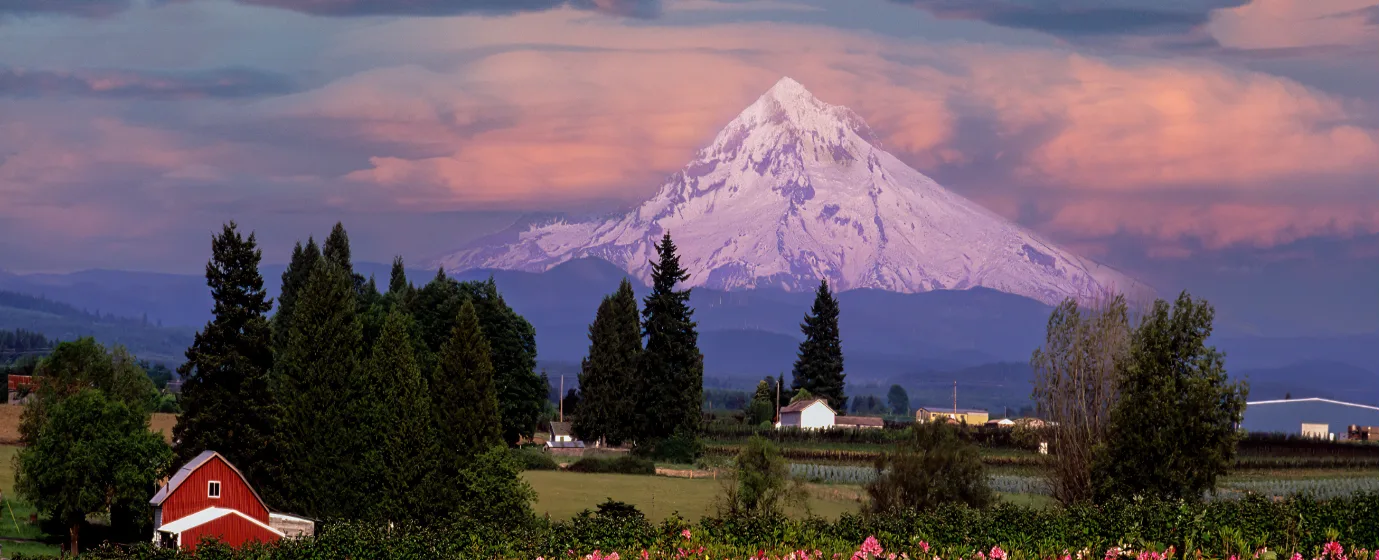
Most people moving to Sandy know about Mount Hood in the abstract — it's the dramatic white peak visible from Portland on a clear day. What they don't realize until they're here is that Sandy sits at the actual gateway to it, and that the outdoor infrastructure built around that geography is unusually deep for a city of 13,300. You're not just near the mountain. You have a world-class mountain bike trail system inside city limits, a glacially-fed Wild and Scenic River running through the Cascade foothills minutes away, and a downtown park that fills with crowds for the annual Sandy Mountain Festival. That combination is rare anywhere in Oregon, let alone in a small town.
The parks system here runs to 19 facilities within city limits alone, ranging from a 127-acre river park to neighborhood playgrounds to a trail that threads through cedar bottomland on five wooden bridges. The city has invested genuinely in this infrastructure — the 2020 restoration at Jonsrud Viewpoint, the permanent stage at Meinig Memorial Park, the partnership with the Bureau of Land Management at Sandy Ridge — and the result is a recreation profile that punches well above what a community this size would normally offer. Families with kids, mountain bikers, anglers, and anyone who wants year-round outdoor access without a long drive find Sandy unusually well-suited to their needs.
The honest trade-off is the weather. Sandy sits in the foothills of the Cascades, and the geography that puts you close to the mountain also means more cloud cover and precipitation than Portland. With 141 sunny days a year, you learn to embrace the overcast and get outside anyway — and most longtime residents do exactly that. The trail systems and river access are genuinely four-season in character, even if some of those seasons involve a rain jacket. For the full picture on cost and neighborhood context, the cost of living page and the neighborhoods guide are worth reading alongside this one.
Whether you're already committed to Sandy or still comparing it with neighboring Gresham, Estacada, or Welches, the sections below cover the parks, trails, river recreation, and seasonal outdoor life that define daily living here.

Signature Parks: Meinig, Jonsrud, and the Everyday Green Space
Meinig Memorial Park is the civic heart of Sandy in a way that few downtown parks manage anywhere. The roughly 10.82-acre site holds a permanent main stage, an amphitheater, two concession stands, walking trails, picnic areas, a rentable log gazebo, and the Fantasy Forest playground structure that parents and kids both know by name. The programming backs that up: the Sandy Summer Sounds free concert series draws the community through the warm months, Movies at the Park fills summer evenings, and the Sandy Mountain Festival — running since 1972 — draws crowds from across the region each year. If you're trying to understand how this town gathers, Meinig is the answer.
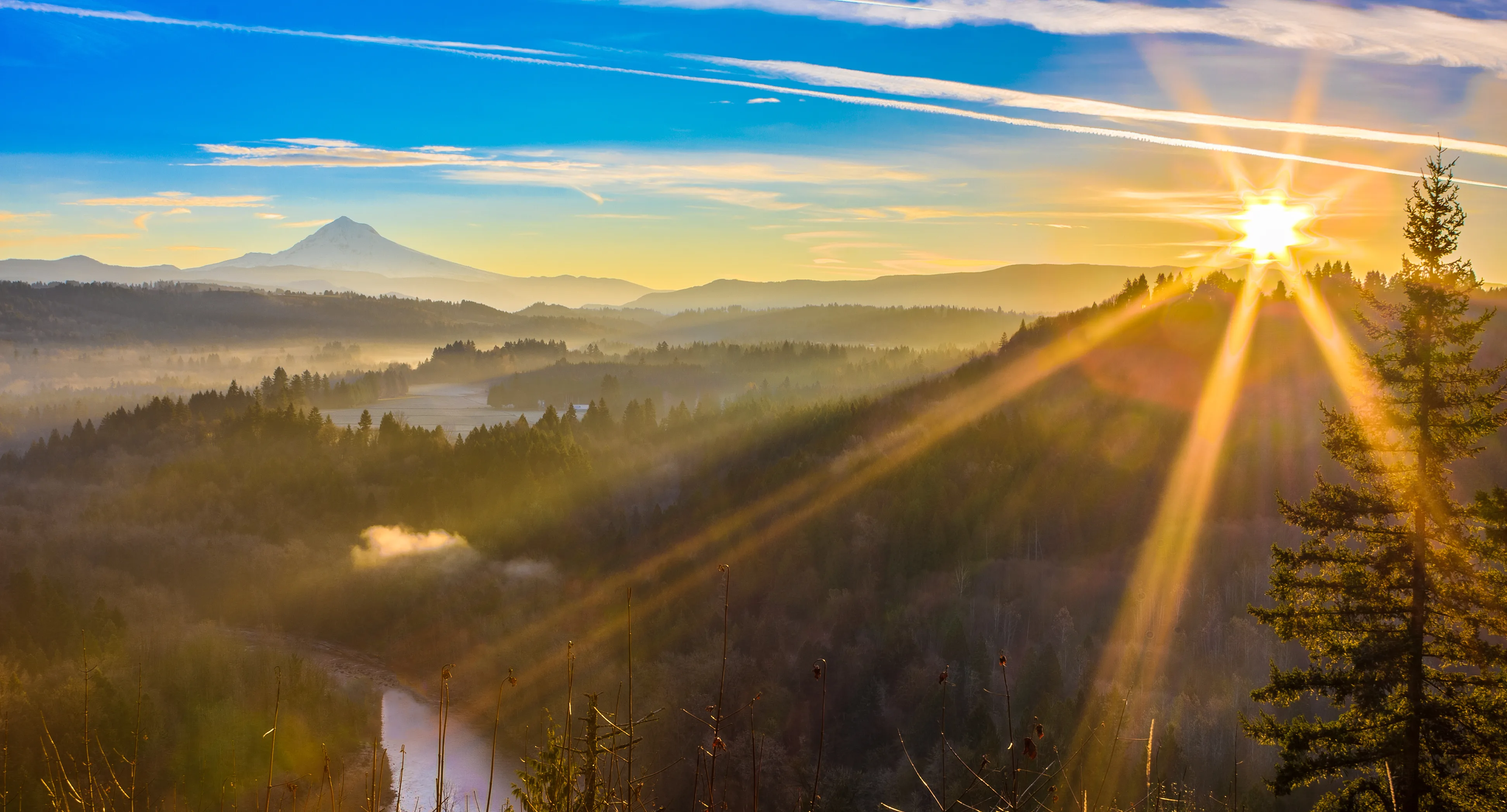
Jonsrud Viewpoint operates on a different scale — just under 5 acres — but delivers something few parks anywhere can match. Designated a stop on the Oregon Scenic Byways program, it overlooks the Sandy River Valley and the ridge formation Oregon Trail pioneers called the Devil's Backbone, with Mount Hood filling the horizon in a way that genuinely stops people mid-sentence. The viewpoint is equipped with telescopes and interpretive panels tracing the Barlow Road segment of the Oregon Trail, the historic route Samuel Barlow blazed in 1845 that carried more than 50,000 westward-bound pioneers through the Sandy area. A 2020 restoration added a color-blind-adapted scenic viewer using Enchroma technology — the first installation of its kind in the United States outside Tennessee.
Beyond these two anchors, the parks system fills in the city with 19 facilities total. The 127-acre Sandy River Park anchors the lower end of the scale, and neighborhood-level playgrounds and open space are distributed across the residential areas. The range matters for daily life: families don't have to drive across town to find a swing set, but they also have a legitimate destination park when they want one.
| Park | Size | Key Features | Best For |
|---|---|---|---|
| Meinig Memorial Park | ~10.82 acres | Main stage, amphitheater, Fantasy Forest playground, log gazebo, trails, picnic areas | Families Walkable |
| Jonsrud Viewpoint Park | ~4.95 acres | Oregon Scenic Byway stop, telescopes, Enchroma viewer, Oregon Trail interpretive panels | Views Nature |
| Sandy River Park | 127 acres | River access, open space, fishing | Nature Quiet |
| Tickle Creek Trail / Park | ~1.8-mile trail | Cedar bottomland, five wooden bridges, connects to family bike route | Families Nature |
| Sandy Ridge Trail System | 15+ trail miles | BLM-managed, directional single-track, beginner through double-black-diamond | Nature Views |
| Neighborhood Playgrounds | Various | Distributed across residential areas citywide | Families |
What new residents notice after a few months is how quickly these parks become part of the weekly rhythm rather than weekend destinations.
Trails: Tickle Creek, Sandy Ridge, and Getting Around on Foot or Bike
The Tickle Creek Trail is the kind of path you move to a small Oregon town to find. Running approximately 1.8 miles through cedar bottomland in the middle of Sandy, crossing its namesake creek on five wooden bridges, it is walkable or bikeable from most neighborhoods in the city. It is also part of a broader 10-mile family bike route called Easy, Breezy, Sandy that begins and ends downtown — a loop that gives families a genuine car-free adventure without driving anywhere to start it. Mature trees overhead, the sound of the creek, and enough gentle grade that it works for all ages: this is the trail that shows up on every long-term resident's short list when they explain why they stay.
Sandy Ridge Trail System is the other story entirely. Originally constructed in 2009 and managed by the Bureau of Land Management, it offers over 15 miles of directional single-track mountain biking in the Cascade foothills, with 1,300 feet of elevation change and terrain running from beginner flow trails up to double-black-diamond descents. Riders come from across the region, drawn by the combination of technical options and the fact that the trails sit at low enough elevation to ride approximately 10 months out of the year. Spring and fall are considered the best seasons for optimal conditions, but the window here is genuinely wide by Pacific Northwest standards.
A Bureau of Land Management day-use fee applies at Sandy Ridge — a nominal per-vehicle charge, with an annual pass available through Recreation.gov. It is worth factoring in if riding here becomes a regular habit, which for many Sandy residents it does.
What Locals Know About the Trails
The Tickle Creek Trail and Sandy Ridge serve completely different populations, and that matters for where you decide to live. Families and casual walkers gravitate toward Tickle Creek's accessibility from the residential core. Serious mountain bikers prioritize being able to reach Sandy Ridge without a long drive. Both trail systems are legitimately close to the city — but if regular access to one of them is important to you, the neighborhoods guide is worth reading to understand which parts of town put you closer to each entry point.
One thing that surprises people after six months here: Sandy Ridge gets busy on good-weather weekends, drawing visitors from Portland and beyond. Locals who ride regularly learn to time their trips to quieter windows. The trail conditions, on the other hand, hold up well — the directional design was built with high traffic in mind.
The Sandy River: Wild and Scenic, Fishable, and Right There
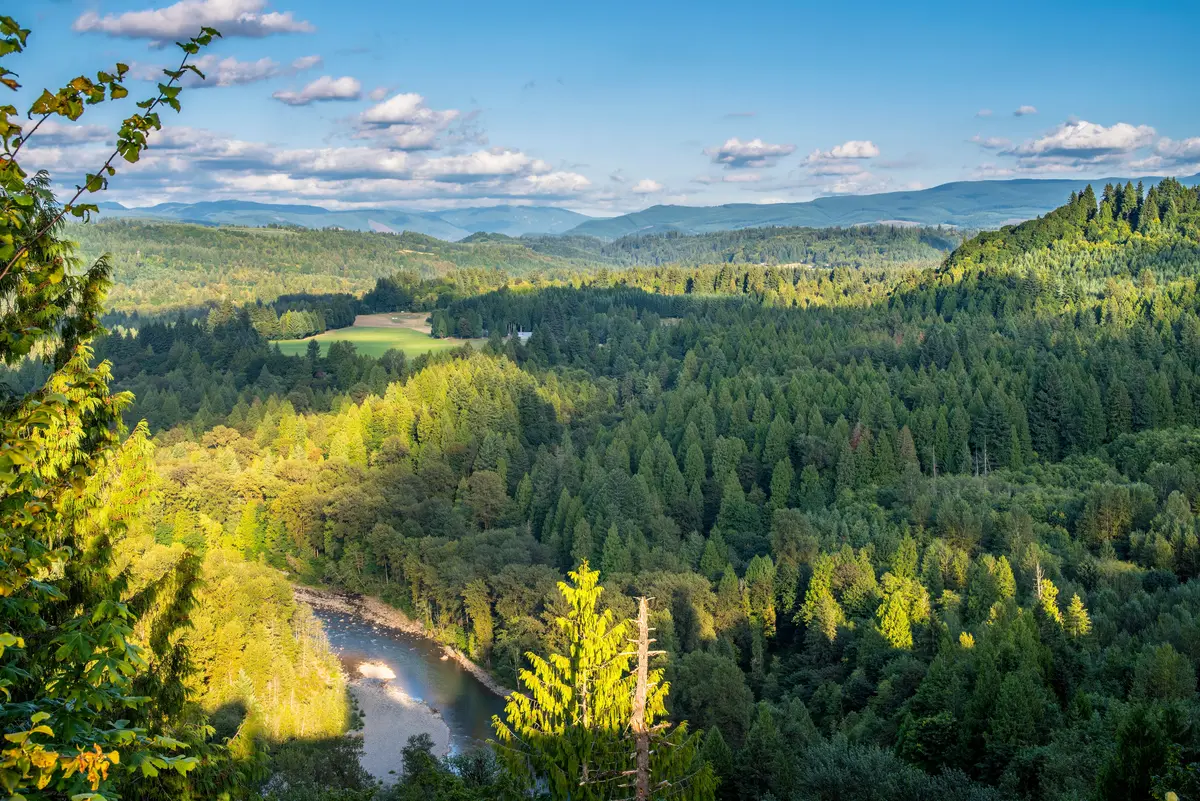
The Sandy River originates from glaciers on Mount Hood and travels 56 miles to the Columbia. Two segments totaling nearly 25 miles carry federal Wild and Scenic River designation, and the river runs entirely dam-free — which is a meaningful distinction in the Pacific Northwest, where dams have reshaped most river systems. The result is a river with genuine salmon and steelhead runs that still function the way they did before settlement: spring Chinook peak in June, coho arrive in September and October, and winter steelhead are at their best from January through March.
The river supports a broad range of recreation beyond fishing. Swimming and tubing are popular along the lower reaches in summer, along with kayaking, paddleboarding, and rafting. The Sandy River Water Trail stretches 38 river miles, running through basalt canyons and stretches of rare old-growth forest, with access points reachable from parks near Sandy. For anyone moving from a metro area where river access means a crowded designated zone, the scale here is different — the Sandy River is a working wild river, and the experience reflects that.
Fishing the Sandy: The Practical Reality
Fishing the Sandy River draws a devoted local community, and it has a reputation in Oregon angling circles that extends well beyond Clackamas County. Winter steelhead season in particular brings dedicated anglers from across the region. The river's dam-free character means runs aren't artificially managed, which experienced anglers consider a significant draw — but it also means conditions are genuinely variable. Anyone moving here with fishing as a priority should plan to spend a season getting to know the river's moods rather than expecting it to fish predictably from day one.
Bank fishing access along the lower reaches and at Sandy River Park is real and usable. The 127-acre Sandy River Park gives the city a substantial footprint on the river that goes beyond a single put-in or pullout. For residents without drift boat access, this matters.
The river also serves as one of Sandy's most honest seasonal markers. When the Sandy is running clear and the Chinook are moving, the town feels connected to the landscape in a way that is hard to replicate in a city further removed from the mountains. That connection is part of what people are buying when they move here — see the broader context on daily life at the living in Sandy guide.
Looking to buy in Sandy? Estimate your payment.
Enter your numbers to see an estimated monthly mortgage payment.
Estimate only. Excludes HOA fees and mortgage insurance. The interest rate above is a starting point, not a quoted rate — replace it with your own to see real numbers. Insurance is a flat placeholder, not a Sandy quote.
Seasonal Recreation and What Living Here Actually Feels Like
Sandy's outdoor calendar runs year-round, but the seasons here are not the seasons you might expect coming from east of the Cascades or from a sunnier climate. The 141 sunny days a year figure is not a marketing line — it is a realistic count, and it shapes how residents relate to the outdoors. The culture here is to get outside in the rain, not to wait for it to stop. The trails at Sandy Ridge drain reasonably well, Tickle Creek Trail is atmospheric in the wet months, and the Sandy River has its own appeal in the gray of January when steelhead are running.
Summer is genuinely beautiful and busy. Meinig Memorial Park anchors the social calendar with the Sandy Summer Sounds concert series and the Sandy Mountain Festival, which has been running since 1972 and pulls in visitors from well outside the immediate area. The combination of river swimming, trail riding, and outdoor events makes July and August feel abundant in a way that rewards people who moved here specifically for this kind of life.
What Newcomers Don't Expect
The seasonal quirk that catches most newcomers off guard is the shoulder-season crowd. Sandy sits on US-26, which is the primary route to Mount Hood ski areas in winter and to the river and trail recreation corridors in spring and fall. Weekend traffic through town on a dry October Saturday — with Jonsrud Viewpoint drawing visitors, Sandy Ridge filling with mountain bikers from Portland, and the river running at prime fall fishing conditions simultaneously — is heavier than you'd expect for a city of 13,300. Residents who've been here more than a year simply stop being surprised by it and plan their own outdoor time accordingly.
The flip side of that traffic is that Sandy has genuine outdoor amenities worth driving to. What would be a special-occasion destination for most Portland residents is, for Sandy residents, Tuesday afternoon. That asymmetry is one of the better arguments for living here — and it applies to Jonsrud Viewpoint at golden hour, to a quick after-work loop on Tickle Creek Trail, and to a winter morning on the Sandy River with no one else around. For families evaluating how outdoor access fits with schools and neighborhood life, the schools page and neighborhoods guide fill in the rest of the picture.
| Season | Top Activity | What to Know |
|---|---|---|
| Winter (Dec–Feb) | Steelhead fishing, Tickle Creek walks | River runs best Jan–Mar for winter steelhead; trail riding continues at Sandy Ridge on drier days |
| Spring (Mar–May) | Sandy Ridge mountain biking, river paddling | Spring is peak season for tacky trail conditions at Sandy Ridge; Sandy River begins Chinook buildup |
| Summer (Jun–Aug) | River tubing, Meinig Park events, Sandy Mountain Festival | Spring Chinook peak in June; park events fill the social calendar; US-26 corridor gets weekend traffic |
| Fall (Sep–Nov) | Coho salmon fishing, Sandy Ridge riding | Coho run September–October; fall is Sandy Ridge's other peak season for conditions and visitors |
Local Expert Takeaway: Sandy's outdoor profile is genuinely unusual for a city its size. The combination of Sandy Ridge Trail System at the doorstep of the Cascade foothills, the dam-free Wild and Scenic Sandy River, and a downtown park system anchored by Meinig Memorial Park gives residents year-round access to recreation that most Oregon cities twice this size can't match. The trade-off is that Sandy's proximity to Mount Hood also makes it a pass-through for regional visitors, especially on good-weather weekends. Residents who learn the rhythm — shoulder days on the trail, weekday mornings on the river, summer evenings at the Meinig concert series — get the best of both worlds. Jonsrud Viewpoint is worth visiting in the first week you live here, and worth returning to every time someone visits from out of town.
Quick Takeaways & FAQs
✅ Sandy Ridge Trail System offers over 15 miles of BLM-managed mountain biking terrain rideable roughly 10 months a year, minutes from downtown Sandy.
⚠️ With only 141 sunny days a year, Sandy's outdoor culture runs in all weather — newcomers who wait for clear skies miss most of what the trails and river offer.
📍 Jonsrud Viewpoint's 2020 restoration added the first color-blind-adapted Enchroma scenic viewer in the U.S. outside Tennessee, overlooking the Sandy River Valley and Mount Hood.
Is Sandy Ridge Trail System suitable for beginners?
Can you swim in the Sandy River near Sandy?
What is the Sandy Mountain Festival and when does it happen?
How many parks does Sandy have?
Is Jonsrud Viewpoint worth a special trip or just a quick stop?
Moving to Oregon?
Tell us what you need help with and we'll connect you with local resources.
