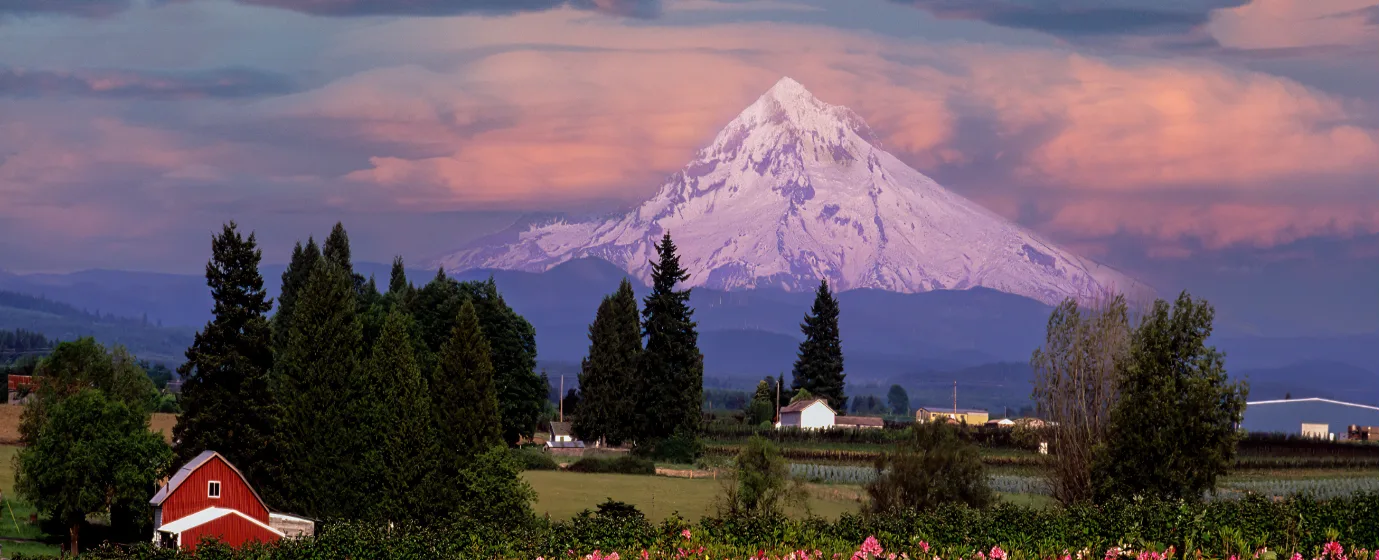
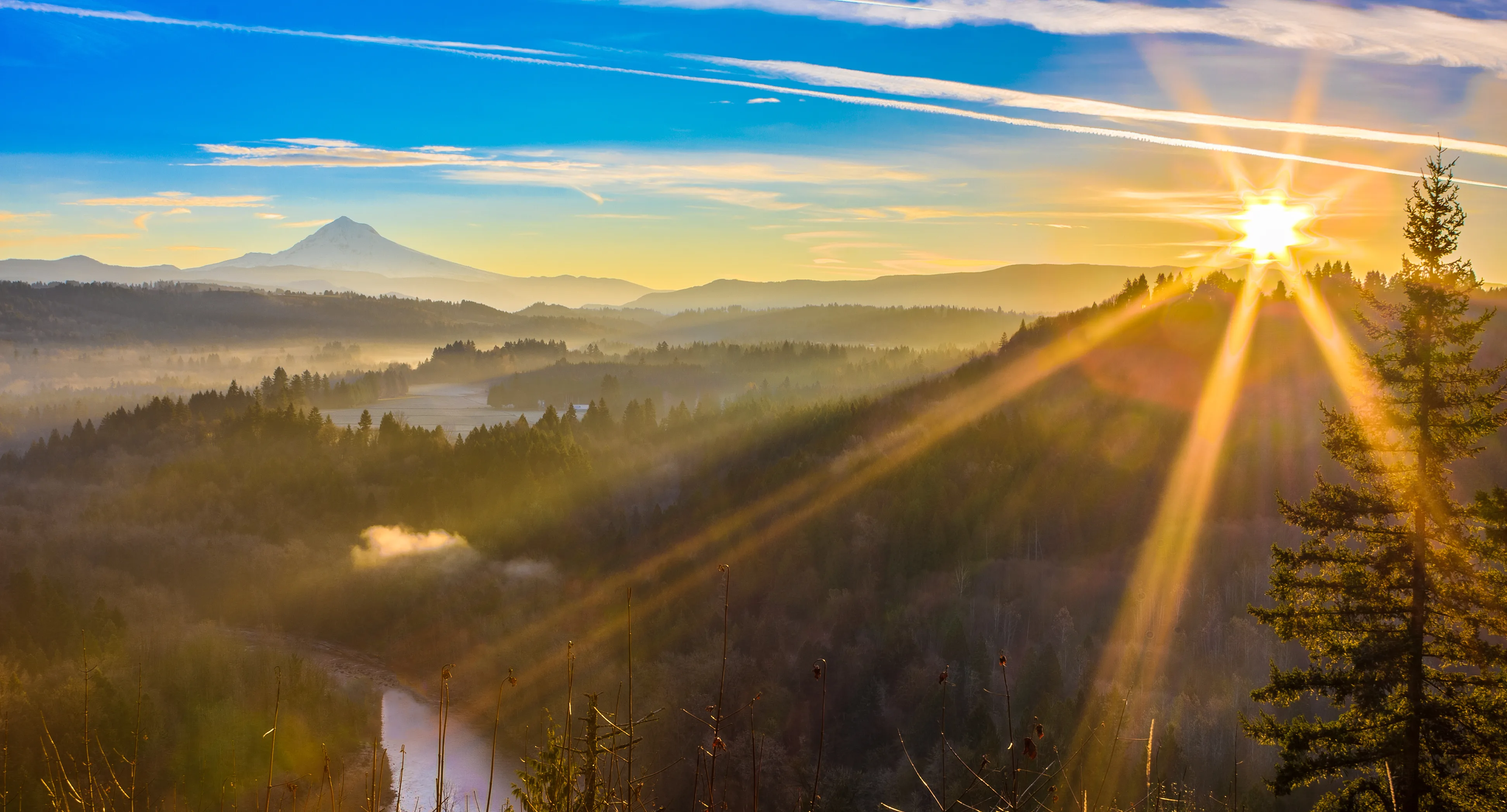
Sandy surprises people who drive through on US-26 on the way to Mount Hood and assume it's just a gas-and-go pit stop. At 13,300 residents, it's a real city — one with distinct neighborhoods, a functioning downtown, and a housing market that looks very different depending on which side of Tickle Creek you're on. What actually shapes daily life here isn't the scenery (though Jonsrud Viewpoint will stop you cold on a clear morning). It's the fact that Sandy is the last full-service city before the mountain, which means it draws people who want Pacific Northwest outdoor access without Portland prices, and keeps them because the community turns out to be stickier than they expected.
The economic backbone is modest but stable: Oregon Trail School District is the largest employer, followed by the City of Sandy and Clackamas County. The district — with 4,147 students enrolled in 2025-26 — holds a B rating, according to Niche, and draws families who want a smaller-town school experience without sacrificing the academic baseline. Fred Meyer anchors the retail side of the city. Residents who need a broader job market commute about 45 minutes to Portland, or to Mt. Hood Community College's campus in Gresham. The city's median household income of $108,984 reflects that many households here are dual-income commuter families who chose Sandy deliberately, not as a fallback.
The typical home price is $526,368 (Zillow Home Value Index, July 2026) — noticeably below what comparable square footage costs in the closer-in Portland suburbs. The trade-off is the commute, which is real, and the rainfall, which is relentless from October through April. Sandy gets 141 sunny days a year, so anyone arriving from a sunnier climate should factor that in before signing. What you get in return: 19 parks inside city limits, the 1.8-mile Tickle Creek Trail running through the heart of town, and the Sandy Ridge Trail System about 13 miles east for mountain biking that draws riders from across the region. For a full cost-of-living breakdown, the dedicated page goes deeper on groceries, utilities, and how Sandy compares to Gresham and Boring.
Whether you're considering a move or just researching the area, the sections below break down Sandy's eight neighborhoods by character, buyer type, and honest trade-offs — along with the most common mistakes buyers make and where renters tend to land.

The Sandy Reality
The divide that matters most in Sandy isn't east versus west — it's whether you're buying inside the Tickle Creek corridor or outside it. The 1.8-mile Tickle Creek Trail runs through the interior of the city, crossing five wooden bridges, and the neighborhoods that sit along it — Hamilton Ridge, Salmon Creek Estates, and the Tickle Creek area itself — have a fundamentally different feel from the newer subdivisions on the city's western and northern edges. Trail access from your backyard is a genuine quality-of-life variable here, not just a marketing line.
The second reality is the commute. US-26, the Mount Hood Highway, is Sandy's lifeline to Portland and the source of its biggest practical frustration. About 45 minutes to Portland on a clear weekday morning is the advertised number; the actual number on a wet Friday afternoon in December is longer, and there is no alternate route that meaningfully improves it. Buyers who underestimate this and purchase in Sandy's outermost subdivisions — farthest from the US-26 on-ramp — compound the problem. Location within Sandy affects your commute more than most buyers realize until they've lived it for a winter.
School boundaries in Sandy are relatively straightforward — the Oregon Trail School District serves the whole city — but the experience at individual schools varies by grade level and program. Families with kids in middle and high school tend to weigh proximity to Pioneer Elementary or Cedar Ridge Middle School specifically, not just the district as a whole. For a school-by-school look, the Sandy schools page covers attendance zones and program options in detail.
Neighborhoods at a Glance
| Neighborhood | Best For | Vibe |
|---|---|---|
| Downtown Sandy | Walkable First-Time | Historic small-town core; tree-lined streets, local shops, and restaurants within walking distance |
| Sandy Bluff | Families Views | West-side neighborhood with Cascade Mountain views, newer housing stock, and a tight-knit feel |
| Bornstedt Village / Cascadia Village | Families First-Time | Planned community in the north with parks, a splash pad, and easy access to downtown |
| Hamilton Ridge | Nature Families | Centrally located; green space along Tickle Creek and a footpath connecting to open acres |
| Salmon Creek Estates | Quiet Nature | Established neighborhood close to trail access, shopping, and restaurants without the subdivision-new feel |
| Alder Creek | Nature Walkable | Peaceful and green northeast of downtown; residents prize its natural surroundings |
| Tickle Creek | Nature Privacy | Trail-adjacent living at the downstream end of the Tickle Creek corridor; quieter and more secluded |
| Sandy Woods | Quiet Families | Established city subdivision with a residential, low-traffic character |
Sandy typical home price: $526,368 (Zillow ZHVI, July 2026). Typical rent: $2,184/mo (Zillow ZORI, July 2026). Neighborhood tiers on this page are relative to these figures.
Best Neighborhood by Buyer Type
| Buyer Type | Best Neighborhood | Why |
|---|---|---|
| First-Time Buyer | Bornstedt Village / Cascadia Village | Planned community layout, multiple park amenities including a splash pad, and proximity to downtown without being in the highest-demand block. |
| Luxury Buyer | Sandy Bluff | Newer construction, Cascade Mountain views, and the best-regarded housing stock in the city attract buyers at the top of Sandy's price range. |
| Walkability Seeker | Downtown Sandy | The only neighborhood where you can walk to the local restaurant row, coffee shops, and Meinig Memorial Park without getting in a car. |
| Families with Kids | Hamilton Ridge | Direct trail access along Tickle Creek, a park with open space and play structure, and a central location that keeps school runs short. |
| Commuters | Downtown Sandy | Closest to US-26, which shaves real minutes off the daily drive to Portland and Gresham. |
| Large-Lot Buyers | Tickle Creek | The most secluded character in the city, with the trail as a backyard amenity and a quieter pace than the planned subdivisions. |
| Renters | Bornstedt Village / Cascadia Village | The townhouse mix in this planned community produces more rental inventory than most other Sandy neighborhoods. |
Looking to buy in Sandy? Estimate your payment.
Enter your numbers to see an estimated monthly mortgage payment.
Estimate only. Excludes HOA fees and mortgage insurance. The interest rate above is a starting point, not a quoted rate — replace it with your own to see real numbers. Insurance is a flat placeholder, not a Sandy quote.
Most Popular Neighborhoods
Downtown Sandy
This is the only neighborhood in Sandy where errands, dinner, and a morning coffee can all happen on foot. Tree-lined streets run past local shops, and Meinig Memorial Park sits at the edge of the district. The catch is that "downtown" in a city of 13,300 means a compact stretch — buyers expecting urban density will be disappointed, and the older housing stock here means more maintenance than newer subdivisions on the edges of town.
Best for: Commuters, walkability seekers, and buyers who want to be embedded in the city's civic life.
Sandy Bluff
Sandy Bluff sits on the west side of the city and has earned a reputation as one of Sandy's most sought-after neighborhoods, largely because of the unobstructed views toward the Cascades and the newer construction that dominates the housing stock. Neighbors here tend to know each other — the Sandy Bluff Park and Dog Park functions as a genuine gathering point. The downside is that west-side location adds a few extra minutes to the US-26 on-ramp, which matters on winter mornings.
Best for: Families with school-age children, view-seekers, and buyers who want newer construction at the top of Sandy's market.
Bornstedt Village / Cascadia Village
This planned community in the city's northern section is the most amenity-dense residential area in Sandy — Bornstedt Park alone offers a splash pad, play structure, community garden, covered shelter, and open fields, while the Cascadia Village portion adds 2.5 acres of park space including a multi-use field with a gazebo. The mix of single-family homes and townhouses makes it one of the few Sandy neighborhoods with genuine rental inventory. The planned-community uniformity is the honest trade-off; this doesn't have the organic feel of the older neighborhoods closer to downtown.
Best for: Young families, parents with school-age children, and first-time buyers who want move-in-ready homes near parks.
Hamilton Ridge
Hamilton Ridge occupies a central position in the city and is directly served by a park with a play structure and a footpath that connects to roughly 7 acres of open space along Tickle Creek, extending toward Dubarko Road. That trail-adjacent open space is the main draw — you can walk into the greenway without getting in your car. The neighborhood's central location is also its limitation for buyers wanting privacy; it feels genuinely in-town rather than tucked away.
Best for: Families who want trail access without a long drive, and buyers who prioritize green space over seclusion.
Salmon Creek Estates
Salmon Creek Estates is one of Sandy's more established neighborhoods, with a community park directly across from the residential lots and close proximity to both the Tickle Creek hiking trail and the city's commercial core. The neighborhood reads as settled and low-turnover, which can mean fewer listings at any given time. Buyers looking for the energy of a newer development won't find it here — but that's precisely what makes it attractive to people who want a neighborhood that already has its character figured out.
Best for: Buyers who want an established neighborhood close to trails and shopping, without the cookie-cutter feel of newer subdivisions.
Alder Creek
Alder Creek sits northeast of downtown and is defined by its natural surroundings — green spaces and mature landscaping give it a quieter, more wooded feel than the western subdivisions. Residents who live here specifically cite the walkable character and the sense of being close to nature while still being within the city. The trade-off is that the northeast position means a slightly longer drive to the US-26 on-ramp for Portland commuters.
Best for: Nature-oriented buyers, remote workers, and anyone who wants a peaceful residential setting without leaving city limits.
Tickle Creek
The Tickle Creek neighborhood anchors the downstream end of Sandy's namesake trail corridor — the 1.8-mile wooded trail with five wooden bridges terminates in this area, making trail access as direct as it gets anywhere in the city. It's the most secluded-feeling neighborhood within city limits, which is the point for buyers who choose it. The flip side: fewer walkable amenities than Downtown Sandy or Bornstedt Village, and the quiet that attracts some buyers can feel isolating to others after a wet winter.
Best for: Nature-first buyers, trail enthusiasts, and households that have already done enough city living and want the woods closer.
Sandy Woods
Sandy Woods is an official city subdivision with a residential, low-traffic character. The data on this neighborhood is thinner than for Sandy's more prominent areas — it doesn't have the park infrastructure of Bornstedt Village or the trail adjacency of Hamilton Ridge or Tickle Creek, but it offers a settled suburban setting within city limits. Buyers drawn here are typically prioritizing quiet streets and proximity to Sandy's services without a particular pull toward any one specific amenity.
Best for: Buyers who want a straightforward residential setting inside city limits without a premium for views or trail access.
Common Mistakes Buyers Make in Sandy
Underestimating the US-26 Commute From the Outer Subdivisions
Every buyer does the math on the commute, but most do it on a Tuesday in October — not a Friday in January with rain and tourist ski traffic. The neighborhoods farthest from US-26 on Sandy's western and northern edges can add meaningful time to that baseline figure of about 45 minutes to Portland. Drive the actual route at actual commute times before you close.
Chasing Square Footage in the Newer Subdivisions Over Trail Access
Sandy's planned communities, especially on the northern edge, offer more house for the money in terms of raw square footage. What they don't offer is the Tickle Creek Trail from your backyard. Buyers who prioritize square footage and then discover they're driving to the trailhead — past neighborhoods that walk to it — often wish they'd made a different call. The trail corridor through Hamilton Ridge and Salmon Creek Estates is the version of Sandy that residents who stay long-term tend to prefer.
Assuming the Whole City Has the Same Downtown Walkability
Downtown Sandy's walkable streets are real, but they're specific to a compact core. Buyers who fall in love with the idea of walking to the local café or the farmers market at the Mount Hood Farmers Market, then purchase in Sandy Bluff or Bornstedt Village, find that those errands require a car. Sandy is not a uniformly walkable city — the walkable version is a specific geography, not a citywide trait.
Skipping the Rainfall Reality Check
Sandy gets 141 sunny days a year. The winters are genuinely grey and wet, and the neighborhoods that feel open and bright in July feel very different in February. Buyers arriving from California or the sunnier parts of Oregon sometimes anchor to a summer visit and are surprised by how insistently the clouds settle in from late fall through early spring. That seasonal shift hits harder in the outer neighborhoods, where you're less likely to walk anywhere and more likely to be stuck in the house on a rainy Saturday.
Best Areas to Rent in Sandy
| Area | Ideal For | Trade-off |
|---|---|---|
| Downtown Sandy | Walkable First-Time Renters | Most walkable rental zone in the city, but older building stock means less modern finishes |
| Bornstedt Village / Cascadia Village | Families Renters | Best park amenities and townhouse rental inventory; planned-community uniformity isn't for everyone |
| Salmon Creek Estates area | Quiet Nature | Close to trails and shopping; lower rental turnover means fewer available units at any time |
| Alder Creek | Nature Quiet | Green and peaceful setting northeast of downtown; slightly longer drive to US-26 for Portland commuters |
| Sandy Bluff area | Families Views | Newer housing stock with Cascade views, but rental inventory here is thin — owners tend to hold |
Sandy's rental market is tight relative to its size. The city-wide typical rent runs in the $2,010–$2,450 range for a two-bedroom, and the neighborhoods with the most consistent rental availability are the planned communities — particularly Bornstedt Village and Cascadia Village — where the townhouse format produces more landlord-held units than the single-family-dominant areas. If you're renting while you explore the market before buying, that northern corridor is the most practical place to start.
Local Expert Takeaway: Sandy's best neighborhoods aren't ranked by prestige — they're ranked by what matters to your specific household. The Tickle Creek corridor through Hamilton Ridge and Salmon Creek Estates is the version of Sandy that long-term residents love most: trail access, green space, and a settled character that doesn't require driving to feel connected to the outdoors. Downtown Sandy is the practical choice for commuters and anyone who wants to walk to the Mount Hood Farmers Market or a local café without getting in a car. And if you're arriving with kids and want the most amenity-dense environment at a middle price point, Bornstedt Village delivers more park infrastructure per block than anywhere else in the city. The mistake most buyers make is treating Sandy as uniform — it isn't, and the neighborhood decision here matters more than in a larger city where character differences average out.
Quick Takeaways & FAQs
✅ Sandy's 19 city parks and the 1.8-mile Tickle Creek Trail mean outdoor access is genuinely neighborhood-level, not just a regional amenity you have to drive to.
⚠️ The commute to Portland on US-26 is real and weather-dependent — buyers in Sandy's outer subdivisions add meaningful time to that about 45 minutes to Portland baseline every wet winter morning.
📍 Bornstedt Village and Cascadia Village are the only Sandy neighborhoods with consistent rental inventory, making them the best starting point for renters who want to try the city before buying.
What is the most walkable neighborhood in Sandy, Oregon?
Which Sandy neighborhood is best for families with kids?
Is Sandy, Oregon a good place to buy a home right now?
What are the safest neighborhoods in Sandy, Oregon?
Which Sandy neighborhoods are closest to the Tickle Creek Trail?
Moving to Oregon?
Tell us what you need help with and we'll connect you with local resources.
