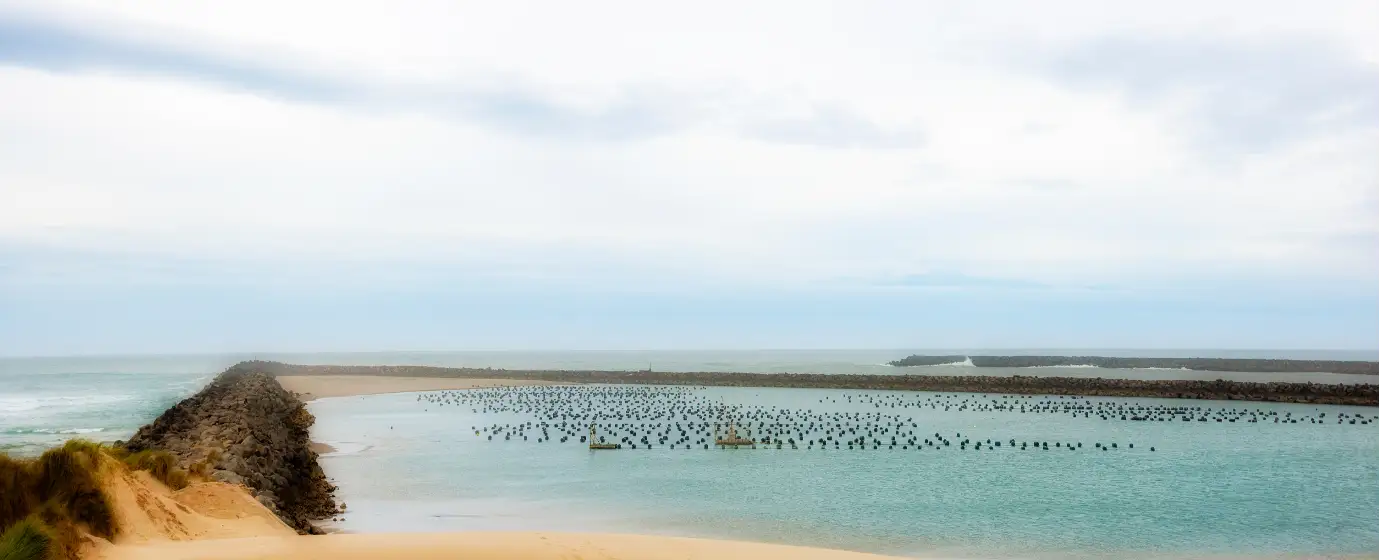
Most families researching a move to Reedsport eventually land on the same question: how honest should I be with myself about what a district this small can realistically offer? Reedsport is a city of 4,317 people on the central Oregon Coast, sitting where US-101 and OR-38 meet at the Umpqua River. It is not a suburb with a dozen elementary schools to choose from. The entire district runs through two buildings, and understanding what that means in practice — for academics, for sports, for the social texture of childhood — is the single most important thing a parent can do before signing a purchase agreement here.
Reedsport School District 105 serves 535 students enrolled in 2025-26, drawing from Reedsport, Winchester Bay, Gardiner, and the rural stretches between them. The district holds a C- rating, according to Niche — a number worth sitting with, not dismissing. On 2024-25 state assessments, 18.8% of students reached math proficiency and 29.1% reached reading proficiency. Approximately 92% of students qualify for free or reduced-price meals, which tells you something real about the community's economic circumstances and the genuine challenges the schools navigate every day. The Reedsport Educational Enrichment Foundation, known as REEF, has channeled community fundraising directly into classrooms for over two decades — evidence that local residents have taken the schools' needs seriously for a long time.
That context matters before you write the district off. Reedsport is a place where a coastal landscape, a tight community, and a charter school model produce an educational environment that looks nothing like a suburban district — and for some families, that is exactly the point. The typical home price here stands at $330,394 (July 2026), noticeably below what families pay in North Bend or the metro markets they may be leaving behind, and that affordability is part of why people make the tradeoff. For more on what the dollars look like month to month, see the cost of living page.
Whether you are relocating from a larger district and trying to calibrate expectations, or a longtime Oregon Coast resident weighing school options for the first time, the sections below cover how the district is structured, what the two schools actually offer, where youth sports and activities stand, and who this district genuinely is — and is not — the right fit for.

How the District Is Structured
Reedsport School District 105 runs a straightforward two-school system. Highland Elementary School handles grades K through 6, and Reedsport Community Charter School — universally called RCCS — takes students from 7th grade through graduation. There is no middle school in between, which means the transition from elementary to a combined 7–12 building happens a year or two earlier than families moving from larger districts typically expect.
That transition is not as jarring as it sounds on paper. With 535 students enrolled in 2025-26 spread across the entire district, class sizes stay small and every student is known by name well before they cross the building threshold. The flip side is that elective variety, AP course depth, and specialized programming are all constrained by enrollment in ways that a district of several thousand students simply isn't.
The district draws from a geographically wide catchment. Families in Winchester Bay and Gardiner are part of the same district, and the rural stretches along OR-38 and US-101 contribute students who ride buses into Reedsport for the school day. That geographic spread reinforces the community's investment in the district — these schools are the only schools, and the town knows it.
The Charter Structure at RCCS
RCCS became a public charter school in February 2010. Charter status here is not a voucher program or a private alternative — it is a fully public school that used the charter framework to build something deliberately different. The model emphasizes community connections and personalized education, and one of its most distinctive features is that community members with professional expertise can register as teachers and lead electives in their areas of knowledge. On a working waterfront with decades of fishing, timber, and maritime history, that opens up a range of learning experiences no standard curriculum map would produce.
The charter also enabled a partnership with Southwestern Oregon Community College, giving upper-division students access to dual-credit coursework and online options. For a graduating class that might number a few dozen students, the ability to arrive at college with credits already banked matters more than it does in a large district where AP classes are a given.
Highland Elementary: The Hawks
Highland Elementary School serves the district's youngest learners through 6th grade. The school's mascot is the Hawks, and its recently remodeled facilities give the building an energy the district describes as a bright, safe, and inspiring environment — language that tracks with what parents who have toured the school tend to say.
What makes Highland genuinely distinctive is its proximity to the Oregon Dunes, the Umpqua River, and the coastal landscape that defines this part of the coast. The district leans into that geography deliberately. Real-world connections to science and environmental education are woven into what students do here, which means a field study along the dunes or a lesson tied to the estuary is a normal part of the school year rather than a special occasion.
Small class sizes are both the school's greatest structural advantage and a reflection of enrollment realities. Teachers know students individually across multiple years. The relationship between a family and the school tends to be direct — you are not navigating a bureaucracy, you are walking into a building where your child's teacher answers the phone. For parents coming from large suburban districts where their kid was one of thirty in a classroom, that shift is often the thing they cite most positively after six months.
The honest caveat: gifted programs, resource-intensive intervention services, and specialized support tracks are limited by what a district of this size can sustain. If your child has significant learning differences that require layered specialist support, the district's capacity to provide it consistently is worth investigating specifically before you move.

Reedsport Community Charter School: The Braves
RCCS is the district's only secondary school, serving grades 7 through 12 in red and black as the Braves. The combined 7–12 structure gives younger secondary students daily exposure to older peers and to the rhythms of high school life — which accelerates social maturity in ways that can be an asset, and occasionally a challenge, depending on the student.
The school's academic model centers on personalized learning and community integration. The dual-credit partnership with Southwestern Oregon Community College gives motivated upperclassmen a real pathway toward college credit before graduation. That matters especially in a small coastal community where the nearest four-year university requires a meaningful drive — having college credits in hand before leaving Reedsport changes the financial and academic calculus for families working with tight budgets.
What the Test Score Picture Actually Tells You
on 2024-25 state assessments, 18.8% of students reached math proficiency and 29.1% reached reading proficiency. Those figures are well below Oregon state averages and are the honest reality of this district. They reflect a combination of factors: the high economic need in the community, the limits of what a small rural district can sustain in instructional resources, and a student population that arrives at school carrying challenges that larger, better-resourced districts have more capacity to address.
The district holds a C- rating, according to Niche. That number is not a ceiling on what an individual student can accomplish here — plenty of RCCS graduates go on to strong college outcomes — but it is a fair signal that the academic floor is not where it would be in a higher-resourced district, and families with high academic expectations should think carefully about what supplemental support they are prepared to provide at home.
Community Support That Actually Shows Up
REEF — the Reedsport Educational Enrichment Foundation — is a locally organized nonprofit that has directed community fundraising into classrooms for over two decades through an annual memorial golf tournament and other community drives. That kind of sustained local investment in a district this small is not a given, and it says something about how seriously the community takes its schools even when the structural picture is difficult. If you want to know which specific programs REEF is currently supporting, the district office is the right place to ask.
Looking to buy in Reedsport? Estimate your payment.
Enter your numbers to see an estimated monthly mortgage payment.
Estimate only. Excludes HOA fees and mortgage insurance. The interest rate above is a starting point, not a quoted rate — replace it with your own to see real numbers. Insurance is a flat placeholder, not a Reedsport quote.
Youth Sports and Kids Activities
Youth sports in Reedsport work differently than they do in a city with a robust recreational infrastructure. Families moving from suburbs with their own AYSO chapter, a dozen travel baseball teams, and an indoor soccer complex need to recalibrate before they arrive. This is a coastal community of 4,317 people — the youth sports ecosystem reflects that scale honestly, and it is better to understand what exists than to be surprised by what doesn't.
School Athletics at RCCS
The primary organized athletic experience for school-age kids is RCCS itself. The Braves run active OSAA athletics programs across three seasons: fall brings football, volleyball, and cheerleading; winter adds basketball and wrestling; spring closes with baseball, softball, track and field, and golf. Both JV and varsity levels compete across these sports, which means a student willing to participate can play meaningful competitive athletics in multiple seasons throughout their secondary years.
Friday night football at RCCS is a genuine community event. In a town without a lot of competing entertainment, the stands fill for home games in a way that feels disproportionate to the enrollment size — which is part of what small-school athletics in Oregon produces. Baseball and softball home games are free to attend, while most other home events carry a standard gate fee.
The Braves Boosters Club supports all of this. It is a nonprofit public charity drawing donations from local residents, alumni, and supporters well beyond Reedsport — evidence that people who grew up here maintain real attachment to the school's athletic programs long after they've moved away.
Recreational Baseball and Softball for Younger Kids
Below the RCCS level, formal standalone leagues with their own registration systems are largely absent in Reedsport, which is consistent with a coastal community this size. The primary option for younger players is the Reedsport Summer Recreation Association, which runs seasonal baseball and softball programs for kids who are not yet in the secondary school system. It is community-run rather than affiliated with a national organization, which means it operates on the energy and bandwidth of the parents and volunteers who show up each season.
Regional Soccer Through Epuerto Sports
For soccer, Reedsport families typically connect with Epuerto Sports, a regional youth club based in the Coos Bay–North Bend area that serves the stretch of coast from Coos Bay to Reedsport to Bandon. The club offers age groups from Pre-K through adult leagues, with both recreational and competitive divisions. It is about 35 minutes to Coos Bay, which is where most practices and games are based — so committing to the competitive side of Epuerto means committing to that drive on a regular basis during the season.
Outdoor Activities as the Real Youth Infrastructure
What Reedsport's kids do most, practically speaking, is live in one of the most extraordinary outdoor environments on the Oregon Coast. The Oregon Dunes National Recreation Area, the Umpqua River, the estuary and tideways along Bolon Island — these are not background scenery, they are where kids spend unstructured time. Families from inland metros often find that within a few months, their children are surfing, fishing, exploring the dunes on OHVs with family, or spending afternoons at Salmon Harbor Marina in ways that replace the organized-league calendar they left behind. That is not a consolation prize. For the right family, it is the whole point of being here. See the parks and recreation page for a fuller picture of what the outdoor access looks like.
Who This District Is Not the Right Fit For
Being direct about this is more useful than softening it. Reedsport School District 105 is a genuinely good fit for some families and a genuine mismatch for others, and knowing which category you fall into before you buy is far better than discovering it after.
Families Prioritizing Academic Metrics
If your household decision-making places heavy weight on standardized test performance, school ranking sites, or AP course availability, the district's current profile will not satisfy you. On 2024-25 state assessments, 18.8% of students reached math proficiency and 29.1% reached reading proficiency. There are no AP courses in the traditional sense for a district this small. Dual-credit through Southwestern Oregon Community College is the closest equivalent, and it is a real option — but it is not the same as a high school with a deep AP catalog.
Students Who Need Intensive Specialist Services
Children with significant learning differences, IEP-driven specialist requirements, or complex behavioral support needs may find the district stretched. Small districts in rural Oregon are required to provide legally mandated services, but the depth and consistency of specialist staffing varies considerably from what a larger district can sustain. This is worth investigating with the district directly, specifically, before you move.
Families Expecting Suburban Recreational Infrastructure
If youth travel sports, a dense calendar of organized recreational leagues, and indoor athletic facilities are central to your family's social life, Reedsport will feel thin. The drive to Coos Bay for regional club options is real and recurring. It is about 35 minutes each way, and if you have two kids in two different sports, that math compounds quickly.
Students Who Thrive on Anonymity and Choice
A combined 7–12 school with a small graduating class means everyone knows everyone. For students who are introverted, navigating social difficulty, or simply someone who needs the reset that a new school and new peer group can provide — the option to do that here is limited. You cannot transfer to a different district school. The community is tight-knit; that is its strength and, for some kids, its genuine pressure point.
None of this is a reason to avoid Reedsport entirely — it is a reason to match your family's specific needs against what exists here rather than assuming the district will resemble wherever you are coming from.
Weekends and Local Favorites
What families do on weekends in Reedsport is as much a part of raising kids here as what happens in a classroom. The town's social life gravitates toward the water, the dunes, and a handful of locally anchored spots that regulars return to consistently.
The Oregon Dunes National Recreation Area is the undeniable weekend anchor. The headquarters sits inside city limits, and families with younger kids quickly learn the rhythm of which access points work best for different ages and interests. Dean Creek Elk Viewing Area pulls families year-round — a herd of Roosevelt elk grazes the meadows there regularly, and spotting them from the roadside overlook is one of those experiences that never stops being genuinely impressive to visitors and residents alike.
On the water, Salmon Harbor Marina in Winchester Bay is where recreational fishing, crabbing, and watercraft culture converge. Bolon Island Tideways State Scenic Corridor draws families who want a quieter walk along the estuary. The Umpqua River Lighthouse and Whale Watching Platform is a landmark that doubles as actual whale watching during migration season.
For food and coffee, Reedsport's local dining scene is compact but genuine. Harbor Light Restaurant, Don's Main Street Family Restaurant, and Sol De Mexico are the sit-down anchors locals return to. Ocean Garden rounds out the options. For coffee, Sugar Shack Bakery, Heidi's Grind, Café Nine Ninety West, and Jackson's Coffeehouse Cafe each have their regulars — the kind of places where staff recognize faces after a month of visits. These are the spots where families run into each other outside of school, where the informal community network that supplements a small district's social life actually builds.
One thing newcomers consistently underestimate: the seasonal rhythm of the coast. Reedsport averages 179 sunny days a year, which means the rainy stretches are real and long, particularly from November through March. Families who build their social life around outdoor activity learn quickly to embrace the wet, to own good rain gear, and to treat a gray beach day as entirely normal. The families who struggle here most are the ones who are still waiting for it to clear up in February.
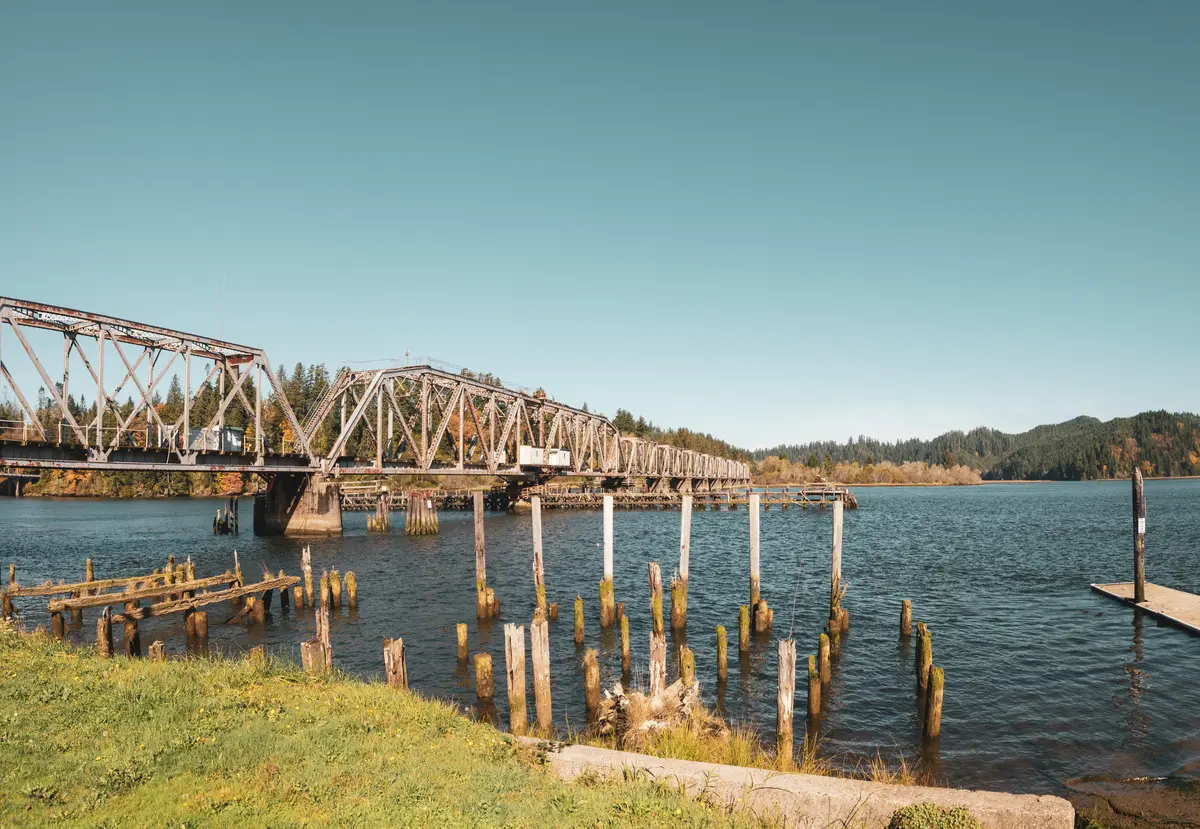
Local Expert Takeaway: Reedsport School District 105 is a small, community-rooted district navigating real resource constraints — the test score picture is honest and the C- Niche rating reflects genuine challenges. What it offers in return is a close-knit learning environment, a charter model that pulls community expertise directly into the classroom, dual-credit access through Southwestern Oregon Community College, and OSAA athletics that draw the whole town to the bleachers on a Friday night. Families who arrive expecting a suburban district will be disappointed; families who arrive expecting something specific to this coastal community — small, known, shaped by the dunes and the river — often find it matches what they were looking for. The outdoor life and the sustained community fundraising behind REEF are the things worth weighing alongside the numbers.
Quick Takeaways & FAQs
✅ Reedsport Community Charter School's community-expert elective model and dual-credit partnership with Southwestern Oregon Community College give students academic pathways that go beyond what most districts this size can offer.
⚠️ On 2024-25 state assessments, 18.8% of students reached math proficiency and 29.1% reached reading proficiency — families with strong academic expectations should plan to supplement actively at home.
📍 The Reedsport Summer Recreation Association runs the primary community youth baseball and softball program for younger kids, and regional club soccer through Epuerto Sports means the Coos Bay drive becomes part of your season schedule.
How many schools are in Reedsport School District 105?
What is the Reedsport school district rating?
What youth sports are available for kids in Reedsport?
What is Reedsport Community Charter School and how is it different from a regular public school?
Is Reedsport a good place to raise a family if schools are a top priority?
Moving to Oregon?
Tell us what you need help with and we'll connect you with local resources.
