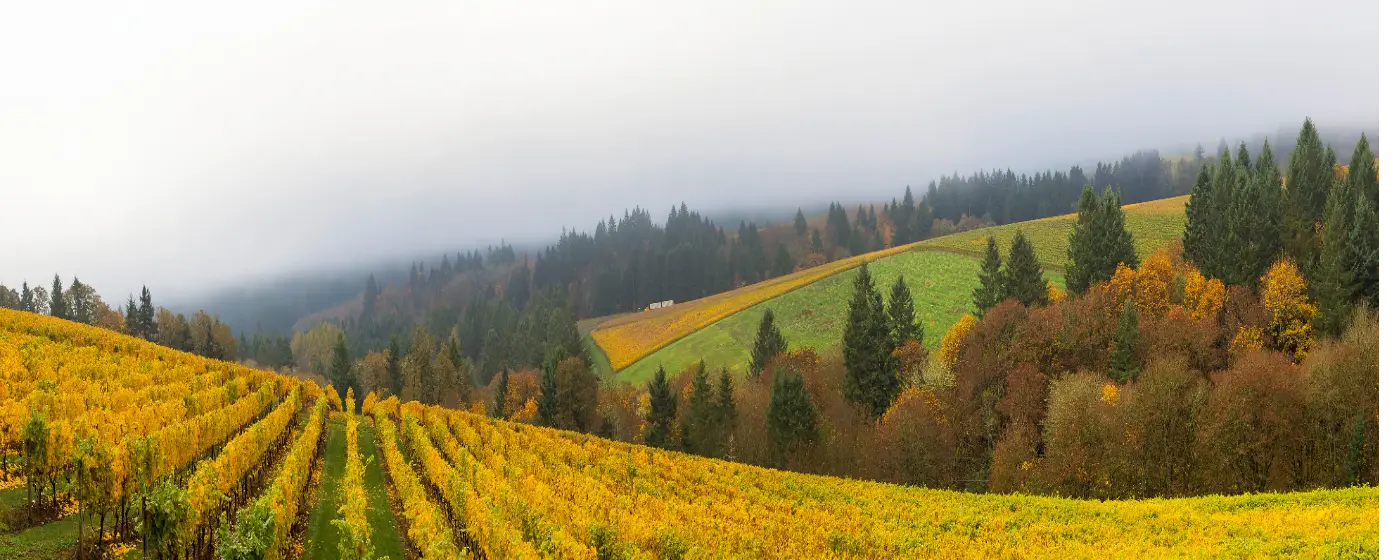
Dundee doesn't look like a retirement destination at first glance. It's a city of 3,200 people strung along OR-99W in the Willamette Valley, small enough that you can walk its commercial core in ten minutes. But spend a weekend here and the appeal clicks into place: vineyard views from nearly every elevation, farm-to-table dining within a short walk, and a pace of life that feels genuinely unhurried. What catches retirees off guard is how complete the day-to-day feels inside such a small footprint — and how quickly the trade-offs surface once you push beyond that footprint.
The economic backbone of Dundee is agriculture and wine country tourism. Argyle Winery and Duck Pond Cellars are genuine local employers, and the Dundee Hills AVA — one of Oregon's most celebrated Pinot Noir appellations — effectively surrounds the city rather than sitting at a polite distance from it. The city's municipal government and proximity to the Newberg School District round out the employment picture. For retirees, that means a community defined more by terroir and small-town rhythms than by suburban amenity density, which is exactly the draw for some buyers and exactly the sticking point for others.
On cost, Dundee sits in an interesting position for Yamhill County: the typical home price of $598,118 (Zillow Home Value Index, July 2026) is real money for a town this size, and a fixed income requires honest planning to make it work. Oregon's tax picture is mixed — Social Security is fully exempt from state income tax, but no sales tax means everyday purchasing goes further. Outdoor life is genuinely accessible: Billick Park anchors the town, Worden Hill Trail and Bald Peak State Park are within reach, and the vineyard backroads through the Dundee Hills offer low-impact walking that suits retirement well.
Whether you're seriously considering a move or just placing Dundee on a shortlist alongside Newberg, Carlton, or McMinnville, the sections below cover what retirees most need to know: healthcare access, the retiree tax picture, walkability, downsizing options, and an honest side-by-side with nearby alternatives.
Why Retirees Are Choosing Dundee
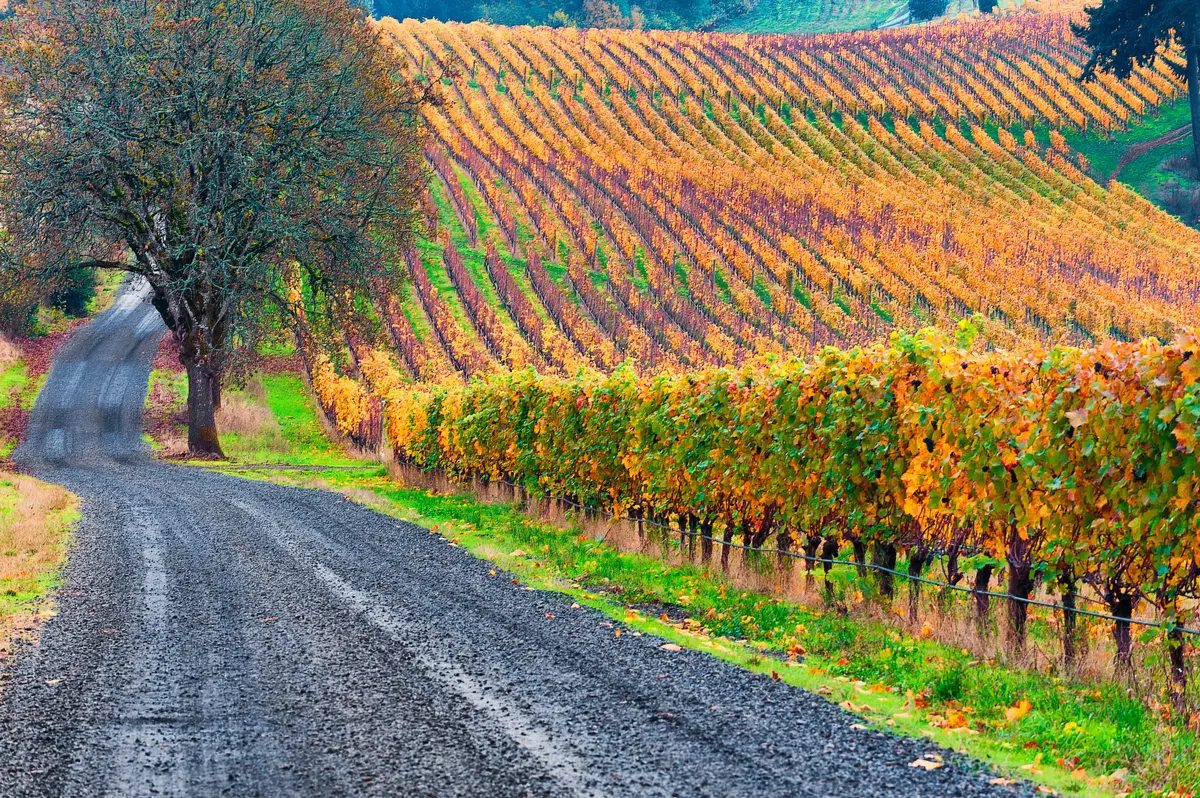
The retirees who land in Dundee and stay share a specific profile: they want wine country living without wine country pretension, they're comfortable in a small town, and they've made peace with driving for most services beyond dining and a walk. If that sounds like you, Dundee delivers at a level that surprises people. The tasting rooms are not a weekend excursion — they're the neighborhood. The restaurant scene punches well above the city's size. And the slower pace along OR-99W (outside of harvest-season tourist weekends) suits people who have stopped optimizing for efficiency.
The case against Dundee in retirement is shorter but worth taking seriously. At a typical home price of $598,118 (July 2026), entry here is not inexpensive for a city of 3,200 people, and the full cost-of-living picture matters on a fixed income. There is no 55+ community here, no dedicated senior center in town, and specialty medical care beyond the nearest hospital means a drive toward Portland or Salem. Retirees who need walkable errands, frequent transit, or a robust senior social infrastructure will find Newberg or McMinnville more practical answers.
The honest fit is someone who values landscape and culinary culture over civic density — a couple downsizing from Portland who wants acreage-adjacent living, or a solo retiree who is self-sufficient by car and wants to wake up inside an AVA. Dundee earns that buyer's loyalty quickly. It tends to disappoint buyers who assumed "wine country" would also mean "well-appointed suburb."
Healthcare & Medical Access in Dundee
Providence Newberg Medical Center is the nearest hospital at about 5 miles — a meaningful advantage for a town this small. It operates a 24-hour emergency room and offers a service depth that goes well beyond what you'd expect from a community hospital: surgical services, cancer care, cardiology and heart care, orthopedics, neurological care, wound care, diagnostic imaging, maternity, and a sleep apnea laboratory. Primary and specialty outpatient care is available through a co-located health center on the same campus, which matters for retirees managing multiple providers.
Providence Newberg Medical Center is part of the Providence Health System — a large regional network that creates referral pathways to higher-acuity care in Portland without requiring a patient to navigate that transfer independently. For day-to-day and moderately complex care, the proximity and service range are genuinely reassuring. The hospital also holds the distinction of being the first Gold LEED-certified hospital in the country, reflecting the same environmental ethic that runs through the broader wine country community.
The honest limit is advanced subspecialty care. Comprehensive stroke centers, Level I or II trauma, complex cardiac intervention, and major cancer surgery are Portland-tier services, and that puts them about 40 minutes to Portland on a clear run — longer in harvest-season traffic on OR-99W. Retirees with chronic conditions that require frequent specialist visits should map that drive realistically before committing. Providence Newberg Medical Center also partners with Yamhill County Public Health on community health assessments across the county, which strengthens the local preventive-care ecosystem for seniors aging in place.
The Retiree Budget in Dundee
Oregon's tax posture for retirees is genuinely mixed, and Dundee is no exception to the state picture. The clearest benefit: Oregon does not tax Social Security or Railroad Retirement benefits at any income level. That full exemption is real and meaningful on a fixed income. The catch is that pensions, traditional IRA distributions, and 401(k) withdrawals are all taxed at Oregon's graduated income tax rates, which run from 4.75% up to 9.9% — among the higher state brackets in the West. Retirees drawing primarily from tax-deferred accounts should model their effective state tax rate carefully; it can erode more purchasing power than the Social Security exemption saves.
The no-sales-tax environment helps with daily spending in ways that compound over a year — groceries, clothing, restaurant meals, and hardware all come without an added percentage. For retirees who spend a meaningful share of income on everyday purchases, Oregon's zero-sales-tax policy is a real structural advantage compared with California or Washington.
On property taxes, Dundee's effective rate sits at approximately 0.70% — modest by Pacific Northwest standards. Oregon's Senior and Disabled Property Tax Deferral Program allows homeowners 62 or older with household incomes at or below $70,000 to defer property taxes as a lien against the home until it's sold or transferred, with the state paying the county directly and 6% simple annual interest accruing on the deferred balance. Oregon carries no general homestead exemption based on age or income alone, so the deferral program is the primary relief tool. For retirees with household incomes above that threshold, the full property tax obligation applies from day one — worth factoring into a monthly budget alongside other fixed costs. The cost-of-living page breaks down grocery, utility, and transportation benchmarks in more detail.
Looking to buy in Dundee? Estimate your payment.
Enter your numbers to see an estimated monthly mortgage payment.
Estimate only. Excludes HOA fees and mortgage insurance. The interest rate above is a starting point, not a quoted rate — replace it with your own to see real numbers. Insurance is a flat placeholder, not a Dundee quote.
Walkability, Community & Staying Active in Dundee
Dundee's walkability is real but narrow. The commercial core along OR-99W — tasting rooms, a handful of restaurants including Red Hills Market, Tina's Wine Country Cuisine, Trellis, and Wooden Heart, plus a few specialty boutiques — is genuinely accessible on foot once you're in it. For retirees who live within that walkable band, daily coffee and dinner plans don't require a car. Beyond that corridor, a car is not optional: most practical errands, the pharmacy, the grocery run, the hardware store — these mean driving, most often toward Newberg.
The terrain deserves an honest mention. Dundee Hills neighborhoods — particularly Falcon Crest, View Crest, and Carmen Heights — sit on genuine slopes. Vineyard country is not flat country, and retirees with mobility considerations should walk the grade of a specific street before committing to a home there. Downtown Dundee and North Dundee on the valley floor are the more level options.
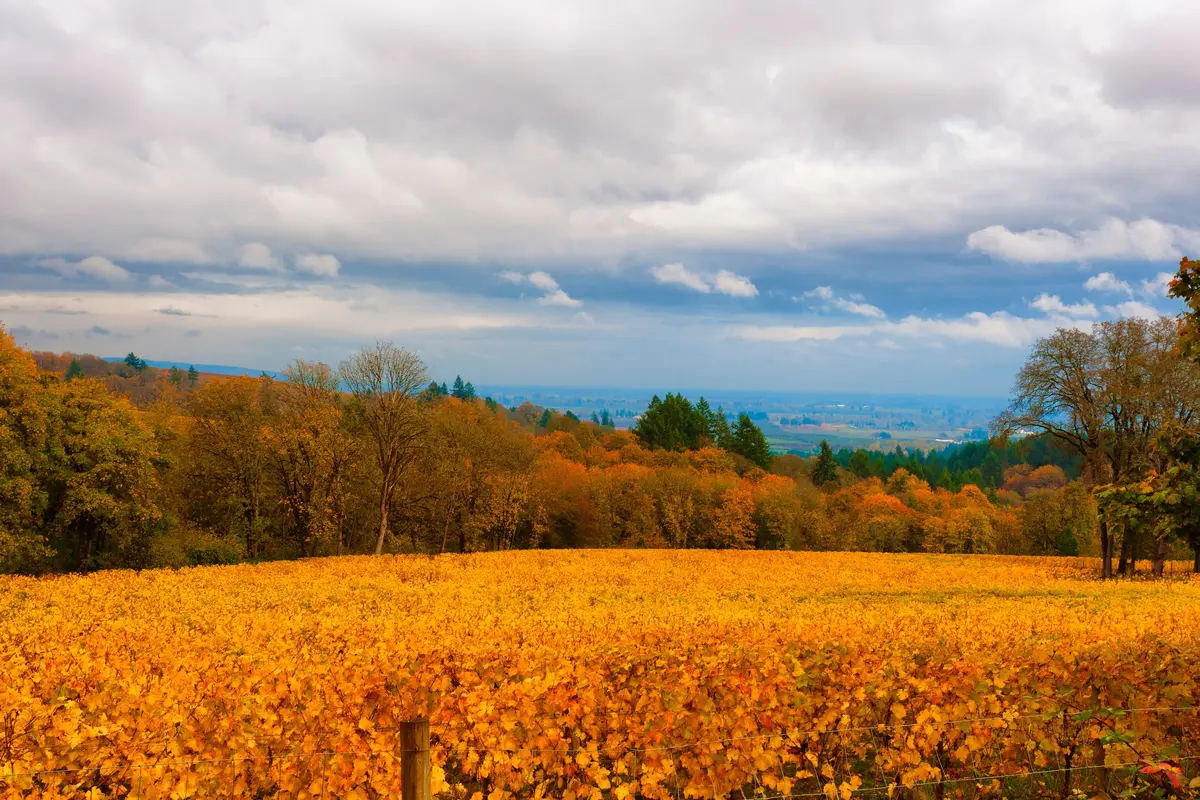
For active outdoor life, Billick Park in town provides a straightforward green space for daily walks. Worden Hill Trail offers a more serious outing with vineyard views, and Bald Peak State Park and Chehalem Ridge Nature Park nearby add longer hiking options suited to moderate fitness levels. The vineyard backroads through the Dundee Hills AVA are genuinely beautiful for walking or cycling and see relatively little traffic on weekday mornings — a detail locals rely on heavily.
Formal senior programming requires a short drive. Newberg carries the organized senior social infrastructure for this part of Yamhill County. The community texture in Dundee itself tends to be winery events, informal gathering at the farm-to-table restaurants along OR-99W, and the quiet rhythms of a wine-country small town. Retirees who build their social life around wine education, culinary events, and the outdoors find it abundant. Those who want structured programming — a senior center, organized exercise classes, a regular volunteer placement — will make Newberg the practical base for that layer of life.
Right-Sizing: Downsizing in Dundee
No 55+ communities were found in Dundee. That is the defining constraint for retirees who want an age-targeted community with shared amenities, organized activities, or a maintenance-free ownership structure. For those buyers, Newberg is the practical next step — Friendsview Retirement Community and Willow Place offer independent and assisted living options, and McMinnville adds Parkland Village Retirement Community and others a short drive further west.
What Dundee does offer is a genuine stock of single-family homes in a range of sizes and ages, and the smaller-footprint neighborhoods closest to the valley floor — Downtown Dundee and North Dundee in particular — carry more ranch-style and single-level options than the hillside areas. A retiree looking for a one-story home with a modest yard and a walkable relationship to the OR-99W restaurant corridor is not chasing an impossible inventory here, though it requires patience and specific neighborhood targeting.
The hillside neighborhoods — Dundee Hills, Falcon Crest, View Crest, Carmen Heights — tend toward newer construction with the vineyard views that draw buyers from Portland and the coast, but the terrain itself is a practical consideration. Multi-level homes on sloped lots are common in those areas, and a buyer downsizing for accessibility reasons should filter explicitly for single-level floor plans rather than assuming the category exists at scale. The neighborhoods page covers the geographic character of each area in more detail.
The honest summary for retirees right-sizing into Dundee: the town works best as a primary residence for self-sufficient, car-comfortable buyers who are drawn to the lifestyle and can find or build the single-level home they need. Retirees who require age-qualified community infrastructure should start in Newberg and treat Dundee as a neighbor rather than a destination.
Dundee vs Nearby Retirement Destinations
| City | Cost vs Dundee | Primary Hospital | Walkability | Senior Living Depth | Overall Retirement Fit |
|---|---|---|---|---|---|
| Dundee | Anchor | Providence Newberg Medical Center (~5 mi) | Narrow walkable core; car essential beyond OR-99W | No 55+ communities; no senior center in town | Strong lifestyle fit for wine-country independent retirees |
| Newberg | Somewhat lower | Providence Newberg Medical Center (on-site) | More walkable downtown; flatter terrain | Friendsview Retirement Community, Willow Place; organized senior programming | Best all-around for retirees who want services and community |
| McMinnville | Noticeably lower | Willamette Valley Medical Center | Walkable downtown Third Street corridor | Parkland Village and multiple senior living options | Best for retirees who want urban amenities and cost savings |
| Dayton | Noticeably lower | Providence Newberg Medical Center (~10 mi) | Very limited; almost entirely car-dependent | Minimal; relies on Newberg for senior services | Rural quiet at a lower price; few built-in retirement services |
| Lafayette | Noticeably lower | Willamette Valley Medical Center (~12 mi) | Limited; small town with minimal walkable core | Very limited; closest options in McMinnville | Budget-friendly with rural character; not built for retirement services |
| Carlton | About the same | Willamette Valley Medical Center (~15 mi) | Small walkable main street; car required for most needs | Limited; Newberg and McMinnville are the service centers | Comparable wine-country lifestyle at a similar cost; slightly more remote |
Newberg is the practical winner for most retirees who are drawn to the Dundee lifestyle but need more infrastructure underneath it. It sits directly beside Providence Newberg Medical Center rather than five miles from it, carries organized senior living communities, and offers a flatter, more navigable downtown — all at a somewhat lower price point. McMinnville adds a bigger commercial footprint and noticeably lower home prices, making it the strongest value play in the region for retirees who can accept the slightly longer drive toward Portland.
Dayton and Lafayette offer meaningful cost savings but strip away the services: neither has meaningful senior living infrastructure, and both lean on Newberg or McMinnville for anything beyond basic daily life. Carlton is the closest peer to Dundee in lifestyle terms — wine-country small town, boutique dining, scenic surroundings — but sits at a comparable cost and without Dundee's hospital proximity advantage. For retirees who specifically want to live inside the Dundee Hills AVA, in a wine-country setting that Newberg's more suburban character doesn't quite replicate, Dundee earns its place on the shortlist. The key is entering with clear eyes about what the town provides and what requires a drive.
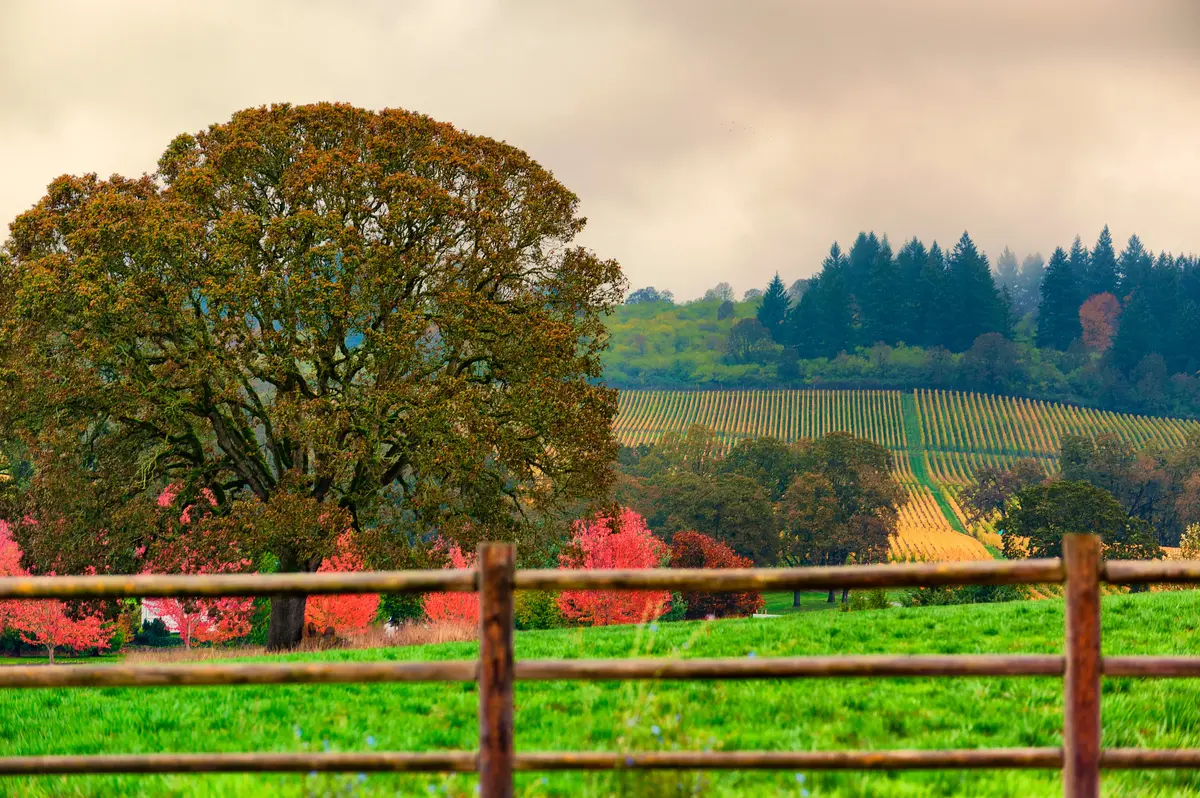
Local Expert Takeaway: Dundee works best in retirement for buyers who are genuinely drawn to wine-country living as a daily experience — not as a weekend trip. Providence Newberg Medical Center is close enough at about 5 miles to give real peace of mind for routine and emergency care. Oregon's Social Security exemption helps on income, the 0.70% property tax rate keeps holding costs modest, and the farm-to-table scene along OR-99W means the best of the lifestyle is walkable from the right address. The sticking points are real, though: no 55+ community exists in town, the hillside neighborhoods are genuinely hilly, and anything beyond what the compact OR-99W corridor offers means getting in the car. Retirees who thrive here tend to be self-sufficient, car-comfortable, and looking for a place where the landscape itself is the amenity.
Quick Takeaways & FAQs
✅ Oregon fully exempts Social Security income from state taxes, and Dundee's effective property tax rate of approximately 0.70% keeps annual holding costs manageable for retirees on a fixed income.
⚠️ No 55+ communities exist in Dundee, and the hillside neighborhoods — Falcon Crest, View Crest, Carmen Heights — involve real grades that can be challenging for retirees with mobility concerns.
📍 Providence Newberg Medical Center, about 5 miles away, offers emergency care, cardiology, cancer care, orthopedics, and outpatient specialty services — a notably broad scope for a community hospital serving a small wine-country town.
Is Oregon a good state to retire in for taxes?
What is the nearest hospital to Dundee, Oregon?
Are there any 55+ or retirement communities in Dundee, Oregon?
Can you walk to stores and restaurants in Dundee?
How does Oregon's property tax deferral program work for seniors in Dundee?
Moving to Oregon?
Tell us what you need help with and we'll connect you with local resources.
