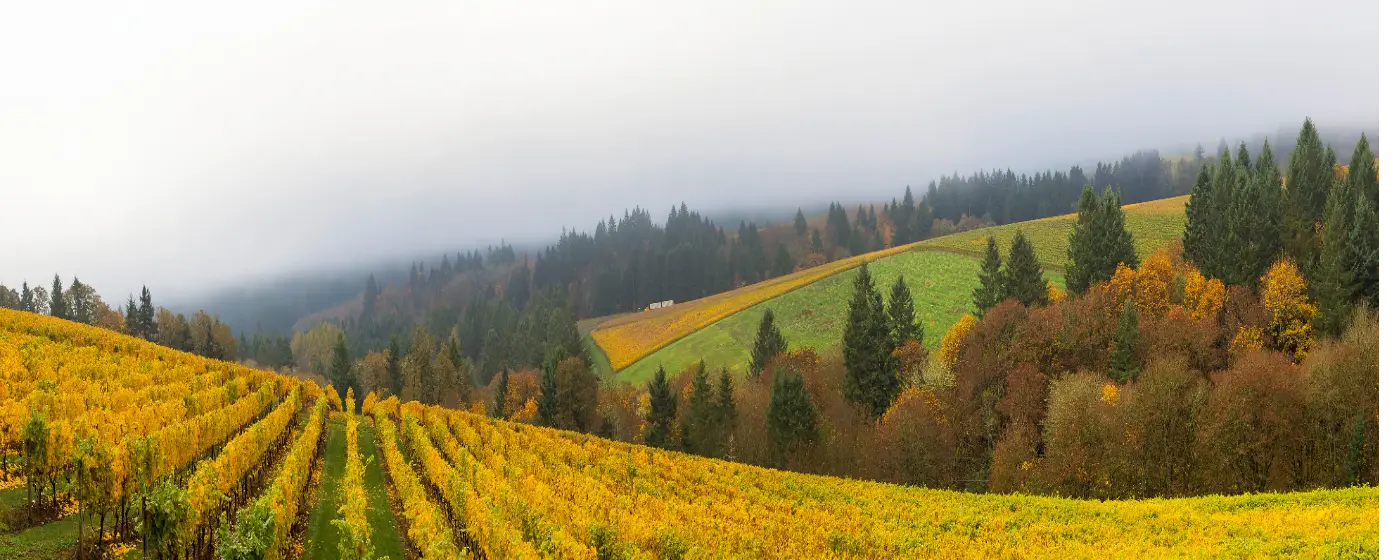
Dundee sits in the Willamette Valley wine country along OR-99W, a two-lane highway that doubles as one of Oregon's most-traveled wine tourism corridors. That geography creates the central safety question here: does all that visitor traffic — the weekend wine-tasters, the tour buses, the seasonal harvest workers — translate into a crime problem for the 3,200 people who actually live here? The short answer, backed by the numbers, is no. But the longer answer explains something useful about where crime concentrates and why it matters when you're deciding where in town to settle.
SafeWise, a national home security research organization, ranked the Newberg-Dundee community Oregon's 5th safest city in 2026 — placing this Yamhill County wine town ahead of far larger metro communities on both violent and property crime measures. That ranking draws on voluntary crime data submitted by local law enforcement to the FBI, and it aligns with what the underlying rate figures show: Dundee carries a violent crime rate of 2.2 per 1,000 residents and a property crime rate of 18.7 per 1,000 residents, both meaningfully below Oregon and national benchmarks. Yamhill County as a whole sees roughly half the aggregate crime rate of the rest of Oregon, so Dundee's numbers don't exist in a vacuum — the entire county trends quiet.
What the aggregate figures don't tell you is that property crime in Dundee is not spread evenly. It clusters along the commercial strip on OR-99W, where visitor foot traffic, parking lots, and roadside retail create the conditions for vehicle break-ins, package theft, and petty larceny. The residential neighborhoods west of the highway — Carmen Heights, View Crest, Falcon Crest — are where the numbers drop further and where families with kids find the quietest streets. That distinction is worth understanding before you settle on a part of town.
The sections below cover Dundee's crime rates in context, the neighborhood-level safety picture, how the local police department is structured, and practical things to pay attention to as you research specific areas — including the one seasonal pattern that catches newcomers off guard.
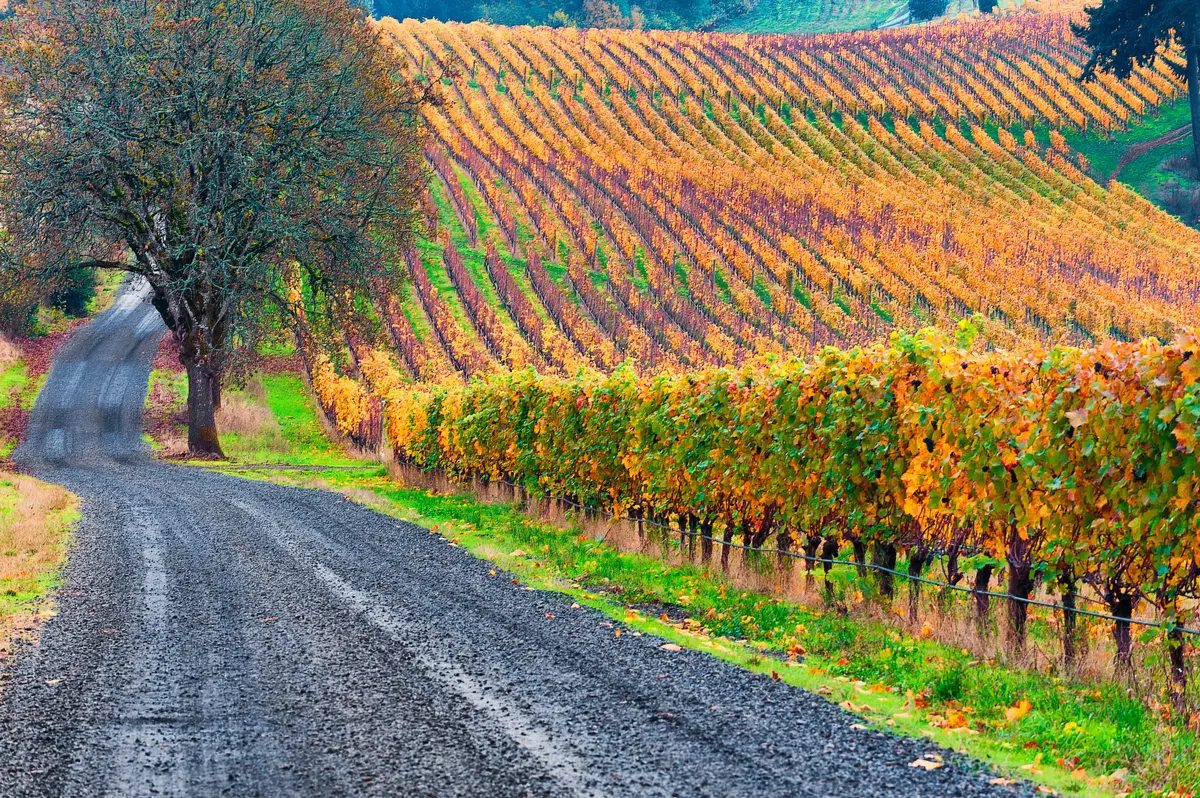
Dundee's Crime Rates in Context
Dundee carries a violent crime rate of 2.2 per 1,000 residents — well below Oregon's statewide rate of 3.3 per 1,000 and below the national rate of 3.7 per 1,000. That gap is not marginal. It puts Dundee comfortably in the safer half of Oregon communities.
On property crime, the picture is more nuanced. A property crime rate of 18.7 per 1,000 residents sits noticeably below Oregon's statewide rate of 24.5 per 1,000, which is encouraging. The comparison against the national rate of 18.4 per 1,000 is essentially a wash — Dundee runs just above the national average here, not below it. That one data point deserves context: the OR-99W corridor draws wine tourism traffic that inflates the commercial-zone numbers in a way that a quiet agricultural town without that foot traffic would not experience.
The county backdrop matters. Yamhill County as a whole records roughly half the aggregate crime rate of Oregon statewide — 14.7 crimes per 1,000 residents versus 29.4 statewide, according to a county health and economic indicators report published by the Newberg Graphic in September 2025. Dundee doesn't sit in an outlier pocket; it reflects a county-wide pattern of relative calm.
The retail corridor along OR-99W sees the most incidents in Dundee; the residential neighborhoods on the western side of town see few. That geographic reality shapes what the city-wide figures actually mean for daily life, and the section below breaks it down block by block.
Where Crime Concentrates in Dundee
The OR-99W Corridor
The northern stretch of OR-99W through Dundee is the commercial spine of town — wineries, tasting rooms, casual restaurants, roadside retail. It is also where the majority of Dundee's property crime incidents occur. Vehicle break-ins, package theft, and petty larceny track visitor movement: parking lots near tasting rooms and commercial stops are the primary locations, not residential side streets.
This is not an unusual pattern for a wine tourism corridor. High visitor volume means a large transient population moving through commercial areas, which raises the baseline rate for opportunistic property crime regardless of how safe the surrounding community is. The OR-18 bypass, which opened in 2018 and redirected heavy through-traffic away from the downtown commercial zone, relieved some congestion — but the wine tourism draw remained, and with it the property crime profile typical of busy commercial corridors.
The Residential West Side
Residents and crime analysts consistently identify the western residential side of Dundee as the quietest part of the city. Neighborhoods like Carmen Heights, View Crest, and Falcon Crest sit away from the OR-99W commercial activity, on streets where the primary traffic is neighbors, not wine tourists. If minimizing property crime exposure is a priority when you're weighing one part of town against another, the western residential neighborhoods represent the lower-risk choice.
Downtown Dundee
Downtown Dundee sits closest to the tourism corridor, which puts it in the zone of higher incidental property crime. That doesn't make it unsafe by any serious measure — the violent crime picture across the entire city is calm — but it does mean that parking a car with valuables visible or leaving packages on a porch longer than necessary carries more risk here than it would a few blocks west. Learn the pattern before you assume downtown Dundee functions like a quiet rural backwater, because along OR-99W it doesn't.
For a deeper look at how these neighborhoods compare on character and what they suit, see the Dundee neighborhoods guide.
Who Polices Dundee — and How
Dundee shares its police department with neighboring Newberg under a formal joint arrangement. The Newberg-Dundee Police Department (NDPD) is a full-service agency covering both cities — a structure that gives a town of 3,200 people access to a significantly larger and more capable department than it could independently sustain.
The NDPD is one of approximately 24 accredited police departments in Oregon, a designation that requires demonstrated compliance with 100 recognized professional law enforcement standards. Accreditation is not automatic and not trivial: it signals organizational infrastructure, training standards, and accountability mechanisms that smaller departments often lack.
The department's structure tells the same story. The Patrol Division includes a School Resource Officer, a Traffic Safety Team, Canine Units, and a Community Outreach Program. The Special Operations Division covers Computer Forensics, Special Investigations, and a Community Response Team. For a community this size, that breadth reflects the benefit of the shared-services model with Newberg, giving residents patrol presence and specialized response capabilities well beyond what a standalone small-city department would provide.
The Newberg-Dundee Police Foundation supplements that with additional funding for programs, training, and officer wellness initiatives that extend beyond what standard public resources cover. The foundation's stated aim is specifically about fostering trust between officers and residents — the kind of community-relationship infrastructure that tends to show up in lower-crime communities before the crime data confirms it.
Looking to buy in Dundee? Estimate your payment.
Enter your numbers to see an estimated monthly mortgage payment.
Estimate only. Excludes HOA fees and mortgage insurance. The interest rate above is a starting point, not a quoted rate — replace it with your own to see real numbers. Insurance is a flat placeholder, not a Dundee quote.
What Newcomers Don't Expect: The Seasonal Safety Shift
Most people researching Dundee look at annual crime statistics. What those numbers don't convey is how dramatically the feel of OR-99W shifts during harvest season — roughly late September through mid-November. The Dundee Hills wine country fills with visitors during this window in a way that dwarfs the normal weekend wine-tasting crowd. More people moving through commercial zones means a noticeably different energy along the main corridor, and it also means the conditions for opportunistic property crime are at their peak.
This isn't a reason to avoid Dundee — the underlying violent crime picture doesn't change with the seasons, and the residential neighborhoods stay quiet year-round. But if you're living near the OR-99W commercial strip and you're accustomed to a sleepier rural pace, harvest season will feel like a different place for six to eight weeks. Locals learn to adapt: they lock cars reflexively, they don't leave anything visible in vehicles parked near tasting rooms, and they treat the commercial corridor differently than they would a back-street neighborhood.
The flip side of that tourism traffic is real: it supports the local economy, fills the restaurants and tasting rooms that make Dundee livable for residents, and funds civic infrastructure that a town of 3,200 people could not otherwise afford. The trade-off is that OR-99W functions as both main street and tourism artery, which means accepting some of what comes with the latter.
Parks and outdoor spaces in Dundee — Billick Park, the Worden Hill Trail corridor — remain genuinely calm regardless of season. For a fuller picture of what outdoor life here looks like, see the parks and recreation guide.
How to Research Safety Before Choosing a Neighborhood
The city-wide figures are a useful starting point, but Dundee is small enough that the difference between one neighborhood and another is real and meaningful. A few concrete approaches help you go deeper without over-relying on headline statistics.
Drive the OR-99W Strip at Different Times
Visit during a weekday afternoon and again on a weekend during wine season. The gap between those two experiences tells you more about what the OR-99W corridor actually feels like than any crime rate figure will. If the energy along the main strip bothers you, the residential neighborhoods west of the highway will almost certainly suit you better — and knowing that ahead of time is worth the trip.
Check CrimeGrade.org's Block-Level Data
CrimeGrade.org publishes granular, address-level incident mapping that lets you look at specific blocks rather than city-wide averages. It shows the spatial distribution of incidents across the city, which is far more useful for evaluating a specific street than any aggregate figure. Pull up a map of the specific addresses you're considering before you settle on a neighborhood.
Talk to the NDPD's Community Outreach Program
The Newberg-Dundee Police Department runs a formal Community Outreach Program as part of its Patrol Division. This is not a pro forma office — it exists specifically to connect residents with department information. If you have questions about a specific street or area, they are the right people to ask. Most departments serving communities this size don't have a dedicated outreach function; the fact that the NDPD does reflects the shared-services structure with Newberg.
Understand What the Property Crime Rate Is Actually Measuring
Dundee carries a property crime rate of 18.7 per 1,000 residents — but that figure is not evenly distributed across the city. The tourist corridor on OR-99W carries a disproportionate share of those incidents, while the residential neighborhoods to the west experience far fewer. Read the aggregate figure as context, not a uniform reality, and weight your research toward the specific areas you're considering. For neighborhood-level character comparisons, the neighborhoods guide covers what each area actually feels like to live in.
Local Expert Takeaway: Dundee is genuinely safe by Oregon standards — a violent crime rate of 2.2 per 1,000 residents puts it well below the statewide figure, and a 2026 SafeWise ranking placed the Newberg-Dundee community 5th safest in Oregon. The honest caveat is on property crime along OR-99W: wine tourism traffic concentrates vehicle break-ins and petty theft in the commercial corridor in a way that the city-wide number alone won't tell you. Families who settle in Carmen Heights, View Crest, or Falcon Crest on the western residential side of town experience a noticeably quieter picture than the aggregate suggests. If you're weighing neighborhoods, start your research with the western side and use CrimeGrade.org's block-level mapping to cross-check specific streets before you decide.
Quick Takeaways & FAQs
✅ Dundee carries a violent crime rate of 2.2 per 1,000 residents — well below Oregon's statewide rate of 3.3 and the national rate of 3.7, and the Newberg-Dundee community ranked Oregon's 5th safest city in 2026 according to SafeWise.
⚠️ Property crime is the real watch-out, and it's not evenly spread — the OR-99W wine tourism corridor accounts for the bulk of vehicle break-ins and petty theft, while the western residential neighborhoods run significantly quieter.
📍 Dundee shares a fully accredited police department with Newberg — one of only about 24 accredited departments in Oregon — giving a town of 3,200 access to specialized units including a Community Outreach Program and a School Resource Officer.
Is Dundee, Oregon a safe place to live?
Which parts of Dundee are safest?
How does Dundee's crime rate compare to the rest of Oregon?
Does wine country tourism affect safety in Dundee?
Who provides police services in Dundee?
Moving to Oregon?
Tell us what you need help with and we'll connect you with local resources.
