Home ›
Blog ›
Best Cities for Remote Workers in Magic Valley, Idaho (2026): 8 Cities Ranked
If you're a remote worker eyeing a move to Magic Valley, you've probably already noticed that south-central Idaho stretches across a wide basin along the Snake River Plain — and that the cities here vary enormously in what they can actually offer someone who earns a living online. The region sits roughly three to four hours from Boise, with U.S. Highway 30 and Interstate 84 threading the corridor together. What ties these eight cities in common is the Magic Valley Regional Airport, affordable land by coastal standards, and a pace of life that tends to draw people fleeing expensive metros. What separates them is almost everything else.
Twin Falls leads this group with a composite score of 7.16 out of 10 — driven by its city-scale broadband options, proximity to the airport, and homes priced around $380,000 that undercut most Idaho metros. Rupert lands at the other end of the spectrum with a composite of 4.15, where an extraordinarily low median home price near $266,500 comes at the cost of real gaps in internet infrastructure and no local coffee scene to speak of. The rankings below grade each city across internet speed, coworking access, coffee culture, airport access, and affordability — the five things that define whether remote work is actually livable, not just theoretically possible.
Top 8 Cities — Jump to Any City
- Twin Falls — #1 Best Infrastructure
- Jerome — #2 Best Value + Airport
- Burley — #3 Most Affordable with Coffee
- Gooding — #4 Lowest Price Small Town
- Buhl — #5 Closest Airport (Small Town)
- Kimberly — #6 Top Airport Access
- Heyburn — #7 Most Coffee for Size
- Rupert — #8 Most Affordable Overall
How This Ranking Was Built
Each city is scored 1-10 on every dimension below against a fixed statewide scale — never against the other cities in this region — then combined into one weighted Composite score out of 10.
Internet Speed — 25%Weighted contribution to the composite score, graded 1-10 against a fixed statewide scale.
Coworking Access — 20%Weighted contribution to the composite score, graded 1-10 against a fixed statewide scale.
Coffee Culture — 20%Weighted contribution to the composite score, graded 1-10 against a fixed statewide scale.
Airport Access — 20%Weighted contribution to the composite score, graded 1-10 against a fixed statewide scale.
Affordability — 15%Weighted contribution to the composite score, graded 1-10 against a fixed statewide scale.
Top 8 Cities: Best for Remote Workers Snapshot
Ranked by overall composite score. Click any city to jump to the full breakdown.
| # | City | Composite | Internet | Coworking | Median Price |
|---|
| 1 | Twin Falls
Twin Falls County | 7.2/10 | 6.6 | 6.6 | $380,000 |
| 2 | Jerome
Jerome County | 6.2/10 | 4.0 | 4.0 | $351,000 |
| 3 | Burley
Cassia County | 5.5/10 | 3.7 | 3.7 | $330,751 |
| 4 | Gooding
Gooding County | 4.5/10 | 2.0 | 2.0 | $322,701 |
| 5 | Buhl
Twin Falls County | 4.5/10 | 2.2 | 2.2 | $450,000 |
| 6 | Kimberly
Twin Falls County | 4.4/10 | 2.4 | 2.4 | $434,000 |
| 7 | Heyburn
Minidoka County | 4.3/10 | 1.9 | 1.9 | $409,000 |
| 8 | Rupert
Minidoka County | 4.2/10 | 2.5 | 2.5 | $266,500 |
Coffee Culture
4.7/10
out of 10
Airport Access
10/10
out of 10
Affordability
8.2/10
out of 10
Median Price
$380,000
2026 market price
Twin Falls earns the top spot here because it's the only city in this group where the remote-work fundamentals genuinely stack up across the board. A population of 55,000 means actual broadband competition — fiber and cable providers both operate here, which matters on a video-call-heavy workday. Magic Valley Regional Airport sits just 7 miles from town, so a last-minute flight to a client meeting or a quick weekend escape doesn't require a half-day of logistics. Homes priced around $380,000 make it one of the more attainable mid-sized cities in Idaho for buyers who want space to set up a real home office.
The coffee scene is modest — two named local spots means you'll find a morning ritual but not a rotating menu of third-wave options — and coworking is available but not abundant. Twin Falls suits the remote worker who wants a full-service city without the Boise price tag: reliable internet, an airport practically in the backyard, and enough amenities to keep daily life from feeling like a compromise.
Coffee Culture
6/10
out of 10
Airport Access
9.1/10
out of 10
Affordability
8.9/10
out of 10
Median Price
$351,000
2026 market price
Jerome punches above its weight for remote workers, landing at rank 2 largely on the strength of its affordability and airport proximity. Homes around $351,000 make it noticeably more accessible than Twin Falls, and Magic Valley Regional Airport is only 17 miles out — still a short drive for frequent flyers. Three local coffee spots give the daily routine some variety for a town of roughly 14,000 residents, which is more than several cities in this group can claim.
The real gap is infrastructure: internet speeds and coworking access both score in the mid-4s, reflecting limited provider competition and few if any dedicated shared workspaces. Jerome is the right fit for the remote worker who's disciplined enough to work from home, doesn't need a coworking office as a fallback, and wants to keep housing costs as low as possible while staying close to Twin Falls for anything the smaller city can't provide.
Coffee Culture
6/10
out of 10
Airport Access
6.1/10
out of 10
Affordability
9.3/10
out of 10
Median Price
$330,751
2026 market price
Burley lands at rank 3 with a housing market that's among the most affordable in this group — median home prices just above $330,000 give buyers real purchasing power without leaving the Snake River region entirely. Three local coffee spots, including Human Bean and Ziggy's, mean daily caffeine is genuinely covered. The airport is about 44 miles out, which puts Burley in the manageable-but-not-convenient camp for travelers.
Internet infrastructure is a real concern here: limited provider competition in a smaller market means remote workers should run speed tests and confirm fiber or cable availability at a specific address before committing. Burley suits buyers who work in roles that aren't bandwidth-intensive, value a low mortgage above most other factors, and don't mind the occasional longer drive to Twin Falls for coworking or airport access.

Coffee Culture
4.7/10
out of 10
Airport Access
6.4/10
out of 10
Affordability
9.5/10
out of 10
Median Price
$322,701
2026 market price
Gooding's case for remote workers is almost entirely built on its home prices near $323,000, which sit at the lower end of this group and offer real equity-building potential. Two local coffee shops is a reasonable baseline for a town under 4,000 people, and the airport is roughly 41 miles out — the same general range as Burley. The critical issue is internet: with a very small population and limited infrastructure investment, this is a city where you need to verify ISP availability street-by-street, not assume it.
Coworking doesn't exist here in any formal sense — the closest realistic option is Twin Falls, which is a committed drive. Gooding makes the most sense for remote workers in low-bandwidth roles who prioritize cost above all else and are genuinely comfortable with small-town daily life, including the infrastructure limitations that come with it.
Coffee Culture
4.7/10
out of 10
Airport Access
8.5/10
out of 10
Affordability
5.6/10
out of 10
Median Price
$450,000
2026 market price
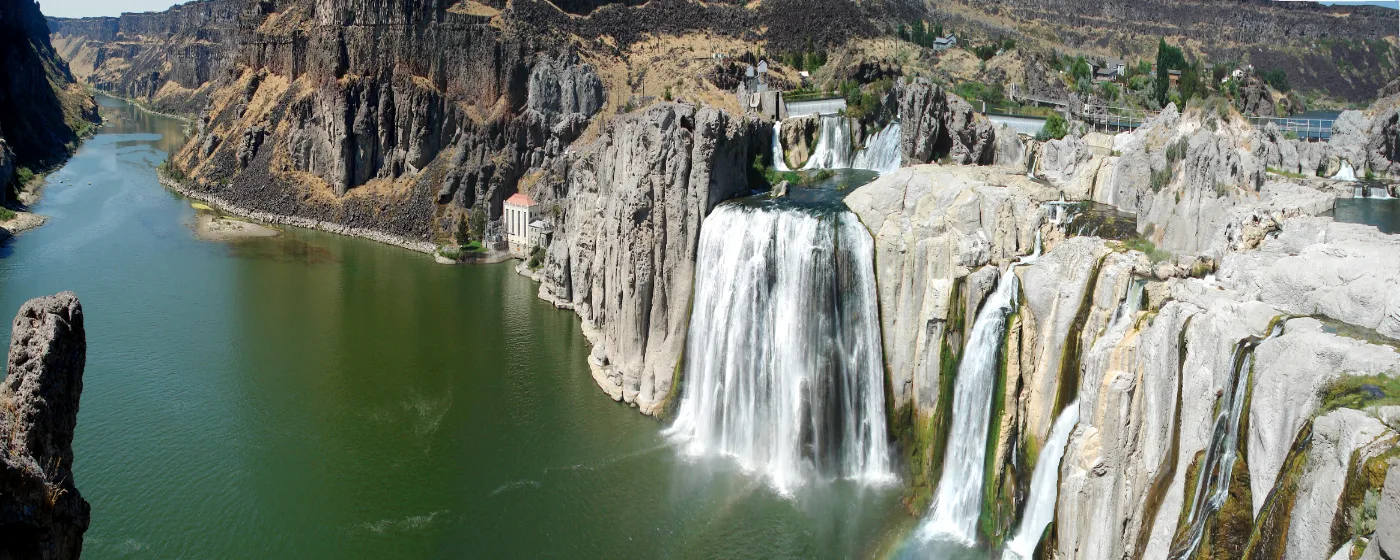
Buhl is an outlier in this group in one notable way: at $450,000, its median home price is the highest of the eight cities ranked here, which pushes its affordability score well below what the other small towns in this corridor achieve. That price point doesn't come with urban infrastructure to match — internet options are limited, formal coworking doesn't exist locally, and remote workers will realistically need to commute into Twin Falls for shared workspaces. The one genuine advantage is airport proximity: Magic Valley Regional is only 21 miles away.
Buhl tends to suit buyers drawn to the Snake River Canyon aesthetics and Twin Falls County address more than the amenities of a larger city. For remote workers, the value equation is harder to justify when similarly priced or cheaper options in this group offer better connectivity — but if a specific property or lifestyle draws you here, verify your ISP options before signing.
Coffee Culture
2/10
out of 10
Airport Access
10/10
out of 10
Affordability
5.9/10
out of 10
Median Price
$434,000
2026 market price
Kimberly's strongest asset for remote workers is one most small towns can't claim: Magic Valley Regional Airport is under 10 miles away, giving it the same perfect airport-access score as Twin Falls at a fraction of the infrastructure. At around $434,000, homes run above what several other cities in this group offer, and without a local coffee shop or coworking space, daily remote-work life here leans heavily on a reliable home setup and the occasional drive into Twin Falls.
Internet infrastructure at this population size tends to be limited, so confirming a specific provider and speed at your address is non-negotiable before moving. Kimberly is a reasonable choice for the remote worker who flies frequently, wants a quieter Twin Falls County address, and is comfortable building their own work environment rather than relying on local amenities.
Coffee Culture
6/10
out of 10
Airport Access
5.9/10
out of 10
Affordability
7.0/10
out of 10
Median Price
$409,000
2026 market price
Heyburn sits near the bottom of this ranking because it combines limited internet infrastructure and no local coworking with a home price around $409,000 — a figure that's harder to justify when more affordable and better-connected cities exist in this same group. Three coffee options, including one accessible in nearby Burley, give it a slight edge over Rupert and Kimberly on daily livability. The airport is roughly 46 miles out, making it one of the farther drives in this group for frequent travelers.
Heyburn is closer to Burley than to Twin Falls geographically, which matters for anyone counting on coworking access or faster broadband. It may suit the remote worker who finds a specific property at a price that works, values the Minidoka County setting, and is willing to make the internet verification process part of their due diligence — but it's not the path of least resistance for most buyers in this group.
Coffee Culture
2/10
out of 10
Airport Access
5.7/10
out of 10
Affordability
10/10
out of 10
Median Price
$266,500
2026 market price
Rupert's home prices — well under $300,000 — are the lowest in this group by a meaningful margin, earning a perfect affordability score. That number is genuinely striking in a state where prices have climbed steadily across most markets. The trade-off is equally real: no coffee shops are listed locally, the airport is roughly 50 miles out, and internet infrastructure in a town of about 6,300 reflects the limited provider competition typical of smaller Idaho markets.
Rupert is the right fit for a narrow profile: a remote worker in a low-bandwidth role, comfortable working entirely from home, who doesn't need to fly often, and for whom monthly housing costs are the single overriding priority. For that buyer, the price point is genuinely compelling. For anyone who needs reliable fast internet or a coworking option as a fallback, the math shifts toward Twin Falls or Jerome.
Twin Falls is the clear anchor for remote workers who need reliable infrastructure and don't want to sacrifice too much in affordability. Jerome is a compelling runner-up — meaningfully less expensive and still close enough to the airport and Twin Falls coworking options to make it work.
Want to see what's for sale in these neighborhoods?
Sign up for listing alerts — get notified when homes hit the market.
Get Listing Alerts →
Frequently Asked Questions
Which Magic Valley city has the best internet for remote workers?
Twin Falls is the clear leader here. Its population of roughly 55,000 supports actual broadband competition — multiple providers operate in the city, which translates to more plan options and more consistent speeds than smaller towns in this group can typically offer. Cities like Gooding, Heyburn, and Buhl have very small populations and limited infrastructure investment, so remote workers considering those markets should verify provider availability at a specific address before making any decisions.
Is there coworking space available anywhere in Magic Valley?
Formal coworking options in this region are concentrated in Twin Falls, which is the largest city in the group at around 55,000 residents. Jerome, at roughly 14,000 people, may have limited options emerging, but most of the smaller cities — Gooding, Buhl, Kimberly, Heyburn, and Rupert — are realistically too small to support dedicated shared workspaces. Remote workers choosing those cities should plan to work from home as their primary setup, with Twin Falls as a fallback for occasional in-person work needs.
How close are these cities to an airport?
Magic Valley Regional Airport is the anchor for the entire region, and distance to it varies significantly across the eight cities. Twin Falls and Kimberly are both under 10 miles away — as convenient as airport access gets at this scale. Jerome is 17 miles out, Buhl is 21 miles, Gooding is roughly 41 miles, Burley about 44 miles, Heyburn around 46 miles, and Rupert sits closest to 50 miles from the airport. If you fly frequently for client work or conferences, your city choice within this region will meaningfully affect how much friction that involves.
What is the most affordable city in Magic Valley for remote workers who want to buy a home?
Rupert has the lowest median home price in this group, well under $300,000 — a figure that stands out even by Magic Valley standards. Gooding and Burley are also among the more affordable options, with homes in the low-to-mid $300,000 range. The important context is that the most affordable cities here also tend to have the weakest internet infrastructure and fewest local amenities, so the cost savings come with real trade-offs that remote workers should weigh carefully against their actual work requirements.
Can I find a coffee shop to work from in these Magic Valley cities?
It depends heavily on which city you choose. Twin Falls, Jerome, Burley, and Heyburn each have at least three local coffee options, giving daily variety for a morning work session outside the house. Gooding and Buhl each have two spots — enough for a routine, but not much selection. Kimberly and Rupert have no local coffee shops listed at all, meaning residents there will need to drive into Twin Falls or a neighboring town for a café environment. Coffee culture as a remote-work amenity is one of the sharper divides across this group.
Moving to Idaho?
Tell us what you need help with and we'll connect you with local resources.

Todd Davidson
About the Author
Todd Davidson is the founder of The Move Genie, a premier digital resource offering in-depth city guides, neighborhood profiles, and localized market insights for communities nationwide. Drawing on an extensive background in home financing and real estate, he established the platform to streamline the relocation process, helping families make confident, data-driven decisions when comparing new areas.