What Is Living in Sandpoint, Idaho Like?
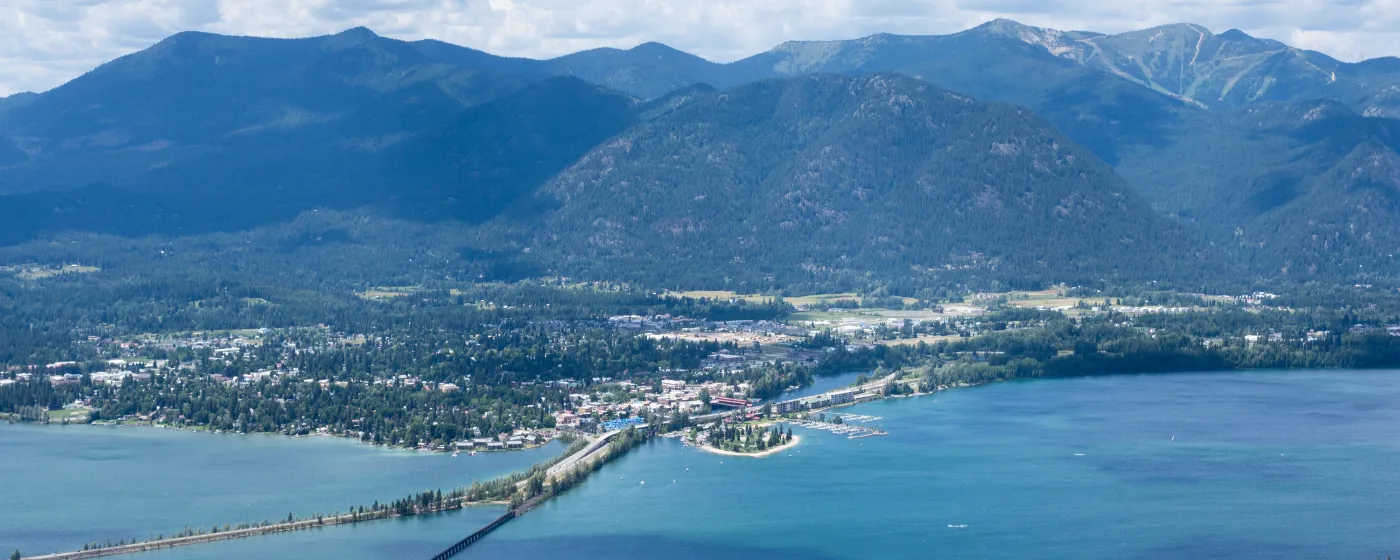
Maybe you've been priced out of Coeur d'Alene and someone mentioned Sandpoint. Maybe you drove through on US-2 and the view across the Long Bridge stopped you cold — a 43-mile lake, a mountain resort on the ridge, a small downtown with a working arts theater. What surprises people isn't that Sandpoint is appealing; it's that a city of just over 10,000 residents can deliver a quality of daily life that most places ten times its size can't match. Lake Pend Oreille — the largest lake in Idaho and the fifth-deepest in the United States — isn't a weekend amenity here. It's the front yard. It shapes where people build, where they walk, and how they spend their summers. US-95 runs straight through the middle of town, connecting Sandpoint to Coeur d'Alene to the south and the Canadian border to the north, and understanding how traffic flows on that corridor matters as much as any other detail for a buyer choosing where to live.
The economy here runs on a more diverse mix than you'd expect from a resort town. Litehouse Foods — the salad dressing and food manufacturing company — is one of the larger private employers in the region, headquartered right in Sandpoint. Kochava, a mobile analytics company that employs technology workers at well above local wage averages, has put Sandpoint on a short list of small cities with genuine tech-sector jobs. The Lake Pend Oreille School District holds a B- rating, according to Niche, and serves K-12 students across Bonner County. Schweitzer Mountain Resort, 11 miles up the ridge northwest of town, drives significant seasonal employment and draws a tourist economy that funds the restaurants, shops, and events that make downtown feel alive year-round. The median age of 41.5 reflects a mix of long-rooted families, remote workers who relocated during the pandemic surge, and retirees who chose the lake over the coast.
Homes here are meaningfully more affordable than the coastal markets many newcomers are leaving behind, though Sandpoint is no longer the overlooked outpost it was a decade ago. The typical home value sits at $588,781 (Zillow Home Value Index, July 2026), a figure that delivers considerably more square footage and lot size than that same dollar amount would buy in Boise or Spokane. The city grew roughly 15% between 2019 and 2024, and that growth shows in both the housing market and the character of who you'll meet at the farmers market or on the City Beach trail. The cost-of-living page breaks down taxes, rent, and everyday expenses in detail. Idaho's effective property tax rate is among the lowest in the West, and Sandpoint's rate of approximately 0.43% is a meaningful part of the ownership math here.
Whether you're seriously weighing a move or still in the research phase, the sections below cover what daily life in Sandpoint actually looks like — the commute realities, the job market, the housing dynamics, the weekend rhythms, and who this city genuinely suits.
Sandpoint at a Glance
Looking to buy in Sandpoint? Estimate your payment.
Enter your numbers to see an estimated monthly mortgage payment.
Estimate only. Excludes HOA fees and mortgage insurance. The interest rate above is a starting point, not a quoted rate — replace it with your own to see real numbers. Insurance is a flat placeholder, not a Sandpoint quote.
Why Are People Moving to Sandpoint?
Sandpoint draws people who have decided that the trade-off between urban amenity and natural access is worth making — and then discover the trade-off is smaller than they feared. This is a city where you can kayak at lunch and attend a live show at the Panida Theater in the evening. That combination is genuinely rare for a town this size.
The Remote-Work Factor
The pandemic reshuffling sent a wave of buyers here from Seattle, the Bay Area, and Southern California, many of them working fully remote in tech, finance, or creative fields. Kochava's presence as a Sandpoint-headquartered mobile analytics employer signals that the local economy isn't purely tourism-dependent. Remote workers find fiber internet access in the city core and a lower cost of living than the markets they left — those arriving from California will find the contrast particularly striking, and the moving-from-California page covers that specific transition in depth.
Who Actually Moves Here
| Buyer Type | What Draws Them | Best Fit |
|---|---|---|
| Remote workers & tech professionals | Kochava presence, fiber internet, lower costs than coastal cities | Tech Value |
| Outdoor-lifestyle seekers | Schweitzer ski resort, Lake Pend Oreille, trails from the doorstep | Nature Views |
| Families with school-age children | Smaller-city feel, IHSAA sports, manageable commutes within town | Families School |
| Retirees & 55+ downsizers | Lake access, walkable downtown, regional health services | Quiet Walkable |
| California equity buyers | Significant price difference, no state income tax in Idaho | Luxury Value |
| Spokane commuters | 75-minute drive to a metro, small-town living, lake lifestyle | Commuter Nature |
| First-time buyers priced out of Boise or CDA | Entry-level inventory exists; lower price floor than Coeur d'Alene | First-Time Value |
The honest case against moving here is shorter but worth reading: Sandpoint is genuinely isolated. There is no major hospital with full surgical specialties — the nearest Level I trauma care is in Spokane. Winters are long and the mountain snowpack that makes Schweitzer great also means you'll shovel a lot.
What Longtime Residents Notice
People who moved here in the 2010s often describe a city that has gotten more expensive and more crowded on summer weekends without getting proportionally more resourced — the road network is largely the same, and the Long Bridge remains the single connection between the north end of town and everything south of Sand Creek. That infrastructure reality is the thing newcomers underestimate most.
The flip side: the growth brought more restaurants, a more diverse food scene, and stronger local event programming. The Sandpoint Winter Carnival each February has grown into a full ten-day event with fireworks at Schweitzer, a downtown Parade of Lights, and the K9 Keg Pull — the kind of annual ritual that builds genuine community identity.
What Daily Life Feels Like in Sandpoint
Downtown Sandpoint is walkable in a way that surprises people who picture a rural Idaho town as purely drive-everywhere. Cedar Street runs the spine of it — the Cedar Street Bridge Public Market sits at the water's edge, and the blocks between there and the Panida Theater on First Avenue contain the farmers market (May through October), independent shops, and more than 60 restaurants and dining spots by Visit Sandpoint's count.
The Seasonal Rhythm
Summer transforms the city in a way that first-timers don't fully anticipate. City Beach fills by 10 a.m. on any weekend in July. US-95 through town — manageable on a Tuesday in March — becomes genuinely congested on summer Friday afternoons as recreational visitors pour in from Spokane and beyond. If you buy near the waterfront or the downtown corridor, build that seasonal reality into your expectations.
Winter is the other defining season. Schweitzer's 2,900 skiable acres and average 300 inches of annual snowfall mean the resort draws serious skiers from across the Pacific Northwest. The 11-mile drive up Schweitzer Mountain Road is paved and maintained, but it requires winter tires and patience after a heavy overnight snowfall. Locals who ski treat it as routine; newcomers from lower elevations take a season to calibrate.
The Food and Arts Scene
For a city its size, Sandpoint punches above its weight on the arts. The Panida Theater — a 1927 Spanish Revival cinema that survived long enough to become a beloved community institution — hosts film, live music, and performing arts year-round. MickDuff's Brewing Company, with its brewpub on N 2nd Ave and a Beer Hall on Cedar Street, is the kind of anchor that sustains a downtown after 6 p.m. The farmers market on Saturday mornings is where you'll run into the same neighbors week after week — it becomes a social fixture faster than you'd expect.
What Newcomers Don't Expect After Six Months
The thing that catches most transplants off guard isn't the winters or the isolation — it's how thoroughly the lake becomes part of their mental geography. People who moved here for a job find themselves structuring entire weekends, then vacations, around water access. The Long Bridge walk becomes a weekly ritual. City Beach becomes the default after-school destination in June. That pull is real, and it's why people who move here tend to stay.
The Sandpoint Housing Market Right Now
The Zillow Home Value Index puts Sandpoint's typical home value at $588,781 (July 2026), down approximately 10% from the prior year's peak. That correction has given buyers more room than they had in 2022 and 2023, but the market remains competitive on well-priced properties — homes that show well are still going to pending in around 19 days.
The pullback from the pandemic peak is real, but don't mistake it for a buyer's market across the board. Inventory remains constrained relative to long-term historical norms, and any home near the water or with lake views tends to attract multiple interested parties regardless of the broader trend. Some parts of the city command significantly more than the city-wide figure; the best neighborhoods page covers how character and price vary across the city's distinct areas.
What the Price Point Gets You
At or near the city-wide typical value, buyers generally find older single-family homes in established neighborhoods, some with character from Sandpoint's logging-era history. Entry-level options — older construction, smaller lots, farther from the water — can be found below that figure. Lakefront and mountain-view properties sit well above it.
Renting is a real option for newcomers who want to understand the city before committing. The cost-of-living page has current rental figures for the area. The effective property tax rate of approximately 0.43% is one of the lowest in the Northwest and meaningfully affects the monthly ownership math in Sandpoint's favor compared to similar-priced homes in Washington or Oregon.
Market Pace — What to Know
Sellers in Sandpoint have grown more realistic about pricing after the 2023–2024 correction, but they haven't capitulated. Days-on-market for overpriced listings have stretched considerably, while accurately priced homes in desirable locations still move fast. The practical implication: knowing the difference between a stale listing and a correctly priced one matters more here than in a uniformly hot market.
Sandpoint Neighborhoods
Sandpoint has several distinct areas — each with its own character and appeal. Here’s a breakdown to help you narrow down where to focus your home search.
🏡 Downtown Historic District
Sandpoint's most walkable neighborhood, built around logged-era buildings on the National Register of Historic Places and anchored by Cedar Street, the Panida Theater, and the Cedar Street Bridge Public Market steps from the water. It suits buyers who want on-foot access to restaurants, events, and the lake, and who appreciate older character homes over newer construction.
🏠 Timber Creek
A residential area with a mix of family-sized homes set back from the downtown bustle, appealing to buyers who want proximity to Sandpoint's amenities without the summer foot traffic of the waterfront core. The neighborhood has a quiet, established feel with mature trees and streets that stay relatively calm even during peak tourist season.
🌳 West Sandpoint (Pine Street/Baldy Mountain)
Climbing the western hillside above downtown, this area trades flat terrain for elevated views and a more private feel, with Pine Street serving as the main corridor between hillside homes and the valley below. It suits buyers who prioritize privacy and lake or mountain sightlines over walkable proximity to downtown shops.
🏘 Syringa Heights
A hillside neighborhood northeast of downtown where homes often sit on larger lots with forested surroundings, attracting buyers who want breathing room and a more rural feel without leaving city limits. The area is popular with families who value yard space and proximity to outdoor recreation over walkable downtown access.
🏔 Pristine Heights
One of Sandpoint's higher-elevation residential areas, offering panoramic views and a quieter pace well-removed from summer waterfront congestion, with properties that tend toward larger parcels and newer construction. It suits buyers who prioritize views, privacy, and space over convenience to downtown.
🌆 Moonridge Estates
A planned residential community that appeals to buyers seeking newer homes with a neighborhood feel and mountain-area access, positioned to attract families and move-up buyers who want more square footage than older in-town inventory typically offers. The area has a distinct suburban character compared to Sandpoint's historic core.
Pros & Cons of Living in Sandpoint
The Pros
- Spectacular lakefront and mountain setting on Idaho's largest lake with year-round outdoor recreation
- Idaho's largest ski resort (Schweitzer) just minutes away
- Thriving arts and cultural scene with festivals
- live music
- and historic Panida Theater
- Strong entrepreneurial economy with aerospace
The Cons
- Higher cost of living and home prices than much of Idaho
- Remote location 75 miles from Spokane means limited big-city amenities
- Heavy winter snowfall (61 inches annually) and below-average sunny days (175 vs national 205)
Getting Around & Commuting in Sandpoint
A car is not optional in Sandpoint. There is no way to soften that. You can walk a pleasant stretch of downtown and the waterfront without one, but grocery runs, school pickups, and trips to the doctor all require driving — and the city's geography means certain bottlenecks are unavoidable.
The Long Bridge Problem
The Long Bridge over Lake Pend Oreille is the single connection between the south end of town — where US-95 enters from Coeur d'Alene — and the central downtown and northward neighborhoods. When there's an accident on that two-lane span, or when summer weekend traffic backs up, the entire city feels it. If you're considering a home south of Sand Creek or in the Sagle area, build the Long Bridge into your daily commute math, not just your drive to the grocery store.
Getting to Spokane
The most common major commute from Sandpoint is the roughly 75-minute run southwest on US-2 and then US-395 into Spokane, Washington. People do it daily for work, and they do it for specialty medical care, major retail, and the airport. Spokane International — approximately 80 miles from Sandpoint — is the practical hub for air travel, served by Alaska, Delta, Southwest, United, and Frontier among others. That drive in summer is scenic and manageable. In January, after an overnight snowstorm on a mountain pass or through the Idaho Panhandle, it demands a different kind of patience.
Local Transit and Amtrak
| Option | Route / Service | Key Detail |
|---|---|---|
| SPOT Bus (Selkirks-Pend Oreille Transit) | Two routes: Dover–Sandpoint–Ponderay–Kootenai | Free to ride; seasonal Schweitzer connector |
| Amtrak Empire Builder | Westbound to Seattle; Eastbound to Chicago | Only Amtrak stop in all of Idaho |
| Spokane International Airport | ~80 miles southwest via US-2/US-395 | Major carriers; most rental companies on-site |
| Private/Charter Air | Sandpoint Airport (5,500-ft paved runway) | No scheduled commercial service |
| Bicycle / On-foot | Downtown core, waterfront trail, City Beach area | Viable for downtown errands only |
Sandpoint's status as Idaho's only Amtrak city is a genuine quirk worth knowing — it's not a commuter tool, but it gives residents a car-free option to Seattle for weekend trips that few small Idaho cities can claim.
Working Locally vs. Commuting Out
The largest local employers are Litehouse Foods, the Lake Pend Oreille School District, Schweitzer Mountain Resort, Kochava, and a major regional health system. For workers in manufacturing, education, hospitality, and mobile technology, local employment is real and reasonably accessible within town. For professionals in industries Sandpoint's economy doesn't yet support — certain legal specialties, finance, large-scale corporate roles — remote work or the Spokane commute is the practical answer.
The tech angle is worth noting specifically: Kochava has made Sandpoint a recognized location in mobile analytics circles, and its presence has had a small but meaningful effect on the kinds of professional roles available locally. It's not a tech hub, but it means you're not entirely alone here if that's your field.
Schools in Sandpoint
Families relocating to Sandpoint have public, private, and higher-education options nearby. Here’s a quick overview.
🎓 School District
Lake Pend Oreille School District serves K–12 students across Sandpoint and the surrounding area. Rated B- (source: Niche.com).
🏆 Graduation Rate
The 4-year high-school graduation rate here is approximately 91.2%.
📚 Higher Education
Idaho’s public universities — Boise State, the University of Idaho, and Idaho State — offer four-year degrees statewide, with community colleges (CWI, CSI, NIC) providing two-year and workforce programs.
🌐 Online Learning
Boise State Online and University of Idaho Online offer fully accredited online degrees for remote learners across the state.
Safety in Sandpoint
A quick look at how Sandpoint compares on the numbers that matter most when weighing a neighborhood or a move.
🛡 Violent Crime
Approximately 0.86 per 1,000 residents.
🔒 Property Crime
Approximately 10 per 1,000 residents.
Compared to the FBI’s most recent national data (2024), Sandpoint’s violent crime is below the national average (about 3.6 per 1,000), and property crime is below the national average (about 17.6 per 1,000).
Against Idaho as a whole, Sandpoint’s violent crime is roughly a third of the state average, and property crime is somewhat above the state average (Bureau of Justice Statistics, Crime Known to Law Enforcement, 2024 (tables 2 and 3)).
Crime rates can vary a lot within a single city, so the citywide numbers above are only a starting point. Some neighborhoods in Sandpoint run well below these averages, while others run higher — the kind of block-by-block detail that matters most when you’re actually choosing where to live. The full guide below breaks it down neighborhood by neighborhood.
Working in Sandpoint
Sandpoint’s largest employers span several industries — here are some of the anchors of the local job market.
🏥 Bonner General Health
Hospital
🛒 Litehouse Foods
Food manufacturing
🎓 Lake Pend Oreille School District
Education
💼 Schweitzer Mountain Resort
Tourism
💼 Kochava
Mobile analytics
Parks & Recreation in Sandpoint
Some of the outdoor spaces that shape everyday life in Sandpoint.
🌱 Lake Pend Oreille
🌱 Schweitzer Mountain Resort
🌱 City Beach
🌱 Sand Creek
Sandpoint residents don’t have to go far for green space — spots like Lake Pend Oreille and Schweitzer Mountain Resort are part of everyday life here, whether that’s a morning walk, a weekend hike, or just somewhere to unwind outside. The full guide below covers more of what Sandpoint has to offer for parks and outdoor recreation.
Retiring in Sandpoint
Sandpoint draws retirees for its balance of amenities, outdoor access, and cost. Here’s what to weigh.
🌤 Climate
Sandpoint gets four genuine seasons — warm, dry summers with lake temperatures ideal for swimming by July, and snowy winters that average over 300 inches of snowfall at Schweitzer's elevation. In-town snowfall is more modest than on the mountain, but cold snaps and icy roads are a real part of November through March. Spring is mild and green; fall, especially October along the lake, is genuinely spectacular.
🍴 Lifestyle
Downtown's Cedar Street corridor, the farmers market, the Panida Theater, and more than 60 dining spots give retirees a cultural and social life that punches well above the city's size. The waterfront and Long Bridge walk are accessible on foot from the historic downtown. Schweitzer offers lift-served access for skiers well into their 70s, and the lake provides year-round recreational programming.
🏚 55+ Communities
Sandpoint has a growing population of older adults and several established neighborhoods that attract retirees and downsizers, particularly in areas with flatter terrain closer to the downtown core and waterfront. Dedicated active-adult community developments are more limited than in larger Idaho cities, though the broader Bonner County area has acreage and lakefront options well-suited to retirement lifestyles. The retiring page covers senior-living options in the region in more detail.
✈ Getting Around
A personal vehicle remains essential for most retirees — Spokane International Airport is about 80 miles southwest for air travel, and specialty medical care typically requires that same drive. Within Sandpoint, the SPOT bus system is free and connects the downtown core to neighboring communities. The Amtrak Empire Builder stop in Sandpoint offers car-free travel to Seattle or Chicago, which longtime residents use for periodic city trips.
🏛 Idaho Taxes for Retirees — What to Know
- Social Security is not taxed — Idaho does not tax Social Security benefits at the state level, regardless of income.
- Flat state income tax — Idaho has a flat income tax (5.3% for 2026). Other retirement income — pension distributions and 401(k)/IRA withdrawals — is taxed as ordinary income at that rate.
- Narrow retirement deduction — Idaho’s Retirement Benefits Deduction is limited: it reaches only certain government pensions (federal CSRS, Idaho firefighter/police, and military retirement) for those 65+ (or 62+ if disabled), and is reduced by Social Security received.
- Sales tax is the tradeoff — The state sales tax is 6.0%, and Sandpoint adds no local sales tax on general retail, so the combined rate is 6.0% (Idaho State Tax Commission, 2026). Groceries are taxed, but a grocery tax credit offsets part of it; prescription drugs are exempt. A small number of resort cities add a local option tax, usually on lodging, alcohol, and prepared food rather than general retail.
- Low property taxes, with senior relief — Idaho property taxes are relatively low. Homeowners 65+ who own and occupy their home may qualify for the “circuit breaker” Property Tax Reduction based on income.
- No estate or inheritance tax — Idaho has no estate, inheritance, or gift tax.
- Capital gains — Capital gains are taxed as ordinary income, though Idaho allows a deduction of up to 60% of the net gain on qualifying Idaho property.
Tax laws change frequently and individual situations vary. This is general information, not tax advice — always consult a qualified Idaho tax professional or CPA for personalized retirement tax planning.
Weekends & Local Favorites in Sandpoint
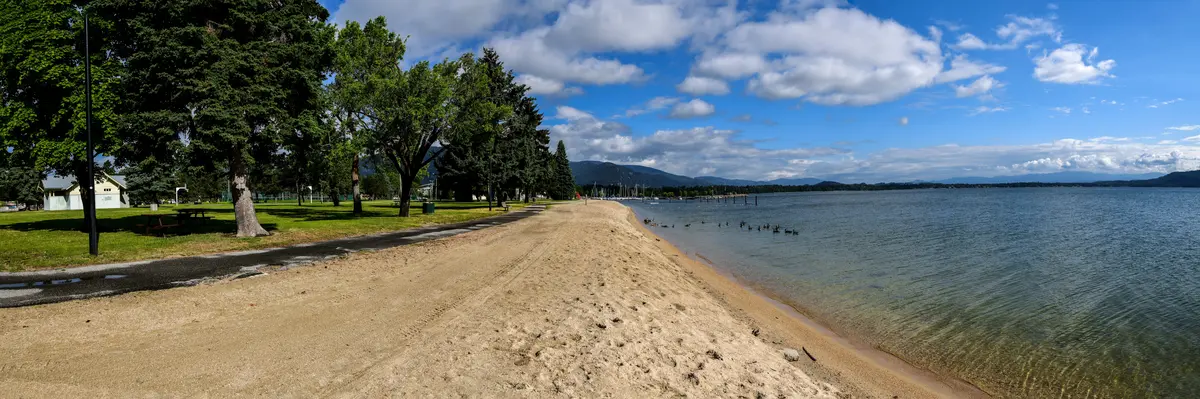
The lake is the starting point for most weekend activity, regardless of season. In summer, City Beach fills with swimmers, paddleboarders, and people walking the path along the shore. The farmers market runs Saturday mornings downtown from May through October, and the rhythm of turning up weekly for local produce and ready-to-eat food becomes one of those habits that makes a place feel like home faster than anything else.
On the Mountain
Schweitzer Mountain Resort — 11 miles northwest of downtown — is Idaho's largest ski area: 2,900 skiable acres, 92 trails, a 2,400-foot vertical drop, and an annual average of 300 inches of snowfall. It's the kind of resort that skiers from the Midwest or Southeast move here specifically for, and locals treat it as a backyard amenity rather than a destination. Summer brings lift-served mountain biking and hiking to the same terrain.
Downtown After Dark
The Panida Theater on First Avenue is the cultural anchor — a restored 1927 cinema that hosts independent films, live music, and community performances and functions as the kind of venue that tells you everything about a small city's character. MickDuff's Brewing Company runs two downtown locations: the brewpub on N 2nd Ave for a sit-down meal, and the Beer Hall on Cedar Street for a more casual pint. The broader restaurant scene across more than 60 spots ranges from waterfront dining to pub nights with live music.
Annual Events That Locals Actually Attend
The Sandpoint Winter Carnival in February — typically a ten-day run — features a downtown Parade of Lights, fireworks at Schweitzer, the K9 Keg Pull (a dog-sled fundraiser that has become genuinely beloved), and a Taste of Sandpoint restaurant showcase. It's the kind of event that a newcomer attends once out of curiosity and circles on the calendar every year after that.
Summer brings the Festival at Sandpoint, an outdoor music series at a lakeside venue that draws national and regional acts to a lawn setting right by the water. These aren't niche events for tourists — they're where you'll find your neighbors, which is the point. For families, youth sports and kids' activity options through the school district and local recreation programs are covered in detail on the schools page.
Day Trips and Regional Access
Priest Lake — about 35 miles north — is the quieter, less-discovered alternative for boating and cabin weekends. The drive north on US-2 into Priest River passes through dense timber country that feels a world removed from summer crowds. Spokane, 75 miles southwest, provides the regional amenity layer: major medical, large-format retail, a significant restaurant and arts scene, and the airport. Most Sandpoint residents treat it as a monthly destination rather than a daily dependency.
Top Things Locals Say About Sandpoint
The best intel about a city comes from the people who actually live there. Here’s what Sandpoint residents say when newcomers ask the questions everyone’s thinking.
“I knew the lake would be beautiful, but I didn't expect it to completely reorganize how I think about weekends. By month four I had a paddleboard, and I hadn't owned anything that floated in my entire adult life before moving here. What I didn't expect was how much the Long Bridge would factor into every single errand — it sounds minor until you're sitting on it for twenty minutes on a Friday in July.”
— Recent Sandpoint home buyer
“What's the most surprising thing about living in Sandpoint?”
How completely the lake takes over your life. You move here thinking Schweitzer is the main draw, and then it's July and you realize you've spent every free hour on or near Lake Pend Oreille. City Beach becomes the default afternoon destination, the Long Bridge walk becomes a weekly ritual, and suddenly a 43-mile lake feels like your own backyard.
“What do locals love most about Sandpoint?”
The scale of it. You can walk from the Cedar Street Bridge Public Market to the Panida Theater in five minutes, run into three people you know, grab a beer at MickDuff's, and still be home for dinner. In a city of 10,000, you actually know your community — and there's a ski resort with 2,900 acres eleven miles up the hill. That combination doesn't exist many places.
“What should newcomers to Sandpoint know?”
Plan your life around the Long Bridge. It's the only way in and out of central Sandpoint across Sand Creek, and in summer or after a winter accident, it backs up fast. Also: get your winter tires before November. The road up to Schweitzer and US-2 toward Spokane are not forgiving to drivers who treat Idaho winters like Pacific Northwest drizzle. And buy a ski pass in October — prices only go up.
“Can you live in Sandpoint without a car?”
For most people, no. SPOT (Selkirks-Pend Oreille Transit) runs free bus service connecting Dover, Sandpoint, Ponderay, and Kootenai, and there's a seasonal connector to Schweitzer, which is genuinely useful. But grocery runs outside the walkable downtown core, school pickups, and anything involving the Spokane airport all require a vehicle. The downtown itself is walkable; the rest of daily life is not.
Cities Near Sandpoint
Other communities near Sandpoint worth a look — each with its own character and price point.
| City | Distance | Best For | Vibe | Median Rent | Median Buy |
|---|---|---|---|---|---|
| Ponderay | 2 mi | Shoppers, commuters & budget buyers | Commercial, practical, no-frills | $1,600 | $614,300 |
| Dover | 3 mi | Waterfront living & quiet streets | Small, riverside, residential | $1,550 | $580,000 |
| Sagle | 6 mi | Acreage, privacy & rural lifestyle | Rural, wooded, spread-out | $1,650 | $620,000 |
More Helpful Guides for Sandpoint
Going deeper on Sandpoint? Our blog series covers everything from first-time buying to retiring here — explore the guides below.
Local Expert Takeaway: Sandpoint rewards buyers who understand that the city's scale is both its strength and its constraint. At roughly 10,000 residents, it delivers a lake, a ski resort, a walkable historic downtown with MickDuff's and the Panida Theater, and a local economy anchored by employers like Litehouse Foods and Kochava — but it does all of this without the infrastructure of a larger city. The Long Bridge is the single artery in and out, the airport is 80 miles away in Spokane, and winters are genuinely demanding. Buyers who move here knowing those facts tend to stay for decades. Buyers who move here expecting Coeur d'Alene amenities at a lower price tend to leave within three years.
Quick Takeaways & FAQs
✅ Lake Pend Oreille — 43 miles long and the fifth-deepest lake in the U.S. — is a literal front-yard amenity for residents, not just a weekend drive.
⚠️ The Long Bridge is the only connection across Sand Creek into central Sandpoint, and a single incident can back up traffic city-wide — factor it into any home's true commute cost.
📍 Sandpoint is Idaho's only Amtrak stop, with the Empire Builder running westbound to Seattle and eastbound to Chicago — a surprisingly useful amenity for a town of 10,000.
What is the typical home price in Sandpoint, Idaho?
How far is Sandpoint from Spokane, and is the commute realistic?
What are the major employers in Sandpoint?
What are the schools like in Sandpoint?
Is Sandpoint a good place to retire?
Helpful Links for Moving to Sandpoint
Moving to Idaho?
Tell us what you need help with and we'll connect you with local resources.
