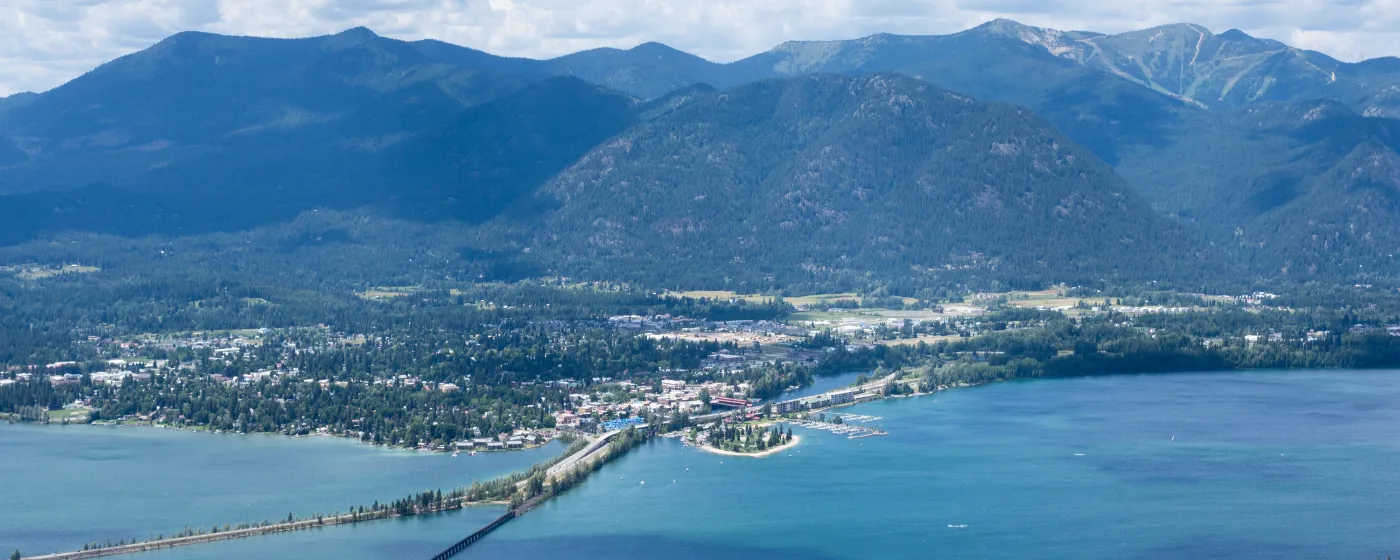
You've probably seen the photos: Lake Pend Oreille at dusk, Schweitzer Mountain dusted with snow, the Long Bridge stretching across water that looks too blue to be real. What the photos don't show is the grocery run in January when Highway 95 is glazed with ice, or the specialist appointment that sends you 75 minutes southwest to Spokane because Sandpoint's hospital — excellent for what it is — doesn't have a cardiologist on staff every day. That tension between extraordinary natural setting and genuine small-town infrastructure limits is the central trade-off every prospective retiree here needs to sit with before signing anything.
Sandpoint is a city of roughly 10,200 people, and the retirement economy here is more cultural than employment-driven. About 17.6% of residents are already 65 or older, and the median age of 42.4 means this isn't a college town that tolerates retirees; it's a community that has genuinely shaped itself around people in their second half. The Panida Theater runs film series and live performances year-round. The Cedar Street Bridge Public Market draws locals every weekend. The Festival at Sandpoint fills War Memorial Field on the lakefront every July and August with ten days of outdoor concerts. These aren't amenities the city is working toward — they're already here.
The cost picture is real and worth stating plainly: the Zillow Home Value Index pegs the typical Sandpoint home at $588,781 (2026), which is meaningfully higher than most of rural Idaho but still noticeably below comparable lakefront resort markets in Montana or the Pacific Northwest. The effective property tax rate of approximately 0.43% is one of the lowest in the country for a market at this price point. Idaho exempts Social Security income entirely from state tax, which matters on a fixed income. The full breakdown of daily living costs lives on the cost of living page, but the short version is this: you'll spend more on housing than you might expect for Idaho, and less on taxes than you'd pay almost anywhere else.
Whether you're drawn by the lake, the mountain access, the small-town pace, or the tax posture, the sections below cover everything a retiree actually needs to evaluate Sandpoint honestly: healthcare depth and its real limits, the retiree budget math, walkability and social life, downsizing options, and how this city stacks up against nearby retirement alternatives.
Why Retirees Are Choosing Sandpoint
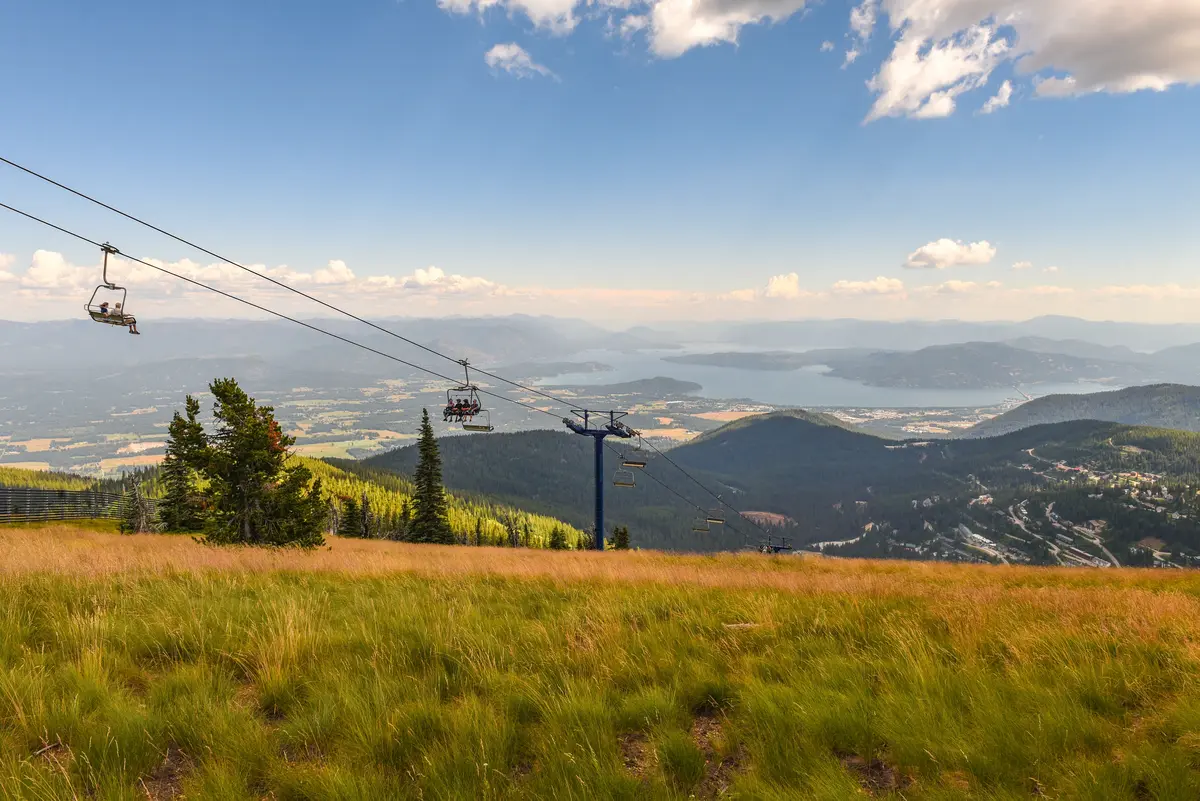
Sandpoint keeps appearing on retirement shortlists for a reason that spreadsheets can't fully capture: the quality of an ordinary Tuesday here is unusually high. You can walk from a downtown coffee shop to City Beach in under ten minutes. The Panida Theater is showing something interesting most weekends. A hiking trail starts where the pavement ends. For active retirees who want a culturally alive small town without the price tag of a coastal resort community, the fit is genuinely strong.
The roughly 17.6% of residents already over 65 means the social infrastructure for retirees exists organically — peer networks, established volunteer organizations, senior programming at the community level. This isn't a place where retirees are outnumbered by twenty-somethings. The independent bars and breweries along Cedar Street and Second Avenue are where locals of all ages actually gather; neither scene empties after Labor Day.
That said, Sandpoint is not the right call for everyone. If you need frequent specialist care — oncology, advanced cardiology, neurology — the 75-minute drive to Spokane is not a minor inconvenience; over time, it's an exhausting reality. Buyers who arrive from Phoenix or Sacramento often underestimate how isolating North Idaho winters can feel when you can't drive comfortably on ice. And the typical home price of $588,781 (Zillow Home Value Index, 2026) puts entry well above what many fixed-income retirees budget. If your retirement depends on a sub-$350,000 home purchase, the inventory here will frustrate you.
Healthcare & Medical Access in Sandpoint
Bonner General Health: What It Does Well
Bonner General Health at 520 N Third Ave is the backbone of medical care in Sandpoint — a 25-bed Critical Access Hospital accredited by DNV GL-Healthcare, serving a regional population of over 57,000. For a town this size, the service depth is genuinely impressive: a 24-hour Emergency Department, ICU, surgical suites, orthopedic care, rehabilitation, home health, and hospice. More than 200 providers are affiliated with the network, and most are accepting new patients — a real advantage for retirees relocating from metros where primary care waitlists run months long.
The Honest Gap: Specialist Access
The Critical Access designation tells you both everything and nothing. It means Bonner General qualifies for federal rural hospital funding — and it means the facility is not built to handle complex, multi-specialty care. Advanced oncology, interventional cardiology, neurosurgery, and Level II trauma all require a trip to Spokane, Washington, approximately 75 minutes away on US-2 and I-90 under good conditions. In winter, that drive can stretch considerably longer, and on bad days it's genuinely treacherous.
For routine care, preventive visits, orthopedic follow-ups, and outpatient rehabilitation, Bonner General handles daily life well. For retirees who already know they'll need regular specialist appointments — quarterly infusions, cardiac monitoring, dialysis — the math on that drive needs to be built into your decision, not discovered after you've moved.
What to Ask Before You Move
Bonner General's service menu does evolve; confirm current specialty availability directly at bonnergeneral.org before making any healthcare-dependent relocation decision. Regional telehealth has also expanded meaningfully in North Idaho since 2020, and many Sandpoint retirees now conduct specialist follow-ups via video rather than driving to Spokane for every appointment. That option won't replace every in-person visit, but it changes the calculus for routine management of chronic conditions.
The Retiree Budget in Sandpoint
Idaho's Tax Posture for Retirees
Idaho exempts Social Security benefits entirely from state income tax — no means test, no income phase-out, no age requirement. That exemption applies automatically, regardless of how large your benefit is. For retirees whose income is primarily Social Security, Idaho's tax treatment is straightforwardly favorable.
The picture shifts for retirees drawing from private pensions, traditional IRAs, or 401(k) accounts. Idaho taxes those distributions at a flat state income tax rate of approximately 5.3% above the standard deduction threshold, and most retirees with non-government pensions do not qualify for the state's narrow Retirement Benefits Deduction. That rate is worth running through your actual withdrawal numbers before you assume Idaho is a uniformly low-tax retirement state. It is competitive — but not the lowest in the region.
Idaho also levies no estate or inheritance tax. The 2026 federal estate tax exemption sits at $15 million, meaning virtually no Sandpoint retiree faces exposure at either level. For those focused on leaving assets to heirs, that combination is meaningful.
Property Taxes: The Genuine Advantage
Bonner County's effective property tax rate is approximately 0.43% — well below the national average of roughly 1.0%. On a home at the Sandpoint median, that keeps annual property tax obligations modest by any comparable-market standard, before any exemptions apply.
Retirees 65 and older should investigate Idaho's Circuit Breaker program immediately. Qualifying homeowners with 2025 household income under $39,130 (after allowable medical deductions) can receive a property tax reduction of $250 to $1,500 per year. Applications go to the Bonner County Assessor between January 1 and April 15 each year — missing the window means waiting a full year to apply again. For retirees on modest fixed incomes, this program can meaningfully reduce the carrying cost of ownership.
Daily Cost Reality
Sandpoint's grocery and dining options are solid for a city this size, but the selection is narrower than a metro retiree will expect — certain specialty items require a trip to Spokane or an online order. Healthcare copays and travel costs for specialist visits should be budgeted explicitly, not assumed to mirror what you paid in a larger city. The full cost-of-living picture, including rent benchmarks for those considering renting first, is on the cost of living page.
Looking to buy in Sandpoint? Estimate your payment.
Enter your numbers to see an estimated monthly mortgage payment.
Estimate only. Excludes HOA fees and mortgage insurance. The interest rate above is a starting point, not a quoted rate — replace it with your own to see real numbers. Insurance is a flat placeholder, not a Sandpoint quote.
Walkability, Community & Staying Active in Sandpoint
The Walkability Reality
Downtown Sandpoint is genuinely walkable by small-town Idaho standards — Cedar Street, First Avenue, and the streets surrounding the Cedar Street Bridge Public Market put restaurants, independent shops, the library, and the lakefront within comfortable walking distance of one another. If you live downtown or in the Downtown Historic District, daily errands on foot are realistic for most of the year.
Outside the core, the picture changes. Hillside neighborhoods away from the downtown grid are car-dependent — the terrain is hilly, sidewalk coverage is inconsistent, and distances to services grow quickly. Retirees who want to age in place without a car should prioritize housing within the downtown core or along flat routes near Sand Creek. The Long Bridge and the City Beach area are flat and accessible, and both see steady foot traffic from locals year-round, not just in summer.
Social Life and Community Anchors
About 17.6% of Sandpoint's population is already 65 or older, so the social fabric for retirees is not something you have to build from scratch. The Sandpoint Senior Center provides programming, meal services, and connection points for the over-60 community. Volunteer opportunities run deep — the Festival at Sandpoint (held at War Memorial Field, 801 Ontario St, every July and August) draws heavily on local volunteers, and the Panida Theater has sustained a community of engaged arts supporters for decades.
Active retirees consistently describe Lake Pend Oreille and Schweitzer Mountain as the backbone of their social calendars. Kayaking and paddleboarding groups form organically on the lake each spring. Schweitzer's nordic and alpine trails draw skiers and snowshoers well into March. The parks and recreation page covers the full outdoor scene, but the short version is that Sandpoint rewards retirees who want to stay physically active in ways that few towns its size can match.
What Six Months Here Actually Looks Like
Most retirees who move here from a larger metro report the same surprise around month four or five: they expected to miss the amenity depth of city life, and instead they find they've filled their calendar faster than they did at home. The trade-off that takes longer to feel is the isolation that sets in during extended stretches of gray weather in November and February. Sandpoint winters are beautiful but not mild — if seasonal affective disorder is part of your history, that factor deserves real weight alongside the lake views.
Right-Sizing: Downsizing in Sandpoint
What the Market Looks Like for Downsizers
Sandpoint's inventory for single-level and low-maintenance living is tighter than most downsizers expect when they arrive. The resale market is dominated by multi-story homes on hillside lots — the same dramatic terrain that produces the views also makes single-floor living genuinely hard to find at reasonable prices. Retirees who are firm on single-level construction should start their search early and expect competition when the right property appears.
Condos and townhomes exist downtown and near the waterfront, and they tend to move quickly. The Dover Bay development in the community of Dover — just across the Pend Oreille River — offers patio homes and low-maintenance lots in a planned community setting with lake access, and it attracts retirees specifically looking for that combination. Dover is a short drive from downtown Sandpoint, and the compromise is light: you give up on-foot access to the core in exchange for maintenance-free living and a neighborhood built around the water.
Assisted Living and Senior Care Communities
Sandpoint has approximately six senior living communities covering the spectrum from independent living to memory care. Bridge Assisted Living at Sandpoint (1123 N Division St) and Evergreen–Idaho Health Care Sandpoint (624 S Division Ave) are among the established assisted living options. Luther Park at Sandpoint serves the independent and assisted living segment with a faith-affiliated campus. This is a workable selection for a city of 10,000, but it is not the deep menu of options you'd find in Spokane or Coeur d'Alene — if your care needs are likely to advance significantly, the limited local supply means future transitions may require relocating again.
The Inventory Honest Talk
Purpose-built 55+ communities in the American Sun Belt sense — gated, amenity-rich, age-restricted — do not exist in Sandpoint. What you find instead are small pockets of age-friendly housing embedded in a mixed-age community. That can be a feature rather than a bug for retirees who don't want to live in an age-segregated environment, but buyers who expect a Trilogy or a Del Webb product will not find it here. The practical advice: if single-level living and minimal exterior maintenance are non-negotiables, tell your agent that explicitly and set a realistic timeline, because the right property may take several months to appear.
Sandpoint vs Nearby Retirement Destinations
| City | Cost vs Sandpoint | Primary Hospital | Walkability | Senior Living Depth | Overall Retirement Fit |
|---|---|---|---|---|---|
| Sandpoint, ID | Baseline | Bonner General Health (Critical Access, 25 beds) | Good downtown; car-dependent elsewhere | Moderate (~6 facilities) | Strong for active, outdoors-oriented retirees with manageable health needs |
| Coeur d'Alene, ID | Noticeably pricier | Kootenai Health (full-service regional hospital) | Better — larger downtown grid, more flat terrain | Deep — significantly more options | Better for retirees needing more medical depth and retail access |
| Spokane, WA | About the same to slightly cheaper | Multiple — Providence, MultiCare, VA Medical Center | Strong — urban core, transit options | Very deep — large metro inventory | Best for retirees who prioritize medical access and amenity variety over scenery |
| Priest River, ID | Noticeably cheaper | No local hospital — referral to Bonner General or Spokane | Very limited | Minimal | Works for self-sufficient, healthy retirees on tight budgets; isolation is real |
| Ponderay, ID | Slightly cheaper | Adjacent to Bonner General (minutes away) | Car-dependent — commercial strip layout | Limited | Practical for budget-conscious buyers who want Sandpoint's hospital nearby without Sandpoint prices |
| Sagle, ID | Slightly cheaper | No local hospital — relies on Bonner General in Sandpoint | Rural — car required for nearly everything | Minimal | Appeals to retirees wanting acreage and privacy with quick access to Sandpoint services |
Coeur d'Alene is the clearest alternative for retirees who want the North Idaho lifestyle but need deeper hospital infrastructure — Kootenai Health is a full-service regional system, not a Critical Access facility, and the broader selection of senior living communities there makes future care transitions easier. The downside is a noticeably higher price floor and a city that feels considerably more suburban.
Spokane sits in its own category: if regular specialist care is already part of your life, living 75 minutes from it rather than in it is a real cost in time and stress. Spokane offers the medical infrastructure and transit options of a mid-sized city, and its home prices are currently competitive with Sandpoint. For retirees who fell in love with the lake but are honest about their health trajectory, Spokane as a primary residence with regular Sandpoint visits is worth considering. Priest River and Sagle offer meaningfully lower prices for buyers who are healthy, mobile, and not dependent on walkable services — but both require accepting that almost every errand involves a car, and neither has the cultural infrastructure that makes Sandpoint's retirement case as strong as it is.
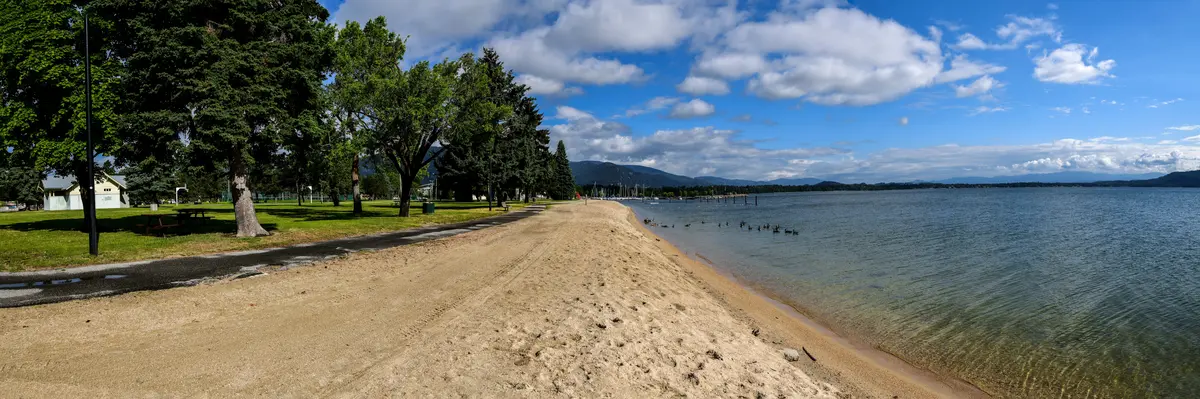
Local Expert Takeaway: Sandpoint's retirement appeal is real and specific: Lake Pend Oreille two blocks from downtown, an effective property tax rate of approximately 0.43%, Idaho's full Social Security exemption, and a community where nearly one in five residents is already 65 or older. The honest counterweight is that Bonner General Health — good as it is — is a 25-bed Critical Access facility, and serious specialist care means a 75-minute drive to Spokane. Retirees who visit in July during the Festival at Sandpoint at War Memorial Field and fall in love with the place should also visit in February, when the gray sky and icy highway tell the rest of the story. If both versions of Sandpoint still appeal to you, it's likely the right fit.
Quick Takeaways & FAQs
✅ Idaho exempts Social Security income entirely from state tax, and Bonner County's effective property tax rate of approximately 0.43% is among the lowest for any lakefront market in the Northwest.
⚠️ Bonner General Health is a capable Critical Access Hospital, but advanced specialist care — cardiology, oncology, neurosurgery — requires a 75-minute drive to Spokane, a real logistical burden for retirees with complex health needs.
📍 The Festival at Sandpoint draws volunteers and attendees from across the region every July and August at War Memorial Field on the lakeshore — it's one of the clearest windows into what the retiree social calendar here actually looks like.
Is Sandpoint a good place to retire if I have ongoing health issues?
Does Idaho tax retirement income like pensions and IRA withdrawals?
Are there 55+ communities or active-adult developments in Sandpoint?
What property tax relief is available for retirees in Sandpoint?
How does Sandpoint compare to Coeur d'Alene for retirement?
Moving to Idaho?
Tell us what you need help with and we'll connect you with local resources.
