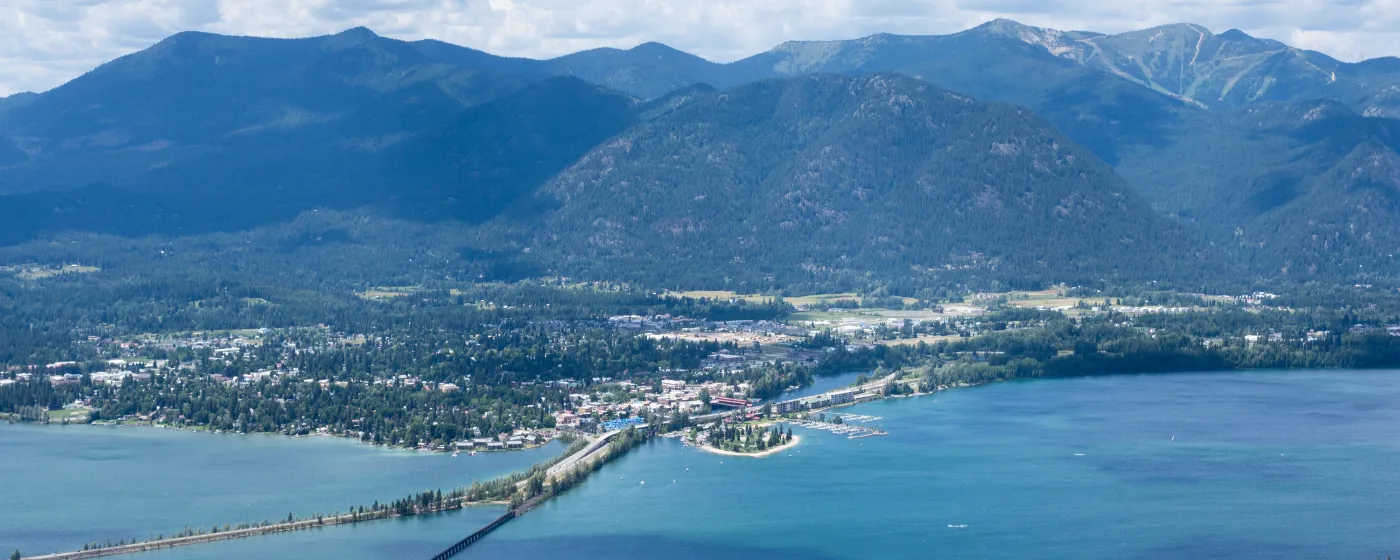
You've probably done the math already. California's cost of housing, state income taxes, and general cost of living push a lot of residents to start searching elsewhere — and North Idaho, specifically Sandpoint, keeps coming up. But Sandpoint is not a typical Idaho town. It sits on the southern tip of Lake Pend Oreille, Idaho's largest lake, at the intersection of U.S. Highway 2 and U.S. Highway 95 in Bonner County. Schweitzer — Idaho's largest ski area — is 11 miles up the road. The result is a small city of roughly 10,200 people that functions more like a mountain resort community than a bedroom suburb. That distinction matters enormously before you make an offer.
The local economy runs on a mix of healthcare through Bonner General Health, food manufacturing at Litehouse Foods, education through the Lake Pend Oreille School District, resort operations at Schweitzer, and a growing technology sector anchored by Kochava, a mobile analytics firm. Remote workers from the Bay Area and Southern California have been landing here for years, drawn by the tax environment and outdoor access. If your income travels with you, the economics work. If you're planning to find local employment at local wages, the numbers are tighter than they first appear — the median household income sits at $72,289, and the local job market reflects a resort-and-service economy, not a tech corridor.
Sandpoint's overall cost of living index is approximately 116 against a national average of 100, driven mainly by housing. California's statewide index sits around 142, so the move still represents real savings — just not the dramatic discount that cheaper Idaho markets offer. What Sandpoint does deliver is a genuinely different pace: City Beach on the lake is a ten-minute walk from downtown's Cedar Street Bridge Public Market, the Panida Theater anchors an arts scene that punches above the city's size, and Winter Carnival fills ten days every February with events at Schweitzer and along the main streets. The trade is urban convenience and career density for mountains, water, and a community that actually knows your name by spring. For more on day-to-day cost of living figures, there's a full breakdown on that page.
Whether you're being relocated by a remote-friendly employer, priced out of the Bay Area, or simply done with California's traffic and tax burden, the sections below cover what Sandpoint costs compared to where you're coming from, how the tax picture changes, what the lifestyle adjustment actually looks like, what surprises people after six months, and what you should know before signing anything.
The Home Price Reality: What Your California Equity Buys Here
Sandpoint's typical home value is $588,781 (Zillow Home Value Index, 2026). That figure has pulled back roughly 10% from its post-pandemic peak, but it remains well above the Idaho statewide median — because Sandpoint is not competing with Pocatello or Twin Falls. It's competing with other mountain resort towns, and buyers arriving with California equity often set the price floor.
If you're coming from the Bay Area or Los Angeles, your equity almost certainly covers a Sandpoint purchase outright or makes for a very strong down payment. The math genuinely works in your favor. What surprises many California buyers is that $588,781 doesn't buy as much square footage as they expect — lakefront and ski-access properties push well above the median, and move-in-ready homes near downtown or with water views move quickly.
The more important number for California transplants is the effective property tax rate: approximately 0.43%. California's statewide average runs around 0.70%. Idaho also offers a homeowner's exemption covering 50% of assessed home value (excluding land), capped at $125,000 — apply for it as soon as you close, because it doesn't happen automatically.
Who This Market Actually Serves
The buyers keeping this market afloat are disproportionately people with California equity, remote incomes, or both. At the city's median household income of $72,289, stretching to the typical home price is genuinely difficult without that equity cushion or a portable salary. If you're arriving with significant equity and a portable income, you're in the comfortable majority of recent buyers. If you're restarting locally, plan your budget carefully — see the full cost of living breakdown for how other expenses stack up.
What This Means in Practice
Sandpoint has distinct geographic zones with meaningful price variation — the neighborhoods guide covers the character of areas like Dover Bay, Syringa Heights, and the Downtown Historic District in detail. The short version: waterfront or ski-adjacent homes sell fastest and farthest above the median; hillside and east-side properties offer the most relative value.
The Tax Comparison: California vs. Idaho, Side by Side
The tax picture is where Sandpoint's case is strongest — and most specific. These aren't rough estimates. Idaho's tax structure is genuinely different from California's in ways that directly affect your take-home pay, your investment gains, and what you'll owe at year-end.
| Tax Category | California | Idaho / Sandpoint |
|---|---|---|
| State income tax — top rate | 13.3% (marginal, 9 brackets) | 5.3% flat rate (all taxable income, effective Jan 1, 2025) |
| State income tax — lowest bracket | 1% | 5.3% flat (no lower bracket) |
| State Disability Insurance (SDI) | 1.3% on all wages (no wage cap since 2024) | None |
| Capital gains tax | Up to 13.3% (taxed as ordinary income) | 5.3% (taxed as ordinary income, no surcharge) |
| Inheritance / estate tax | None at state level | None |
| Effective property tax rate | ~0.70% statewide average | ~0.43% (Sandpoint) |
| Sales tax — combined rate | 7.25% base + local add-ons (often 8–10.25% total) | Sandpoint has a combined state and local sales tax rate of 6.0% |
| Grocery sales tax | Exempt from sales tax | Taxed at 6% state rate; $120/person credit on state return |
The income tax shift is the most immediate change most California relocators feel. If you earned $200,000 in California and paid near the top bracket, moving to Idaho's flat 5.3% rate is a meaningful difference. The SDI elimination adds another layer: California's State Disability Insurance applied to every dollar of wages in 2026 with no wage cap — Idaho has no equivalent deduction at all.
Capital Gains: A Specific Win for Equity Sellers
If you're selling a California home and realizing significant capital gains, Idaho's treatment matters. California taxes capital gains as ordinary income at up to 13.3%. Idaho taxes them as ordinary income too — but at a flat 5.3%, with no state-level surcharge on investment gains. For buyers selling high-appreciation California properties before moving, this distinction can be substantial. Establish Idaho residency properly before the sale if this applies to you; that's a conversation for a tax professional, not a real estate agent.
The Grocery Tax Wrinkle
One thing that genuinely surprises California transplants: Idaho taxes groceries at the register at the full 6% state rate. California exempts groceries from sales tax. The $120-per-person grocery tax credit on your Idaho income tax return partially offsets this, but you still pay at checkout. For a household of four, the credit amounts to $480 annually — not nothing, but not a full offset either.
The Lifestyle Adjustment: What California Didn't Prepare You For
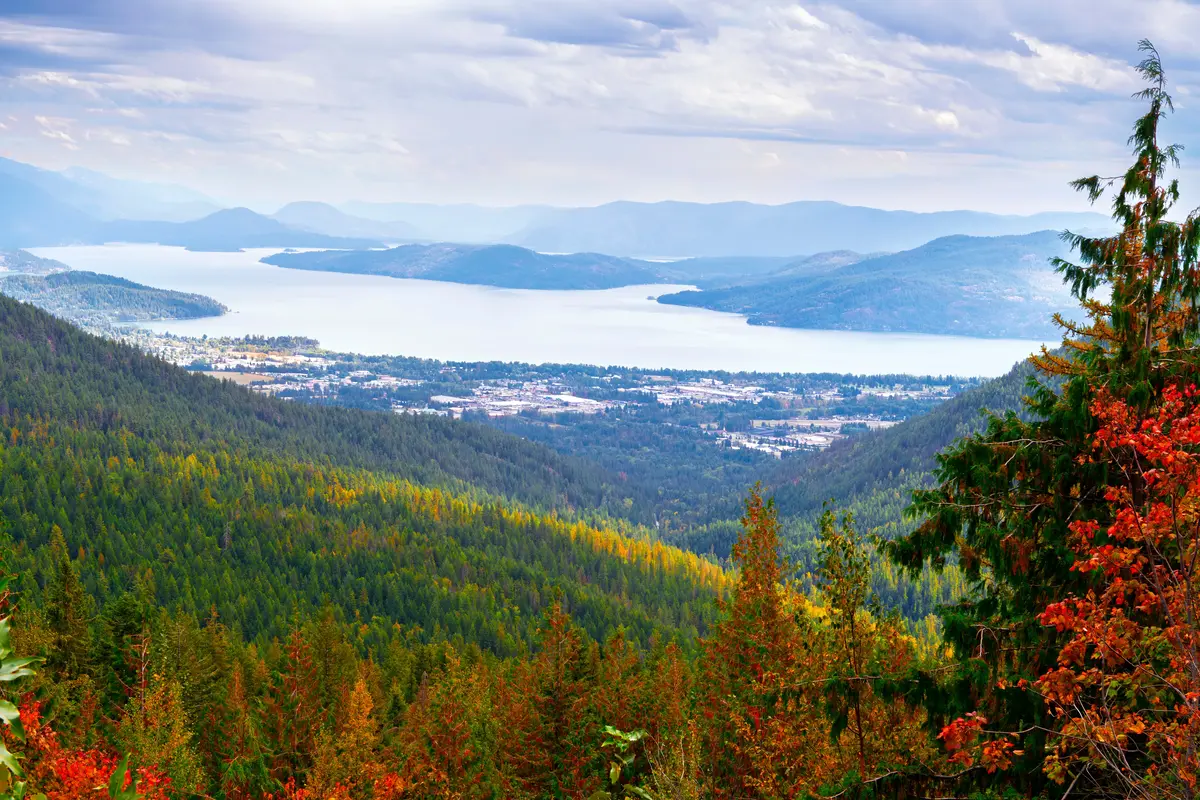
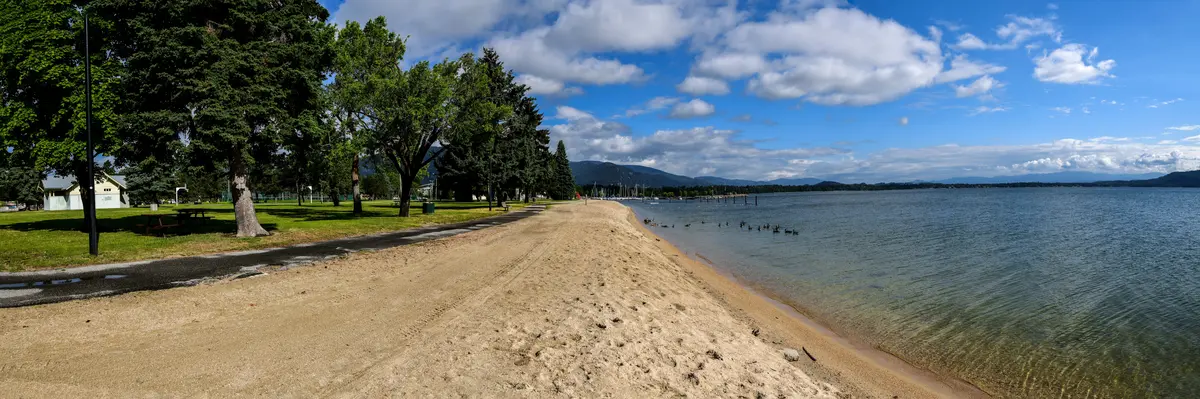
Six months in, most California transplants say the same thing: they underestimated both how beautiful and how remote Sandpoint actually is. The lake is right there. You walk to City Beach from downtown. The Long Bridge pedestrian walkway puts you over open water with a mountain backdrop that photographs like a postcard and feels even better in person. And then a February snowstorm closes Highway 95 for a day, and there's no DoorDash, and the nearest Trader Joe's is in Spokane, 75 miles away.
The Airport Situation Is Real
There is no commercial airline service into Sandpoint. Spokane International Airport (GEG) is approximately 75 miles away, roughly 1 hour 15 minutes to 1 hour 30 minutes by car on a clear day. In winter, that drive can extend significantly depending on conditions on Highway 2 or Highway 95. If you fly frequently for work or travel, build that drive into your mental model of living here — it's the most common practical frustration among remote workers who relocated from metro California.
What Actually Makes Daily Life Good
The downtown core along First and Cedar is genuinely walkable by small-city standards. A handful of independent brewpubs along the main streets are the kind of places where regulars know each other's orders by the second visit. The Panida Theater books live performances and film series that keep the cultural calendar alive well past ski season.
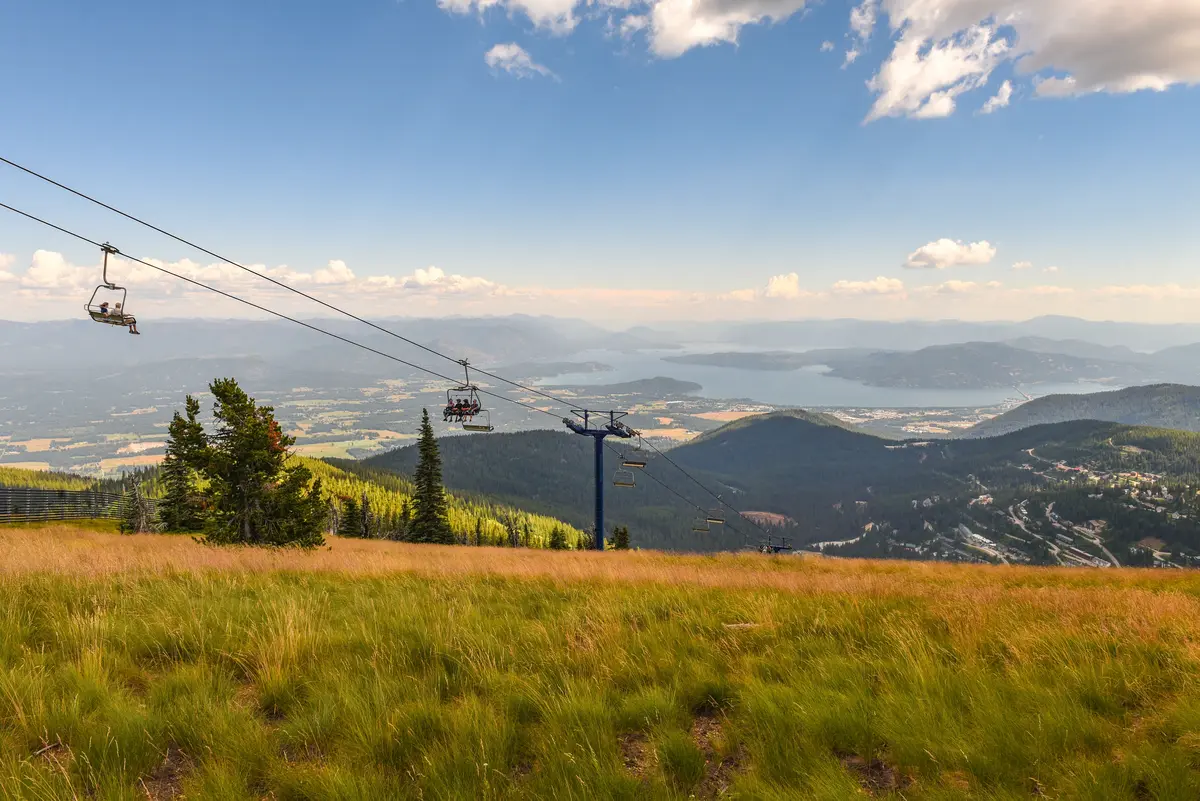
Schweitzer is 11 miles up the mountain — 2,900 skiable acres, a 2,400-foot vertical drop, 92 trails, and an average of 300 inches of snowfall annually. It's on the Ikon Pass. Californians accustomed to Tahoe traffic jams and resort parking fees will notice that Schweitzer's crowds are thinner and the access is genuinely easier. That's the trade that makes the remote winters livable for most people who stay.
Where Families Actually Gather
City Beach is the real community hub from June through September — families with kids, paddleboards, a swim area, and enough social density that you'll recognize faces by the second weekend. The Cedar Street Bridge Public Market draws a consistent Saturday crowd. Winter Carnival in mid-February, which ran February 13–22 in 2026, brings out the whole town for the downtown Parade of Lights and fireworks at Schweitzer. These aren't tourist events people watch from the sidelines — locals organize them and fill them. For school-age families, the Lake Pend Oreille School District page covers what the district actually looks like.
Looking to buy in Sandpoint? Estimate your payment.
Enter your numbers to see an estimated monthly mortgage payment.
Estimate only. Excludes HOA fees and mortgage insurance. The interest rate above is a starting point, not a quoted rate — replace it with your own to see real numbers. Insurance is a flat placeholder, not a Sandpoint quote.
What People Get Wrong — and Why Some Californians Move Back
Not everyone who comes from California stays. The honest reasons are worth naming before you commit rather than discovering them after closing.
The Wage Gap Is Not a Minor Detail
Sandpoint's local job market does not support California incomes. Healthcare at Bonner General Health, education through the school district, and resort work at Schweitzer are the dominant employment sectors. Kochava offers tech employment, but it's a single company in a small city. If your remote arrangement ends, or your employer eventually requires in-office presence, re-entering the local job market at the same income level is genuinely difficult. This is the single most common reason families who moved here on a remote-work arrangement eventually leave.
The Isolation Calculus
Sandpoint has a population of roughly 10,200. If you're used to the social and professional density of the Bay Area, San Diego, or Los Angeles, the adjustment is real. There are no regional malls, no major medical centers beyond Bonner General Health for specialized care, and no major league anything. People who thrive here tend to be outdoors-oriented, comfortable with a tight social circle, and genuinely fine with driving to Spokane when they need something specific. People who struggle tend to have underestimated how much ambient city life they were drawing on.
Highway 95 Through Downtown
The traffic chokepoint most newcomers don't anticipate: Highway 95 runs directly through Sandpoint's downtown, and the single bridge crossing over Sand Creek backs up meaningfully during peak summer tourism and during the morning and afternoon school-and-work windows. It's not Los Angeles traffic — but for a city of 10,000, it's a legitimate daily friction point. The workaround locals use: if you're commuting east or south, the Pine Street corridor through West Sandpoint can shave meaningful time during the peak bridge backup window of roughly 7:30 to 8:30 a.m.
I Would Not Buy on the Highway
Homes adjacent to Highway 95 — particularly along the sections where it narrows through the downtown corridor — carry persistent noise and truck traffic that doesn't show up on a weekend showing in good weather. Summer tourist traffic amplifies it. If you're house-hunting, drive the street at 7 a.m. on a weekday before making any decisions. The neighborhood guide lays out which areas sit clear of that corridor.
The Bottom Line for California Buyers: Who Sandpoint Is and Isn't For
Sandpoint is genuinely compelling for a specific type of California refugee: someone with equity to deploy, an income that moves with them, and an honest preference for mountains and lake over urban density. For that buyer, the tax savings on income, the lower property tax rate, and the lifestyle access to Schweitzer and Lake Pend Oreille are not hypothetical — they're immediate and real.
| Buyer Type | Fit with Sandpoint | Key Consideration |
|---|---|---|
| Remote Worker | Strong | Income portability is the entire foundation; confirm your arrangement is permanent before buying |
| Families with Kids | Moderate–Strong | Lake Pend Oreille School District serves the area; outdoor access is exceptional; social density is thin compared to suburban California |
| Outdoor Enthusiast | Very Strong | Schweitzer, Lake Pend Oreille, and hundreds of miles of trails — this is the primary draw for most |
| Equity-Rich California Seller | Strong | California gains taxed at 5.3% flat in Idaho vs. up to 13.3% in CA; establish residency properly |
| Local-Job Seeker | Weak | Wage levels and job volume don't support a California-style income; buyers relying solely on local earnings face real affordability pressure |
| First-Time Buyer from CA | Moderate | Lower price point than most CA markets, but Sandpoint is not cheap — entry-level requires tradeoffs on location or condition |
| Retiree / Semi-Retired | Moderate–Strong | Lifestyle quality is high; medical specialist access requires Spokane; no state estate tax is a genuine benefit |
The buyers who struggle are those who move primarily to escape California rather than primarily to be in Sandpoint. Those are different motivations, and Sandpoint's remoteness has a way of sorting them out within the first winter.
The Realistic First Steps
Come in summer and come in February. The town looks and feels different in both seasons, and you need both data points. Drive Highway 95 at morning rush. Walk City Beach on a Tuesday. Strike up a conversation at one of the waterfront spots on First Avenue and ask how long the person next to you has been here and what surprised them. Talk to people who came from California five years ago, not six months ago — their perspective on what held and what didn't is more useful than any article. For the mechanics of buying here, the first-time homebuyer page covers the process specifics. For a read on who Sandpoint suits and what daily life looks like, that page goes deeper on the community side.
Local Expert Takeaway: The Californians who land in Sandpoint and stay are the ones who came for the lake and the mountain, not just the tax rate. The income tax shift to Idaho's flat 5.3% is real, the property tax at 0.43% is noticeably below California's average, and selling a high-appreciation California home and buying here with that equity is a strong financial move for the right buyer. But the remote access — one bridge, one highway, Spokane 75 miles away — is not a detail to footnote. Walk City Beach, drive the Highway 95 corridor at 8 a.m., and spend a winter weeknight at one of the downtown brewpubs to see if the quiet feels like freedom or like confinement. That answer tells you more than any spreadsheet.
Quick Takeaways & FAQs
✅ Idaho's flat 5.3% income tax and zero SDI payroll deduction create an immediate and meaningful take-home pay increase for most California earners, especially those previously in the state's higher brackets.
⚠️ Sandpoint's market is accessible primarily for buyers arriving with California equity or portable remote incomes — those planning to earn local wages face affordability pressure that can feel surprisingly familiar to what they left.
📍 The nearest commercial airport is Spokane International, approximately 75 miles away — a drive that can stretch to 90 minutes or more in winter highway conditions, which is the most consistent practical complaint among California transplants after six months.
How much lower are property taxes in Sandpoint compared to California?
What is Idaho's income tax rate compared to California's?
Does Idaho tax groceries? I heard there's a grocery tax.
Can I actually get to the airport easily from Sandpoint?
Is Sandpoint actually affordable compared to California, or is it just cheaper than the Bay Area?
Moving to Idaho?
Tell us what you need help with and we'll connect you with local resources.
