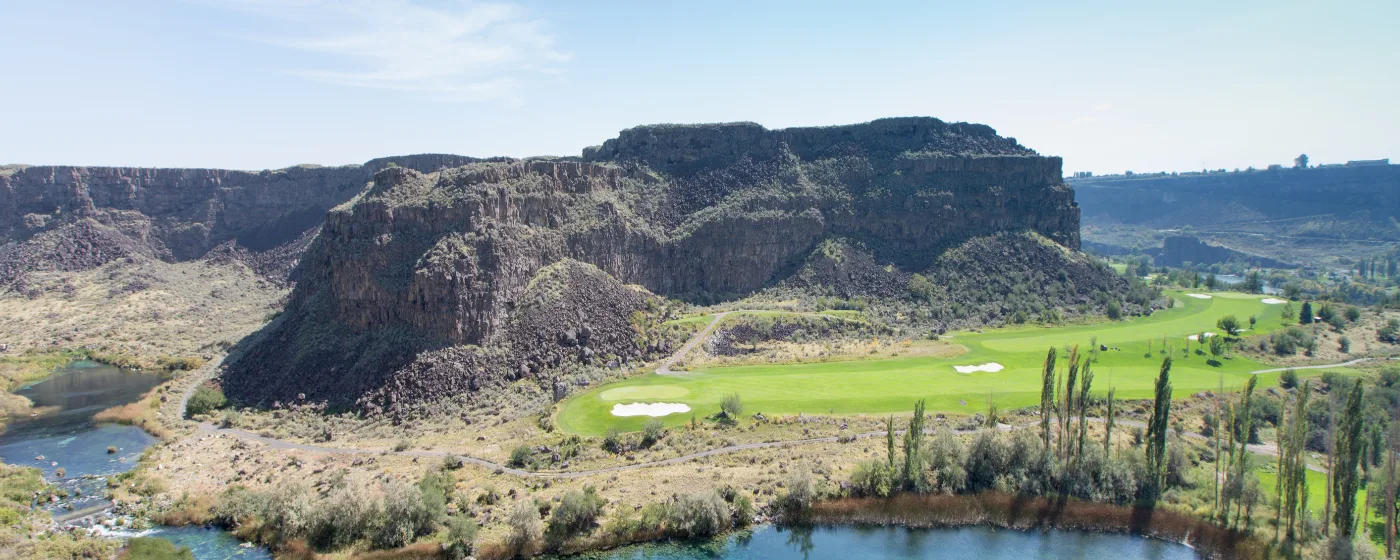
Maybe you've been priced out of the Boise market and someone at a family reunion mentioned the Magic Valley. Maybe you've driven U.S. 93 through Jerome and noticed that the pace here is genuinely different — not slower in a sleepy way, but quieter in a way that starts to sound appealing once you're a few years from a full-time job. Jerome sits at the geographic center of southern Idaho's agricultural basin, about 120 miles east of Boise on Interstate 84, with Twin Falls a 12-minute drive south across the Snake River Canyon. The land is wide and flat, the sky is enormous, and housing costs are a fraction of what retirees are fleeing in California, Oregon, and the Treasure Valley.
Jerome is a working town of roughly 14,000 people anchored by dairy processing, manufacturing, and agriculture — industries that create a stable, unpretentious community where the cost of services, food, and daily life stays grounded. That community character shapes retirement here: this is not a resort town or an amenity-rich exurb. There is no golf retirement enclave, no Whole Foods, no arts district. What there is: genuine affordability, a tight-knit social fabric, and the full breadth of Twin Falls' hospitals, restaurants, and retail within a commute that most retirees can do in their sleep.
For anyone on a fixed income, Jerome's math is hard to argue with. The median sold price was $351,000 in May 2026 — see the full cost-of-living breakdown for the broader picture. Property taxes run at an effective rate of approximately 0.67%, among the lower rates in the region. Idaho exempts Social Security benefits entirely from state income tax, and the state ranked 9th on the Tax Foundation's 2026 State Tax Competitiveness Index. For retirees stretching a monthly check, those numbers compound quickly into real quality of life.
Whether you're weighing a move here or just trying to understand whether Jerome belongs on your shortlist, this guide covers the healthcare landscape, what your retirement budget actually looks like, walkability and community life, downsizing options, and how Jerome stacks up against nearby towns that retirees also consider.
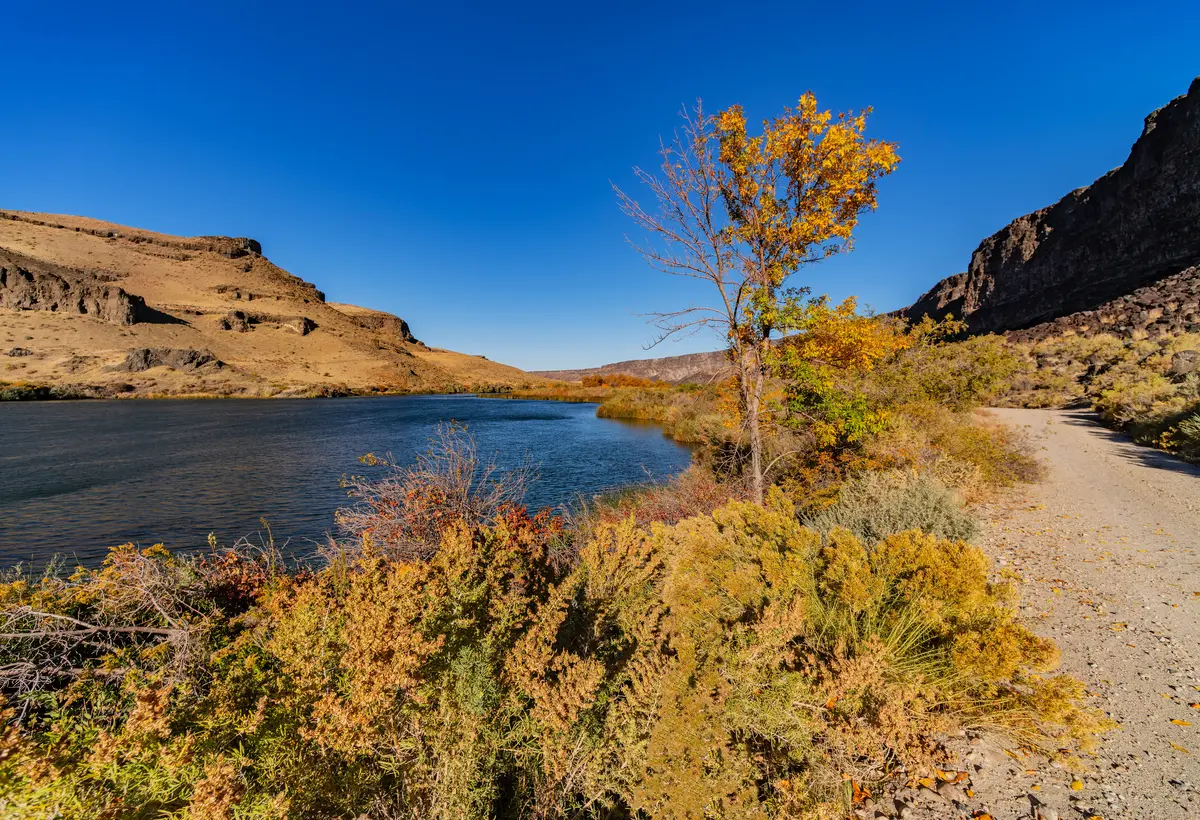
Why Retirees Are Choosing Jerome
The retiree who fits Jerome is usually someone who has already retired from the idea that retirement requires a curated lifestyle. You're comfortable in a small city. You own a car and plan to keep driving. You want to own a home outright — or close to it — and keep your monthly overhead low enough that the rest of life feels like options, not obligations.
At a median sold price of $351,000 (Redfin, May 2026), Jerome lets many buyers arriving from higher-cost states purchase a three-bedroom home with cash or a modest loan and redirect what used to be a mortgage payment toward travel, healthcare, or grandchildren's tuition. That single fact drives more retirement decisions here than any lifestyle amenity.
Jerome genuinely fits people who prioritize proximity to a larger city without paying for the privilege of living in one. Twin Falls — with its own hospital system, specialty clinics, box retail, restaurants, and St. Luke's Magic Valley Medical Center — is 12 minutes away. Retirees who want that access without Twin Falls prices find Jerome is the practical answer. It's a less obvious fit if you need robust public transit, walkable errands without a car, or a dense calendar of cultural events. Those things exist in limited form here, and you should weigh that honestly before committing.
Healthcare & Medical Access in Jerome
What Jerome Has On the Ground
St. Luke's Jerome Medical Center, at 709 N Lincoln Ave, is Jerome's primary hospital — a 25-bed critical access facility that has served this community since 1952, when it opened as St. Benedict's Hospital. It runs a 24-hour emergency department alongside family medicine, women's health, pediatrics, and urgent care. For routine and urgent needs — a fall, a chest scare at 2 a.m., a wound that can't wait — the ER is close and functional.
The facility earned a 2025 Performance Leadership Award as part of National Rural Health Day recognition across St. Luke's critical access hospitals, which matters because it signals investment and accountability within the St. Luke's system rather than a standalone rural clinic coasting on minimum standards. St. Luke's has also deployed a mobile breast health clinic that brings screening directly into rural communities like Jerome, so you're not automatically driving to Twin Falls for a mammogram.
The Honest Distance-to-Advanced-Care Reality
Cardiac surgery, neurosurgery, oncology, advanced orthopedics — none of that happens in Jerome. For any complex or specialty procedure, you're heading south to St. Luke's Magic Valley Medical Center in Twin Falls, which is the region's full-service referral hospital. That's a 12-minute drive on a normal day, and a genuinely important one if you or a spouse manages a serious chronic condition.
Retirees with significant cardiac history, dialysis needs, or active cancer treatment should map that commute — not to be alarmed, but to be realistic. Twin Falls handles a lot more than most small regional cities its size, so the gap between Jerome and real specialty care is not as wide as the population difference might suggest. Still, plan accordingly and confirm which network your supplemental Medicare coverage accepts before you close on a home here.
What Locals Know About the System
Because St. Luke's runs both Jerome and the Twin Falls flagship, your primary care relationship in Jerome transfers cleanly into the specialty network in Twin Falls. Referrals stay within the same electronic health record, which matters practically when you're 70 and managing three prescriptions and a cardiology follow-up. That integration is one of the real advantages of Jerome's location that retirees from outside Idaho often underestimate until they're using it.

The Retiree Budget in Jerome
Social Security and Idaho's Tax Posture
Idaho exempts Social Security benefits fully from state income tax — no income threshold, no phase-out, no partial inclusion. If Social Security is your primary income source, that exemption is worth real money every year compared to states that partially or fully tax it.
Pension income, IRA withdrawals, and 401(k) distributions are a different story. Idaho taxes those at a flat 5.3% state rate in 2026, the rate set by House Bill 40 signed in March 2025 — down from 5.695% previously, but still a meaningful line item for retirees drawing down private accounts. There is no broad senior exemption for private retirement income, though military retirees and certain public pension recipients may qualify for a narrower deduction — check with a tax professional before assuming it applies to your situation. Idaho also levies no estate or inheritance tax, and the federal exemption sits at $15 million per individual in 2026, so estate planning headaches are minimal for most retirees here.
Property Tax Relief for Seniors
Jerome's effective property tax rate is approximately 0.67% — one of the lower rates in the state. On a home at the city median, that keeps annual property tax well below what most retirees paid in their previous state.
Idaho's Property Tax Reduction program — often called the Circuit Breaker — can reduce a primary-residence property tax bill by $250 to $1,500 for homeowners 65 or older whose total income, after deducting medical expenses, is $37,810 or less. Separately, Idaho lets qualifying seniors with income under $60,000 defer property tax payments entirely until the home is sold, transferred, or the owner passes — taxes accrue with interest but create no current cash burden for fixed-income households. That deferral option is genuinely unusual and worth knowing about if you're asset-rich and cash-flow-constrained.
Daily Cost of Living on a Fixed Income
Idaho's state sales tax is 6% (combined rate approximately 6.03%), but prescription drugs are exempt — a direct benefit for retirees managing chronic conditions. The state also offers a grocery tax credit of $155 per person annually (up to $250 with itemized receipts) for tax year 2025, available even to residents who owe no income tax by filing Form 24. On a tight monthly budget, that credit is one of those small but consistent offsets that add up across a retirement decade.
Groceries, gas, and everyday services in Jerome trend noticeably below Twin Falls prices, and Twin Falls already runs well below Boise. Retirees arriving from the Pacific Northwest or California routinely describe the cost of a grocery run or a car repair here as something that takes a few months to stop feeling surprising.
Looking to buy in Jerome? Estimate your payment.
Enter your numbers to see an estimated monthly mortgage payment.
Estimate only. Excludes HOA fees and mortgage insurance. The interest rate above is a starting point, not a quoted rate — replace it with your own to see real numbers. Insurance is a flat placeholder, not a Jerome quote.
Walkability, Community & Staying Active in Jerome
The Geographic Reality of Getting Around
Jerome is flat — genuinely flat — which is one of its underappreciated advantages for older adults. There are no hills to negotiate on a bicycle, a walk, or a mobility scooter. The terrain does not fight you. What the city does require is a car for most errands: a grocery store, a pharmacy, a hardware run all involve driving. There is no meaningful public transit network, and the distances between commercial corridors make walking to daily errands impractical for most residents.
The exception is the Lincoln Avenue corridor, where a retiree living close to downtown can walk to a handful of service businesses, the post office, and a breakfast spot without getting in a car. That walkable window is real but narrow. Plan to keep driving — and if you or your spouse anticipates giving up keys within the next decade, factor that into your decision before buying here.
Where Jerome's Retirees Actually Gather
The Jerome Senior Center on East Ave is the social anchor for many retirees here. It runs daily programming, lunch service, exercise classes, and periodic day trips — the kind of low-key structure that keeps isolation from creeping in during an Idaho winter. The community built around it is genuinely tight, and newcomers are typically folded in quickly in a town this size.
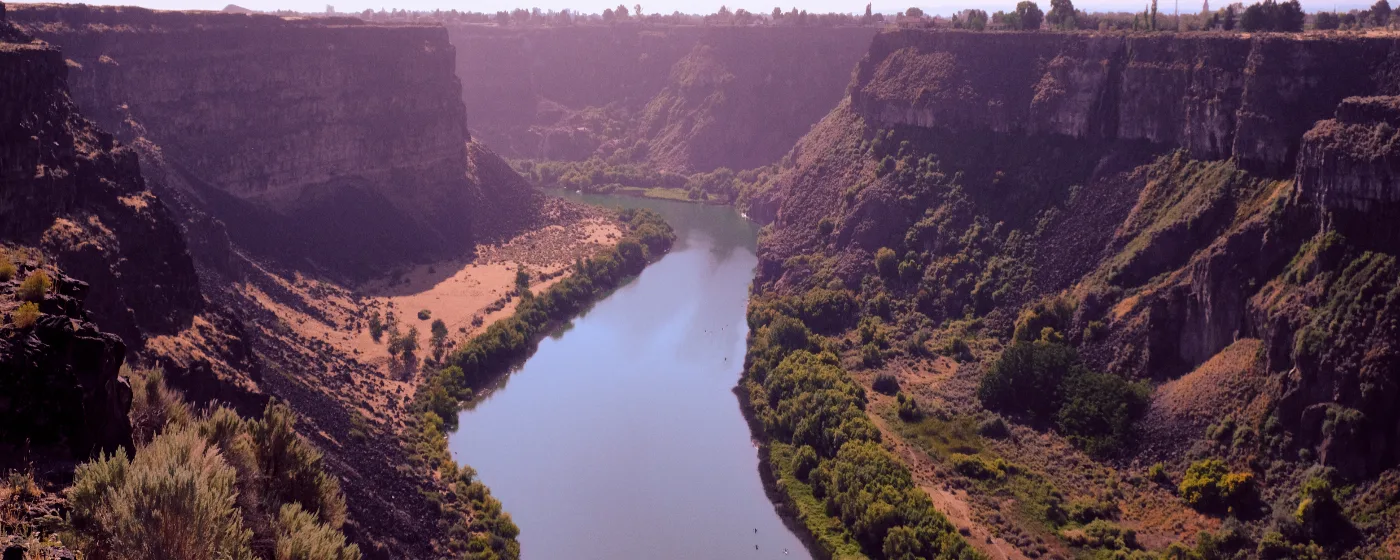
Snake River Canyons Park and the area around the Snake River draw older adults for walking and birdwatching, both activities that are meaningfully better here than in most Idaho cities of Jerome's size. The Jerome County Historical Museum and the Idaho Farm and Ranch Museum offer volunteer opportunities that retirees coming from professional careers often find satisfying — these aren't large operations, and they genuinely depend on consistent volunteer labor.
For a relaxed evening out, Fat Clarence's Pub and Grub on S Lincoln Ave is the kind of unpretentious neighborhood bar where regulars know each other and the menu is honest comfort food. It's not a retiree-specific scene, but it's a community one — the kind of place where you become a regular faster than you'd expect in a city three times this size.
What Surprises People After Six Months Here
The social fabric moves faster than newcomers expect. Jerome is small enough that you'll recognize people at the grocery store within a few months, and that familiarity translates into a kind of informal community safety net that retirees from larger cities find disorienting in the best way. The downside is equally honest: if you're someone who prefers anonymity, or whose social life centers on cultural institutions and dining variety, Jerome will feel thin inside of a year. The people who stay love the pace; the people who leave usually cite the same reason.
Right-Sizing: Downsizing in Jerome
What the Inventory Actually Looks Like
Jerome is not a purpose-built retirement town, and its housing stock reflects that. The dominant form is the single-family ranch-style home — one story, three bedrooms, attached garage — built between the 1960s and the early 2000s. For retirees downsizing from a two-story home, those ranch homes are the practical answer and they're available throughout the city at prices that allow many buyers to arrive without a mortgage.
Some areas offer slightly larger, newer construction on bigger lots for buyers who want more space or a more finished aesthetic. These homes sit at the upper end of Jerome's price range, but still land noticeably below comparable product in Twin Falls. If maintaining a large yard is not something you want in retirement, older ranch neighborhoods closer to downtown offer smaller lots with proportionally lower maintenance demands.
55+ and Low-Maintenance Options
Jerome does not have a dedicated 55+ gated community or a branded active-adult development in the style you'd find in Sun City or a larger resort market. That's an honest gap if that community structure is important to your retirement vision. What the market does offer is a modest inventory of patio homes and smaller single-level attached homes that function as practical low-maintenance options even without an age-restricted designation.
Buyers who want a true 55+ community with a clubhouse, a pool, and organized social programming typically find what they're looking for in Twin Falls, 12 minutes south, where that product category has more depth. The practical question is whether you need the community infrastructure or just the single-level, low-maintenance form factor — Jerome satisfies the latter reliably and the former only partially.
The Downsizing Calculus
For retirees selling a home in a higher-cost market, Jerome's median gives considerable room to buy well within equity proceeds and bank the difference. Lower acquisition cost means lower property tax, lower insurance, and more capital available for healthcare or travel — that arithmetic is straightforward and it's the reason many buyers from California and the Pacific Northwest end up here with cash in hand.
One practical note: the Jerome resale market is smaller than Twin Falls, which means fewer comparable sales and occasionally slower absorption. If you need to sell within a few years of buying — a health change, a family situation — plan for a market that works but doesn't move as quickly as a larger city. That's not a reason to avoid Jerome; it's a reason to buy a home you'd be comfortable holding longer than you plan.
Jerome vs Nearby Retirement Destinations
| City | Cost vs Jerome | Primary Hospital | Walkability | Senior Living Depth | Overall Retirement Fit |
|---|---|---|---|---|---|
| Jerome, ID | Anchor | St. Luke's Jerome Medical Center (25-bed critical access, 24/7 ER) | Low — car required for most errands; flat terrain is a plus | Thin — no 55+ community; solid senior center | Strong for budget-focused, car-driving retirees who value Twin Falls proximity |
| Twin Falls, ID | Noticeably pricier | St. Luke's Magic Valley Medical Center (full-service regional referral hospital) | Moderate — Blue Lakes Blvd is driveable; some walkable districts near downtown | Good — multiple 55+ communities and assisted-living facilities | Better for specialty healthcare dependence or buyers wanting more amenities |
| Wendell, ID | Somewhat cheaper | No local hospital — depends on Jerome or Twin Falls | Very low — small town, limited services | Minimal — very small community | Best only for buyers wanting maximum rural quiet and minimal overhead |
| Burley, ID | About the same | Cassia Regional Hospital (Intermountain affiliate, smaller critical access) | Low — car-dependent; flat | Limited — some senior housing, smaller senior center | Comparable affordability but farther from Twin Falls specialty care |
| Filer, ID | Somewhat cheaper | No local hospital — Twin Falls dependent | Very low — residential small town | Minimal | Appeals to buyers wanting a quiet residential community close to Twin Falls |
| Hailey, ID | Considerably pricier | St. Luke's Wood River Medical Center (critical access, smaller than Jerome's options) | Moderate — downtown Hailey is walkable for a small city | Limited — some senior options but smaller inventory | Better for retirees prioritizing outdoor recreation and mountain lifestyle over cost |
Twin Falls wins decisively on healthcare depth and senior living variety — if you're managing a serious chronic condition or want a 55+ community with programmed amenities, that's where the product is. Jerome wins on cost and delivers Twin Falls access in 12 minutes, which makes it the better call for healthy, car-driving retirees whose primary goal is stretching retirement savings.
Wendell and Filer offer even lower price points but give up both healthcare infrastructure and commercial amenities without meaningfully changing the Twin Falls commute picture. Burley offers comparable affordability to Jerome but adds distance to the region's strongest hospital system. Hailey is a fundamentally different retirement proposition — mountain scenery, outdoor lifestyle, and a price tag to match — suited to a buyer whose priorities don't overlap much with Jerome's core value. For the retiree doing the honest math on fixed income and long-term healthcare access, Jerome sits in a practical middle ground that few other Magic Valley towns can match.
Local Expert Takeaway: Jerome's retirement case rests on one honest equation: you get Idaho's Social Security exemption, a 0.67% property tax rate, a home you can likely buy outright from proceeds of a higher-cost-market sale, and a 12-minute drive to Twin Falls' full hospital system — all in a flat, tight-knit community where a neighborhood bar on Lincoln Ave knows your order by month three. The catch is equally honest: no 55+ community, no walkable errand loop worth relying on, and a social calendar that you'll largely build yourself. Retirees who arrive knowing that tend to stay; the ones who don't tend to end up in Twin Falls within two years.
Quick Takeaways & FAQs
✅ Idaho fully exempts Social Security benefits from state income tax, and Jerome's effective property tax rate of approximately 0.67% keeps carrying costs low for retirees on fixed incomes.
⚠️ Jerome has no dedicated 55+ community and no meaningful public transit — a car is essential for daily life, and anyone anticipating giving up driving within the next decade should plan accordingly.
📍 St. Luke's Jerome Medical Center at 709 N Lincoln Ave handles emergencies and routine care around the clock, but cardiac surgery, oncology, and advanced orthopedics all require the 12-minute drive south to St. Luke's Magic Valley in Twin Falls.
Is Jerome, Idaho a good place to retire on Social Security?
What hospital serves Jerome, Idaho retirees?
Are there 55+ or active-adult communities in Jerome, Idaho?
Can I walk to errands in Jerome if I give up driving?
What tax breaks are available to senior homeowners in Jerome?
Moving to Idaho?
Tell us what you need help with and we'll connect you with local resources.
