
If you searched for Moscow, Idaho on a national news site a few years ago, you found coverage of a terrible crime — the 2022 murders of four University of Idaho students that shook the Palouse and attracted months of national attention. That coverage created an impression of Moscow that the raw numbers simply do not support. Bryan Kohberger pleaded guilty and received four consecutive life sentences without the possibility of parole. The case is closed. And the FBI's Uniform Crime Report data for every year since — including 2024 — places Moscow among the safest cities in Idaho by violent crime rate.
Moscow sits at the base of the Palouse hills in Latah County, about ten minutes from Pullman, Washington. Its population of roughly 26,000 is anchored by the University of Idaho campus, which brings students, faculty, and staff who collectively shape the city's rhythms and, to a meaningful degree, its crime profile. A college town's crime pattern tends to look different from a bedroom suburb's: more larceny and opportunistic theft, less violent crime than many assume. Moscow follows that pattern closely.
The headline figures: Moscow's violent crime rate is 2.9 per 1,000 residents and its property crime rate is 10 per 1,000 residents. Violent crime sits noticeably below the Idaho state average and well below the national rate. Property crime comes in slightly above the Idaho statewide figure but remains far under the national norm — a distinction that matters when you're deciding which part of the city to settle in. Idaho as a whole recorded the lowest property crime rate among all 50 states in 2024, which gives Moscow an already-favorable baseline to work from.
Whether you're weighing a move to the Fort Russell Historic District or trying to understand what the University District actually feels like after dark, the sections below break down Moscow's crime data by type, by geography, by trend, and by what it means practically for people choosing a neighborhood here.
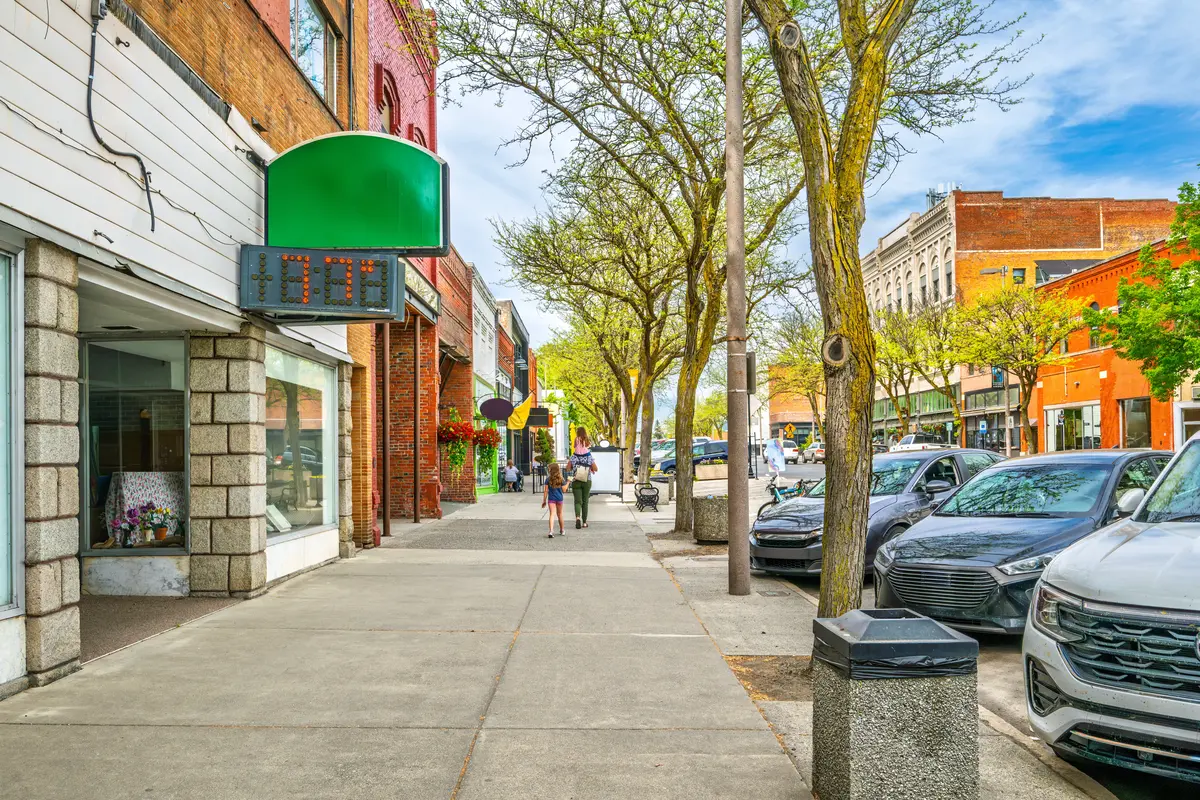
Moscow's Crime Numbers in Context
Raw crime figures mean almost nothing without a frame of reference. Here's where Moscow actually stands against Idaho and the nation, using FBI Uniform Crime Report 2024 data and state-level comparisons.
| Metric | Moscow, ID | Idaho Avg | U.S. National Avg |
|---|---|---|---|
| Violent crime (per 1,000) | 2.9 | ~2.54 (scaled) | ~4.0–4.43 |
| Property crime (per 1,000) | 10 | ~9.67 | ~17.6–19.6 |
| FBI raw violent crimes reported (2024) | 5 total | — | — |
| Violent crime rate per 100,000 (FBI UCR 2024) | 18.7 | ~254 | ~359 |
| Overall safety score (CrimeByCIty.com) | 81/100 | — | — |
| National percentile (safer than X% of U.S. cities) | 73rd | — | — |
| PlainCrime statewide ranking (cities 10k+) | #1 in Idaho | — | — |
The violent crime figure that stands out most: FBI Uniform Crime Report 2024 data recorded just 5 violent crimes in Moscow for the full reporting year — a rate of 18.7 per 100,000 residents, which is approximately 95% below the national rate of 359 per 100,000.
PlainCrime, analyzing that same FBI 2024 dataset, ranked Moscow the safest city in Idaho among all cities with populations of 10,000 or more. CrimeByCIty.com, using the same underlying data, gave Moscow a safety score of 81 out of 100 and placed it in the 73rd percentile nationally — meaning it is safer than roughly three out of every four U.S. cities of comparable size.
The five-year picture reinforces the single-year read. Over 2019–2024, Moscow's average violent crime rate ran approximately 82% below the national average. The property crime five-year average sat roughly 43% below the national norm over the same period. These are not marginal advantages — the gap is substantial and consistent across multiple reporting cycles.
One important methodological note: different aggregators produce different per-1,000 figures because they use different scaling approaches. The violent crime figure of 2.9 per 1,000 in the fact sheet reflects an index-scaled methodology; the raw FBI count translates to roughly 0.19 per 1,000 from the same data. Both confirm the same directional reality — Moscow's violent crime is far below what most similarly-sized U.S. cities see — and the property crime figure of 10 per 1,000 aligns tightly with NeighborhoodScout's FBI-derived calculation.
What Type of Crime Actually Occurs in Moscow
Understanding what kind of crime happens matters more for daily life than any single aggregate number. In Moscow, property crime dominates — and violent crime is genuinely rare.
The Property Crime Reality
The most reported offenses in Moscow in 2024 were larceny-theft, followed by burglary. These are crimes of opportunity: unlocked cars near the University of Idaho campus, bikes left unchained near the downtown core along Main Street, bags left visible on seats near the commercial strip on West Pullman Road. If you move here, property crime — not the threat of violence — is the category that warrants your practical attention.
At 10 per 1,000 residents, Moscow's property crime rate is modestly above the Idaho statewide average of approximately 9.67 per 1,000. That slight elevation is almost entirely explained by the density of foot traffic, student rental housing, and commercial activity concentrated in the downtown and University District corridors. It does not represent a city-wide threat — it represents specific areas at specific times.
Violent Crime Is the Exception, Not the Pattern
Five violent crimes in a full reporting year across a city of 26,000 people. That is not a misprint — that is the FBI's own count for 2024. Aggravated assault does appear in the data, but even that category is thin by any national comparison. Robbery and rape figures are minimal enough that reporting thresholds apply.
For people relocating from larger metros — Boise's Treasure Valley, the Pacific Northwest's major cities, anywhere in California — Moscow's violent crime environment will feel noticeably quieter. The practical implication: walking to a café on a weekday evening, attending an event at the performing arts venue on Main Street, or crossing campus after a UI basketball game are not activities that carry meaningful personal safety risk.
The Trend Line Is Moving the Right Direction
Moscow's overall crime rate fell 31% in 2024 compared to 2023. Over the prior five years, both violent crime and property crime declined. Idaho's total crime rate simultaneously dropped 6.3% from 2023 to 2024, hitting its lowest point in two decades per the Idaho Statistical Analysis Center — a statewide tailwind that benefits Moscow directly.

Where Crime Concentrates: Moscow's Geographic Safety Divide
Moscow is not uniformly anything — not uniformly safe, not uniformly risky. Crime concentrates in specific corridors, and knowing which neighborhoods sit inside versus outside those corridors is the most useful thing this page can tell you.
The East-West Pattern
CrimeGrade.org's geographic breakdown of Moscow places total crime incidents at approximately 47 per year in the eastern parts of the city, compared to approximately 259 per year in the western parts. That is not a small difference — it is roughly a fivefold gap in incident volume between the quietest and busiest zones.
The western concentration tracks with where commercial activity and high foot-traffic density actually live: the downtown core along Main Street, the blocks immediately surrounding the University of Idaho campus, and the commercial corridor stretching toward the western edge of the city. These are areas with bars, restaurants, student housing, and the kind of density that generates both economic activity and opportunistic theft.
The eastern residential zones — which include areas like East Hill and Fort Russell Historic District — generate far fewer incidents. These are established, owner-occupied neighborhoods with lower turnover, less foot traffic after dark, and the quieter character that comes with distance from the university's immediate orbit.
Downtown and the University District
Downtown Moscow and the University District are where you are most likely to encounter the property crime that drives Moscow's headline number. This is not a reason to avoid these areas — it is a reason to exercise the same habits you'd use anywhere with high pedestrian density. Don't leave a laptop bag on a café chair unattended. Lock your bike with a U-lock rather than a cable. These are Palouse-specific adaptations, not survival strategies.
The University District in particular has the layered character of any college neighborhood: students who leave bikes unsecured, apartments with revolving tenants, and late-night commercial energy. That combination produces more larceny reports than the quieter streets east of campus.
South Hill, West Moscow, and Lena Whitmore
South Hill and West Moscow carry more mixed profiles than the eastern residential areas. They sit closer to the higher-traffic western corridors, which means modestly more exposure to the property crime patterns concentrated there. West Moscow in particular benefits from suburban spacing and lower density, which generally tracks with lower incident rates — but it is geographically adjacent to corridors with higher activity.
Lena Whitmore and College Hill, positioned between the university's pull and the quieter eastern residential fabric, represent middle ground: active enough to feel connected to campus life, removed enough to avoid the worst of the downtown concentration. Parents with school-age children who want walkable streets without being directly in the highest-traffic zone often find this area worth a close look.
Looking to buy in Moscow? Estimate your payment.
Enter your numbers to see an estimated monthly mortgage payment.
Estimate only. Excludes HOA fees and mortgage insurance. The interest rate above is a starting point, not a quoted rate — replace it with your own to see real numbers. Insurance is a flat placeholder, not a Moscow quote.
The 2022 UI Murders: What You Need to Know
Anyone researching Moscow's safety will encounter coverage of the November 2022 murders of four University of Idaho students. It was a devastating crime that touched every part of this small city, and it would be dishonest to skip past it.
Here is what the subsequent data confirms: it was a singular event, not a symptom. Bryan Kohberger was arrested, charged, pleaded guilty, and received four consecutive life sentences without the possibility of parole. The case is resolved.
Moscow's FBI-reported violent crime figures for 2022 and every year since remain among the lowest in the state. The five-year average (2019–2024) for violent crime in Moscow runs approximately 82% below the national average — a figure that includes the 2022 reporting year. The crime did not represent an underlying pattern in Moscow's safety environment, and the data since has not revealed one.
What the 2022 case did produce was a prolonged national media presence in Moscow that shaped perceptions well beyond what the statistics support. Relocating buyers who search Moscow, Idaho and find that coverage should read it alongside the FBI's own 2024 data: five violent crimes in a full reporting year, a #1 safest-city-in-Idaho ranking from PlainCrime, and a downward trend that continued through 2024. The coverage was real; the implied ongoing threat is not.
If you are choosing a neighborhood and this history is on your mind, the Fort Russell Historic District — the established, owner-occupied area east of the downtown core — sits at meaningful distance from both the downtown commercial strip and the immediate university housing zone. It is the kind of neighborhood where longtime residents know their neighbors by name, and where the streets feel settled in a way that no data table fully captures.
Practical Safety Tips for Living in Moscow
Moscow's numbers make a strong case for the city's overall safety. But numbers describe the past, and the most useful safety habits are the ones you build before something happens rather than after.
Property Crime: Where to Focus Your Attention
Lock your car every time, everywhere. Larceny-theft is Moscow's most reported offense, and unlocked vehicles — even in quieter residential areas — are a known target. This is especially true in the blocks near the University of Idaho campus along Deakin Avenue and the streets immediately south of campus, where student foot traffic and transient parking create consistent opportunity for opportunistic crime.
Bikes are a primary target. If you ride, budget for a quality U-lock rather than relying on cable locks alone. The campus area and downtown stretches of Main Street see the highest concentration of bike theft reports. Locking to a fixed rack in a visible, trafficked area cuts risk meaningfully.
What People Notice After Six Months Here
Residents who move to Moscow from larger cities often say the same thing around month three or four: they stop locking their doors automatically. That habit drift is understandable given the actual threat environment — but it is the drift that creates the occasional burglary report in otherwise quiet Fort Russell or South Hill blocks. The risk is low; the mitigation is free.
The other thing new residents mention: the downtown area around the performing arts venue and the Main Street restaurant corridor feels genuinely walkable and safe at night in a way they did not expect from a city this size. Late evenings at a brewery on North Jackson Street or a walk back from a show — these are ordinary Moscow activities that carry none of the ambient tension you might carry home from a comparable evening in a larger city.
Doing Your Own Neighborhood Research
Before you settle on a specific block or neighborhood, CrimeGrade.org's Moscow breakdown lets you look at crime density by area of the city. It is worth spending twenty minutes with it alongside a map of the neighborhoods you are seriously considering. The east-west pattern described earlier holds broadly, but individual blocks within any neighborhood vary — a quiet street one block from a commercial corridor can have a meaningfully different incident history than the corridor itself.
The Moscow Police Department publishes a public call-for-service log that is searchable by address range. It is not a substitute for FBI-aggregated data, but for checking a specific block you are considering, it is the most granular tool available at the local level.
The Bottom Line on Day-to-Day Safety
Moscow's practical safety environment is one of the city's genuine advantages. A violent crime rate running well below both the Idaho average and the national norm, a downward trend confirmed across five years of data, and a property crime picture that is manageable with basic precautions — these are the working conditions of daily life here. The city is not crime-free. No city is. But the gap between Moscow's reality and the impression left by national news coverage is substantial, and that gap matters when you are deciding where to put down roots.

Local Expert Takeaway: Moscow is one of the safest mid-sized cities in Idaho by every available metric — ranked #1 in the state for violent crime rate by PlainCrime's FBI Uniform Crime Report 2024 analysis. The real safety distinction to understand before choosing a neighborhood is geographic: the eastern residential areas like East Hill and Fort Russell see a fraction of the incidents that concentrate in the downtown corridor and the University District. If property crime is your primary concern, a block near the commercial stretch on North Jackson puts you closer to the activity that drives most reports; a block in the Fort Russell Historic District puts you further from it. Lock your car and your bike wherever you land, and Moscow's day-to-day safety environment will likely exceed what you expected.
Quick Takeaways & FAQs
✅ PlainCrime ranked Moscow the #1 safest city in Idaho (among cities 10,000+) using FBI Uniform Crime Report 2024 data — five violent crimes in the entire reporting year for a city of 26,000.
⚠️ Property crime is the real safety consideration here: larceny-theft near the University of Idaho campus and downtown drives Moscow's only modestly-above-state-average property crime rate of 10 per 1,000 residents.
📍 The east-west geographic divide matters: eastern neighborhoods like East Hill and Fort Russell Historic District report roughly one-fifth the annual crime incidents of the higher-traffic western corridors near downtown and campus.
Is Moscow, Idaho a safe place to live?
How does Moscow's crime rate compare to other Idaho cities?
What happened with the 2022 University of Idaho murders — is Moscow still affected?
Which neighborhoods in Moscow are the safest?
What kind of crime should I actually be concerned about in Moscow?
Moving to Idaho?
Tell us what you need help with and we'll connect you with local resources.
