
Maybe you've accepted a position at the University of Idaho or Schweitzer Engineering Laboratories and someone handed you a list of zip codes. Maybe you've been priced out of Boise and a colleague mentioned Moscow — smaller, cheaper, still a genuine college town. Whatever brought you here, the first thing to understand is that Moscow is shaped by two forces that don't show up on a map: US-95 (locally called Jackson Street through town), which acts as a practical east-west dividing line, and the University of Idaho campus, which sets the gravitational center for everything else. Every neighborhood decision in this city flows from your relationship to those two anchors.
The University of Idaho enrolls roughly 12,000 students and is the city's largest employer, which means neighborhoods close to campus carry rental demand that pushes prices up and owner-occupancy rates down. Schweitzer Engineering Laboratories and the Moscow School District round out the major employment base, drawing engineers and educators who tend to buy east of the highway or in the quieter hillside neighborhoods to the south. The Moscow School District serves all city neighborhoods, so school assignment is less of a sorting mechanism here than it is in larger cities — but proximity to specific elementary schools still influences where families concentrate.
The citywide typical home value sits at $444,039 (Zillow Home Value Index, May 2026), which is noticeably below Boise-area prices and reflects a market shaped by a state university town rather than a suburb of a major metro. Prices vary meaningfully by neighborhood — from entry-level bungalows near campus to renovated Craftsmans in the Fort Russell Historic District — and the spread matters when you're choosing between a shorter commute and more square footage. Moscow is also rated Idaho's most walkable city, with 17 neighborhood parks and the Latah Trail connecting town to Troy, which means on-foot access is a real variable in the neighborhood comparison.
Whether you're considering a move or just researching the area, the sections below break down Moscow's eight neighborhoods by price band, character, buyer type, and the mistakes that catch relocating buyers off guard.
The Moscow Reality
The single most important thing to understand about buying in Moscow: the University of Idaho campus doesn't just anchor the east side of downtown — it actively compresses the owner-occupant housing market. Every block within walking distance of the campus edge pulls double duty as student housing inventory, which means turnover is high, neighbor stability is lower, and prices per square foot don't always reflect what you'd expect from the condition of the home.
US-95 (Jackson Street) is the practical dividing line that most locals navigate by instinct. On the quieter side of it, you get more predictable parking and neighborhoods where student influence fades quickly. On the campus side — or within a few blocks of the UI Arboretum and Botanical Garden — the student-housing effect is much stronger. Buyers who don't account for this distinction often end up in a neighborhood they expected to be quiet and find it anything but during the academic year.
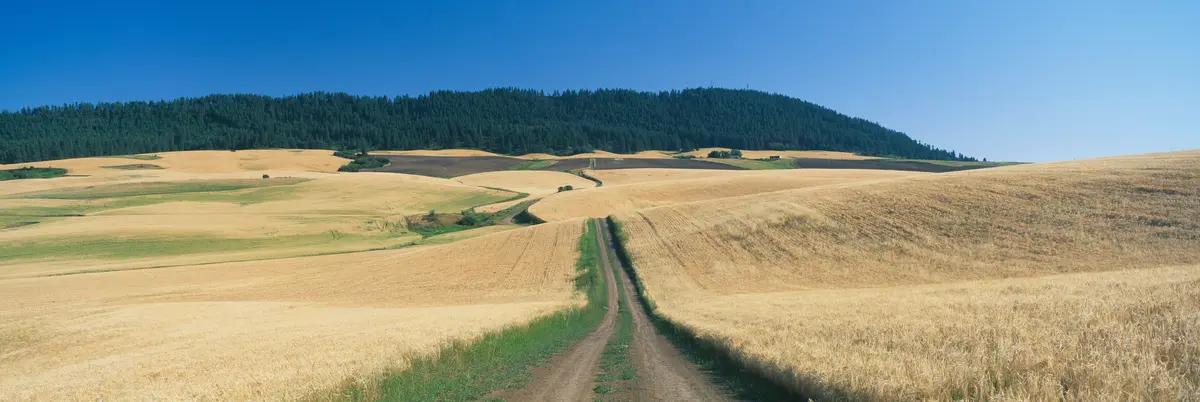
The second divide worth knowing is elevation. Moscow sits on the Palouse, and the hillside neighborhoods — East Hill and South Hill — trade walkable access to Main Street for larger lots and a buffer from campus foot traffic. That's a genuine lifestyle trade-off, not just a marketing distinction, and it shapes resale dynamics too. Families who move here from larger cities sometimes buy based on lot size alone and later wish they'd prioritized proximity to the Saturday Farmers Market on Friendship Square or the walkable corridor through the downtown core.
Neighborhoods at a Glance
| Neighborhood | Best For | Price Range | Vibe |
|---|---|---|---|
| Downtown Moscow | Walkable Transit | $320,000–$480,000 | Active, commercial-residential mix; farmers market Saturdays |
| Fort Russell Historic District | Luxury Quiet | $480,000–$720,000 | Pre-1930s architecture, tree-lined streets, owner-occupant stable |
| East Hill | Families Views | $400,000–$580,000 | Elevated, suburban feel, larger lots, Palouse views |
| West Moscow | First-Time Value | $300,000–$430,000 | Post-1970s ranch homes, quieter, car-dependent |
| University District | Renter Walkable | $280,000–$420,000 | High student density, near campus, high turnover |
| Lena Whitmore | Families School | $320,000–$460,000 | Elementary school anchor, park-adjacent, stable owner-occupancy |
| College Hill | Commuter Walkable | $340,000–$500,000 | Between campus and the downtown core, mixed owner-student |
| South Hill | Privacy Nature | $420,000–$640,000 | Hillside lots, newer construction, quiet, longer drive to downtown |
Best Neighborhood by Buyer Type
| Buyer Type | Best Neighborhood | Why |
|---|---|---|
| First-Time Buyer | West Moscow | Entry-level pricing on post-1970s ranch homes with manageable maintenance and a quieter street environment away from campus churn. |
| Luxury Buyer | Fort Russell Historic District | The city's only formally designated historic district, with pre-1930s Queen Anne and Craftsman homes that command the highest prices and the strongest architectural character in Moscow. |
| Walkability Seeker | Downtown Moscow | The grid street system puts the Farmers Market, the Kenworthy Performing Arts Centre, and the 1912 Center all within a short walk. |
| Families with Kids | Lena Whitmore | Lena Whitmore Elementary School sits at the neighborhood's core on South Blaine Street, and the adjacent park on South Cleveland Street is a genuine daily gathering point for parents. |
| Commuters to Pullman | College Hill | The southern approach to US-95 is most direct from College Hill, shaving time off the ten-minute Pullman run without requiring a full hillside climb. |
| Large-Lot Buyers | South Hill | Hillside parcels here are the largest within city limits, with views across the Palouse that no flat neighborhood can match. |
| Renters | University District | The highest concentration of multi-unit rentals and the most competitive per-room pricing relative to square footage sit closest to the UI campus edge. |
Looking to buy in Moscow? Estimate your payment.
Enter your numbers to see an estimated monthly mortgage payment.
Estimate only. Excludes HOA fees and mortgage insurance. The interest rate above is a starting point, not a quoted rate — replace it with your own to see real numbers. Insurance is a flat placeholder, not a Moscow quote.
Most Popular Neighborhoods
1. Downtown Moscow
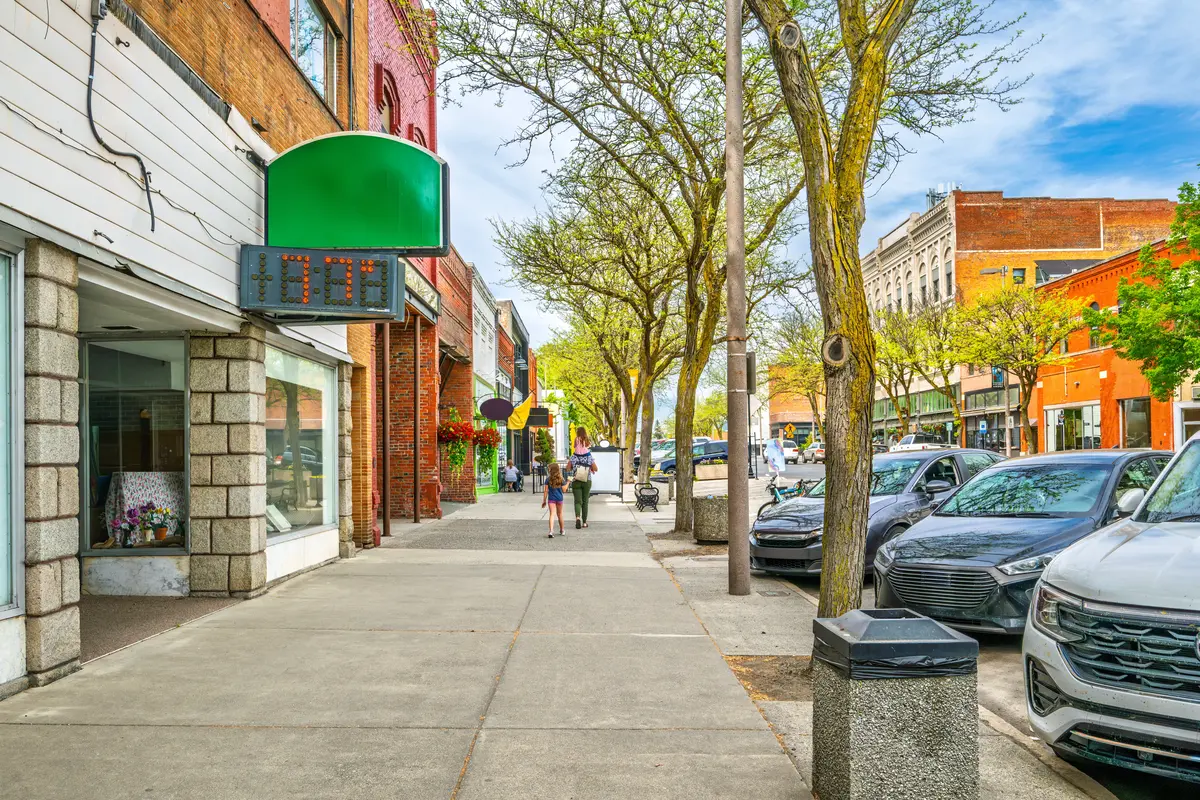
Downtown is where Moscow's identity is most legible: the Saturday Farmers Market on Friendship Square, the Kenworthy Performing Arts Centre, the 1912 Center, and the McConnell Mansion all sit within a compact walkable core. Homes here are a mix of older Victorian-era stock and infill construction, with prices in the $320,000–$480,000 range — but you're often buying a smaller lot and accepting noise from the commercial corridor. SMART Transit's two fixed bus routes serve this area, which matters if you work on campus or commute to Pullman without a car.
Best for: Buyers who want to walk to everything and don't mind the weekend event energy.
2. Fort Russell Historic District
Bounded roughly by Washington, Hayes, Third, and D Streets, Fort Russell was established as a historic district in 1980 and originally catalogued 116 properties — Queen Anne cottages, Greek Revival foursquares, and bungalows that reflect Moscow's Palouse merchant prosperity of the 1880s and 1890s. Prices run $480,000–$720,000, and for good reason: these are the oldest homes in the city, and older wood-frame construction means higher maintenance costs that don't show up in the listing price. The expanded district boundary, approved by the Idaho Historical Sites Review Board in 2016, adds a layer of preservation oversight that protects character but limits your renovation options.
Best for: Buyers who prioritize architectural character and long-term neighborhood stability over square footage or new construction.
3. East Hill
East Hill rises above the city grid and delivers what the flat neighborhoods can't: wider lots, Palouse views, and a suburban buffer from campus activity. Prices here run $400,000–$580,000, and you're mostly looking at post-1970s construction — solid but not architecturally distinctive. The trade-off is real: getting downtown or to campus means driving, and the hillside roads ice up faster than the valley streets in a Palouse winter.
Best for: Families with kids and remote workers who want space and quieter streets without leaving city limits.
4. West Moscow
On the far side of US-95, Moscow's street energy drops noticeably — this is ranch-home territory, mostly built after the 1970s, with the kind of quiet that relocating buyers from larger cities either love immediately or find isolating after six months. Prices in the $300,000–$430,000 range make it the most accessible entry point in Moscow's owner-occupant market. The catch: you are car-dependent here in a way that no other Moscow neighborhood forces you to be, and SMART Transit's bus route on this side of town has limited frequency.
Best for: First-time buyers and value-conscious buyers who prioritize price over proximity.
5. University District
The University District is where the UI campus bleeds directly into the residential grid, and the result is a neighborhood defined by its tenant population — high-density housing, frequent turnover, and prices in the $280,000–$420,000 range that reflect investor demand rather than owner-occupant competition. Non-student owner-occupants are mostly found east of Highway 95 or south of the UI Arboretum and Botanical Garden, which gives you a rough mental map of where to look if you want to buy here without living amid constant move-in/move-out cycles. It's the right place to buy an income property; it's rarely the right place to plant roots as a primary resident.
Best for: Investors buying rental property and renters who want to walk to class.
6. Lena Whitmore
Named for a longtime Moscow School District teacher, this neighborhood centers on Lena Whitmore Elementary School at 110 South Blaine Street — a building operational since 1952 — and the public park at 125 South Cleveland Street that backs up to it and draws families on weekends and all summer long. Prices run $320,000–$460,000, which puts it in reach for teachers and Schweitzer Engineering employees who want a genuine neighborhood rather than a student-heavy block. It's not as walkable as downtown and not as scenic as the hillside areas, but the owner-occupancy stability is among the highest in Moscow.
Best for: Parents with elementary-age children who want a school-anchored, park-adjacent neighborhood at a mid-range price.
7. College Hill
College Hill occupies the terrain between the University of Idaho campus and the downtown commercial corridor, which means you get more on-foot access than the hillside neighborhoods while maintaining slightly more distance from the densest student blocks than the University District proper. Prices in the $340,000–$500,000 range reflect that middle-ground position. The mix of owner-occupants and student renters means block character varies considerably — one street can feel settled and quiet; the next is clearly a rental row — so due diligence on your specific block matters here more than anywhere else in Moscow.
Best for: Buyers who want walkable access to downtown and a shorter drive to Pullman, and who can tolerate a mixed owner-renter street environment.
8. South Hill
South Hill is where Moscow's newest construction concentrates, with hillside parcels carrying the largest lots in the city and views across the rolling Palouse that justify the premium. Prices run $420,000–$640,000, skewing toward the upper end for newer builds on the better-positioned lots. What you give up is meaningful: the drive down to Main Street or the Farmers Market is longer than buyers expect, the roads require more confidence in winter, and the neighborhood has less of the established tree canopy that makes Fort Russell or East Hill feel lived-in.
Best for: Buyers prioritizing newer construction, large lots, and Palouse views who are comfortable with a car-dependent daily routine.
Common Mistakes Buyers Make in Moscow
Treating Campus Proximity as a Neutral Variable
Buyers who haven't spent time in Moscow during the academic year consistently underestimate how much the UI campus shapes day-to-day life in the adjacent blocks. A house three blocks from the campus edge in the University District is not the same as a house three blocks from the campus edge in Fort Russell — one faces heavy student rental pressure; the other is in a designated historic district with a completely different ownership profile. Walk the specific block in September, not July, before you commit.
Assuming All of West Moscow Is Equal
West Moscow is not a single neighborhood — it's a collection of subdivisions that developed across several decades, and quality of construction, lot size, and street character vary block by block. Buyers who anchor on price and cross US-95 without distinguishing between the older ranch streets near Styner Avenue and the newer cul-de-sacs farther out often end up in a location that's more isolated than they expected. Know which subdivision you're actually buying into.
Ignoring Winter Road Conditions on the Hillside Neighborhoods
East Hill and South Hill both look appealing in a summer showing — the views across the Palouse are genuinely striking. What listings don't mention is that the hillside streets are the last to be plowed after a Palouse snowstorm, and a rear-wheel-drive vehicle becomes a genuine liability from November through February. Buyers moving from warmer climates routinely discover this in their first winter and list the commute difficulty as a primary reason for selling within two years.
Buying for Square Footage Instead of Neighborhood Position
Moscow is small enough — 26,000 people — that buyers sometimes assume neighborhood choice is less consequential than in a larger city. It isn't. A larger home in West Moscow at $380,000 trades away the Saturday Farmers Market, the walkable stretch of downtown, and the community density that makes Moscow genuinely enjoyable to live in. Many buyers who optimize purely on price-per-square-foot find themselves spending far more time in the car than they anticipated, which is a particular frustration given that Moscow is Idaho's most walkable city if you're positioned to take advantage of it.
Best Areas to Rent in Moscow
| Area | Ideal For | Typical Rent Range | Trade-off |
|---|---|---|---|
| University District | UI students, young professionals on campus | $600–$950/room; $1,100–$1,700 for a 1–2BR unit | High turnover, noise during academic year, limited parking |
| Downtown Moscow | Renters who want walkable access to the main commercial corridor and transit | $1,000–$1,600 for a 1BR; $1,400–$2,000 for a 2BR | Limited supply of larger units; weekend event foot traffic |
| College Hill | Graduate students, young professionals, commuters to Pullman | $950–$1,500 for a 1–2BR | Block quality is inconsistent; heavy student-renter mix |
| Lena Whitmore / South-Central | Families, educators | $1,200–$1,800 for a 2–3BR | Fewer multi-unit rentals; competition from owner-occupants |
| West Moscow | Value-focused renters comfortable being car-dependent | $950–$1,400 for a 2–3BR | Car required for everything; limited walkable amenities |
Moscow's rental market tightens sharply each August when UI's academic year begins — if you're arriving in the fall, start your search no later than May to avoid competing with thousands of returning students for the same limited inventory. SMART Transit's free east and west bus routes serve Downtown, College Hill, and the University District, which meaningfully offsets the cost of renting close to campus without a car.

Local Expert Takeaway: Moscow's neighborhood map is simpler than it looks once you orient around two anchors: the UI campus edge and US-95. If you want walkability and community density, the Downtown-to-College Hill corridor — where the Saturday Farmers Market, the Kenworthy Performing Arts Centre, and the 1912 Center all sit — is where Moscow earns its reputation as a genuinely livable college town on a daily basis. If you want quiet, space, and Palouse views, East Hill or South Hill deliver, but price in a reliable all-wheel-drive vehicle and the psychological cost of driving for every errand. Fort Russell is the only neighborhood in Moscow where the architecture itself is a genuine long-term asset, and Lena Whitmore is the closest thing this city has to a settled, school-anchored family enclave at a price that doesn't require a dual tech income.
Quick Takeaways & FAQs
✅ Moscow is rated Idaho's most walkable city, and the Downtown-to-College Hill corridor makes that rating feel real — if you buy in the right neighborhood.
⚠️ The University of Idaho campus creates a student-rental overlay in the University District and parts of College Hill that consistently surprises buyers who don't visit during the academic year.
📍 Fort Russell Historic District homes were built before the 1930s and are the only properties in Moscow subject to historic preservation oversight — renovation plans require City of Moscow Historic Preservation Commission review.
What is the most affordable neighborhood to buy a home in Moscow, Idaho?
Which Moscow neighborhood is best for families with school-age children?
Is the Fort Russell Historic District worth the higher price?
What is it like to rent near the University of Idaho campus?
How different are the hillside neighborhoods (East Hill, South Hill) from the rest of Moscow?
Moving to Idaho?
Tell us what you need help with and we'll connect you with local resources.
