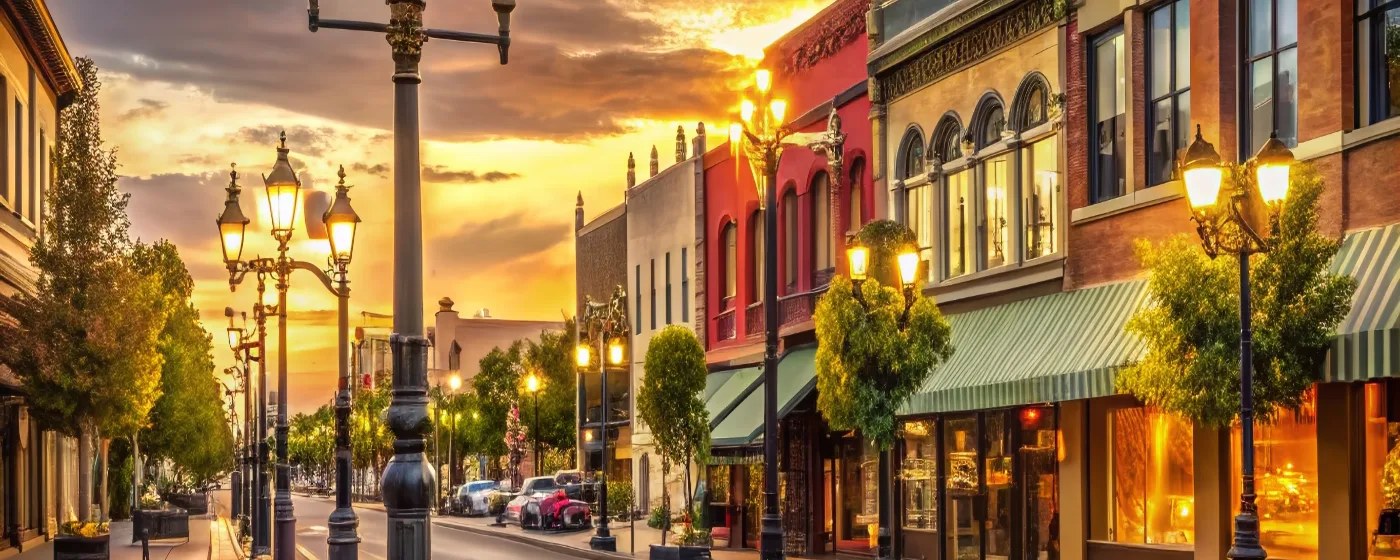
Most people picture Idaho Falls as a mid-size desert city in a flat river valley — a practical place, not a destination. Then they walk the Snake River Greenbelt on a June evening, pass the 600-foot-wide waterfall thundering across the river, and realize the city is built around one of the most accessible stretches of wild water in the Mountain West. The Snake River isn't a backdrop here; it's the organizing spine of outdoor life, and the parks and trails that run along it are the reason many residents say they'd struggle to leave.
The city's parks system punches well above its 72,700-person weight class. More than 50 park properties, 26 miles of multi-purpose trails, three public golf courses, an accredited zoo, a public aquatic center, an ice arena, and rodeo grounds — all maintained by the City of Idaho Falls Parks and Recreation Department — give families and outdoor-minded residents a year-round activity calendar that rivals cities two or three times the size. Tautphaus Park alone functions as a neighborhood anchor on the south side, drawing parents with young children on weekend mornings the way a downtown plaza might elsewhere.
What surprises newcomers after their first full year is how usable the outdoor infrastructure actually is. The Greenbelt is paved, lit in sections, and genuinely flat — not a challenging trail system dressed up as a stroll. Cross-country ski grooming on city trails in January, free outdoor skating at Tautphaus Park, and disc golf at 60-acre Freeman Park mean the calendar stays full even when the Snake River is running cold and grey. For families considering a move who want outdoor access without driving an hour to find it, the park system is one of Idaho Falls' most concrete selling points. For kids' sports and school-based activities, see the full breakdown on the Idaho Falls schools page.
The sections below cover the Snake River Greenbelt and waterfall, Tautphaus Park and the zoo, the Japanese Friendship Garden and riverfront landmarks, and the seasonal recreation options that fill out the year.
The Snake River Greenbelt: Idaho Falls' Defining Trail
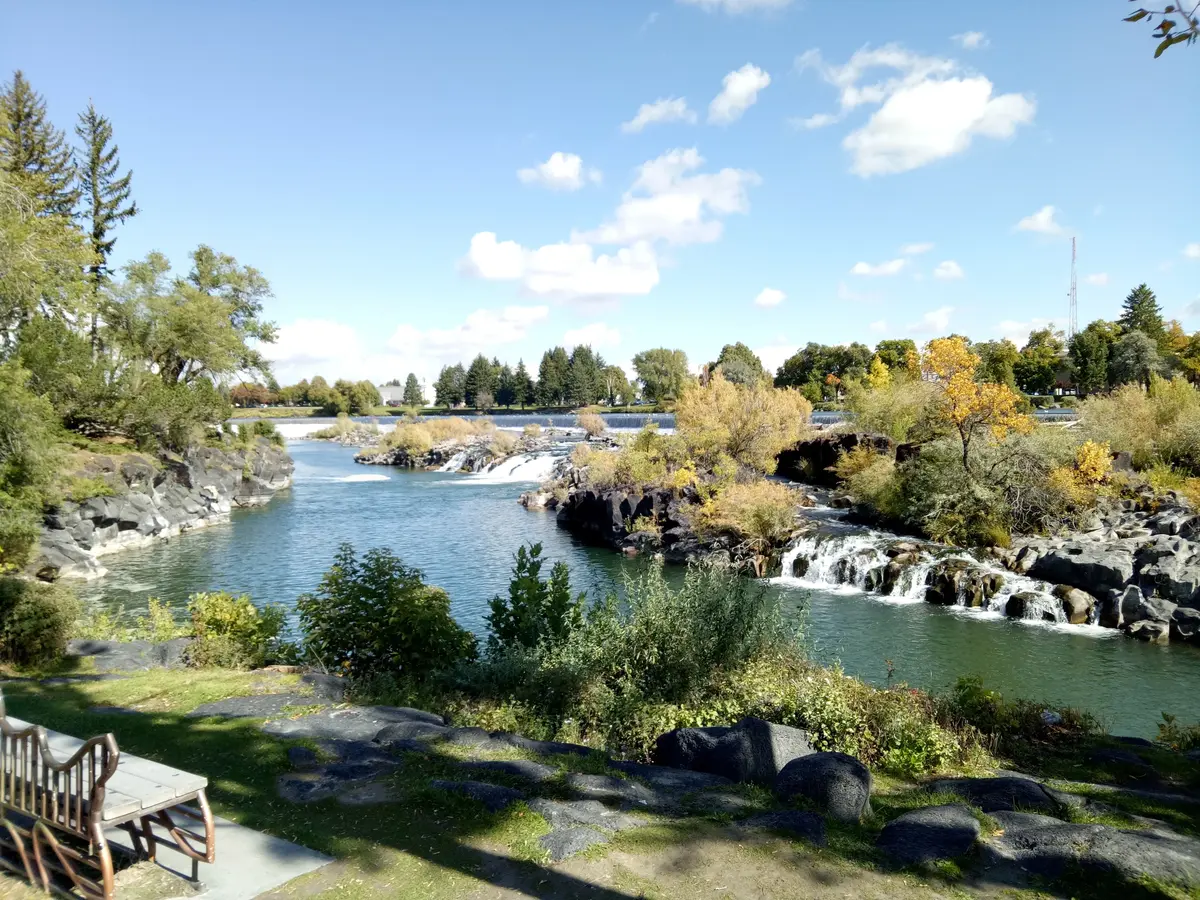
Five miles of paved trail run along each bank of the Snake River through the heart of the city — connect both sides and you have the approximately 10.5-mile Greenbelt loop that AllTrails rates as easy, with only about 216 feet of total elevation gain. That flatness is the point. You can push a stroller the whole way, ride a cruiser bike without shifting gears, or walk it in trail runners without breaking a sweat. Most locals don't do the full loop in one go; they pick a stretch near their neighborhood and repeat it.
The Greenbelt is a joint project between the City of Idaho Falls and the Idaho Falls Rotary Club, which has funded significant portions of its expansion. That partnership shows in the maintenance — the pavement is in good shape, signage is consistent, and the river access points are well-marked. It connects Historic Downtown, Snake River Landing, and Freeman Park in one continuous corridor without a single road crossing that feels dangerous.
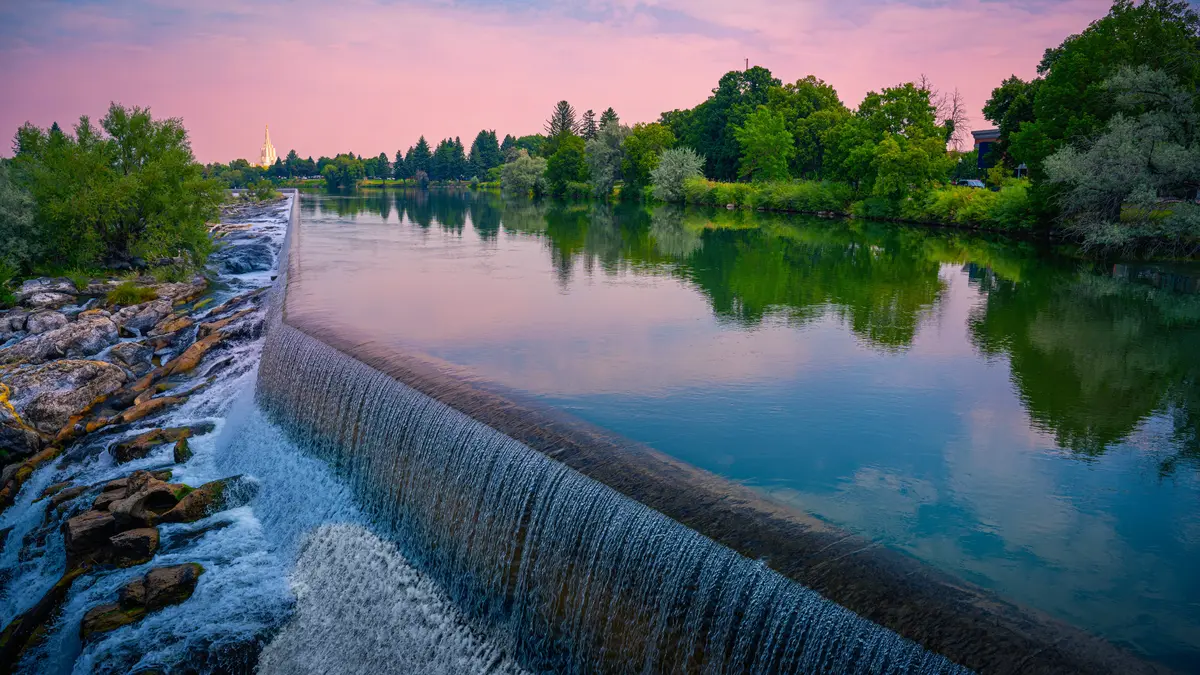
The centerpiece is the falls itself. The Idaho Falls waterfall — a 600-foot-wide cascade spanning the entire width of the Snake River — sits roughly midway along the downtown stretch and is visible from the trail on both sides. It's not a tall dramatic drop; it's wide, constant, and loud in spring when snowmelt pushes the river high. Locals treat it as a given and walk past it daily. Visitors from out of state consistently name it the most surprising thing they didn't expect to find in eastern Idaho.
What the Greenbelt Connects
Walking south from the falls, you pass a prominent local landmark and reach Snake River Landing, the mixed-use development with river-facing restaurants and a small plaza. Walking north, the trail opens up toward Freeman Park. The Japanese Friendship Garden sits on a rocky island mid-route — you cross onto it from either bank. The Greenbelt also serves as the venue for the Idaho Falls Duck Race, a Farmers Market, and the Snake River Roaring Youth Jam each year, drawing thousands of residents to the riverfront for events that feel genuinely local rather than manufactured.
One honest note: weekend mornings in summer, the popular downtown section between the falls and Snake River Landing gets crowded enough that cyclists and pedestrians come into conflict. If you're on a bike and want a faster pace, the north stretch toward Freeman Park stays quieter and the path is wider in sections.
Tautphaus Park: The Neighborhood Anchor That Does Everything
Tautphaus Park is the kind of facility most cities this size don't have — not because of any single feature, but because of the density of what it fits onto one property. Five ball diamonds, four shelters, tennis courts, a basketball court, a skateboard park, horseshoe pits, an all-access playground, an amusement park, an ice arena, and the city zoo all share the same footprint in the Tautphaus Park neighborhood on the south side of the city.
Families with young children treat it as a default Saturday destination from April through October. Funland at the Zoo opened for the 2026 season on May 23 — it's a restored historic amusement experience, not a Six Flags-style park, but that's exactly what makes it work for this age group. The scale is right for kids under ten, and the rides are within walking distance of the zoo entrance.
The Zoo: More Substantial Than You'd Expect
The Idaho Falls Zoo at Tautphaus Park holds more than 300 individual animals across 130 exotic species — and it carries the distinction of being the first zoo in Idaho accredited by the Association of Zoos and Aquariums. It participates in more than 40 Species Survival Plans, which means it's genuinely integrated into national conservation programs rather than operating as a standalone attraction. Approximately 145,000 visitors come through each season; the zoo reopened for 2026 on April 16.
The accreditation matters more than it sounds. AZA standards require regular audits of animal care, exhibit quality, and conservation programming. For a city of 72,700, having an AZA-accredited zoo is unusual, and locals who've moved here from larger metros consistently mention the zoo as something they didn't expect to find.
Winter at Tautphaus
The park doesn't go dormant in January. A free outdoor ice rink operates at the corner of Rollandet Street and Softball Drive through the winter months, with skate rentals available at the park's indoor ice arena during public skate times. The indoor arena hosts public skating sessions and youth hockey leagues through the cold months. If you're moving here from a place without a public ice rink, this becomes a Friday-night habit faster than you'd expect.
The Japanese Friendship Garden, Freeman Park, and the River's Hidden Features
Most people discover the Japanese Friendship Garden by accident on their first Greenbelt walk — you round a bend, see a small rocky island in the middle of the Snake River, and realize there's a traditional garden gate, a pond with a Dragon's Path crossing, a viewing platform, and a large stone lantern sitting in the middle of the river. It's one of those places that stops people mid-stride.
The garden was built to mark thirty years of partnership between Idaho Falls and its Japanese sister city, Tokai-Mura. The island itself has a longer history: it's the same rocky outcropping where the first bridge to span the Snake River in Eastern Idaho was built. The lantern was gifted directly by Tokai-Mura, and the design — water features, a traditional gate, a deck overlooking the river — is genuinely faithful to the form. It's quiet on weekday mornings and worth going out of your way for on a first visit.
Freeman Park: The Underrated North End
Freeman Park sits at the northern terminus of the Greenbelt, covering approximately 60 acres. Most newcomers don't find it immediately because the downtown stretch of the river gets all the attention, but regulars who want space tend to gravitate here. The Idaho Falls Disc Golf Course is built into the park, with the Greenbelt path providing direct access — you can walk or bike in from the river trail and drop into the course without getting in a car.
The park's scale means it absorbs crowds better than the more compressed downtown riverfront. Dog walkers, disc golfers, and casual cyclists share the space without friction. If you're buying in the Numbered Streets neighborhood or the north side of town, Freeman Park is likely to become your default outdoor spot rather than the falls area.
The River as Infrastructure
The Snake River through Idaho Falls isn't just scenery — Idaho Falls Power operates hydroelectric plants at four locations along the river and collaborates with Parks and Recreation on habitat and access improvements. That partnership has produced better boat launches and kayak access points than you'd find in a city that treats its river as purely aesthetic. Kayaking, fishing, and flat-water paddling are all viable from within city limits, without trailering to a reservoir an hour away.
Looking to buy in Idaho Falls? Estimate your payment.
Enter your numbers to see an estimated monthly mortgage payment.
Estimate only. Excludes HOA fees and mortgage insurance. The interest rate above is a starting point, not a quoted rate — replace it with your own to see real numbers. Insurance is a flat placeholder, not a Idaho Falls quote.
Seasonal Recreation: Year-Round Use of a Cold-Weather City
Idaho Falls sits at roughly 4,700 feet in elevation, which means four genuine seasons — including winters cold enough to shut down fair-weather outdoor routines entirely if you don't plan for them. The city's parks department takes this seriously. Trails are groomed in winter for cross-country skiing, fat biking, and walking, which means the trail system stays functional in January rather than becoming an icy afterthought.
| Season | Primary Activity | Where It Happens | Notes |
|---|---|---|---|
| Spring (Apr–May) | Greenbelt walking, cycling, zoo opening | Snake River Greenbelt, Tautphaus Park | River runs high with snowmelt; falls at peak volume |
| Summer (Jun–Aug) | Disc golf, kayaking, outdoor events, Funland | Freeman Park, Snake River, Tautphaus Park | Duck Race, Farmers Market, Youth Jam on the riverfront |
| Fall (Sep–Oct) | Trail running, cycling, golf | Greenbelt, Pinecrest / Sand Creek / Sage Lakes courses | Crowds thin; best weather window for the full 10.5-mile loop |
| Winter (Nov–Mar) | Cross-country skiing, fat biking, ice skating | Groomed city trails, Tautphaus Park rink, park ice arena | Free outdoor rink at Rollandet St & Softball Dr; rentals at indoor arena |
The three public golf courses — Pinecrest, Sand Creek, and Sage Lakes — stay open from spring through late fall, and the price point is well below what you'd pay at private clubs in the region. Sand Creek in particular runs along, predictably, Sand Creek, which gives it a layout that feels more interesting than a flat municipal track.
What's Within Easy Reach Beyond City Limits
Idaho Falls functions as a base camp for a broader outdoor radius. Grand Teton National Park is roughly 90 minutes west on US-26, and Yellowstone is about two hours north. Mesa Falls — two tiers of waterfall on a tributary of the Snake River in the Caribou-Targhee National Forest — is less than an hour away and consistently underused because most visitors drive straight past it to Yellowstone. A state park near Ashton offers blue-ribbon trout fishing and cross-country skiing in winter.
The honest trade-off for serious mountain bikers and single-track hikers: Idaho Falls itself is flat. The city's trail system is excellent for what it is — a paved, accessible, family-friendly river corridor — but it won't satisfy someone who moved from Boise's Foothills or Bend's trail network expecting technical riding out the back door. That kind of terrain exists in the region, but you'll drive 45 minutes to an hour to reach it. Newcomers who learn this in month three occasionally feel it as a gap the listing descriptions didn't prepare them for.
The Wes Deist Aquatic Center
For families, the Wes Deist Aquatic Center fills the summer gap between river access and neighborhood pool. It operates on a public admission model and draws heavily from the surrounding residential neighborhoods during peak summer weeks. Lines get long on 95-degree August afternoons — arrive before 11 a.m. or after 4 p.m. if you want to skip the wait at the entrance.
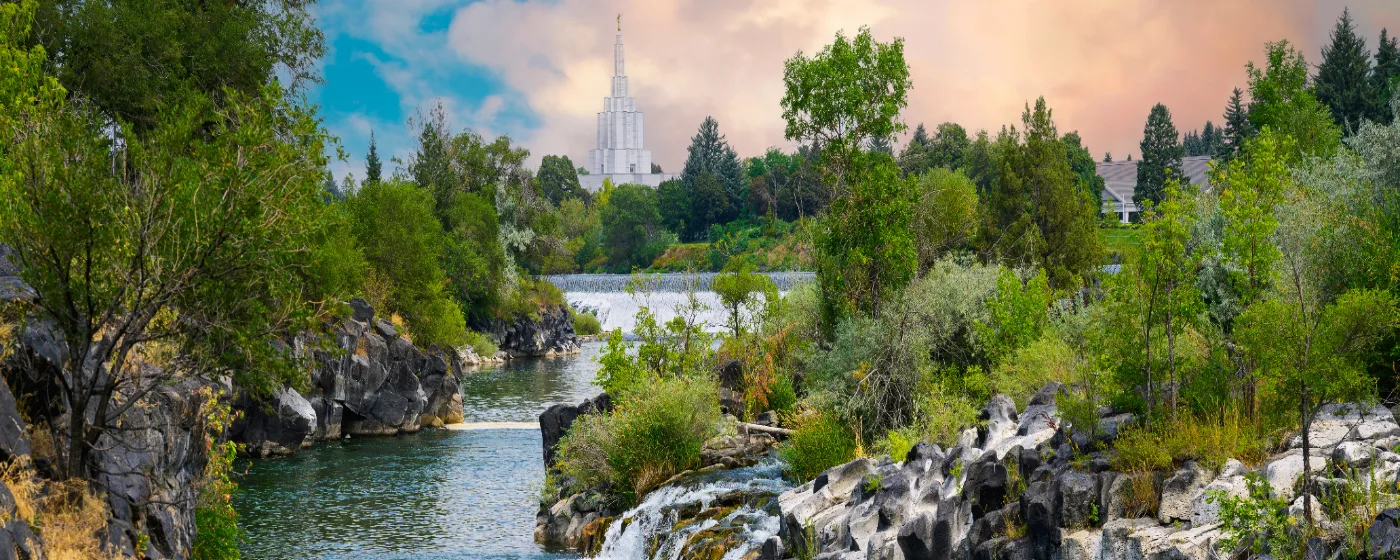
Local Expert Takeaway: The Snake River Greenbelt is the most underrated piece of urban infrastructure in eastern Idaho — 10.5 miles of paved, flat, river-level trail connecting the waterfall, the Japanese Friendship Garden on its Snake River island, and Freeman Park's disc golf course, all without touching a car. Combine that with an AZA-accredited zoo at Tautphaus Park, a free outdoor ice rink in January, and groomed cross-country ski trails, and Idaho Falls offers a parks system that consistently surprises people who moved here expecting a basic mid-size city. The gap to know going in: if single-track mountain biking or technical hiking is central to your lifestyle, you'll be driving 45–60 minutes to find it — the city trails are excellent but genuinely flat.
Quick Takeaways & FAQs
✅ The Snake River Greenbelt's 10.5-mile paved loop passes a 600-foot-wide waterfall, the Japanese Friendship Garden on a historic river island, and Freeman Park — all within city limits and entirely flat.
⚠️ Serious mountain bikers and single-track hikers should know that Idaho Falls' trail system is urban and paved; technical terrain requires a 45-to-60-minute drive to reach.
📍 The Idaho Falls Zoo at Tautphaus Park is the first AZA-accredited zoo in Idaho, with more than 300 animals across 130 species — an unusually substantial facility for a city this size.
How long is the Snake River Greenbelt in Idaho Falls?
Is the Idaho Falls Zoo worth visiting — and is it open year-round?
What outdoor activities can you do in Idaho Falls in winter?
Can you kayak or fish on the Snake River within Idaho Falls city limits?
What is the Japanese Friendship Garden in Idaho Falls?
Moving to Idaho?
Tell us what you need help with and we'll connect you with local resources.
