
Most people who look up Ammon start by comparing it to Idaho Falls — and that comparison flatters Ammon in ways that aren't always obvious at first. Ammon sits immediately east of Idaho Falls along Sunnyside Road and 17th Street, sharing employers, shopping, and the same regional economy, but operating as its own city with its own tax structure and a noticeably different housing stock. The question isn't really whether Ammon is affordable in an absolute sense. It's whether the premium over the surrounding small towns — Iona, Ucon, Rigby — is justified by what you get: newer construction, city services, and proximity to major regional employment corridors.
The economic backbone here is the kind that creates stable, mid-to-upper-middle household incomes rather than boom-and-bust cycles. Melaleuca, the wellness products company headquartered nearby, is one of the larger private employers in eastern Idaho; and the Idaho National Laboratory draws engineers and researchers who often choose Ammon specifically for its newer subdivisions and relative quiet. That employment mix keeps median household incomes — reported around $86,121 — meaningfully above most comparable Idaho cities, which in turn sustains housing demand and keeps prices from softening even when national markets cool.
On the day-to-day spending side, Ammon runs noticeably below national averages. BestPlaces pegs the city's overall cost of living index at 94.3, roughly 5.7% below the U.S. average. Utilities are where residents feel the savings most directly: Idaho Falls Power's residential electric rate is among the lowest in the country, and gas prices in the Idaho Falls area hover near or below the national average. Groceries cost less here than in Boise or the Treasure Valley, and Idaho's tax structure — low property taxes, no estate tax — rewards homeowners in particular.
Whether you're relocating for a job at the lab, moving up from a rental in Idaho Falls, or comparing Ammon against Rigby or Iona, the sections below break down Ammon's housing costs, everyday expenses, how it stacks up against nearby cities, and what the full tax picture looks like for residents.
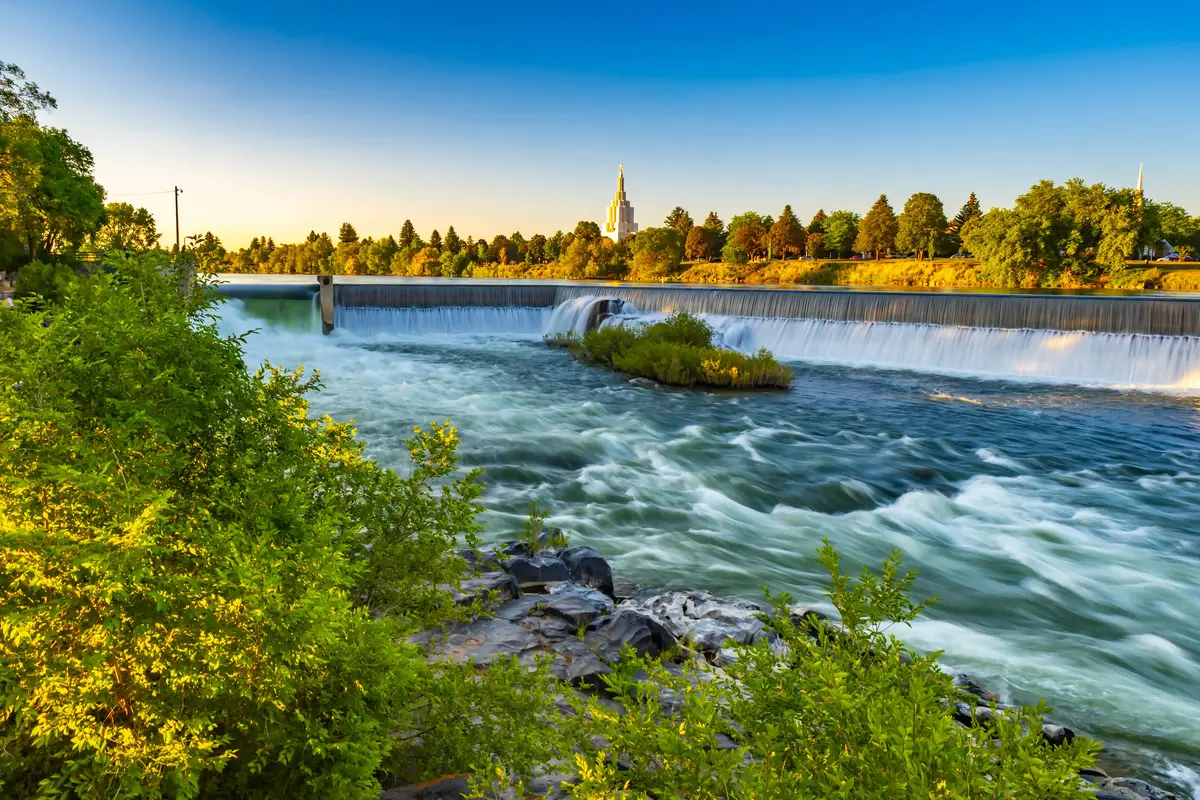
What It Really Costs to Live in Ammon
Ammon costs less than most people expect from a city with this level of new construction and suburban polish. The overall cost of living index sits at 94.3, placing it below the national average and noticeably below the Idaho state average — which itself runs well under the U.S. figure. That combination is unusual: you're getting a city that's affordable by national standards and affordable by already-low Idaho standards.
Housing is the main driver pulling that index down. The median sale price in Ammon was $430,000 in January 2026, which is competitive with Idaho Falls and substantially lower than what comparable new-construction suburbs command in the Treasure Valley around Boise or Meridian. What pushes Ammon's cost above the smaller surrounding towns — Iona, Rigby, Ucon — is the newer housing stock and the city amenities that come with it. You're not paying a Boise premium; you're paying a modest step up from rural Bonneville County.
Non-housing costs reinforce the value case. Utilities run well below national norms thanks to Idaho Falls Power's rates, gas stays near or under the national average, and Idaho's tax structure favors owners with one of the lowest effective property tax rates in the country. The honest caveat: if you're arriving from a major metro expecting urban walkability or on-foot access to daily errands, Ammon's car-dependent layout means transportation costs are real — factor in two vehicles for most households, and budget accordingly.
Housing: Rent vs Buy in Ammon
What Buyers Are Actually Paying
The city-wide median sale price of $430,000 (Redfin, January 2026) reflects Ammon's primary reality: this is a buyer's market for new and near-new single-family homes, not condos or urban infill. Entry-level options — typically older ranch-style homes on the city's western edge — start closer to the low-to-mid $300,000s. The gap between entry-level and median reflects how many newer subdivisions have raised the floor; if you're shopping at the bottom of the range, expect to compete on condition and timing.
Ammon's effective property tax rate is approximately 0.46%, which is well below the national median of roughly 0.89% and even slightly below Idaho's already-low statewide average. On a practical level, this means the annual carrying cost on a typical Ammon home is materially lower than on a comparable-priced home in most other states — Idaho's homeowner's exemption reduces the taxable value on a primary residence, compressing that rate further for owner-occupants. Use the mortgage calculator below this section to model your specific payment; monthly figures vary too much by down payment and rate to generalize here.
The Rent Picture
Renters in Ammon are a smaller share of the population than buyers — this city is structured around ownership, and the rental inventory reflects that. Typical two-bedroom units run roughly $1,200–$1,500 per month, with newer construction or larger floor plans pushing higher. Renting makes sense if you're less than 12–18 months from a likely move, still building a down payment, or want time to understand which part of the city fits your daily patterns before committing. For anyone planning to stay three-plus years, the property tax advantage and the relative affordability of the median price make ownership the cleaner financial case in this market.
For specifics on how prices vary across Ammon's neighborhoods — from Sandcreek and Eagle Pointe to Cortland Ridge and the McCowin Park area — the Best Neighborhoods guide covers each area's character and approximate price band.
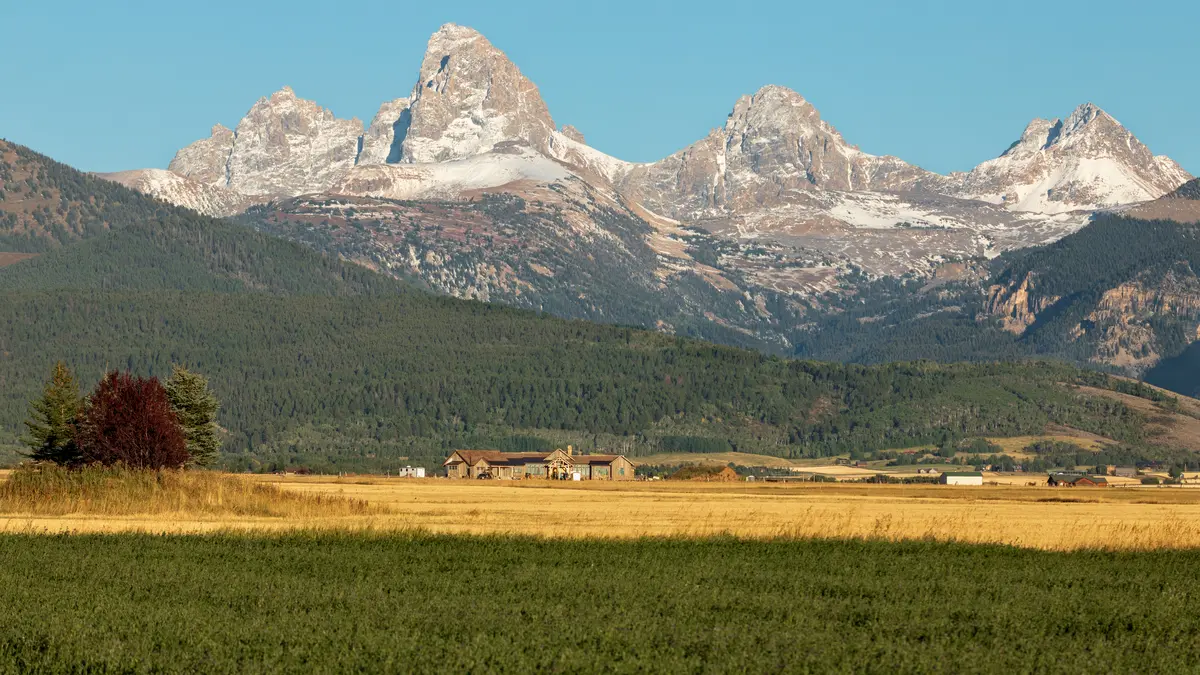
Everyday Costs Beyond Housing in Ammon
Utilities are where Ammon residents get a consistent, measurable win. Most homes in the city are served by Idaho Falls Power, whose residential electric rate of $0.076 per kilowatt-hour — plus a $24 monthly service charge — puts a typical monthly electric bill around $95 for a 1,000 kWh user. That's well below the national household average of $147. Natural gas runs higher in winter: statewide averages suggest roughly $109 per month in cold months, dropping to around $40 in summer, for an annual average near $75. Internet costs vary, and Ammon has invested in its own fiber-optic network infrastructure — worth confirming availability at your specific address, since service territory boundaries can be uneven.
Groceries in Idaho run below what most newcomers from larger metros expect. Bureau of Economic Analysis data puts average grocery and beverage costs at approximately $319 per person per month statewide — a figure that aligns with what residents report paying at the big-box stores along 25th Street in Idaho Falls, a short drive from most of Ammon. Gas at the pump was approximately $2.80 per gallon in the Idaho Falls area as of January 2026, near the national average. Idaho does levy a 33-cent-per-gallon gas tax, but total pump prices still come in at or below what most transplants paid in their previous markets.
| Category | Typical Monthly Cost | Notes |
|---|---|---|
| Housing (2BR Rent) | $1,200–$1,500 | Renter estimate; owners: use the mortgage calculator above for a purchase-price-specific payment |
| Electric Utility | ~$95 | Idaho Falls Power rate; based on 1,000 kWh/month usage at $0.076/kWh + $24 service charge |
| Natural Gas | ~$45–$110 | Seasonal range; higher in winter (averaging ~$109), lower in summer (~$40) |
| Groceries | $319 per person | BEA statewide estimate; family of four runs roughly $1,100–$1,300/month |
| Transportation & Gas | $150–$250 | Assumes one vehicle; most households need two — budget accordingly; gas ~$2.80/gal locally |
| Phone & Internet | $100–$180 | Ammon has its own fiber network; confirm service availability at your address |
| Misc / Discretionary | $200–$400 | Dining, recreation, Grand Teton Mall, weekend drives; estimate for one adult |
Looking to buy in Ammon? Estimate your payment.
Enter your numbers to see an estimated monthly mortgage payment.
Estimate only. Excludes HOA fees and mortgage insurance. The interest rate above is a starting point, not a quoted rate — replace it with your own to see real numbers. Insurance is a flat placeholder, not a Ammon quote.
Ammon vs Nearby Cities: Cost Comparison
| City | Median Home Price | Typical 2BR Rent | Cost vs Ammon |
|---|---|---|---|
| Ammon | $430,000 (Jan 2026) | $1,200–$1,500/mo | — baseline — |
| Idaho Falls | ~$350,000–$380,000 | $1,050–$1,350/mo | Noticeably cheaper to buy; similar to rent |
| Rigby | ~$320,000–$360,000 | $950–$1,200/mo | Cheaper across the board; more rural tradeoffs |
| Iona | ~$400,000–$440,000 | Limited rental stock | About the same; very small rental market |
| Shelley | ~$280,000–$330,000 | ~$900–$1,100/mo | Meaningfully cheaper; longer drive to INL |
| Ucon | ~$310,000–$360,000 | Minimal rental stock | Cheaper to buy; fewer services and amenities |
Ammon sits at the upper end of eastern Idaho's price range, reflecting its newer housing stock and city-level services. The most direct competition is Iona — similar price point, similar family-oriented character, but even smaller and with fewer commercial amenities.
Taxes & the Bottom Line for Ammon
Income Tax
Idaho moved to a flat individual income tax rate of 5.3% in 2025, reduced from the prior rate of 5.695% under HB 40, signed by Governor Brad Little in March 2025. That rate applies to all taxable income — there are no brackets to optimize around. For a household earning Ammon's median of $86,121, the flat structure is straightforward: your Idaho income tax bill is predictable and, relative to most Western states with top marginal rates above 7–9%, comparatively modest.
Sales Tax
Idaho's state sales tax is 6.00%, with a combined average (state plus local) of 6.03% — below the national average and one of the simpler structures in the region. Notably, Idaho applies sales tax to groceries but offsets it with a grocery tax credit: $155 per person per year (raised from $120 in 2025 under HB 231), claimable on your state return. Filers who spend more on groceries can submit receipts for a credit up to $250. For a family of four, that credit alone returns $620 annually — a meaningful rebate on a line item that doesn't disappear.
Property Tax
The effective property tax rate of approximately 0.46% is the single clearest financial advantage of owning in Ammon. At the median price discussed earlier in this guide, that rate produces annual property taxes that are roughly half what a comparable home in most mid-Atlantic or Midwestern markets would generate — and Idaho's homeowner's exemption reduces the assessed value on a primary residence further, compressing that effective rate for owner-occupants. No estate tax, no inheritance tax, and a gas tax that keeps transportation costs manageable round out the picture.
Who Fits This Budget
Ammon's cost structure rewards dual-income households, INL researchers, and anyone coming from a higher-cost Western market where the median home price felt out of reach. The city tends to be a stretch for single-income renters trying to save a down payment — inventory at the bottom of the market is thin, and the car-dependent layout means transportation is a real line item, not an afterthought. But for households with stable employment at one of the major regional anchors, the combination of below-average taxes, low utilities, and a home-price median well under what comparable suburbs cost in Boise makes the numbers work in a way that's genuinely unusual for a city with this much new construction.

Local Expert Takeaway: Ammon's tax structure does a lot of work that residents don't always realize until they compare notes with friends in Boise or out of state. The 0.46% effective property tax rate, Idaho's flat 5.3% income tax, a grocery credit that returns $155 per person annually, and electric bills anchored by Idaho Falls Power's $0.076/kWh rate add up to a cost profile that's genuinely competitive — not just for eastern Idaho, but against most mid-size metros in the West. The honest friction is transportation: this is a two-car city, and anyone underestimating that line item will feel it by month three.
Quick Takeaways & FAQs
✅ Ammon's effective property tax rate of approximately 0.46% is roughly half the national median, making ownership here meaningfully cheaper to carry year over year than in most comparable U.S. markets.
⚠️ Most of Ammon requires two vehicles — the car-dependent layout means transportation costs are a real budget line, not an afterthought, and single-car households will feel the gaps quickly.
📍 Idaho Falls Power serves most Ammon addresses at $0.076/kWh, producing monthly electric bills around $95 for typical usage — well below the $147 national household average.
What is the median home price in Ammon, Idaho?
How does Ammon's cost of living compare to Idaho Falls?
What is Idaho's income tax rate for Ammon residents?
Are utilities cheap in Ammon, Idaho?
Does Idaho charge sales tax on groceries in Ammon?
Moving to Idaho?
Tell us what you need help with and we'll connect you with local resources.
