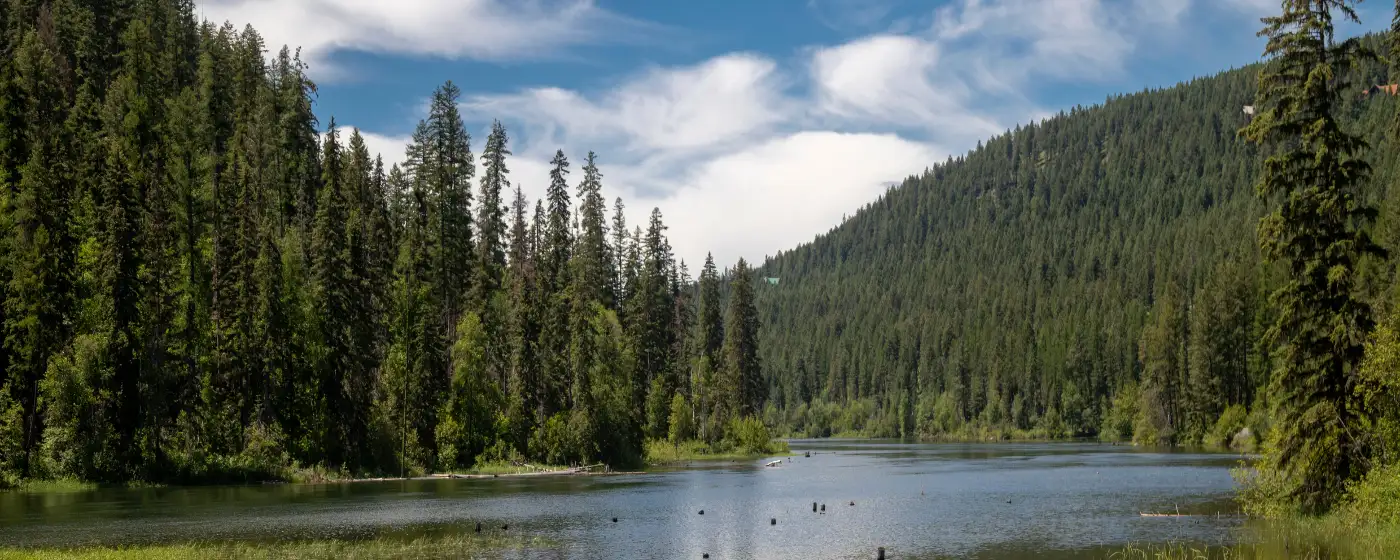
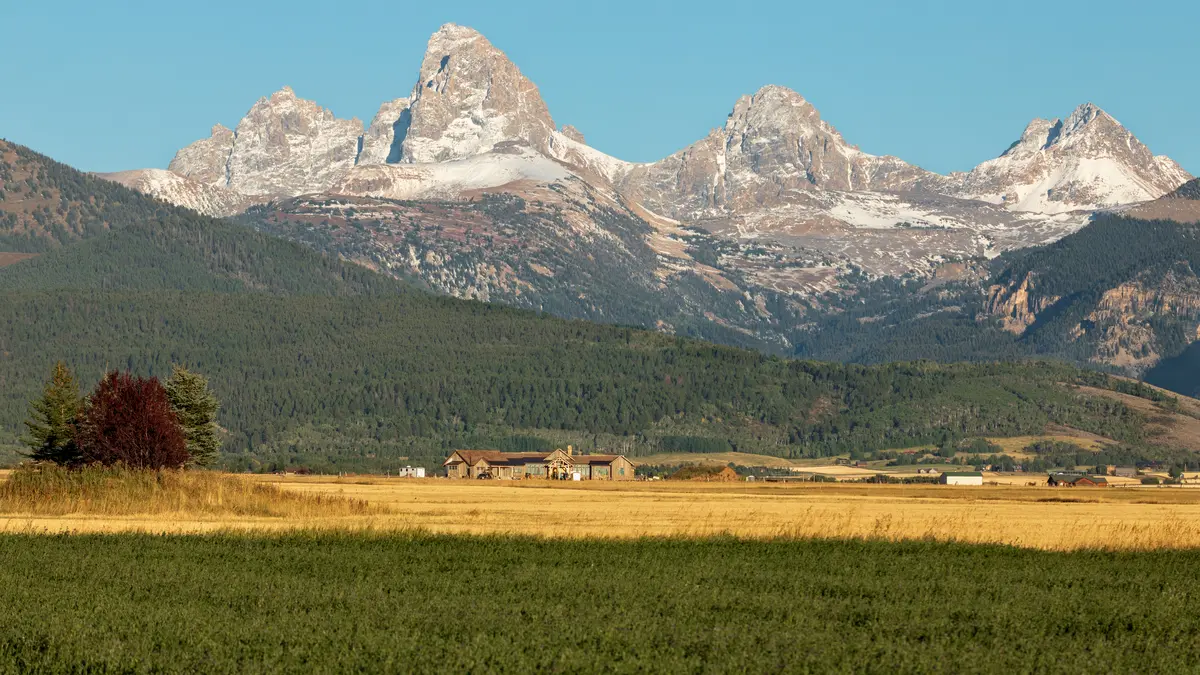
Maybe your company let you go remote. Maybe you ran the numbers after your third California property tax reassessment and felt something shift. Maybe you just drove through eastern Idaho on a summer trip and couldn't stop thinking about the sky. Whatever brought you here, Ammon keeps showing up on Californians' shortlists for a reason that goes deeper than price: this is a small city — about 20,000 people — that sits immediately east of Idaho Falls, shares its commercial corridor on U.S. Highway 20, and still manages to feel like a neighborhood rather than an overgrown suburb. The Teton Range sits close enough on clear days to remind you exactly where you are. That combination of access and quiet is what makes people stay.
The economic backbone here is steadier than most cities this size. Idaho National Laboratory, the federal nuclear research facility about 50 miles west on I-20, anchors a professional workforce that lives in Ammon precisely because the commute is manageable and the schools are solid. Melaleuca — a major wellness products company headquartered in Idaho Falls — employs thousands in the region. A regional medical center rounds out the employer base with healthcare jobs that draw people who want urban-caliber careers without urban-caliber housing costs. Bonneville Joint School District #93, which serves Ammon, holds a B rating, according to Niche, and is the kind of district where parent involvement is visible and real, not just a talking point on a school board website.
The cost-of-living shift from California is substantial enough that people sometimes don't believe it until they close escrow. Ammon's median sale price was $430,000 as of January 2026 — a figure that represents a dramatic change from what most coastal Californians paid or are currently paying. Property taxes run at an effective rate of approximately 0.46%, well below the national median, and the state's overall tax posture is competitive enough that Idaho ranked 9th on the Tax Foundation's 2026 State Tax Competitiveness Index. Day-to-day life centers on parks like Woodland Hills, McCowin Park, and Peterson Park, a short drive to Grand Teton Mall for basics, and the kind of low-traffic residential streets where kids still ride bikes in the evening.
Whether you're finalizing the decision or just stress-testing the idea, the sections below break down the California-to-Ammon financial comparison in real numbers, the tax shift you'll feel in your paycheck, what the housing market actually looks like for buyers coming from high-cost markets, the lifestyle differences worth planning for, and the things that surprise California transplants after month six.
The Home Price Reality: What Your California Equity Buys Here
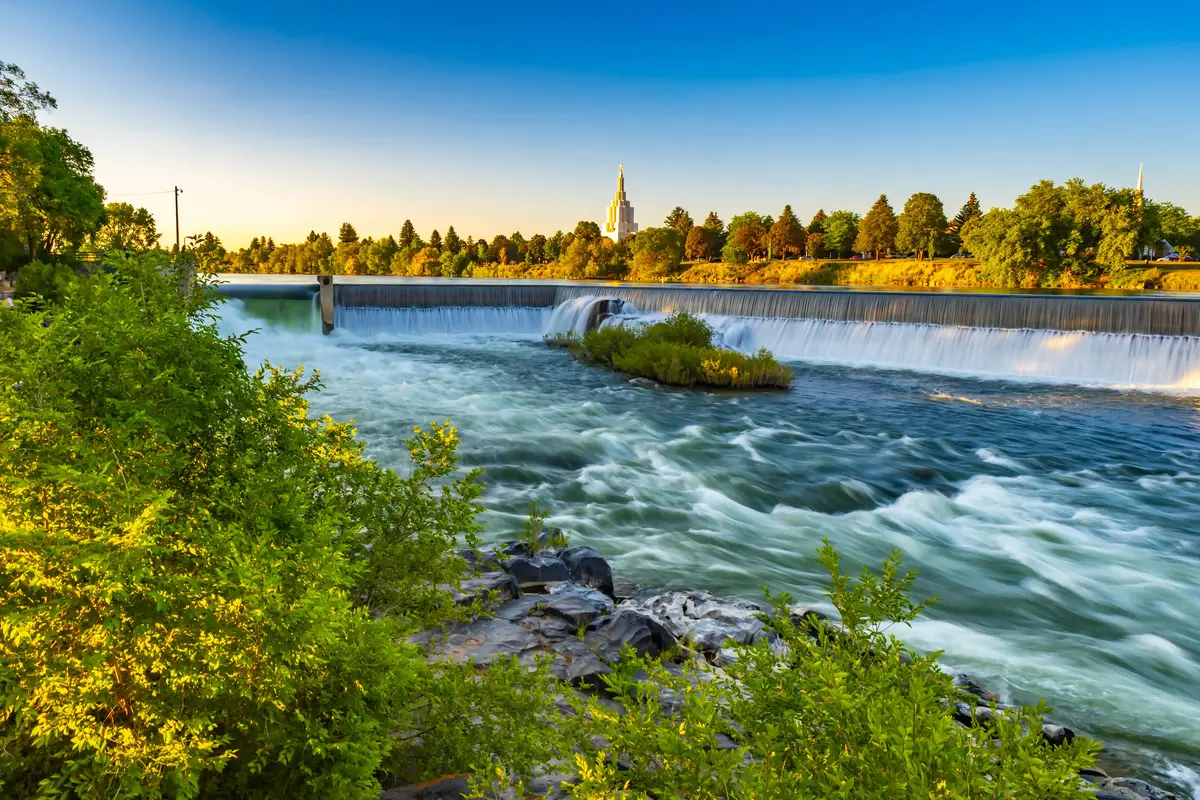
The single biggest shock for California buyers isn't the price — it's what they realize they no longer have to compromise on. Ammon's median sale price was $430,000 in January 2026. That figure covers a lot of square footage by West Coast standards: four bedrooms, a two-car garage, and a yard measured in fractions of an acre rather than fractions of feet.
What the Numbers Mean for California Equity
A buyer selling a median-priced home in the Bay Area or coastal Los Angeles typically arrives with equity that covers the entire Ammon purchase outright — or leaves them with a down payment large enough to make the monthly math look almost uncomfortable in how favorable it is. Even buyers exiting Sacramento or the Inland Empire, where prices have moderated from their 2022 peaks, usually arrive with enough equity to buy without stretching.
The entry point matters too. Older construction in Ammon's established neighborhoods — areas near McCowin Park or the Community area — can still be found in the low-to-mid $300,000s. Newer builds in developments like Cortland Ridge or Eagle Pointe push above the median, with finished homes in the upper $400,000s to low $500,000s. That range covers a lot of ground that simply doesn't exist in any coastal California market. For the full breakdown on how Ammon's neighborhoods compare, the neighborhoods page goes deeper.
The Effective Property Tax Difference
California's Proposition 13 kept many long-term owners at artificially low assessed values — but new buyers paid full market-rate taxes. In practice, buying a $1.5 million California home at a 1.1% effective rate meant a significant annual bill. Ammon's effective rate of approximately 0.46% on a $430,000 purchase produces a tax obligation that most California transplants describe as almost disorienting in its modesty.
That rate sits right at Idaho's statewide median and well below the national median of roughly 0.89%. The cost-of-living page has the full property tax breakdown alongside utilities and grocery comparisons.
| Purchase Scenario | Ammon Median ($430,000) | Typical CA Coastal Purchase |
|---|---|---|
| Effective property tax rate | ~0.46% | ~1.0–1.2% (varies by county) |
| Bedrooms at that price | 3–4 BR typical | 1–2 BR condo typical |
| Garage included? | Yes, 2-car standard | Rarely at entry price |
| Lot size expectation | 0.15–0.25 acres common | Often 0 (attached units) |
| New construction available? | Yes, at median range | Rarely below $700K in most metros |
| HOA fees | Low or none in most areas | $400–$700/mo common in condos |
The shift in what your housing dollar delivers is the most immediate thing California buyers notice. The second thing they notice is what happens to their paycheck.
The Tax Shift: What Moves with You and What Disappears
Moving from California to Idaho isn't just a change of address — it's a restructuring of your household's tax picture. The differences are meaningful enough that getting them wrong in your planning can lead to either a pleasant surprise or a miscalculated budget.
State Income Tax: The Flat-Rate Trade
Idaho runs a flat 5.3% state income tax on all taxable income, effective January 1, 2025. There are no progressive brackets — every dollar above the standard deduction is taxed at the same rate. California's system is the opposite: a multi-bracket structure that reaches a top marginal rate of 13.3% (including the 1% Behavioral Health Services Tax on income over $1 million), the highest state rate in the country.
There is a crossover point worth knowing: at approximately $81,000 of taxable income, California's progressive brackets actually produce a lower state tax bill than Idaho's flat 5.3%. Below that threshold, California wins on income tax alone. Above it — which describes most dual-income households and most of the professional class that commutes to Idaho National Laboratory or works remotely for a California employer — Idaho wins, and the gap widens steadily as income rises.
If you're carrying California equity into a remote job that still pays a California salary, running the actual numbers with a CPA who knows both states is worth the two hours.
The SDI Line Item That Disappears
California levies State Disability Insurance (SDI) at 1.3% of wages in 2026, with no wage cap since 2024. On a $150,000 salary, that's $1,950 per year off the top. Idaho has no equivalent payroll deduction. It's not a huge number in isolation, but it's a line item that simply stops appearing on your pay stub the moment you establish Idaho residency and update your withholding.
Sales Tax: The One Counterintuitive Line
Idaho's statewide sales tax is 6%, with virtually no local additions — Ammon charges no city sales tax on top of that. California's statewide rate is 7.25%, but many California counties and cities add local taxes that push the effective rate to 9–10.25% in places like Los Angeles, San Francisco, and Sacramento. Ammon's 6% is noticeably lower for most purchases.
The one wrinkle: Idaho taxes groceries at the full 6% rate. California exempts most food from sales tax entirely. Idaho partially offsets this with a refundable Grocery Tax Credit of $155 per person per year — raised from $120 in the 2025 legislative session — but households buying for four or five people will still feel the grocery tax line more than they did in California. It's the one area where the California tax code is more favorable for everyday spending.
| Tax Category | Ammon / Idaho | California (general) |
|---|---|---|
| State income tax (flat/top rate) | 5.3% flat | Up to 13.3% (progressive) |
| Income tax crossover point | Idaho wins above ~$81K taxable | CA wins below ~$81K taxable |
| State Disability Insurance | None | 1.3% of wages (no wage cap) |
| Statewide sales tax | 6% | 7.25% base; 9–10.25% in many cities |
| Grocery tax | 6% (with $155/person annual credit) | Exempt for most food items |
| Effective property tax rate | ~0.46% | ~1.0–1.2% for new buyers |
| Tax Foundation 2026 competitiveness rank | 9th nationally | Bottom tier nationally |
The full property and income tax details live on the cost-of-living page if you want to model your specific situation.
The California Migration Pattern — and What It's Doing to Ammon
You're not blazing a trail. IRS Statistics of Income data for tax years 2022–2023 show California losing approximately 100,397 net tax filers and $11.9 billion in adjusted gross income to other states — the largest net out-migration in the country for four consecutive tax years, with Idaho consistently among the top per-capita destinations. Some of those filers landed in Boise. A meaningful share ended up in eastern Idaho, including Ammon.
What This Means for the Local Market
The influx has been a primary driver of Ammon's price appreciation over the past several years. Buyers arriving with California equity could pay over asking and still feel like they got a deal by Bay Area math. That pressure has eased somewhat as interest rates normalized, but Ammon's median has held steady in a way that reflects genuine demand, not speculative froth.
Long-term Ammon residents have complicated feelings about this. The city's character — its patchwork of LDS-influenced family culture, its quiet residential streets, its lack of a downtown bar scene — is exactly what drew California transplants in the first place. The development of Foothills Square, with a Les Schwab and the first Café Zupas location in eastern Idaho expected to open in 2026, is a direct response to the growth in purchasing power and retail expectations that came with the migration wave. The proposed 60-acre Ammon Town Center at Ammon Lincoln and Sunnyside Road — projecting a $60 million investment in dining, office, and residential uses — signals that the city is planning for continued growth rather than hoping the migration wave reverses.
The Honest Tension
Some California transplants move here and try to recreate the food scene, the walkable access, or the density they had before. That's the fastest path to disappointment. Ammon is not Sacramento with cheaper rent. It's a small eastern Idaho city with big skies, quick access to Idaho Falls, and a community that was functional and self-contained long before anyone from the Bay Area arrived. The people who thrive here are the ones who came for what Ammon actually is — not for what they hoped to build it into.
Looking to buy in Ammon? Estimate your payment.
Enter your numbers to see an estimated monthly mortgage payment.
Estimate only. Excludes HOA fees and mortgage insurance. The interest rate above is a starting point, not a quoted rate — replace it with your own to see real numbers. Insurance is a flat placeholder, not a Ammon quote.
What Daily Life Actually Looks Like After the Move
The first thing most California transplants say around month three is some version of: "I didn't realize how much mental energy the traffic was costing me." There's no equivalent of what commuters face on a major freeway at 5 p.m. Getting from the Sandcreek area or Woodland Hills to central Idaho Falls — where most of the region's retail, restaurants, and employers are — takes roughly ten minutes on a bad day. That psychological shift is real and tends to catch people off guard.
Where People Actually Gather
Weekend life in Ammon rotates around its parks. McCowin Park — with its mature trees and open fields — is the Friday-after-school gathering spot for families with younger kids. Woodland Hills Park anchors the north side of the city. Peterson Park sees heavy use through the long summer evenings when daylight lasts past 9 p.m. and the heat is dry rather than oppressive.
For breakfast, a handful of local diners near the city's main commercial corridors are the kind of neighborhood spots that California transplants tend to adopt within weeks of arriving. Grand Teton Mall handles the big-box retail needs, and Idaho Falls proper fills in whatever Ammon doesn't have on its own, from a wider restaurant selection to additional services.
The Infrastructure Surprise
Ammon runs its own municipal fiber-optic network — one of the fastest and most affordable in the country. For remote workers who've wrestled with California's inconsistent internet infrastructure, this is a genuinely pleasant surprise. If you're relocating specifically because remote work opened up the geography, Ammon's fiber situation is worth knowing before you compare it against other small cities in the region.
What You Give Up
There's no pretending this is a lateral move on amenities. Ammon has no walkable commercial district you can stroll to from a residential street. The cultural calendar is thinner than Sacramento, let alone the Bay Area. Winters are real — January lows run well below freezing, and snow requires actual preparation rather than the occasional inconvenience it is in coastal California. The outdoor payoff is significant: Yellowstone is roughly two hours north, the Tetons are closer, and the Snake River Plain offers fly fishing, hiking, and camping that California residents routinely pay significant money to access. But the trade is real, not cosmetic. Living in Ammon covers the day-to-day lifestyle in more depth.
The Traffic Chokepoint Worth Knowing
The one genuine traffic friction in Ammon is the Sunnyside Road and U.S. 20 intersection during the mid-afternoon school-dismissal window — roughly 2:45 to 3:30 p.m. on school days. It's not California freeway traffic by any measure, but it's the single chokepoint that surprises people who assumed eastern Idaho had no congestion at all. Timing errands for before noon or after 4 p.m. eliminates it entirely.
What California Buyers Should Do Before Making an Offer
Buying in Ammon after a California tenure involves a few specific planning steps that buyers from other states don't always need to think about. Getting them right shortens the adjustment period considerably.
Establish Idaho Residency Deliberately
Idaho income tax begins the day you establish domicile — not the day your California employer updates your address in payroll. If you're arriving mid-year, you'll file a part-year return in both states. California's state tax authority is aggressive about auditing high-income filers who leave mid-year, particularly if they have ongoing California income sources. A CPA who handles California nonresident returns is worth the fee before your first Idaho filing season.
Understand the Homeowner's Exemption
Idaho offers a homeowner's exemption that reduces the taxable assessed value of a primary residence — which contributes to why the effective rate stays as low as it does. You apply for it after closing, and it applies to the following tax year. Missing the application window means waiting another year, which is an easy administrative mistake for buyers who don't know it exists. Your closing agent in Ammon should flag it, but ask explicitly. The first-time homebuyer page covers Idaho-specific buying mechanics in more detail.
Don't Anchor on California Pricing Logic
In California, a house priced at $430,000 signals something specific — age, condition, location, or all three. In Ammon, that figure is the market median, which means you'll find newer construction, functional layouts, and decent school proximity right in that range. The instinct to keep pushing up the price to get quality is often counterproductive here. Many buyers from Southern California overshoot the market and buy more house than they need because the numbers still feel impossibly low by the standard they internalized over a decade in California.
Factor in the School District Before Choosing a Street
Bonneville Joint School District #93 serves Ammon, and the district's strong overall standing — it holds a B rating, according to Niche — means that most attendance zones perform well. The schools page breaks down attendance boundaries and school-level performance. If you have school-age children, choosing your neighborhood based on the specific school boundary rather than just the city is worth doing before you start touring homes.
The Fiber Internet Factor for Remote Workers
If you're relocating as a remote worker — which describes a significant portion of California transplants — Ammon's municipal fiber network is a genuine competitive advantage that affects which neighborhoods are best suited to your situation. City-operated fiber is available in established residential areas; coverage in newer developments on the city's growing edges can vary. Confirming service availability at a specific address before closing is a fifteen-minute call that matters.
Safety statistics for Ammon are covered on the safety page, and outdoor recreation — including access to the parks and regional trail system — is on the parks and recreation page.

Local Expert Takeaway: The California transplants who do best in Ammon are the ones who came for what the city actually is: reasonable scale, fast access to Idaho Falls, a flat tax that rewards professional income, and $430,000 that buys a real house with a yard. The ones who struggle are the ones who arrived expecting to rebuild their California life at a discount. Spend a long weekend here in January before you commit — the cold is honest, and so is the quiet. If you still want to move after that weekend, you'll stay.
Quick Takeaways & FAQs
✅ Ammon's $430,000 median sale price (January 2026) combined with a 0.46% effective property tax rate delivers a housing cost structure that is dramatically more favorable than any coastal California market.
⚠️ Idaho's flat 5.3% income tax beats California's rate for households earning above approximately $81,000 in taxable income — but below that threshold, California's progressive brackets actually produce a lower state tax bill, so run the numbers before assuming you win on income tax.
📍 Ammon runs its own municipal fiber-optic network — one of the most affordable in the country — which matters considerably for remote workers relocating from California.
Is moving from California to Ammon, Idaho worth it financially?
How does Idaho's income tax compare to California's for a remote worker still earning a California salary?
What surprises California transplants most about living in Ammon after six months?
Does Idaho tax groceries, and how does that compare to California?
What is the housing market like in Ammon for buyers coming from California with significant equity?
Moving to Idaho?
Tell us what you need help with and we'll connect you with local resources.
