
Most people moving to eastern Idaho ask about Idaho Falls first and discover Ammon second. The question that follows is usually the same: is it actually safe, or does it just feel safe because it's suburban and new? That's a fair question — and the numbers give a clearer answer than gut feel. Ammon sits directly east of Idaho Falls, covering roughly 7.6 square miles of compact suburban development in Bonneville County, with 25th East functioning as the spine connecting most of its major residential areas and commercial corridors.
The city's violent crime rate comes in at 2.2 per 1,000 residents — below Idaho's statewide rate and well below the national figure. That's not a marketing claim; it's a consistent finding across multiple aggregators using FBI Uniform Crime Reporting data. The city's 20,681 residents skew young (median age 32.9), with a low poverty rate and strong household income — demographic characteristics that correlate strongly with community stability. A stable employment base anchored by major regional institutions keeps workforce turnover relatively low and supports the economic conditions that hold crime rates down.
Growth is the complicating factor. Ammon has expanded roughly 15.68% since the 2020 Census and is adding residents at approximately 2.79% per year. Fast growth in any community puts pressure on infrastructure and the informal social networks that make neighborhoods feel cohesive. So far, Ammon's crime numbers haven't risen with its population — but new residents should understand which parts of the city have been here longest and which are still being built around them.
The sections below break down Ammon's raw crime figures, how they compare to state and national benchmarks, what the numbers look like across different parts of the city, and what practical steps you can take before deciding on a specific neighborhood.

Ammon's Crime Numbers at a Glance
Ammon's two headline figures are a violent crime rate of 2.2 per 1,000 residents and a property crime rate of 11.6 per 1,000 residents. Read in isolation, those numbers don't tell you much. Read against the right benchmarks, they tell you quite a lot.
| Metric | Ammon | Idaho (statewide) | U.S. National |
|---|---|---|---|
| Violent crime per 1,000 | 2.2 | 2.54 | ~3.7 |
| Property crime per 1,000 | 11.6 | 9.67 | ~18.4 |
| vs. national violent crime | Below | Below | Benchmark |
| vs. national property crime | Below | Below (lowest in U.S.) | Benchmark |
| State ranking (overall crime) | — | #2 safest, 2024 | — |
| Residents feeling safe | — | 69% (3rd highest nationally) | — |
On violent crime, Ammon sits comfortably below both the Idaho average and the national average — a consistent finding whether you pull from CrimeGrade.org's modeled analysis or national crime benchmarks compiled from FBI Uniform Crime Reporting data.
Where Property Crime Fits In
Property crime at 11.6 per 1,000 is slightly above Idaho's statewide rate — but Idaho's statewide property crime rate is the lowest among all 50 states, so clearing that bar is a high standard. Ammon's figure still comes in meaningfully below the national property crime rate of approximately 18.4 per 1,000. The honest read: property crime here is low by any national measure, even if it's not quite at the floor of what Idaho's quietest small towns report.
Idaho as a whole saw its total offense rate drop 6.3% from 2023 to 2024, reaching its lowest point in two decades. Since 2005, property crimes statewide have decreased by 66% and crimes against persons by 35%. Ammon's numbers reflect that broader downward trajectory.
How Ammon Compares to the Cities Around It
Context matters more than raw figures when you're choosing between Ammon and its nearest neighbors. The Idaho Falls Metropolitan Statistical Area covers several municipalities with meaningfully different crime profiles, and Ammon is generally considered among the more stable options in the region.
The Idaho Falls Relationship
Idaho Falls is Ammon's immediate neighbor to the west — separated by a short drive and, in some corridors, just a street or two. Idaho Falls is a larger city with more commercial density, more foot traffic, and, as a result, somewhat higher crime exposure in certain commercial zones. Ammon's residential character and city limits help insulate it from those patterns, though residents who shop, dine, or work in Idaho Falls regularly cross into that environment.
Smaller communities in Bonneville County — Iona to the north, Ucon to the northwest — tend to report even lower raw crime totals, but those are much smaller towns where a handful of incidents can swing the per-capita rate dramatically in either direction. Ammon's 20,681-person population makes its rate more statistically stable and meaningful as a planning tool.
The Growth Question
Ammon added roughly 2,800 residents between 2020 and 2026, and the growth hasn't stopped. Foothills Square along 25th East is drawing new retail and commercial anchors, including the first Café Zupas location in eastern Idaho. More retail means more foot traffic, and more foot traffic historically correlates with modest increases in opportunistic property crime. That's not a prediction, it's a pattern worth watching as the corridor matures.
The city's low poverty rate and strong household income both point toward the kind of economic stability that tends to hold crime rates down even as population expands. So far, the data supports that relationship holding.
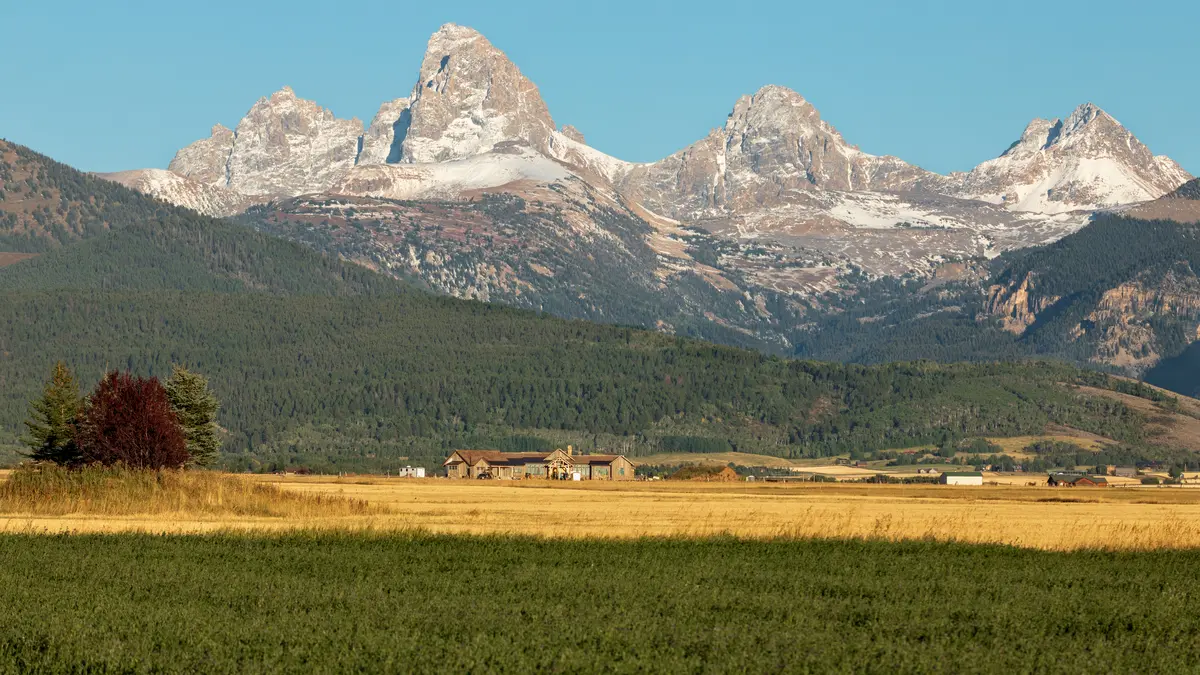
Neighborhood Safety Picture Across Ammon
Ammon doesn't publish block-level crime heat maps the way larger cities do, so neighborhood-level comparisons require reading the city's physical and commercial geography alongside the citywide figures. A few patterns emerge from that approach. For a full breakdown of each neighborhood's character, see the Ammon neighborhoods guide.
Sandcreek and Eagle Pointe
These established residential areas represent the kind of low-density, owner-occupied suburban development that consistently reports lower property crime. Long-term ownership, intact neighborhood networks, and limited cut-through traffic all contribute. Best for: Families Quiet streets
Woodland Hills and McCowin Park Area
Woodland Hills sits near Woodland Hills Park, one of Ammon's better-used green spaces. The McCowin Park area similarly benefits from a well-maintained civic anchor — parks draw consistent family activity, which in practice means more eyes on the surrounding streets throughout the day. Both areas have an established feel that newer developments are still building toward. Best for: Families Parks access
Foothills Square and Cortland Ridge
Foothills Square is the city's most actively developing commercial zone. More construction activity and retail arrival means temporary disruption in the feel of surrounding streets — not a crime spike, but the kind of transitional energy that takes a year or two to settle. Cortland Ridge, as a newer residential pocket, is still accumulating the community density that makes an area feel cohesive. Best for: First-time buyers Value
The Villas and Community Area
These neighborhoods tend to attract a mix of younger families and first-time residents drawn by relatively accessible entry points into the Ammon market. The Community area in particular benefits from its central location within the city's existing fabric. Best for: First-time buyers Commuters
What Locals Know After Six Months
The surprise most residents mention after settling in isn't crime — it's how quiet the streets actually are at night, even along 25th East, once you step one block off the commercial corridor. What catches people off guard is the occasional vehicle break-in in parking lots near the large regional mall on the Idaho Falls side of the border. That's technically Idaho Falls geography, not Ammon, but residents who park there don't always track the city line. The practical takeaway: leave valuables out of sight in any mall-adjacent parking lot regardless of which city's sign is at the curb.
Looking to buy in Ammon? Estimate your payment.
Enter your numbers to see an estimated monthly mortgage payment.
Estimate only. Excludes HOA fees and mortgage insurance. The interest rate above is a starting point, not a quoted rate — replace it with your own to see real numbers. Insurance is a flat placeholder, not a Ammon quote.
What the Numbers Don't Tell You — and What Does
Per-capita crime rates are useful starting points, not final answers. Ammon's 2.2 violent crimes per 1,000 means roughly 45 violent incidents reported across the entire city in a given year — a manageable absolute number in a community of 20,000-plus people, but still real events affecting real households. Understanding what those incidents look like in practice matters more than the rate alone.
The Nature of Violent Crime Here
In communities with Ammon's demographic profile — low poverty, strong household income, young families — violent crime tends to be concentrated in domestic and interpersonal categories rather than stranger-danger scenarios. That doesn't make it less serious, but it does shape the experience of living here differently than a community where robbery or assault in public spaces drives the rate. Nothing in Ammon's profile or any public incident reporting suggests the latter is a significant factor.
Property Crime: What's Actually at Risk
Property crime at 11.6 per 1,000 translates to roughly 240 incidents citywide annually — and in suburban communities like Ammon, the bulk of that is typically vehicle-related: unlocked cars, items visible in back seats, and opportunistic garage entries when doors are left open overnight. This is the category where individual habits genuinely move the needle. Residents who consistently lock cars and secure garages see essentially zero exposure to this category of crime.
The Trend Line Is Favorable
Idaho's crime trajectory makes Ammon's position more encouraging than a single-year snapshot suggests. The Idaho Statistical Analysis Center documented a 6.3% drop in the state's total offense rate from 2023 to 2024 — the lowest level in twenty years. Ammon's own figures have remained stable through its rapid growth phase, which is not a given for a city expanding at nearly 3% annually. That stability is worth weighting in your assessment.
A Note on Reporting Completeness
Ammon is a relatively high-income, educated community — characteristics associated with higher crime reporting rates. That means Ammon's figures may capture a larger share of actual incidents than comparable communities with lower reporting. In other words, the numbers you see here may actually reflect reality more accurately than the figures from a community where many incidents go unreported. That's a sign of civic health, not a hidden crime problem.
Practical Steps for Researching Safety Before You Decide on a Neighborhood
The citywide figures give you the baseline. These specific steps help you get to neighborhood-level confidence before committing to a specific street or area in Ammon.
Use Bonneville County's Public Records
Bonneville County Sheriff and Ammon City maintain public incident logs. Pulling reports for a specific address range or zip code over the past 12 months gives you a far more granular picture than any aggregated rate. Look for patterns — repeated incidents on the same street, clusters around a specific commercial property — rather than isolated events.
Visit at Different Times of Day
This sounds obvious, but most people tour neighborhoods between 10 a.m. and 4 p.m. on weekdays. Drive through Peterson Park, McCowin Park, and Woodland Hills Park on a Friday evening and a Sunday morning. The people using those spaces, the foot traffic on adjacent streets, and the general energy of the area at non-peak hours tells you more than any crime map.
Talk to Neighbors Directly
Ammon's compact 7.6-square-mile footprint means most neighborhoods are genuinely small. Knocking on two or three doors on the specific street you're evaluating and asking residents what they've noticed — not what they've heard about the city generally — is the highest-signal research you can do. People who've lived on a block for three years know things that don't appear in any database.
Check the Commercial Corridor Trajectory
The Foothills Square development along 25th East is still evolving. Before settling on a home adjacent to an active commercial development, check what permits are pending and what categories of retail are planned. A neighborhood anchored by a family restaurant and a medical clinic develops differently than one anchored by late-night entertainment, and that distinction matters for the long-term feel of surrounding residential streets.
Cross-Reference the City Boundary
Ammon and Idaho Falls share a porous border in several areas. When you're researching a specific address, verify which city's jurisdiction it falls under — police response, code enforcement, and the applicable crime statistics all depend on that line. Properties marketed as being "in Ammon" occasionally sit in Idaho Falls city limits, and vice versa. The Bonneville County Assessor's parcel viewer can confirm jurisdiction in under a minute.

Local Expert Takeaway: Ammon's violent crime rate of 2.2 per 1,000 puts it below both the Idaho state average and the national benchmark — a meaningful distinction for a city that has grown by more than 15% since 2020. The property crime figure at 11.6 per 1,000 is slightly above Idaho's historically low statewide rate but still well below the national average, and the honest version of that number largely reflects vehicle and garage opportunism rather than anything more serious. The practical safety picture here is strong, and Idaho's statewide crime trend — down 6.3% in 2024 alone — suggests it's likely to stay that way. Before choosing a specific block, pull Bonneville County incident logs for that address range, visit the neighborhood at different times of day including evenings near Peterson Park or McCowin Park, and confirm which city's jurisdiction the parcel actually sits in. That last step alone can save real confusion about which crime data you should even be looking at.
Quick Takeaways & FAQs
✅ Ammon's violent crime rate of 2.2 per 1,000 is below Idaho's statewide average and well below the national rate — a genuine strength backed by multiple independent data sources.
⚠️ Property crime at 11.6 per 1,000 sits slightly above Idaho's (nationally lowest) statewide rate, mostly driven by vehicle and garage opportunism rather than more serious incidents.
📍 The Ammon–Idaho Falls city boundary is blurry in several commercial areas near the regional mall — always verify a specific parcel's jurisdiction using the Bonneville County Assessor's parcel viewer before drawing conclusions about which city's crime data applies.
What is Ammon, Idaho's violent crime rate?
Is Ammon safer than Idaho Falls?
What kind of crime is most common in Ammon?
How has crime trended in Ammon and Idaho overall?
Are there specific neighborhoods in Ammon that are safer than others?
Moving to Idaho?
Tell us what you need help with and we'll connect you with local resources.
