
Military retirees figured this out first. Joint Base Lewis-McChord sits 8–12 minutes from Spanaway's front door, which means commissary access, Tricare-network facilities, and a community that already speaks the language of service — all without paying Tacoma prices. But you don't need a DD-214 to make Spanaway work in retirement. Roughly 27% of residents here are seniors, and that critical mass shapes what the city actually has to offer: senior housing directories list at least 20 facilities serving the 98387 ZIP code, and the social infrastructure that comes with a large older population is genuinely present in a way it isn't in younger bedroom communities.
The case for Spanaway in retirement starts with what Washington State doesn't tax. Social Security, pension income, IRA withdrawals, 401(k) distributions — none of it is touched by state income tax, because Washington has no personal income tax at all. That single fact puts more money in your pocket every month than any HOA amenity list can match. The Zillow Home Value Index for Spanaway sits at $475,231 (2026), which is noticeably below the statewide Washington average — meaning retirees who cash out of higher-cost markets often arrive with equity to spare and a payment that finally feels manageable on a fixed income.
Day-to-day life here is suburban and car-dependent, which matters if you're planning decades ahead. Spanaway Lake Park and the 200-acre Bresemann Forest give you genuine green space within the community, and the annual Fantasy Lights display at Spanaway Park has a neighborhood-gathering quality that says something about the social temperature of the place. But running errands without a car is difficult, and the Pacific Avenue South corridor — while well-served by retail — is built for drivers. If you're imagining a walkable downtown with coffee shops and a farmers market, Spanaway is not that city. If you're imagining a quiet, affordable base camp with good outdoor access and a short drive to Tacoma's full amenity set, it starts to make a lot of sense.
Whether you're a military retiree already in the area, a Pacific Northwest transplant looking to downsize, or someone weighing Spanaway against Puyallup, Lakewood, or Tacoma, this guide covers the healthcare picture, the retiree tax posture, what active senior life actually looks like here, and how the downsizing market is behaving right now.

Why Retirees Are Choosing Spanaway
The retirees who land in Spanaway and stay tend to fit one of two profiles: military veterans and their spouses who spent years near Joint Base Lewis-McChord and simply never found a reason to leave the area after separation, and budget-conscious Pacific Northwest retirees who got priced out of Tacoma or the west side of the Sound and found that Spanaway offered a real house — not a condo compromise — at a price their retirement income could sustain.
What makes Spanaway genuinely work for both groups is the combination of low state tax burden, a median home price that leaves room to breathe, and proximity to a full-service city without paying full-service city prices. For an honest look at who Spanaway suits overall, the retirement calculus is straightforward: if your income is Social Security plus a pension or retirement account, Washington's tax structure is among the most favorable in the country, and Spanaway's price point lets that income actually cover the mortgage or the rent.
Who should look elsewhere? Retirees who need a truly walkable lifestyle — the kind where you can age out of driving and still handle daily life on foot — will find Spanaway frustrating. The city is built around Pacific Avenue South and a network of arterials that assume car ownership. Retirees who prioritize proximity to Level I trauma care or highly specialized academic medical centers will also want to weigh their options carefully; Spanaway's hospital access is solid but not deep, and we cover that fully in the next section. If you want urban energy, Tacoma is 20 minutes away, but Spanaway itself does not deliver that on its own streets.
Healthcare & Medical Access in Spanaway
The Primary Hospital Anchor
MultiCare Good Samaritan Hospital in Puyallup is the hospital most Spanaway retirees depend on — sitting roughly 10–12 miles to the northeast. It operates a 24/7 emergency department, a Level III trauma center, full surgical services, mental health programs, and comprehensive inpatient and outpatient care. The American Nurses Credentialing Center has accredited Good Samaritan through its Practice Transition Accreditation Program, which is a meaningful quality signal for older patients who spend more time as inpatients than younger ones.
For primary care and routine specialist visits, the MultiCare network has clinic locations throughout the South Puget Sound corridor, and most Spanaway residents are within a short drive of cardiology, orthopedics, and oncology services. Day-to-day chronic disease management — the bread and butter of retirement healthcare — is genuinely well served here.
The Honest Distance-to-Advanced-Care Reality
Where Spanaway falls short is Level I trauma and highly specialized quaternary care. The nearest Level I trauma centers are in Tacoma — at MultiCare Tacoma General — and Harborview Medical Center in Seattle is farther still but represents the region's most advanced academic medicine. For a routine retirement, this gap rarely matters. For retirees with complex cardiac conditions, neurological issues, or cancer requiring cutting-edge treatment protocols, that distance is worth factoring into your decision before you buy.
Military retirees have an additional layer here that civilians don't: Madigan Army Medical Center on Joint Base Lewis-McChord is one of the Pacific Northwest's largest military treatment facilities, with broad specialty depth for those with Tricare access. If that applies to you, Spanaway's healthcare picture improves materially — Madigan is roughly 10–15 minutes from most parts of the city.
In-Home and Facility Care
In-home senior care in Spanaway averages approximately $23.00 per hour as of mid-2026, which is meaningful context for retirees planning to age in place. Combined with at least 20 senior housing facilities serving the immediate area, there's genuine infrastructure here for the full continuum — independent living, assisted living, and memory care — without the wait lists or scarcity that affect smaller communities.

The Retiree Budget in Spanaway
Washington's No-Income-Tax Advantage
Washington is one of only nine U.S. states with no personal income tax — joining Alaska, Florida, Nevada, South Dakota, Tennessee, Texas, and Wyoming. For retirees, this means Social Security, pension distributions, IRA and 401(k) withdrawals, and annuity income are all free of state taxation. On a combined household retirement income of $70,000–$90,000, that can translate to thousands of dollars a year that simply stay in your pocket compared to what you'd owe in California, Oregon, or most Midwest states.
Washington does levy a 7% capital gains tax, but it applies only to long-term gains above an annual threshold in taxable brokerage accounts — it does not affect retirement account withdrawals, Social Security, or pension income. For the vast majority of retirees drawing from 401(k)s and pensions, this tax is simply not relevant. The full cost-of-living breakdown for Spanaway covers daily expenses in detail, but the headline is that groceries, utilities, and services run close to the state average.
Property Tax: Moderate and Reducible
Spanaway's effective property tax rate is approximately 0.94% — moderate by Washington standards and well below what you'd encounter in many western states. On top of that baseline, Washington offers senior property tax relief programs that can reduce the burden further for qualifying homeowners based on age and income. The exact thresholds are set and verified by the Pierce County Assessor, and eligibility is worth checking early in your retirement planning — not as an afterthought after you've already closed.
The market conditions themselves favor patient buyers right now. Homes in Spanaway averaged 25 days on market in early 2026, which means you're not bidding against a dozen other offers on a Tuesday. Downsizers who aren't racing a lease expiration have genuine negotiating room — something that was hard to say about this market two or three years ago.
Looking to buy in Spanaway? Estimate your payment.
Enter your numbers to see an estimated monthly mortgage payment.
Estimate only. Excludes HOA fees and mortgage insurance. The interest rate above is a starting point, not a quoted rate — replace it with your own to see real numbers. Insurance is a flat placeholder, not a Spanaway quote.
Walkability, Community & Staying Active in Spanaway
The Walkability Reality
Spanaway is a car-dependent community — there's no gentle way to say it. The Pacific Avenue South corridor has sidewalks and retail density, but running your daily errands on foot from a typical residential street here is impractical. The terrain is relatively flat, which matters for retirees who want to walk for fitness without navigating steep grades, but flat doesn't mean walkable when the nearest pharmacy or grocery store is a mile down a four-lane arterial.
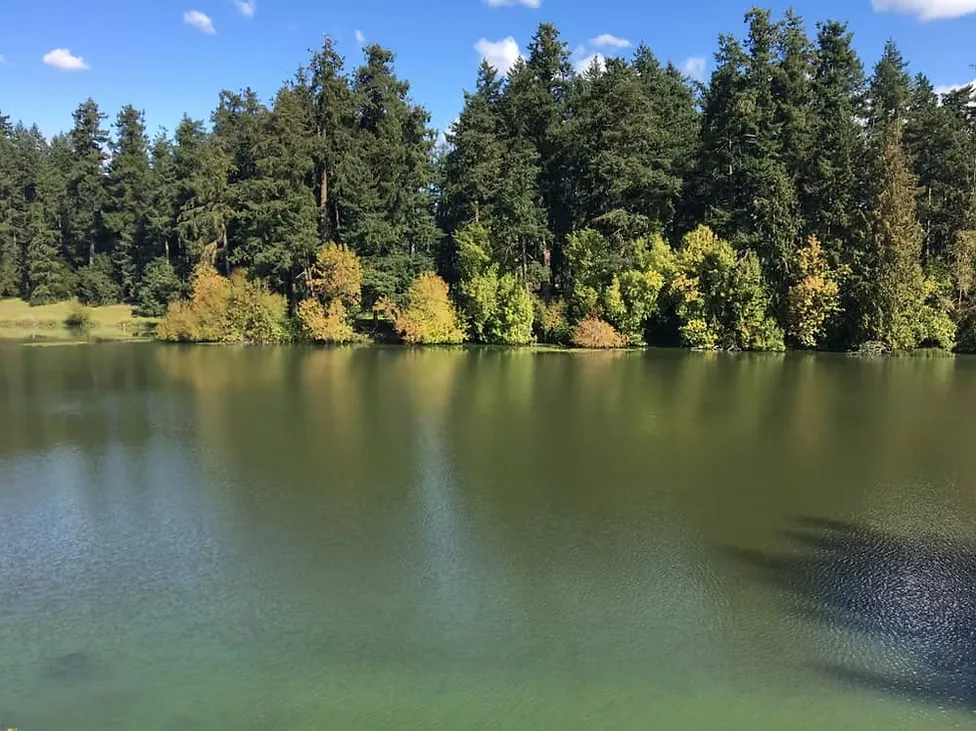
What Spanaway does offer on foot is green space. The trails through Bresemann Forest and around Spanaway Lake Park are genuinely pleasant for morning walks, and the lake loop in particular is a year-round gathering spot for older residents who use it daily. These are the kinds of places where you'll actually see retirees connecting — a morning walk that turns into a conversation, a regular group that meets without anyone organizing it.
Senior Centers and Social Life
Pierce County operates senior programs and activities through its network of community centers, with programming accessible to Spanaway residents. Local faith communities play an outsize role in the social fabric here — more so than in higher-density cities where secular social options are plentiful. Volunteer opportunities through service organizations, food banks along the Pacific Avenue corridor, and JBLM-adjacent veteran support groups give retirees with time and energy genuine ways to plug in.
One thing newcomers don't expect: the Fantasy Lights display at Spanaway Park in November and December draws visitors from across Pierce County, and for long-time residents it has the feel of a recurring neighborhood reunion. If you move here in October, attending Fantasy Lights in your first December is probably the fastest way to feel like you actually live here rather than just own a house here.
Morning coffee at Mary Mary's Cafe on Pacific Ave S is where a slice of the everyday senior social scene plays out — it's a genuine neighborhood spot, not a chain, and the kind of place where regulars know each other's orders.
Right-Sizing: Downsizing in Spanaway
What the Inventory Actually Looks Like
Spanaway's housing stock skews toward single-family homes built from the 1970s through the 2000s — ranch-style and split-level construction that ranges from legitimately single-level to technically single-level-on-one-floor with a split-level entry that surprises you on moving day. When you're downsizing with aging-in-place in mind, being explicit with your agent about zero-step entry and single-level living is essential here, because the market uses those terms loosely.
True single-level patio homes and smaller detached houses in the 1,200–1,600 square foot range do exist in Spanaway and tend to move at the lower end of the city's price range — making them genuinely accessible for retirees stepping down from a larger home. Condominium inventory is thinner than in Tacoma or Puyallup, so if condo living is your target format, you'll have more options by expanding your search to adjacent markets.
55+ and Active-Adult Communities
Directories serving the 98387 ZIP code list at least 20 senior housing facilities, spanning independent living, assisted living, and memory care. Dedicated 55+ active-adult communities — the kind with amenity packages, organized social programming, and deed-restricted age requirements — are present in and around Spanaway, though the supply is more limited than in purpose-built retirement markets farther south in the region. What exists here tends to be smaller in scale and more community-integrated than a large master-planned adult campus.
For retirees who want to downsize but stay in conventional homeownership rather than a managed community, Spanaway's price point creates a real opportunity: selling a larger home in a higher-cost market and buying a right-sized Spanaway ranch outright — or with a very small remaining mortgage — is a realistic outcome rather than a hypothetical one. The roughly 27% senior share of the local population means that single-level homes turn over with some regularity, which keeps inventory from drying up entirely even in tight market conditions.
Spanaway vs Nearby Retirement Destinations
| City | Cost vs Spanaway | Primary Hospital | Walkability | Senior Living Depth | Overall Retirement Fit |
|---|---|---|---|---|---|
| Spanaway | Anchor | MultiCare Good Samaritan (Puyallup, ~10–12 mi); Madigan for veterans | Low — car-dependent; flat terrain good for fitness walking | Strong — 20+ facilities in ZIP | Value Nature Access Military retirees especially well served |
| Puyallup | About the same | MultiCare Good Samaritan — on-site | Moderate — downtown core is walkable; outer areas are not | Strong — broad independent and assisted options | Walkable Core Better for retirees who want some on-foot access; hospital is next door |
| Lakewood | Noticeably cheaper | MultiCare Lakewood Medical Center; Madigan nearby | Low — suburban arterial pattern similar to Spanaway | Moderate — solid but smaller selection than Spanaway | Value JBLM Access Lowest entry costs in the area; strong military-retiree infrastructure |
| Tacoma | Pricier | MultiCare Tacoma General (Level I trauma); St. Joseph Medical Center | High in select neighborhoods — streetcar corridor, walkable core | Very strong — widest selection in the region | Walkable Amenity-Rich Best hospital depth; costs more; right for retirees prioritizing urban access |
| Parkland | About the same to slightly cheaper | MultiCare Tacoma General via Tacoma (~15–20 min) | Low — similar suburban pattern | Moderate | Value Close to Pacific Lutheran University — occasional cultural programming; quieter than Spanaway |
| University Place | Pricier | MultiCare Tacoma General (~15 min); St. Joseph Medical Center nearby | Low overall; pleasant waterfront walking paths | Moderate — growing senior housing inventory | Views Quiet Puget Sound views and quieter pace; costs more; good for retirees with equity to deploy |
Puyallup is the strongest competitor for retirees who want hospital proximity without leaving the Pierce County comfort zone — MultiCare Good Samaritan is literally in that city, and the downtown has a genuinely walkable core that Spanaway can't match. Lakewood wins on raw affordability and JBLM access, making it the default for military retirees who are purely budget-driven. Tacoma is the right answer if hospital depth and urban amenities are the priority — you'll pay for it, but the Level I trauma access and senior living selection are meaningfully better than anything south of the city. Spanaway lands in the middle: not the cheapest, not the most walkable, not the closest to a Level I trauma center — but one of the better overall packages for military retirees and anyone who wants a real single-family house at a price that leaves retirement income room to breathe.
Local Expert Takeaway: Spanaway is a genuinely strong retirement value for two specific profiles: military retirees who want to stay near JBLM without paying Tacoma prices, and Pacific Northwest downsizers who need a real single-family house — ideally single-level — at a price their retirement income can actually service. Washington's no-income-tax status and Spanaway's approximately 0.94% property tax rate (with senior relief programs available through Pierce County) make the monthly budget math work better here than in most comparable climates. The catch is car dependency — if you're planning for a future where you might stop driving, Spanaway requires a plan B. Mary Mary's Cafe on Pacific Ave S and the morning trail loop at Spanaway Lake Park are where the everyday social fabric actually shows up; the community feels more connected than the suburban layout suggests.
Quick Takeaways & FAQs
✅ Washington's zero state income tax means Social Security, pension, and retirement account income are entirely free of state taxation — one of the strongest tax postures for fixed-income retirees in the country.
⚠️ Spanaway is functionally car-dependent, and retirees planning to age out of driving will need to factor in transportation alternatives that don't yet exist at scale here.
📍 Military retirees within 10–15 minutes of Madigan Army Medical Center have access to specialty care that makes Spanaway's overall healthcare picture substantially stronger than it looks on a civilian-only map.
Is Spanaway a good place to retire on Social Security and a pension?
What hospital do Spanaway retirees use?
Are there 55+ or active-adult communities in Spanaway?
Does Washington State tax retirement account withdrawals or capital gains for retirees?
Can you get around Spanaway without a car as a retiree?
Moving to Washington?
Tell us what you need help with and we'll connect you with local resources.
