
Maybe your company is relocating you to Olympia's state-government campus. Maybe you've been priced out of the Seattle suburbs and someone in your orbit mentioned Lacey as a realistic alternative. Either way, you're about to discover that Lacey sits in a genuinely interesting position for first-time buyers: prices are meaningfully below the Puget Sound metros to the north, the housing stock trends newer, and Washington's lack of a personal income tax quietly increases your purchasing power in ways that don't show up on a listing sheet. The catch — and there is one — is that entry-level inventory moves fast, and first-timers who show up unprepared lose houses to buyers who did their homework.
The Zillow Home Value Index for Lacey stood at $516,096 in March 2026, up a modest 0.3% year-over-year — a far cry from the frenzy of 2022 but not a buyer's market either. What's changed is the pace: homes are sitting roughly 10% longer than they did a year ago, giving you slightly more room to think. But homes priced below $500,000 — the true first-timer's target band — still close at approximately 97% of asking price and go to pending in around 16 days. Pre-approval isn't a formality here; it's the price of admission. For a full look at how Lacey's cost of living compares to surrounding communities, see the cost of living page.
Lacey's workforce is anchored by state-government agencies, a regional university, and a cluster of logistics and distribution employers along the I-5 corridor — which means a steady base of buyers with predictable, documented income, exactly the profile lenders like. That competition is real. At the same time, Thurston County's effective property tax rate runs approximately 0.96%, which keeps monthly carrying costs lower than many comparable Washington markets. The Chehalis Western Trail, Huntamer Park, and the Regional Athletic Complex are the kind of daily-life amenities that make a neighborhood feel like a place to stay — and for first-timers, that matters when you're deciding whether a starter home could become a five-year home.
Whether you're just starting to think about buying or you're ready to make an offer next month, this guide walks through what your budget actually buys in Lacey, the step-by-step process from pre-approval to closing, a realistic budget table, and the specific mistakes that cost first-timers the most in this market.
The Lacey First-Time Buyer Reality
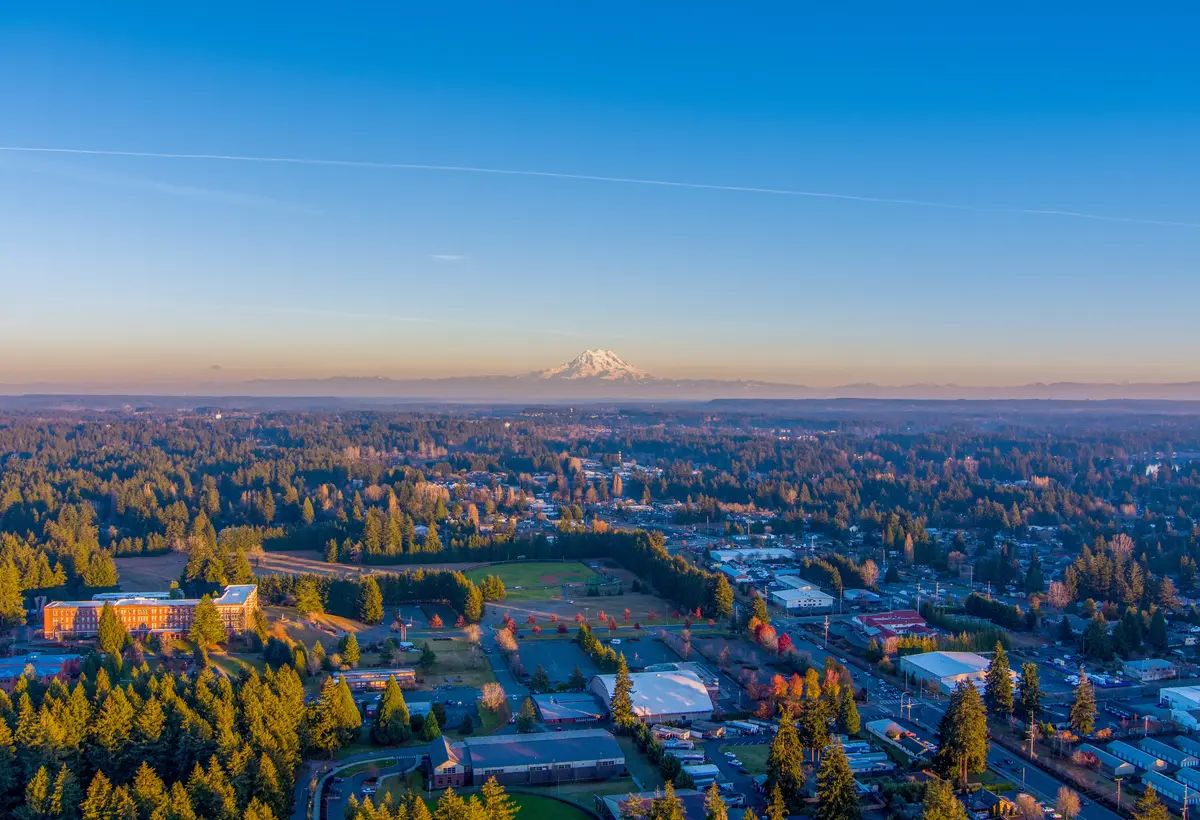
The Zillow Home Value Index for Lacey sat at $516,096 as of March 2026 — but that citywide figure includes a wide range of properties, and understanding what it means for a first-timer requires some unpacking. Entry-level inventory in Lacey skews toward homes built in the 1990s and early 2000s, typically 3-bedroom, 2-bath layouts with attached garages and fenced yards. If your budget lands below $480,000, expect a competitive situation whenever a decent property hits the MLS.
What you get at that entry level is a genuine value compared to what the same price point buys closer to Seattle or even Tacoma. First-timers relocating from higher-cost states sometimes feel an almost disorienting sense of what's possible here, especially once they account for Washington's no-income-tax advantage, which stretches take-home pay in ways that change the math on what monthly payment is actually manageable.
The honest constraint is cash, not income. The Lacey market runs on relatively thin down payments — HUD data shows roughly 30% of conventional loan originations in the area carried a loan-to-value ratio above 90%, meaning many buyers are putting down less than 10%. That's encouraging for first-timers who haven't had decades to save, but it does mean you need to budget carefully for closing costs on top of your down payment. Going in with a clear picture of your total cash-to-close is the single most important financial step you'll take before touring a single home.
The Homebuying Process in Lacey, Step by Step
Step 1: Get a True Pre-Approval — Not a Pre-Qualification
Pre-qualification is a phone call. Pre-approval is a document. In Lacey in 2026, sellers and their agents expect to see a written pre-approval letter before they'll take an offer seriously — and some won't even schedule a showing without one for serious buyers. A real pre-approval requires pay stubs, W-2s, two years of tax returns, bank and asset statements, and a hard credit pull. It is distinct from the informal estimates many online tools call "pre-qualification." Your pre-approval letter is typically valid for 30–90 days, so time it to your actual search window — not months before you're ready to move.
Step 2: Define Your Search Before You Tour
Lacey's geography matters more than most first-timers realize before they start driving. The neighborhoods north of Martin Way near Hawks Prairie feel and function differently from the quieter, tree-lined streets to the south. Know which trade-offs you're actually making — newer construction and easier freeway access versus larger lots and more established neighborhood character — before you spend weekends in open houses. For a deeper look at neighborhood character across Lacey, the living in Lacey guide covers the distinctions in full.
Step 3: Make a Complete Offer
In a market where sub-$500K homes achieve roughly 97% of asking price, your offer needs to be tight. A complete offer includes your pre-approval letter, a reasonable earnest money deposit (typically 1–3% of purchase price in Thurston County), and clear terms on contingencies. First-timers most commonly stumble here in two ways: submitting low "test" offers on desirable properties and losing them to buyers who came in serious, or writing offers without understanding what a mutual acceptance date triggers in terms of inspection timelines.
Step 4: Inspection and Appraisal — Don't Confuse Them
The home inspection is for your benefit: a licensed inspector walks the property and identifies material defects that should inform your negotiation or your decision to walk. The appraisal is for your lender: it confirms the home's value supports the loan amount. First-timers often treat these as interchangeable — they're not. You pay for both, they happen in sequence (inspection first), and the outcomes can affect your deal very differently. Budget $400–$600 for inspection and a similar range for appraisal; both are non-refundable if the deal falls through.
Step 5: Closing
Washington state closings are handled by escrow companies, not attorneys — a difference from many East Coast states that surprises relocating buyers. Your escrow officer coordinates the final title review, loan documents, and fund disbursement. You'll receive a federal closing disclosure form at least three business days before closing that itemizes every cost. Read it against the Loan Estimate you received at the start. Discrepancies happen and are worth flagging before you're sitting at the signing table.
How Much Home Can You Afford in Lacey
The table below shows estimated cash requirements at several realistic purchase price points in Lacey's current market. All figures are estimates — closing costs vary based on lender, loan type, and negotiated terms, but budgeting 2–3% of purchase price for buyer-side closing costs is a reasonable working assumption for most Washington transactions. This table does not include monthly payment, property tax, or insurance figures — use the mortgage calculator below for those estimates.
| Scenario | Purchase Price | Down Payment | Est. Closing Costs | Cash Needed at Table |
|---|---|---|---|---|
| FHA (3.5% down) — entry level | $420,000 | $14,700 (3.5%) | ~$9,000–$12,600 | ~$23,700–$27,300 |
| Conventional (3% down) — entry level | $420,000 | $12,600 (3%) | ~$9,000–$12,600 | ~$21,600–$25,200 |
| FHA (3.5% down) — mid-range | $480,000 | $16,800 (3.5%) | ~$10,000–$14,400 | ~$26,800–$31,200 |
| Conventional (3% down) — mid-range | $480,000 | $14,400 (3%) | ~$10,000–$14,400 | ~$24,400–$28,800 |
| Conventional (5% down) — near median | $516,000 | $25,800 (5%) | ~$11,000–$15,500 | ~$36,800–$41,300 |
| Conventional (10% down) — near median | $516,000 | $51,600 (10%) | ~$11,000–$15,500 | ~$62,600–$67,100 |
FHA loans accept credit scores as low as 580 with 3.5% down, though most lenders in Washington prefer 620 or higher. Conventional loans start at 3% down but require private mortgage insurance (PMI) on any down payment below 20% — a cost that stays on your monthly payment until you've built sufficient equity. The 10%-down scenario reduces your PMI burden significantly and tends to make offers more competitive when sellers have multiple bids to evaluate.
One figure first-timers consistently underestimate: earnest money. That 1–3% deposit comes out of your pocket at mutual acceptance — weeks before closing — and needs to be liquid, not tied up in a retirement account that requires a withdrawal process. Make sure your "cash needed" calculation accounts for earnest money as a separate, immediate draw on your funds.
Looking to buy in Lacey? Estimate your payment.
Enter your numbers to see an estimated monthly mortgage payment.
Estimate only. Excludes HOA fees and mortgage insurance. The interest rate above is a starting point, not a quoted rate — replace it with your own to see real numbers. Insurance is a flat placeholder, not a Lacey quote.
Common First-Time Buyer Mistakes in Lacey
Shopping Before You Have a Pre-Approval Letter
This is the mistake that hurts most in Lacey's sub-$500K band. Homes in that price range regularly go to pending in 16 days or less. If you see a property on a Thursday, fall in love at the weekend open house, and then spend the following week gathering documents for a lender, it's gone. Worse, touring homes without a pre-approval gives you false information — you don't actually know what you can afford until a lender has verified your income, debt, and credit. The number in your head and the number in your pre-approval letter are sometimes the same. Sometimes they're not.
Waiving the Inspection Contingency on the Wrong House
During the heated years of 2021–2023, waiving inspection contingencies was common in competitive offers. The Lacey market has softened enough that you should rarely need to do this — and for a first-timer buying older housing stock that dates to the 1980s and 1990s, waiving inspection is genuinely risky. Roof conditions, older electrical panels, and crawl-space moisture issues are real findings in this region's older inventory. Keep your inspection contingency. If a seller won't accept any offer with one, that itself is information worth weighing.
Ignoring the School-Boundary Reality
North Thurston Public Schools serves all of Lacey, but boundary lines for specific elementary schools vary by address and can shift. First-time buyers who assume "Lacey = one school experience" sometimes close on a home only to discover their address feeds into a different building than the one they toured during their neighborhood visits. If school assignment matters to your family, verify the specific address against the district's boundary tool before making an offer — not after.
Underbudgeting Total Cash to Close
The down payment is the number most first-timers focus on. The closing costs are the number that catches them off guard. In Washington, buyer-side closing costs typically cover lender fees, appraisal, home inspection, title insurance, prorated property taxes, and recording fees. On a $480,000 purchase, that can add $10,000–$14,000 on top of your down payment — money that needs to be in a liquid account, not an investment account that requires a liquidation event. Separately, your earnest money deposit is due at mutual acceptance, often weeks before closing. Running both numbers simultaneously — closing costs and earnest money — from day one is the planning habit that keeps deals from collapsing at the finish line.
Local Expert Takeaway: In Lacey, the buyers who lose homes aren't usually outbid by cash offers from out-of-state investors — they're outmaneuvered by local buyers who showed up pre-approved, understood what the sub-$500K band actually looks like, and kept their inspection contingency while writing a clean, complete offer. Get your pre-approval from a Washington-licensed lender before you tour a single property on the Chehalis Western Trail corridor or in Hawks Prairie, and build your total cash-to-close figure — down payment plus closing costs plus earnest money — before you fall in love with any listing.
Quick Takeaways & FAQs
✅ Washington's lack of a personal income tax quietly increases your purchasing power, making Lacey's $516,096 median go further than the sticker price suggests for buyers relocating from income-taxed states.
⚠️ Homes under $500,000 in Lacey close at roughly 97% of asking price and go to pending in about 16 days — skipping pre-approval before touring in this band costs buyers houses, not just time.
📍 Washington state closings are handled by escrow companies, not attorneys — a process difference that surprises buyers relocating from most East Coast and Midwest states, so ask your agent to walk you through the escrow timeline early.
What credit score do I need to buy a home in Lacey, WA?
How long does it take to buy a home in Lacey from pre-approval to closing?
Is Lacey a good place to buy a starter home right now?
What are closing costs for a home buyer in Washington state?
Do I need 20% down to buy a home in Lacey?
Moving to Washington?
Tell us what you need help with and we'll connect you with local resources.
