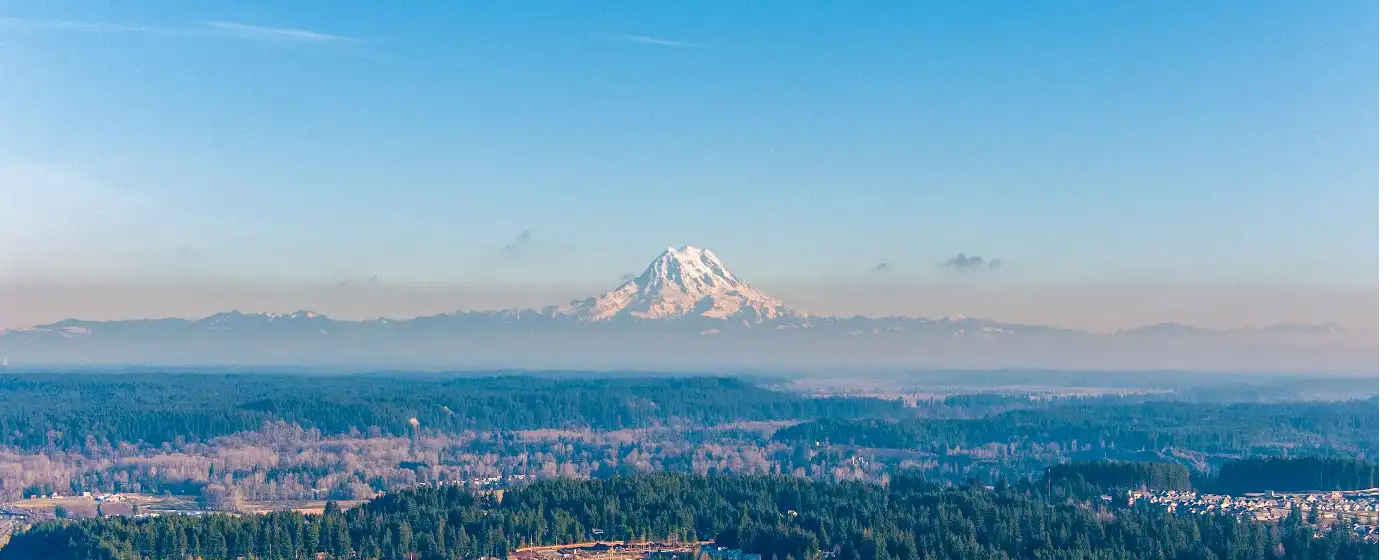
Maybe your company is relocating you here, or you've discovered that South Puget Sound offers something the Seattle metro has largely stopped offering: a house you can actually afford on a state-government salary. Lacey sits just east of Olympia on Interstate 5, roughly 60 miles south of Tacoma, and the Capitol Campus is a 12-minute drive from most of the city. That commute math is what draws a lot of people here — but it doesn't tell you anything about why two buyers with identical budgets and identical family sizes can end up with completely different experiences depending on which side of Martin Way they land on.
The city's economic anchor is the State of Washington itself — state agencies across Olympia and Lacey employ a significant share of local residents, and that institutional base gives the housing market a floor that pure tech-hub cities don't have: demand here doesn't evaporate when one company lays off. North Thurston Public Schools is also among the larger local employers, alongside Saint Martin's University on the Lacey-Olympia border. Families with school-age children dominate the buyer pool in most of the newer subdivisions, and the city's population of roughly 58,600 is still growing fast enough that new plats keep getting filed every quarter.
The citywide Zillow Home Value Index stood at $516,096 in March 2026 — noticeably below what you'd find in comparable Tacoma neighborhoods and a fraction of the Seattle median, which is part of the story. Day-to-day life here runs through Huntamer Park and the Chehalis Western Trail for recreation, and the 6th Ave SE corridor near the Woodland District for independent coffee and neighborhood dining. The compromise for affordability is that Lacey is genuinely car-dependent outside a few walkable pockets, and Interstate 5 congestion heading north toward the Tacoma Narrows can add real time to any commute beyond Olympia.
Whether you're comparing a Hawks Prairie Craftsman against a Tanglewilde rambler or trying to figure out which rental zone has the shortest vacancy windows, the sections below break down Lacey's eight neighborhoods by price, character, buyer type, and the honest trade-offs most agents skip over.
The Lacey Reality
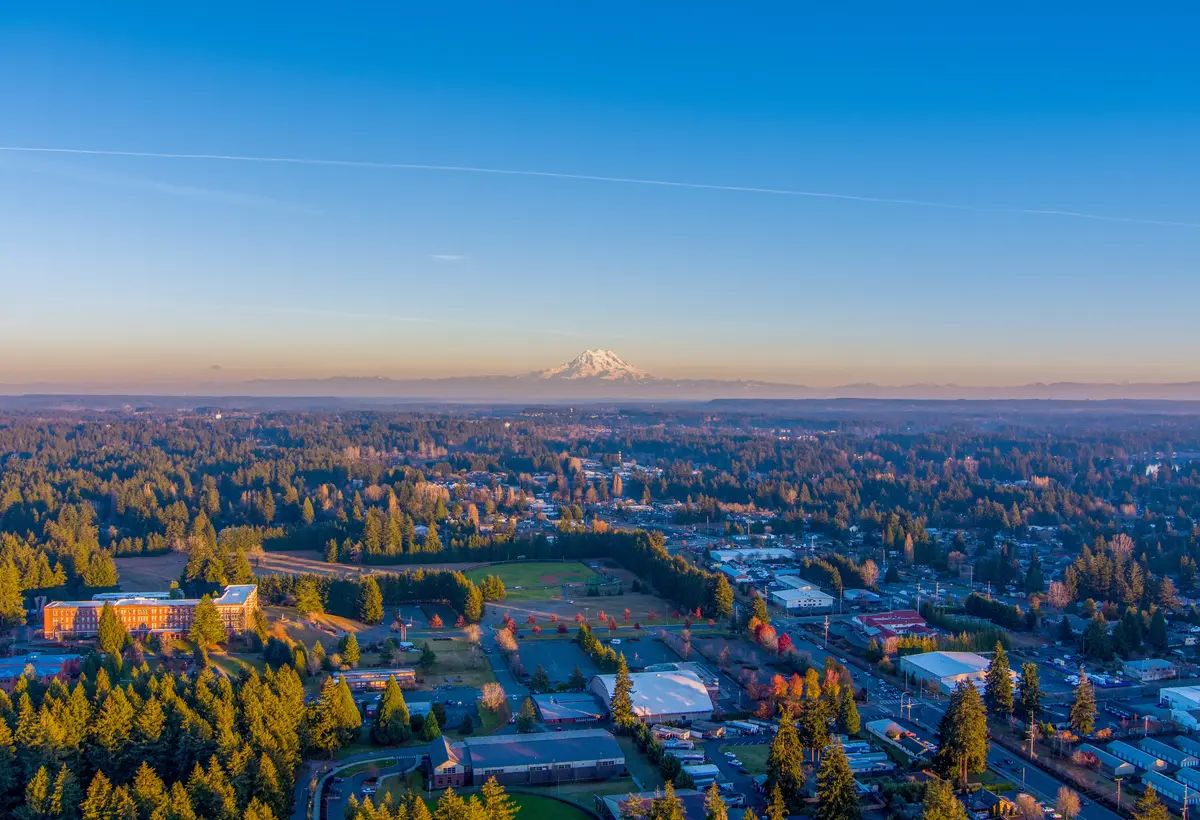
The single most important line in Lacey real estate isn't a zip code boundary — it's Martin Way East. South and west of Martin Way, you're in older Lacey: smaller lots, mid-century and 1970s-era construction, mixed commercial strips, and neighborhoods that feel more like first-ring suburbs. North of Martin Way and stretching up toward Hawks Prairie Road and Marvin Road, you're in the city's growth belt — master-planned subdivisions built largely in the last 25 years with larger homes, consistent landscaping, and HOA governance. Buyers who treat these two halves as interchangeable almost always end up surprised.
School boundary placement is the second variable that scrambles assumptions. North Thurston Public Schools draws attendance zones that don't always follow intuitive neighborhood lines, and two houses on the same street can feed into different elementary schools. Families relocating from out of state — especially those used to districts where the boundary follows a single road — regularly discover this only after making an offer. The Lacey schools guide maps this out in detail; check it before you narrow your search to a specific block.
The I-5 corridor itself creates a third divide. Neighborhoods west of the freeway — primarily the Woodland District and parts of Central Lacey — sit closer to downtown Olympia and to Saint Martin's University, which gives them a slightly more urban, walkable character. Neighborhoods east of I-5, like Hawks Prairie and Pleasant Glade, trade walkability for newer construction and more square footage per dollar. Understanding which side of that freeway your daily life will happen on is the first decision, not the last.
Neighborhoods at a Glance
| Neighborhood | Best For | Price Range | Vibe |
|---|---|---|---|
| Central Lacey | First-Time Renters | $390,000–$490,000 | Established, mixed-use, walkable pockets near the city core |
| Hawks Prairie | Families Commuters | $540,000–$650,000 | Master-planned, Craftsman-heavy, high-amenity northern edge |
| Tanglewilde | Value First-Time | $370,000–$460,000 | Quiet, wooded, older stock with room to build equity |
| Meadows | Families School-Focused | $470,000–$560,000 | Suburban calm, newer subdivisions, well-kept streets |
| The Lakes | Luxury Views | $560,000–$700,000 | Established, mature trees, water access, Pacific NW character |
| Pleasant Glade | Privacy Nature | $430,000–$530,000 | Low-density, wooded lots, east-side quiet |
| Horizons | Families Quiet | $490,000–$590,000 | Newer construction, cul-de-sac streets, suburban order |
| Woodland District | Walkable Renters | $420,000–$520,000 | Urban-infill, mixed-use, fastest-changing corner of Lacey |
Best Neighborhood by Buyer Type
| Buyer Type | Best Neighborhood | Why |
|---|---|---|
| First-Time Buyer | Tanglewilde | Older construction keeps entry prices genuinely below the city median, leaving room to improve rather than stretch. |
| Luxury Buyer | The Lakes | The largest lots, the most mature landscaping, and water-adjacent settings that no newer subdivision can replicate. |
| Walkability Seeker | Woodland District | The only neighborhood in Lacey with a form-based zoning code designed specifically to put daily errands on foot. |
| Families with Kids | Hawks Prairie | Newer schools, consistent sidewalks, and a tight community feel make it the default choice for parents with school-age children. |
| Commuters | Hawks Prairie | Less than 8 miles from the Capitol Campus and the on-ramp to I-5 is practically in the neighborhood. |
| Large-Lot Buyers | Pleasant Glade | Lower density east of the freeway means more buffer between neighbors without jumping to rural Thurston County pricing. |
| Renters | Woodland District | The city's densest pipeline of new apartments, including MFTE-eligible units, is concentrated here. |
Looking to buy in Lacey? Estimate your payment.
Enter your numbers to see an estimated monthly mortgage payment.
Estimate only. Excludes HOA fees and mortgage insurance. The interest rate above is a starting point, not a quoted rate — replace it with your own to see real numbers. Insurance is a flat placeholder, not a Lacey quote.
Most Popular Neighborhoods
Central Lacey
Central Lacey is where the city's bones are visible: older ranch-style homes on modest lots, strip commercial along Pacific Avenue and Martin Way, and a mix of long-time owners and renters who remember when the city was a fraction of its current size. Prices in the $390,000–$490,000 range make it the most accessible part of Lacey for first-time buyers, though older construction means deferred maintenance is a real factor on individual inspections. The Lacey Fireworks Spectacular at Rainier Vista Community Park each July draws the neighborhood together in a way that newer subdivisions simply haven't had time to build yet.
Best for: First-time buyers who want to be close to services and don't mind older homes; renters priced out of Woodland District.
Hawks Prairie
Hawks Prairie is Lacey's northern growth engine — built almost entirely within the last 25 years in a master-planned format with consistent Craftsman streetscaping, wide sidewalks, and a commercial hub anchored by big-box retail along Marvin Road. The median listed asking price ran $602,000 as of June 2026, which places it well above the city-wide figure, and that premium reflects real things: newer construction, Intercity Transit bus service along Marvin Road and Willamette Drive, and a location less than 8 miles from both Joint Base Lewis-McChord and the Capitol Campus. The downside is HOA oversight that some buyers find restrictive, and the northern commercial strip can feel more like a franchise corridor than a neighborhood center.
Best for: Families with kids, state-government commuters, and JBLM households who want newer construction without leaving Lacey.
Tanglewilde
Tanglewilde sits south of Martin Way with a wooded, quieter character that its mid-century homes support well — lots are larger relative to the price, and the tree canopy is the kind that takes 50 years to grow. Homes in the $370,000–$460,000 range are among the most affordable owned housing in the city, though buyers should budget for updates: roofs, windows, and electrical panels in this vintage range are commonly the first items flagged in inspections. There's no commercial core to speak of, so daily errands require a car, and the nearest grocery options are back on Martin Way.
Best for: Value-oriented buyers who prioritize lot size and mature trees over turnkey condition.
Meadows
The Meadows area occupies middle-period Lacey — subdivisions that went in during the late 1990s and 2000s, after the master-planning era really took hold but before Hawks Prairie became the default answer to "where do families move." Streets are quiet and well-maintained, and the $470,000–$560,000 price band represents a genuine step up in condition over Tanglewilde without fully committing to Hawks Prairie prices. The school feed is important to verify here: depending on exactly where a home sits, elementary assignment can vary, which is a detail worth confirming before an offer rather than after.
Best for: Families with school-age children who want newer suburban construction at a moderate price.
The Lakes
The Lakes is the neighborhood that surprises buyers who assumed Lacey was all new subdivisions — homes built in the late 1980s and early 1990s in ranch and Pacific Northwest bungalow styles, on larger lots with mature landscaping and, in some pockets, genuine water frontage. Prices in the $560,000–$700,000 range reflect that scarcity: this stock isn't being replicated anywhere in the city. The catch is that 30-to-40-year-old infrastructure means buyers should scrutinize HVAC systems, crawl spaces, and sewer laterals carefully; the setting is worth it, but the inspection contingency is not a place to get casual.
Best for: Move-up buyers who want water access, mature landscaping, and architectural character that newer subdivisions can't offer.
Pleasant Glade
Pleasant Glade delivers the lowest-density feel available inside Lacey city limits — wooded lots, fewer sidewalks, and a buffer from neighbors that reads more like semi-rural Thurston County than a city neighborhood. Homes in the $430,000–$530,000 range sit east of I-5, which means a short hop to the freeway but genuine separation from the commercial corridors that define the west side of the city. The downside is distance: Olympia's downtown, the Capitol Campus, and most of the city's dining options all require deliberate drives, and transit options are thin compared to Hawks Prairie.
Best for: Buyers who prioritize lot privacy and natural setting over proximity to amenities.
Horizons
Horizons is the most recently developed of Lacey's established neighborhoods — cul-de-sac streets, consistent vinyl-sided construction, and a suburban order that feels intentional in both the positive and the limiting sense. The $490,000–$590,000 range buys genuinely newer homes with modern floor plans, and the neighborhood skews heavily toward families with school-age children, which gives it a social fabric that moves fast. What it lacks is differentiation: homes here look similar, lots are modest, and the character that comes from 30 years of individual owners making idiosyncratic choices hasn't had time to develop.
Best for: Parents with young children who want newer construction, safe streets, and neighbors at a similar life stage.
Woodland District
The Woodland District is the one corner of Lacey where the city is actively trying to build something that doesn't exist yet: a walkable, mixed-use urban neighborhood. The form-based zoning code under Lacey Municipal Code Chapter 16.24 governs building form and street connections directly, and a 376-unit, dual-tower apartment project with 18,000 square feet of commercial space is already in design review — real density, not a rendering. Just Cuz Cafe at 4410 6th Ave SE and Fog & Fern Coffee House at 4219 6th Ave SE are both confirmed open and signal the kind of independent local character the district is building toward. Prices in the $420,000–$520,000 range include older condos and newer mixed-use units; the Multifamily Tax Exemption is available in Woodland Square, making it the most relevant zone for renters watching income-restricted availability.
Best for: Renters seeking urban-infill density, buyers who want walkable streets before the full build-out is done, and anyone who prefers independent coffee shops to strip-mall convenience.
Common Mistakes Buyers Make in Lacey
Treating the City as One Uniform Market
Buyers who make offers based on a $516,096 citywide figure without drilling into neighborhood-level data routinely overbid in Tanglewilde (where the ceiling is lower) or underbid in Hawks Prairie (where $602,000 was the median listed price as of June 2026). The spread between the city's cheapest and most expensive neighborhoods is wide enough that the citywide number is almost useless for any individual transaction.
Ignoring the School Boundary Before Going Under Contract
North Thurston Public Schools draws attendance zones that don't always follow block lines, and the Meadows and Central Lacey areas in particular have spots where two adjacent streets feed different elementary schools. Families who assume that being in a "good neighborhood" means a specific school assignment regularly find themselves requesting a transfer after closing — which is not guaranteed. Verify the exact address against the district's boundary map before making an offer, not after.
Underestimating Martin Way as a Daily Friction Point
Martin Way East is the city's east-west commercial spine, and it carries genuine congestion during morning and evening peak hours — particularly at the intersections with Lacey Boulevard and Pacific Avenue. Buyers who choose a home based on the I-5 on-ramp distance without accounting for the Martin Way crossing between them and the freeway sometimes find their commute runs longer than the map suggests. This is especially relevant for Pleasant Glade and Tanglewilde residents heading north toward Olympia.
Buying in the Woodland District Without Understanding the Construction Pipeline
The Woodland District is actively transforming, with over 1,200 residential units citywide at various approval stages as of April 2025 and a 376-unit apartment project in active design review within the district itself. Buyers purchasing a condo or smaller unit here expecting a stable, settled neighborhood should understand that construction activity, street closures, and shifting commercial tenants are part of the next several years. That's not a reason to avoid the area — but it's a reason to price in some tolerance for a neighborhood that isn't finished becoming what it's going to be.
Best Areas to Rent in Lacey
| Area | Ideal For | Typical Rent Range | Trade-off |
|---|---|---|---|
| Woodland District / Woodland Square | Walkability Seekers Renters | $1,400–$1,950/mo (1–2BR) | Fastest-leasing sub-market; MFTE units require income qualification and move quickly |
| Hawks Prairie (near Marvin Road) | Commuters Families | $1,600–$2,100/mo (2–3BR) | Tight vacancy; newer complexes fill within days, and waiting lists are common in peak season |
| Central Lacey | Budget Renters Transit Users | $1,200–$1,700/mo (1–2BR) | Older building stock means varying quality; inspect before signing |
| Tanglewilde | Quiet Living Value | $1,300–$1,650/mo (2BR house rentals) | Most supply is single-family rentals from individual landlords — fewer amenities, more variability in lease terms |
| Meadows / Horizons | Families School-Focused | $1,700–$2,200/mo (3BR) | Limited rental inventory; most housing is owner-occupied, so availability is inconsistent |
Roughly 44% of Lacey's housing stock is renter-occupied citywide, but that share is not evenly distributed — the Woodland District and the Hawks Prairie commercial corridor account for most of the purpose-built apartment inventory, and vacancy rates in well-maintained complexes in both areas run tight enough that units in some sub-markets lease in under a week. If you're relocating and need to rent first, give yourself a 60-day lead time and be prepared to apply the same day you tour.
Local Expert Takeaway: The buyers who do best in Lacey are the ones who commit to a specific corridor before they start touring. If you're a state employee commuting to the Capitol Campus, Hawks Prairie puts you inside 12 minutes with a transit option on Marvin Road as a backup. If you want the city's only genuine on-foot access to coffee and neighborhood dining, the Woodland District — specifically the 6th Ave SE stretch between Fog & Fern Coffee House and Just Cuz Cafe — is the only bet in town. And if the goal is maximum lot and tree canopy for the dollar, Tanglewilde consistently delivers that at prices well below the citywide median. Pick the corridor that matches your actual daily life, then let price do its work within it.
Quick Takeaways & FAQs
✅ Hawks Prairie offers Lacey's best combination of newer construction, I-5 access, and transit options — all within 8 miles of the Capitol Campus.
⚠️ The Woodland District is actively under construction as a walkable urban neighborhood, which means buyers should expect multi-year disruption alongside the long-term upside.
📍 Just Cuz Cafe and Fog & Fern Coffee House on 6th Ave SE are the current anchors of Lacey's only genuine walkable neighborhood corridor — and both are confirmed open as of mid-2026.
What is the most affordable neighborhood in Lacey, WA?
Which Lacey neighborhood is best for families with school-age children?
Is the Woodland District a good place to buy in Lacey right now?
How do home prices in Hawks Prairie compare to the rest of Lacey?
Where should I rent in Lacey if I'm relocating and want a short-term lease?
Moving to Washington?
Tell us what you need help with and we'll connect you with local resources.
