
Texas Hill Country · Best Places to Retire · 2026
Best Places to Retire in Texas Hill Country, Texas — Every City Ranked
Cities ranked by a weighted composite of healthcare access, walkability, affordability, climate, and quality of life — so you can find the retirement fit that actually matches how you want to live.
By Todd Davidson, Relocation Writer & Housing Market Analyst, Updated September 2026
Choosing a place to retire in Texas Hill Country means choosing between very different versions of small-town life. The region stretches across rolling limestone terrain, cedar-covered ridgelines, and spring-fed rivers — a landscape that draws retirees from every part of the state. But the towns themselves vary sharply: some are working county seats with hospitals on Main Street and grocery stores within a short drive; others are tourism-driven destinations where second-home demand has pushed prices far beyond what local wages ever justified. The corridor that ties this group together is the draw of slower pace, natural scenery, and a genuine sense of community that the outer rings of San Antonio and Austin can't replicate.
What separates the cities on this list is less scenery — they all have it — and more the practical infrastructure that shapes retirement: whether there's a hospital in town, whether home prices leave room in the budget for everything else, and whether daily errands require a long drive or a short trip across town. Towns where prices follow local working economics tend to be county seats with genuine services; towns where tourism and second-home demand set the price tend to carry premiums that can strain a retirement budget. The sections below break down each city's healthcare access, walkability, cost, climate, and day-to-day quality of life so you can see exactly what you're getting and what you're giving up.
How This Ranking Was Built
Each city is scored 1-10 on every dimension below against a fixed statewide scale — never against the other cities in this region — then combined into one weighted Composite score out of 10.
Healthcare — 25%Weighted contribution to the composite score, graded 1-10 against a fixed statewide scale.
Walkability — 20%Weighted contribution to the composite score, graded 1-10 against a fixed statewide scale.
Affordability — 20%Weighted contribution to the composite score, graded 1-10 against a fixed statewide scale.
Climate — 15%Weighted contribution to the composite score, graded 1-10 against a fixed statewide scale.
Quality of Life — 20%Weighted contribution to the composite score, graded 1-10 against a fixed statewide scale.
Top 5 Cities: Best Places to Retire Snapshot
Ranked by overall composite score. Click any city to jump to the full breakdown.
| # | City | Composite | Healthcare | Walkability | Median Price |
|---|
| 1 | Uvalde
Uvalde County | 6.9/10 | 8 | 6 | $174,888 |
| 2 | Kerrville
Kerr County | 5.8/10 | 8 | 4 | $354,872 |
| 3 | Marble Falls
Burnet County | 5.5/10 | 8 | 4 | $403,309 |
| 4 | Fredericksburg
Gillespie County | 5.3/10 | 8 | 4 | $521,138 |
| 5 | Wimberley
Hays County | 4.8/10 | 4 | 4 | $604,777 |
Affordability
10/10
out of 10
Quality of Life
5/10
out of 10
Median Price
$174,888
2026 market price
Uvalde's case for retirement rests on two pillars that are hard to find together in Texas Hill Country: a full-service hospital right in town and a $174,888 typical home price that leaves meaningful room in a retirement budget. Situated along US-90 and US-83 at the southwestern edge of the Hill Country, Uvalde is a genuine working county seat — not a weekend destination — which is exactly what keeps costs grounded. Summers are genuinely hot and the dining and recreation scene is modest for its size, so retirees who want a packed social calendar may find themselves wanting more.
Uvalde suits buyers who prioritize financial breathing room and real local healthcare over walkable downtowns and curated amenities. It's a quieter, more self-sufficient kind of Hill Country retirement than what Kerrville or Fredericksburg offer — better for those who plan to garden, travel, and live simply than for those who want a vibrant daily scene just outside the front door.
Affordability
5/10
out of 10
Quality of Life
6/10
out of 10
Median Price
$354,872
2026 market price
Kerrville is the Hill Country's most established retirement town, and its infrastructure reflects that. A full-service regional medical center sits right in the city, making it the kind of place where healthcare access is a genuine asset rather than a planning concern. At a $354,872 typical home price, it costs noticeably more than the region's working county seats but still offers a real home market — not the vacation-driven pricing that shapes some neighboring towns. The drawback is walkability: Kerrville's residential fabric is subdivisions rather than a walkable core, so daily life is car-dependent in practice.
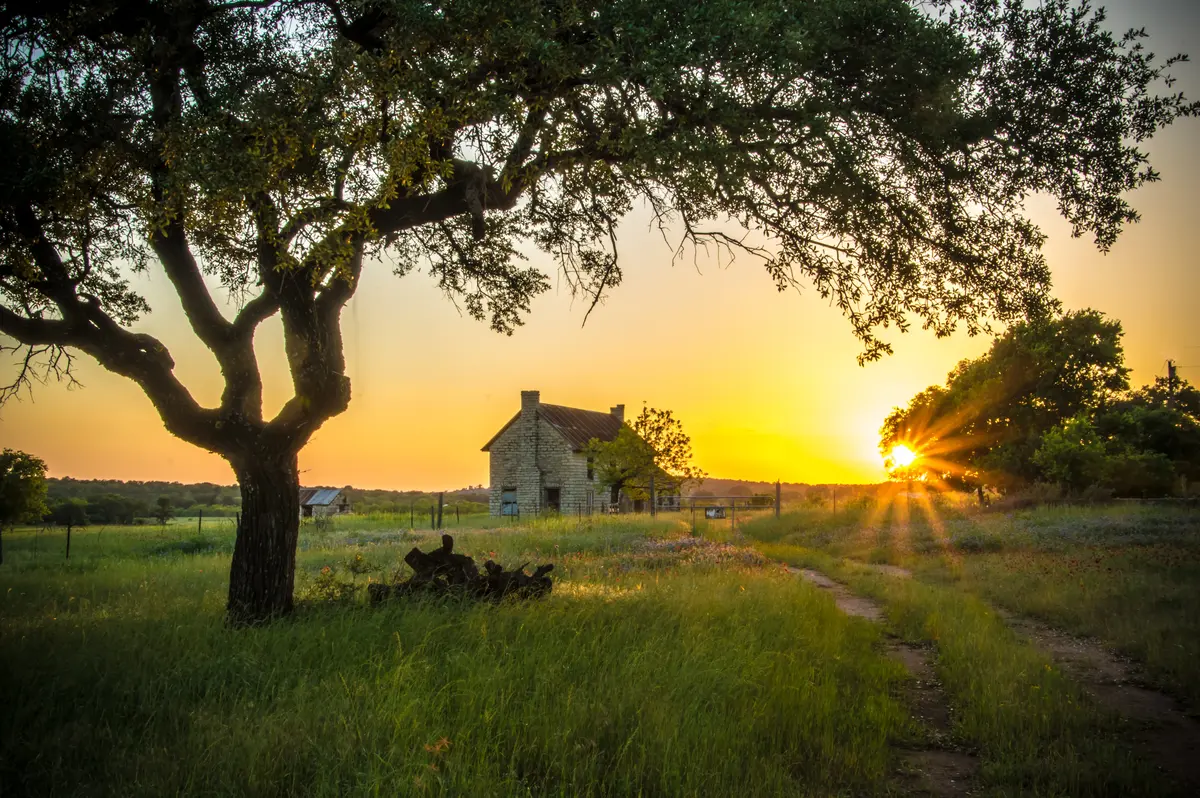
Vicksburg Village is the one established age-restricted community in this group of cities, making Kerrville the default answer for buyers specifically seeking that kind of setting. It also suits retirees who want a mid-size Hill Country town with genuine services and hospital care in town, but who aren't willing to pay the premium that resort-town demand commands in places like Fredericksburg or Wimberley.
Affordability
4.0/10
out of 10
Quality of Life
5/10
out of 10
Median Price
$403,309
2026 market price
Marble Falls sits on Lake Lyndon B. Johnson at the eastern edge of the Hill Country, and the lake-town setting drives both its appeal and its price. A full-service hospital in town is a meaningful asset, but at a $403,309 typical home price, buyers are paying a significant premium over the region's more affordable county seats without getting the lifestyle density that more established towns can offer. US-281 and TX-71 make it accessible, but daily life still requires a car for most errands given the town's small scale.
Marble Falls tends to suit retirees drawn specifically to lakeside living and the natural setting more than to a rich social or dining scene. It offers solid healthcare access in a smaller, quieter package than Kerrville — but the price reflects lake-town demand, and buyers running a pure retirement-value calculation may find that harder to justify than the scenery alone warrants. Buyers who fall in love with the water and the landscape often accept the trade-off willingly.
Affordability
2.4/10
out of 10
Quality of Life
6/10
out of 10
Median Price
$521,138
2026 market price
Fredericksburg is the Hill Country's marquee town — German heritage architecture, a wine trail that draws visitors year-round, museums, and a Main Street that actually functions as a gathering place. A local hospital means healthcare access is solid. But tourism and second-home demand have pushed the typical home price to $521,138, and that number shapes what retirement here actually looks like: buyers are competing in a market driven partly by weekenders and investors, not just fellow retirees. Most of daily life still requires a car despite the appealing downtown streetscape.
Fredericksburg suits retirees who want the richest lifestyle menu in Hill Country — wineries, dining, arts, and a walkable downtown strip for afternoon strolls — and who are prepared to pay for it. It is a markedly different kind of retirement than what Kerrville or Uvalde offer: more curated, more expensive, and more oriented toward enjoying a destination town as a permanent resident rather than just a visitor.
Affordability
1.3/10
out of 10
Quality of Life
7.3/10
out of 10
Median Price
$604,777
2026 market price
Wimberley's appeal is real and specific: abundant sunny days, a tight-knit community identity, and a quality-of-life scene that punches above its very small size. But retirement planning here requires eyes open to the constraints. There is no hospital in Wimberley — the nearest emergency room is a meaningful drive away — which is a material consideration for older buyers. And at a $604,777 typical home price, it carries the steepest entry cost in this group, driven by consistent demand from buyers across Texas who want that particular Hill Country-meets-creek atmosphere.
Wimberley suits retirees in good health who prioritize natural beauty, sunny days, and a genuine small-town scene over hospital proximity and budget headroom. It is a fundamentally different retirement proposition than Kerrville or Uvalde: less about practical infrastructure, more about lifestyle and landscape. Buyers who spend time there and fall for it tend to commit fully; those doing a straight retirement-needs calculation often find that the healthcare gap and the price tag are harder to overlook.
In the Hill Country, the gap between a town with a hospital and a town without one matters more in retirement than almost any other factor — and the town with the hospital isn't always the one with the higher price tag. Match your budget and your tolerance for driving to the city that fits both.
Want to see what's for sale in these neighborhoods?
Sign up for listing alerts — get notified when homes hit the market.
Get Listing Alerts →
Frequently Asked Questions
Which Hill Country city has the best in-town hospital access for retirees?
Uvalde, Kerrville, Marble Falls, and Fredericksburg all have full-service hospitals right in town — a meaningful advantage for retirees who want to avoid a long drive for medical care. Wimberley does not have a local hospital, which is the most important practical distinction on this list for buyers thinking about healthcare in their later years.
Are there any age-restricted communities in Texas Hill Country?
Kerrville is the only city in this group with an identified age-restricted community — Vicksburg Village. None of the other cities on this list had established communities of that kind found during research. Buyers specifically seeking that kind of setting will find Kerrville the most straightforward answer in Hill Country.
Which Hill Country town offers the strongest retirement value on a fixed income?
Uvalde stands apart from the rest of this list on affordability. Its typical home price is well below every other city here, and it offers genuine services — including a hospital — that a retiree on a fixed income would actually use. Kerrville and Marble Falls sit in a middle range on price, while Fredericksburg and Wimberley carry resort-town premiums that can strain retirement budgets significantly.
Is Wimberley a practical place to retire, given the healthcare situation?
Wimberley works well for retirees in strong health who can plan around the drive for emergency care. The town has a lot to offer — a sunny climate, a quality-of-life scene that's impressive for its size, and a community identity that residents feel strongly about. The honest trade-off is this: if proximity to a hospital is a priority, Wimberley asks you to compromise on it in a way that Kerrville or Uvalde do not.
What makes Fredericksburg different from the other Hill Country retirement options?
Fredericksburg has the most developed lifestyle infrastructure of any city on this list — a genuine walkable downtown, a wine trail, museums, and a dining scene shaped by decades of tourism investment. That comes at a price: home costs reflect sustained demand from buyers across Texas and beyond. Retirees choosing Fredericksburg are typically choosing a town they've already fallen for as visitors, and they're paying accordingly. Those doing a pure retirement-value comparison often land in Kerrville or Uvalde instead.
Moving to Texas?
Tell us what you need help with and we'll connect you with local resources.

Todd Davidson
About the Author
Todd Davidson is the founder of The Move Genie, a premier digital resource offering in-depth city guides, neighborhood profiles, and localized market insights for communities nationwide. Drawing on an extensive background in home financing and real estate, he established the platform to streamline the relocation process, helping families make confident, data-driven decisions when comparing new areas.